Category Archives: Contemplation, prayer

Love – in Small Doses for the Sin Sick Soul #10

And we are put on earth a little space, 
That we may learn to bear the beams of love. –
William Blake

wild geese

Resurrection Passion

Oh Spendthrift Love,
Oh Lay Me Down Love,
even from the tree
you coax: follow me.

Oh Love That Never Dies,
could I love like the pear tree loves
in heedless scarlet surrender
to the grey autumn sky?

Could I run breathless
bearing bright bouquets
across the fields to you?

Could I with mad extravagance
pour out all my oil
upon your brow?

Could I throw caution
to the wind and fling
myself  over the lake
in a flurry of milkweed
seeds and cattail fur?

Could we rendezvous
in every crack and cranny
of creation where you issue
in sweet tenderness?

Could I be held enthralled
by wonder unable to move
across a room for need to kneel
at every step in praise?

Could I place my palm
upon the surface of any cheek
and trace the contours
of grace with a finger?

Oh Love That Never Dies,
teach my heart to love again.
Teach me desire
that draws life from dry bones
like orange flames
leaping from kindling sticks.

Oh Way is Narrow Love,
Oh Take Up Your Cross Love,
teach me resurrection passion.

I’ve had enough of death.

______________________________

Love – in Small Doses for the Sin Sick Soul #9


And we are put on earth a little space, 

That we may learn to bear the beams of love.
William Blake

Holy Saturday

Stop!
surrender
to
resurrection

new growth

______________________________

Note to readers:  This blog is part of a series of Lenten “short takes” on the themes of lent, which follow more or less the lectionary Scripture lessons for this season. Like a note you find tucked under the bark of a tree, a lozenge to let melt in your mouth, an amulet to wear around your neck, I hope these little reflections may hold a small dose of truth or comfort  or challenge for your life on the way to Easter.

I have noticed in my work as spiritual director that it is hard for many of us to take in the goodness and grace, as well as the challenge of the story of Jesus and God’s redeeming love. Perhaps we need to titrate the gospel. Sometimes a well- timed, tiny dose, carefully administered, may be what the Physician orders for our healing. And so slowly we build up our tolerance for love and more and more joy finds the faith in us through which to invade our being.

Dose titration:  adjustment of the dose until the medication has achieved the desired effect

Love – in Small Doses for the Sin Sick Soul #8


And we are put on earth a little space, 

That we may learn to bear the beams of love.
William Blake

 A page from a 14th century German Haggadah

Pasach – Passage, No. 1

After we were passed over
we passed over.

When the waters split
drew back
a shimmering wall
seething strength, waves
smacking, spitting above us

some of us hesitated
to weigh the odds
consider and debate.
Was it more magic?
Who was this son of Abraham
with his stave of almond wood?

Crippled from scrabbling straw in the fields
mixing mortar for the man
meeting his quotas
we dawdled on the shore.

Others, children especially, ran out
skipping over the coral
through the sea grass
past the shipwrecks
and green turtles
raising their mottled beaks, amazed.

We heard hooves pounding,
shouts, thunder of chariot wheels.
Death before, death behind.
Better to drown
than die by the hands of those bastards.

The kids, though,
did not flinch,
tossing up fistfuls of sand,
diamonds in the sun,
playing on the seabed
like shrimp.

We hobbled over,
leaning on each other,
fearful, fretting.
Seems when a soul is crushed
it takes a long time to rinse out the slave.

Though at Pasach, when we gathered,
it would all come back.
We would shake off another chain
see more clearly
sip liberty
like wine.

Pasach – Passage,  No. 2

The night we celebrated Pesach –
what did he say, what did he mean
leaving and that we knew
the way to where he was going?

I was trying to work it
out when another sea split open
not waters humping up like steel cliffs
but a great scythe slashing
through the middle of everything
and him falling, tumbling down into the rift.

A passage
where there had been none before
death leering from either side.

I heard the soldiers coming
swords clanking at their sides.
In the acrid air lungs burned, eyes stung
flames draped from clouds.

And while they dragged him off
blood blossomed
on the vast lintel and door posts
of the writhing world
and dribbled down
like tears.

*Hebrew (Pasach) also spelled Pascha for Passover or passage. The verbal form means to protect and to have compassion as well as pass over. Exodus 12 -14; John 14-19


______________________________

Note to readers:  This blog is part of a series of Lenten “short takes” on the themes of lent, which follow more or less the lectionary Scripture lessons for this season. Like a note you find tucked under the bark of a tree, a lozenge to let melt in your mouth, an amulet to wear around your neck, I hope these little reflections may hold a small dose of truth or comfort  or challenge for your life on the way to Easter.

In the abundance of words which inundate us daily, it is easy for the message of redemption to be buried under the latest disaster, outrage or scandal. Likewise the familiar stories and passages of lent may grow dull and trite to ears and hearts already stuffed with words. 

I have noticed in my work as spiritual director that it is hard for many of us to take in the goodness and grace, as well as the challenge of the story of Jesus and God’s redeeming love. Perhaps we need to titrate the gospel. Sometimes a well- timed, tiny dose, carefully administered, may be what the Physician orders for our healing. And so slowly we build up our tolerance for love and more and more joy finds the faith in us through which to invade our being.

Dose titration:  adjustment of the dose until the medication
has achieved the desired effect

Love – in Small Doses for the Sin Sick Soul #7


 And we are put on earth a little space,
That we may learn to bear the beams of love.
– William Blake

 Palm Fanfare

Passion Sunday

They fought on the way to church
this time ugly.  

Was it the tone he took,
or her throbbing resentment
that kicked in the door
like a demon repo man
turning up to repossess their souls?  

Mud rushed in
a roaring sludge
of sorrows, lashes
rebukes, scorn
bitterness, betrayal
heaping up
burying the light.  

The back seat was silent.  

In the sanctuary they stood mute
in the crowd of flourished palms
hosannas fluttering like petals
watching their kids in the happy throng
pass by with pain in their eyes.  

Across town the detective
poured herself another cup of coffee
scanned reports from last night
homicide, hit and run
three break-ins, some domestics.  

Robert rolled over,
knees up to his chin, gripping the covers.
He hurt so bad. He couldn’t get those feelings
for Andy to go away, nor the horror
in the cafeteria when they snickered and laughed.  

Lester sat at his kitchen table, thumbing through his Bible.
He got the diagnosis the day before.  
The words didn’t make sense.
He looked around.
Everything seemed tilted sideways.
Does cancer cause this? he wondered.  

Alice in a back pew waved her palm like a white flag.
During the week she goes into a house full of roaches
and mice to treat the baby of a twelve year old girl.
People so desperate, so much pain. Plse pray,
she texts her friend and waves harder,
counting on this Jesus to make a difference.  

Nations thrash and groan. Politicians rage.
The bomb ticks in the parked car.
Seas haul homes and lives
out to watery oblivion.  

Some peasant playing a fool on a donkey
rides into town saying he is the King.
He is going to turn things around,
unseat the emperors,
release the grasp of greed,
cure the lust for money,
and heal the virus.
Sure enough the fool gets himself killed.  

Everyone is looking for a goat to carry off
that mudslide of shame, regret, and responsibility.

For a while we can pimp up the peasant,
wave some foliage, call him king
as the bullies and the haters
the fear mongers and the betrayers 
the self- righteous and the proud hitch
a ride on his back like fleas.
Then we can go home, relax
watch the ball game and root for our team.  

But the peasant with pain in his eyes
on the donkey has his own agenda.  

I am not your Palm Sunday ornament,
a wonder super hero
your ticket to respectability
a card to play in your political games.  

Look again. I am you.
I am you riding high into town.
I am you awash in disgrace and humiliation.
I am you having done the unthinkable
and there is no way you can repair the damage you caused.  

I am you, holiness, hawking yourselves day and night
in the holy places you have turned into markets.
I am you, holiness, stuck
right down in the middle of a profane life in a profane world.
I am you, holiness, betrayed by a sneer, or the grab for influence.
I am you, holiness, trampled on and defiled.  

Will you duck out now
skip those other services
and only show up year after year
in your new clothes
to see the lilies and hear the music?  

Or will you come back
to listen to my commandment 
to let me wash your feet
and drink to a new covenant?  
Will you stay awake with me
and with yourself one hour in our suffering?
Will you say, not my will, but thine?  

Will you face your betrayer, see what you need to see 
become truth in the face of authority?
Will you strip off all your disguises, costumes
facelifts, masks, and self-deceit?
Will you hand over your assets for others to toss the dice?  

Will you watch at our dying?
Will you thirst?
Will you feel your own pain?
Will you cry out why has God forsaken us?  

Will you rest in the tomb
that silent womb of mystery
dead with me?  

Will you come early on the third day?


Lily

Lily (Photo credit: amitkotwal)

______________________________

Note to readers:  This blog is part of a series of Lenten “short takes” on the themes of lent, which follow more or less the lectionary Scripture lessons for this season. Like a note you find tucked under the bark of a tree, a lozenge to let melt in your mouth, an amulet to wear around your neck, I hope these little reflections may hold a small dose of truth or comfort  or challenge for your life on the way to Easter.

In the abundance of words which inundate us daily, it is easy for the message of redemption to be buried under the latest disaster, outrage or scandal. Likewise the familiar stories and passages of lent may grow dull and trite to ears and hearts already stuffed with words. 

I have noticed in my work as spiritual director that it is hard for many of us to take in the goodness and grace, as well as the challenge of the story of Jesus and God’s redeeming love. Perhaps we need to titrate the gospel. Sometimes a well- timed, tiny dose, carefully administered, may be what the Physician orders for our healing. And so slowly we build up our tolerance for love and more and more joy finds the faith in us through which to invade our being.

Dose titration:  adjustment of the dose until the medication
has achieved the desired effect

Love – in Small Doses for the Sin Sick Soul #6


And we are put on earth a little space, 

That we may learn to bear the beams of love.
William Blake

Thin-Ice


Thin Ice

The interviewer probes,

so do you think the economy will get better?

Fear leaps up from the gut


climbs to her throat


voice shakes, melts into tears.


Fifty two,


back in her bedroom


at mom and dad’s

turning over at night

she sees the puzzles, rock collection,

Girl Scout Handbook

stacked on the shelf beneath the window,

teeters between now and then

on the brink

of circumstances beyond her  control.

Better to practice walking on thin ice 

before we find ourselves there.

How does one learn 
to trust

your life will bear your weight?

The grey sheet shrinks from the shore.

Dark water laps milkweed stubble,

slopping over hoof-pocked mud.

Could she step over the translucent border

to opaque surface a few feet further out?

Oh to put her future in a box,

tie it with a pretty bow

and place it next to high school

yearbooks on the shelf.

The fortune tellers circle,

bracelets jangling, bright skirts swinging,

leaning over their tea leaves crying out:

Alzheimer’s, incontinence, poverty, ruin!

After millions heard her cry on public radio,

after her immersion into choking humiliation

possibility awoke.

She saw what they had seen

and loved it now.

Come, she said,  as she took her nakedness

into her arms like a lost child,

a beautiful melody.

I will teach you how to walk on thin ice.

Let us go to the spring woods

and learn to pull uncertainty and loss 

to our chins like a blanket of oak leaves,

sweet pine needles, mushrooms,

and the milky blooms of May apples.

All the best and most beautiful things

are willing to go under at any moment

and take us with them into the dark

to be carried back again,

laughing sheaves of light.

Child of my heart, listen.

Don’t turn away from my face.

Nothing perishes

when born by the arms of grace.

May apple flower

Don’t ponder ancient history
Look! I am doing a new thing. Isaiah 43: 14-21

Restore our fortunes, O Lord,
like the watercourses in the Negeb.
May those who sow in tears
reap with shouts of joy.
Those who go out weeping,
bearing the seed for sowing,
shall come home with shouts of joy,
carrying their sheaves. Psalm 126: 4-6 NRSV

______________________________

Note to readers:  This blog is part of a series of Lenten “short takes” on the themes of lent, which follow more or less the lectionary Scripture lessons for this season. Like a note you find tucked under the bark of a tree, a lozenge to let melt in your mouth, an amulet to wear around your neck, I hope these little reflections may hold a small dose of truth or comfort  or challenge for your life on the way to Easter.

In the abundance of words which inundate us daily, it is easy for the message of redemption to be buried under the latest disaster, outrage or scandal. Likewise the familiar stories and passages of lent may grow dull and trite to ears and hearts already stuffed with words. 

I have noticed in my work as spiritual director that it is hard for many of us to take in the goodness and grace, as well as the challenge of the story of Jesus and God’s redeeming love. Perhaps we need to titrate the gospel. Sometimes a well- timed, tiny dose, carefully administered, may be what the Physician orders for our healing. And so slowly we build up our tolerance for love and more and more joy finds the faith in us through which to invade our being.

Dose titration:  adjustment of the dose until the medication
has achieved the desired effect

Love – in Small Doses for the Sin Sick Soul #5


And we are put on earth a little space, 
That we may learn to bear the beams of love.
– William Blake

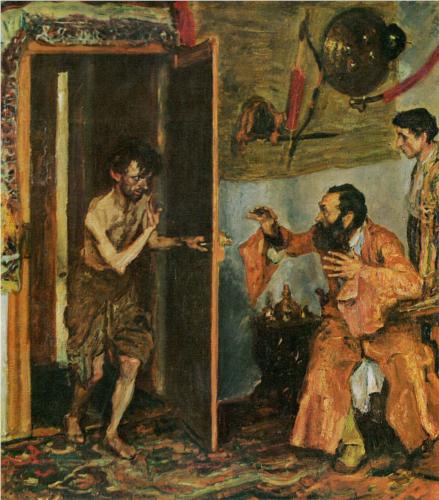
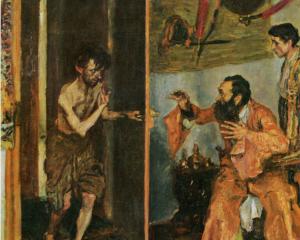
the-prodigal-son.jpg!Blog


The Lost Son Wakes from His Dream

Up to your knees in hog dung

eyeing hungrily

corn stubble

slop bucket

egg shells, coffee grounds

black banana peels

rancid grease, moldy bread.

Rouse yourself

from this putrid

dream of your demise.

Awake.

Tune in to your reality show.

Walk off the set of this drama

and come to yourself.

Reach down

pull that dying man out of the muck

wash his stinking feet.

Take a chance on mercy.

Go ahead. Say it.

You had it all wrong.

Spit out the words stuck in your craw

like a piece of broken glass:

            I am sorry.

And come on home.

Besides,

there will be a party

and presents.

ring

Luke  15: 11-32

___________

Note to readers:  This blog is part of a series of Lenten “short takes” on the themes of lent, which follow more or less the lectionary Scripture lessons for this season. Like a note you find tucked under the bark of a tree, a lozenge to let melt in your mouth, an amulet to wear around your neck, I hope these little reflections may hold a small dose of truth or comfort  or challenge for your life on the way to Easter.

In the abundance of words which inundate us daily, it is easy for the message of redemption to be buried under the latest disaster, outrage or scandal. Likewise the familiar stories and passages of lent may grow dull and trite to ears and hearts already stuffed with words. 

I have noticed in my work as spiritual director that it is hard for many of us to take in the goodness and grace, as well as the challenge of the story of Jesus and God’s redeeming love. Perhaps we need to titrate the gospel. Sometimes a well- timed, tiny dose, carefully administered, may be what the Physician orders for our healing. And so slowly we build up our tolerance for love and more and more joy finds the faith in us through which to invade our being.

Dose titration:  adjustment of the dose until the medication
has achieved the desired effect

Love – in Small Doses for the Sin Sick Soul #4


And we are put on earth a little space, 

That we may learn to bear the beams of love.
William Blake

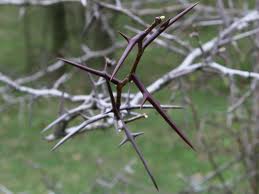
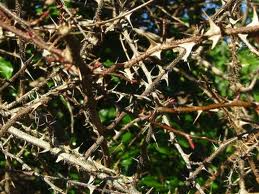
thorns

Fast


Bound

breathless and blind

open your eyes.

Unclasp the clutch

of the  hand

around your throat.

Fast

to break the fast

of the barbed hooks

and thorns

of dissolute gods

boring into the bleeding brow

of your howling  soul.

thornbush

  • Where are addictions or unhealthy attachments tying up your freedom to be available to God on God’s terms – however  God would have you?
  • What dissolute, lying gods have their merciless hands around your throat?
  • Will you open your eyes?

______________________________

Note to readers:  This blog is part of a series of Lenten “short takes” on the themes of lent, which follow more or less the lectionary Scripture lessons for this season. Like a note you find tucked under the bark of a tree, a lozenge to let melt in your mouth, an amulet to wear around your neck, I hope these little reflections may hold a small dose of truth or comfort  or challenge for your life on the way to Easter.

In the abundance of words which inundate us daily, it is easy for the message of redemption to be buried under the latest disaster, outrage or scandal. Likewise the familiar stories and passages of lent may grow dull and trite to ears and hearts already stuffed with words. 

I have noticed in my work as spiritual director that it is hard for many of us to take in the goodness and grace, as well as the challenge of the story of Jesus and God’s redeeming love. Perhaps we need to titrate the gospel. Sometimes a well- timed, tiny dose, carefully administered, may be what the Physician orders for our healing. And so slowly we build up our tolerance for love and more and more joy finds the faith in us through which to invade our being.

Dose titration:  adjustment of the dose until the medication
has achieved the desired effect

Love – in Small Doses for the Sin Sick Soul #3


And we are put on earth a little space, 

That we may learn to bear the beams of love.
William Blake

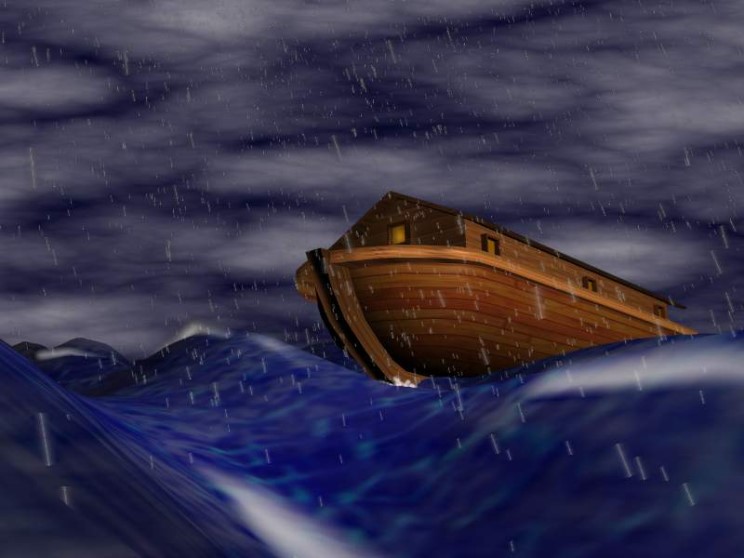
NoahsArkPitch

The Flood

It crept up slowly.

You did not notice at first,

though your feet were always cold ,

socks soggy.

Accustomed to the damp

you pulled on galoshes

then hip waders.

You didn’t know why

you were always so tired

like walking against a strong current, you’d say.

By the time the force of the tide

sucked  your heart

out by the roots

it was too late.

You plunged

into that dark torrent

gasping for air

clawing

for something to hang onto.

The ark you

unbelieving

had refused

rocked  above the waters.

The old man leaned

over the side

extended  a wooden

beam.

I see you are ready now, he said.

Grab on,

there is room for one more.

__________________

Is something threatening to drown you, which you keep ignoring?
What keeps you from reaching out for help?
If you are safe in your arc, is there someone out there who needs a hand up into the boat?
What are you waiting for?

______________________________

Note to readers:  This blog is part of a series of Lenten “short takes” on the themes of lent, which follow more or less the lectionary Scripture lessons for this season. Like a note you find tucked under the bark of a tree, a lozenge to let melt in your mouth, an amulet to wear around your neck, I hope these little reflections may hold a small dose of truth or comfort  or challenge for your life on the way to Easter.

In the abundance of words which inundate us daily, it is easy for the message of redemption to be buried under the latest disaster, outrage or scandal. Likewise the familiar stories and passages of lent may grow dull and trite to ears and hearts already stuffed with words. 

I have noticed in my work as spiritual director that it is hard for many of us to take in the goodness and grace, as well as the challenge of the story of Jesus and God’s redeeming love. Perhaps we need to titrate the gospel. Sometimes a well- timed, tiny dose, carefully administered, may be what the Physician orders for our healing. And so slowly we build up our tolerance for love and more and more joy finds the faith in us through which to invade our being.

Dose titration:  adjustment of the dose until the medication
has achieved the desired effect

A Prolonged Hesitation – Meeting God in the Spaces

Ireland Upland

Silence is God’s first language. – John of the Cross

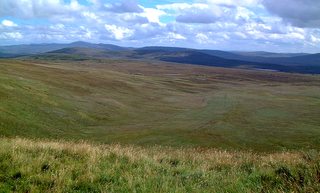
Spaces captivate me. The spaces between things – pauses, silences, rests between notes, empty rooms, expanses of prairie, moors, and highlands.  A friend of mine from a large urban center once came to Kansas for a visit. I drove her out west on I70. The empty space terrified her. She much prefers the human made canyons of New York City, than places where the land itself dominates the environment and asserts its untamed, mysterious vitality.

In my work as a listener to the stories of others, I find the spaces between the words, the sudden silences, or the time a person takes for thinking to be where the treasures lie, where holiness abides.

flintyhills3

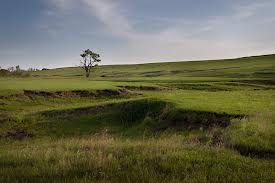
I recently found a friend in the poet, Rilke. I drove south through the stunning space of the Flint Hills to Wichita to The Magnificat Center. This haven of hospitality and spiritual nurture hosted a retreat led by Mark Burrows, scholar of medieval Christianity. Mark had recently translated some of German poet, Rainer Maria Rilke’s early poems.  Prayers of a Young Poet, Paraclete Press.

For an evening and a day Professor Burrows opened up Rilke’s poems like small packets of compressed holiness. Once set free by Burrows’ translation and our imagination, the poems awakened us to the immense and voluminous God this young poet had discovered.  In the spring of 1899 God had wooed Rilke during the Russian Orthodox holy week services at Moscow’s Cathedral of the Dormition.  By the end of our brief time together I felt the room we gathered in enveloped by presence and I, too, felt holiness pulsing in me.

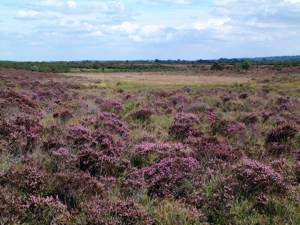
The resonance of Rilke’s images and Mark Burrow’s masterful interpretation slowed me down, and ushered me into in the mystery of Rilke’s God. I was taken out beyond myself and the horrible cold I had brought with me to a more spacious place. The image Rilke used to express his desire to touch into God’s immensity was heath, the open, treeless landscape of moor and bog.

Whatever you yearn for, my soul, say it
Be heath, be heath, be wide.
. . . .
Be heath, be heath, be heath

Prayers of a Young Poet, translated by Mark Burrows, p 30.

Heath view

What is it in us that allows God to meet us with fullness, depth, and beauty? The potential is always present. Love or loss of love may do this, preaching may do this, sacraments, art, music, nature, beauty, may do this. Yet we must offer the space, the openness, the inner heath or expanse of Kansas Flint Hills to become the altar for this dancing God.

As the psalmists, prophets and Jesus knew, poetry may offer such an altar for the sacrament of presence.  Paul Valéry defined a poem as “a prolonged hesitation between sound and sense.” That is also not a bad definition for a parable. Parable and poem both dis-orient, surprise, stop us in our tracks, and expand our awareness beyond our previously known world.

Poetry invites, even demands that we hesitate, off balance, scratching our heads, to teeter between sound and sense. Most things which reveal Transcendence (that which is beyond our selves) require us to enter the unfamiliar and wait on the edge of not knowing, without having to rush in and fill the moment with a refutation, argument, praise, or anything to end the awkward, uncomfortable “dead” space. It seems to me that good art makes us hesitate and allows what we may perceive as dead to rise up before us. Surely good preaching, celebrating sacraments, and prayer ought to do the same.

Moor
Yet hesitation is seen as a flaw, a lack of confidence, or making someone have to wait. Thomas Merton wrote that we live in a time of no room, in which we are “obsessed with lack of time, lack of space, saving time, conquering space, projecting into time and space the anguish produced within [us] by the technological furies of size, volume, quantity, speed, number, price, acceleration.” Thomas Merton, A Book of Hours, ed. Kathleen Deignan, p 32 

We live in a time of no room with no space for a soul’s edges to roll out, unconfined by agenda. Hemmed in by a culture which has convinced itself that time is a commodity, of which there is great scarcity, our souls become cramped, stunted, and deformed by the crushing weight of  having to produce and fill every moment with sound and human activity.

communion cup

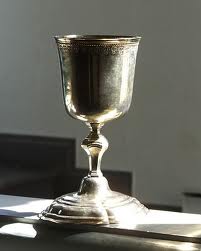
Time is the sacred vessel of encounter with divine presence.  Where else do we think it is going to happen, if not here, now in this moment? We put little, if any, space between and within the words we speak to one another. We have little available “random access memory” in our minds.  Words pile upon words. Life is reduced to thirty second sound and image bites. Minds are crammed and obese with knowing, calendars booked solid, days filled with activity, and hearts full of oneself.

Who among us will be bold to hesitate, to linger in the land of uncertainty on the shore of wisdom?   Who will offer shelter for silence to collect itself, curl up and hum to itself in the sun? Who will be heath?

________________________

Please note Praying Life Readers: I will be leading a retreat at the Magnificat Center in Wichita, Kansas on March 22-23, 2013.  For more information and to register: Retreat led by Loretta F Ross  It would be great to see you there!

Faith and Fear

A two part series on giving birth
to redemption in your time and place.

Part One – Mary and Cousin Carl

A-annuncia_Fra_Angelico

Most every epiphany or showing of God in scriptures is met with fear. When the angel Gabriel comes to Mary saying,  “Rejoice, O highly favored one. The Lord is with you,” Mary does not break out in ecstatic bliss. Instead she is greatly troubled at the saying. As Luke tells it, she considers in her mind what sort of greeting this might be. And well she might. It was probably not the first time some itinerant ladies’ man claiming to be an angel had come on to her.

The angels in the Bible get some of the worst lines. They are hard to pull off with any authenticity. Enter one angel Gabriel with a flourish of wings and heavenly splendor who must make believable both his incredible presence and the words: “Rejoice, O favored one.”  Smile, God loves you. This is your lucky day! Any virgin with an ounce of sense might consider in her mind, “Right sweetie. Have I ever heard that one before.”

The immensity of the heavens is about to invade Mary in a mysterious and awesome conception that will defy rational explanation and accomplish an incarnation that ushers in the redemption of the world. Yet before Christ is born, Mary must face her fear and make a choice. And so it is with us. When God’s cheery messenger meets us with the news that we will conceive and bring forth the fruit of salvation, fear rather than joy is likely to be our first response.

A-Annunciation_da_MessinaMessengers sent by God to announce God’s saving love often wear camouflage. They have a hundred disguises. Can we trust that they are who they say they are? This seed of hope they want to place within us, dare we believe it, receive it? What if we are mistaken and this is all a dream or a product of our own egotistical imaginations? What arrogance makes you think you can bear sacred saving gifts into the world? This is no angel, but Cousin Carl dressed up in Aunt Edith’s chenille bathrobe with some tinfoil wings and a halo made out of a pie pan!

In real life angels rarely look like the ones in paintings. And yet, does it matter if the angel really is Cousin Carl? To me, what matters is that we believe that holiness and salvation are afoot, whatever ridiculous disguises they wear.

Prior to the advent of God’s redeeming love in our lives and world comes a courageous act of faith. The birth of Christ is contingent on the belief of a young girl with an imagination creative enough to envision the impossible and a sense of her worth strong enough to defy fear and anxiety. She places her whole being in jeopardy as she lays out her life and all that she holds dear on the gamble that there is a God in the heaven who might have some business to do with her.

We are to rely on faith rather than evidence, Ian Matthews writes in his interpretation of St. John of the Cross. Yet, here’s the kicker: the danger St. John warns of “is not so much that we shall trust in the wrong thing, but that we shall stop trusting at all; that, while we may never say it in so many words, we shall cease to believe that we are factor in God’s life.”

Matthews continues:
Survival demands a certain skepticism. We are trained to cope as social beings by keeping our desires within realistic limits. But where God is concerned, the problem lies in our desiring too little, and growing means expanding our expectations; or rather, making [God’s] generosity, not our poverty, the measure of our expectations.  – Ian Matthews, The Impact of God – Soundings from St. John of the Cross

Mary, sizing up her heavenly visitor, is moving from the rather safe place of conventional norms into a new realm where few of the old rules will make much sense. No one else can judge for her the validity of that grinning angel holding out joy like Aunt Edith’s peanut brittle. Should she take a bite? She hasn’t forgotten that incident in the garden with the serpent. What is truth? How can she be sure this is an invitation from God?

There are no books she can read, no wise men and women she can consult. She alone must determine and act on her own truth. How will Joseph or her village ever believe what is happening to her? Yet what others will think is not her ultimate concern. Her concern is obedience to the living God, to hope, to the possibility of wonder that lies beyond what the eye can see.

Joseph and the others must come to their own conclusions. They, along with the rest of us, are given that freedom. In W. H. Auden’s poem, “For the Time Being”, Joseph says to Gabriel:

All I ask is one important and elegant proof
That what my Love had done
Was really at your will
And that your will is Love.
Gabriel responds:
No, you must believe;
Be silent and sit still.

Weighing the odds, Mary asks one question, “How shall this be since I have no husband?”

“No problem,” guarantees the angel. And citing the case of barren Elizabeth, he assures her that with God nothing is impossible. Mary’s question raises a far from minor point. The participation of a male is a basic ingredient for conception. When God sends a divine messenger to us announcing that we have been chosen to bring forth some saving work, it may appear that some major components for success have been omitted. How shall this be since I have no money? Since I have no work? Since I have no education?

“No worry, it’ll be a cinch,” says Cousin Carl, snapping his fingers. “The Holy Spirit will come upon you.”

Finally it is up to Mary. The redemption of the cosmos is resting on the consent, the free choice of this mortal woman to have faith, to believe that what she is experiencing is true, and to claim and live out her experience of that truth by conceiving the fruit of salvation.

What will be your answer to Cousin Carl?


A_Annunciation_Collier

_______________________

 To be continued ~ watch for part two of this two part series. Will Mary say yes?  And what’s faith got to do with it?

This post is adapted from my book, Letters from the Holy Ground – Seeing God Where You Are, Chapter 38