-
Join 2,896 other subscribers
-
Recent Posts
- © Loretta F. Ross and The Praying LIfe, 2009 - 2013. Unauthorized use and/or duplication of this material without express and written permission from this blog’s author and/or owner is strictly prohibited. Excerpts and links may be used, provided that full and clear credit is given to Loretta F. Ross and The Praying LIfe with appropriate and specific direction to the original content.
Follow Us
- Follow The Praying Life on WordPress.com
Category Archives: The praying life
Windbags, Blatherers, and Chatterboxes for God
Will you choose to live from the peace from which you issue? Will you forsake the urgent illusion of your own ego and sink into your being and find your home there?
Every creature, whether it knows it or not, seeks repose.
Posted in contemplation, Contemplation, prayer, Sabbath, Spiritual Practices, The praying life
Tagged Christianity, Meister Eckhart, Prayer, silence
Midsummer Tragedies
In the midst of life we are in death.
Earth to earth, ashes to ashes, dust to dust.
Book of Common Prayer, Burial Service
He carried the news gently in his mouth. I took the gift from between his soft lips and mourned. The black retriever had scooped the lifeless, winged thing from under the bird feeder.
The night before I stood on the glider and peered into the nest, hidden in the leaves. Two naked heads with open beaks peeped softly.
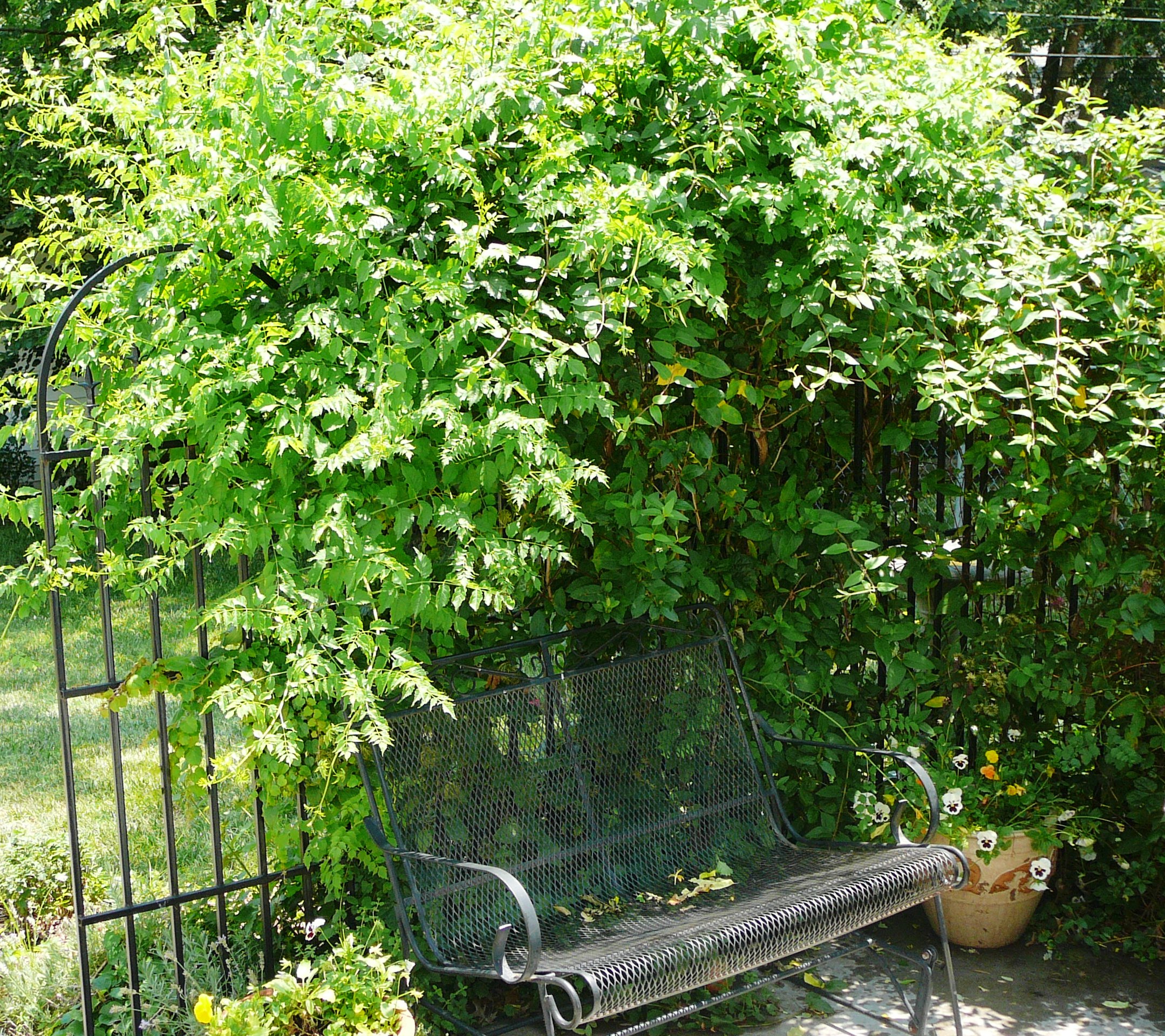
We discovered the nest, while trimming the trumpet vine, which covers the trellis around the patio. We put down our clippers and traded gardening for bird watching. For the past three weeks we delighted in the cardinal couple and their chirps and whistles. They took turns guarding and sitting on the nest and often perched on the trellis or on the glider under the vine.
What had happened? Mom and Dad had vanished and the other fledgling as well. The nest was vacant. The air was empty. Gone was purdy, purdy, purdy; chip, chip, chip; and the what-cheer, wheet, wheet, wheet, songs and calls.
We glowed under the blessing of their nearness. I wanted to see the youngsters learn to fly. Did a blackbird, blue jay, or that bold squirrel, who kept coming up close to the patio cause the tragedy?
I was going to write a blog about the fruitfulness of summer. Instead I buried the bird in the garden next to the zinnias and wondered where the cardinals had flown and how they were doing. I hope they begin again in a safer place than my backyard has proved to be.
It has been a tough week. A seventeen year boy was killed in a car accident. A family gathered to remove life support from their beloved. A woman, whose organs have begun to shut down, makes a last journey home to be with family. Twenty seven people die in an Afghan hospital when a bomb explodes. In Minot, North Dakota, the Souris River rises to snatch its prey – over 4000 homes flooded, eleven thousand residents have evacuated.
You know. You know. In the midst of life we are in the midst of death. A squirrel carrying off a bird is in the way of things. And so hearts, breaking from love and loss, are in that same way of things – life ending, people and things we love being destroyed, wearing out, wasting away.
So I say look while you can. Pour out the precious oil of your loving attention on what is before you. Allow yourself to be anointed ahead of time for the deaths you will witness and mourn, including your own. Hold your dear life close with open arms. You can always trim that trumpet vine later.
Share this:
Posted in Animals, Christianity, Contemplation, prayer, faith, The praying life
Tagged abundance, cardinals, death, letting go, mourning, suffering
Coffee with Wendell Berry
We meet at dawn when the air is cool and resonates with chirps and whistles, caws and clucks. A woodpecker drills down the block. The scalloped edges of clouds glow in the eastern sky.
Wendell speaks. I listen. Today he talks of man’s overriding desire.
The fullness of a cup equals
that of the sea – unless the mind
conceive of more, longing for women
in disregard of the limit
of singularity, gluttonous beyond
hunger, greedy for money in excess
of goods, lusting for Heaven
in excess, …
I put down my cup, avoiding his eyes, while he continues.
And so the mind
grows a big belly, a sack full
of the thought of more, and the whole
structure of enough, of life itself,
which is never more nor less
than enough, falls in pieces.
I stare into the mirror at the full belly of my mind, folded upon itself, captive by its hungers, stuffed, yet ceaselessly reaching out its restless tentacles to enlarge its holdings – a mind so full and yet so vacant, so satiated and yet so fretfully incomplete.
I see the whole structure of enough demolished, blown and blasted, and I in dull stupor, ignorant of the gracious sufficiency sweeping over me with each drawn breath.
Wendell sips and watches me a moment, as if to gauge my strength, and then goes on:
In the name of more we destroy
for coal the mountain and its forest
and so choose the insatiable flame
over the green leaf that within our care
would return to us unendingly
until the end of time.
Wendell, I say to the poet farmer from Kentucky.
Wendell. I reach across the table and take hold of his hand as though I were drowning.
Wendell,
teach me to tend the green leaf
before it is too late.
Let the same mind be in you that was in Christ Jesus, who, though he was in the form of God, did not regard equality with God as something to be exploited, but emptied himself… Philippians 2: 5-6
This post includes excerpts from a poem by Wendell Berry, 2008, II, Leavings, p. 106.
Stay in Touch: lross@fromholyground.org
Like on Facebook
Related articles
- Stop It! (theprayinglife.wordpress.com)
Share this:
Posted in Justice, spirituality, The praying life
Tagged care for earth, greed, lust, mind, Wendell Berry
Resurrection’s Rude Affront
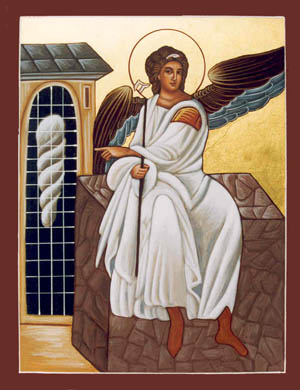
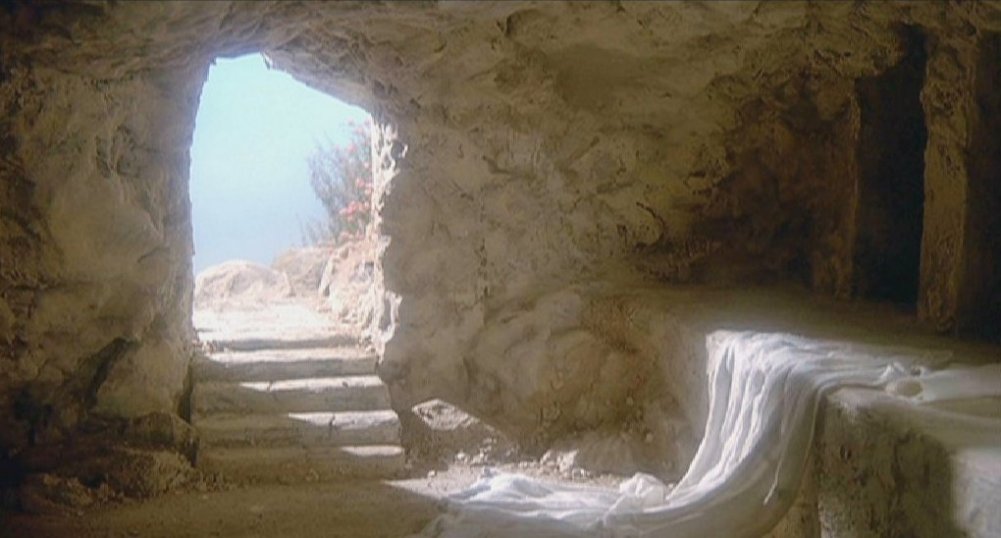
But he said to them, ‘Do not be alarmed; you are looking for Jesus of Nazareth, who was crucified. He has been raised; he is not here. Look, there is the place they laid him. But go, tell his disciples and Peter that he is going ahead of you to Galilee; there you will see him, just as he told you.’ So they went out and fled from the tomb, for terror and amazement had seized them; and they said nothing to anyone, for they were afraid. Mark 16: 6-8
It is no wonder that they didn’t get it at first.
The distance from his line to theirs
is years of light –
from sorrow to joy,
despair to hope
death row to picnic in the park.
We still don’t get it.
We still haven’t made the perilous journey
beyond the edges of the known territories.
We want mostly to slouch around the tomb
spicing up death
dissecting sorrow.
Misery is kin.
Failure familiar.
But the man acquainted with grief
is intimate with gladness.
And when they arrived,
he was gone.
Of course,
just when you think you are going to put your hands
on divinity,
just when it seems to be holding still enough
to catch
just when swirling matter and energy
hesitates
pauses
it’s gone to Galilee.
And we are left holding the spices.
Best make a pie
for death will not lie down
to wear grief’s flavor.
There is a joke here,
a cosmic practical joke.
If you go to the tomb
to tend to the dead
and talk to the angel,
you risk losing everything
that holds your life together.
But after you have already
lost most of it anyway
in the event that has brought
you to death’s house,
you really haven’t much to lose.
It is the suffering, the anguish
that has you scurrying at dawn
to touch for one last time
your love.
It is there you may see angels,
when all hope is lost,
all reality laid low.
Then the words of angels
will strike you,
crack you
open
and leave you spilling
down the sides of mercy.
Someone is laughing
and you still damp with tears
had hoped to spend the night
in sorrow’s arms.
A rude affront to ones
adjusted to the gloom,
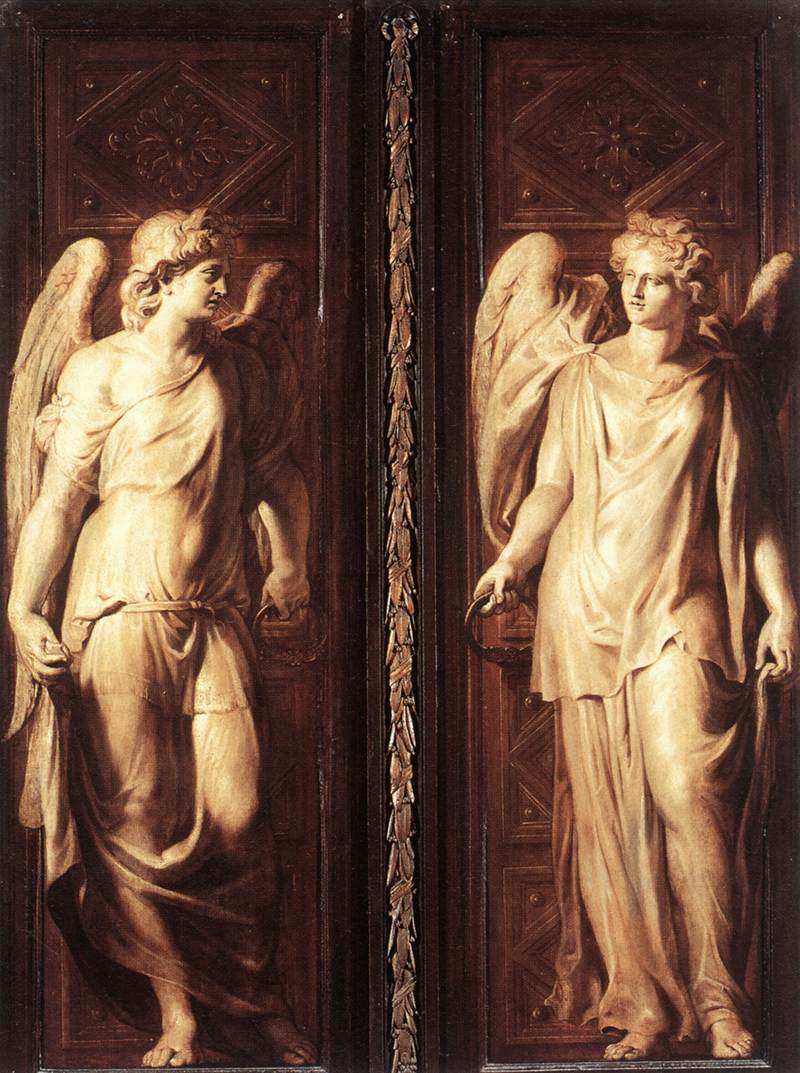
this grinning angel,
garish almost in his gleam.
This post is excerpted from Quem Quaeritis?Whom Are You Seeking by Loretta F. Ross. This readers’ drama has been performed extensively, including a performance by the Metropolitan Memorial Methodist Church in Washington, DC.
The Sanctuary Foundation for Prayer
Read more about prayer www.fromholyground.org,
Contact the author lross@fromholyground.org, www.fbook.me/sanctuary
Follow at http://twitter.com/lfross
Share this:
Posted in Easter, faith, Resurrection, The praying life
Tagged dying to self, empty tomb, Galilee, Jesus, Mark 16: 6-8, resurrection, wonder
A Spare, Bare Love
Spring is coming, maybe. A man, whom much of the world will declare is God, is making his way inexorably to death. He is going to do that ordinary thing people do everyday: he is going to suffer and die.
What makes this different is that it is God, who is doing it, and God overcomes the sting of it all by being God, by being One who attains victory, not by escaping evil or by beating it to a pulp, but by surrendering to it and going right through the heart of it, while remaining God.
As we watch Jesus walking toward the cross, we call out: “Don’t do it. Don’t go that way. And for heaven’s sake, don’t ask us to do it, too.” But he, who has set his face like flint, will not hide from the insult and spitting. No, the amazing claim is that this gray day, this aging body, this meager life, this broken world houses glory. And our reluctant following after Jesus is grounded in the slim hope that somehow, some way, this is true.
Spring doesn’t come from some far distant place like an eagerly awaited guest bringing exotic presents. Spring recoils, bounces up from the heart of winter, and jiggles before us like a jack-in-the-box. The joke is on us.
We strain to turn the crank that sets free joy, and just when our guard is down and we think life is only a meaningless turning to an idiotic tune, out pops Jesus, winking his eye. “Now, die!” he says. We, who thought we were chasing joy and were hot on its trail, find ourselves swallowed up by Life and dwelling in the inner parts of the God who creates joy. . . .
Amazingly, God wants to be with us and has gone to great lengths to get our attention, even condensing divinity to fit into a mortal being. And that is almost more than we can bear. What do we know about being company for God? For thousands of years we have been trying to get it right.
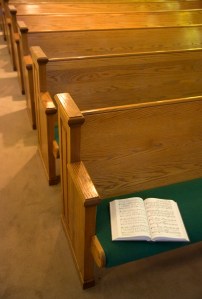
Someone hears a Word from the Lord and says: “Here do it like this. Here are the answers we are seeking.” We give names to Truth. We compose prayers, and rituals. We sew up little suits for Truth to wear. Over time Truth grows beyond the suits. Its legs stretch below the pant cuffs. Shirt sleeves ride up to the elbows. We try to stuff Truth back in its tearing clothes. We sew patches here and there. We get into fights about the right color of patches. We pay more attention to the clothes than to Truth.
Truth condescends to wear the forms we give it, only briefly. Jesus bursts the wineskin of the tomb we called death. The church shudders, draws in its breath and exhales, bursting its seams. Some panic. Some become weary and simply turn away.
When Truth as we have known and cherished it begins to grow beyond the forms which have mediated it for us; that is, language, institutions, and rituals – we may shrug our shoulders and walk away, feeling betrayed.
For a good part of the journey our relationship with the Holy is largely self serving. We seek God for our and others’ benefit. Then during this tedious lent we go seeking help and find a forlorn God carrying a cross.
Jesus asks, “How long have I been with you and you still do not understand? I want to be with you – not just to bring you peace, joy and good, but even more, because I need a place to lay my head. Will you stay with me one hour?”
“We usually begin our acquaintance with God from the outside in. Jesus is external, beyond us. I learn about God from the historical record, the witness of the church, scripture – through forms, rituals, disciplines, words, symbols. Could it not also be possible to know God from the inside out? To experience God from God’s interior reality, a reality which the forms seek to represent or express? “Where are you staying?” John’s two disciples ask Jesus. “Come and see,” he says. And they went and saw where he lived and remained there with him that day. (John 1: 38-39)
How would it be for you to live in the place where Christ lives? To eat and sleep and move about in his home?
The shift from knowing Jesus from the outside in to the inside out may be perilous. The structures of meaning, categories for naming and holding one’s experience and truth, begin to disintegrate. They no longer work to contain one’s experience of self and Christ. We may feel confused. What was certain and absolute seems less so. We may feel abandoned by the God of our past experience. We may think we are losing our faith.
Spiritual growth may involve the pain of withdrawal we feel, as God is yanking our cherished means of knowing Divine Reality away from us. Our spiritual sense is still too unrefined and accustomed to spiritual glitz to appreciate the more subtle flavor of pure faith. Hence we may feel aridity and dullness.
As God calls us away from familiar ways of knowing God what is left? Nothing but loss and a cross on hill with a dead man hanging from it? Stay there a bit longer. Wait. Be confused. Consent to not knowing or understanding.
Something you cannot even conceive of is preparing to spring up. Something so new, so radically different your mind cannot name is sending out roots in the silent darkness. Tiny tendrils are thrusting through the heavy earth, threading their way around stones to living water. Wait some more.

Oh, it’s hard to bear the ambiguity, the urge to plow up the soil and rip out the root, to hold it to the light, dissect it, name its parts and feel that secure sense of power and control where we can say this is this and that is that. Yet we can wait. We can trust until it stands before us in the morning sun. Then we reach in joy to touch once more our Beloved.
“Don’t cling to me,” he says. (John 20:17)
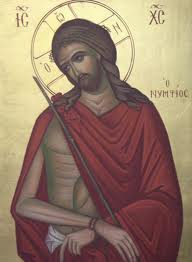
Here is a spare, bare love. All that is left is a man walking alone carrying what will kill him, the merciless weight of mortality. Here is only a naked soul surrendered to God, slung from the pillar of its own predicament.
If God could enter into our humanity with humble love, can it be too much for us to do the same? There is no other way into the Kingdom.
Here this is what is so: we all screw up. We all are limited and frail. And we can rejoice, because we do not have to lie about it anymore.

Spring tenses in the roots of the pear tree. And all who were ever carried off in the teeth of jealousy or simply in the way of things, all innocence defiled, all vulnerability exploited sink with a sigh into a white dawn that stretches like a shroud wound round the world.
“Come follow me,” the Dawn whispers. And we are invited to take another step into that place beyond knowing, beyond feeling where everything really is all right.
Excerpted and adapted from Letters from the Holy Ground, by Loretta F. Ross (Ross-Gotta)

The Sanctuary Foundation for Prayer
Read more about prayer www.fromholyground.org,
Contact the author lross@fromholyground.org, www.fbook.me/sanctuary
Follow at http://twitter.com/lfross
Share this:
Posted in Easter, Good Friday, Lent, The praying life
Tagged christ, crucifixion, God, Jesus, Religion and Spirituality, Ritual, truth
Stop It!
I woke to a list of tasks and projects to complete – important, worthwhile, necessary duties.
But the Holy One said, “Rest.”
I argued. “Lord, I have to do this. I need to get that done. And the yard needs raking.”
“Stop!” the Lord said to me. Stop it.
So I turned on myself, flaying myself with guilt and shame. “What’s wrong with you? Why can’t you get more accomplished?”
“Shabbat.” God said. Shabbat.
We drain ourselves with too much doing, striving, and succeeding. We push past our limits and strain our bodies and make ourselves sick. The neglected soul shrivels and turns dry and hard like the dusty, wrinkled slice of apple I swept up from under my table.
Shabbat or Sabbath means literally to stop. Interestingly, the Hebrew “Shabbat” sounds a little like “stop it.”
Remember the Sabbath Day and keep it holy. Six days you shall labor and do all your work. But the seventh day is a Sabbath to the Lord your God; you shall not do any work – you, your son or your daughter, your male or female slave, your livestock, or the alien resident in your towns. For in six days the Lord made heaven and earth, the sea, and all that is in them, but rested the seventh day; therefore the Lord blessed the Sabbath day and consecrated it. Exodus 20:8-11
What Israel learned from the fourth commandment is that Sabbath rest is an alternative to aggressive anxiety, writes Walter Brueggemann in Journey to the Common Good (pp 25-26) .
Most Christians think of Sabbath as a day of worship, which may actually turn into a day of production, activity, and achievement, as many clergy will tell you. Though church seemed long and boring to me as a child, endless Sunday afternoons at my Mennonite Grandmother’s home, sitting on a couch with prickly upholstery and listening to the clock tick was not an improvement. At least at church we had music. At grandma’s my brother and I itched and fidgeted to go outside and play.
However, at its origin, Sabbath was not about worship. Brueggemann continues, “It is about work stoppage. It is about withdrawal from the anxiety system of Pharaoh, the refusal to let one’s life be defined by production and consumption and the endless pursuit of private well-being.”
To cease working for a day is an act of defiance in a godless system of aggressive production and accumulation. To keep Sabbath is an act of rebellion against Pharaoh’s kingdom of scarcity where there is never enough. To keep Sabbath is a statement of faith in the abundance and provision of the Kingdom of God, where sharing by all will mean scarcity for none. Finally, “to stop it” is an act of obedient trust in God’s goodness, as one rests and enjoys the wonder of all that God has made.
Recently, people, who come to me for spiritual guidance, seek not so much counsel or suggestions for how to pray, but, rather, the permission and opportunity to be still and rest in God.
A woman tells me, “I think what I need today is to just be quiet and for you to lead me in meditation.” A little music, Psalm 27, and an extended silence followed.
We sat together facing our internal distractions and anxious mental sorties away from our intention of presence to God. We calmed our fretful souls, and held ourselves steady before the voluminous mystery of love. Over time this Sabbath being, this doing nothing, will change the quality and the character of all our active doing. By disengaging from Pharaoh’s system of scarcity and anxiety, we root more deeply into the realm of the endless mercy and providence of the Holy One.
Here is a god, who had so much fun doing and creating that he took a day off in order to rest and delight in his own handiwork. Then God, tickled with himself, commanded all his creation, including livestock and resident aliens, to enter into the joy of such rest. “Go outside and play. Take a look at what a marvelous universe I have made. I can’t get over how wonderful it all is.”
As the woman, who needed rest, and I participated together in the wonder of the gift of our being, the silence thickened, ebbed and flowed, smooth as satin and softly throbbing. We drank deeply from that well. When the session came to an end, we drew back reluctantly from the living water.
“You were very thirsty?” I asked. Yes, she nodded.
“Me too.” I said.
Learn by little the desire for all things
which perhaps is not desire at all
but undying love which perhaps
is not love at all but gratitude
for the being of all things which
perhaps is not gratitude at all
but the maker’s joy in what is made,
the joy in which we come to rest.
Wendell Berry
May you discover the maker’s joy in your Sabbath rest.
Shabbat Shalom!
“In returning and rest you shall be saved.
In quiet and trust shall be your strength.” Isaiah 30: 15
This is the second in a series of posts this year on
Isaiah 30:15. Read the first post on this verse here: Returning
The Sanctuary Foundation for Prayer
Read more about prayer www.fromholyground.org:
emaillross@fromholyground.org,
Follow at http://twitter.com/lfross
Share this:
Posted in Contemplation, prayer, Lent, Sabbath, Spiritual Practices, spirituality, The praying life
Tagged Biblical Sabbath, Isaiah 30:15, Prayer, rest, Wendell Berry, workaholic
Homeless
Black grackles and speckled starlings,
with yellow beaks and rusty throated chatter
clatter up and down the branches
gleaning the leavings of winter’s suet cakes.
A pile of must-read books
litter my desk and the chair before the window
where I come to pray.
Wisdom and knowledge at my fingertips,
and the perfect YouTube video of a good life,
forwarded from friend to friend,
promises to change everything.
Click here now.
How long do you stand on the street corner,
listening to the preachers and barkers?
How long do you slurp up the news,
opinions, and seductions of others?
How long do you sit on the couch
of the world consuming secondhand notions,
lies, and rumors?
When will you sit down before mystery
and invite it to come rest in your lap,
your lap, I mean, your heart and singular, scintillating body?
When do you stop singing somebody else’s song
and chasing somebody else’s god
and coveting somebody else’s experience?
When, oh when,
dear, irreplaceable you,
will you lay
yourself down in your own true,
blue bonnet strewn field of a life?
And say to the starling –
Here come, with your little orange feet and strange black eye.
How precious you are in that freckled jacket.
And I ask you,
how many prayer breakfasts,
committee meetings, and strategy sessions,
how many well-intentioned,
and not so well-intentioned,
soldiers of truth
gathering to plot their version of a perfect world
must we salute?
Just how long will it take, do you think,
for us to be safe enough
and gentle enough
and humble enough
for the shy weary God to come and lay his head?
Jesus replied, “Foxes have holes and birds of the air have nests,
but the Son of Man has no place to lay his head.” Matthew 8: 18-22
A YouTube video on Matthew 8: 18-22
The Sanctuary Foundation for Prayer
Read more about prayer www.fromholyground.org, www.fromholyground.wordpress.org
Contact the author lross@fromholyground.org, www.fbook.me/sanctuary
Follow at http://twitter.com/lfross
Share this:
Legends of Elijah, the Tishbite, Prophet Dog
The Early Years
Wake, O wake, and sleep no longer,
For he who calls you is no stranger.
Elijah was up bright and early, alert and expectant. He barked sharply before the door of his mistress. She, however, failed to rouse from her slumber. So the little prophet chewed away his frustration at the zipper on the cover of his bed until it fell open the whole length. Poking in his snout, he bit off a hunk of the white foam inside. He diced it up into nice small pieces and strewed the bits across the kitchen floor. Then he barked a while. His mistress stretched, yawned, turned over, and went back to sleep. Elijah bit off another hunk. By the time the sleeper awoke, an inch of foamfall covered the entire kitchen floor.
Imagine Elijah’s astonishment, when shooed outside, to find the whole backyard and as far as he could see, covered in white stuff like the foam in his bed. Only this was better. He could wet his throat with it and roll in it and leave his tracks. By chewing up his bed he had not only made his mistress awake, but changed the world! His heart swelled with the power of the Spirit within him.
This would be the first of many miracles in the prophet dog’s career.
Later, on that great day, he would tell Seal, the cat, “What you do inside in the kitchen has the power to change the world!” The feline, however, having been around the block a time or two, told him to save his preaching for the ravens. In one of her nine lives the old cat was Queen Jezebel’s kitty. Seal made it a policy to never worship anything.
She did vaguely remember cuddling up to the Goddess Asherah, but she hadn’t seen her for a long time, and how the stinky dog could ruin a perfectly good napping spot was beyond her.
Inquiring minds may want to read I Kings: 16-17
The Sanctuary Foundation for Prayer
Read more about prayer www.fromholyground.org,www.fromholyground.wordpress.org
Contact the author lross@fromholyground.org, www.fbook.me/sanctuary
Follow at http://twitter.com/lfross
Share this:
Posted in Animals, Contemplation, prayer, The praying life
Tagged Elijah, Religion and Spirituality