Category Archives: Spiritual Practices

Love – in Small Doses for the Sin Sick Soul #4


And we are put on earth a little space, 

That we may learn to bear the beams of love.
William Blake

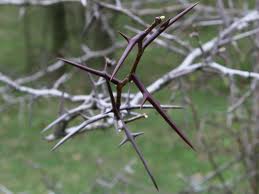
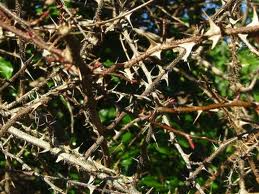
thorns

Fast


Bound

breathless and blind

open your eyes.

Unclasp the clutch

of the  hand

around your throat.

Fast

to break the fast

of the barbed hooks

and thorns

of dissolute gods

boring into the bleeding brow

of your howling  soul.

thornbush

  • Where are addictions or unhealthy attachments tying up your freedom to be available to God on God’s terms – however  God would have you?
  • What dissolute, lying gods have their merciless hands around your throat?
  • Will you open your eyes?

______________________________

Note to readers:  This blog is part of a series of Lenten “short takes” on the themes of lent, which follow more or less the lectionary Scripture lessons for this season. Like a note you find tucked under the bark of a tree, a lozenge to let melt in your mouth, an amulet to wear around your neck, I hope these little reflections may hold a small dose of truth or comfort  or challenge for your life on the way to Easter.

In the abundance of words which inundate us daily, it is easy for the message of redemption to be buried under the latest disaster, outrage or scandal. Likewise the familiar stories and passages of lent may grow dull and trite to ears and hearts already stuffed with words. 

I have noticed in my work as spiritual director that it is hard for many of us to take in the goodness and grace, as well as the challenge of the story of Jesus and God’s redeeming love. Perhaps we need to titrate the gospel. Sometimes a well- timed, tiny dose, carefully administered, may be what the Physician orders for our healing. And so slowly we build up our tolerance for love and more and more joy finds the faith in us through which to invade our being.

Dose titration:  adjustment of the dose until the medication
has achieved the desired effect

Love – in Small Doses for the Sin Sick Soul #3


And we are put on earth a little space, 

That we may learn to bear the beams of love.
William Blake

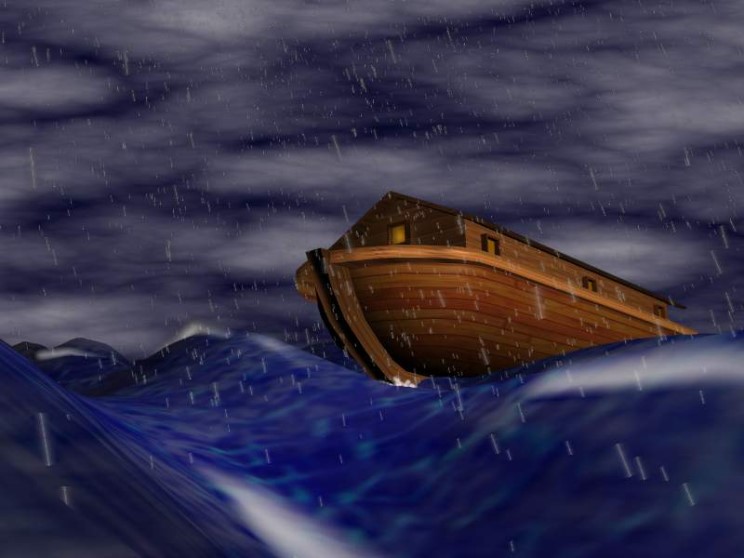
NoahsArkPitch

The Flood

It crept up slowly.

You did not notice at first,

though your feet were always cold ,

socks soggy.

Accustomed to the damp

you pulled on galoshes

then hip waders.

You didn’t know why

you were always so tired

like walking against a strong current, you’d say.

By the time the force of the tide

sucked  your heart

out by the roots

it was too late.

You plunged

into that dark torrent

gasping for air

clawing

for something to hang onto.

The ark you

unbelieving

had refused

rocked  above the waters.

The old man leaned

over the side

extended  a wooden

beam.

I see you are ready now, he said.

Grab on,

there is room for one more.

__________________

Is something threatening to drown you, which you keep ignoring?
What keeps you from reaching out for help?
If you are safe in your arc, is there someone out there who needs a hand up into the boat?
What are you waiting for?

______________________________

Note to readers:  This blog is part of a series of Lenten “short takes” on the themes of lent, which follow more or less the lectionary Scripture lessons for this season. Like a note you find tucked under the bark of a tree, a lozenge to let melt in your mouth, an amulet to wear around your neck, I hope these little reflections may hold a small dose of truth or comfort  or challenge for your life on the way to Easter.

In the abundance of words which inundate us daily, it is easy for the message of redemption to be buried under the latest disaster, outrage or scandal. Likewise the familiar stories and passages of lent may grow dull and trite to ears and hearts already stuffed with words. 

I have noticed in my work as spiritual director that it is hard for many of us to take in the goodness and grace, as well as the challenge of the story of Jesus and God’s redeeming love. Perhaps we need to titrate the gospel. Sometimes a well- timed, tiny dose, carefully administered, may be what the Physician orders for our healing. And so slowly we build up our tolerance for love and more and more joy finds the faith in us through which to invade our being.

Dose titration:  adjustment of the dose until the medication
has achieved the desired effect

Love – In Small Doses for the Sin Sick Soul #2

And we are put on earth a little space, 
That we may learn to bear the beams of love
 – William Blake


expulsion 2

Leaving Paradise

Trip

fall

splat

face down into

the ground.

Sink into softness

that gives

and for

gives.

Come home

to your loamy beginning

and your end.

For your reflection: Recall a time when you fell, took a hard blow, or were brought down by some loss or disappointment. What awareness did you have of your own brokenness and shame?  Could you forgive yourself? What did you learn in your humiliation? How did you change?

Note to readers:  This blog is part of a series of Lenten “short takes” on the themes of lent, which follow more or less the lectionary Scripture lessons for this season. Like a note you find tucked under the bark of a tree, a lozenge to let melt in your mouth, an amulet to wear around your neck, I hope these little reflections may hold a small dose of truth or comfort  or challenge for your life on the way to Easter.

In the abundance of words which inundate us daily, it is easy for the message of redemption to be buried under the latest disaster, outrage or scandal. Likewise the familiar stories and passages of lent may grow dull and trite to ears and minds already stuffed with words.

I have noticed in my work as spiritual director that it is hard for many of us to take in the goodness and grace, as well as the challenge of the story of Jesus and God’s redeeming love. Perhaps we need to titrate the gospel. Sometimes a well- timed, tiny dose, carefully administered, may be what the Physician orders for our healing. And so, slowly, we build up our tolerance for love and more and more joy finds the faith in us through which to invade our being.

Dose titration:  adjustment of the dose until the medication
has achieved the desired effect

Love – In Small Doses for the Sin Sick Soul # 1


Crosswalk

Wait

for the sign

to change

step off the edge

For your reflection: What signs in your life have changed, which  call you to step off the edge of certainty and comfortable beliefs?

Note to readers:  This blog is part of a series of Lenten “short takes” on the themes of lent, which follow more or less the lectionary Scripture lessons for this season. Like a note you find tucked under the bark of a tree, a lozenge to let melt in your mouth, an amulet to wear around your neck, I hope these little reflections may hold a small dose of truth or comfort  or challenge for your life on the way to Easter.

In the abundance of words which inundate us daily, it is easy for the message of redemption to be buried under the latest disaster, outrage or scandal. Likewise the familiar stories and passages of lent may grow dull and trite to ears and minds already stuffed with words.

I have noticed in my work as spiritual director that it is hard for many of us to take in the goodness and grace, as well as the challenge of the story of Jesus and God’s redeeming love. Perhaps we need to titrate the gospel. Sometimes a well- timed, tiny dose, carefully administered, may be what the Physician orders for our healing. And so, slowly, we build up our tolerance for love and more and more joy finds the faith in us through which to invade our being.

Dose titration:  adjustment of the dose until the medication has achieved the desired effect

Take and Read

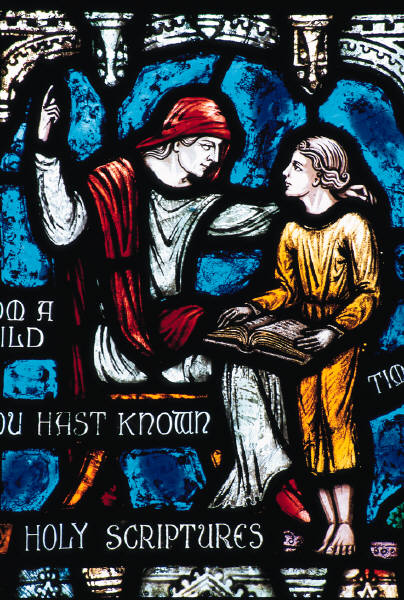
The sheer activity of reading scripture … is itself an act of faith, hope, and love, an act of humility and patience. It is a way of saying that we need to hear a fresh word, a word of grace, perhaps even a word of judgment as well as healing, warning as well as welcome.  To open the Bible is to open a window toward Jerusalem, as Daniel did, no matter where our exile may have taken us.         ~ After You Believe, N.T. Wright

A temptation in the contemplative life is to step away from our theological and Biblical underpinnings and become self absorbed in one’s own experience of God. Prayer, meditation, and contemplation are important practices, but without turning and returning to the Word of God in scripture we may lose our bearings. The witness of those who came before us, which we find recorded in the narratives, histories, wisdom literature, and poetry of the Bible forms us in the mystery of the human experience of the Holy One.

Yes, the Bible is sexist, racist, contradictory, bound by historical events, political realities, tribal animosities, tedious, nonsensical, and  a host of other limitations imp0sed by the motley crew of human beings, who have put their hands on it. The Bible also has the hands of the Holy One on it. It is  shot through with the sublime and transcendent Holy Spirit, who has chosen to associate with our species  (only God knows  why) and expose itself to all our messes, as it calls us and holds us accountable to a Being  greater than we ourselves.

Reading the Bible is like opening up a dusty old trunk in the attic full of family records, dim photos, grade cards, farm records, yellowed newspaper clippings, diaries,  bills of sale, and baby booties. Why did they save this? What was so important about this clipping that someone put it away so carefully? Oh, look, there is great great grandpa by the old homestead. Hey, listen to this entry. It’s about great uncle Harry’s trial for stealing horses, “They led the disheveled man in chains into the courtroom…”

In scripture we learn about our roots, who God is and who God calls us to be. We come to know the nature of God, the limitations and weakness of the creation and what it means to be in right relationship with God, with ourselves and with one another. Scripture is a privileged place of meeting the Holy One and a powerful means of spiritual growth.

The discipline of daily Bible reading and reflection holds our feet to the fire. We are unable to squirm away from confronting difficult texts, hard sayings, and truths we may not want to hear. Being moored to scripture keeps us from floating off into philosophical abstraction and metaphysical flights of fancy, by anchoring us to the specific ground of God’s revelation in time and space in particular communities and individuals. Likewise reading scripture encourages us to pay attention to God’s revelation in the concrete messy details of our own lives.

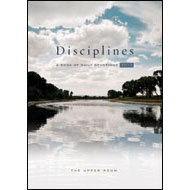
Here is a resource for daily Bible Study I highly recommend.

Disciplines – A Book of Daily Devotions 2013.  Find light for your daily walk with God through The Upper Room Disciplines. In this best-selling devotional book, 53 writers from diverse Christian backgrounds and locales help you explore the Bible’s message for your life. 

New in 2013: Each week opens with a Scripture Overview, followed by four questions or suggestions for reflection for personal or small-group use. Widely available online and at your local bookstore in Kindle and paperback, Disciplines 2013 makes a thoughtful gift for Sunday school teachers, pastors, or anyone who wants to mine the rich treasures of scripture.  

I am honored to again be invited to contribute a week of reflections on the readings from the Revised Common Lectionary. But don’t buy the book just to read my thoughts. You will discover fifty three other writers, waiting to guide you into the transforming encounter with the Word of God. ~ Loretta F. Ross Take and Read
Here is a little story about the power of reading the Bible.

I  was . . . .weeping in the most bitter contrition of my heart, when, lo, I heard the voice as of a boy or girl, I know not which, coming from a neighboring house, chanting, and oft repeating, “Take and read; take and read.” 

Immediately my countenance was changed, and I began most earnestly to consider whether it was usual for children in any kind of game to sing such words; nor could I remember ever to have heard the like. So, restraining the torrent of my tears, I rose up, interpreting it no other way than as a command to me from Heaven to open the book, and to read the first chapter I should light upon.

For I had heard of Antony, that, accidentally coming in whilst the gospel was being read, he received the admonition as if what was read were addressed to him, “Go and sell that thou hast, and give to the poor, and thou shalt have treasure in heaven; and come and follow me.” And by such oracle was he forthwith converted unto Thee.

So quickly I returned to the place where . . . . I had put down the volume of the apostles, when I rose thence. I grasped, opened, and in silence read that paragraph on which my eyes first fell, — “Not in rioting and drunkenness, not in chambering and wantonness, not in strife and envying; but put ye on the Lord Jesus Christ, and make not provision for the flesh, to fulfil the lusts thereof.”

No further would I read, nor did I need; for instantly, as the sentence ended, — by a light, as it were, of security infused into my heart, — all the gloom of doubt vanished away.      ~ St. Augustine, Confessions

Not Ten Best Practices for Prayer

prayer..

“Your writing has changed lately,” a friend who reads these blogs said last week. “Is that related to the retreat you went on?”

I have been thinking I ought to write a more accessible, timely post, something about the weather we have endured here in Kansas,  the contentious world of politics, an entertaining piece about my dog, or a list: Ten Best Practices for Prayer. Copy Writer tells me that lists always get lots of views and shares.

Yet, if this is a blog about prayer, it ought to reflect the experience of one who is praying. So at least for today I bring you another update from the silence. One word is really all I have to say: longing, deep vast yearning, reaching toward what I cannot really name.

And as some of you know, my friends, such longing is really kind of awful. Awful in the sense of how it stretches and stretches one ever beyond one’s self. Awful in the sense that it has no end. Awful in the sense that it is out of one’s control or naming. Awful in the sense that it is love that ever seeks its fulfillment in the beloved.

The writer of the Cloud of Unknowing called such prayer a naked intention of love directed to God alone.

 ___________________

A Failure to Communicate

I would like to stand and hold my balance on the threshold
with the wind whistling through the space
where my heart used to be
and watch the birth and death of beings
the coming and going of existence
and somehow fasten myself in that place,

the Alpha and Omega, the beginning and the end.

I have had it with these little cages
we stuff full of significance
and string out across a page
like a rumbling circus parade of gaudy wagons drawn by camels.

The penned beasts of meaning pace back and forth
while we snap the whip and totally miss the show.

Nor is communication a fortune cookie “thought for the day.”

Flirting on the edge of my awareness
where words dissolve
and nothing separates

love broods.

I bang against the bars.
Let me out.
Set me free of me.

Why I long to escape the confines of language I do not know
for when I meet you there,
in that other country, our native land
I will have nothing to say or offer

because you will already have all you ever need.

____________

I tell you this: it is more profitable to your soul’s health, more worthwhile, more pleasing to God and the hosts of heaven – yes, more helpful to your friends, natural and spiritual, dead or alive – that you should have this blind outreaching love to God himself, this secret love pressing upon the cloud of unknowing, that you should have this as your spiritual affection, than that you should contemplate and gaze on the angels and saints in heaven and hear the happy music of the blessed.     The Cloud of Unknowing and Other Works


The Closing

A life time is like a flash of lightening in the sky
rushing by like a torrent down the steep mountain.  Gautama Buddha

It is done.
The message glowed in my palm.
The screen went dark.
The home full of light and memory
had passed neatly out of our hands.

Half a day’s drive north
we rose with the birds
to wash our faces
walk to our cushions
sit in stillness
as the sun came up.

Occupied with the throb
and slosh
of humans being,
minds alert
to the swell and surge
of experience,

we did not gulp or grasp,
but lifted our forks slowly
to savor what was on our plate.

Carrying our cups attentively
like offerings of fragrant brew
we got insights
we got bored
our necks ached
our necks really ached
our legs cramped
our minds sank.

Fur grew in our brains.
A cat named Torpor climbed up our bodies,
stretched herself across our shoulders, purring.

We stepped carefully along the drive,
the wooded path, the lawn.
When the bell startled
the still air and the finches flew,
we returned to sit
and then to walk
and sit again.

Up against our limits for the taste of God,
we picked up our hand held devices
just to check the time
and well, maybe, any messages
and then like hopeless junkies
shot up
with the news.

And, Lord, like Peter, (say it)
we slept.
We could not stay awake one hour
to watch our own suffering
let alone yours.

And the tall ones,
full of grace, like some exotic species,
came and moved among us.
We tried not to grasp
their beauty with our eyes
or covet their youth.

When they left too soon,
we, shoulders shaking, sobbed,
Oh no. Oh no.
Oh please don’t go.

But they with other roads
to travel and business
of their own stepped easy
over the threshold, saying

Let go. Let go.

And Mary said,
They have taken away my Lord,
and I do not know where they have laid him.

And the angel said, He is not here. He is risen.

And Jesus said,  Don’t
cling to me.

And raccoon, rotund and tight with bloat,
lay on the side of the road
and said,  See my insides are turned out.

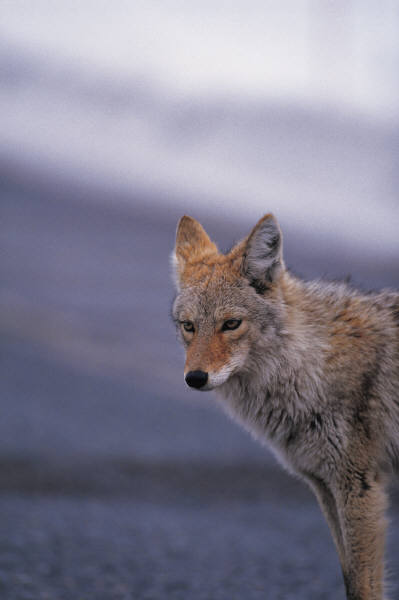
And Coyote
trotting briskly across the clearing in bright midday
paused to look behind his shoulder
then disappeared into the woods.

A thick snake of ancient sorrow
rose up in us from miles below the surface
twisted, heaved us double with its force.
A wind whistling loneliness
whined and keened through all the spaces
in our bones.

every
thing
is going
back
and forth
across
a threshold

coming into existence
and going out of existence

while the dying rising one stands ever
on the brink
offering
a torn fragment of what is so

lost opportunities
things we have done we cannot change
our loved ones whose graves we want to tend

 we gaze at the ragged piece of our existence
resting in his tattered palm

Jesus, how will this ever be enough
to satisfy our hunger,
or slake this sorrow?

 Take. Eat, he says.
Be healed of thy affliction.

Thou, who gives and bears away,
grant us mercy
to take each moment
to our lips
and drink the cup you give
bitter,  sweet.

Give us,
O Sentry at the terminal,
where all things come and go,
the appetite and wit
to swallow and digest
entirely
what is so.

________

You sweep people away like dreams that disappear. They are like grass that springs up in the morning. In the morning it blooms and flourishes, but by evening it is dry and withered. Psalm 90: 3-6 New Living Translation

This existence of ours is a transient as autumn clouds. To watch the birth and death of beings is like looking at the movements of a dance. A life time is like a flash of lightening in the sky rushing by like a torrent down the steep mountain.  Gautama Buddha

Do not let your hearts be troubled. Do not let them be afraid. John 14:27

How To Eat A Piece Of Chocolate

This image was selected as a picture of the we...

Wake up. Pay Attention.
Jesus

It matters little to the soul in what manner
it is obliged to abandon itself,
and what the present moment contains;
all that is absolutely necessary
is that it should abandon itself unreservedly.
Jean Pierre de Caussade

Don’t gobble it.
Don’t do anything else while you are eating it.

Do not read email.
Do not watch TV.
Do not adjust your makeup.
Do not drive the car.
Do not talk to someone.
Do not try to write about eating chocolate.

Sit down. (This is going to take a while.)

See the wrapper.

Examine it, noting the color, graphics, ingredients, and company information.

See the lineage of your chocolate.

A small tree is tucked under the upper canopy of the rainforest, probably in West Africa. Anchored in rich soil, bathed in high humidity and tropical heat, the cacao tree sways in the breeze. A tiny midge, bred in the tree’s decaying leaves on the forest floor, begins its journey upward to crawl within the five petals of the white, dime-sized flowers blooming directly from the trunk. After the flower fades, a pod develops, stuffed with seeds, which are picked, fermented, dried, and ground to make your chocolate.

English: Cacao (Theobroma cacao) Español: Plan...

See the farmer who planted and cared for the cacao tree.

See the workers harvesting the beans, hauling the harvest, inventing, and operating machines. See the long train of people who have brought this chocolate to your hands and at what price? How many were children? Who suffered? Who gained? What has it taken to bring this smoky rich flavor to your mouth? How many miles has it traveled on someone’s back, by cart, conveyor belt, crate, ship, plane, or truck? How many hands has it passed through – plantation owner, shipper, factory worker, buyer, grocery stocker, check out clerk – to bring it to your hand?

Say thanks.

Relax. There is no rush here. Not now.
You hold eternity in your palm.

To pay attention and be fully present in each moment is to meet eternity. For each moment offers in its endless treasures all you will ever need for that moment. Some call this the sacrament of the present moment, or being present. Others call it mindfulness. Jesus called this quality of trust-filled awareness the kingdom of God.

Remove the wrapper.

Feel the weight, see the color and shape of the chocolate. Lift it to your nose and sniff its fragrance. Do you catch the whiff of forest nights, heavy with insect song and stars?

Run your finger over the chocolate. Is it smooth like satin, rough, or molded in some way?

Break off a piece. See it separate and reveal its interior.

Now bring it to your mouth.
Wait. You are getting ahead of yourself.

Slow down.

Do not eat it before you eat it.
First, bring it to your mouth to bring it to your mouth.

Pay attention to the impulse to lift your hand and the complex brain chemistry and mechanics of respiration, circulation, nerve, muscle, tendon, and bone, which perform this feat at your merest whim.

Feel the chocolate touch your lips. Run your tongue over the surface.
Press
your teeth into it until the chocolate gives itself to you
and splits in two.

Hold the forest, the flower, the midge, the wind, the suffering,
the unappeasable appetite of commerce, a thousand sweaty hands,
and a thousand sultry nights
in your mouth.

Feel them soften and release their sweet, spreading river of bitter, buttery cacao.

________________

Mindfulness is the miracle by which we master and restore ourselves. It is the miracle which can call back in a flash our dispersed mind and restore it to wholeness so that we can live each moment of life. Thich Naht Hahn

The present is ever filled with infinite treasure, it contains more than you have capacity to hold. . . .The divine will is a deep abyss of which the present moment is the entrance. If you plunge into this abyss you will find it infinitely more vast than your desires. Jean Pierre de Caussade

Writing Exercise
Eat something mindfully, awake and aware in the present moment, and write about your experience. How did you feel when you began this exercise? How did you feel when you completed it? What did you notice, experience, or learn?

Chocolate tasting selection

Friends, I will be away from writing and reading for the next two weeks . I will spend ten days in silence and meditation, practicing mindfulness, as I walk, breathe, wash my face, and eat a little chocolate.

Perhaps we will meet in the spaces of eternity in each new moment.
Until then, pay attention!

Loretta

The Writing Exercise

Write a letter to a landscape or scene you pass through today.
For example, “Dear Branner Trafficway.”

Dear Mom,

You rest now in my way.
The plastic cartons I put you in
clutter the path
from
kitchen
to office.

I step around the contents of your dismembered
life
trying not to trip,
coffee cup in one hand
sheaf of papers in the other.

Squeezing past a bin
I stumble upon
your journals
tales of trips
to the woods
wildlife sightings
what happened last Tuesday,
and how Gladys brought over a pan of sweet rolls,
still warm from the oven
poems about birds and babies
dragonflies
and things you cannot change and break your heart
word snapshots and watercolor sketches –

scattered orange road construction cones
confuse the once familiar scene.

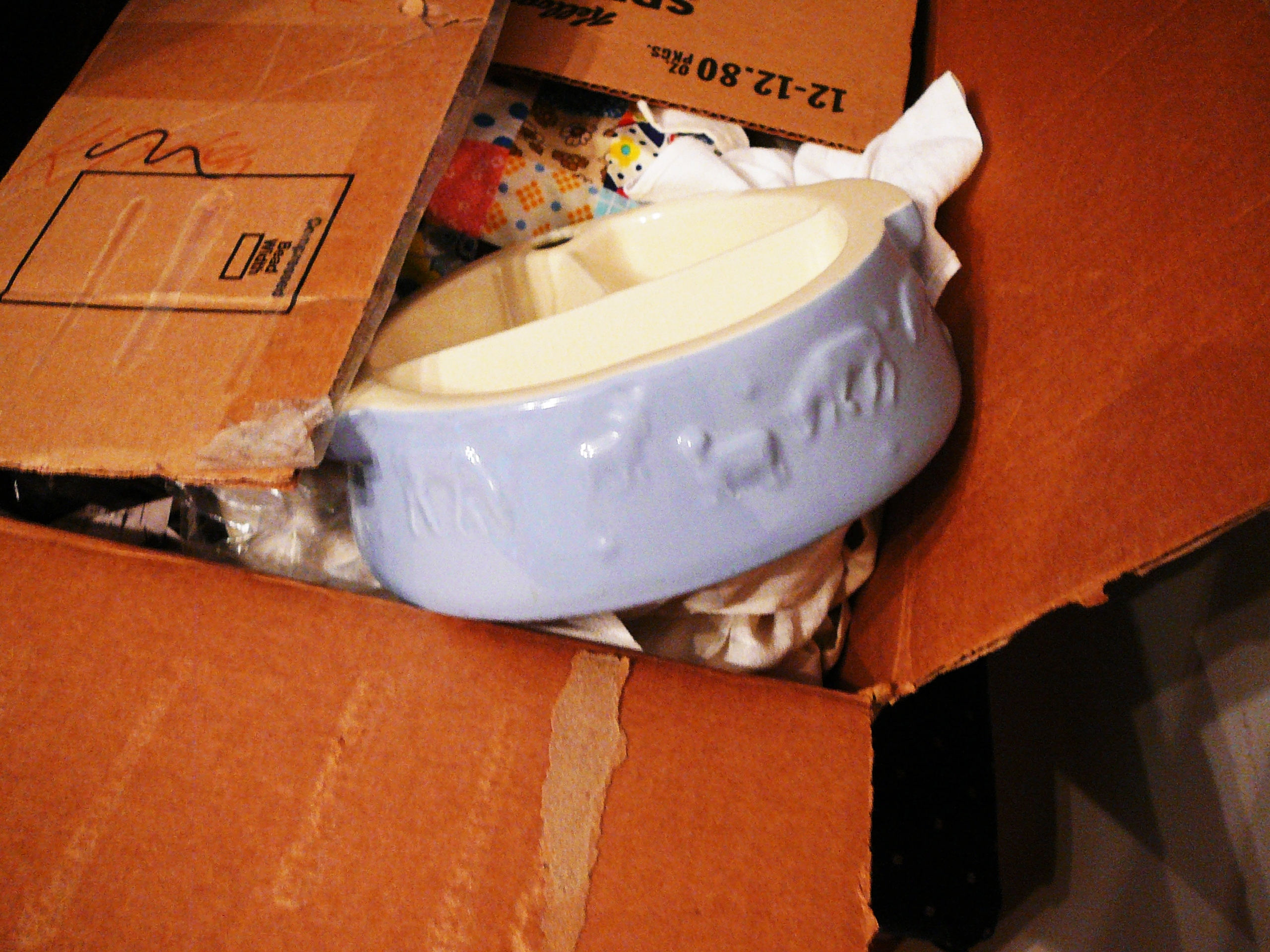
The blue china sectioned dish you fed me from,
when I kicked my legs in the high chair,
peeks over the top of another box.

Photo albums, the ducks you carved,
and all the letters and cards I ever sent you
occupy the landscape of my life
and I am no longer sure
how to get from here to there.

Periods of disorientation are part of the spiritual life Biblical theologian Walter Brueggemann tells us. Such periods precede what he calls new orientation. Brueggemann charts how the history of Israel tells the story of orientation, confusion and loss of direction, and new clarity over and over. The story culminates in the crucifixion and resurrection and then continues with the church and our individual journeys as well.

What are the inner and outer landscapes you are passing through today? Take a moment to share what you are witnessing so we all may grow closer to seeing the big picture.

Thanks to Melissa Sewell and Leah Sewell and the Topeka Writers’ Workshop for inviting me to pay attention to my landscape.

Boring Church and the Vulnerable God

There is a bit of the scientist in anyone who sets out to test in his or her own life if Jesus Christ is really all he is cracked up to be. “Prove it,” the contemplative says to God. Here are all these promises: freedom, joy, abundance, peace, wholeness, justice, truth, and life eternal. “Show me,” says the contemplative, setting out to experiment with divinity in the laboratory of experience.

In the beginning God is the object of the search. At some point God may peremptorily rise out of the test tube and take over the experiment. I find myself being dissected. My soul is flayed open by truth. I am blinded by glaring light and toasted over a Bunsen burner, where my impurities are burned away and I am distilled into my essence. I am no longer in control of this process. The knower and the known have shifted places. And truth is not something I can find, but something that has me in its grasp.

Theologian Lesslie Newbigin observes, “Reason, even the most acutely critical reason cannot establish truth.” … [This is because] You cannot criticize a statement of what claims to be the truth except on the basis of some other truth-claim – which at the moment – you accept without criticism. But that truth-claim on which your critique is based must in turn be criticized. Any claim to know truth is, therefore, simply a concealed assertion of power.” (Truth to Tell, The Gospel as Public Truth, Eerdmans, 1991, pp 29-30.)

The work of scientist Michael Polanyi reminds us that “all knowing involves the personal participation of the knower, that knowing always involves the risk of being wrong, and that the struggle to know calls for the fullest exercise of personal responsibility.” Truth to Tell,  p.51)

Instead of seeking proofs of God from reason or experience, the contemplative finds fulfillment simply and humbly dwelling in love in God’s presence.  The contemplative gives God entry into the world, not through a claim of truth, but through a believing heart. Instead of an exercise of power through the assertion of my reality over yours via dazzling argument or feats of spiritual prowess, the contemplative takes the vulnerable route of allowing God to make God’s own appeal through the context of his or her surrendered life.

I acknowledge my vulnerability when I say, “I cannot know it all. I may be wrong. This is what I see. This is what I am responsible for articulating as clearly as I can.” We might characterize the spiritual journey as the process of discovering right relationship to this vulnerability, which we meet in ourselves, others and in God.

By vulnerability I mean capable of being wounded and wrong, open to attack or damage. Our vulnerability may include our sin and temptation to evil, our failure and weakness – wherever we are not whole, wherever we fall short of the glory which is our promised inheritance as God’s children.

We can relate to our woundedness in many ways: with anger, resentment, impatience, contempt, deceit, shame, and blame. We can so identify ourselves with our vulnerability that we know ourselves only as victim. Then, committed to our suffering and stubbornly resistant to healing, we may defend our wounds with fierce loyalty.

God sends into our consciousness, into the heart of matter, Holy Vulnerability in the form of Jesus. It teaches, heals, suffers, dies, and rises saying, “Look, watch me. This is what it means to be human. It is all right. Everyone is wounded. Follow me and be healed.”

Over and over Jesus’ ministry reached out to the vulnerable ones. He brought home the lost and the misfits saying, “You belong too.” He didn’t bring them back to turn them into Jews or folks like him. He just brought them back saying, “You, just as you are, are important. You have a contribution to make. We need you. You belong.”

Loving Jesus takes away our shame for being human like nothing else can. For he shows us how to be poor, how to value and appreciate our vulnerability. He tells us the vulnerable ones will see God and inherit the kingdom of heaven. He helps us get off our high horse and come down where we ought to be on our knees.

In the painful encounter with our vulnerability and diminishment, we meet the diminished suffering God and our own holiness. For in my poverty I discover my true worth. Stripped of what I can do, what I possess, how I am known by others – all the external ways I have attempted to create worth for myself, I find my true self in the center of my humility, which is also the dwelling place of the Trinity.

I used to read my children a story about a little girl who was born with a long tail like a dragon. Various characters seek to help the child with what is perceived by some as her disability. I liked Mike the cat’s approach best. “Teach her to love her tail,” he sagely advised. He shows her how to switch her tail back and forth, wind it around the fire escape railing and hang upside down. Teach her to love her tail.

Part of the task of the church is to teach us to love our tails and God’s tail, Jesus. Spirituality without Jesus Christ is spirituality that may be resisting the fundamental truth of our vulnerability. It may be a spirituality that, well or ill disguised, is exercising power, trying to be God.

The world holds vulnerability with fear and contempt. The church ought to teach us to hold it in our arms and love it. But the church is, of course, vulnerable too.
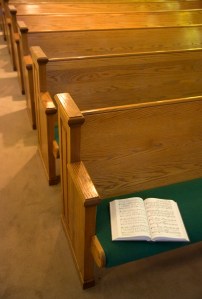
I was trying on a new hat when eleven year old Cicelia observed that you should always wear a hat to church. “It protects you from boredom, mom. The boredom rays, like the ultra violet rays from the sun are in church and sometimes at school. If you have a hat, you will be protected from the boredom.”

I hope the place where you worship is not boring. Maybe if churches had more to do with being with God and less to do with talking about God, things wouldn’t be so boring for Cicelia and others. As EvelynUnderhillobserved, “God is the interesting thing.”

A good deal of church seems to have little to do with God and is conducted as though God were, if not absent, at least very far away. Little time is given for God to get a word in edgewise. Our frantic activity and anxious busyness comprise our faithless creed that not much of anything can happen without our doing it ourselves.

Perhaps it is just too risky, too frightening. What if nothing happens? Nothing is changed or accomplished? Once Cicelia put a sign on her door painted in large red letters: KNOK or ELSE! Red paint ominously dripped from the letters like blood.

Jesus, we know you stand at the door and knock, but beware! We are resistant to transformation, devoted to our losses and the sins of others against us, and do not really trust your power in our lives.

The church will always be imperfect. It will be unimaginative and boring and rigid sometimes, because we are unimaginative and boring and rigid sometimes. Thank goodness God’s presence doesn’t depend on our winning academy awards in best Pentecost service of the year.

I have been in so many churches where you wonder why anybody comes at all. What with the dozen dusty arrangements of silk flowers and the sappy pictures of Jesus and the bad roller rink organ music you wonder what the appeal could be.

The appeal is, of course, Jesus. Jesus is there and active, because the people believe in him. Their vulnerable belief holds the door open for the vulnerable God to enter.

Knok or Else.  He is likely to walk right on in.

This post is an excerpt from my book written about learning to pray as I raised children in small town, Holton, Kansas. Loretta Ross (Ross-Gotta),  Letters from the Holy Ground – Seeing God Where You Are, Sheed and Ward, 2000,  pp 119-122.