Category Archives: Contemplation, prayer

Saved by Poetry

(Caution, rant alert.)
I am really tired of people who are in charge of things – leaders, authorities, and grown ups – fighting. I am annoyed with how much of the “news” consists of offering ringside seats at the latest knock down, drag out. I am sickened by sarcasm, cynicism, stridency and the legitimizing of fear, anger, and blame as reasonable and acceptable points of view in communal problem solving. I am annoyed by emails which trumpet, Read and weep and conclude with This is bad…..real bad….these guys MUST be stopped, stopped now, and stopped HARD!!!!
Thank goodness, April is poetry month. It has arrived just in time to save you from the black hole of my self righteous indignation.
When my brother and I picked, poked, badgered and teased each other into tears and blows at bedtime, my poet mom would holler up the stairs, “You kids settle down or I am coming up there with a stick with a bee on the end of it.” Mom rarely raised her voice or showed anger, but that image of her bounding up the steps waving a stick with a bee attached would hush us up and settle us down right smart. Just contemplating mom doing such a thing was sobering. So we turned over in our beds, sighed, and fell into the sleep we so sorely needed.
Flannery O’Conner wrote that poetry is the accurate naming of the things of God. For me that means everything, for what does not belong to God? For accuracy we must step away from bombast, pontification, egotism and fear to look courageously into what is so. Rather than exalting anger and fear and attempting to defend truth by diminishing all other competing truths, poetry invites us to gaze generously upon the reality of our common experience that points in the direction of truth, which poetry would never claim to possess, but only to love.
Poetry is the sensuous earthy praise of dirt, color, and detail. Poetry holds in its open palm the transformative reality of the winged sparks of sun bouncing off the blackbird’s belly, and the piercing sting of a stick with a bee on the end of it.
God, who consented in Jesus to be tethered to time, space, race, nation – the unique, speckled, flecked and marked human form of one homo sapiens, has in that startling incarnation blessed and made holy the spare, the absurd, and singular. In each particle of creation the deity scintillates, and truth shouts for those with eyes to see and ears to hear.
A poem has been haunting me for the past two weeks. Remembering only snatches, It’s lemonade. It’s lemonade. It’s April, I finally hunted it up. Read it out loud right now to your cat, your friend, or just for the glorious sound of it.
It’s lemonade, it’s lemonade, it’s daisy.
It’s a roller-skating, scissor-grinding day;
It’s gingham waisted, chocolate flavored, lazy
With the children flower-scattered at their play.
It’s the sun like watermelon,
And the sidewalks overlaid
With a glaze of yellow yellow
Like a jar of marmalade.
It’s the mower gently mowing,
And the stars like startled glass,
While the mower keeps on going
In a waterfall of grass.
Then the rich magenta evening
Like a sauce upon the walk,
And the porches softly swinging
With a hammockful of talk.
It’s the hobo at the corner
With his lilac-sniffing gait,
And the shy departing thunder
Of the fast departing skate.
It’s lemonade, it’s lemonade, it’s April!
A water sprinkler, puddle winking time,
When a boy who peddles slowly, with a smile remote and holy
Sells you April chocolate flavored for a dime.
-Marcia Masters
I recall this poem every April, but I probably hadn’t read it for more than 35 years. Hmm, things have changed. Some of the images sound dated. Scissors grinder? What’s that?
The polite soft spoken man showed up every spring with his neat kit and folded soft rags that smelled of oil. He would sit on the front steps, while I watched him sharpen my mother’s scissors. A small man with creases in his face, he worked carefully, thoughtfully as he ground, polished, oiled and then replaced his tools, and folded the cloth he wiped the scissors with. I smell the oil and metal, see the dandelions on the lawn, and feel the warm sidewalk under my bare feet. He told me he lived in Florida in the winter. From spring to fall he worked his way through towns across the country, sharpening scissors and knives, talking to children, and carefully folding his rags.
Other images sound out of touch: The happy hobo pausing to smell the lilacs has been replaced by large numbers of homeless people – most not so happy.
However, the rich magenta evening like a sauce upon the walk, trips over the tongue like a tap dance and coats the mouth with the aftertaste of expensive chocolate. Just the other night, I watched that magenta evening spread its warm sauce over the streets and sidewalks of my neighborhood.
You can see how a poem can evoke, expand and unfold within your own experience, taking you to places you have long forgotten and inviting you to see your present with new eyes.
I used to think our problems would be solved if all politicians were required to take a weekly ballet class. The intense focus on the body with its specific articulation of holiness, seemed to be good for the soul. To pay attention to the turn out of the leg, the strength of the abdomen, and the way the arm and wrist occupy space would ground lofty ideologies and silence talking heads. The sweet and humbling honesty of doing all this surrounded by mirrors would level the playing field. The thrilling self surrender of a grande jeté would put many things into perspective.
Maybe all it would take is a few good poems.
Why not write one yourself this week? Stretch yourself to accurately name some of the things of God. With a smile remote and holy, post it here or on the Sanctuary Facebook Page, and add your singular, sane and supple sanctity to the dance.

Read more about prayer at www.fromholyground.org
Tracking Holiness – Newsletter
Contact Loretta at lross@fromholyground.org, www.fbook.me/sanctuary
Follow at http://twitter.com/lfross
Become a fan of the The Sanctuary Foundation for Prayer

Spices at Dawn

The First Woman Speaks:
on her way to the tomb at dawn 
I needed one last look,
a chance to smooth your blanket,
touch your cheek
and press my lips against your hand.
I wanted to straighten up a bit,
put things in order
and I guess
it’s true
see for myself that you were dead.
Who is to tell what you were to me
how I found power in your glance
and freedom at your feet
and, say it,
love.
How I loved you so.
Me so timid, awkward,
eager to please.
It was like falling in love for the first time.
I was dizzy with the joy of it.
It is true I loved you the most
for what I became in your presence…
happier, braver, stronger.
Now do I mourn more
the loss of the self you gave me
than for you?
How your aliveness
gave me definition, clarity, and sense!
What was dormant and stunted
took root and bloomed.
Oh Jesus
I could have knelt forever before you
in that quiet way
sipping sanctity like wine.
Now I falter at death’s grim behest,
embarrassed
to slam against the stillness of your chest.
Dare I invade you
with my gaze?
Death’s shroud uncovers all.
Dare I view holiness
in such a feeble state?
Dare I behold the dark veins of your wrists
frozen as winter twigs?
Forgive me when the oil
disturbs the tangled sleep
of all the hairs upon your breast.
May I not faint
to touch
the skin
behind
your ear.
~ from Quem Quaeritis (Whom Are You Seeking) A Reader’s Drama for Easter by L.F. Ross
On your walk to the tomb, expecting to find a corpse, do not let your assumptions about what is over and dead prevent your seeing the fullness of your emptiness. Savor the love that has brought you to this place. Honor the holiness that has passed through your life. Greet the unexpected stranger.
And may you not faint to place your palm upon such beauty.
Easter Joy to you and yours!
Read more about prayer at www.fromholyground.org
Tracking Holiness – Newsletter
Contact Loretta at lross@fromholyground.org, www.fbook.me/sanctuary
Follow at http://twitter.com/lfross
Become a fan of the The Sanctuary Foundation for Prayer

Ashes to Ashes

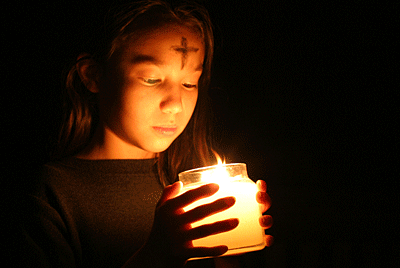
One by one they come forward. I press my thumb into the black sooty ash. On the forehead I make the sign of an ancient form of execution. Looking them in the eyes I say, “Remember that you are dust and to dust you shall return.” For some I have to stand on tiptoe to make the mark. For the children I bend down to sign their lifted brows.

After eleven years among them, I know these people – their pain, their struggles, losses, hopes, and dreams. I love them. They come to place themselves before the altar and ask for this – this sincerity, this frank acknowledgement of death. They come to receive the smudge that says they know they have fallen short and they are sorry.

In a culture which denies death, sin, and personal and corporate responsibility for wrong-doing, I am moved by these who come to stand before God and one another in radical honesty. Instead of  wrinkle cover, make-up and  hair growth tonics, they wear the sign that says they know they will die, and because of that, and because life is good, they want to live it well.

This never fails to shake me to core – people coming together in the dead of winter, here and there, all over the world to bow their foreheads for the ash, to be told they are going to die, and to lift their faces once again toward the warm sun of redemption.


Earth to earth, ashes to ashes, dust to dust; in sure and certain hope of the Resurrection into eternal life … Book of Common Prayer

Learning to Sit in a Room Alone

..all man’s miseries derive from not being able to sit quietly
in a room alone.  Blaise Pascal

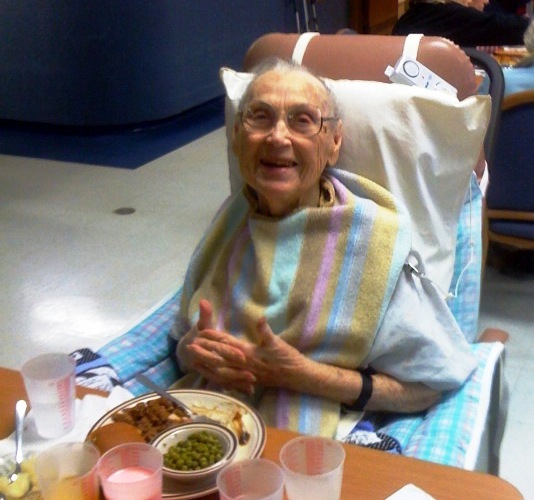
After living over sixty years in the same house, my ninety six year old mother recently moved. We had cajoled, pleaded, and argued with mom about a move for some time. The more we talked the more resistant she became. We brought in her pastor, a beloved nephew, her doctor, and her friends to convince her of the merits of assisted living. Once I tricked her into visiting a place “just to check it out, mom, see what it’s like.” She pronounced that the wallpaper was horrible and remained adamantly against moving anywhere beyond her own backyard.

Home health aides came five days a week. She received meals on wheels and wore a bracelet on her wrist with a button to connect her to emergency assistance. She spent most of her time alone in her room drinking her tea, keeping an eye on the neighbors, and watching the birds and squirrels through the long Iowa winter.

“I know what these places are like,” she told me. “They dope you up. I’ve spent a lot time in these homes.” She had – first, with my bedridden, great Aunt Ethel, then my grandfather, and finally my father. She chuckled telling the story of going to see Dad one time and finding a resident sitting next to him holding his hand. My father, even with Alzheimer’s, always cut a fine figure with the ladies. As mother walked up to bring him some ice cream, the woman looked at mom sternly and asked, “Well, who are you?!” “I am his wife,” mom told her.

The last time I tried to convince mom to move, she silenced me with the words, “Why should I leave here when I am so content? I have everything I need.”

Well, yes. Why should she leave? How rare to be content and feel you have everything you need. She lived through the Great Depression and missed out on many things most of us would call necessities. In her deprivation she had mastered the priceless art of being content with what she had.

As my siblings and I prayed and fretted, God intervened. Compression fractures in her back and being in so much pain she couldn’t leave her chair accomplished a move for mom. She was carried off to a place, as Jesus told Peter, “You do not wish to go.” (John 21: 18) A week later, settled in at the care center, mother said, “This is a good place. They are very good to me here. The food is good. It is wonderful they have places like this.”  When we asked her if she wanted us to get her a TV for her room, she declined saying, “Oh I watch TV out in the common area. I have everything I need here.”

Some days I look out on the world and see a bunch of self righteous, entitled brats, all pushing, shoving, and scheming to get what “what’s owed them.” Other days I see the fear and desperation of people with shallow roots, who must hold themselves up with external supports of power, influence, possessions, and success.  I recognize the brats and the shallow rooted, because it takes one to know one. Daily I face the temptation to shore myself up with the perishable things of this world. I know the thirsty grasp for water of those with shallow roots.

Without a vibrant interior life and a self deeply connected to Goodness in whatever name one gives it, we do not fare well in seasons of loss, storm, and disaster. Without the ability to be self reflective and to enjoy the company of one’s self, I am a prisoner chained to a cell built of my own insatiable neediness.

I heard a story recently about psychologist Carl Jung who once advised a very busy and successful man, who came to him for treatment, to spend time each evening alone. The man returned to the Dr Jung to report he felt no better. He had shut himself up in a room, read, and listened to music. Jung told him, no – no reading, no music. He was to do nothing, just be with himself. The man protested that he could not possibly do that. He didn’t like being with himself. Dr Jung responded, “Why this is the self you have been inflicting on others for fourteen hours a day. If you cannot stand to be with it, how can you expect others to?”

You need not leave your room. Remain sitting at your table and listen. You need not even listen. Simply wait. You need not even wait. Just learn to become quiet and still and solitary. The world will freely offer itself to you to be unmasked. It has no choice. It will roll in ecstasy at your feet.     Franz Kafka

When the time comes, when I am carried where I do wish to go, I want to be like mom.

So I practice. Each day I sit in my room, learning to become quiet and still and solitary. By golly it happens: the unmasked world rolls in ecstasy at my feet, whooping and hollering. I do not lie. I feel as indulged and pampered as a first class tourist on a cruise ship. I have everything I need. The world has no choice. It will scintillate, dance, and shimmy in delirious exaltation of its creator.

Go ahead. Take a seat and wait for the show to begin.

Be still and know that I am God.
I am exalted among the nations,
I am exalted in the earth.
I am exalted in the rooms of the old.
I am exalted in the cell of the prisoner.
I am exalted in the ruins of the city.
I am exalted in the penthouse and palace.
I am exalted in the peasant hut.
Everywhere and always
I am exalted in my kingdom
which you will find within you.
Be still
and know. Based on Ps 46:10

www.fromholyground.org

Contact Loretta at
lross@fromholyground.org, www.fbook.me/sanctuary

Follow at http://twitter.com/lfross

Become a fan of the The Sanctuary Foundation for Prayer

Clueless

For I resolved to know nothing while I was with you except Jesus Christ and him crucified.  I Corinthians 2:2

He went out, not knowing where he was going,” says the writer of Hebrews.  Abraham,  the father of our faith, didn’t have a clue where he was headed, no map, five year plan, or GPS device. Just faith.

Most of us want a little more than simple obedience to the word of the Lord burning in our hearts. We want a backup plan, some insurance policy to guarantee that our wandering about in the dark and hard work will be justified. We do not want to look back in shame or sorrow at the choices we made.

Most of all, when someone asks what our plans are for this year, we want that calm sense of security that comes with being able to answer clearly: My goal for this year is to plant a garden, go to Greece, or graduate from the Neuroscience Institute. You need something with a nice ring, which wins a nod of approval, or even better envy. So we consult a bevy of advisors. How long do I have, Doc? Madame Sylvia looks in her crystal ball. We check our horoscope and give our broker a call.

In our sleepless nights we pray, “God… please… let me know things will be all right.”

Instead of a five year plan in the mail, we get the present moment.

This frayed and tattered now.

My old buddy, Oswald Chambers, writes in his January 2 entry in  “My Utmost for His Highest”:

One of the most difficult questions to answer in Christian work is, “What do you expect to do?” You do not know what you are going to do. The only thing you know is that God knows what he is doing….. Have you been asking God what He is going to do? He will never tell you. God does not tell you what he is going to do – He reveals to you who He is. … You must learn to “go out” through your own convictions, creeds, or experiences until you come to the point in your faith where there is nothing between yourself and God.

Wanting to know the future, and to possess absolute clarity about where one is going is the last stronghold of the ego and a defense against intimacy with God, where the way is revealed only as I have surrendered my desire to know anything, except, as St. Paul puts it, “Christ and him crucified.”

We are nearest to God when we have gone out from our egos – our own knowing, our worries, and desires – and are vulnerably present to Holiness. As we become present to the Presence, we discover a relationship so wholesome, nourishing, and tender in its embrace that our notion of direction and purpose is transformed. My life’s direction is not something I grasp by knowing, but rather is given to me as I allow myself to be known in the mutual exchange of love that is  our relationship with Christ.

This seeking, palpable, grace filled Presence of Christ is what allows us to go out into the unknown, empty handed and clueless. Jesus told his followers: “Take nothing for the journey – no staff, no bag, no bread, no money, no extra tunic.”  Luke 9: 3

We learn to trust more in the ever present power of the One who sends us, than in our own preparations. And oh how much easier life becomes then!

How does one do this? Be aware. Allow space in your consciousness for God. Shovel away your lists and agendas, goals and objectives. Make a clear path through the snow drifts of your ego to the great I Am.

This is how I tried to do that today. All morning I prayed in the sunshine pouring through my window. I began with a list. A stream of words and worries that gradually slowed to a trickle.  Still in my pajamas and robe at 11:00, I am happy as a clam. Wrapped in love, I do not want to stop.

Often when I pray with others it is like this. Saying amen is a strain; lifting my head and opening my eyes, an effort. The magnetic pull of God captures me. To pull away is a sorrow, a sudden brutal severing from the heart’s true home. But the hour is up, the person who has come for prayer needs to go and is wondering if I am half crazy. So I return to “normal,” which seems ever more strange and artificial to me.

I know. I am weird. I also know many of you share this sense of God drawing you into Love.

I prayed for you this morning, for nothing in particular beyond peace, love, and joy. It is true I may not know you, yet I feel an oceanic rush of love and desire for your well being that hollows me out and leaves me breathless. I think it must be God’s love for you passing through my awareness. I hope it sweeps you off your feet today and tosses you hither and yon without a clue as to where you are going.

And on this cold day may you, beloved object of God’s devotion,

feel His warm breath upon your cheek.

Tell me about your prayer, the love song God is singing to you today.

Read more about prayer at www.fromholyground.org

Contact Loretta at lross@fromholyground.org, www.fbook.me/sanctuary

Follow at http://twitter.com/lfross

Become a Fan of the The Sanctuary Foundation for Prayer

When Hope Fails


Hope is what gets a lot of people through the Christmas season. And the failure of hope is what leaves some souls shipwrecked on the treacherous rocks of the sin and imperfection of this world.

What is it for you this year? Death of a loved one? Spouse in Afghanistan? Unemployed? House foreclosed? Cancer?

Hope is the presentiment that the imagination is more real, and reality less real, than we had thought. It is the sensation that the last word does not belong to the brutality of facts with their oppression and repression.  It is the suspicion that reality is far more complex than realism would have us believe, that the frontiers of the possible are not determined by the limits of the present, and that miraculously and surprisingly, life is readying the creative event that will open the way to freedom and resurrection.  Rubem Alves

She was fourteen. She sat next to me as we drove home after the Christmas Eve service. Lights sparkled from distant homes across the snow covered fields. Shattered with pain and trying not to show it, I tried to focus on driving. After a while she spoke out of the darkness, “Mom, things aren’t ever going to be the same, are they?”

That year, our family had been struck by a blow from which we would never fully recover. In spite of  brave efforts, prayer, and sacrifice we could not put back together what was broken and, perhaps, fatally flawed.

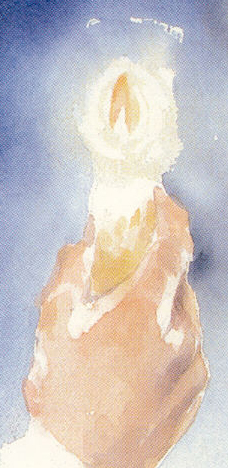
During that season of suffering, hope became nearly eclipsed by fear, anger, shame, and pain. Each evening I turned briefly from my grief in defiance of “the brutality of facts with their oppression and repression,” and lit a candle for hope. Even though I felt no hope, I let the candle hold my hope for hope.

In those days I clung to the verse of scripture the minister preached at our wedding. Remember thy word to thy servant in which thou hast made me hope. This is my comfort in my affliction, that thy word gives me life. Psalm 119: 49-50 What an odd text for a wedding, you may think. Yet as the years unfolded it became more and more meaningful. I prayed it, holding God accountable to the goodness promised to me in scripture and whispered to my soul. God’s promise of joy, peace, and love comforted me and gave me the ability to keep breathing in my affliction.

Carmelite writer Constance Fitzgerald writes about the movement in our spiritual journey from “naïve hope to theological hope.” Through experiences of loss and suffering, naïve hope in a Santa Claus god and other illusions nurtured by our egos give way to a different, richer kind of hope. We let go of placing our hope in our own efforts, our own goodness, our own “luck” or deservedness. We let go of our “right” to ourselves and our way. Or perhaps it is more accurate to say, we numbly watch our way wrenched from our grasp. We face our helplessness and the truth that we are not in control. Hope in oneself and one’s little plans and projects dies on the cross of our life experience.

It is there in that stillness of a drive back home on the worst Christmas Eve in one’s life, while a child’s heartbreaking question hangs in the air, that hope in God is born.

You may miss it at first, especially if the pain is choking you. But refuse to let the last word be the brutality of facts. Go ahead and light that tiny candle. Defy the darkness. And pay attention. A baby is on its way. Something fragile and new and unimaginably sweet is making its way into your consciousness. 

I tell my daughter, “Yes, honey, things will not be the same. But I believe somehow or other, things will be all right.”

And they were.

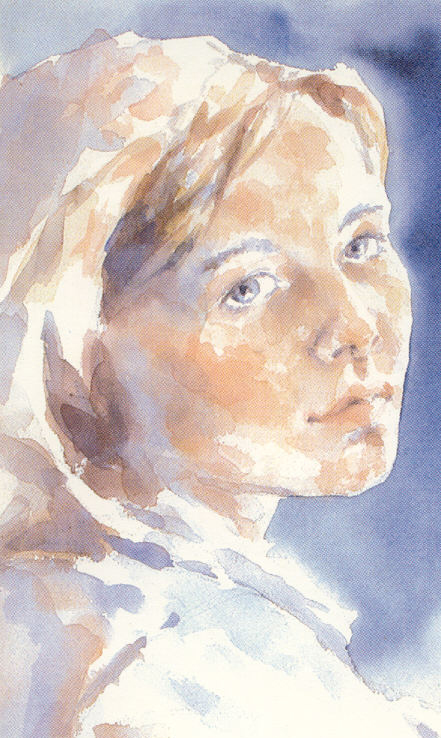
Special thanks to artist Anne Emmons for her permission to use “Hope” in this blog. You can reach Anne at anneemmons_8@msn.com or on Facebook. 

Here is Anne’s story about this painting:  I was trying to think of one moment in the Biblical narrative which captures the theme of hope.  Each year I have made a new image for Christmas since 1997, and in 2000, I was struck by the idea of hope as the source of light. The images in this series reflect the thought that Christ came, the Light of the world, into darkness. So I was thinking about one single moment in the story and I realized the moment Mary heard the announcement from the Archangel Gabriel must be the moment hope found a form, in her face. At the time, my daughter was almost 14, the estimated age of the Virgin Mary, and I suddenly connected with the story in a particular way. I kept her home from school that morning to have her sit for the painting. What struck me, and this has since been confirmed from other sources, most recently Anthony Bloom’s book, Beginning to Pray, was that the Incarnation was possible only through God’s will in union with the “yes” of the young Mary, who became the bearer of the Uncontainable God. Just after I painted this I saw the Pontormo Annuciation in a small side chapel in Florence, and Mary had the same sort of look of wonder I tried to catch.  Now my daughter Claire has a two year old son, Theodore. She is a single mother who said yes to the birth of this child, whose name she chose, not knowing it means “gift of God.”

Read more about prayer at www.fromholyground.org

Contact Loretta at
lross@fromholyground.org, www.fbook.me/sanctuary

 Follow at http://twitter.com/lfross

Thanksgiving Reverie

My ninety six year old mother dozes in her chair. Her toast remains half eaten on the tray. The dog sleeps at her side.

Frost last night. Now bright morning sun streams through the windows. The refrigerator hums. Outside the gnarly cedar with its silvered bark shelters the house. When did it get so tall?

Memories – laughter, faces of loved ones, snatches of conversation, four dogs romping in the back yard, good food – play in the mind.

Today is Black Friday, the make or break retail sales day of the U.S. economy. Only twenty eight days until Christmas.

There is no rush here. No need to shop.

All is calm
All is bright
Round yon mother and dog.

Here in this old house on Madison Street, whatever it was we thought we needed to do has given way to the art of being – of watching the leaf shadows play on the trunk of the cedar, and peering long into the deep blue sky.

The mother dozes. The dog stirs, turns on his side. His breath is slow and deep.

The air is tender and mild. Nothing to disturb the flow of grace.
Relax. Christmas already came here a long time ago.

Read more about prayer at
www.fromholyground.org
Contact Loretta at
lross@fromholyground.org, www.fbook.me/sanctuary

Follow at http://twitter.com/lfross

Prayer Boots – Part 2

This post is a continuation of last week’s, Prayer Boots – Part 1, a chapter from my book, Letters from the Holy Ground.

This summer a friend and I had a yard sale.  For a week I hauled boxes from attic and basement.  The children and I lugged baby clothes and infant swings to the dining room, where the kids promptly set up house.  “Remember this?  O Mom, look!  I remember this cute little dress.  I really looked so sweet in it, didn’t I?” they chirped sounding like they were eighty years old.  Cicelia spent two hours playing with the Johnson and Johnson baby blocks.  They had a tea party with the chipped china sitting at the little red table with their knees up to their chins.  Each box held wonder.  “Look mom, these beautiful curtains.  Can I have them in my room?”  Diana crowed, pulling out the tattered remains of the drapes that hung in our first apartment.

 Later that evening she came to me.  Holding a tiny blue sock to her lip and tucking her head under my arm, she said softly, eyes glowing with the rapt smile of one who has seen a vision of angels, “Oh Mommie, I remember me.”

Something forgotten, something precious, tender and pure that Diana called me had been recovered for her in that tiny sock.  When I asked what she meant, she said, “Well I just remember myself when I was a baby.”  That tiny sock I could never keep on her foot took her back to a pre-verbal time where she was held, rocked, nursed, sung to. It was a place where me dwelled, the essence of her being in the holy ground of the womb.  And she stilled her non-stop seven year old inquisitive mind to forget herself, to pay attention, and remember who she is: a child cradled in the loving bliss of One who is larger, kinder and more beautiful than she, and in whom she lives and moves and has her being.

She still crawls in bed with me in the mornings, her coltish long legs and arms poking, thrashing around, giggling, telling me jokes and that she loves me so much. She seeks herself in that safe place, before she bolts into her day of dolls and math and spelling and exuberant surprises. I wish we could all come to our prayer with her trust, playfulness and devotion.
I stared in shock whenever I passed the dining room with all those cartons brimming over with my past.  This is the room where we gather to pray, to recount our salvation history, to remember and receive the Eucharist.  Boxes lined the walls.  Infant seats and infant carriers and infant bottles and infant sleepers, undershirts and socks spilled all over the space where we sing songs of love to Mary’s baby.

My daughters poked about in their past, where we come to poke in our past, holding it to the light, turning it over in our palms, wondering what sort of price it would bring, praying God to be merciful.

The sale was one day only.  My friend and I sweated it out, swilling ice tea, tallying our profits and losses. During lulls in business, stricken with visions of having to haul all the stuff to the dump, we rushed about with markers slashing our prices.  “Everything must go,” we resolved, as we paused to fold one last time the sleeper we had laundered and folded so many occasions we had lost count.  We smoothed tiny collars and wrote $.10 on the stickers.

The Age of Aquarius macrame went, along with the tires, decrepit lounger, ice crusher, and malt maker.  We carted off my friend’s wedding gown, the fondue pot and five or six boxes of baby clothes to the thrift shop.

It was afterwards as I was picking up hangers and empty boxes from the floor of the room where we, breaking the bread and lifting the cup, do as he asked. Gathering up scraps of newspaper and tags, I saw the little nightie on the table.  It was then, forgetting myself in the mystery that rocks us all, and holding the soft worn flannel, sweet with baby scent to my cheek, that I remembered me.

One of the deepest mysteries of holy ground is the mystery of identity.  When God meets Moses at the burning bush, the two exchange their identities.  God calls, “Moses, Moses.”  The call is unique, distinct.  There can be no mistaking who is being summoned.

Moses’ response is the classic prophetic response to a call from God:  Henanni, or Here I Am.  After Moses receives his mission, he presses this burning Reality for its identity.  “Who shall I say sent me?” he asks.  And God responds, “Tell them that I Am.”

Holy ground is the place of exchange where I Am meets Here I Am, where What I Have Been will be transformed by Who I Am Becoming, where I forget what I thought I was and remember I am.
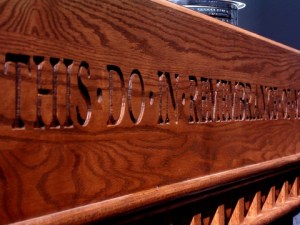
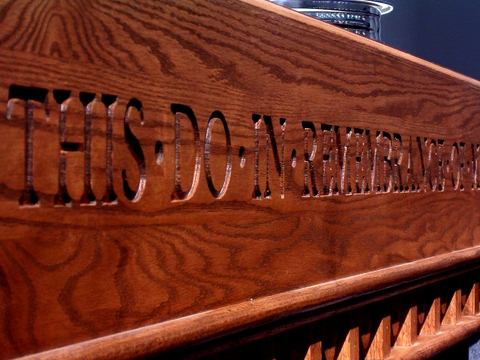
On just about every communion table I have ever seen are carved the words:  “Do this in remembrance.”  The little sacraments of our lives are those graced moments of holy communion when we do something prayerfully and in remembrance.  We release our grasping and coping. Then bread is transformed into the body of Christ, a blue sock into an angel’s wing, and a mortal being into a being in God.

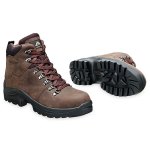
God instructed Moses on Mt. Sinai to make holy garments for Aaron and his sons, including a plate of gold engraved with the words “Holy to the Lord,” which Aaron was to wear on his forehead, apparently to help everyone keep their parts straight.  My boots came with a tag that read: “Genuine Leather, Ozark Trail.”  They didn’t have any with gold plates.  I’ll try to remember my part anyway.

These days you can buy all kinds of prayer paraphernalia:  crystals, incense, podcasts of famous pray-ers, cds of words of power, icons, statues, pictures of Jesus in a startling array of poses, holy bells and whistles, oils and unguents.  My hunch is that it’s best to travel light, and you could do a lot worse than to get a good pair of boots.

Why not do it in remembrance?  Maybe we’ll meet on the trail.
Read more about prayer at
www.fromholyground.org

Contact Loretta at
lross@fromholyground.org, www.fbook.me/sanctuary

 Follow at http://twitter.com/lfross

Prayer Boots – Part 1

I am off to do some teaching and visiting with family. This week and next, I offer here in two parts a chapter from my book, Letters from the Holy Ground. Get some boots and go pray.

bootsI went to Holton Farm and Home Store last week and bought some praying gear, boots, warm socks and gloves.  I selected a pair of sturdy waterproof boots from the row of five buckle galoshes next to the watering troughs.  I think I am ready now.  I purchased the boots with money friends at the church I served gave me when I left. I kept the money, which came attached to the leaves of a prayer plant, for a whole year not knowing just how to spend it.  I considered books, office supplies and liturgical accouterments.  Now I see that proper prayer vestments include boots for walking over this land we call holy.

The more we pray, the more we discover prayer’s richness and power, and the more we hunger for it.  In its essence prayer is simply paying attention to God.  And that turning of the will to God, that choice to attend to God, is how we participate in making holy ground.

There is a temptation in the spiritual life to talk about praying, to read about it, to write about it, to attend workshops on it, to preach sermons about it, to feel guilty about not doing it, to build edifices where it is supposed to happen- anything but the scandalously simple, yet arduous task of doing it.  In contrast to our institutions of theological and religious education, the one thing the disciples asked Jesus to teach them was how to pray; and Jesus taught them by simply praying. “Here, do it like this,” he said.

So I am praying, turning my attention to God more intentionally and for longer periods of time with no particular result in mind beyond a simple open presence to the Holy One.  A good deal of this praying is happening on the land.  And when you stalk holiness in autumn in Kansas, you need a good pair of boots.

Crouched under the cedar in the rain, sloshing along the winding creek, following the deer trail up the gully, I try tocedar branch forget myself in prayer that I might remember who I really am.  I imagine hiking toward a place of being so self-forgotten in God that one needs nothing external to validate oneself.  Is it possible to follow the path to holy ground where the communion of prayer alone feeds and sustains us and the earth?

Perhaps our task is not so much making holy space in our lives, as becoming holy space ourselves. One way of becoming holy ground is to remember who we are.  And we are often quite convinced that we most certainly have been forgotten. That may be because we just can’t bear the wonder and joy of love.  Is that why Love stood before us that night before we killed Love and told us: “This bread is my body…this wine, a new promise sealed in my blood.  Don’t forget!”?

“Don’t forget,” Love said.  “I beg you not to forget.  For when you forget, you hang me back on the cross with your lies and self deception and fear and heedless stampede over my tender presence in all creation.”

communionStill we do forget.  Psychiatrist Gerald May writes that we often do not remember experiences of communion with God, because they are so threatening to our egos. The loss of self-definition characteristic of unitive experiences arouses unconscious fear. Wiping off the chalkboard of our spiritual experience, our officious ego scolds, “Let’s just forget this ever happened and go back to worshiping me as almighty in your life.”

 What might you need to remember?

 More next week…

 Gerald May in Will and Spirit (San Francisco: Harper & Row, 1987) Chapter 5.

Read more about prayer at
www.fromholyground.org

Contact Loretta at
lross@fromholyground.org, www.fbook.me/sanctuary

 Follow at http://twitter.com/lfross

Letting Go

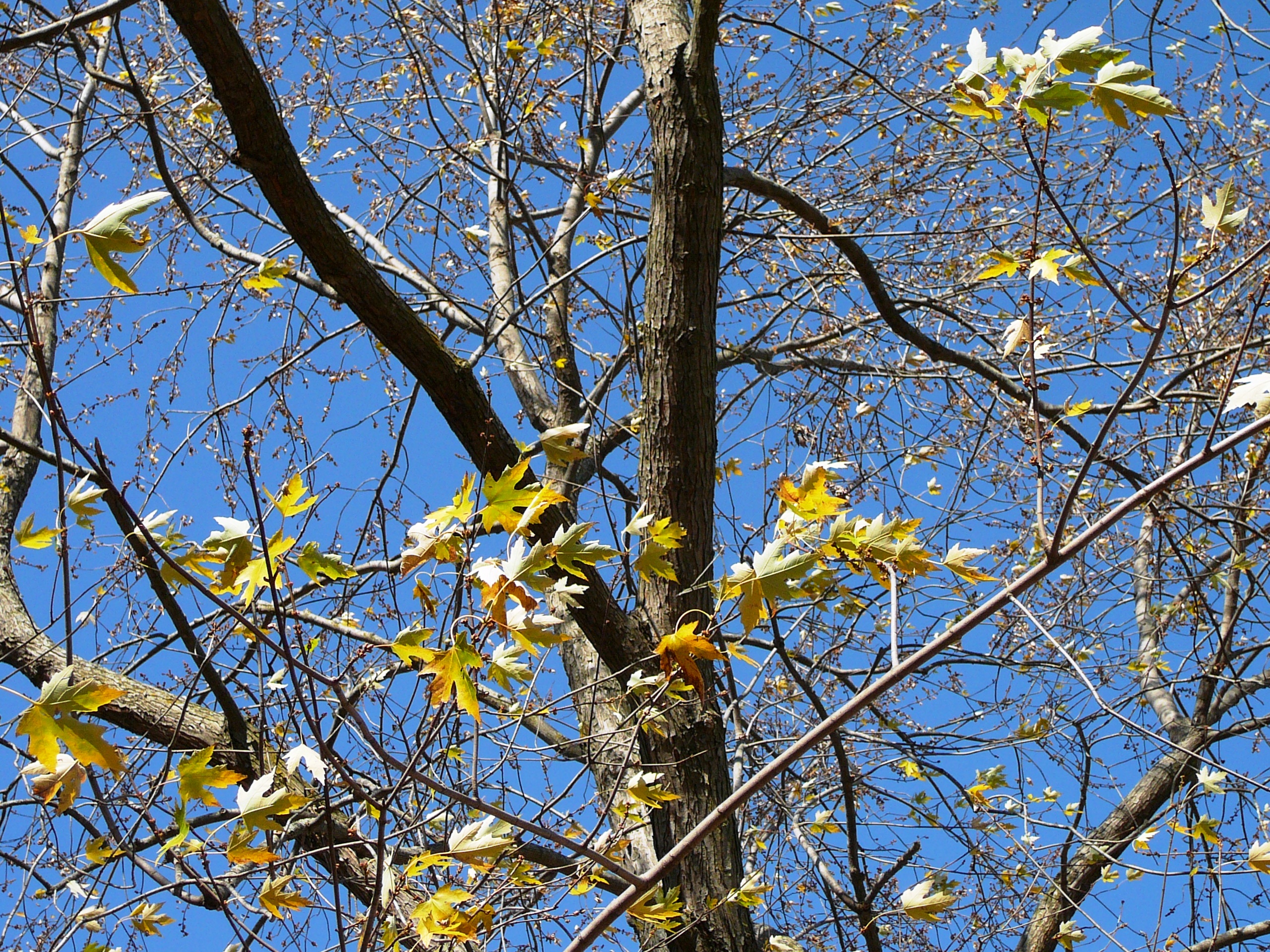
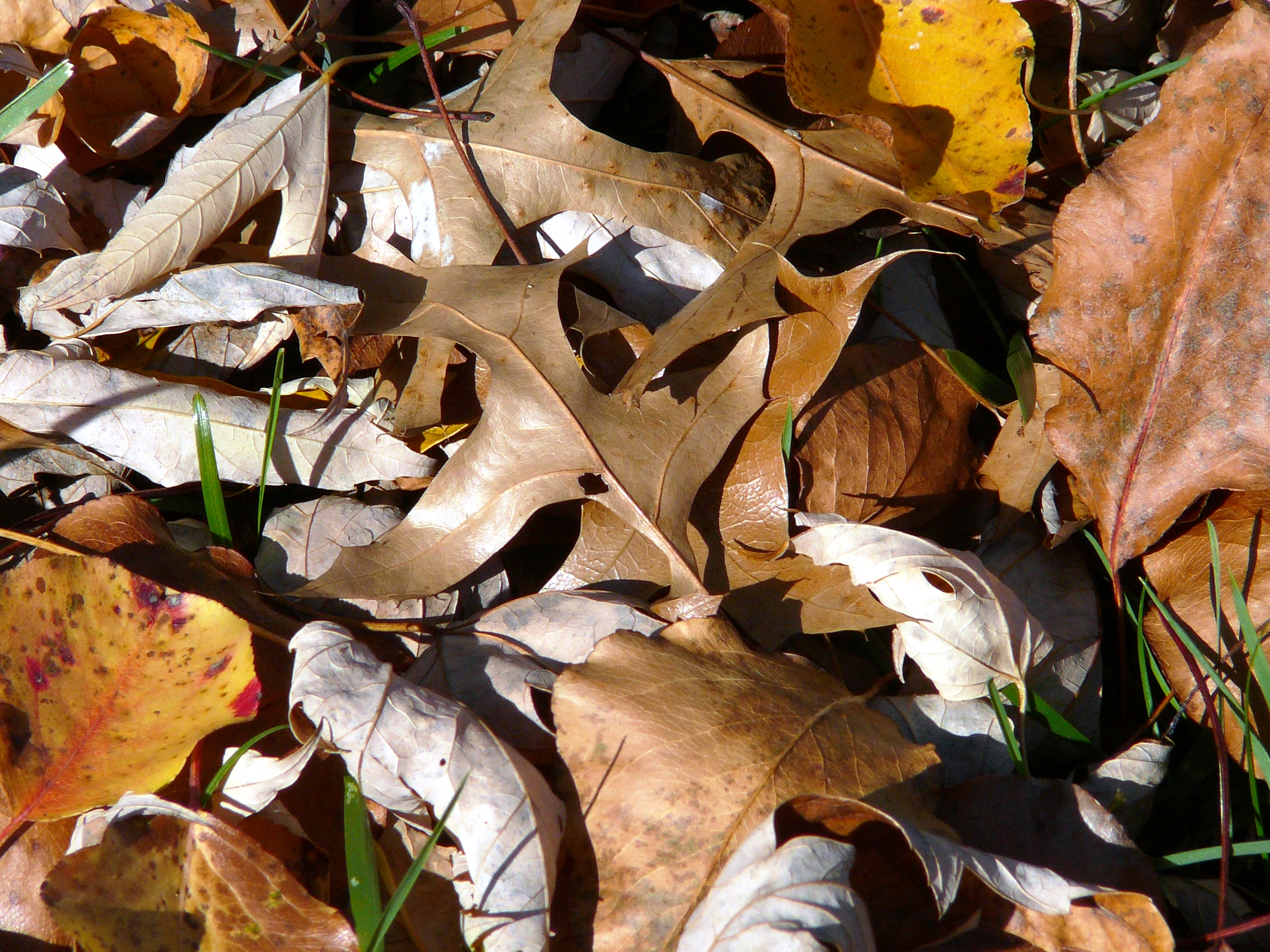
leavesThe gold canopy outside my window has disappeared. For two weeks light, filtered and gilded by maple leaves, shed luster on the yellow carpet beneath. The luminous scene drew me into in a warm cocoon of whispering leaves. I listened to their stories of summer, their losses and gains, and their sweet good-byes.

Now stark branches make black scribbles on the wan blue sky. The dove perching with her head under her wing seems so exposed. The leaves on the ground curl like an old person’s hand, mottled and transparent. Only a few leaves remain on the branches, twisting in the wind, straining against their stems.

The season of letting go, of loosening one’s fastenings and sailing out into the unknown, comes round again. Too soon. A November nostalgia settles over me, that curious longing for lost opportunities and for what was, which, in retrospect, reveals those things, which were more important than you ever realized at the time. November – a time to disrobe, to remove what is no longer serviceable and send energy into the depths, the root of things.

Someone did something that really hurt my feelings. I have carried the wound for a week or two. It still smarts and brings tears when I take it out and look at it. I believe God is telling me to let it go, to have compassion for this person and her suffering. I don’t want to though. I wonder if there is something I need to listen to and learn from in the intensity of the pain. It is one of those situations where there is really little I can do, but move on with generosity and amnesia, until forgiveness moves in.

So, let’s turn back to the leaves. The word used to describe the process of a tree shedding its foliage is senescence – getting old. The eleventh month impresses upon us the reality of aging, of time running out, as the year winds down. As the days shorten, the green chlorophyll is destroyed and oranges and reds in the leaves are revealed. The tree is preparing for winter dormancy and draws all the nutrients in the leaves through the stems and down into the roots. The sugars and amino acids that are produced, instead of the chlorophyll dependent upon the sunlight, serve as a kind of antifreeze for the tree. leaves sky

At the place where a leaf stem fastens to a branch, there are two kinds of cells. The part of the stem attached to the branch contains waxy impermeable cells. These are called the bundle scar and contain the bud of next year’s leaf. The cells connected to the leaf itself are softer and snap easily in the wind and rain.

I watch a lone leaf near the top of my neighbor’s tree. It flutters, twists, turns in the wind, then releases itself and drops floating down through the huge dark limbs, finally settling lightly on the earth below like a sigh.

Oh to be drawn so gracefully by the tug of gravity into the arms of God’s providence. How glorious to ride the wind, to be tossed and blown. I think I should like to die in autumn or early winter, dropping like a late hanging leaf from a very tall tree. I am grateful to the leaves this year and their lesson to let go, to surrender, to fall, and come to rest at the foot of the tree of life. I am grateful, too, for bundle scars, that place that heals the wound of separation with the promise of new growth.

“Let go,” the leaves say as the wind sends them scuttling up the street under the moon. “Let go.”

Brown leaves

Read more about prayer at
www.fromholyground.org, www.theprayinglife.wordpress.com

Contact Loretta at
lross@fromholyground.org, www.fbook.me/sanctuary

 Follow at http://twitter.com/lfross