Tag Archives: suffering

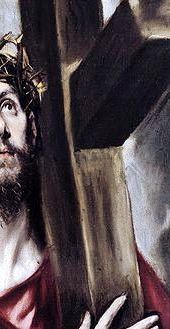
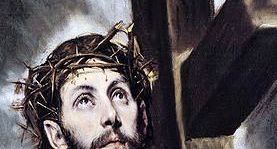
Exploring Solitude: Meeting the Crucified One

God is simplicity and one-foldedness,
inaccessible height and fathomless depth,
incomprehensible breadth and eternal length,
 a dim silence and a wild desert.

So wrote John of Ruysbroeck in the 14th century.

God is also a man, whose name is Jesus,

born in a middle eastern city,

of a woman named Mary.

Firmly anchored in time and space,

he walked the paths of Nazareth,

ate,  and laughed,  and loved.

God is also this same man,

now beaten,  bleeding,  and dying,

executed on a cross.

For in Jesus

the Inaccessible Height and Fathomless Depth

had inserted

itself into

the messy specificity and limitation

of humanity,

and consented

to occupy

suffering,

injustice,

cruelty,

fear,

defeat,

and death.

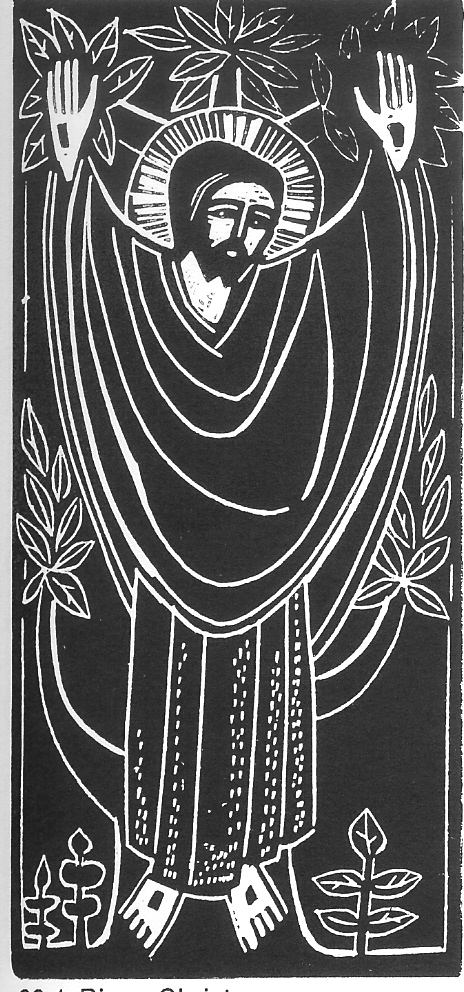
So now,  all that suffers,  loses,  messes up,  and bleeds finds welcome in that dim silence and wild desert of the cross.  All that is lost or broken is gathered and folded into the height and depth and breadth and length of God. Every precious particle of God’s making  is held with infinite tenderness in the simplicity of love.

There are moments,  days,  even years for some,  where the work of solitude involves suffering.  Alone with God,  we are presented with painful truths. We are refined and purified.  We gradually learn to be present to God,  not on our terms,  but on God’s terms in the context of our own specificity.

This is the work of letting go and letting be. This is the journey of ever deepening faith and radical trust. This is the door that sets us loose to roam forever free.

During the observance of Holy Week,  the specificity of God made known in Jesus,  enters into the lonely anguish of surrender to the terms of his Father.  The one who has been surrounded by crowds and encircled by his chosen disciples,  makes the solitary journey into death to return to the heart of all being.

We find an account of this journey in the gospel of Mark.  Mark’s gospel is characterized by a simple,  direct,  unpretentious style.  The gospel has an urgency about it.  Mark’s  frequent use of the dramatic present tense contributes to the immediacy.  The emphasis is on the action – the deeds and words of Jesus – as he confronts and responds to the religious establishment,  the disciples,  and the crowds.  This action moves compellingly to the crucifixion.  The story unfolds in a hurry,  as though the very presence of Jesus has set in motion forces which lead inevitably to the cross.

Then at the cross,  in striking contrast to the preceding scenes,  Jesus becomes the receiver of the action in total surrender.  The syntax changes from active voice to passive voice,  as the Greek word,  paradidomai,  appears more and more frequently.  Paradidomai means handed over,  or to give into the hands of another,  to be given up to custody,  to be condemned,  to deliver up treacherously by betrayal.  This is the same word the gospels,  as well as St. Paul, use repeatedly to describe the crucifixion.

As the resurrected Jesus tells Peter on the lake shore,  there comes a time when we will be carried where we do not wish to go. (John 21: 18)  Then we find ourselves being handed over to our life circumstances,  the limits,  sins, injustices,  and frailties of human existence.

At the cross in Jesus the Limitless,  Inaccessible,  Unfathomable God makes things very plain, very simple:

Watch me. Trust me. Do it like this. All is forgiven. Surrender. Allow yourself to be carried into darkness. There is a place beyond your knowing or naming, where I am and you are. Follow me.

All transformation,  all redemption require moments such as these:

the passivity of the seed buried in the earth,

the passion of love poured out to the last dregs for the beloved,

the prostration of oneself in the dim silence and wild desert,

where all things are born anew.

The moral revival that certain people wish to impose will be much worse than the condition it is meant to cure.  If our present suffering ever leads to revival, this will not be brought about through slogans, but in silence and moral loneliness, through pain, misery and terror, in the profoundest depths of each person’s  spirit.      Simone Weil


Solitude Practice:

  • What do you need to surrender, let go of, or let be this week?
  • Not all, but much of our suffering may be tied to our defiant resistance to letting go and refusal to accept the suffering of self denial. Do you agree with Simone Weil that broad social change could be gained, not by imposition of morality, but through the struggle in the depths of individual souls?
  • What is it like for you to shift from being the prime mover and actor in your life story, to becoming the receiver of the action of others? How might God be handing you over this Holy Week?
  • Is there a relationship between your consent to being carried where you do not wish to go and experiences of healing and redemption in your life?

Next post in this series –  Exploring Solitude:  Leaving solitude, gone to Galilee.

______________________________________

 News for Praying Life Readers!

I am leading a workshop in April here in Topeka, KS. Hope to see some of you there!

Look and See: Nurturing a Shining, Festive Life of Prayer

Saturday, April 21, 2012
8:30-12:00
$20.00
First Congregational Church
1701 SW Collins, Topeka, KS  

Please register early to assure a place by calling or emailing First Congregational UCC. 785-233-1786; info@embracethequestions.com


Exploring Solitude: The Wild Things Within

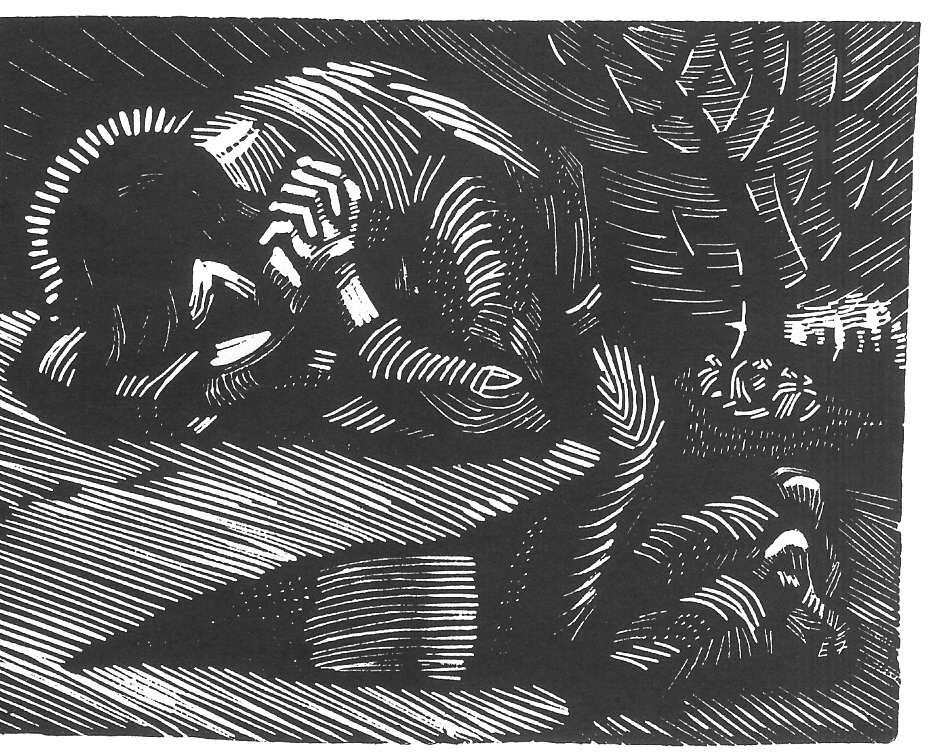
He said to the disciples, “Stay here while I go and pray over there.” When he took Peter and Zebedee’s two sons, he began to feel sad and anxious. Then he said to them, “I’m very sad. It’s as if I’m dying. Stay here and keep alert with me.” Then he went a short distance farther and fell on his face and prayed . .              Matthew 26: 36- 38 (CEV)


The season of lent invites us into wilderness solitude to encounter the wild things and places within us.  In a world of extraversion, solitude allows space for introspection and encounters with untamed and little known parts of ourselves.

On her way out of church one Sunday morning, a member told me a story about her granddaughter, who had come with her that day. My custom is to invite the congregation to a period of silent prayer before I offer the pastoral prayer. At the conclusion of my prayer, five year old Lindy whispered to her grandma, “Loretta took so long before she started praying, that I had to start praying for people I didn’t even like.”

Yes. Silence does that to us, doesn’t it? It brings us to the end of the list of our own needs and concerns and opens out our prayerful awareness of people and inner realities, which we do not even like. Many avoid solitude for this reason. When I stop doing, accomplishing, distracting, and numbing myself with various opiates, I am left with my wounds, enemies, and alienation. The wilderness of the self opens before us and we reach for the phone, turn on the television, or pour ourselves a glass of wine. 

He came back to the disciples and found them sleeping. He said to Peter, “Couldn’t you stay alert one hour with me? Stay alert and pray so that you won’t give in to temptation. The spirit is eager, but the flesh is weak.” Matthew 26: 40-41 (CEV)

The work of solitude includes the slow, patient task of befriending the darkness, of being present with compassion to my inner wildness, and of staying awake one hour with ourselves in our misery, as Jesus asked his disciples to do for him.

The followers of Jesus were unable to offer him such companionship. It is likewise very difficult for us to offer ourselves such gentle, present love. Yet if one can manage it, if only for a few minutes, that ache, that knife in the heart, the sick all encompassing grief  will begin to lessen just a bit, and a peace will slowly seep into the space of your silence.

This is where the deep work of contemplative transformation begins. The pleasant, consoling moments of contemplative prayer are important to our growth and infect us with the love of God. Sometimes they arrive unbidden, unexpected as sheer gifts. Other times we enter deeper communion with God through the ongoing practice of contemplation in some form: centering prayer, lectio divina, prayer of quiet, meditation.

Several years ago a friend confessed to me, “I am so over spiritual “disciplines.” She had reached a point beyond practicing prayer, because she wanted something from God, or because she ought to, or because it was interesting, or helpful to her daily life. Prayer for her was becoming much more demanding than a nice idea or exercise in personal improvement.

Thomas Merton wrote, “True prayer and love are learned in the hour when prayer becomes intolerable and the heart has turned to stone.” The deeper work begins when silence and solitude may be the last thing we want and the only thing we cannot live without. When just sitting still reveals to us a pervasive sadness, or the reality of a loss or truth we are denying or running from, silence is not some syrupy, cozy me-and-Jesus picnic. Silence is a summons to face into who I am and who God is becoming for me in a perilous confrontation with the truths of my life and who God will or will not be for me.

Again he came and found them sleeping.
Their eyes were heavy with sleep.
But he left them and again went
and prayed the same words for the third time.
Matthew 26: 43-44 (CEV)

Yet it is here – when facing fear, betrayal, or deep sorrow– that the encompassing and spreading love of God begins to open within us with its healing balm. Sometimes we need a companion to help us, as Jesus asked for from his friends in his hour of need. We may need to enter the silence in small doses at first. Tiny little sips of God may be all we can manage. Gradually that contact with God will begin to soothe our souls and bring a peace that will exceed our understanding.

It may not seem like much, this tiny bite of calm. You are still in your wilderness, up against a wall, facing an impasse, with little hope. Yet you keep going back for little sips of silence, as quiet fills you and you surrender to the moment.

My Forty Days in the Wilderness
One autumn over twenty years ago I spent forty days in the wilderness. I was sick and doctors were unable to diagnose or treat whatever was causing the unrelenting headaches and fatigue. Weary of the tests and drugs, I went off alone each day and several nights. I did not watch television, use the computer, talk on the phone, read mail or much of anything, except scripture. My only human interaction was with my immediate family.

Day after day and into the night I waited for that little sip of calm, that spark of life and hope. I learned to tend the spark, gather kindling, shavings, combustible scraps of living goodness: birdsong, the quail feeding along the lakeshore, the way a spider walked up the side of my tea cup. These and the stars over my head began to fuel the flame, which grew and illuminated the way for me.

Here is some of what happened as I tell it in my book, Letters from the Holy Ground:

I came to the wilderness in part because I heard Jesus crying and saying he was lonely for us.  I came out of a growing sense of God’s hunger and need for us and for one who would stay with him one hour.  I came to discover how it would be to delight in and enjoy God for God, and not for what God could do for me or the world.

And I found along with my brother, Simon Peter,  that the spirit is willing, but the flesh is weak.  And to pray with Christ is more difficult than praying to Christ.

Are there some among us who are willing to watch with Christ one hour? Are there some willing to turn in radical trust toward God and away from the forces within and without that seek to deny Christ?

Is there one willing to pay the cost of staying one hour, of tasting and knowing God’s suffering in her bones, of being bereft of all mortal assistance, of contending with a near constant onslaught of devils, of serving as a bridge between heaven and earth and thereby, bearing in his body, mind, and psyche on the one hand, the immaculate tenderness and the surging ferocity of Divine Love; and on the other hand, the immense ocean of mortal sorrow?

Like Peter, I couldn’t do it. For along with my good intentions I brought my weariness and poverty and dependence on God’s mercy.  And my eyes grew heavy and I slept.

But God slept too.  Christ rested too.  For Christ brought to the wilderness the same as I:  weariness and poverty and dependence on my mercy.  And so like two homeless children huddled in an alley, like two lovers entwined, we slept while the owl hooted and the bullfrogs boomed and the little grey mouse nibbled bread in the corner.

In the wilderness of solitude our suffering becomes bound up with, informed by, and transformed by the suffering of Jesus in his solitude.

By such fierce mercy and vulnerable love are we redeemed.


Solitude Practice:

  •  Have you had the experience of hurting too much to pray? Or have you avoided praying because you do not want to be still long enough to start feeling your pain?

  • What are some of the ways you distract yourself from entering silence and solitude?

  •  Have you found that place of peace in the midst of your chaos and suffering? How do you describe that experience? What would you tell someone who has never been there and is afraid to be alone in seeking it?

  •  Take some time today to be still and alone. Be with yourself with all the gentleness and love you can muster. Be with yourself as you would want to be with Jesus in his suffering. What do you notice or learn?

Next post in this series:
Exploring Solitude: Deadly Acedia, or Too Bored to Care 

I would love to hear about your experience of silence and facing the wild things within yourself, what you have learned, what helped ease your suffering and what did not. We offer our companionship to others as we tell our stories. You may comment below, on our Facebook Page, or email me at lross@fromholyground.org

It Begins with a Howl

 It begins with a cry            

      a muffled sob at midnight

      a “Help me!” filling the dark    alley with terror

      a fist banging on the door

      a numb, blank stare and a      hand, clenching and     unclenching a ball of tissue       

 a sudden lurch and collapse, facedown in the open field


This is how it begins, what we call Christmas.

Salvation is summoned by its negation.

The Savior is called forth by the raw expression
of the creation’s need,

the howl
that rises from the shattering
collision of what is with what should be.


Christmas begins when God hears

 And God heard the voice of the boy… Gen 21:17

I have heard their cry on account of their taskmasters. Ex 3:7

Do not be afraid, Zechariah, for your prayer has been heard. Luke 1:13

Christmas begins when God sees

I have observed the misery of my people who are in Egypt.  Ex 3:7

My tears will flow without ceasing, without respite until the Lord from heaven looks down and sees. Lamentations 3: 49-50

She answered God by name, praying to the God who spoke to her, “You’re the God who sees me!” “Yes, he saw me; then I saw him!” That’s how the desert spring got named God-Alive-Sees-Me Spring. Genesis 16: 13-14

Christmas begins when the earth turns, writhes, and lifts up its lamentation. When the protest of the human heart joins its sorrow with the heart of the One acquainted with grief,

then

you step out of the forest
and into the clearing
to place in our hands

a child
wet and wild.

Here is my answer, you say.
And the name of the child is

      Love.

Midsummer Tragedies

In the midst of life we are in death.
Earth to earth, ashes to ashes, dust to dust.
Book of Common Prayer, Burial Service

He carried the news gently in his mouth. I took the gift from between his soft lips and mourned. The black retriever had scooped the lifeless, winged thing from under the bird feeder. 

The night before I stood on the glider and peered into the nest, hidden in the leaves. Two naked heads with open beaks peeped softly.

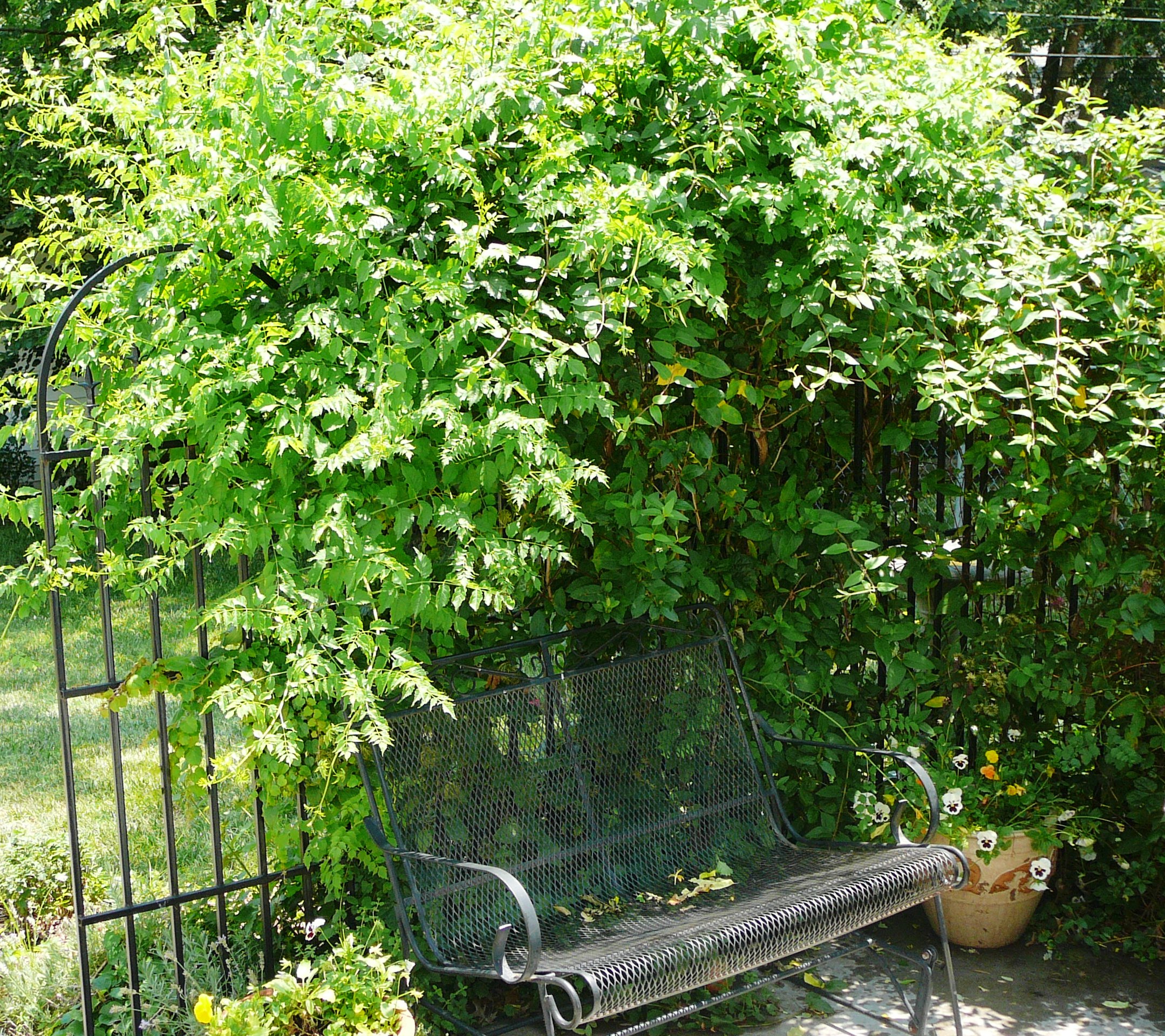
We discovered the nest, while trimming the trumpet vine, which covers the trellis around the patio. We put down our clippers and traded gardening for bird watching. For the past three weeks we delighted in the cardinal couple and their chirps and whistles. They took turns guarding and sitting on the nest and often perched on the trellis or on the glider under the vine.


What had happened? Mom and Dad had vanished and the other fledgling as well. The nest was vacant. The air was empty. Gone was purdy, purdy, purdy; chip, chip, chip; and the what-cheer, wheet, wheet, wheet, songs and calls.

We glowed under the blessing of their nearness. I wanted to see the youngsters learn to fly. Did a blackbird, blue jay, or that bold squirrel, who kept coming up close to the patio cause the tragedy?

I was going to write a blog about the fruitfulness of summer. Instead I buried the bird in the garden next to the zinnias and wondered where the cardinals had flown and how they were doing. I hope they begin again in a safer place than my backyard has proved to be.

It has been a tough week. A seventeen year boy was killed in a car accident. A family gathered to remove life support from their beloved. A woman, whose organs have begun to shut down, makes a last journey home to be with family. Twenty seven people die in an Afghan hospital when a bomb explodes. In Minot, North Dakota, the Souris River rises to snatch its prey – over 4000 homes flooded, eleven thousand residents have evacuated.

You know. You know. In the midst of life we are in the midst of death. A squirrel carrying off a bird is in the way of things. And so hearts, breaking from love and loss, are in that same way of things – life ending, people and things we love being destroyed, wearing out, wasting away.

So I say look while you can. Pour out the precious oil of your loving attention on what is before you. Allow yourself to be anointed ahead of time for the deaths you will witness and mourn, including your own. Hold your dear life close with open arms. You can always trim that trumpet vine later.

Lent, Suffering, and Weary Pastors

“The reason why pastors are so tired around Easter is because they have to preach about something they don’t really believe and it just wears them out,” announced a colleague to the group of clergy.  Some clergy will tell you their fatigue is due to all the extra services, studies and observances that cluster around the season.  One wonders what it is that calls out the sudden burst of piety and round of religious soirees, if it is not the need to reinforce our sagging faith.


Evelyn Underhill describes spiritual growth as a “series of oscillations between states of pleasure and states of pain which fatigue the immature transcendental powers.” (E. Underhill, Mysticism, p. 381.)  Whatever the cause, the amazing truth of Good Friday and Easter is more than most of us can swallow, let alone integrate in such a way that we remain in possession of the power of the Risen Christ, while at the same time surrendered to that power.


Death is wearisome.  Suffering is wearisome.  Evil wears us down, grinds us down.  As the opposite of creativity, evil employs repetition as one of its weapons.  The slow steady accumulation of minor abuses and violations turn over time into an onslaught, which erodes our best intentions.  Sick and tired of it all, we finally succumb with a yawn and let death have its way with us.


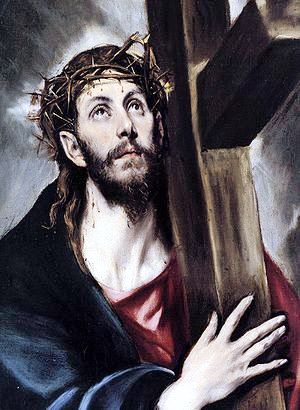
Jesus says, “It is lent. Come on.  Take up your cross and follow me.” Jesus does not summon us to a quick easy death.  He says cross – that slow torment that keeps you hanging around, conscious, gasping, while the body strains and sags against the nails that pin us to our own circumstances and the slow agonizing drag of gravity does its job.


We sink slowly into the earth, the forces of the universe pulverizing us over eons into dust.  At such a prospect, heartily endorsed from pulpits far and wide, one’s transcendental powers, mature or immature, might well benefit from a swig of Geritol.


“Have a Happy Death,” my friend says.  And I go read about those eccentric saints who extol the joy of suffering and actually prayed to share in Christ’s pain.  What did they know I don’t know?


A while back I got a large envelope in the mail with the words SECRETS THAT CAN BANISH PAIN emblazoned across the front.  Inside a Mr. Mark Bricklin promised to send me secrets that would save my life and show me HUNDREDS OF WAYS TO GET FAST RELIEF.  I looked over his offer and decided to take a nap.


Our culture has little capacity to find anything redeeming in anyone who would deliberately seek to suffer. We have a difficult time distinguishing between the suffering of sacrificial love and suffering that is meaningless and self-defeating. It is hard for us to believe that suffering consciously chosen and accepted could be anything other than dysfunctional behavior.


This may be part of the reason why the season wears us out.  This Jesus hanging on a cross for our sakes appears hardly functional.  He makes none of the promises of Mr. Mark Bricklin who exhorts me not to deprive myself and my loved ones of the chance to truly banish pain.  (Mail the enclosed card today!) The effort of leaning up against that cross in a culture that seeks to banish pain, and the real spiritual work of extending ourselves past our exposed doubt deeper into God is more than a little fatiguing.


Spiritual growth may be seen as slowly deepening belief, or the steady erosion of our hypocrisy.  Layers of pretense and self deceit  peel away to expose our fear.  What is revealed is the limit of our belief, its edges.  A good deal of our suffering is that raw exposure of our doubt, our unbelief, to the light of the Risen Christ.  It stings, smarts.  We think we are dying, losing everything.


Perhaps the difference between tragic suffering and the redemptive suffering in which Christ invites us to participate lies not in the amount, kind or quality of the pain, nor in its cause.  What makes one kind of suffering sacred and healing, and another simply one more case of horror and abuse inflicted upon an innocent victim may lie in the extent of our personal freedom to choose how we respond to the pain we experience when others trespass against us.


And here we might look to Jesus, the pioneer and perfecter, “who for the joy that awaited him, endured the cross, despising the shame…” (Hebrews 12: 1-2)  We do not have to love our suffering; we just have to bear it.  We take up our crosses.  We consciously receive the pain that comes our way, not for the pain we must endure, but for the joy that awaits.  In this way we become martyrs, not in self abasing, whining, self-righteous martyrdom, but in the original sense of the word.  Martyr in Greek means witness, one who has seen God and is willing to testify by one’s life that God lives – even in the midst of death and evil and defeat.


Perhaps what those long-suffering saints know that I and Mr. Mark Bricklin haven’t yet grasped, is that what makes suffering redemptive is enduring the cross despising the shame, making light of its disgrace. The self which dies is the ego, the grasping, controlling, faithless part of ourselves which believes everything is up to us.  Unlike Jesus, we do not despise the shamefulness of our suffering.  We despise ourselves instead.  We are humiliated and contemptuous of ourselves in situations of disgrace, defeat and loss which expose our limits.


We want an explanation for our pain.  The ego anxiously searches for meaning in the mistaken notion that in understanding we may find relief.  Jesus does not seek to justify himself.  His focus is not on the cause of his suffering, but on obedience to the One he loves and from whom he came and to whom he is headed in joyful reunion. Jesus does not despise himself, instead he despises that which seeks to humiliate and destroy his identity as the holy Child of God, in other words, his innate goodness and sanctity.  Jesus does not stop loving himself or God in his suffering.


To be beaten, to be rejected, to be abandoned and despised without beating, rejecting, abandoning, and despising oneself is to know oneself as a child of the Holy One.  To suffer, despising the shame, is to remain grounded in one’s essential goodness, even when one has reached the limits of one’s ability to do good.


A blessed lent to you and to Mr. Bricklin too.  May we all enjoy a happy death, a good rest, and steadily maturing transcendental powers.


This post adapted from Letters from the Holy Ground, Sheed & Ward, 2000, written by Loretta F. Ross (Ross-Gotta).
The Sanctuary Foundation for Prayer

Read more about prayer www.fromholyground.org
Contact the author lross@fromholyground.org, www.fbook.me/sanctuary
Follow at http://twitter.com/lfross


Still Not Saved?

The summer is over, the harvest is in and we are not saved.  Jeremiah

You might chalk it up to the waning of the light, or to the overcast skies. Regardless of the cause, the change from summer to fall often stirs up a case melancholy in our souls. The shrubs I purchased last July and watered in their containers through the hot summer are still waiting for me to plant them. A year is winding down and I am looking at what remains undone, unsatisfied, and unfulfilled in my life.

A little mouse has found the bird feeder outside my window. He shimmies up the pole each day and gobbles the sunflower seeds and cracked corn. I suppose I should sic my cat after him, but I haven’t the heart to intrude on his salvation with her teeth in his throat.

Autumn’s teeth are biting into my heart. I don’t notice the pain as long as I am working. Then there it is, asking for my attention. A young woman described to me the pain she was feeling as like a splinter working itself out. “I think I need to just feel the pain I have stuffed for so long.” Another woman avoids sitting still to pray and listen to God. When I asked if it was because that was so painful, she began to weep in recognition.

What is it that will save us? What will rescue us from our incurable wound, as Jeremiah calls the distress of his people? Will the politicians scrambling for public offices? Will the latest technology? Will scientific advances? Will new leadership? Will my working night and day save us?

In the growing dark of autumn, reality appears more nuanced, layered, and resonant to me, than life as we tend to live it — skimming over the surface, subsisting on sound bites, condensation, slogans, and bumper stickers. In my fall funk I am suspicious of easy answers, human arrogance, and frenzied activity.

I am not alone in this assessment. People come for spiritual guidance. They sit down and reflect prayerfully upon their lives. They unpack their days and their opinions, lift and hold them to the light. They savor, grieve, rage, and weep. Sometimes they talk about how they do not fit in at their churches. Some are looking for more depth. Sometimes they ramble and are hard to follow. One person sits and simply says, “I do not know. I don’t know,” over and over.  Sometimes they thank me for the safety and freedom they feel here.

I listen and pray and observe the Spirit’s dance in their stories. I witness the subtle shifts and changes in their hearts. These individuals possess that rare gift, an inner life, an examined inner life. They have taken responsibility for what is going on in that inner life. They understand how the truth of their interior reality shapes their outer experience. They are engaged in the serious and critically important work of personal transformation, self understanding, and deepening faith.

What I do is to stay with them in their pain, even when they can’t stand to stay with themselves. I believe, when they cannot believe. I hold up a light, as they discover the healing and freedom that wait beyond their darkness.

Many of us want to foster change in our world and institutions without doing the deep and painful inner work of our own transformation. How can I ask a whole community to change without being intimate with my own pain and my resistance to the cross of suffering in my life?

Thomas Keating invites us to understand our personal pain in a larger context, “Whatever you are going through is your invitation to participate in the redemption of the world.” The implication here is that healing for us all is made available through how we as individuals respond to the pain in our lives. This redemptive, life giving power of suffering love is modeled for us by Jesus.

The French activist and mystic, Simone Weil, writing in the late 1930s, observed that “The moral revival that certain people wish to pose will be much worse than the condition it is meant to cure.  If our present suffering ever leads to revival, this will not be brought about through slogans, but in silence and moral loneliness, through pain, misery and terror, in the profoundest depths of each man’s spirit.”

We are all trying to get by the best we can, taking our harvest where we find it. We are still not saved. The cat lurks. The market falls. You can’t find a job.

Perhaps what is called for in this waning of the light is the ability to be compassionately present to our collective suffering with love and faith. Could we not trust that out of the profoundest depths of our spirits, as we die to ourselves and the way we want things to be, unimaginable new life is already putting out tiny rootlets, waiting to emerge in some distant spring?

If you can’t believe that, I do not fault you.
We all have days like that. Besides, it’s autumn.

In the mean time, lean on me.


Become a fan of the The Sanctuary Foundation for Prayer
Read more about prayer www.fromholyground.org, Tracking Holiness – Newsletter
Contact the author lross@fromholyground.orgwww.fbook.me/sanctuary
Follow at http://twitter.com/lfross

The Dance of Suffering and Joy

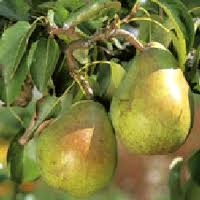
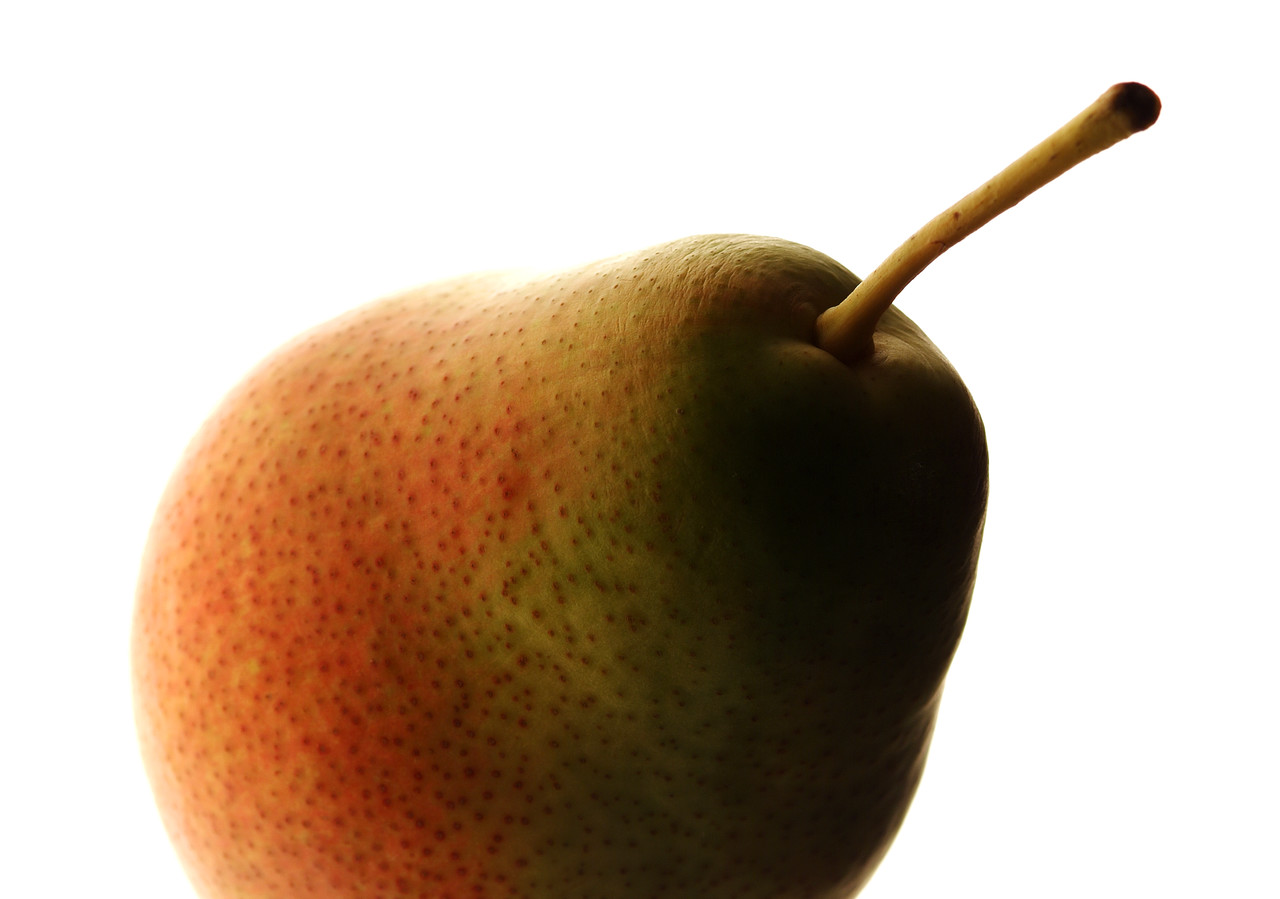
The leaves of the pear tree are glossy and thick on the branches. The pears, a bit larger than walnuts, blush rose near their stems. On my window frame hangs the icon of a skinny naked Jesus. It is the crucifix of San Damiano from which St. Francis heard Jesus tell him to repair His church. This Jesus will not meet my gaze, but looks down some hellish tunnel of sorrow that hallows the space between us. His face is grey, mouth turned down. He is wearing a sheer loin cloth that looks like it came from Frederick’s of Hollywood. I am embarrassed for him in his poverty, his utter abasement. Cheer up Jesus!  You look terrible. The pear tree is laden with fruit this year!

He doesn’t seem to notice the fruit, though he must see it – his eyes are wide open. Pinned like a specimen to the cross where under his arms are gathered stately mourners, he bleeds in tiny spurts from hands and feet. Angels hover over his head in neat rows. One appears to be performing a liturgical dance. No – that’s no angel. It must be Christ on his way to heaven, ascending in a crimson mandala.

The crucified Jesus just hangs there. Has he no shame? It is I who squirm, not he.  For his eyes pin me at the intersection of poverty and abundance where I hang ripening in the Kansas sun in mid September. O Jesus, how long must you hang there suspended in misery, wearing us out with that sorrowful stare?

With an introit of barking dogs, the squirrels soon will come to pluck the half-ripe pears with their agile paws, taking one bite from each, and then carelessly tossing them to the ground to rot. Pray God to preserve us from squirrels that raid at dawn, chattering and chasing up and down the branches, tempting us into thinking that we have been made to be consumed by squirrels. Pray God that we may be left hanging, suspended by the heart’s stem, hidden in the leaves until we’ve ripened properly. And then, at the sharp insistent teeth of need open our flesh sweet and tender to one another.

Then maybe that sad Jesus will get off that rugged cross and come eat the fruit of summer with us.

____________________

We went to Koger’s Variety Store for back to school specials the other day and painstakingly put names on new back packs, glue bottles, scissors, and Big Chief Tablets.  We watched Dad’s jaw drop as he wrote the check for new clothes at the mall.  Then last evening we noted it was getting dark so early.

The air is uneasy, a mix of the eager hope of a brand new lunch box and the painful regret that summer is over and we never got around to making those doll clothes or camping out in the back yard to watch the stars all night.

Jeremiah laments with us, “The harvest is past, the summer is ended and we are not saved.”(8:20)  And we find ourselves at the  intersection of poverty and abundance where the kingdom of God is conceived. Christians seem to perpetually stand on the threshold of a new school year clutching our shiny lunch boxes in one hand and the forsaken dreams of summer in the other. Holy ground is the paradoxical place where we simultaneously live in the Pentecost fullness of the gifts of the Spirit and the power of the Risen One; and in the crucifixion emptiness and cry for redemption of the Suffering One.

Jesus tells us that of God’s own will we have been brought forth to be a kind of first fruits of God’s creatures.  Like the firstborn child or the firstborn of livestock, the first fruits to come ripe in a season were sacred to God.  “When the grain is ripe, ready to be given up, at once the farmer puts in the sickle because the harvest has come,”(Mark 4:29) says Jesus. When one is ready to die, then harvest is come. How odd to be ripening for death, to be growing in Christ only to be handed over.


Just as the cross is the joining of two opposite directions, we live in the creative tension of the union of poverty and abundance.  The tension is great, and it is hard for us to stay in the center of the cross for very long. We want resolution. We are tempted to heave ourselves down one polarity or the other.  But if we can hold both the pear tree laden with fruit and our ongoing need to be nourished, if we can accommodate both the Risen Christ and the Crucified Savior, then we may discover, out of the union of these opposites, new fruit conceived in us which will heal and sustain the earth.

The barrage of demands and the voracious appetite of a culture that seeks to devour, rather than savor its sustenance undermine a quiet patient trust in God’s seasons of growth and harvest.  What is it that finally brings us to fruition? Is it not the sharp insistent teeth of need, our own poverty and the poverty of one another, that finally allows us to fall sweet and tender into each other’s embrace?

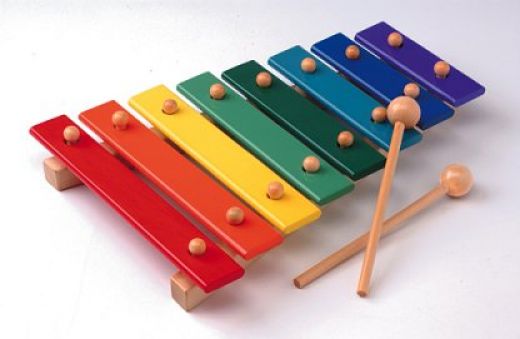
At Toys R Us — Oh my, toys are us! In Proverbs Wisdom tells us, “At the beginning I was playing beside him like a little child and I was daily his delight.”(8:29),  I listened to a tinkling recording of “It’s a Small World, Isn’t It?” while watching a lion and a lamb, a giraffe, a hopping kangaroo, and a waving bear shimmer across a plastic screen. Nearby Cicelia plinked a xylophone in plunking delight.

Then in the department store she asked, “Are shoes alive?”

Her elder sister exclaimed, “No!”

But she persisted, “I saw one talking on TV.”

“Let’s see,” I said, and leaning over a cordovan Bass loafer inquired, “Are you alive?”

“Oh mom,” Diana sighed.

We tried on grown-up perfume. When the saleslady offered to help, we told her we were searching for a fragrance that was really “us.” A spray, and Cicelia, pressing her hands to her cheeks, giggled, “Oh mom, I know this one is me!”

Before boarding the escalator we tried on hats. Cicelia, in a large brimmed red felt with ribbons, and Diana, in a small black veiled cloche, gazed at their images in the narrow mirror on the best day of my life.

We took six dresses from a rack for Diana to choose. Cicelia was her handmaiden, letting it be according to sister’s word, carrying, doing buttons and zippers, and holding up the blue satin fabric like a swatch of heaven against each dress.

Jesus, I thought you were suffering, but I saw streams of light pouring from your head like a fountain, spraying colors – blue, azure, hues of red, green, yellow – shimmering rainbows irradiating in spurts and gushes and rivers from a still small body sagging on a tree. All day I played plinking magic while you spun streams of green leaves, jungles, hay fields in spring, purple hyacinths, beets, cerulean seas, dolphins, berries, mountain mist, and a single red rose flame out of the chaste and tender aureole of your pain.

There in the dance of creation and dissolution, there where our need is met with the abundance of another and our abundance fills another’s lack,

there where it is a small world after all,

there is our joy made complete.


This post is excerpted from the author’s book, Letters from the Holy Ground – Seeing God Where You Are

If you find something here you like, let us know! The Sanctuary Foundation for Prayer

Read more about prayer at www.fromholyground.org ,
Tracking Holiness – Newsletter
Contact the author at lross@fromholyground.org, www.fbook.me/sanctuary
Follow at http://twitter.com/lfross

Prairie Lamentation

Driving west on Interstate 70 from Topeka, Kansas around ten in the morning, I plunged into that green swath of oceanic beauty called the Flint Hills. Named by explorer Zebulon Pike in 1806, the majestic sweep of bluestem prairie extends north to Nebraska and south all the way to Oklahoma.

Formed 250 million years ago when Kansas and Oklahoma were covered with shallow seas, the land is compared to the undulating roll of a great body of water. The shallow soil rests on seabed layers of flint, shale, and the fossilized remains of sea animals.

Reveling in the beauty, I was sailing down the road, when I came abruptly upon a sight that brought my heart to my throat and sent a chill down my spine. A huge shimmering whiteness moved off to the north along the road. Bigger than the side of a barn, it lifted and fell back to the ground. It seemed alive somehow, but no animal could be that large.

I slowed, curious and wary. The highway was deserted. Was this a UFO? Maybe I should look for an exit and turn back. I drove a bit further, then coasted onto the shoulder, and stopped about 100 yards away, watching that white thing waving.

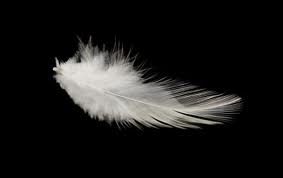
It looked like huge wings. One wing spread up the side of a hill, the other lay nearer to the road in the valley. A few iridescent feathers lifted in the wind and reflected the blue sky like mirrors. The wings were rising and falling slightly in a convulsive shudder.

It’s hurt. It needs help. But it’s huge. Would I scare it? Would it attack me? And what is it?

I looked up and down the road. Still no traffic. I opened the car door and slid out. A sudden rush of wind whipped past and slammed the door shut. The air was cool and smelled of grass. The only sound was the soft swish of shuddering feathers. Standing by the side of the road between earth and heaven, I pressed my hands over my mouth and stepped forward. I had taken a few more steps when, suddenly, the thing, the bird hiccupped. It convulsed and heaved in a ragged sob.

I nearly jumped out of my skin, but I saw that it was crying. The beautiful bird had spread herself over the sea of grass to weep. Don’t ask me how, I just seemed to know the bird was a she.

I moved a little closer, wondering if I could be of comfort. May I help you? But before I could finish the thought, a river of grief and anguish engulfed me and I tumbled over and over, gasping for air, drowning in sorrow. A deafening roar of cries and sorrow filled my senses. Then a battering wind and hellish screams pulverized me into tiny pieces, flinging me into darkness. After that, nothing.

When I came back together as myself, I was there in the quiet August morning with the hills, the sky, the empty highway, and the still bird. She seemed calmer now. The shuddering had stopped.

Are you all right? I asked. Are you able to fly? And again, instantly, I was drawn out of myself in a sickening swoop over mountains. We dove into the depths of the sea, peered into the eye of a whale, and crawled with a crab on a shore. I saw the molecules of a heart valve, and plummeted into the shrunken belly of a child in Sudan. We whooshed through glittering palaces of power and stood on the floor of the New York Stock Exchange. She laid those wings over a pile of bodies in Pakistan and sat on the shoulder of a man holding an AK47 rifle. We splashed in a child’s swimming pool with a little girl in a pink and green striped bathing suit. She whispered to an artist bent over a painting, and coursed up the stem of a tomato vine in Fremont, Nebraska.

This time, reeling and breathless, I didn’t want to ask any more questions, or bear the answers. I gazed upon her wings spread over the prairie grass and the reflection of the blue sky, the puffy white clouds, and the tall grass waving. In the play of light and color I caught of glimpse of a woman peering back at me and realized with a start that the woman was myself.

Then she lifted one wing. She drew her head out from under it and turned her eyes on me. A bolt of love and compassion seared through me with the crackle and snap of flames rising from dry wood.

I sank down beside the bird. What do you want of me?

Tell them.
To stop.
Hurting me.

I cringed, shaking my head. I can’t. I am complicit. I have blood on my hands, too.

She waited for me. The wind ruffled her feathers. The puffy clouds moved across the sky. Somewhere a meadowlark called.

Okay. How?

Be brave.
Be brave, she told me.
Be brave.
_____________________________

Let no unwholesome word proceed from your mouth, but only such a word as is good for edification according to the need of the moment, so that it will give grace to those who hear.  Do not grieve the Holy Spirit of God, by whom you were sealed for the day of redemption. Let all bitterness and wrath and anger and clamor and slander be put away from you, along with all malice. Be kind to one another, tender-hearted, forgiving each other, just as God in Christ also has forgiven you. Ephesians 4: 29-32 (NASV)

Don’t grieve God. Don’t break his heart. His Holy Spirit, moving and breathing in you, is the most intimate part of your life, making you fit for himself. Don’t take such a gift for granted. Ephesians 4: 29 (The Message)

We invite you to become a fan of the The Sanctuary Foundation for Prayer

Read more about prayer at www.fromholyground.org,
Tracking Holiness – Newsletter
Contact the author at lross@fromholyground.org, www.fbook.me/sanctuary
Follow at http://twitter.com/lfross

How the Light Gets In

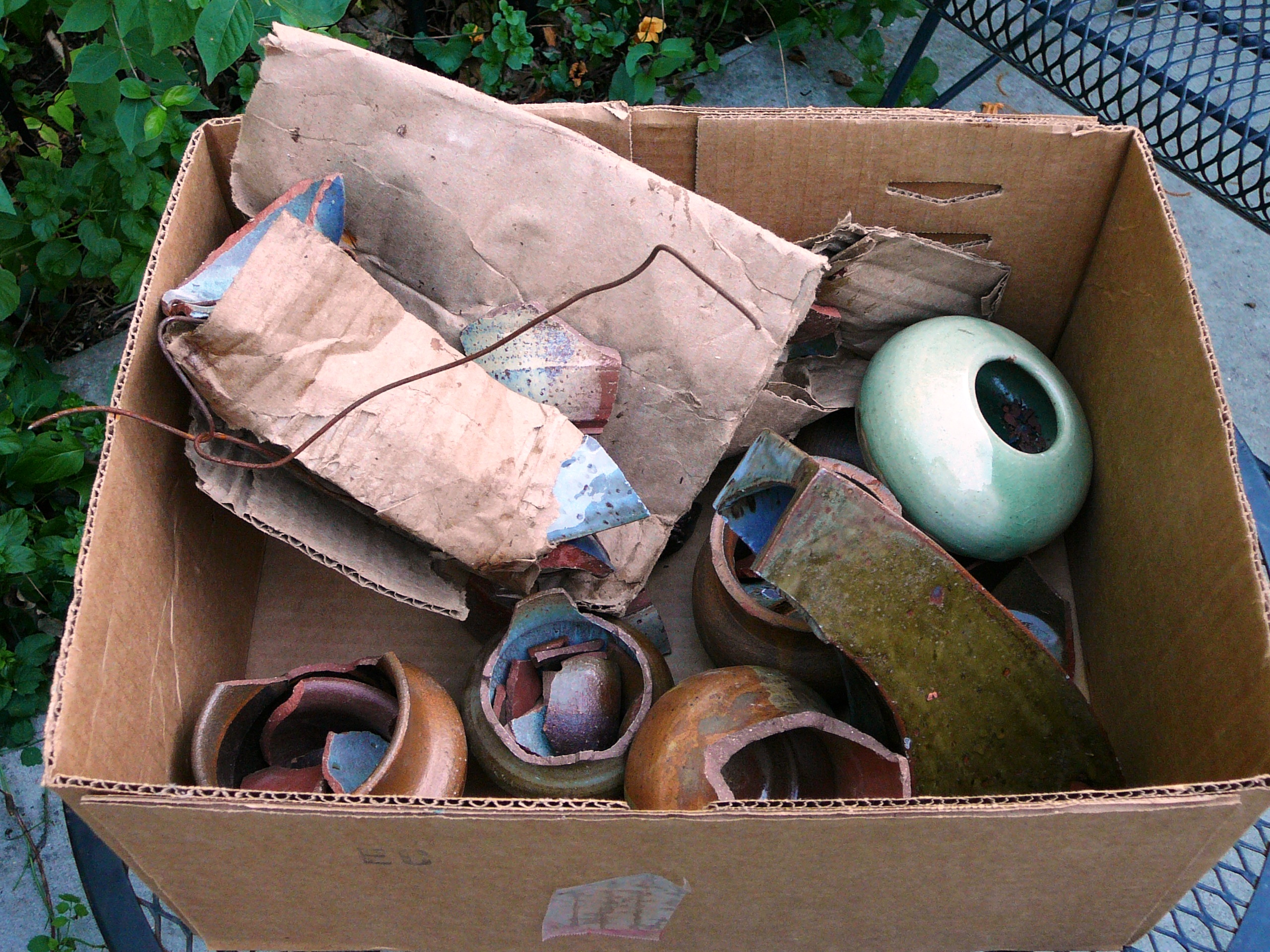
Weeping before the box, she lifts out the pieces and places them on the counter. All but one or two are broken.
Two weeks before when the boxes arrived, I had carried, heartsick, this one filled with the chink and clatter of broken pottery to the basement. Then I forgot all about the box of broken dreams, until I heard her carrying it up the stairs, shards rattling like a chest of huge coins.
She moves the pieces on the counter, sorting and fitting parts together.
In a distant city another young woman also picks out the ruins of herself from the broken jar of illusion.
So much is broken – plans, relationships, jobs, dreams – and rattles around inside us. We take out the pieces, hold them to the light, and try to fit them together. This confrontation with our fallibility and that nothing earthly lasts forever brings deep suffering. Loss is always more painful than the books can say, the scriptures convey, or the prophets of prosperity preach. We need a picture.
A man at the end of his own dance with mortality, hunched over on his knees in a dark garden, tears rolling down his face. He says to his father, the Heaven Dweller, “Take this cup from me.” And to his friends, “Can you not stay with me one hour in this agony?”
There may be something harder than watching one’s children suffer, but on this day I do not know what it is. The hardest thing I do in this work of ministry, prayer, and listening to souls in their journey to God is staying awake with others in their pain. This is to say, that the hardest thing is staying awake with Jesus as he suffers in others.
Some days I fail. I numb out. I fall asleep. I deny the suffering, blame the sufferer, quibble and become annoyed and irritated with how the person expresses her pain. The other day I thought of one family, “Always lots of drama in this family system.” I suppose, applying the same cynical criteria, one would have to say that Jesus was the all time drama queen.
Can’t you just stay with me in this torment? Can we just be there, trusting God and the soul to figure things out? Respecting the power and presence of the Holy Spirit in the awesome autonomy of an individual life, while lifting up the candles of faith, hope, and love seem to be my task.
I fidget. I want to fix things, pass out band aids. Leaning over her shattered treasures, she tries to wire one sculpture back together, fashioning a frame of cardboard.
“We need some glue. I’ll get some glue,” I say. “Let’s go to the store and get some good glue.”
She refuses.
Finally I stop.
Several days later I ask about the box of jumbled shards on the porch. “Oh, I don’t care what you do with it,” she tells me, as she heads off with her eyes on new heights.
To love, to know passion, and bliss is also to have our hearts broken. I know of no way to get around this and anyone who tries to tell you different is a liar. To live, we must die. To touch transcendence and eternity is also to gaze upon and weep over the box of our own finitude, our broken handiwork, our illusions, and limited understanding. “Forget your perfect offering. There is a crack in everything. That’s how the light gets in,” sings Leonard Cohen.
The man in the dark garden gets up. It is time, he says, to be broken.
It is time
for us to be made whole.

The birds they sang
at the break of day
Start again
I heard them say
Don’t dwell on what
has passed away
or what is yet to be.

Ah the wars they will
be fought again
The holy dove
She will be caught again
bought and sold
and bought again
the dove is never free.
Ring the bells that still can ring
Forget your perfect offering
There is a crack in everything
That’s how the light gets in.
Leonard Cohen
Dear Hearts: Don’t give up. Don’t ever give up. For fun – A couple of video versions of Cohen’s Anthem.
You Tube: Cohen in concert singing Anthem
You Tube: Photo interpretation of Anthem
Read more about prayer at www.fromholyground.org
Tracking Holiness – Newsletter
Contact the author at      lross@fromholyground.org, www.fbook.me/sanctuary
Follow at http://twitter.com/lfross
Become a fan of the The Sanctuary Foundation for Prayer

A Goodly Theme

This post is an adaptation of a post first published July 5, 2010.

My heart overflows with a goodly theme
as I sing my ode to the King. Psalms 45:1

The kingdom of God will come when men and women are willing to be penetrated by bliss.
-M.C. Richards – Centering in Pottery, Poetry, and the Person

Her words stopped me in my tracks and resonated like a struck gong. Little seemed blissful in my life at the time. It was 1973. I was living alone in an apartment in Ann Arbor, Michigan, working at a job I hated, depressed, and hurting deeply. These words of artist M.C. Richards penetrated my defenses, self pity, and sense of worthlessness like a swift shining sword. For the first time in a season of sadness I felt hope.

The notion that the rule of God, the peaceable kingdom, the promise of wholeness for all people is a function, not of ridding the earth of evil, not of righting all injustice, not in overcoming human sin and limitation, but rather our willingness to receive goodness and mercy into our being  has animated my life ever sense.

“Put down your sword!” Jesus tells Peter in the garden of Gethsemane. Peter, in a desire to protect his master, had taken a sword to the ear of one of the Roman soldiers who had come to arrest Jesus. However, Jesus’ kingdom was not of this world. It is a Reality already here, present, and accessible to all. Jesus says, it is within you and everywhere like a seed, common and transforming as leaven. The winsome, disarming Jesus manifested that kingdom wherever he went and invited his followers to do the same.

Two disarming black labs, my Elijah and Jean Luc Picard, who arrived with some house guests, have been teaching me about bliss. The dogs met for the first time a week ago with the hearty delight of Adam, when God introduced to him the woman he had made of Adam’s rib.

“Ah, at last a fit companion! Bone of my bones, flesh of my flesh,” Adam exults. Though not recorded in the scripture, I figure Adam then wiggled all over just like my dog, Elijah.

The best-friends-forever have been inseparable – wrestling, play fighting, swimming, fetching, and sprawling, here and there, exhausted and snoring. Holding back nothing, these fellows have allowed bliss to penetrate and animate every cell of their bodies. Bliss surrounds, follows them, spills out of their eyes, and rolls off their shoulders. Even the cat has a spring in her step and an amused quality to her feline reserve.

I believe the great challenge of our time and all mortal time is holding our hearts open to the rain of grace – the glorious reign of delight that ceaselessly offers itself to the whole creation.

“But hold on!” you say. What about climate change eating away our coasts and killing off species? What about health care crisis?  What about the lives and shores devastated by oil spills? What about your own personal crisis and impasse, your unemployment, your grief, your illness? What about the suffering ones everywhere we turn?

Could you, will you, permit the tiny possibility of joy to penetrate your darkness, to kiss you on the face, to pounce upon you from behind? Maybe, before you know it, it will jump up into your lap and go to sleep in your arms.

To notice, delight in, and allow ourselves to be penetrated by the goodness of God does not mean we ignore the places where that goodness is obscured or sorrow and pain exist.

The amazing opportunity to be a member of the homo sapiens species alive on this earth at this time is an incredible gift.  Our willingness to receive, to lay down and roll on our backs in, the sheer bliss of being alive is what allows God to transform that vortex of darkness, greed, and hate through us. What evil and sin target and destroy is joy, because joy is a unfallable sign of the presence and power of God.

The world does not need our disgust, outrage, anger, and rage. It needs the Reign of Christ’s joy with its unfailing hope, faith, and love. The world – sucked into the whirlpool of greed, violence, and  suffering – will not enter the Kingdom of God through our anger, retaliation, and swords, but through our bliss, the utter delight and lab-lucious joy of being children of the Father of Goodness and the Mother of Mercy.

Let no one and no circumstance rob you of such a splendid birthright.

Download and read latest issue of Holy Ground – A Quarterly Reflection on the Contemplative Life,  “Try a Little Tenderness”

Holy Ground Spring 2017