Tag Archives: Jesus

How To Eat A Piece Of Chocolate

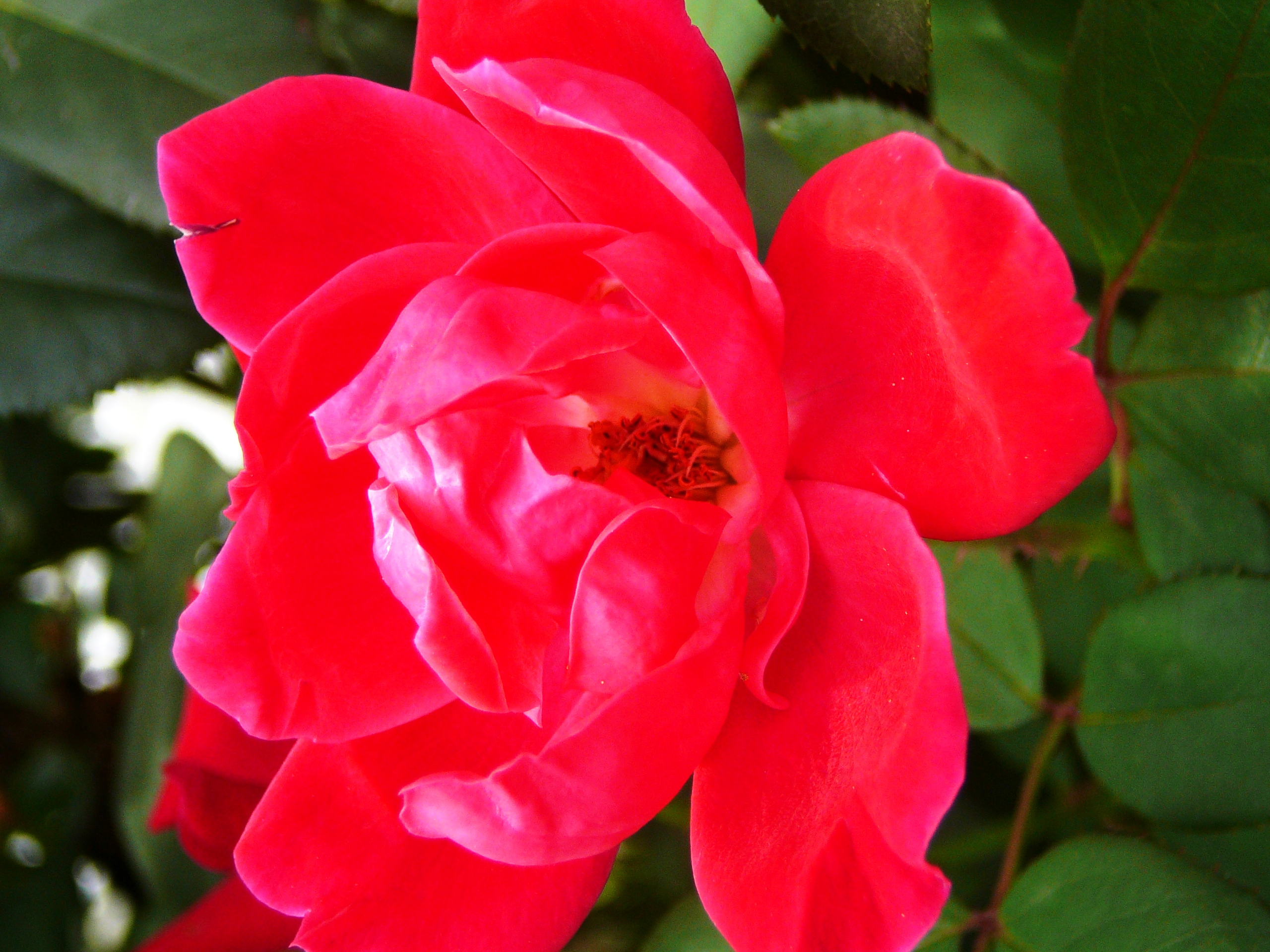
This image was selected as a picture of the we...

Wake up. Pay Attention.
Jesus

It matters little to the soul in what manner
it is obliged to abandon itself,
and what the present moment contains;
all that is absolutely necessary
is that it should abandon itself unreservedly.
Jean Pierre de Caussade

Don’t gobble it.
Don’t do anything else while you are eating it.

Do not read email.
Do not watch TV.
Do not adjust your makeup.
Do not drive the car.
Do not talk to someone.
Do not try to write about eating chocolate.

Sit down. (This is going to take a while.)

See the wrapper.

Examine it, noting the color, graphics, ingredients, and company information.
See the lineage of your chocolate.

A small tree is tucked under the upper canopy of the rainforest, probably in West Africa. Anchored in rich soil, bathed in high humidity and tropical heat, the cacao tree sways in the breeze. A tiny midge, bred in the tree’s decaying leaves on the forest floor, begins its journey upward to crawl within the five petals of the white, dime-sized flowers blooming directly from the trunk. After the flower fades, a pod develops, stuffed with seeds, which are picked, fermented, dried, and ground to make your chocolate.

English: Cacao (Theobroma cacao) Español: Plan...

See the farmer who planted and cared for the cacao tree.

See the workers harvesting the beans, hauling the harvest, inventing, and operating machines. See the long train of people who have brought this chocolate to your hands and at what price? How many were children? Who suffered? Who gained? What has it taken to bring this smoky rich flavor to your mouth? How many miles has it traveled on someone’s back, by cart, conveyor belt, crate, ship, plane, or truck? How many hands has it passed through – plantation owner, shipper, factory worker, buyer, grocery stocker, check out clerk – to bring it to your hand?

Say thanks.

Relax. There is no rush here. Not now.
You hold eternity in your palm.

To pay attention and be fully present in each moment is to meet eternity. For each moment offers in its endless treasures all you will ever need for that moment. Some call this the sacrament of the present moment, or being present. Others call it mindfulness. Jesus called this quality of trust-filled awareness the kingdom of God.

Remove the wrapper.

Feel the weight, see the color and shape of the chocolate. Lift it to your nose and sniff its fragrance. Do you catch the whiff of forest nights, heavy with insect song and stars?

Run your finger over the chocolate. Is it smooth like satin, rough, or molded in some way?

Break off a piece. See it separate and reveal its interior.

Now bring it to your mouth.
Wait. You are getting ahead of yourself.

Slow down.

Do not eat it before you eat it.
First, bring it to your mouth to bring it to your mouth.

Pay attention to the impulse to lift your hand and the complex brain chemistry and mechanics of respiration, circulation, nerve, muscle, tendon, and bone, which perform this feat at your merest whim.

Feel the chocolate touch your lips. Run your tongue over the surface.
Press
your teeth into it until the chocolate gives itself to you
and splits in two.

Hold the forest, the flower, the midge, the wind, the suffering,
the unappeasable appetite of commerce, a thousand sweaty hands,
and a thousand sultry nights
in your mouth.

Feel them soften and release their sweet, spreading river of bitter, buttery cacao.

________________

Mindfulness is the miracle by which we master and restore ourselves. It is the miracle which can call back in a flash our dispersed mind and restore it to wholeness so that we can live each moment of life. Thich Naht Hahn

The present is ever filled with infinite treasure, it contains more than you have capacity to hold. . . .The divine will is a deep abyss of which the present moment is the entrance. If you plunge into this abyss you will find it infinitely more vast than your desires. Jean Pierre de Caussade

Writing Exercise
Eat something mindfully, awake and aware in the present moment, and write about your experience. How did you feel when you began this exercise? How did you feel when you completed it? What did you notice, experience, or learn?

Chocolate tasting selection

Friends, I will be away from writing and reading for the next two weeks . I will spend ten days in silence and meditation, practicing mindfulness, as I walk, breathe, wash my face, and eat a little chocolate.

Perhaps we will meet in the spaces of eternity in each new moment.
Until then, pay attention!

Loretta

Boring Church and the Vulnerable God

There is a bit of the scientist in anyone who sets out to test in his or her own life if Jesus Christ is really all he is cracked up to be. “Prove it,” the contemplative says to God. Here are all these promises: freedom, joy, abundance, peace, wholeness, justice, truth, and life eternal. “Show me,” says the contemplative, setting out to experiment with divinity in the laboratory of experience.

In the beginning God is the object of the search. At some point God may peremptorily rise out of the test tube and take over the experiment. I find myself being dissected. My soul is flayed open by truth. I am blinded by glaring light and toasted over a Bunsen burner, where my impurities are burned away and I am distilled into my essence. I am no longer in control of this process. The knower and the known have shifted places. And truth is not something I can find, but something that has me in its grasp.

Theologian Lesslie Newbigin observes, “Reason, even the most acutely critical reason cannot establish truth.” … [This is because] You cannot criticize a statement of what claims to be the truth except on the basis of some other truth-claim – which at the moment – you accept without criticism. But that truth-claim on which your critique is based must in turn be criticized. Any claim to know truth is, therefore, simply a concealed assertion of power.” (Truth to Tell, The Gospel as Public Truth, Eerdmans, 1991, pp 29-30.)

The work of scientist Michael Polanyi reminds us that “all knowing involves the personal participation of the knower, that knowing always involves the risk of being wrong, and that the struggle to know calls for the fullest exercise of personal responsibility.” Truth to Tell,  p.51)

Instead of seeking proofs of God from reason or experience, the contemplative finds fulfillment simply and humbly dwelling in love in God’s presence.  The contemplative gives God entry into the world, not through a claim of truth, but through a believing heart. Instead of an exercise of power through the assertion of my reality over yours via dazzling argument or feats of spiritual prowess, the contemplative takes the vulnerable route of allowing God to make God’s own appeal through the context of his or her surrendered life.

I acknowledge my vulnerability when I say, “I cannot know it all. I may be wrong. This is what I see. This is what I am responsible for articulating as clearly as I can.” We might characterize the spiritual journey as the process of discovering right relationship to this vulnerability, which we meet in ourselves, others and in God.

By vulnerability I mean capable of being wounded and wrong, open to attack or damage. Our vulnerability may include our sin and temptation to evil, our failure and weakness – wherever we are not whole, wherever we fall short of the glory which is our promised inheritance as God’s children.

We can relate to our woundedness in many ways: with anger, resentment, impatience, contempt, deceit, shame, and blame. We can so identify ourselves with our vulnerability that we know ourselves only as victim. Then, committed to our suffering and stubbornly resistant to healing, we may defend our wounds with fierce loyalty.

God sends into our consciousness, into the heart of matter, Holy Vulnerability in the form of Jesus. It teaches, heals, suffers, dies, and rises saying, “Look, watch me. This is what it means to be human. It is all right. Everyone is wounded. Follow me and be healed.”

Over and over Jesus’ ministry reached out to the vulnerable ones. He brought home the lost and the misfits saying, “You belong too.” He didn’t bring them back to turn them into Jews or folks like him. He just brought them back saying, “You, just as you are, are important. You have a contribution to make. We need you. You belong.”

Loving Jesus takes away our shame for being human like nothing else can. For he shows us how to be poor, how to value and appreciate our vulnerability. He tells us the vulnerable ones will see God and inherit the kingdom of heaven. He helps us get off our high horse and come down where we ought to be on our knees.

In the painful encounter with our vulnerability and diminishment, we meet the diminished suffering God and our own holiness. For in my poverty I discover my true worth. Stripped of what I can do, what I possess, how I am known by others – all the external ways I have attempted to create worth for myself, I find my true self in the center of my humility, which is also the dwelling place of the Trinity.

I used to read my children a story about a little girl who was born with a long tail like a dragon. Various characters seek to help the child with what is perceived by some as her disability. I liked Mike the cat’s approach best. “Teach her to love her tail,” he sagely advised. He shows her how to switch her tail back and forth, wind it around the fire escape railing and hang upside down. Teach her to love her tail.

Part of the task of the church is to teach us to love our tails and God’s tail, Jesus. Spirituality without Jesus Christ is spirituality that may be resisting the fundamental truth of our vulnerability. It may be a spirituality that, well or ill disguised, is exercising power, trying to be God.

The world holds vulnerability with fear and contempt. The church ought to teach us to hold it in our arms and love it. But the church is, of course, vulnerable too.

I was trying on a new hat when eleven year old Cicelia observed that you should always wear a hat to church. “It protects you from boredom, mom. The boredom rays, like the ultra violet rays from the sun are in church and sometimes at school. If you have a hat, you will be protected from the boredom.”

I hope the place where you worship is not boring. Maybe if churches had more to do with being with God and less to do with talking about God, things wouldn’t be so boring for Cicelia and others. As EvelynUnderhillobserved, “God is the interesting thing.”

A good deal of church seems to have little to do with God and is conducted as though God were, if not absent, at least very far away. Little time is given for God to get a word in edgewise. Our frantic activity and anxious busyness comprise our faithless creed that not much of anything can happen without our doing it ourselves.

Perhaps it is just too risky, too frightening. What if nothing happens? Nothing is changed or accomplished? Once Cicelia put a sign on her door painted in large red letters: KNOK or ELSE! Red paint ominously dripped from the letters like blood.

Jesus, we know you stand at the door and knock, but beware! We are resistant to transformation, devoted to our losses and the sins of others against us, and do not really trust your power in our lives.

The church will always be imperfect. It will be unimaginative and boring and rigid sometimes, because we are unimaginative and boring and rigid sometimes. Thank goodness God’s presence doesn’t depend on our winning academy awards in best Pentecost service of the year.

I have been in so many churches where you wonder why anybody comes at all. What with the dozen dusty arrangements of silk flowers and the sappy pictures of Jesus and the bad roller rink organ music you wonder what the appeal could be.

The appeal is, of course, Jesus. Jesus is there and active, because the people believe in him. Their vulnerable belief holds the door open for the vulnerable God to enter.

Knok or Else.  He is likely to walk right on in.

This post is an excerpt from my book written about learning to pray as I raised children in small town, Holton, Kansas. Loretta Ross (Ross-Gotta),  Letters from the Holy Ground – Seeing God Where You Are, Sheed and Ward, 2000,  pp 119-122.
Exploring Solitude: Leaving Solitude, Gone to Galilee

“Don’t be afraid.  I know you’re looking for Jesus the Nazarene, the One they nailed on the cross.  He’s been raised up; he’s here no longer.  You can see for yourselves that the place is empty.  Now—on your way.  Tell his disciples and Peter that he is going on ahead of you to Galilee.  You’ll see him there, exactly as he said.”

They got out as fast as they could, beside themselves, their heads swimming.  Stunned, they said nothing to anyone. (Mark 16: 6-7  The Message)

Contemplation is the world becoming luminous from within as one plunges breathlessly into human activity, wrote paleontologist, and priest, Pierre Teilhard de Chardin.

Eventually, that which calls us into solitude will also send us out of solitude. Communion with God by ourselves leads to communion with God with others and everything that is. The longing to connect with God returns us to all that is in God.  As Jesus prayed:

 I pray that they will one, Father, just as you are in me and I am in you. I pray that they also will be in us…I’ve given them the glory that you gave me so that they can be one just as we are one. John 17: 21-22 


Solitude deepens our appreciation and concern for all that is in God’s creation. Thomas Merton wrote that it was in solitude where he became capable of deep love for others.

I do not mean to imply that entering solitude means that we are without companions there. A jostling, rowdy, crowd of the saints and angels may join you from time to time. I believe the saints approve of our going off alone to pray and will show up to share their love, make wise cracks, and steal our cookies. Or – maybe it is the mice you hear in the night, muttering and munching your Cheetos. Yet other energies come and go – ancestors, spirits, the great chorus of prayer lifted night and day throughout time and space, the Trinitarian exchange of love that holds the stars in their courses.  Call it what you may. We are never alone. Yet one day, an angel of sorts will intrude on your cozy peace and tell you to go back to the crowds of Galilee.

Time to Go?
Many of us may live for long stretches with little major change in our lives. We complain and fret about the way things are, but we are comfortable in our complaining. Some kind of restriction, suffering, or limitation has become as familiar and predictable as on old friend. Or perhaps, we have grown beyond a wineskin, which once served us well, yet we continue to conform to it, cramming and squeezing ourselves in something which no longer serves us well.

Ways of living end. Even the lovely gifts of solitude come to an end. And it is time to go back home, or wherever home will be for us now. I have come to recognize an organic sense within me, which sits up, looks around, and begins to think of the world beyond my solitude. New energy, clarity, and purpose quicken within me. I know it is time to go back to the world. I am ready – rested, realigned, and serviceable for God’s good pleasure.

Or perhaps we wake one morning, rub our eyes, and say, “Well this is enough of this!” Maybe it’s the cross we are stuck on, clutching at our suffering, reviewing, blaming, nursing resentment, and bitterness.

So, we put down our fork and decide to stop eating sour grapes. And we go out to see if there is somebody who needs a hand to help them climb down from whatever they are hanging from or hanging onto.

Or maybe, you are stuck, numb, and passive in the tomb, playing out some kind of death drama. Then one day you sit up, look around and say, “Oh Rats. Guess I better get up. This is just plain silly. The door has been wide open for days. And I am missing out on all the fun.”

The Summons to Life
The Word of the Lord goes out to the mountains, the lake shores, the forests, and deserts. The Word of the Lord seeps under doorsills, writes itself upon your mirror, and grabs you by the throat in the doctor’s office.

Come, come! Follow me. I am not here. I have risen! Come plunge into the heart of the world, the hurly burly, the bustling shove and rush of life. Come, dive into the chaos. Let go of the death in your life. Follow me down the main streets crying, “Life is winning! Love is winning!”

And you, once basking in the silence and beauty of your Love, now ignite, burn incandescent, and, running with fire, immerse yourself in the midst of the darkness, blossoming like the night sky on the Fourth of July.

Isn’t this why you have been made, to be a rag, soaked in God, burning hot with truth and molten laughter? What good is all your suffering, your losses, and solitude, if they do not thrust you into the throng, wearing the fragrance of God?

People can tell you know, that fragrance, that scent of holiness, that wafts from you, when you have been spending time with God. Dogs and children will follow you. Birds will sing for you. And love-starved souls will line up at your door.

The world does not need your knowledge, your money, and competence. The world does not need your fear, your anxiety, your worry, your pitiful soul sagging from a cross, and your grim tales of death and woe.

The world needs your faith. The worlds longs for one authentic God-smitten soul, who can no longer hold back the Spirit, rising like an orange sun, like a soaring bird, like a great flag unfurling, shouting from every cell, “He is not here. He is risen. He is gone. Gone. To Galilee!”

Get over yourself. Stop sniveling and cringing.

Be a flame in the darkness, faith in the unfaith, hope in the despair, love in the hate, laughter in the gloom.

Go ahead. Rouse the dead! Stomp your foot, and cry, out, “Live!”

Pass out roses. Prepare a feast. You have died and risen with Christ. Nothing can stop you now from bearing grace into the world with every breath you breathe.

So good is this Good News.

So good is this raucous community filled with light.


 Solitude Practice:

  •  In a world full of fear, anxiety, and efforts by many to amplify that fear, how and where do you convey a different message?
  • Have you noticed ways in which your solitude practice helps you to love others more?
  •  What has you sniveling or cringing? Is it time to let it go for faith and trust in Christ?


This is the last post in the Exploring Solitude Series for now.  I am sure I will take up this topic again in the future.  Thank you for all the likes, shares, retweets, comments, and emails. You are each a beautiful treasure to me!

 Next post:  Something You Do Not Want to Miss   :  )

___________________________

 Praying Life Readers,

I am leading a workshop this month here in Topeka. Hope to see you there!

Look and See: Nurturing a Shining, Festive Life of Prayer

Saturday, April 21, 2012
8:30-12:00
$20.00
First Congregational Church
1701 SW Collins, Topeka, KS  

www.embracethequestions.com

Please register early to assure a place by calling or emailing First Congregational UCC. 785-233-1786; info@embracethequestions.com

 Related articles

Exploring Solitude: Tomb Time

Something strange is happening – there is a great silence on earth today, a great silence and stillness. The whole earth keeps silence because the King is asleep. The earth trembled and is still, because God has fallen asleep in the flesh, and he has raised up all who have slept ever since the world began. God has died in the flesh and hell trembles with fear. 

 – from an ancient homily on Holy Saturday used in the monastic tradition


Holy Saturday

Holy Saturday is one of my favorite days of the church year. I want to savor the richness of this day, but our rush to Easter Vigils, Easter Sunrise Services, Easter Breakfasts, Easter Cantatas, Easter Dramas, and Easter Egg Hunts does not give one much opportunity to enter the soundless, solemn peace of Christ asleep. I want to halt the parade of Easter soirees to discover the grace of this moment in the story of saving Love.

Such a pause doesn’t seem to be in our nature.

Over ten years ago US News and World Report solicited readers’ answers to the question, “Does America have ADD?”  According to the article, “Since 1965, the average news sound bite has shrunk from 42 seconds to just 8. The average network TV ad has shrunk from 53 seconds to 25. Fifteen second ads are on the rise. Multi-tasking is in. Downtime is out.” Millions of children and quite a few adults have been diagnosed with attention deficit disorder, a brain imbalance that is thought to be the root of unusual hyperactivity, impulsivity, and poor concentration. Wired magazine calls ADD the “official brain syndrome of the information age.”

What does it take to sit us down, stop us in our tracks, and shut our mouths? When have you been brought to your knees and cast face down, prostrate, by some overwhelming mystery of suffering love? Have you been able to stop the frenzied round of your life’s demands without feeling guilty, lazy, or neglectful?

What is alarming to me about our culture’s distracted, harried quality is that, as I understand redemption, transforming love requires a lot of focus and concentrated effort. I really cannot participate with Christ in his death and resurrection, and simultaneously answer my E-mail, pick up the dry cleaning, plan supper, and listen to my teenager.  Not that any of these activities cannot hold saving power, but servants of transforming love need to be able to act with attentive one-pointed concentration, and a wholeness of mind, heart, and body that require our doing one thing at a time. What is implied in such loving attentiveness is that this task, this person here, now, is worthy of my entire attention. As I am able to set aside or die to other competing calls for my concern, greater love and healing may pour through me.

Rest

Tradition holds that after Jesus died on the cross, he went to preach to the souls in hell and retrieve Adam.

16th century Russian icon of the Descent into ...

I certainly hope not. Hadn’t he already done enough preaching, enough sacrificing?

I’d rather think he rested. After all it was the Sabbath. Surely his ministry and the hard saving labor of his passion and death had worn him out. What  wondrous grace then to be placed in a soundless chamber safe and secure from all alarm – not to mention, answering machines, faxes, cell phones and pagers.

Not all silence is the graced silence of Christ’s tomb. Silence is the expression of a multitude of experiences: embarrassed, sweaty-palmed pauses, numbed shock, dissociated trauma; dull tedious droning; the excruciating stillness of shunning, loneliness and betrayal; the thick pouting silence of blame and resentment; the angry choking silence of the oppressed; and the isolated silence of the deaf.

In contrast –

The silence of the grave has a solemn feel.
After great pain a formal feeling comes-
The nerves sit ceremonious like tombs, wrote Emily Dickinson.

The solemnity of Holy Saturday carries a weight that presses us down to the earth where we are no longer able to flit and flutter away from truth.

The flimsy props we use to hold ourselves upright slide to the ground and we along with them. Like sheets stretched across a sagging clothesline until the wet and windblown linens drape upon the earth, the weight of death drags us down, lays us down in a voluminous sweet surrender.

The Resurrection Power of Truth Telling

Truth is a friend of this silence. The silence of God reveals what is false, what words confuse, conceal, deny, or destroy. I love how Jesus just stands there when Pilate asks, “What is truth?”  Truth is right before us, standing in this present moment. Truth simply offers itself. It does not argue its case, defend itself, or plead. It just gives itself to us in love for those who have ears to hear, eyes to see, and hearts to know. As I embrace the truth of the present moment with love, the next moment is redeemed.

“The power of the kingdom is the spirit of the Risen Christ seen in the strength of truth as it continues to break through human limitation and sinwrites Jacqueline Bergan. The Risen Lord enters my world with his redeeming grace and power through the door made my truth telling. What truths have I entombed in silence? I meet the Risen Lord as I speak truth as best I can moment by moment.

Freedom

The silence of the tomb is full of freedom. One feels a releasing and relaxing throughout one’s whole being – like taking off your shoes, loosening your belt, slipping into comfortable old clothes. You are not in charge. You do not have to make things happen. You do not have to figure things out. This silence is the celebration and sanctification of being itself – your being.

So how do we get there- off the cross and into the tomb? How might we enter into such a silence and know its sweetness and its eternal freedom? I do not think we do a very good job of teaching ourselves how to surrender. We may move through lent and Eastertide watching and reflecting on Jesus who dies for our sins – trying to figure out just what it really means and what difference it makes, working up an appropriate attitude of contrition and sorrow – yet somehow distanced from it all.

Lent and Easter become a sort of mythic cardboard backdrop to our lives as unreal and one dimensional as a child’s drawing. What we may miss is that the paschal mystery played out before us in scripture, hymn, and ritual is simultaneously going on in our own lives and hearts. Jesus is dying and rising in the circumstances of your life. Knowing that, believing that transforms your every act, every thought into something holy with sacred potential to give new life.

So to what do we surrender? Evil, sin, death – a rabid crowd roaring for someone to crucify? We surrender to Love – to how Love is having its way with us in our lives – through the tedious, joyful, painful days of getting up in the morning, fixing breakfast, setting out to do what needs to be done. I know many saints who quietly surrender to love and love’s inscrutable purposes day after day, until spent with loving in the simplest, most unassuming ways they are drawn into Love itself.

Home

A freight train sounded its mournful whistle as it rattled past my father’s window at the nursing home. Sometimes a light behind his eyes would ignite and for the briefest second he remembered trains. Love had hallowed him out. He was getting ready to enter the final tomb. Every time I see a hawk I remember when he told me how he loved to lie in the fields as a boy and watch the hawks ride the currents of the wind.  My mother called the place where my father waited for God, the “rest home.” Its actual name is Pleasant Manor Care Center. We have modern names for these places – skilled nursing facilities, residential care, assisted living. I rather like rest home myself.

The tomb of Holy Saturday is a kind of rest home where we wait to be lifted into resurrection.

Go ahead.  Surrender to Love.  You have nothing to lose, but death.


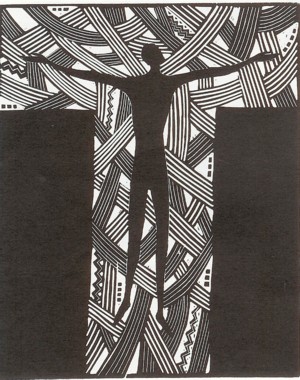
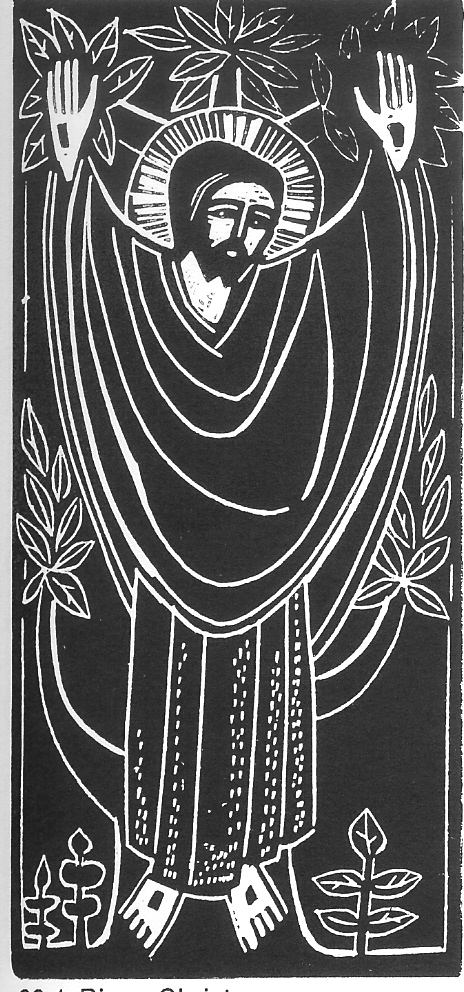
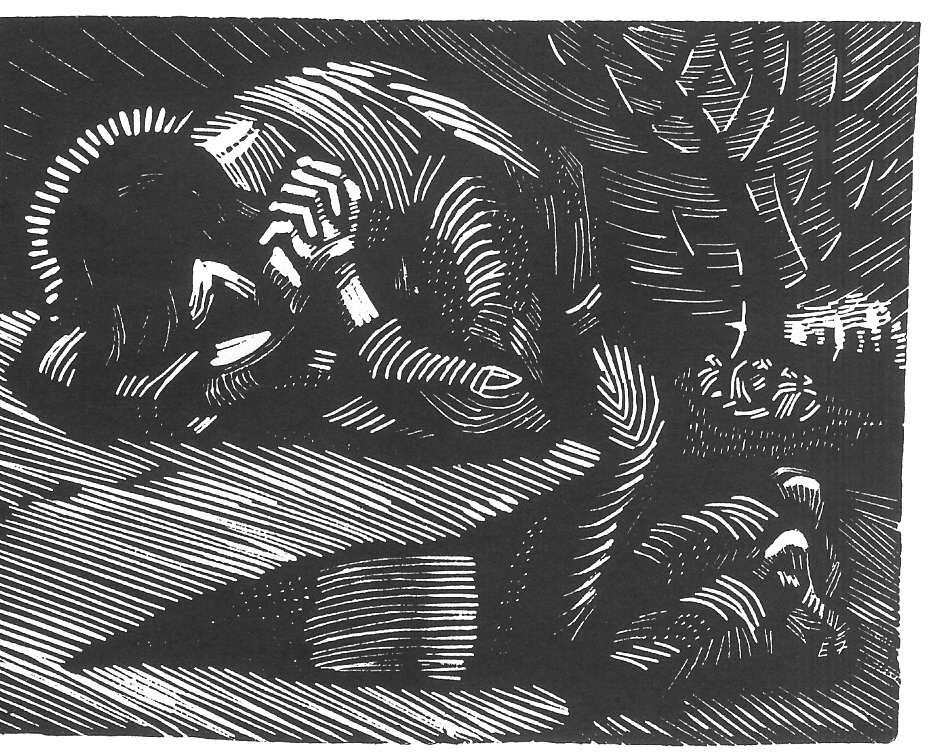
Images in this post are from Liturgical Art, Meinrad Craighead, 1998, Sheed & Ward

Solitude Practice:

  • Look around the tomb. What truths have you hidden away?
  • Do one thing today slowly, attentively, mindfully. Perhaps you prepare a meal, listen to a child, take a walk or a shower. Open yourself fully to the task with loving generosity. What do you learn?

Next post in this series –  Exploring Solitude:  Leaving solitude, gone to Galilee.

______________________________________

  Praying Life Readers,

I am leading a workshop this month here in Topeka. Hope to see you there!

Look and See: Nurturing a Shining, Festive Life of Prayer

Saturday, April 21, 2012
8:30-12:00
$20.00
First Congregational Church
1701 SW Collins, Topeka, KS  

www.embracethequestions.com

Please register early to assure a place by calling or emailing First Congregational UCC. 785-233-1786; info@embracethequestions.com


Exploring Solitude: Meeting the Crucified One

God is simplicity and one-foldedness,
inaccessible height and fathomless depth,
incomprehensible breadth and eternal length,
 a dim silence and a wild desert.

So wrote John of Ruysbroeck in the 14th century.

God is also a man, whose name is Jesus,

born in a middle eastern city,

of a woman named Mary.

Firmly anchored in time and space,

he walked the paths of Nazareth,

ate,  and laughed,  and loved.

God is also this same man,

now beaten,  bleeding,  and dying,

executed on a cross.

For in Jesus

the Inaccessible Height and Fathomless Depth

had inserted

itself into

the messy specificity and limitation

of humanity,

and consented

to occupy

suffering,

injustice,

cruelty,

fear,

defeat,

and death.

So now,  all that suffers,  loses,  messes up,  and bleeds finds welcome in that dim silence and wild desert of the cross.  All that is lost or broken is gathered and folded into the height and depth and breadth and length of God. Every precious particle of God’s making  is held with infinite tenderness in the simplicity of love.

There are moments,  days,  even years for some,  where the work of solitude involves suffering.  Alone with God,  we are presented with painful truths. We are refined and purified.  We gradually learn to be present to God,  not on our terms,  but on God’s terms in the context of our own specificity.

This is the work of letting go and letting be. This is the journey of ever deepening faith and radical trust. This is the door that sets us loose to roam forever free.

During the observance of Holy Week,  the specificity of God made known in Jesus,  enters into the lonely anguish of surrender to the terms of his Father.  The one who has been surrounded by crowds and encircled by his chosen disciples,  makes the solitary journey into death to return to the heart of all being.

We find an account of this journey in the gospel of Mark.  Mark’s gospel is characterized by a simple,  direct,  unpretentious style.  The gospel has an urgency about it.  Mark’s  frequent use of the dramatic present tense contributes to the immediacy.  The emphasis is on the action – the deeds and words of Jesus – as he confronts and responds to the religious establishment,  the disciples,  and the crowds.  This action moves compellingly to the crucifixion.  The story unfolds in a hurry,  as though the very presence of Jesus has set in motion forces which lead inevitably to the cross.

Then at the cross,  in striking contrast to the preceding scenes,  Jesus becomes the receiver of the action in total surrender.  The syntax changes from active voice to passive voice,  as the Greek word,  paradidomai,  appears more and more frequently.  Paradidomai means handed over,  or to give into the hands of another,  to be given up to custody,  to be condemned,  to deliver up treacherously by betrayal.  This is the same word the gospels,  as well as St. Paul, use repeatedly to describe the crucifixion.

As the resurrected Jesus tells Peter on the lake shore,  there comes a time when we will be carried where we do not wish to go. (John 21: 18)  Then we find ourselves being handed over to our life circumstances,  the limits,  sins, injustices,  and frailties of human existence.

At the cross in Jesus the Limitless,  Inaccessible,  Unfathomable God makes things very plain, very simple:

Watch me. Trust me. Do it like this. All is forgiven. Surrender. Allow yourself to be carried into darkness. There is a place beyond your knowing or naming, where I am and you are. Follow me.

All transformation,  all redemption require moments such as these:

the passivity of the seed buried in the earth,

the passion of love poured out to the last dregs for the beloved,

the prostration of oneself in the dim silence and wild desert,

where all things are born anew.

The moral revival that certain people wish to impose will be much worse than the condition it is meant to cure.  If our present suffering ever leads to revival, this will not be brought about through slogans, but in silence and moral loneliness, through pain, misery and terror, in the profoundest depths of each person’s  spirit.      Simone Weil


Solitude Practice:

  • What do you need to surrender, let go of, or let be this week?
  • Not all, but much of our suffering may be tied to our defiant resistance to letting go and refusal to accept the suffering of self denial. Do you agree with Simone Weil that broad social change could be gained, not by imposition of morality, but through the struggle in the depths of individual souls?
  • What is it like for you to shift from being the prime mover and actor in your life story, to becoming the receiver of the action of others? How might God be handing you over this Holy Week?
  • Is there a relationship between your consent to being carried where you do not wish to go and experiences of healing and redemption in your life?

Next post in this series –  Exploring Solitude:  Leaving solitude, gone to Galilee.

______________________________________

 News for Praying Life Readers!

I am leading a workshop in April here in Topeka, KS. Hope to see some of you there!

Look and See: Nurturing a Shining, Festive Life of Prayer

Saturday, April 21, 2012
8:30-12:00
$20.00
First Congregational Church
1701 SW Collins, Topeka, KS  

Please register early to assure a place by calling or emailing First Congregational UCC. 785-233-1786; info@embracethequestions.com


Exploring Solitude: The Wild Things Within

He said to the disciples, “Stay here while I go and pray over there.” When he took Peter and Zebedee’s two sons, he began to feel sad and anxious. Then he said to them, “I’m very sad. It’s as if I’m dying. Stay here and keep alert with me.” Then he went a short distance farther and fell on his face and prayed . .              Matthew 26: 36- 38 (CEV)


The season of lent invites us into wilderness solitude to encounter the wild things and places within us.  In a world of extraversion, solitude allows space for introspection and encounters with untamed and little known parts of ourselves.

On her way out of church one Sunday morning, a member told me a story about her granddaughter, who had come with her that day. My custom is to invite the congregation to a period of silent prayer before I offer the pastoral prayer. At the conclusion of my prayer, five year old Lindy whispered to her grandma, “Loretta took so long before she started praying, that I had to start praying for people I didn’t even like.”

Yes. Silence does that to us, doesn’t it? It brings us to the end of the list of our own needs and concerns and opens out our prayerful awareness of people and inner realities, which we do not even like. Many avoid solitude for this reason. When I stop doing, accomplishing, distracting, and numbing myself with various opiates, I am left with my wounds, enemies, and alienation. The wilderness of the self opens before us and we reach for the phone, turn on the television, or pour ourselves a glass of wine. 

He came back to the disciples and found them sleeping. He said to Peter, “Couldn’t you stay alert one hour with me? Stay alert and pray so that you won’t give in to temptation. The spirit is eager, but the flesh is weak.” Matthew 26: 40-41 (CEV)

The work of solitude includes the slow, patient task of befriending the darkness, of being present with compassion to my inner wildness, and of staying awake one hour with ourselves in our misery, as Jesus asked his disciples to do for him.

The followers of Jesus were unable to offer him such companionship. It is likewise very difficult for us to offer ourselves such gentle, present love. Yet if one can manage it, if only for a few minutes, that ache, that knife in the heart, the sick all encompassing grief  will begin to lessen just a bit, and a peace will slowly seep into the space of your silence.

This is where the deep work of contemplative transformation begins. The pleasant, consoling moments of contemplative prayer are important to our growth and infect us with the love of God. Sometimes they arrive unbidden, unexpected as sheer gifts. Other times we enter deeper communion with God through the ongoing practice of contemplation in some form: centering prayer, lectio divina, prayer of quiet, meditation.

Several years ago a friend confessed to me, “I am so over spiritual “disciplines.” She had reached a point beyond practicing prayer, because she wanted something from God, or because she ought to, or because it was interesting, or helpful to her daily life. Prayer for her was becoming much more demanding than a nice idea or exercise in personal improvement.

Thomas Merton wrote, “True prayer and love are learned in the hour when prayer becomes intolerable and the heart has turned to stone.” The deeper work begins when silence and solitude may be the last thing we want and the only thing we cannot live without. When just sitting still reveals to us a pervasive sadness, or the reality of a loss or truth we are denying or running from, silence is not some syrupy, cozy me-and-Jesus picnic. Silence is a summons to face into who I am and who God is becoming for me in a perilous confrontation with the truths of my life and who God will or will not be for me.

Again he came and found them sleeping.
Their eyes were heavy with sleep.
But he left them and again went
and prayed the same words for the third time.
Matthew 26: 43-44 (CEV)

Yet it is here – when facing fear, betrayal, or deep sorrow– that the encompassing and spreading love of God begins to open within us with its healing balm. Sometimes we need a companion to help us, as Jesus asked for from his friends in his hour of need. We may need to enter the silence in small doses at first. Tiny little sips of God may be all we can manage. Gradually that contact with God will begin to soothe our souls and bring a peace that will exceed our understanding.

It may not seem like much, this tiny bite of calm. You are still in your wilderness, up against a wall, facing an impasse, with little hope. Yet you keep going back for little sips of silence, as quiet fills you and you surrender to the moment.

My Forty Days in the Wilderness
One autumn over twenty years ago I spent forty days in the wilderness. I was sick and doctors were unable to diagnose or treat whatever was causing the unrelenting headaches and fatigue. Weary of the tests and drugs, I went off alone each day and several nights. I did not watch television, use the computer, talk on the phone, read mail or much of anything, except scripture. My only human interaction was with my immediate family.

Day after day and into the night I waited for that little sip of calm, that spark of life and hope. I learned to tend the spark, gather kindling, shavings, combustible scraps of living goodness: birdsong, the quail feeding along the lakeshore, the way a spider walked up the side of my tea cup. These and the stars over my head began to fuel the flame, which grew and illuminated the way for me.

Here is some of what happened as I tell it in my book, Letters from the Holy Ground:

I came to the wilderness in part because I heard Jesus crying and saying he was lonely for us.  I came out of a growing sense of God’s hunger and need for us and for one who would stay with him one hour.  I came to discover how it would be to delight in and enjoy God for God, and not for what God could do for me or the world.

And I found along with my brother, Simon Peter,  that the spirit is willing, but the flesh is weak.  And to pray with Christ is more difficult than praying to Christ.

Are there some among us who are willing to watch with Christ one hour? Are there some willing to turn in radical trust toward God and away from the forces within and without that seek to deny Christ?

Is there one willing to pay the cost of staying one hour, of tasting and knowing God’s suffering in her bones, of being bereft of all mortal assistance, of contending with a near constant onslaught of devils, of serving as a bridge between heaven and earth and thereby, bearing in his body, mind, and psyche on the one hand, the immaculate tenderness and the surging ferocity of Divine Love; and on the other hand, the immense ocean of mortal sorrow?

Like Peter, I couldn’t do it. For along with my good intentions I brought my weariness and poverty and dependence on God’s mercy.  And my eyes grew heavy and I slept.

But God slept too.  Christ rested too.  For Christ brought to the wilderness the same as I:  weariness and poverty and dependence on my mercy.  And so like two homeless children huddled in an alley, like two lovers entwined, we slept while the owl hooted and the bullfrogs boomed and the little grey mouse nibbled bread in the corner.

In the wilderness of solitude our suffering becomes bound up with, informed by, and transformed by the suffering of Jesus in his solitude.

By such fierce mercy and vulnerable love are we redeemed.


Solitude Practice:

  •  Have you had the experience of hurting too much to pray? Or have you avoided praying because you do not want to be still long enough to start feeling your pain?

  • What are some of the ways you distract yourself from entering silence and solitude?

  •  Have you found that place of peace in the midst of your chaos and suffering? How do you describe that experience? What would you tell someone who has never been there and is afraid to be alone in seeking it?

  •  Take some time today to be still and alone. Be with yourself with all the gentleness and love you can muster. Be with yourself as you would want to be with Jesus in his suffering. What do you notice or learn?

Next post in this series:
Exploring Solitude: Deadly Acedia, or Too Bored to Care 

I would love to hear about your experience of silence and facing the wild things within yourself, what you have learned, what helped ease your suffering and what did not. We offer our companionship to others as we tell our stories. You may comment below, on our Facebook Page, or email me at lross@fromholyground.org

Re-tired: Embracing the Call to Solitude

I need to be still for a while.

I need to savor and integrate a month of bounty, a year of gratitude.

I need to listen long

to the captivating resonance of relationships,

that singing bowl of community.

A Japanese rin marks the beginning of moments ...

I recently made a big change in my life and how I will spend my hours in the coming years. I retired. When I hear this word, retire, I see myself driving my car over to the repair shop and saying, “Hoist me up, Mike, and put on some Michelin Pilot Sport Pluses all around this dune buggy. I need something sturdy that will hold me to the road in all weather. Mike, my man, I got places to go and things to see.”


As the old year closed I said goodbye to a community I served for over twelve years and began my retirement from traditional parish ministry. The Sanctuary Foundation, which I founded over twenty years ago, will continue. In the coming year I will offer spiritual guidance, teach a little, and finish a new book.


Most importantly, I will practice what I have preached. I will allow the stillness to feed the hunger of my heart, and offer my life with greater integrity to what I feel most deeply called and what the church, regardless of all its good intentions, seems least able to support.


Mind you, I do not leave parish ministry burned out, beaten down, or resentful as some do. This may be because I worked part-time. I also did not carry the same responsibility, which a head of staff carries. And I continued my long established practice of taking a day a week for solitude and prayer through those twelve years. Besides, even though they work hard and balance multiple tasks and responsibilities, clergy continue to show statistically that they are among the happiest professionals. 


I continue to believe in the church, which is to say, that I believe in the wonder of people stepping out of their daily lives to come together to sing, and to lift their hearts and minds to something beyond their own manipulation and control. I believe in the miracle of people, who seek to love, forgive, and work together in spite of their differences. I believe in the Power that inspires their faith and surrender to One kinder and wiser than they. I believe in the Grace which meets us in vulnerability, admitting failures, and in opening our lives to the scrutiny of a loving God. I believe in the Compassion that leads people to acts of justice and mercy and the Love that empowers them to lay down their lives for each other.


In this sense church is a singular, unique mystery, which has grasped the human species. It startles the wits out of me every time I walk into or stumble upon such church in one of its many manifestations.


To leave parish ministry and my particular community of faith felt like parts of my heart were being pulled out by the roots. So deep was the love we shared and the goodness of God in our midst.


So why leave? Over the past thirty years of my service to the church I have found the traditional forms of ministry, as much as I have loved the work, have always seemed to require a compromise of what I hold most deeply – a life lived prayerfully, mindfully, steeped in the substance of the living God. Too often the church seemed to ask me to live more of the world, than in the world. The church, like each of us, is deeply influenced and captive to the values, practices, and gods of a secular culture. I find it very difficult to stand against that tide of endless production, pragmatism, and focus on self and survival.


Instead of becoming of the world, Paul calls the church to a transformation of its mind, its self understanding as it exists in the world.

Don’t become so well-adjusted to your culture that you fit into it without even thinking. Instead, fix your attention on God. You’ll be changed from the inside out. Readily recognize what he wants from you, and quickly respond to it. Unlike the culture around you, always dragging you down to its level of immaturity, God brings the best out of you, develops well-formed maturity in you. Romans 12: 2 The Message

I never fit in. My personal tension with the church is not because the church has failed. It is a because I am a monk, albeit a gregarious one. Monk, which means solitary is in direct conflict with church and its sense of gathering. And there’s the rub and the glory.  Service, whether in the hermitage or in the pulpit, on one’s knees or at the bedside of a suffering soul, listening to the pain of the poor or raising money for mission,  always requires a death, a sacrifice of some desire or another. I do not blame the church for this, but, rather, the church has educated and purified me through the very conflicts which tried and tempered my soul.


I, alone, am responsible for following the call of God in my life. I am grateful to my denomination, Presbyterian Church(USA), those intelligent, imaginative, decent and orderly ones, and the Presbytery of Northern Kansas  for making space for their solitary, monkish sister. Now at the end of her service and the beginning of her honorable retirement, she will embrace what called her out of darkness and back to the church thirty three years ago, in a way more congruent with her heart’s deepest desires.


So as you can see, I have some things to mull over. I need time to downshift and decelerate as I make for myself a life more congruent with the word of God as it sings in my heart and speaks to me in the ancient texts. Besides I have a big pile of thank you notes to write, and I need to get over to Mike’s and get those new tires.


I will take a couple weeks off from writing The Praying Life. And I will be back  before you know it. In the meantime I will post occasional thoughts and links here and on the 
Sanctuary Foundation Facebook page.

Holy God,
in your will is our peace.
In this moment is your will.
Here, now.

Let’s hit the road.


With deep love and gratitude to The Reverends Paul Waters, Ron Schultz and Rob Winger and the members and friends of Crestview UMC in Topeka, Kansas.

Dear Reader, I am interested in hearing from you. What do you need? How might this blog speak more directly to the hunger of your heart in the coming year? Email your ideas, questions, and suggestions here , or comment below.

I am looking forward to the journey ahead!

It Begins with a Howl

 It begins with a cry            

      a muffled sob at midnight

      a “Help me!” filling the dark    alley with terror

      a fist banging on the door

      a numb, blank stare and a      hand, clenching and     unclenching a ball of tissue       

 a sudden lurch and collapse, facedown in the open field


This is how it begins, what we call Christmas.

Salvation is summoned by its negation.

The Savior is called forth by the raw expression
of the creation’s need,

the howl
that rises from the shattering
collision of what is with what should be.


Christmas begins when God hears

 And God heard the voice of the boy… Gen 21:17

I have heard their cry on account of their taskmasters. Ex 3:7

Do not be afraid, Zechariah, for your prayer has been heard. Luke 1:13

Christmas begins when God sees

I have observed the misery of my people who are in Egypt.  Ex 3:7

My tears will flow without ceasing, without respite until the Lord from heaven looks down and sees. Lamentations 3: 49-50

She answered God by name, praying to the God who spoke to her, “You’re the God who sees me!” “Yes, he saw me; then I saw him!” That’s how the desert spring got named God-Alive-Sees-Me Spring. Genesis 16: 13-14

Christmas begins when the earth turns, writhes, and lifts up its lamentation. When the protest of the human heart joins its sorrow with the heart of the One acquainted with grief,

then

you step out of the forest
and into the clearing
to place in our hands

a child
wet and wild.

Here is my answer, you say.
And the name of the child is

      Love.

Trapped? Got a Noose around Your Neck?

You know the feeling: the noose slowly tightening around your neck, or that heavy ball and chain around your ankle, which you drag through the day.

Or, perhaps for you, it is the windowless room of your mind with that mean interrogator under the bare bulb, harping all day long and into the night: “You will never . . . You will always . . . You can’t … Who do you think you are?”

When I first heard the phrase, “areas of unfreedom,” I didn’t understand my teachers. (My spell checker doesn’t understand either.) I was just beginning to learn about the dynamics of spiritual growth, what in a simpler time we used to call discipleship or sanctification. “Huh? I’m free,” I thought. “This is the USA.”  The Spirit had yet to show my inner prison.

My jailors were the assumptions, unexamined beliefs, and negative thoughts which operated below my awareness. This gang of ignorant, fear mongers, and liars had formed a portion of my self identity, that is, who I thought I was, and what I could, or could not do with my life.

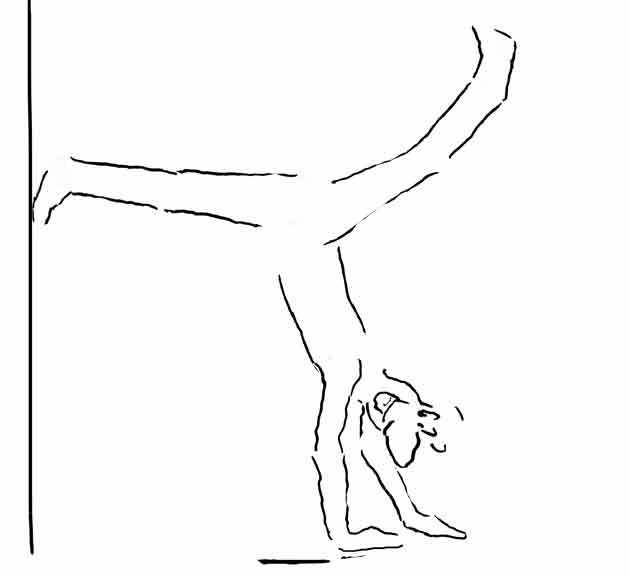
The other day one of these creepy little sadists gave me a swift kick in my solar plexus. Our teacher asked us to put our hands on the floor and kick our legs up into the air against a wall and balance on our arms.  “Just try it,” she said, urging us on, “like when you were a kid. Your arms are strong enough to hold you.”

“Oh, yes. I can do this!” I thought. I have done many head stands and arm balances in my life. “Now just bend over, straighten your arms, and kick yourself up against the wall. No problem.”

As I took a few steps toward the wall, a dark, choking fear suddenly rose up in me and stopped me in my tracks. I was stunned. It had been over twenty years since my last hand stand, but I had stayed in shape and my arms were stronger now than ever. Where had this fear come from? I was safe here. There were people to catch me, if I fell or stumbled. I was dumbfounded. How did this happen in me?

“You’re too old,” my jailor sneered. “You can’t do things like this anymore. Pay attention to me or you will hurt yourself.”

Most of us have places of impasse in our interior world, where we feel stuck, fated, or chained to a particular understanding of ourselves, which limits our future unnecessarily. Sometimes these aspects of how we see ourselves are unconscious. Though not apparent to us, such beliefs may deeply affect our lives.

I have a little pile of quotations and scripture verses above my desk. The other day I pulled this one out and put it on top.

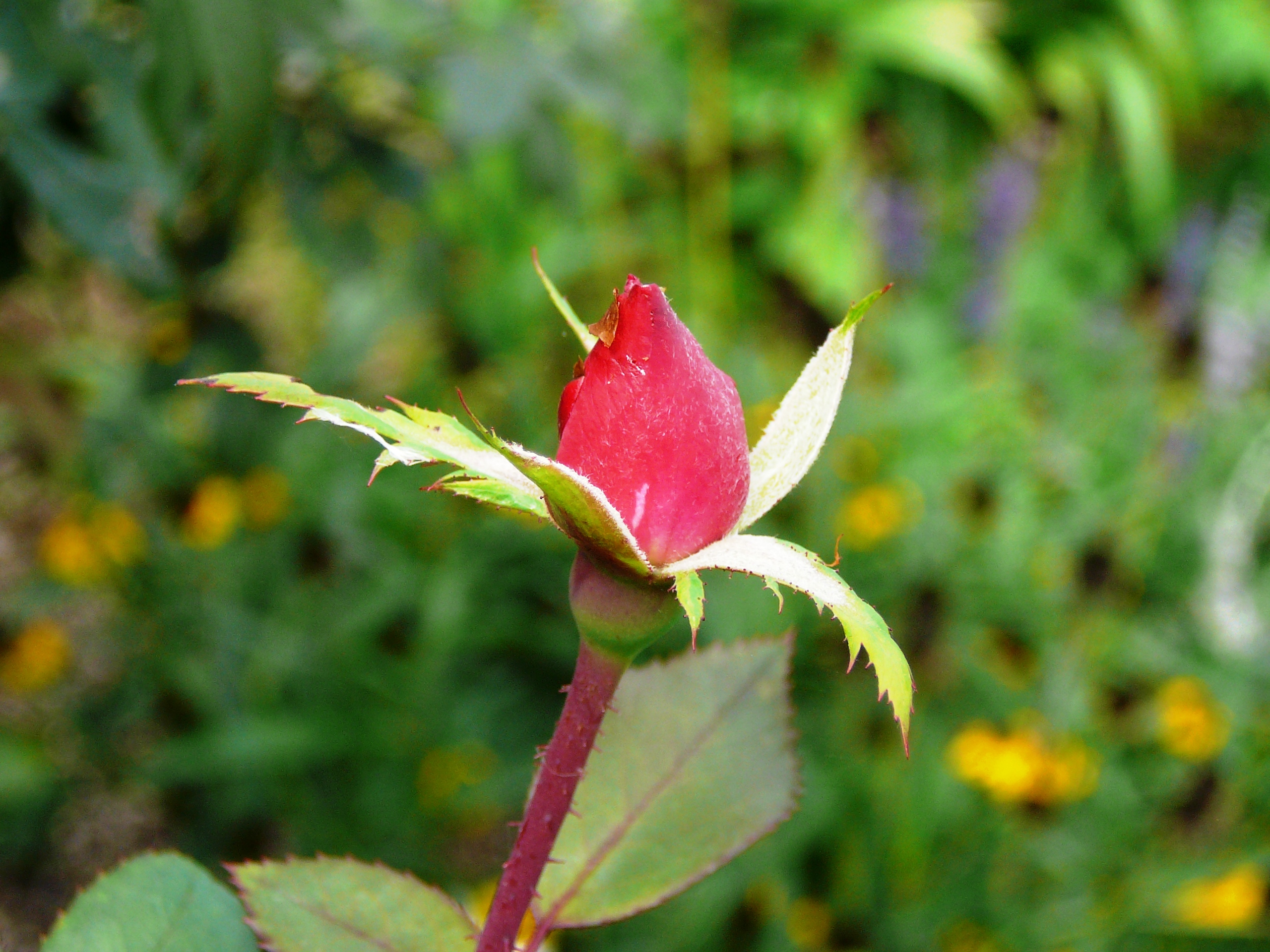
And the day came when the risk
to remain tight in a bud was more painful than to bloom.

This is a poem by Anais Nin, a woman whose life I do not entirely recommend, but certainly demonstrates that wisdom is not the property of only the straight-laced and conventional.

The path of spiritual growth calls us to break out of the constraints of our tight little buds. There is a point where the risk of opening to an unknown possibility is less than the pain of remaining bent over in the tight room of a constraining self conception.

Nin’s words remind me of Jesus’ urgency to break the boundaries of his ministry and his own chosen human mortality with his words:

 I’ve come to start a fire on this earth—how I wish it were blazing right now! I’ve come to change everything, turn everything right side up—how I long for it to be finished!                   (Luke 12:50 Message)

Jesus expresses the urgency of his desire to burst beyond the expectations of his disciples and followers to fully express his purpose on the cross. There was so much more he had to offer than the healings, miracles, and teaching along those dusty roads and little villages.

The process of spiritual transformation confronts us over and over with those places of unfreedom in ourselves, which have us tied in knots, weighed down, or locked into a tiny cell. With a punch in the gut the Spirit may reveal how we are imposing limitations on ourselves, which have nothing to do with God’s will for us, but a lot to do with what others have told us, or assumptions we have picked up from the culture.

Paul reminds the Galatians, who were caging themselves with religious rules, “Christ has set us free to live a free life. So take your stand! Never again let anyone put a harness of slavery on you.” (Galatians 5:1 Message)

I am standing about six feet from the wall in my living room. My teacher thought I could do this. I know there are people older than I who do this. I have a choice. I can stay in the tight bud of my fear and be safe and be too old for this. Or I can keep trying until I do it.

Your goal might not be a handstand. For that matter, mine may not be a handstand either. I just whacked my foot on a piece of furniture, giving it another try.

However, more is at stake here than gymnastics. Spiritual growth requires flexibility, strength, and elasticity of soul. What might be keeping you in a constrained and incorrect conception of what you are capable of?

Simply recognizing the fear, or the faulty belief, allows it to dissipate. The sun is shining. Come on, sweetie, you know you can no longer resist its warming rays. You can do this.

I am yours, kicking up my heels, here in Kansas.

If would like to try a hand stand yourself, click here for a little help.

Empty Pockets and Trust in God

The way I see it, a mystic takes a peek at God and then does her best to show the rest of us what she saw.  She’ll use image-language, not discourse. Giving an image is the giving of gold, the biggest thing she’s got… Hurling and wielding the best stuff she can imagine, insisting on an unmediated Way of Wakefulness,…she agrees to the quiet morning hour in front of God in exchange for a bit of revelation.  She doesn’t ditch tradition as much as take it for its word and peer inside its cavernous shell.  There must still be something worth saying. There must still be something worth pointing to.
 -Jessie Harriman in God Laughs and Plays by David James Duncan

 I greet you with my pockets turned inside out, holding out a few crumbs I picked from the seam.

Most every time I write this blog, I write from such a place of intellectual and spiritual poverty, that I feel like I am scraping gum off the sidewalk to offer you.

Oh, I have plenty of previously written material. Some of it you might like or find useful. I also seem to have an endless supply of ideas, opinions, and questions we could take up together here. However the longer I sit in that quiet morning hour waiting for a bit of revelation, the more stale and the less true all my previous thinking and posturing appear to be.

Something in me insists on peering into the Mystery anew each time I write. This is both an irresistible delight and a harrowing encounter with my own empty pockets.

I haul myself and the collected wear and tear of personal and world events before the throne of Great Stillness. There I reach out beyond my limits and press my palm in the face of Mystery and say, “Here. Here. Put it here.”

Then I wait.

In that waiting there is only the ache of love – nameless, infinite, ever beyond my control.

“Trust” was the word I found in my palm this week. Trust? That old thing? How many times does this word turn up in scripture and in the words we say to each other? How about something new, fresh, maybe a little edgier? 

Thousands of children with stick legs and arms are dying in the horn of Africa. A young man just nineteen years old came home to the little town up the road, where he was buried with military honors. Global markets, drunk on anxiety, dip and sway, fall and crawl up again. Politicians argue. A self-styled prophet of God goes to prison for doing unspeakable things to little girls.

Holy One, the world is going to hell in a hand basket and all you can offer is trust?

Trust in the Lord with all your heart, 
And lean not on your own understanding; 
In all your ways acknowledge Him, 
And He shall direct   your paths.
Do not be wise in your own eyes; 
Fear the Lord and depart from evil.
It will be health to your flesh,
And strength to your bones.
         Proverbs 3:5-8, New King James Version

So – help yourself these crumbs:


Trust in what you cannot fully know or name or understand, or write about.

Trust in the enduring love in your heart that weeps with compassion and yearns for justice and struggles
to know what to do in these challenging times. 

Trust in your conviction that God will not be defeated by the evil and sin of humans.

Trust that Someone is afoot, knitting together the broken bones of Christ’s body.

And most amazing of all:

Trust that our trust and faith are the salve,

which heals all wounds.


And he could do no miracle there except he laid hands
on a few sick people and healed them.
And he wondered at their unbelief. Mark 6:5-6