What the Trees Said – Our Bellies

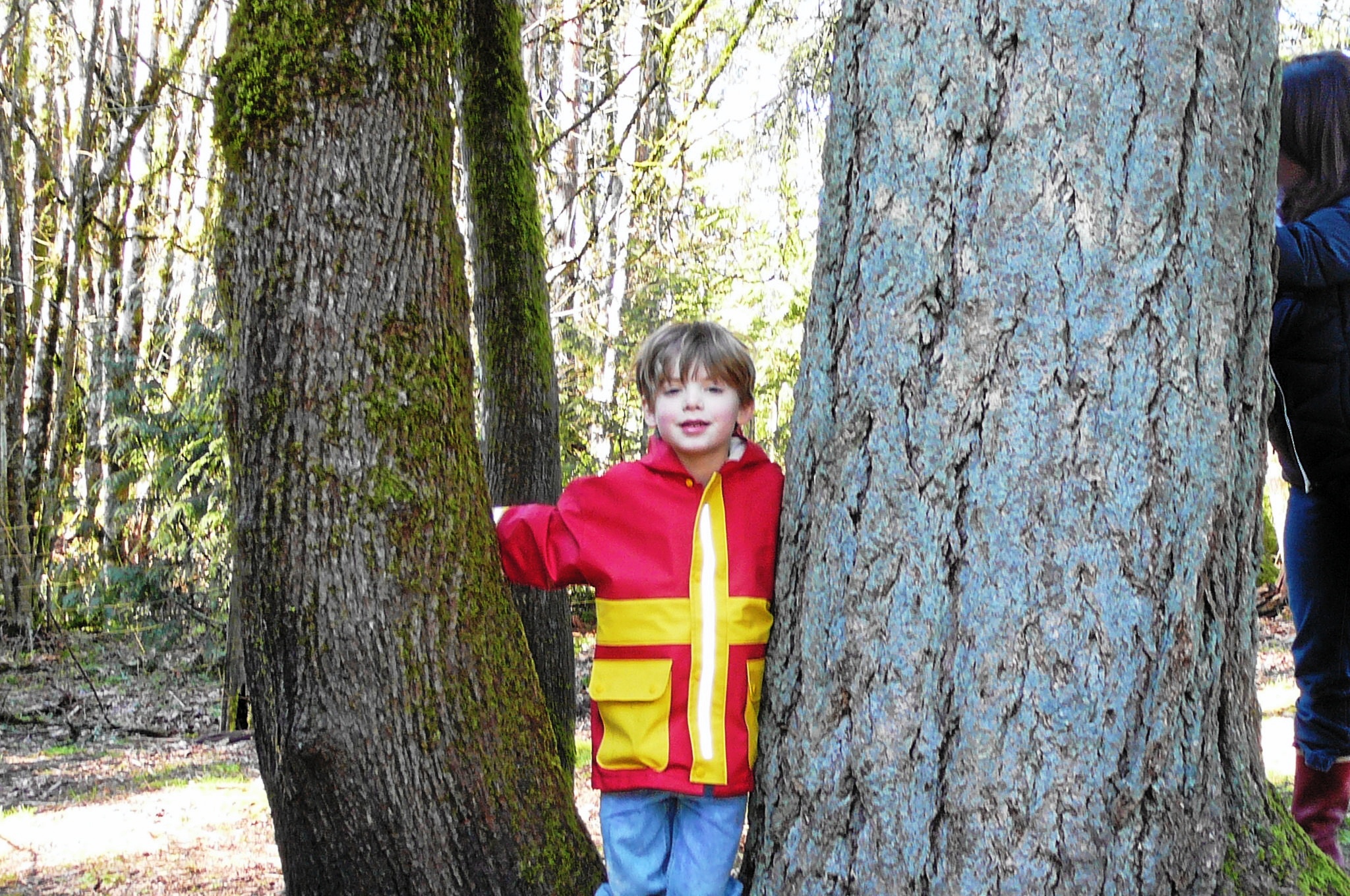
boy and trees

What the Trees Said – Our Bellies

We have missed you
stepping lightly
patting our
bellies
soft
small palms
leaning
into us
when you
are weary.

What I know of the divine sciences and the Holy Scriptures,
I have learned in woods and fields. I have no other masters
than the beeches and the oaks.  Bernard of Clairvaux

Try This:
Spiritual Practice – Find a tree you like. Place both palms upon its bark. Feel the rough bark surface against your hands. Listen. Lean your weight against the tree. Look.
Say Amen.

What the Trees Said – Origins

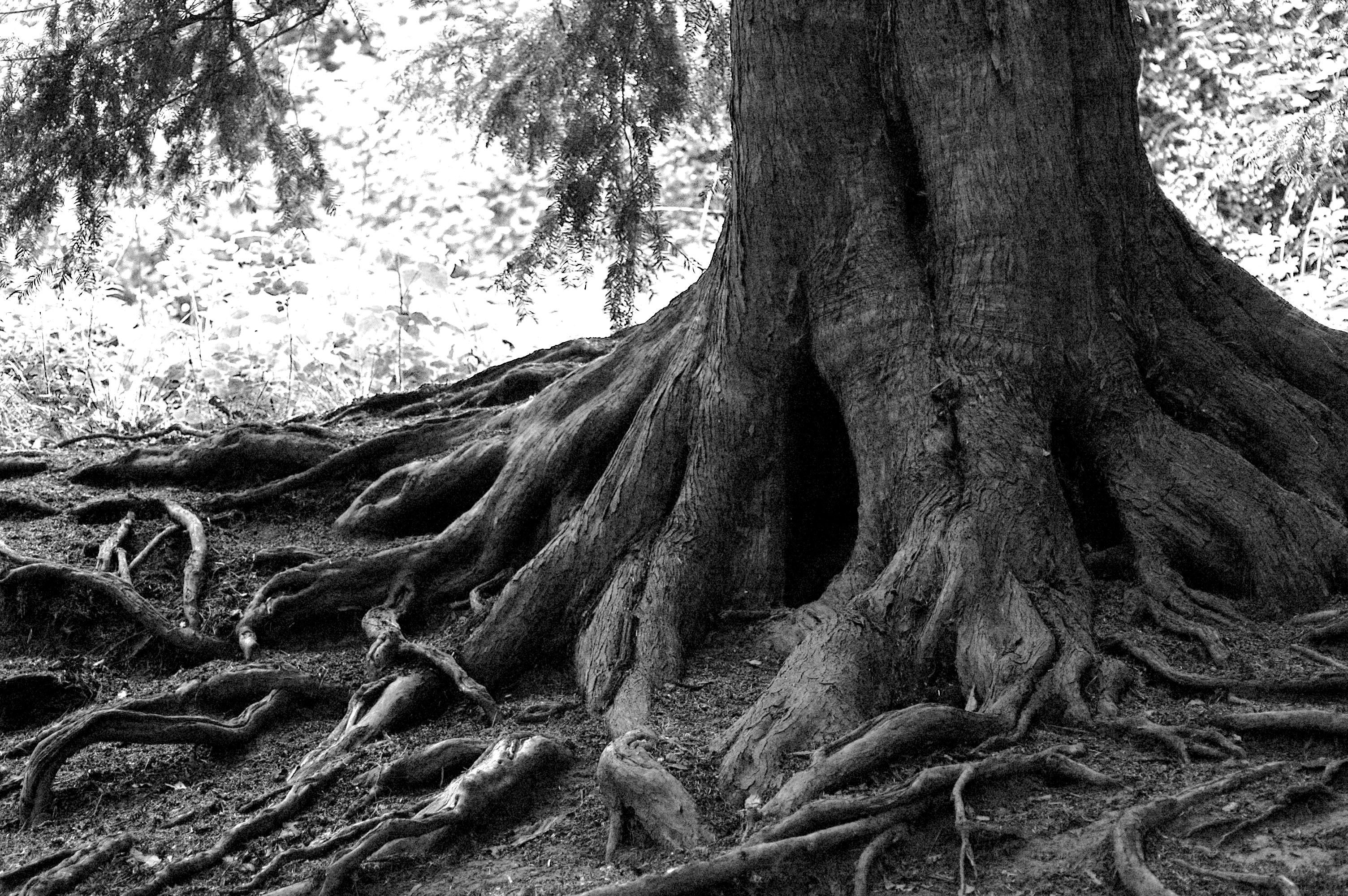
tree_roots

Know your roots.
Pull up a few.
See those sallow
rangy threads
sinewy cords
thick as your arm
splintering stone
slurping up existence quenching
your
thirst?

__________________________

I am tangled up in heritage and ancestor – those tough ties to blood, tribe, family, and gene – running through scripture and ancient traditions like twisting roots.

Long scattered to dust, hidden, yet flowing through our veins,
tenacious forebears animate our lives. I can hear them, stocks of gnarled and tangled cheerleaders, waving stringy fingers, scrabbling, murmuring

Stop slouching and grow for pity’s sake!

________________

Do you know where you came from and who is still feeding your soul?

After writing this post I came across this passage from Isaiah, translated poetically by David Rosenberg, author of the masterful, A Poet’s Bible, Rediscovering the Voices of the Original Text.

I brought up children
held them in my presence
and they turn from me

deaf and blind
when even the dumb ox knows
who holds his food

an ass
the trough
the master fills

but Israel knows nothing
of its root in me
sees nothing of where

they come from . . .

Isaiah Chapter 1, Translation by David Rosenberg

What the Trees Said – Coyote

coyote

Last night coyote,
whose mother
raven said
was hit
on the highway,
turned himself
three times
scratched
sank
midst the gnarled
knees
of grandfather oak
tucked his face
beneath his tail
and slept til dawn

May we all find among the trees resting places for our sorrow.
Go out among trees today.

It’s No Dream World

Dear Ones,

I have recently returned from ten days of silent meditation on a Minnesota lake with a group of people willing to do something like that. One has to figure that we are all a bit odd.  Now I am taking some time to continue working on a new book. I thought I ought to check in with you though, and reading this morning what I had worked on yesterday, I was so struck with this quotation from my old buddy Eugene Peterson. It really says what I am about in this book. May it speak to your hearts as well.

With deep joy at being in the mystery with you,

Loretta

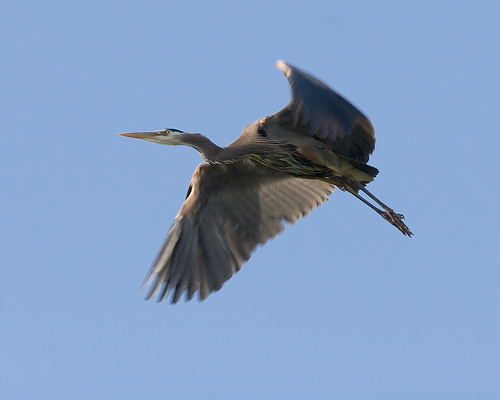
  blueheronmicrosoft

This world, this reality, revealed by God speaking to us, is not the kind of world to which we are accustomed.  It is not a neat and tidy world in which we are in control- there is mystery everywhere that takes considerable getting used to, and until we do, it scares us.

 It is not a predictable, cause-effect world in which we can plan our careers and secure our futures – there is miracle everywhere that upsets us no end, except for the occasions when the miracle is in our favor. 

 It is not a dream world in which everything works out according to our adolescent expectations – there is suffering and poverty and abuse at which we cry out in pain and indignation. “You can’t let this happen!” 

 For most of us it takes years and years and years to exchange our dream world for the real world of grace and mercy, sacrifice and love, freedom and joy. 

 Eugene Peterson, Eat this Book – A Conversation in the Art of Spiritual Reading, p 105


This is the opening quotation from Introduction to Section Six, “A God So Holy and a People So Frail,” from Accounting for the Hope, a work in progress by Loretta F Ross. All rights reserved.   The Sanctuary Foundation for Prayer

What the Trees Said – The Invitation

Northwest Temperate Rainforest

Give up.
Stop fixing,
yearning,
grasping.

As I am in you be
in me.

This effort
to separate
distinguish
yourself
is so
hard
on you.

For freedom Christ has set us free. Stand firm, then, and do not be subject again to the yoke of slavery. Galations 5: 1, NEB

I am off to spend some time listening to trees. Perhaps I will bring back messages. In the meantime, you might consider what you are trying to fix, hanging onto, or hungering after, that, in truth, you have already been set free from, or possess in great fullness. At least that is what I aim to do.

Of Pastors and Love

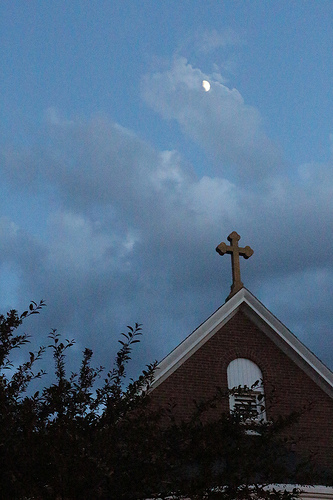
chapel cross

People still think the pastor can save the church.
I am 30 years old and I do not want to be a hospice worker.
My church is so scattered. The task is to try to get them to focus.
One third of the church split off and left.
I had nine years of a dark night.
                                                                -overheard at a retreat for clergy

I have been listening to the conversations of small groups of clergy about their lives in a once, honored profession. Pastoral ministry has suffered loss of prestige, respect, and influence over the past thirty years in the eyes of many Americans. Some of the reasons for this include sexual misconduct, greed, hypocrisy, ethical failures, cultural upheaval, and changing demographics.

In addition, the rise of fundamentalism produced considerable confusion about what a “real” Christian is or is not. Some  Christians have promoted particular understandings of Christianity as normative for all disciples of Jesus. Often these perspectives have held media attention, while many other Christians do not share the same understanding. When only extreme and headline grabbing faith expressions are discussed, distorted impressions of faith end up defining religion in ways distasteful to many, including Christians themselves.

Most of the conversations I heard from pastors were about adjusting to sweeping change, which, though in the long view the human species excels at, at the same time, has never come to embrace without struggle.
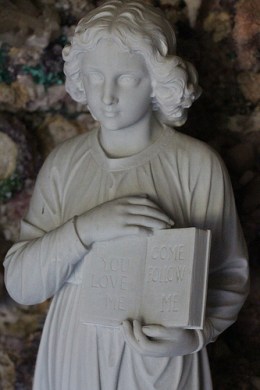
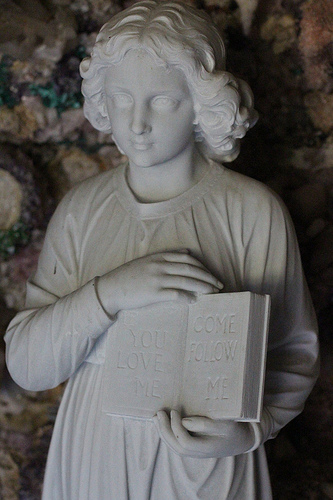
Statue follow me

Cultural differences in what people are valuing
I worry about the bottom dropping out
My congregation worries that I will leave.
I want to be fully employed. I have all this stuff I want to express.
I want to finish well, stay fresh, and spiritually dependent on my God.

Earlier this month, I listened to new pastors engaged in ministry for four years or less. More recently I immersed myself in the wrenching, painful, joyful, and, yes, hilarious stories of men and women serving churches in Iowa from a range of Christian traditions. They were invited to attend a retreat by their judicatory heads and supervisors from nine different denominations, including AmericanBaptist, Lutheran (ELCA), Roman Catholic, Reformed Church of America, Church of the Brethren, Episcopalian, Presbyterian (USA), and United Church of Christ. The gathering called, The Imagination Retreat, was sponsored by the Des Moines Center for Renewal at Grandview College and held at The Shalom Retreat Center in Dubuque, Iowa.

We were all from what are generally considered mainline churches. These include the once great, proud churches with huge stone buildings, in some cases, now nearly empty and in need of repair, as well as fifteen member rural churches, bustling parishes, and missional congregations.

I want to get to know my daughters and grandchildren.
This is the first time off I have had in 32 years.
There is a whole generation ignorant of the language of God.
I am really content and happy, but maybe I am not supposed to be content.
My church worries about dying.

We had two pregnant moms in the group, older clergy nearing retirement, and ones in the middle wondering if it was time to pull up their roots and move on to a new parish. We probably did not all agree on the hot social/political issues our governments are fighting about. However we had not gathered to solve problems, debate, or convince others of the rightness of our positions.

We came because we were weary, hurting, looking for something more, and needing a safe place to be ourselves and be honest. We came because we were exhausted from being in charge and offering living water to thirsty souls, while our souls had dried and shriveled for want of the refreshment of Christ Jesus. We came for Sabbath and renewal and to imagine what seemed nearly beyond our comprehension as we began: peace, hope, faith, unexpected freedom, and joy – all gifts, which amazingly arrived pretty much on schedule at the end of day three of our four days together.
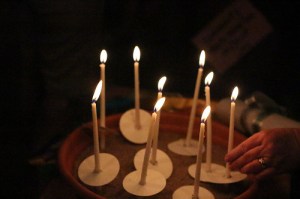
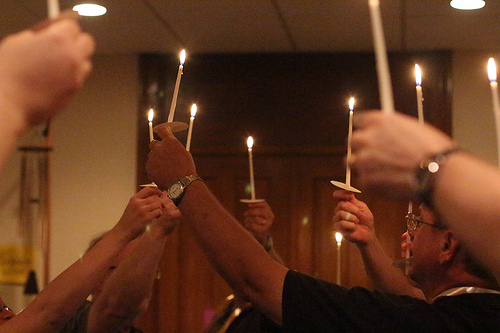
9136556152_f91380573d

All of it is about this one woman,[or – man, secretary/choir director, organist, trustee, Sunday School teacher, family/person who runs everything,] . . .

They don’t see themselves as a vehicle for Christ. They just write checks.

How long… before I retire, leave, this church dies,
do I have to wait, until we start seeing some growth?

There isn’t a Roman Empire anymore, but there sure are a lot of Italians.

Church happens. It just happens.

I hear recurrent themes in their conversations. I hear the subtext of the laments, the confusion, and fatigue of these pastors as the groaning of the Holy Spirit in the body of Christ. We use Walter Brueggemann’s masterful little book, The Spirituality of the Psalms. Brueggemann relates the form of the Psalms to the realities of human experience as –

Psalms of orientation: songs of guaranteed creation
Psalms of disorientation: songs of disarray
Psalms of new orientation: songs of surprising new life

Christians find in these psalms, not only the story of Israel’s suffering and God’s redeeming love, but also the foreshadowing of the Paschal mystery: the life, death, and resurrection of Jesus, as well as their own personal and corporate experiences of orientation, disorientation, and surprising new orientation.

One recurrent theme is that of impasse, a condition of disorientation, when one doesn’t know what to do next. Our response to impasse is often anxiety and rising panic. Soon anxiety’s children show up: shame, blame, judgment, polarization, disengagement, or the increasing need to impose control or force. Learning how to manage the inevitable anxiety of change, my own, as well as that of my congregation is vital for spiritual leadership.

I have changed. They have too.

So this guy on the board says,
“That’s not what it was forty years ago.”
And I think, “I wasn’t even born then.”

On my Sabbath I ask, What is going to give me life today?
The ministerial association is horrible.
There are local pastors’ groups, but they are not nurturing.
Change means giving up something and that is scary.

And God said, “Why don’t you let me do that for you?”

For me – I am always sort of thinking I need the next class,
books, conference, skill set. Now I see I have everything I need.
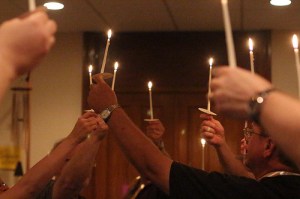
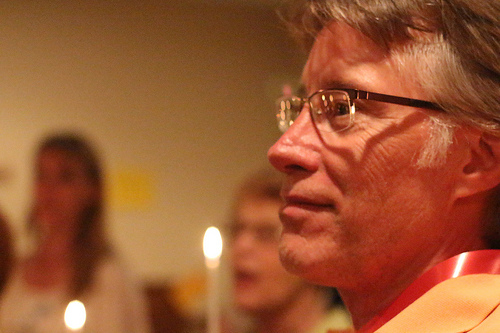
9134246995_8d62e4e10d (1)

I also hear isolation and grief. I hear resilience, like the fertile, spongy sweep of a bog, a rich, deep, ground of being. I hear love, sometimes entangled and enmeshed, sometimes pure as a meadowlark’s song, sometimes self-emptied and sacrificial, always full of passionate yearning for Shalom.

It only takes me about twenty minutes before I am in love with them all.

It is easy for any child to pick out the faults in the sermon on his way home from church every Sunday. It is impossible for him to find out the hidden love that makes a man [or woman], in spite of his intellectual limitations, his neuroticism, his own lack of strength, give up his life to the service of God’s people, however bumblingly he may go about it.                            Flannery O’Connor
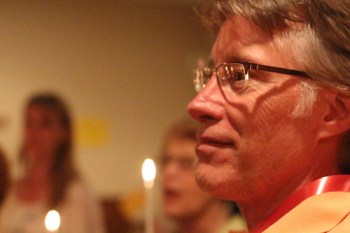
9134213395_bf9942bce8

May Jesus hold us all close in that hidden love.

___________________________

Special thanks to those who dreamed up this gathering: The Rev. Dwight DuBois, Director of the Center for Renewal, the Rev. Myron Herzberg, and the Rev. Mary Beth Mardis-LeCroy. And deep gratitude to all who gathered!

For more information about this retreat you may email Dwight DuBois .
Photographs by Suzanne Gorhau.

____________________________________________

UPCOMING SANCTUARY FOUNDATION EVENTS:
AUGUST 17-18

I will be Scholar in Residence at  First Presbyterian Church, Mt. Pleasant, Iowa on August 17-18, 2013. I will lead workshops on Saturday afternoon, and preach Sunday morning, followed by a Q&A forum.

     . . .from one degree of glory to another
Growing in the Knowledge and Wisdom of Love

We live in a time of sweeping changes in our personal, corporate, and global lives together.  The rapid pace and depth of change reach into every corner of our lives and leave many feeling confused, fearful, and grieving.

This presentation will consider what Christ teaches us about such change and how we may respond to the changes we face from the stance of a growing and deepening faith required for such a time as this. Our particular focus will be on the practice of contemplative prayer, which fosters wisdom, creativity, compassion, and love.

Find out more here


So Full of God Is Every Creature

StFwolf

Apprehend God in all things, for God is in all things. Every single creature is full of God and a book about God. Every creature is a word of God. If I spent enough time with the tiniest creature – even a caterpillar- I would never have to prepare a sermon. So full of God is every creature.  Meister Eckhart                                                                 

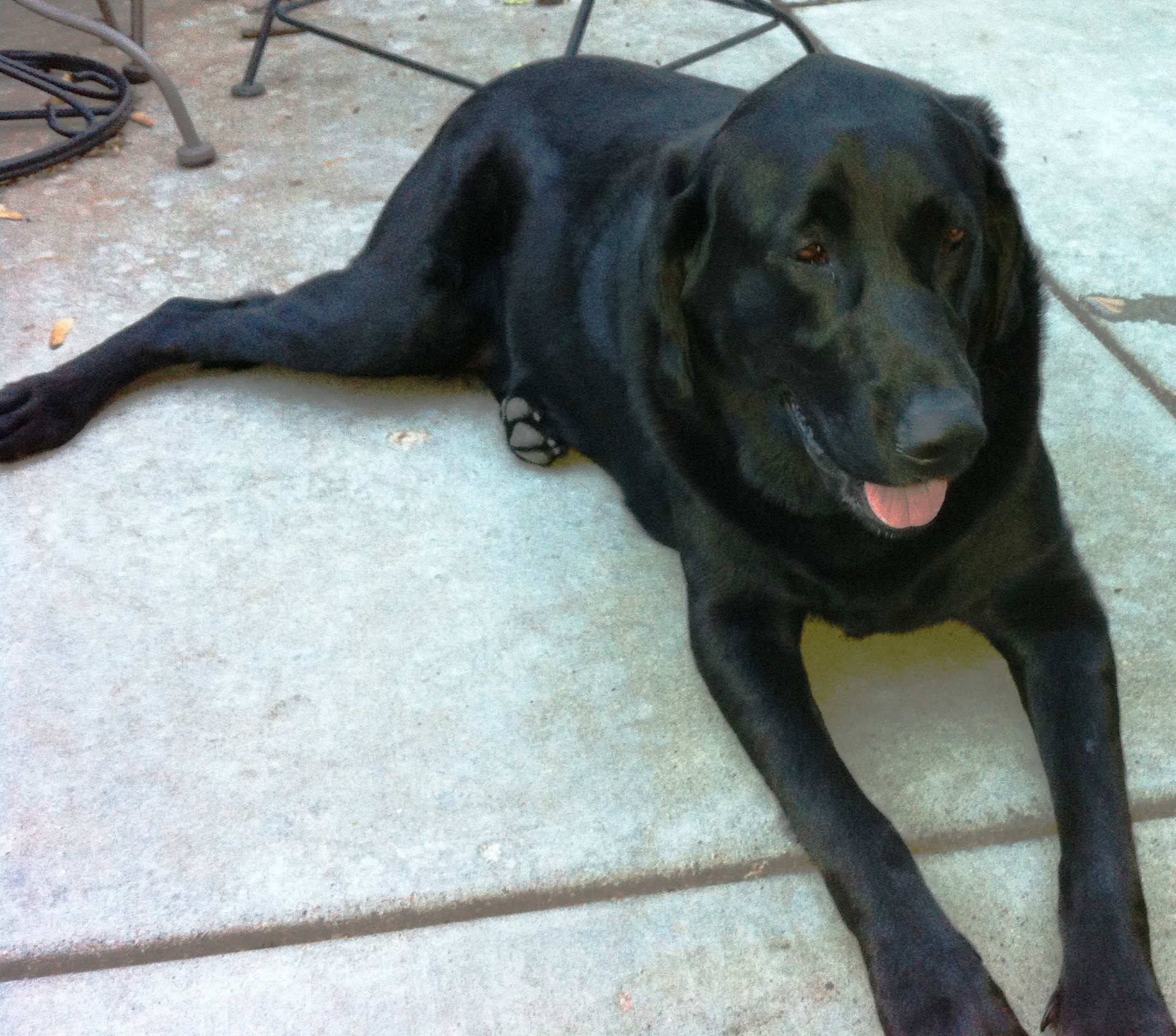
My black lab whinnies with a high pitched cry outside my door when I start to meditate. I get up and let him in. He turns in circles on the rug several times then lays down with a thud, head between his legs, and sighs deeply.  Before she died my cat always turned up to settle herself in my lap. Animals are often present with us as we pray. Dogs, cats, rabbits, snakes, herons, fish, coyotes, possums, deer, cows, a wild boar, turkeys, quail, even a mountain lion showed up a time or two to speak of God to me.

A few weeks ago the neighborhood fox paid a call at 4:00 am. My dog was out guarding and began to bark excitedly. When I went to the window I saw the fox, close to the fence, and Elijah on the inside quietly looking at each other.  No more barking, just eyes meeting. After while the fox turned and walked out to the middle of the street and lay down under the streetlight. The two continued their silent communion. I stood at the window wondering what was going on. Then the fox stood and walked to the neighbor’s front yard, curled himself up, and appeared to go asleep. What was communicated, what information exchanged, what dog and fox questions had been answered? It was a mysterious encounter that likely would not have happened if I had been outside with Elijah. Would the two had shared that long gaze and the peace that gathered up between them?

Eli 5.13

If I were alone in a desert
and feeling afraid.
I would want a child to be with me.
For then my fear would disappear
and I would be made strong.
This is what life in itself can do
because it is so noble, so full of pleasure
and so powerful.

But if I could not have a child with me
I would like to have at least a living animal
at my side to comfort me.

Therefore,
let those who bring about wonderful things
in their big, dark books
take an animal – perhaps a dog-
to help them.

The life within the animal
will give them strength in turn.
For equality
gives strength in all things
and at all times.   Meister Eckhart

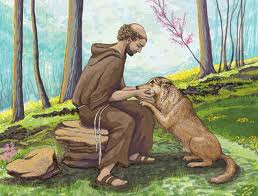
St. Francis prays over the animals Bensiger

Animals participate with us in our shared life, exchanging their sensory awareness with our own. As we interpenetrate each other’s awareness, our communication results in shifts affecting each other. German philosopher, theologian, and mystic (1260-1327), Meister Eckhart writes of receiving strength and life from a child or an animal. Children and animals possess a kind of innocence and presence to their awareness, which adults may lack.

A Rabbit Noticed My Condition

I was sad one day and went for a walk;
I sat in a field.

A rabbit noticed my condition and came near.
It often does not take more than that to help at times –
to just be close to creatures who
are so full of knowing,
so full of love
that they don’t – chat,
they just gaze with their marvelous understanding.
   St. John of the Cross in Love Poems from God

Chambers_bosseron_charles_c_b_St_Saint_francis_assissi_animals_thumb

How do animals enter your prayer and contemplation? What do they teach you? What shifts happen in you as you commune with them?

In my book, Letters from the Holy Ground, I took a look at the presence of animals in our lives and prayer:

From the beginning, animals had figured in my journey, but now they began to show up more in my writing. And they were not content to simply add color and amusement, the dear things wanted to speak. The animals developed a following among some of my readers. The dog, cats, and rabbits even received occasional cards and inquiries. I seemed to have struck a chord.

What did whimsical animal fantasy have to do with spiritual formation? Did the creatures serve a purpose beyond a literary device and medium of revelation? I became curious about why animals held so much joy and interest for me and my readers. I think it is because animals naturally possess the poverty of spirit I was seeking for myself. Gerald Vann observed that the condition for happiness is a deep sense of our creatureliness. I think part of becoming ordinary is the discovery and deep acceptance of the joy and freedom in our creatureliness. The animals help ground me and remind me that I, like them, am subject to One larger and greater than myself.

Contemplation, consolation, ecstasy, may have a tendency to inflate a person. Being entrusted with the spiritual care and nurture of others, likewise, may puff up our egos. The animals seemed to call me back to the earth, to simplicity, to surrender and trust.

But ask the animals and they will teach you:
the birds of the air, and they will tell you;
ask the plants of the earth,
and they will teach you;
and the fish of the sea will declare to you.  (Job 12:7–8 )

Animals do not lie or pretend. They do not sin. They seem to know that God’s omnipotence undergirds everything. Animals disarm our logical defenses and help us overcome our human resistance to grace. I even came to identify a state of being in myself I called “rabbit power.” Rabbit power meant humility and the wisdom, balance, and earthy connectedness of an animal that lives as a prey species, close to the ground and mindful of its vulnerability. I connected rabbit power with taking off my shoes and walking barefoot. In my experience, no rabbit has ever appeared to pine after being something other than it is; rabbit power was a place where I could gratefully be who I am and therein find deep delight and peace.

Finally, communion with animals reflected my desire for union with God. To cross the chasm from one species to another and find communion and a sense of mutual respect and regard seemed to mirror my longing to connect with God. To establish a connection, an understanding, however slight with something wholly other than oneself, is to participate in the eager groaning of a creation seeking wholeness and unity with its Creator.

Spend some time praying with an animal this week. Let me know what you  learn. I would love to hear about some of the marvelous understanding creatures give to you.

 Seal on lap

Here is a wonderful complement to this blog post.

http://www.youtube.com/watch?v=3hdUCzbCuYk

Let the Beauty We Love Be What We Do

PalmSunday-06

The children also greet Christ with palm branches and lay their garments on the ground honoring Him as King.

I kept Holy Week and Pascha with Saints Peter and Paul Antiochian Orthodox church this year. The Orthodox Christian Church celebrated  Pascha (Easter) on May 5. I did not make it to all of the holy week services. There were seventeen, beginning with the Saturday before Palm Sunday, the Saturday of St. Lazarus, the Righteous.  The people and their priest, Father Joseph Longofono, offer their gifts and talents with generosity and devotion. They are warm and welcoming to this awkward Presbyterian who comes among them to pray and learn more about a faith tradition she has long admired from afar.

On Palm Sunday, (April 28 this year) at the end of the service we processed outside with our palms, songs, incense, and other regalia and holy items for which I do not know the words.  I can tell by The Services of the Great and Holy Week and Pascha, the book of Holy Week liturgies I purchased, that most of these words are Greek. I learned enough Greek in seminary to pass the class and my ordination exams. Since then translation is an afternoon’s ordeal involving a concordance, Greek grammar book, Kittle’s ponderous Theological Dictionary of the New Testament, and trying to remember the Greek alphabet.

A few startled sparrows rose out of the shrubbery as we poured out onto the lawn.  Cars buzzed by heading East on one-way Huntoon Street. Along our path I smiled to see at my feet a little shrine of twigs overlaid with narrow strips of green moss.  Easy to miss, barely a foot or two in height, the shrine was a small construction of sticks stuck at various angles in a patch of moist bare ground.  Tucked in the crotch of a branch was a white spirea blossom.

The happy procession wound back inside the small sanctuary, its walls alive with glowing icons of the saints. You can feel them all looking tenderly on from heaven, adding their voices to our prayers and songs and benediction. I read that Orthodox draw no distinction between the Body of Christ in heaven and those on earth. They view both parts of the Church as inseparable and in continuous worship together of God. Orthodox worship therefore expresses this unity of earth and heaven in every possible way so that the earthly worshippers are continually reminded through all their senses of the heavenly state of the Church.  Wikipedia

It is as though for the Orthodox, worship is a continuous act since the beginning of the church. Everyone in heaven is there and we show up to join in the perpetual praise and leave and return as our lives allow. When we return we merely pick up where we last left off. And unlike many churches I am familiar with, nobody here is in any hurry. After all we have eternity.

The church was packed with more children than adults this day. Older children stood quietly with their parents, toddlers sat on the floor, mothers, fathers, grandparents, and aunts held babies crooked in their arms and nestling against their shoulders. Some kids sat on the few pews.  (Orthodox Christians stand for worship. The pews are reserved for the elderly, children, and fainthearted visitors.)  Toddlers wandered about. There was an ease about their presence, parents taking them in and out of the service as needed. The occasional cries, thumps, or exclamations formed a descant of baby babble to the chants and songs sung in four part harmony throughout the service.

After church I chatted with a little girl, admiring her cute flip-flops, and on the way to my car came upon the twig shrine with a red haired boy kneeling before it. The twigs and blossom had been kicked over.

I said to the boy,” Oh did you make this? It is very beautiful.” Nodding yes, he told me that his sister knocked it down.

“I am sorry. It is a holy thing,” I said.

His sister joined us and said, “Luke doesn’t like to sing the holy songs.”

“Hmm,” l said, as Luke worked on rebuilding his shrine, “sometimes people prefer to make holy things than to sing holy songs.”

“He doesn’t like to come to church,” she said in the irksome manner of sisters who broadcast a brother’s private life to strangers.

“Yes, there are people who feel that way,” I said to the little girl as her brother struggled to get the blossom to stay in the crook of the twig. I thanked Luke for making a holy thing and repairing it, and walked to my car.

His sister, shouted after me, “He is hypert,” as she, appearing a little hypert herself ran racing around the church yard in a holy dance of her own.

Luke, kneeling in the dirt with his offering, as brothers everywhere have learned to do, ignored her.

pearblossomclose

Hundreds of Ways to Kneel and Kiss the Ground
The impulse to worship and to express the beauty and awe of our souls to the author of our being seems nearly universal in human experience. I believe this desire is placed in us by God in the core of our being, like a magnet, which draws us through our life experience to reach out and connect with the one who put it there. We may spend a lot of our lives seeking ways to express this sublime impulse. Yet if we trust our hearts, we will be led to places and forms of worship, as though guided by a God-given implanted GPS device.

There are many ways to worship God.  Sufi poet, Rumi tells us, Let the beauty we love, be what we do.  There are hundreds of ways to kneel and kiss the ground. I believe that our efforts at praise and worship are like building little shrines in the mud, each dear to God, each delighting the heavens, each precious.

When the beauty we love, becomes what we do, even the mundane may hold the potential of sublime worship: Lucille’s macaroni hot dish; the green and pink chintz curtains Elsie made for the ladies room; the deacon holding the door for you; your desperate prayer; a pile of rocks in the desert; your garden. In all kinds of ways we gather sticks, find a blossom, and put it out where someone will see it. Praise will be offered.

To be human, made in the image of the Creator, is to pour out our hearts on something we love which is greater and beyond ourselves.  Our responsibility is to discover ways to kneel in reverence, which will express our deep yearning and connect us to what is good, true, beautiful, and free. For me that is worship of God, the Holy Spirit, and Jesus Christ.

Luke’s Palm Sunday act of worship reminded me of another child’s offering. When she was around six or seven, my daughter, Diana, brought me a stick with dandelions, grass, and pink phlox wound around it. I wrote about it in my book Letters from the Holy Ground,

“This is a prayer stick, mom. I made it for you.” It was a large stick with flowers woven round the top. Could I let the stick pray for me? For I do not know how to pray aright. I lean the stick against my altar. “Pray stick,” I say. “Pray now.” I go off to other things, while the stick holds the offering pointing toward heaven. Dare I trust creation to pray for me, to bear my prayer? Here stone, pray. Here river, pray. Here moon, pray. Just by being what you are, a maple branch salvaged from last fall’s ice storm, wrapped round with pink petals, transformed by the touch of a child’s hand into something sacred.

How shall we sing the Lord’s song in a foreign land? That is the question. For our hearts are heavy, and we, captive by this mortal flesh sit down and weep.

Loretta Ross (-Gotta), Letters from the Holy Ground  – Seeing God Where You Are, Sheed & Ward, 2000, p 67

How shall you sing the Lord’s song? Find that gps device in your heart and let it point you in the direction of the worship of your soul. I would love to hear about the things which lift your heart to God in the comment section below.

Severed

sea

Drawing her arms
through the salt sea
legs straining
giving her body
to the task

she swam among
the floating limbs
reaching after them
before they turned
to sink slowly down

to shocked shipwrecks
astonished clams
coming to rest in a cloud
of silt, the softly yielding
residue of other remains.

She heard no sound
but her breath
and the slip slosh of sea
as she ploughed the
surface of their sorrow.

She thought
she could retrieve them
gather the fragments
siphon up the spilt blood
return to all donors

bring mothers
their sons and daughters
reborn,
wrapped in seaweed

take this leg, uprooted,
to the young man
Here it is yours, she’d say.
I found it in the sea.

So deep, so wide the wound
of flesh and bone
so piercing, urgent the ache
to be re- membered.

__________________________________

for those whose lives have been blown apart
for those who must pick up the pieces

Loretta F. Ross, 2013

Wake Up!

Man Waking to Alarm Clock

Contemplation is about waking up. Simply defined, to be contemplative is to experience an event fully, in all its aspects. Biblically this is expressed as knowing “face to face.” What is implied in that phrase … is that we are in contemplation when we stand before reality and experience it without the limits and distortions that are created by narcissism, pragmatism, and excessive restlessness.   Ronald Rolheiser, The Shattered Lantern


Prayer wakes us up to what is so, not to our dreams, illusions, wishes, and desires for what is so, but to the sacred reality of each moment.

How grim you may think. How boring – this dirty kitchen, this cluttered desk, this sagging body, this pock-marked, disappointing, and flailing world?  From here it is a short, sad trip to the dark pit of the if onlys, the why nots, and maybe whens. Or perhaps I look around for someone or some event to blame for my shabby reality. Maybe I plot a way to get even, or tune out and play a game on my cell phone, fool around on Facebook, go shopping, or eat something.

We live in a culture which makes an art and a virtue out of avoiding the truth of our deep need, our sadness,  grief, and anger –  at what? Let’s put it like this: at being human. For buried beneath  much of our striving, stress, and anxiety I often discover a kind of contempt for ourselves and our vulnerability. We persistently look outwardly for relief for the painful human condition, which plays neatly into the agenda of  our culture of consumption, as we seek to find our worth through other persons, power, prestige, and possessions.

Over time prayer may eventually shatter such agendas and expose their superficiality and ultimate inability to satisfy our deep need. We find ourselves sitting in the midst of reality, still mundane, yet strangely shot through with beauty, wonder, and joy.

“You are a ruby embedded in granite. How long will you pretend it’s not true?” asks the poet Rumi. Contemplative prayer wakes us up to see through the granite of illusion to the splendor of the ruby.

FREE !

In gratitude to Praying Life readers and to all who comment, like, and share our posts here, please help yourself to a free pdf version of the most recent issue of Holy Ground Winter 2013. This issue is about waking up and finding that ruby.

If you find this to be something you would like to receive on a regular basis, please subscribe! You can receive your own copy delivered to your home mailbox or electronically online. Just indicate which version you prefer in the drop down box when you subscribe.

By subscribing you will also help support The Sanctuary Foundation as it reaches out to people of many faith traditions to nourish inner peace in a chaotic and complex world. We cannot do it without you. Really.

Holy Ground issue