A God Who Dances

A honey suckle vine extends herself into space in a graceful flourish. Reaching into nothingness, she dangles from hope and her own inner nature for making a connection to something beyond herself.
I have been reaching out into cyber space with The Praying Life blog for over a year now of weekly posts. Time for a bit of review and evaluation.
This time of year many churches celebrate the Trinity, a notion that makes a lot of people scratch their heads and squint.  English historian Edward Gibbon, famously called the Trinity, “perhaps the deepest and darkest corner of the whole theological abyss.”
Undaunted, some pastors will boldly attempt to explain how a God can be one, and three. The scholarly ones will use the ancient words of the church to describe the Trinitarian nature of God:  circumincessio, Latin for sits in a circle, and (my favorite) perichoresis, Greek for dances in a circle. Both words refer to the relationship of the inner parts of God, a relationship of intimacy, reciprocity, and circularity.
If I were preaching about the Trinity, I would pass on what Meister Eckhart says. “Do you want to know what goes on in the core of Trinity?  I will tell you. The Father laughs and gives birth to the Son. The Son laughs back at the Father and the gives birth to the Spirit. The whole Trinity laughs and gives birth to us.”
The Trinity speaks of a dynamic hilarity and self giving in the heart of God’s nature.
God is a community, an interactive exchange of love. As creatures made in God’s image, we also are profoundly connected and communal. I just wish we could laugh more about it.
Blogging has heightened and deepened my awareness of the bounty of community in the shared experience of our life in God together. The opportunity for exchange and conversation has shaped, formed, and reformed me.
For me personally, the past year of the praying life has been the slow and only work of conversion, of turning and re-turning my heart to the One who summons beauty, justice, and truth from our souls, bids us to love, and marries us to Mercy. A life focused in prayer keeps revealing those things in me which struggle against God’s Spirit. You know – the pride, selfishness, envy, fear, doubt, ambition.
Internet ministry is ripe for all these sins to distract and flourish. Who commented on what? How many viewers did I get? Does my blog have “authority”? Oh look at how good his blog is…. I wish I could write like her. Blah, blah, blah. God, set me free of me!
Blogging has invited me to loosen up, to be more present – in this world of fleeting impressions, and swiftly passing fancies. Instead of trying to grasp, preserve, and set in stone, as print media encourages, I have been invited to tune into the streaming presence of God and to become more streaming myself, more open and influenced and shaped by this dance.  
Twelve months out, reaching for a handhold, streaming a life in God, I hope you are stretching into the unknown. I hope you are laughing and giving birth to joy from your branch on the vine.
Thank you from the bottom of my heart for reaching out, reading and commenting, for sharing the blog with others, for praying and sharing your own praying life.

For such delight we have been created.
Shall we dance?


Read more about prayer at www.fromholyground.org
Tracking Holiness – Newsletter
Contact Loretta at lross@fromholyground.org, www.fbook.me/sanctuary
Follow at http://twitter.com/lfross
Become a fan of the The Sanctuary Foundation for Prayer

Pentecost – The Inhalation

Some years ago I wrote a Readers’ Drama for Pentecost, called “The Feast.” It is set in a small rural Kansas town at a shelter house in the city park. The people have gathered for a covered dish dinner. Before eating, however, they wait for the Holy Spirit. The drama is an imaginative exploration of the meaning of the Holy Spirit. Here is a scene from The Feast.

Act Three: He Breathed on Them and Said Receive the Holy Spirit.

Scene One:  The Inhalation

Breath of God
Spirit of God
Spirit Breath
The wind brought the dust, like a thick dark cloud.  It came up the hill and clung to their arms and legs, the backs of their necks, and drifted around their ankles.  The dust knew its own.  And with the dust came the seeds, pollens, spores, insects, and all manner of boring, digging, thrusting, grasping things, all looking for a place to root.
Across the world from the shelter house someone was weeping.  The wind brought the sound.  It carried the earth’s suffering – the scrapings, the debris, the underbrush, the grass cuttings, dandelion fluff, paper cups, plastic milk bottles, and old newspapers – scuttling down alleys and streets of cities and villages.
All that was loose came whistling up that hill, swirling around the shelter house:
a severed hand
a letter that said:  Where were you?  I waited as long as I could.
an invoice:  Amount due – $30.00 for services rendered.  This is our last notice.
a grocery list someone had scribbled on the back of a Time Magazine subscription card:  apples, bread, quail, milk, honey, Easy-Off
a live chicken riding in a red plastic wastebasket with the words, “You’re in good hands with All State,” on the side
and a trailing scream like a long red scarf.
On the end of the scream like a long red scarf was a story of children with flies in their eyes who propped themselves like tinker toys against mothers whose breasts sagged empty as yesterday’s balloons.
And from the throats of the children came the sound – a rattle of dried seeds in a pod, a wail of sirens in the night, a whine of chain saws cutting living tissue.
Edith and Ethel and John and Maxine and Charles, your children are crying.  They are weeping through the long winter night huddled on the stony ground, no covers for their thin legs, bones clacking in the chill, dreaming of rice and goat meat.
The scarf wound tighter around the shelter house.  People, your children are calling for you!  They lay in bloody heaps like rags in back alleys, motels, living rooms, battlefields, jails, and camps.  Beaten, raped, shot, hung, strangled, poisoned, drowned, electrocuted, the rags writhe in terror’s arms.
People, don’t you hear their sobbing – in hospital beds, around kitchen tables, in automobiles on their way to work, their shoulders hunched like dustpans over their broken hearts?
The wind blew and the waiting disciples called the wind Spirit of God. That is important – getting the right name for things.  Recognizing who is blowing into town.  Is this a gust out of the south bringing a lot of the neighbor’s trash into your yard, or is it the breath of divinity declaring that my neighbor’s trash and grief belong in my backyard?
The truth about God’s ravishing Ruah is that she is not rude.  She comes only where she is invited, where there is a welcome and room made for her.  God’s Spirit enters into emptiness, fills lack; she is the mirror image of a black hole, the inhalation after the exhalation.  She flows into hollows and crannies and searches for expectant openness.  Those gathered sat and waited, like people holding their breath out until the need for air was so great, so deep that the lungs sucked in the breath quenching the vacuum with life.
The key is learning to hold the breath out, not to gulp the spirit, but to wait for her to rush into you, to wait until the body of Christ draws the spirit out of its own deep thirst.
Then we no longer breathe, but are breathed.
In this Pentecost season may the Holy Spirit blow
something wondrous into your being.
And may you have the courage to inhale.
Read more about prayer at www.fromholyground.org Tracking Holiness – Newsletter
Contact Loretta at lross@fromholyground.org, www.fbook.me/sanctuary
Follow at http://twitter.com/lfross
Become a fan of the The Sanctuary Foundation for Prayer

In Between – Ascension and Pentecost

While he was still with them, he said:
Don’t leave Jerusalem yet. Wait here for the Father to give you the Holy Spirit, just as I told you he has promised to do. John baptized with water, but in a few days you will be baptized with the Holy Spirit. While the apostles were still with Jesus, they asked him, “Lord, are you now going to give Israel its own king again?”Jesus said to them, “You don’t need to know the time of those events that only the Father controls. But the Holy Spirit will come upon you and give you power. Then you will tell everyone about me in Jerusalem, in all Judea, in Samaria, and everywhere in the world.”    Acts 1: 6-9 (CEV)
I ask the glorious Father and God of our Lord Jesus Christ to give you his Spirit. The Spirit will make you wise and let you understand what it means to know God. Ephesians 1: 17 (CEV)
Something new is coming,
something incredible,
something beyond our imagination
and our manipulation.
Something promised.
Well maybe.
That is to say, we hope it is.
He said it would.
And you know,
if you think about it,
didn’t the things he said
turn out as he promised?
Well. Yes.
But not always the way we thought.
Maybe we heard it wrong. Maybe we were just really gullible.
But no. We saw it with our own eyes. Heard with our own ears.
We watched him rise up
out on the hill,
wind blustering all around,
and the jagged saw of goodbye

chewing us apart.

Don’t go. Don’t go. We love you so!
And the love
filling us up
and tipping us
over
with its force.
And us, breathless and blown
rolling and tumbling around
like trash in an alley.
His Words,
imprinted
on our souls like a bright tattoo.
And the angels saying, Get up. Get going!
He said to wait.
Hold still. Be still.
Wait.
There would be more. Something else.
Spirit he called it.
Comforter, advocate, guide,
who will help us remember it all.
Help us catch our breath,
and give us legs for such a world, as we have glimpsed.
Oh, why not Him? Why this spirit thing,
when we had a love we could hold in our arms and look in the eye?
The Father, reaching down into humanity,
snatches back the offspring
of his selfless, effervescent generosity,
his dear and only Love.
Oh God,
catching up very God of very God, begotten not made,
by the scruff
of his collar
and drawing him back into your joyful dance,
what are you thinking, cutting in like this, sweeping off with our partner?
Life is eternal – that is good news.
But what to do with the life and the love,
left here as we are, knocking about in the flesh?
He said to wait. Just wait.
Few things leave us more vulnerable than the Holy Spirit. Few things ask us to tolerate being clueless, with nothing to hang onto,
but a memory and a promise.

Read more about prayer at
www.fromholyground.org

Tracking Holiness – Newsletter

Contact Loretta at
lross@fromholyground.org, www.fbook.me/sanctuary

Follow at http://twitter.com/lfross

Become a fan of the The Sanctuary Foundation for Prayer

Mary Oliver Reads Poems at the Leid Center

Tall, slender, white hair falling over her face, stooped at the shoulders, unpretentious – she read about foxes, red birds, rivers, her dog, Percy. And a heron.


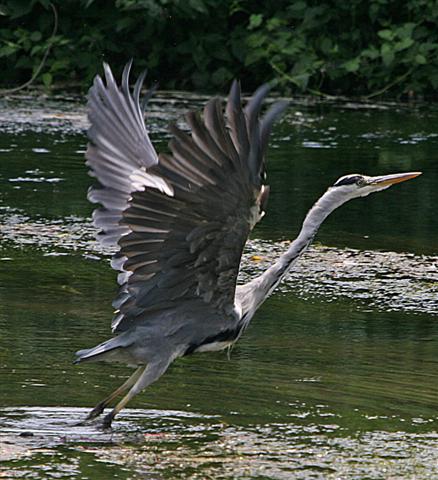
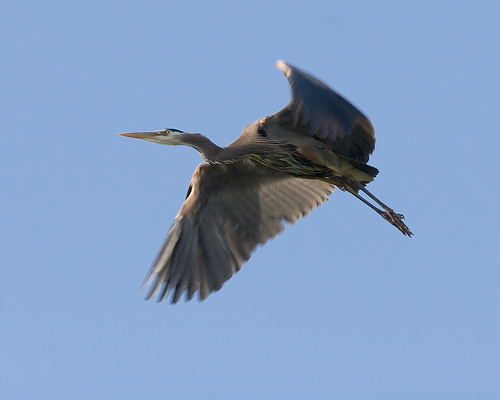
I saw it lift off the rail of a high balcony in the Leid Center. Unfolding her great wings,  the heron sailed over our heads and slipped neatly through the mottled blue curtain behind Miss Oliver.
I saw the tucked black foot of the swan in the dark water of the lake. I wondered if someone said there was a bear in the Truro woods, would the bear just maybe appear, because the town so much needed something wild and singular.


As she bowed over the podium picking out poems, Mary Oliver handed me my life on a platter. Lean over it, she said. Inhale its beauty. Taste its exotic flavors. Slurp the juice and let it run down your jowls.


The next day someone told me told about coming close to her own death, while flying north in a small plane. Ice began to form on the wings. Shaken to the core, she met her own fierce desire to live. “I don’t want to leave yet. I am not done enjoying the world and being part of it,” she told me.


The poet made a mistake. She was reading A Summer Day with its unforgettable closing line: What do you plan to do with your one wild and precious life? Instead of reading precious, she said perfect.  Later in the question and answer time, a woman asked the poet if she finds her poems changing over time and that she had noticed Oliver had a changed a word in the last sentence of A Summer Day. “I did?! What?” the poet exclaimed. She had no idea she had replaced precious with perfect. “Well, isn’t that interesting?” she laughed.


Some are blessed enough to know life is precious. A moment is given where our wings take on ice, we go into a stall, and hover an instant before a freefall into the secret.


But what does it mean to know your life is also perfect? Coming from God and returning to God, how could it not be perfect? Ours is a God who told Moses his name was being itself, Yahweh.


Our life – frayed, fretful, and failed – is perfect. It is we, who give it a dwelling place and personality for a time, who are too distracted to see its splendor and too imperfect to perceive its perfection.


We – querulous and argumentative, standing center stage in our little dramas – miss that great and perfect bird sweeping silently through the blue, light streaked, curtain of mystery.


…Then, not for the first or the last time,
I take the deep breath
of happiness, and I think
how unlikely it is
that death is a hole in the ground,
how improbable
that ascension is not possible,
though everything seems so inert, so nailed
back into itself–
the muskrat and his lumpy lodge,
the turtle,
the fallen gate.
.   .   .   .   .
…this decision,
this trailing of the long legs in the water,
this opening up of the heavy body
into a new life: see how the sudden
gray-blue sheets of her wings
strive toward the wind; see how the clasp of nothing
takes her in.
from Heron Rises from the Dark Summer Pond, Mary Oliver
Read more about prayer at
www.fromholyground.org
Tracking Holiness – Newsletter
Contact Loretta at lross@fromholyground.org, www.fbook.me/sanctuary
Follow at http://twitter.com/lfross
Become a fan of the The Sanctuary Foundation for Prayer

Consider the Maple Keys

Consider the lilies of the field, how they grow;
they toil not, neither do they spin.
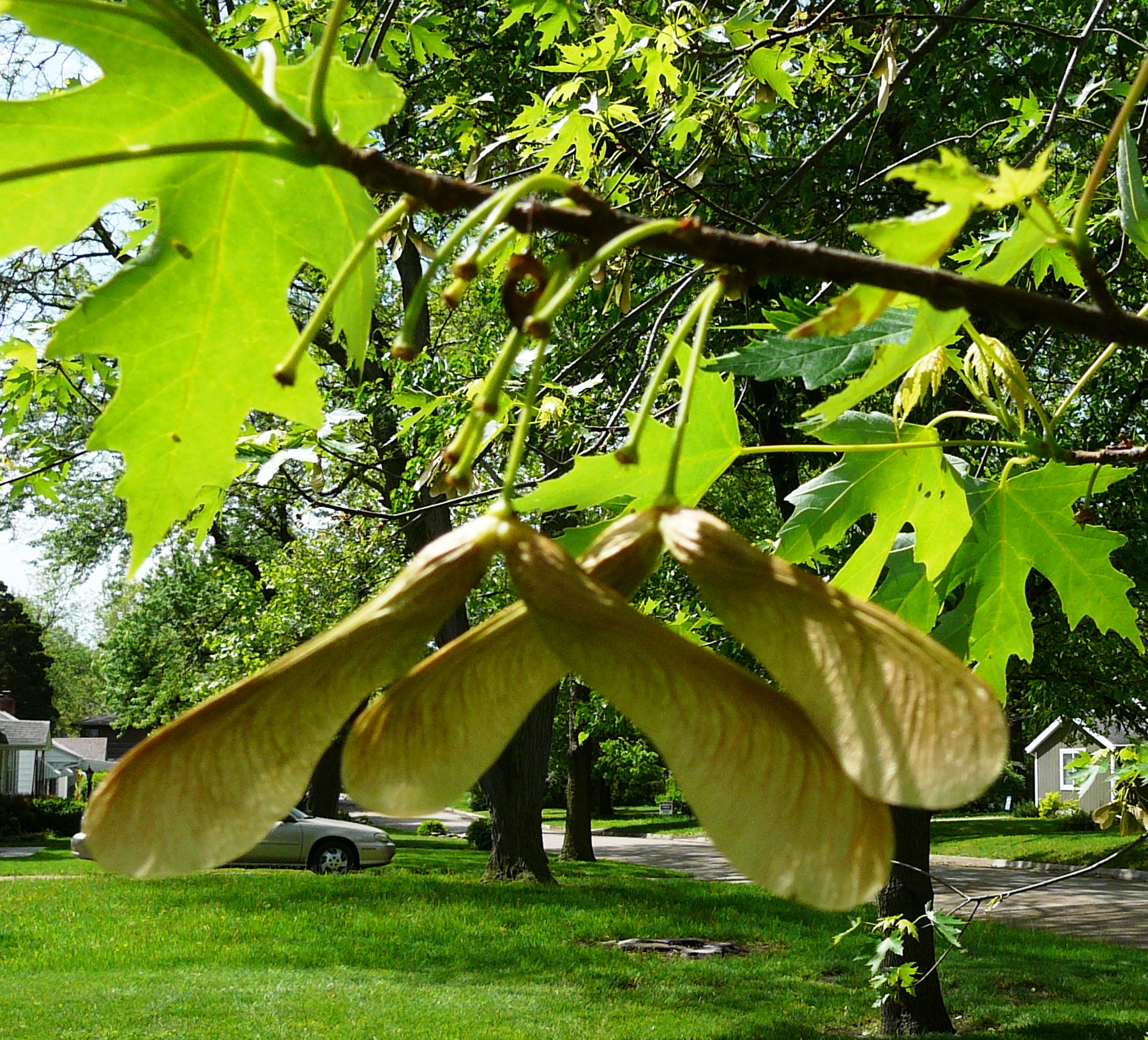
The helicopters have landed. I returned home last week to find them scattered across my lawn, piled in drifts along the curbs, and clogging the gutters.
Maple keys are on an exuberant mission of fertility. Formed after the early spring flowers bloom on the maple’s branches, they hang in thick green clusters. As the fruit ripens, the color drains out of the wings. They thin to paper husks and release themselves, sailing off in dizzy circles.
These single winged wonders propel themselves by the auto gyrating principle of flight. The wing, which reminds me of a tiny squirrel tail, is counterbalanced by the weight of the seed or fruit.
Helicopters in the backyard, grass growing like weeds, a new crop of bunnies down the alley … Life wants to live, to express its live-li-ness. It cannot help itself. What Dylan Thomas called “the force that through the green fuse drives the flower” is at work here in Kansas. What sucked Jesus up from that cold slab and put him back on his feet, trotting down to Galilee, is loose in the world propagating itself in heedless prodigality.
Lately I have been noticing that how I evaluate, or interpret my experience and people is less and less important. Oh, my thoughts may be of riveting interest to me. Those closely held opinions, my ego defining and enhancing assessments about how things ought to be can enthrall me.
But now, really, am I not merely one maple key turning, floating lazy in one of millions of backyards? Am I not, too, heading for some crack in the sidewalk to insert myself into this good earth? Will I not lie resting, as my skin dries and peels away, as my seed splits and a tiny root weaves down into the substance of things hoped for?
What interests me more than my opinions is the seed – being itself, that hidden fuse in the mortal soul, which has amazing resilience and determination to express itself, to live.
I see this life in others more and more. I hear it in the subtext of conversation, hidden beneath the skin of things. It murmurs, like leaves whispering in a breeze. The ache and thrust to live, to sink into some welcoming soil, to be seen, heard, and received is an awesome power encased in the fragile, tissue thin, vulnerability of humankind.
As a species we seem always to be wanting things or not wanting things, or being angry or hurt, or disappointed, when our desires are frustrated or denied. Sometimes as rampant anxiety, sometimes as a yearning that tears and consumes, sometimes as a sigh at the end of the day, the seed strains against its waxy membrane, splitting its boundary with the need to grow and endure, sending out seeking tendrils asking: Am I all right? Will things be okay? Am I doing what I am supposed to? Will I get what I want?
When I see this collective longing buried under our anger, cynicism, cruelty, and fear, my criticism turn to compassion, my fretting to trust, and my impatience to surrender to the wind.
Life possesses us. And it will live through us. Do not believe for a moment that you can stop it. Not oil spills, economic downturns, illness, failure, not even death, not even death can stop it. For life owns death, makes it bow before it, and will reclaim all losses.
Consider the maple keys, loose in the skies. Catch a ride. And for God’s sake, for all our sakes, allow the life in your unique and splendid aerodynamic design live.
Read more about prayer at
www.fromholyground.org, www.theprayinglife.wordpress.com
Tracking Holiness – Newsletter
Contact Loretta at
lross@fromholyground.org, www.fbook.me/sanctuary
Follow at http://twitter.com/lfross
Become a fan of the The Sanctuary Foundation for Prayer

A Hand Caught Beyond Death’s Grip

I offer this week the closing portion of a Readers’ Drama for Easter, Quem Quaeritis? (Whom Are You Seeking?)  The drama is a conversation among a narrator, the three women who come to the tomb to tend to the body of Jesus, and the angel who meets them with the words, “He is not here. He is risen.” A poetic exploration of the meaning of the resurrection, the drama weaves back and forth between contemporary and historical settings. I wrote it over the course of a year in which I meditated, read, and prayed about the resurrection.
NARRATOR
Christ,
at once giver and receiver,
the one who bore
and was raised
that who thrust forth
and who was penetrated,
the willing victim
the union of opposites
now bids us
rise from the dead kingdom of duality
to a realm of holiness and power
that transcends categories
of human making.
THIRD WOMAN
“See the holes in my palms?
Have you anything to eat –
a bit of fish to chew,
some bread?” he asked,
extending a hand
caught beyond death’s grip.
FIRST WOMAN
On the afternoon of the day my friend died
in a hospital bed in Iowa City,
my daughter and I made cookies.
In the Kansas kitchen overlooking the finch feeder
while seventeen finch gobbled
two pounds of thistle seed
(95 cents a pound at Allen Farm and Feed),
we measured flour and brown sugar
butter and ginger
and mixed them in the yellow bowl.
Patting out the dough on the cookie sheet,
we stopped to taste.
“Umm very good!” she said.
There while she stood on the orange chair
with a brown apron hanging to her ankles,
I saw for the first time
how the smooth curve of her cheek
presses against space
with such exquisite beauty.
SECOND WOMAN
How is it that we have come so far
yet missed so much?
FIRST WOMAN
How is it green fields tumble in the wind
and tulips pierce last fall’s leaves,
spearing death neatly
with pale green blades?
SECOND WOMAN
How is it that we
afflicted with resurrection fever
drowse through it all
like sleepwalkers?
We hobble over the land,
our actions:  jerks and twitches
random, impotent tossings in our sleep.
THIRD WOMAN
The hand I clasp
has a hole in it.
The cheek I kiss
wears the odor of nard.
The eyes I behold
contain celestial vistas.
THE ANGEL
Once divinity
sprouted
underneath a woman’s heart.
She who had been so empty
walked in fullness.
Now Earth,
who carried patiently
the son of humanity as he ripened,
contracted
the forces of deliverance,
squeezed him
through the narrow channel of the cross,
disgorged the stone
in a rush of living water,
and thrust him
wet and slippery
into the arms
of the astonished church,
which at the same instant
held
the body of Christ
and became it.
ALL WOMEN
Oh then Mary’s joy
swelled into our song.
FIRST WOMAN
And we,
SECOND WOMAN
magnified by our plentitude,
FIRST WOMAN
spied Infinity kicking
in our finitude.
THE ANGEL
He is here.
Read more about prayer at
www.fromholyground.org, www.theprayinglife.wordpress.com
Tracking Holiness – Newsletter
Contact Loretta at
lross@fromholyground.org, www.fbook.me/sanctuary
Follow at http://twitter.com/lfross
Become a fan of the The Sanctuary Foundation for Prayer


Saved by Poetry

(Caution, rant alert.)
I am really tired of people who are in charge of things – leaders, authorities, and grown ups – fighting. I am annoyed with how much of the “news” consists of offering ringside seats at the latest knock down, drag out. I am sickened by sarcasm, cynicism, stridency and the legitimizing of fear, anger, and blame as reasonable and acceptable points of view in communal problem solving. I am annoyed by emails which trumpet, Read and weep and conclude with This is bad…..real bad….these guys MUST be stopped, stopped now, and stopped HARD!!!!
Thank goodness, April is poetry month. It has arrived just in time to save you from the black hole of my self righteous indignation.
When my brother and I picked, poked, badgered and teased each other into tears and blows at bedtime, my poet mom would holler up the stairs, “You kids settle down or I am coming up there with a stick with a bee on the end of it.” Mom rarely raised her voice or showed anger, but that image of her bounding up the steps waving a stick with a bee attached would hush us up and settle us down right smart. Just contemplating mom doing such a thing was sobering. So we turned over in our beds, sighed, and fell into the sleep we so sorely needed.
Flannery O’Conner wrote that poetry is the accurate naming of the things of God. For me that means everything, for what does not belong to God? For accuracy we must step away from bombast, pontification, egotism and fear to look courageously into what is so. Rather than exalting anger and fear and attempting to defend truth by diminishing all other competing truths, poetry invites us to gaze generously upon the reality of our common experience that points in the direction of truth, which poetry would never claim to possess, but only to love.
Poetry is the sensuous earthy praise of dirt, color, and detail. Poetry holds in its open palm the transformative reality of the winged sparks of sun bouncing off the blackbird’s belly, and the piercing sting of a stick with a bee on the end of it.
God, who consented in Jesus to be tethered to time, space, race, nation – the unique, speckled, flecked and marked human form of one homo sapiens, has in that startling incarnation blessed and made holy the spare, the absurd, and singular. In each particle of creation the deity scintillates, and truth shouts for those with eyes to see and ears to hear.
A poem has been haunting me for the past two weeks. Remembering only snatches, It’s lemonade. It’s lemonade. It’s April, I finally hunted it up. Read it out loud right now to your cat, your friend, or just for the glorious sound of it.
It’s lemonade, it’s lemonade, it’s daisy.
It’s a roller-skating, scissor-grinding day;
It’s gingham waisted, chocolate flavored, lazy
With the children flower-scattered at their play.
It’s the sun like watermelon,
And the sidewalks overlaid
With a glaze of yellow yellow
Like a jar of marmalade.
It’s the mower gently mowing,
And the stars like startled glass,
While the mower keeps on going
In a waterfall of grass.
Then the rich magenta evening
Like a sauce upon the walk,
And the porches softly swinging
With a hammockful of talk.
It’s the hobo at the corner
With his lilac-sniffing gait,
And the shy departing thunder
Of the fast departing skate.
It’s lemonade, it’s lemonade, it’s April!
A water sprinkler, puddle winking time,
When a boy who peddles slowly, with a smile remote and holy
Sells you April chocolate flavored for a dime.
-Marcia Masters
I recall this poem every April, but I probably hadn’t read it for more than 35 years. Hmm, things have changed. Some of the images sound dated. Scissors grinder? What’s that?
The polite soft spoken man showed up every spring with his neat kit and folded soft rags that smelled of oil. He would sit on the front steps, while I watched him sharpen my mother’s scissors. A small man with creases in his face, he worked carefully, thoughtfully as he ground, polished, oiled and then replaced his tools, and folded the cloth he wiped the scissors with. I smell the oil and metal, see the dandelions on the lawn, and feel the warm sidewalk under my bare feet. He told me he lived in Florida in the winter. From spring to fall he worked his way through towns across the country, sharpening scissors and knives, talking to children, and carefully folding his rags.
Other images sound out of touch: The happy hobo pausing to smell the lilacs has been replaced by large numbers of homeless people – most not so happy.
However, the rich magenta evening like a sauce upon the walk, trips over the tongue like a tap dance and coats the mouth with the aftertaste of expensive chocolate. Just the other night, I watched that magenta evening spread its warm sauce over the streets and sidewalks of my neighborhood.
You can see how a poem can evoke, expand and unfold within your own experience, taking you to places you have long forgotten and inviting you to see your present with new eyes.
I used to think our problems would be solved if all politicians were required to take a weekly ballet class. The intense focus on the body with its specific articulation of holiness, seemed to be good for the soul. To pay attention to the turn out of the leg, the strength of the abdomen, and the way the arm and wrist occupy space would ground lofty ideologies and silence talking heads. The sweet and humbling honesty of doing all this surrounded by mirrors would level the playing field. The thrilling self surrender of a grande jeté would put many things into perspective.
Maybe all it would take is a few good poems.
Why not write one yourself this week? Stretch yourself to accurately name some of the things of God. With a smile remote and holy, post it here or on the Sanctuary Facebook Page, and add your singular, sane and supple sanctity to the dance.

Read more about prayer at www.fromholyground.org
Tracking Holiness – Newsletter
Contact Loretta at lross@fromholyground.org, www.fbook.me/sanctuary
Follow at http://twitter.com/lfross
Become a fan of the The Sanctuary Foundation for Prayer

The Morning After

Well, it’s over, thank
goodness.
The lilies droop.
The chocolate bunnies hunch
half eaten in the plastic grass.
Mrs. Mitchell runs the sweeper
in the sanctuary
sucking up the alleluias.
It’s over
and we made it.
We said it wouldn’t be easy.
We said we would be taking up the cross.
But the pain catches us
off guard
and we hunt
for other causes.
We said, “Yes, Lord, we will follow,”
and sauntered into lent
with the nonchalance of toddlers reeling
along some sheer drop off
all ignorant of our peril.
So when it comes.
The event, the person, the inner turmoil
which nudges us to embrace
the cross’s hideous face,
we forget
and call it irreconcilable differences
or stress or heartburn.
_____________
Once I went through a very painful period of deep suffering. When I talked with my spiritual director about it, he asked, “What have you been praying for?”
“To be conformed to God’s will.”
“Well, what did you expect?” he said.
We have an uncanny way of compartmentalizing our life in God. For some of us the things we say to God in church, the prayers, and songs, appear to have little connection to the life we lead outside church. How many times have we prayed “thy kingdom come, thy will be done on earth as it is in heaven” and then gone home and worried all week about the state of the economy, our nation, or our families?
Several people lately confided to me how afraid they are about the world. These are deeply faithful people, yet they are afraid. As for me, I, too, fretted most of last week – those useless “what should I do next” worries. The one we follow has explicitly told us not to fear. Yet we try to justify our fear by hunting around for the cause of our discomfort and call it whatever is fashionable – midlife crisis, the government, the economy.
In doing that we subvert the process of growth and maturity God has initiated within us, usually at our request. Think about it. What sort of things have you been asking of God lately?
The sacred action of transformation within our souls as individuals and nations will create turmoil, uncertainty, painful loss, and suffering. This is the cross. At the same time it is purposeful, hopeful, and to those who remain grounded in faith will, absolutely, result in new life and greater freedom to love and serve one another.
For me the bottom line is this, where do I get my news?  What is my foundation, the central fact and eternal truth of my life?  CNN, FOX News, my wimpy ego, or the Risen One calling me to trust in the hidden life and power of God around every bend in the road?
Now – go eat the rest of that chocolate bunny and have a day full of wonders!

Read more about prayer at  www.fromholyground.org Tracking Holiness – Newsletter
Contact Loretta at  lross@fromholyground.org www.fbook.me/sanctuary
Follow at http://twitter.com/lfross
Become a fan of the The Sanctuary Foundation for Prayer

Spices at Dawn

The First Woman Speaks:
on her way to the tomb at dawn 
I needed one last look,
a chance to smooth your blanket,
touch your cheek
and press my lips against your hand.
I wanted to straighten up a bit,
put things in order
and I guess
it’s true
see for myself that you were dead.
Who is to tell what you were to me
how I found power in your glance
and freedom at your feet
and, say it,
love.
How I loved you so.
Me so timid, awkward,
eager to please.
It was like falling in love for the first time.
I was dizzy with the joy of it.
It is true I loved you the most
for what I became in your presence…
happier, braver, stronger.
Now do I mourn more
the loss of the self you gave me
than for you?
How your aliveness
gave me definition, clarity, and sense!
What was dormant and stunted
took root and bloomed.
Oh Jesus
I could have knelt forever before you
in that quiet way
sipping sanctity like wine.
Now I falter at death’s grim behest,
embarrassed
to slam against the stillness of your chest.
Dare I invade you
with my gaze?
Death’s shroud uncovers all.
Dare I view holiness
in such a feeble state?
Dare I behold the dark veins of your wrists
frozen as winter twigs?
Forgive me when the oil
disturbs the tangled sleep
of all the hairs upon your breast.
May I not faint
to touch
the skin
behind
your ear.
~ from Quem Quaeritis (Whom Are You Seeking) A Reader’s Drama for Easter by L.F. Ross
On your walk to the tomb, expecting to find a corpse, do not let your assumptions about what is over and dead prevent your seeing the fullness of your emptiness. Savor the love that has brought you to this place. Honor the holiness that has passed through your life. Greet the unexpected stranger.
And may you not faint to place your palm upon such beauty.
Easter Joy to you and yours!
Read more about prayer at www.fromholyground.org
Tracking Holiness – Newsletter
Contact Loretta at lross@fromholyground.org, www.fbook.me/sanctuary
Follow at http://twitter.com/lfross
Become a fan of the The Sanctuary Foundation for Prayer

Dying for Love

The moral revival that certain people wish to impose will be much worse than the condition it is meant to cure. If our present suffering ever leads to revival, this will not be brought about through slogans, but in silence and moral loneliness, through pain, misery and terror, in the profoundest depths of each man’s spirit.             Simone Weil

To accept defeat, to accept suffering for love of God and in obedience to God’s will is extraordinarily difficult. Yet such surrender is what saves us. The purification of our intention, the corrections in our thinking, the deepening compassion, and the redemptive power released from the profoundest depths of a person’s spirit transforms, heals, and frees. The church, as the place which could most clearly articulate and live out how to die to oneself, personally and corporately, seems to avoid any direct attention to such a notion. More often we find ourselves caught up in the push and glamour of success, the tasks of survival, and pumping up egos, rather than teaching them how to die.

That I must die to myself and suffer loss and pain and that such a death might be participation with Christ in a redemptive mystery goes against the grain of the independent self reliant spirit and the “me first” character of our times. However, when we settle for slogans, consultants, and committees, we circumvent the opportunity to discover strength in weakness and victory in failure. We build our case on ideology and successful practices, rather than a witness to God and faith. We succumb to a simplistic understanding of God’s saving action in history as winners or losers, and do not know ourselves as active participants in the redeeming of a broken world.

I am not sure why we don’t get this. Christians are a people who bow before a man dying on a cross, for heaven’s sake.

Christians the world over are about celebrate that dying man. They will tell again the ancient story of their God and how he came to be betrayed, humiliated, beaten and nailed to a tree. They will recall how this God, who was supposed to bring an end to their sorrow and oppression, failed miserably.

They will remember, too, how they failed miserably. How they betrayed, abandoned, and killed their God. They will see again how they had got things all wrong, how they had so horribly misperceived the truth with their narrow minds, jealous hearts, and faithless souls.

And they will be astonished by the Grace, which rolled away the stone of their rigidity and fear, and defied their wildest imaginations. What they thought was ruined and dead now stood before them in the bright morning sun and spoke, “Go and tell the others to go to Galilee. They will see me there.”

This was an old story. Calling something names, beating up something, and killing it to take away our pain and anger and sin wasn’t new. For thousands of years, we had been killing things and one another and offering them up to God as a way to set things right, get what we want, and make up for the messes we made.

But this time was different. In their fury and fear, this time they killed God, divinity itself. And Holiness let them. God wore their spit upon his face, their rage upon his back. He opened wide his arms to be penetrated by their malice.

This time God said, “OK. I will show you. This is what it looks like to kill God. This is what it means to see the truth about yourselves. This is how to love.

I am willing to bear the pain of your sins against me and against yourselves. This is what forgiveness looks like. This is what peace costs.”

With that willingness and love their God sucked the poison out of sin. He defused the power and grip of evil on the human heart. He took the hell out of everlasting damnation and gave them eternal life.

And he told his followers to do the same with the suffering in their lives.

Today many Christians wear little replicas of that cross of execution like tiny gold electric chairs or lethal injection needles. They wear death on a string and carry life in their hearts.

For having died with their God, they rise with him. And from the profoundest depths of their spirits flow rivers of living water.  This is what a moral revival looks like.

Everyone who is thirsty, come.

Read more about prayer at www.fromholyground.org
Tracking Holiness – Newsletter
Contact Loretta at lross@fromholyground.org, www.fbook.me/sanctuary
Follow at http://twitter.com/lfross
Become a fan of the The Sanctuary Foundation for Prayer