-
Join 2,897 other subscribers
-
Recent Posts
- © Loretta F. Ross and The Praying LIfe, 2009 - 2013. Unauthorized use and/or duplication of this material without express and written permission from this blog’s author and/or owner is strictly prohibited. Excerpts and links may be used, provided that full and clear credit is given to Loretta F. Ross and The Praying LIfe with appropriate and specific direction to the original content.
Follow Us
- Follow The Praying Life on WordPress.com
Category Archives: Lent
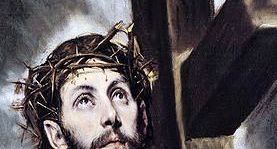
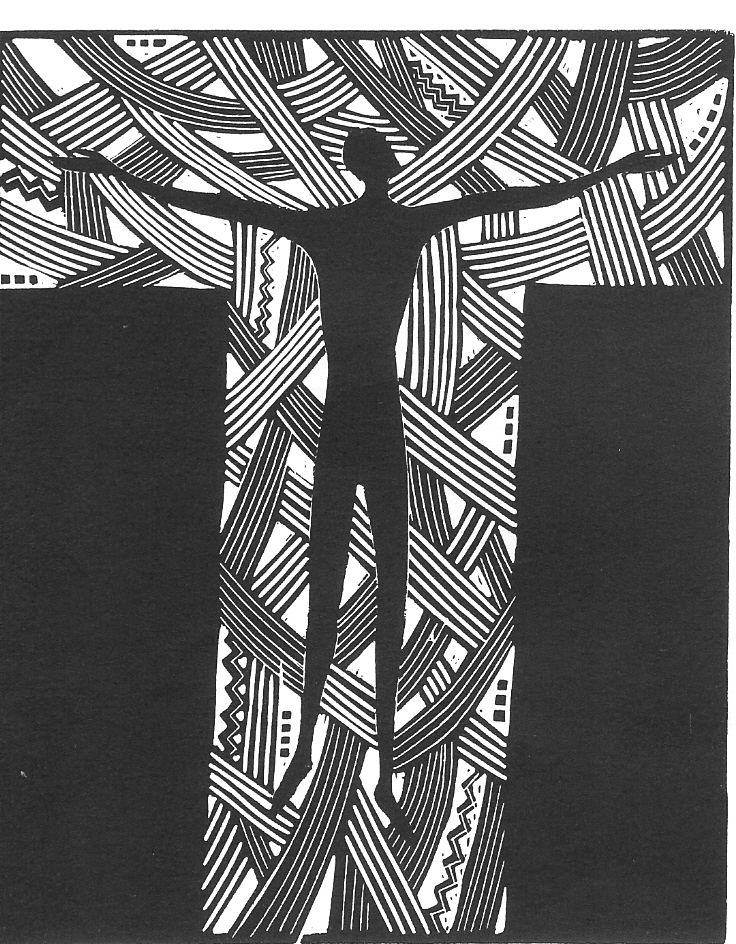
Dying for Love
Read more about prayer at www.fromholyground.org
Posted in Lent, Prayer, sin, Spiritual Practices
Tagged crucifixion, suffering, transformation
A Pure Heart and the Maple Tree
Blessed are the poor in spirit, for theirs is the kingdom of heaven.
Blessed are the pure in heart, for they will see God. Matthew 5: 3, 8
The slender branch of the maple tree outside my window extends itself in a graceful arc. Along its slim fingers it sports rust colored jewels, intricately cut opening buds, bursting with light. When did this happen? Last time I looked, barren twigs jutted stiffly into the cold air.
Here in Kansas, held captive for weeks under heavy overcast skies, we have plodded through our days with only basketball to get our blood pumping. Meanwhile, spring is quietly sneaking up on us.
Dare I say this? I am not ready. With only a few weeks of lent remaining, I have fallen off my wagon of simple living and over indulged in complexity, excess, and that ancient tempter, anxiety.
I need a little austerity, some ordered calm, and spaciousness, not a riotous burst of color luring me into getting anxious about gardening and yard work. I am looking for a paring down of tasks, and to tethering my heart to what is most important, not pecking mindlessly after every crumb I see.
I need a spare, bare mind, swept clear of clutter and fuss, rather than the cramped, narrow, over stuffed rat’s nest I have created. These gray days are revealing to me more clearly the contours of my addiction to my agenda. How will I ever be ready for Easter splendor and the enchanting dance of spring with so much of me running the show, asserting itself and its way?
I am Peter, pulling Jesus’ coattails, saying, “No Lord, no cross! No death! We can win this on our own!” My spirit has not been poor, aware of its total dependence on the mercy of God. My heart has not been pure, willing only one thing, but rather, adulterated with conflicting desires.
My fetching maple beckons with her pretty fingers. “Come, you fool,” she whispers. “Let go. Dwell with me in the pure driven snow of grace.”
Prayer for Lent
Make me lean, Lord.
Teach me the quiet asceticism of winter trees
whose bare branches articulate space
in spare
thrusting
syllables
of praise.Set me down before the bowl of emptiness
where you swirl, swell, steam,brimming at the brink of nothing.
Feast me from the platter of want,
where need of anything but you is indigestible.Cut away the obesity of pride,
the folds of selfishness.Make me meager,
a mere thin thing flapping its limbs
composing snow angels
across the pristine sweep of your celestial substance,
an anonymous indentation pressed in desolation
telling your glory.My sustenance: your Word.
And my life: glad graffiti splashed
across some time’s wall:God goes here.
For a good time,
call.
Read more about prayer at www.fromholyground.org
Tracking Holiness – Newsletter
Contact Loretta at lross@fromholyground.org, www.fbook.me/sanctuary
Follow at http://twitter.com/lfross
Please become a fan of the The Sanctuary Foundation for Prayer
Posted in Lent, Prayer, Spiritual Formation
Tagged poverty of spirit, prayer for lent, purity of heart, spring
Smartphone Downgrade
A Cautionary Tale of Lust and Regret
Last November I upgraded my mobile phone. I was two years overdue for the money saving upgrade and I was envious. I lusted after a fancy smartphone, one with which I could check email and surf the web. My brother, sister-in-law, and one daughter all sported iphones. Other friends had BlackBerries. I felt dumpy with my unimpressive phone which only made calls and took photos. I envied my friends and colleagues, pulling out their phones to check their calendars and show them off. I wanted to be smart, “digitally literate,” and able to communicate with “millennials.”
So I picked up Eris Droid at my carrier store. Eris was a fetching beauty, slim, and full of apps. He was young and lively, sensitive and eagerly responsive to the warmth of my touch. And when he flexed his hefty rebate, I nearly swooned.
It took Eris and me a while to get acquainted. He didn’t like that I choose not to use Google for my email. He put up a little fuss and went into a pout about that. His gizmos and whiz bangs were fun and impressive. Yet as young lovers often do, he raised my cost of living with his taste for the internet.
But boy did I fit in! I could pull him out and watch heads turn. “Oh, a droid!” Eris and I spent a lot of time trying to understand each other, when he wasn’t recharging. Funny how he wore out faster than I did. Then after a few months, I realized I wasn’t actually using most of Eris’ impressive attributes. But I was still cool. And he was in my pocket.
Then in a dumb move I laundered my smartphone along with my jeans. Pulling out the wet clothes, I saw him sitting forlornly on a little ridge in the back my new front loader.
Oh no. And I hadn’t bought the insurance.
I pulled out his battery and buried it alongside Eris in a bowl of rice to dry out. After 24 hours, still no pulse. It was over. No matter what I did, I could no longer turn him on.
Last week I went back to the store, figuring I would just have to go ahead and purchase a new phone. I figured this might cost me a couple hundred dollars. Oh naïve dreamer that I was! To replace my phone would cost five times what I paid when I purchased it, $589. If I choose to cancel my contract and go sign up with a different carrier, that would cost me $300. If I was willing to downgrade (horrors!), I could get a phone like the four year old one I had upgraded from for between $200 and $300. I used a bad word at this point.
To his credit my young salesman, every bit as good looking as Eris and much more alive, was almost as grief stricken as I. He kept telling me, “I am so sorry. I feel so bad about this.” I do believe there was even a tear in his eye. You see we had already compared notes on dogs and learned we both have labs, he a yellow lab named Coach, me a black one named Elijah.
Coach’s master, new on the job I think, had accidentally given me some misinformation. He initially quoted a replacement price of much less than $589 and I had agreed to it. It was, as he was writing up the sale, that he discovered he had read from the wrong column. That would be the column headed, Cost of New Phone for Stupid People Who Launder Them and Do Not Have Insurance.
At this point, between a rock and hard place, inspiration struck. Driving over to the store, I had prayed. At the end of the day, tired and frustrated with Eris conking out on me, my landline not working either, and feeling stressed with finances, I just surrendered the whole sordid affair to God. “Whatever you say, Lord. Let it be to me according to your will.”
Standing before the cheap dull phones, which people normally get for free when they upgrade, but which were going to cost me $200.00, while Coach’s master gamely tried to console me, I thought, “Wait. Why not use my old phone?” I had brought along the pitiful, clunky thing in order to transfer contacts, since they would not be able to get the contacts off my laundered phone. “Can I just use my old phone?” Well, duh, yes. Dumb woman gets smart!
So here I am after a three month fling with Eris, back with my old phone with lowered rates. On July 11, 2011 I can upgrade to an Eris or whatever new phone catches my fancy, maybe even an iphone by then. Or not.
Epilogue
A day or two later I picked up the card my salesman had given me. Turning it over I learned that I can receive a $25.00 credit for every person I refer to the Wanamaker Road Verizon Wireless store in Topeka, Kansas, who signs up with Verizon. Advanced appointment is required. Tell them Elijah and I sent you. Trust me. They will see you get what you need. But be sure to buy the insurance.
Read more about prayer at www.fromholyground.org
Contact Loretta at lross@fromholyground.org www.fbook.me/sanctuary
Follow at http://twitter.com/lfross
Become a fan of the The Sanctuary Foundation for Prayer
Tagged envy, eris droid, iphone, jealousy, lust, smartphone
Mudbabes and Humility
Spring was on the way, and Ahs was feeling sorry for himself. “I am just pitiful,” whined the dog. “Pitiful is what it is. My pen is pitiful. My food is pitiful. My body is pitiful. My life is pitiful.”
Isabella and Captain Midnight, the two new rabbits, were itching to scratch their toes in the dirt. They had their eyes on the soft earth with the leaf mold under the hedge south of the house. They would soon rake back the leaves, scrape out a nice trough to stretch out in, and flop over in the moist dirt on their backs.
___________________________
What does the Lord require? Acts of justice, a love of kindness, and a humble walk with God, according to Amos. For some people the requirements of justice and love do not seem to be as difficult to offer God as humility. Perhaps that is because humility is allusive. Once you think you’ ve got it, you’ve lost it. Though difficult I think it is well worth aiming for. It is a key to happiness. As the Irish say, “Humility, that low sweet root from which all heavenly virtues shoot.”
Humility comes from the word humus. Humus, which is what Isabella is itching to stretch out in, refers to the brown or black material resulting from decomposition of plant or animal matter and forming the organic portion of the soil. The virtue of humility and the earth are intrinsically connected.
A lot about being Christian has to do with coming down where we ought to be and staying there. Here four-legged critters might have an advantage. Any significant brush with the holy can leave us reeling and unsteady with a tendency for
grandiosity and fanaticism. This is why the more one prays, the more one needs to go around barefoot, sit down, lie down, stretch down upon the earth, and stay in close touch with brothers and sisters who crawl, gallop, trot, and slither.
To be humble is not to make comparisons, observed Dag Hammarskjöld: “To have humility is to experience reality, not in relation to ourselves, but in its sacred independence. It is to see, judge, and act from the point of rest in ourselves.”
To be human is to encounter limits and to suffer. Through our suffering we have the opportunity to greet and love the sacred vulnerability that resides in the heart of matter and to forgive ourselves for being human. The dying God, all bloody, hanging on a tree, may repulse, offend, scandalize, or leave us unmoved and detached. Our response may mirror our inner relationship to our own human frailty. How much compassion and generosity can you bring to yourself in your situation? Not denial, resentment, or blame – but rather, gentle acceptance of who you are in your sacred independence and trust that you have been created and loved by God and are therefore worthy of your own affection and regard.
What is pitiful is when we get the notion we ought not to be pitiful and then take an attitude of contempt toward ourselves. The fact is we are pitiful – all of us, poor and meager, sinners. Can we lower ourselves enough to enter our pitiful reality, live there, and love it with Jesus?
The name Adam in the creation story in Genesis derives from adamah, which means “the ground.” It refers to God’s forming humanity from the earth. A friend translates Adam as “mudbabe.”
You don’t like the way you are, the way things are? You see room for improvement, need for change? One of the lessons of Lent and Easter is that transformation, healing, and new life come not from a magical deus ex machina that drops out of the sky to change whatever it is that doesn’t suit us. Rather, as Jesus turns his face to Jerusalem, he invites us to rub our noses in the mud and honestly face the painful realities of our lives and world, as he does the same on the cross.
Feeling a little pitiful yourself? That is why the Almighty came down to earth and let us treat holiness as we treat one another. God comes to teach us to show mercy to one another. God says in Jesus, “Look, my mudbabes, I am not above being human. You ought not to be either. You are going to fail and hurt one another. You are going to make mistakes and come to the limits of your flesh, your mind, and your faith.”
Sometimes I do not know what prayer is beyond the long worn rag of human longing waved toward the heavens like a tattered flag. Today I think prayer has to do with putting down one foot after the other upon this earth, while being honest with ourselves and God about our limitations. Today I think prayer is stretching out in the dirt.
Try this. Go find a place outdoors where there is no concrete smothering the ground. Take off your shoes. Put one bare foot down upon the earth and then the other. Then kneel down on all fours and press your forehead into the ground. Feel the self-importance, pretense, and the absurd seriousness with which you take yourself drain off. Smell the earth. Take a good look at the dust from which you came and to which you will return.
Then go have a sandwich and give thanks that you are human and just exactly who you are. Savor and honor the piece of humanity you represent. And taste the goodness of humility.
Adapted from Letters from the Holy Ground – Seeing God Where You Are, Loretta F. Ross, Sheed & Ward, 2000
Read more about prayer at www.fromholyground.org
Contact Loretta at lross@fromholyground.org, www.fbook.me/sanctuary
Follow at http://twitter.com/lfross

Become a fan of the The Sanctuary Foundation for Prayer
Posted in Lent, Spiritual Formation, Spiritual Practices
Tagged humility, Jesus, lenten devotion, mud
To Err Is Human, To Forgive Divine
This Week’s Puzzler!
Name a three letter word, which will stop a conversation. Say it and watch people avert their eyes, stiffen, and slip away as quickly as possible. Psychiatrist Karl Menninger wrote a book about whatever happened to it.
You’re right! The word is sin.
Here is Menninger: But first I must return to the promise to review the events in the recent rapid decline and disappearance of the word “sin,” not because any particular word is so important in itself, but because its obsolescence may be a clue to fundamental changes in the moral philosophy of our civilization. (Whatever Happened to Sin? 1973, p 27)
Thirty seven years later, sin sounds even more archaic. Sin grates against the ear like some antiquated puritanical rant. In a culture with license to say any swear word or expletive one can come up with, the taboo word is, ironically, sin.
Part of this may be due to a trivialization of the meaning of sin and the distortions we bring to it. For many, sin carries negative connotations of judgment, intolerance, hellfire and brimstone. However, sin is not a moralistic judgment. Sin, which is separation from God, is a description of the condition of creation, a condition of alienation and estrangement from our highest good.
Eugene Peterson writes, Sinner means something is awry between humans and God. In that state people may be wicked, unhappy, anxious, and poor. Or, they may be virtuous, happy, and affluent. Those items are not part of the judgment. The theological fact is that humans are not close to God and are not serving God. The Contemplative Pastor
As reasons for the decline of sin as a category for understanding the human condition, psychiatric nurse, Norman L. Keltner, cites four factors: First, the influence of psychology on our understanding of human behavior. Second, the erosion of personal responsibility.
A third factor is the focusing away from behaviors to one’s feelings about those behaviors. .. The implications of such views were that if individuals could get in touch with their feelings and understand their motivation, then many unacceptable behaviors were acceptable. While not totally devoid of some standard, the overwhelming move to openmindedness blurred the lines. When coupled with the growing philosophical view that right and wrong are better conceptualized as personal values than as community values, tolerance of once frowned upon or forbidden behaviors occurred.
Keltner finds a fourth tendency in our society’s whole notion of individualism. As Robert Bellah and his colleagues (1991) note, “… individualistic achievement and self-fulfillment make it difficult for people to sustain their commitment to others, either in intimate relationships or in the public sphere.” Whatever Became of Sin – Revisiting Menninger’s Question
A world view that includes both God and sin, assumes that persons are responsible for their behavior, that some behaviors draw us closer to God and other behaviors lead us away.
Without sin as part of our understanding of human behavior, we are left with explanations that fall short and miss the mark of a satisfactory remedy. Without sin we do not need God, Jesus, or that nasty thing called religion. Without sin the crucifixion is just one more state execution and Easter, an interesting ghost story.
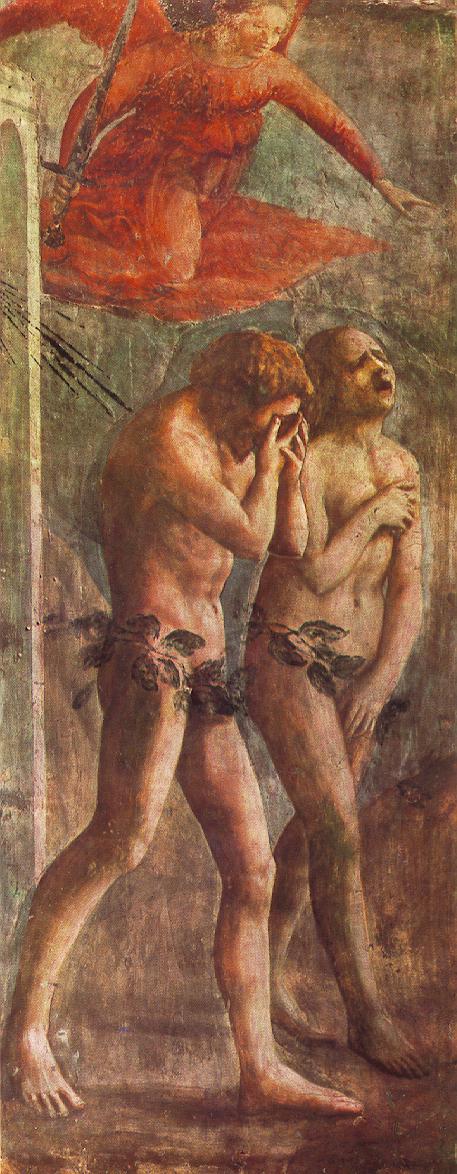
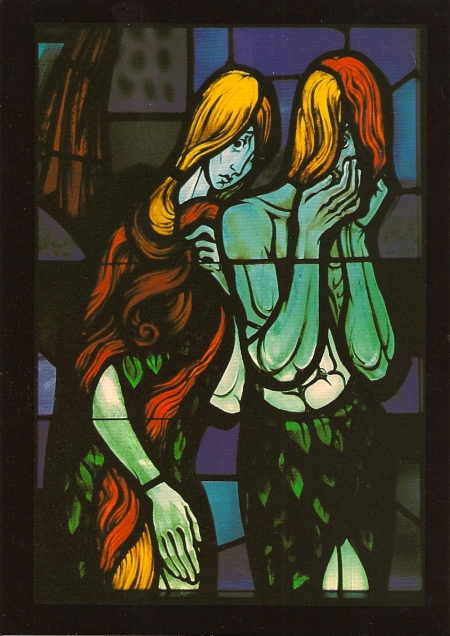
Without a serious reckoning with sin, we fashion a god and a religion which suits us, which condones the behavior we want, and urges us to satisfy our desires at others’ expense. The word for this, another taboo word, is idolatry. Without sin, we delude ourselves into thinking that we have accomplished what Adam and Eve were hoping for, when they succumbed to the temptation to disobey and replace God with themselves as sovereign in their lives.
As St. Paul wrote, “If we say we have no sin, we are deluding ourselves and strangers to the truth.” Avoiding the word, does not remove the reality of sin. Denial of sin does cut us off from the remedy – the mercy and grace of God, which free us from the crushing burden of guilt, shame, and having always to be perfect and right.
We, alone, cannot extricate ourselves from the mess of human existence. We can fight about whose fault it is. We can politicize and theorize. We can gather all the brilliant thinkers, artists, and scientists of the world to bring their expertise to bear. We can possess all the wealth of the world, yet we, on our own, cannot save ourselves. We cannot defeat the greed, the lust for power, the envy, the deceit, and the selfishness of the human heart. So we flounder, cry out, slashing at one another, bent over in pain and fear like souls in torment lost in a maze of fun house mirrors.
To see oneself or another as a sinner is like the child telling the obvious truth that the emperor had no clothes. There is wondrous freedom here to be honest about who we are and to be healed and forgiven. As Eugene Peterson writes, “To call a man a sinner is not a blast at his manners or his morals. It is a theological belief that the thing that matters most to him is forgiveness and grace.”
Read more about prayer at www.fromholyground.org
Contact Loretta at lross@fromholyground.org, www.fbook.me/sanctuary
Follow at http://twitter.com/lfross

Become a fan of the The Sanctuary Foundation for Prayer
Posted in Lent, spirituality
Tagged Eugene Peterson, forgiveness, grace, idolatry, Jesus, Karl Menninger, sin, truth
Ashes to Ashes
One by one they come forward. I press my thumb into the black sooty ash. On the forehead I make the sign of an ancient form of execution. Looking them in the eyes I say, “Remember that you are dust and to dust you shall return.” For some I have to stand on tiptoe to make the mark. For the children I bend down to sign their lifted brows.
After eleven years among them, I know these people – their pain, their struggles, losses, hopes, and dreams. I love them. They come to place themselves before the altar and ask for this – this sincerity, this frank acknowledgement of death. They come to receive the smudge that says they know they have fallen short and they are sorry.
In a culture which denies death, sin, and personal and corporate responsibility for wrong-doing, I am moved by these who come to stand before God and one another in radical honesty. Instead of wrinkle cover, make-up and hair growth tonics, they wear the sign that says they know they will die, and because of that, and because life is good, they want to live it well.
This never fails to shake me to core – people coming together in the dead of winter, here and there, all over the world to bow their foreheads for the ash, to be told they are going to die, and to lift their faces once again toward the warm sun of redemption.