


-
Join 2,763 other subscribers
-
Recent Posts
- © Loretta F. Ross and The Praying LIfe, 2009 - 2013. Unauthorized use and/or duplication of this material without express and written permission from this blog’s author and/or owner is strictly prohibited. Excerpts and links may be used, provided that full and clear credit is given to Loretta F. Ross and The Praying LIfe with appropriate and specific direction to the original content.
Follow Us
- Follow The Praying Life on WordPress.com
Category Archives: faith
Money Money Money Money
Posted in Christianity, contemplation, disorientation, faith, Lent, Spiritual Formation, spirituality
Tagged Religion and Spirituality, suffering
Can You Imagine?
And the true realism, always and everywhere, is that of the poets:
to find out where joy resides and give it a voice far beyond singing.
For to miss the joy is to miss all.
Robert Lewis Stevenson
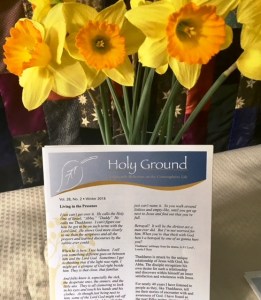
This issue of Holy Ground explores, joy, creativity and imagination.
Underneath all of these gifts lies faith – faith to step into the unknown
to welcome the mystery, and venture out beyond our perceived limits.
We cannot achieve what we cannot conceive. To refuse to take hold of
a possibility and reach beyond our present limitations and discover
where our joy resides is to deprive ourselves and others of our
unique, irreplaceable imaginations.
Read Holy Ground Issue
Come on. Step up. Read this Issue of Holy Ground.
You don’t want a miss a fun poem – Church Meeting Postmortem.
Posted in contemplation, faith
Tagged courage, creativity, Creator, imagination, poetry and joy, writers
Living in the Presence
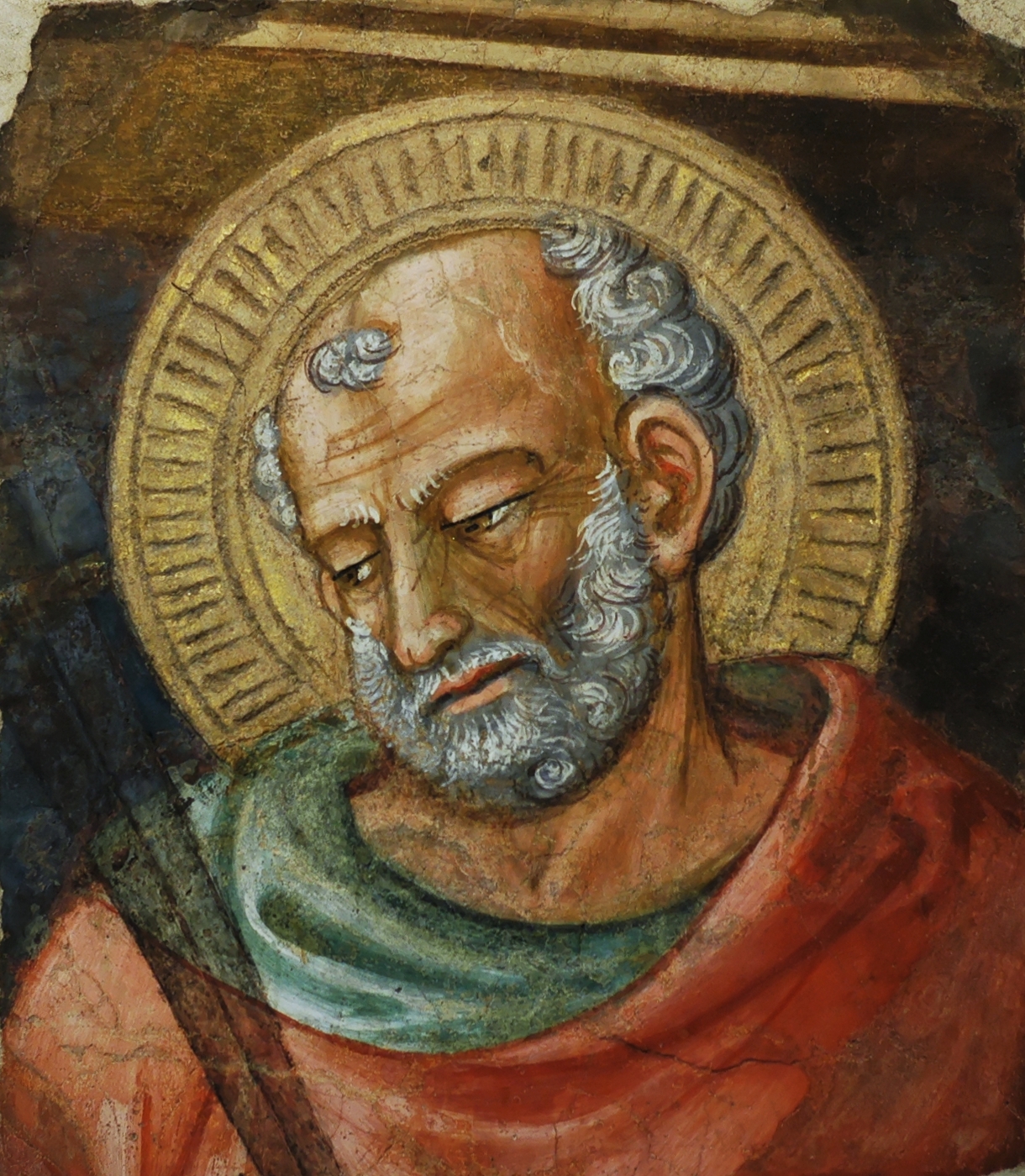 When he is here, I see holiness. I tell you something different goes on between him and the Lord God. Sometimes I get to thinking that if the light was right, I might get a glimpse of God right beside him. They is that close, that familiar.
 Thaddaeus, Is It I, Lord?, Loretta F. Ross
Living in conscious awareness of the presence of God dramatically changes us and how we see and respond to the world around us. This issue of Holy Ground explores the experience of God’s presence.
There is a profound difference between our words, concepts, theologies about God and our experience of God. For some people our language about God and our denominational theological systems and beliefs create barriers to their experience and encounter with the Holy One.
God is an event of communion. Richard Rohr
Help Us Tell Our Story
 Do you have a story about how The Sanctuary has made a difference in your life? Maybe you are a long time subscriber of Holy Ground, or came for spiritual guidance. You might have participated in a retreat or workshop. Did you read some of our publications or blog? Perhaps, you join us on Friday mornings for silence. The Sanctuary has been tending souls for nearly thirty years and we have crossed paths with many people.
Would you send us three or four sentences about why you support this ministry with your prayers, your gifts, or your presence? We would like to share your experience of The Sanctuary with others. You may also include any suggestions you have or what you would like to see us offer.
If you prefer that your name not be used, just let us know and we will leave it off anything we publish. Comment below, or Email us
or info@fromholyground.org
And thanks for making your story part of our story!
_______________________________________

The contemplative who can stand back from a situation and see it for what it is, is more threatening to an unjust social system than the frenzied activist who is so involved in the situation that he cannot see clearly at all. – Karl Barth
“The Sanctuary reaches out to help people stand back and see the immensity, depth, and richness of faith.”
________________________________________
Contemporary Spirituality of Kansas City Upcoming Events
Wisdom Teachings for Spiritual Seekers
 |
 |
May 5, 2018
Rethinking
Communion and Community
9:00 a.m. – 12:00 p.m.
Country Club Christian Church
6101 Ward Parkway,
Kansas City, MO 64113
 |
|
July 20-21, 2018
Christianity as Planetary Faith:
Engaging Teilhard’s Vision
Friday, July 20, 2018 – Saturday, July 21, 2018
7:00 p.m. – 9:00 p.m. & 9:00 a.m. – 4:00 p.m. (lunch included)
Bishop Miege High School
5041 Reinhardt Drive
Roeland Park, KS 66205
To register and learn more: Eventbrite
or contact: Mike Matteuzzi at 913-253-2510
Daughter of Promise, Son of Despair
In early March of 1991 I watched the horrid beating of Rodney King in south Los Angeles on our television in Holton, Kansas. We lived in a big older home with a wrap around porch. I often rocked my daughters on the porch swing. Ages 9 and 7, they played on the swing – reading books, eating popsicles, and spending long afternoons with Barbie dolls. On summer evenings I would sit there listening to the crickets and birds. That was where I took a harrowing journey of prayer with Mr. King and other brothers and sisters.
A year later in April of 1992, we learned the news of the acquittal of the four officers involved in the brutal beating. Soon after this news a white man was pulled from his truck and beaten until dead by some black men. What followed were riots in south Los Angeles. The riots lasted five days. More than 60 people died and over 2000 were injured. Damages were estimated at one billion dollars.
At the time I was studying the story of the stoning and death of Stephen in Acts, thinking about deep intercessory prayer, and feeling helpless to make a difference.
So I wrote a poem in the style of a rap, which reflects the story of Rodney King, and other stories similar to his and the story St. Stephen. This poem has numerous references to scripture texts, which I have provided here at the end of the poem.
Twenty five years later I still believe we are called and capable of deeply transforming prayer for people we may not even know, as well as acts of justice and mercy. Rodney King himself became a sign of the power of love and sacrifice. In April of 2012 his autobiography, The Riot Within: My Journey from Rebellion to Redemption. Learning How We Can All Get Along was published. In June of 2012 Mr. King died. I offer this poem in his memory and the memory of all who suffer injustice.
-Loretta F. Ross

New York Daily News 1992
Daughter of Promise, Son of Despair
Run brother, trapped in the ghetto
in a gangland nightmare, run.
Here, look quick, a hole in the darkness,
startled with starkness,
a tiny crack of light at the end of the street,
a rupture in time, a rent in the curtain,
the one thing certain,
a valve slid open in the throb of a heart beat.
Daughter of Promise, Son of Despair
weaving hopefulness out of thin air
Daughter of Promise, Son of Despair
exchanging your lives for a thing more fair
Daughter of Promise, Son of Despair
rock in the porch swing, singing your prayer.
Daughter of Promise, Son of Despair
run through the dark streets meeting death’s dare.
“I see an opening in the heavens,” Stephen cried,
and slipped in an instant to Eternity’s side.
“Jesus, receive my spirit,” he prayed.
“Forgive them!” he shouted, knelt unafraid.
Stephen preached full of power and grace
doing wonders and signs with his angel’s face.
“You stiff-necked people!” he railed, then died,
killed by the stones in the hearts he’d tried
to turn from malice and murder and lies
to the truth of a Love which could die and rise.
I’ll hold the door open for you,
I’ll lift the latch that seals the catch
that quarantines time from eternity,
heaven from hell.
And then the first stone fell.
Hip thrust out against the door,
arms spread wide, shoulders aching, stomach quaking
straining beneath the blow of doubt and pelt of defeat.
Promise’s child prays on the porch swing.
Promise’s child picks up the beat.
Here, you running down the street,
looters, shooters, losers, boozers, resisters,
you who don’t believe, cannot conceive
a way out, an open door
you lost, walking in circles, blinded by pain
you know this voice, hear it again
here is the way, the cleft, the gate, the threshold
make for it with all your heart,
and safely enter the sheepfold
before she loses her nerve and the sea unpart.
Brother, sister, God hears your cries!
And she spies the skies opened and glory spilling out,
God’s tears like golden rain down mercy’s spout.
Help is coming. Here this life laid down for you,
for love of you, for love of Love –
this life laid down, fallen down,
hunched in a ball and rolling down,
spread out, offered down to the quick,
to the dregs
this life drinking your cup of sorrow,
swallowing your poison,
handling the vipers, walking across the floor of hell
this life laid across yours like a shield
absorbing the shocks that you may be well.
You there running down the streets with your gun,
has anyone ever laid down her life for you?
Can one white lady sitting on a porch swing in Kansas
turn the tide of rage and hate you carry in your bones?
Maybe tonight you catch a glimpse of hope.
Maybe tonight the fear that clutches you releases
and you imagine a new future –
maybe somewhere something lets go in the cosmos,
something stopped up, clogged, frozen, held enthrall.
A new wind wakens, rushes in and you are freed.
She prays for you, child of Despair,
running down the streets carrying your VCR,
running down the streets grabbing for what you never had,
running after a stolen dream.
The politicians rant.
The child on the curb by the burnt out building is hungry.
We need a new program, a plan, an idea, a solution…
some mental gymnastics to comfort us
that there is something that can be done
without costing us too much.
And then they will all settle down
and we can turn back to our own affairs.
We shall not get out of this
without paying to the last penny.
Sit down on the curb with the hungry child
and drink her cup.
The sickening blows fall again and again.
The man draws up his knees and rolls in pain.
Still they come, faster and harder,
mercilessly over and over,
slamming into the soft flesh,
pulverizing bone and sinew –
speak to him of eternity now
while sin and evil rain steady destruction
speak to him of salvation now
But she is beyond talk,
running for her life, lungs straining,
gasping for air in the smoke,
tears coursing down her cheeks,
sweating, legs aching, hearing the shots,
backing up against a wall of despair,
the bitter gall moving through her
like a stream of fire,
holding his bounty to her heart, darting out of alleys
running home.
And her brother is sitting in the sweet night air
swinging in the porch swing calm and cool,
listening to the mourning dove, waiting for the fireflies
swinging low, carried home.
They say it can happen like this
if you have a mustard seed of faith:
One night while sitting at supper, talking about your day, asking for the salt – you are transferred in a wink of an eye to the camp, where you stand in line with your cup for rice and wrap the thin blanket around your shoulders against the chill . . .
and a gaunt refugee woman sits down at our table munching your hamburger,
and we pass her the salt.
Cram your cranium into heaven,
poke a hole in eternity
hold it open with your body
and be transformed
in a twinkling of an eye
by the renewal of your mind
unconformed
and cradled in the looter’s arms
and no one can snatch you out of his arms
and you shall never perish
for you belong to him and he to you
to have to hold and to cherish.
The daughter of Promise sings her lullaby:
Swing low, sweet brother
and have mercy.
Christ have mercy.
Sweet brother, swing low.
Hear the wind blow.
For days I have lain in your pain.
And I have lain in that thick smoke-filled darkness
murky with ambiguity and lies
oned with you and with the one from whom we come
descended into your hell
that you might rise
and I be carried home
in this dark world no more to roam.
Swing low.
~ written in April of 1992
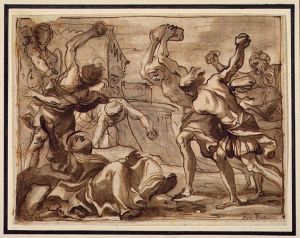
Stoning of St. Stephen – Domenico Piola, early 1650s
Scriptures cited:
Acts 6: 8-15, 51-60
Stephen, full of grace and power, did great wonders and signs among the people. 9 Then some of those who belonged to the synagogue of the Freedmen (as it was called), Cyrenians, Alexandrians, and others of those from Cilicia and Asia, stood up and argued with Stephen. 10 But they could not withstand the wisdom and the Spirit[a] with which he spoke. 11 Then they secretly instigated some men to say, “We have heard him speak blasphemous words against Moses and God.” 12 They stirred up the people as well as the elders and the scribes; then they suddenly confronted him, seized him, and brought him before the council. 13 They set up false witnesses who said, “This man never stops saying things against this holy place and the law; 14 for we have heard him say that this Jesus of Nazareth[b] will destroy this place and will change the customs that Moses handed on to us.” 15 And all who sat in the council looked intently at him, and they saw that his face was like the face of an angel. . . .
51 “You stiff-necked people, uncircumcised in heart and ears, you are forever opposing the Holy Spirit, just as your ancestors used to do. 52 Which of the prophets did your ancestors not persecute? They killed those who foretold the coming of the Righteous One, and now you have become his betrayers and murderers. 53 You are the ones that received the law as ordained by angels, and yet you have not kept it.”
54 When they heard these things, they became enraged and ground their teeth at Stephen.[j] 55 But filled with the Holy Spirit, he gazed into heaven and saw the glory of God and Jesus standing at the right hand of God. 56 “Look,” he said, “I see the heavens opened and the Son of Man standing at the right hand of God!” 57 But they covered their ears, and with a loud shout all rushed together against him. 58 Then they dragged him out of the city and began to stone him; and the witnesses laid their coats at the feet of a young man named Saul. 59 While they were stoning Stephen, he prayed, “Lord Jesus, receive my spirit.” 60 Then he knelt down and cried out in a loud voice, “Lord, do not hold this sin against them.” When he had said this, he died.
Romans 12: 2
Do not be conformed to this world, but be transformed by the renewing of your minds, so that you may discern what is the will of God—what is good and acceptable and perfect.
I Corinthians 15: 49-52
What I am saying, brothers and sisters, is this: flesh and blood cannot inherit the kingdom of God, nor does the perishable inherit the imperishable. 51 Listen, I will tell you a mystery! We will not all die, but we will all be changed, 52 in a moment, in the twinkling of an eye, at the last trumpet.
John 10: 27
My sheep hear my voice. I know them, and they follow me. I give them eternal life, and they will never perish. No one will snatch them out of my hand.
John 10: 14-16 I am the good shepherd. I know my own and my own know me, just as the Father knows me and I know the Father. And I lay down my life for the sheep. I have other sheep that do not belong to this fold. I must bring them also, and they will listen to my voice. So there will be one flock, one shepherd.
Lullaby for the Little Ones
Dear ones,
I first wrote this when my daughter was around a year old. She is now 34. I posted it here in 2012. It is a lullaby worth hearing again in these times of continuing uncertainty and suffering. May you find comfort here and deep assurance in the steadfast love of the One Who Is Greater than All.
My heart is not proud nor my eyes haughty. I do not busy myself with great matters or things too marvelous for me. But I have calmed and quieted my soul. As a weaned child clinging to its mother – like a child that is weaned is my soul. O Israel, hope in the Lord from this time forth and forevermore. (Psalm 131)
The little one stood waiting. Its whole life had led up to this moment. While the One Who Is Greater than All, most gracious, almighty, mother and father, reached down and down and through and through, lifted and kissed the little one and held it tight. The little one nestled into the arms of the One Who Is Greater Than All and lay back, gazing into the dark face with starry eyes. And the two began to rock.
_____________
Like babes, we cling to the earth’s smooth furrows with tiny fingers, as it makes its daily rounds. We feel the beat of creation’s pulse against our cheeks.
What child is this? Whose lullabies are these? Whose nursery is this – this universe of spattered fire and splashing water? Souls, spilled across the Milky Way, find their way in a manger, and sway swaddled in the earth’s sweet clothes of winter snows and summer hay.
Who rocks us here, while our eyes, transfixed by Love’s pure light, discover our image reflected in the holy face? The little one stood waiting while the One Who Is Greater Than All spoke:
Come sit with me and rock a while and I will sing you lullabies that Sarah sang to Isaac. I will tell you stories, wondrous tales of adventure, danger, miracles and love. For these songs must be sung, these stories told. Not kept on shelves like jars of pickles in a darkened cellar. No spice can preserve us, but these stories can save. In the telling is new life. In the singing is good news.
How did we come to this place, this rocking on God’s lap and listening to these stories? Go back to the beginning of the beginning, before we were intricately wrought in the depths, before the forming of our inmost parts, before we were knitted together in our mothers’ wombs to when our unformed substance was first beheld. For we were held before we were even something to behold.
We began babes in Christ, smacking, sucking infants grasping and gasping at the source of life, gulping in the Spirit’s breath like ones nearly drowning in the rushing waters of the world:
O Lord, get me through this, help me, heal me, save me, free me, show me what to do! We lift to you our many hungers and concerns – our budget, our new addition, the middle East, global warming, the economy, the droughts, the poor, those in prison, those who mourn, the sick and lonely, the persecuted and enslaved – Lord, hear our prayer – and don’t forget the little children!
And God continued to hold us, while Mary held God’s squirming son. The nursing infant is too weak to hold onto its mother. She must lift the child and support its back. She must turn its head and draw its fingers from its mouth and place it on her breast. It knows not how to feed itself.
So we rocked with God under a cloud of violence, whose mists seeped into our lives as ghostly fears. Life, never a certain thing, seemed like a runaway kite in a storm, while we grasped frantically to its frayed and thinning string. We denied and argued and pleaded and bargained with the menacing cloud, until spent and weary with making peace with death, we learned there is no peace with death and we did not go gentle, but wore out our rage in colic screams. All this while our patient God walked us in our dark nights and bore against our stiff-legged kicking.
Then came the weaning.
The Hebrew word for wean means also to ripen and repay. Wean is not a sudden loss of sustenance, but a ripening toward greater fulfillment and profound nourishment.
O Lord my heart is not haughty, my eyes are not raised too high. I do not occupy myself with ambitious desire or things which are too marvelous for me.
Done with getting and spending and proving and earning.
Done with seeking and striving and the thin piercing whine of urgent need.
Done with bawling hungers and waking in the night with stomach cramping and the terror screams that know no hope nor appetite appeased.

Then came the weaning, the ripening.
An early evening rain splashed gently on the apple blossoms, sending white petals sifting to the glistening grass. We heard the wet whistle of the cardinal and watched a robin listen, head tilted, for the rumble of earth worms. We saw the drops slide down the glass. “The window crying,” you said. It was dusk, the color of plums. Teddy slipped from your lap. You gazed into my eyes and smiled. And before I offered you to suck, you fell asleep. And thus you ripened. And so we rocked all night, past striving, past approval seeking, past demon whispers of ambition. And in the morning you bit into the Spirit’s fruit.
The weaned child has attained strength and muscular control. It climbs onto its mother’s lap without help. It pats her face and nuzzles its head against her shoulder. It delights simply in the mother’s presence.
Like a weaned child on its mother’s breast is my soul.
No longer consumed with consuming,
no longer gulping and choking on life,
but content
content to rest in God.
An awareness – childlike, simple, accepting –
came to the psalmist who sings to us today,
an awareness that came to Job,
when God spoke to him out of the whirlwind:
there are some things too wonderful, too marvelous for us
that mere knowing will not save us, that understanding will not end suffering, that strategies and master plans and mission statements cannot ease our pain, that psychological acumen, administrative expertise, and a panorama of pretty programs with flashy learning centers and lesson books printed in three colors will not root out the evil in our hearts
that dedicated scholarship, facile exegesis, brilliant preaching, flashing memes, a new economy, and all that we may do and strive to produce will not ease our pain.
The way is in the manger.
Come, lift the child and hold it close to your heart as Mary did.
Hush. Speak softly. Walk on tiptoe.

What is needed is persons with quiet souls who cling to Holiness as the trees cling to the earth.
What is needed is persons with humble hearts who will mother the Christ within them, who will speak gently to all they meet for they know that each of us carries Mary’s sleeping boy.
Our work is of such utter simplicity and ordinariness that we shrink from it. Surely there must be more – than to be a friend, to share another’s burden, and to be in love with Grace.
We rush about anxious, agitated, and oh so busy. Our plans and prayers are ill-conceived and sloppy. Our eyes are raised too high. We are occupied with ambitious desires. We presume to be absorbed in things too marvelous for us.
Climb on God’s lap and rest. And a multitude of persons will find God’s rest near you.
Fall deeply in love with the Christ child, care for it ever so tenderly, and your simple presence will nurture the Christ child in others.
At that time they came to him and said: “Who is the greatest in the kingdom of heaven?” Jesus took up a little child and placed it on his lap and said: “Unless you turn and become like this little child, you shall never enter the kingdom of heaven.”
The little ones snuggle closer:
the humble singer of the psalm, you and I, and Eve and Moses and Sarah and Peter and Martha and that littlest one of all with the holes in his hands and feet.
The curve of time turns in on itself, bends back and threatens to disintegrate. Apocalyptic whispers and end time sonnets play in bars and senate chambers. Death watches on the TV news announce more violence, more battles, more destruction.
“We like the old songs best,” the people tell the pastor. “I sang ‘Whispering Hope’ at my mother’s funeral,” the gentle man tells her on his way out. “Thank you for letting us sing it again.”
Hope
a whisper so soft, we must be stilled and quieted to hear it
Hope
a whisper so soft, we must be clinging close to hear it
Hope
soft as the voice of an angel breathing a lesson unheard.
Like a child that is weaned is my soul. O Israel, hope in the Lord from this time forth and forevermore.
May your year ahead be blessed with holy rest and whispers of hope, gentle delights and profound joy. May you gather the strength and courage for whatever you face, secure in the knowledge of a love that will not let you go.
Loretta F. Ross
Whispering Hope, hymn by Alice Hawthorne, copyright 1924 by the Standard Publishing Company
Read Latest Issue of Holy Ground Here
holy-ground-autumn-2016
Posted in Advent, Christmas, contemplation, faith
Tagged Christmas, God, hope, lullaby, Mary, Psalm 131, rest in God, trust, Whispering Hope
Prayer that Hurts
 He lay slumped on her lap like a great heavy mail sack stuffed with the cards and letters of creation’s lovelorn. They spilled from him with the blood. “Save me. Heal me. Help me. Love me. Save me. Heal me. Help me. Love me.” Over and over the messages were the same. Some were written in the scraggly script of the old, some in the sprawling letters of the very young, some on the finest stationary. Others were on scraps of newspaper, prison walls, and sheets from hospital beds. Some were stamped out in the snow, and some were imprinted on faces, especially around the eyes and mouth. “Save me. Heal me. Help me. Love me.” https://theprayinglife.com/tag/pieta/
_____________________________
I felt a particular urgency and conviction as I was praying and writing the summer issue of Holy Ground, A Quarterly Reflection of the Contemplative Life. Restricted by a back injury and needing to rest as my body healed gave me time to focus on the needs of the world as the news broke on my iPad:
pockets of conflict throughout the world, atrocities
back to Iraq
back to Iraq
another kid dead on a street in Missouri
Ebola virus striding across Africa, now penetrating our borders
melting ice sheets, rancorous election season
and on and on…
Lying there on the couch, I had little escape. What can I possibly do to stem this tide?
I hope you find some help and direction in ways to responding this unique and important period of history. It is no accident we have been born in this time.
Here is an except from one section of this issue on Intercessory prayer. ( You can read the entire issue here. Holy Ground, Intercede, Part 2 – Summer 2014)
Prayer that hurts
If anyone claiming to be united to God is always in a state of peaceful beatitude, I simply do not believe in their union with God. Such a union, to my mind, involves great sorrow for the sin and pain of the world; a sense of identity not only with God, but also with all other souls, and a great longing to redeem and heal. St. Teresa of Avila
Vulnerable involvement with the broken world will expose our own wounds and need for forgiveness. If I pray for my enemy, I risk having my mind changed. To pray for others is to consent to experiencing the cross. It may be as simple as dying to my own desires for a particular outcome, or dying to my desire to do something other than to respond to someone’s need for prayer.
Intercessory prayer asks what good is my peace, my sense of well-being, when my sister is hurting? What good is my abundance, if it does not give me the freedom and strength to bring my faith and peace to someone else’s weakness and sorrow?
Sometimes intercessory prayer tends to be more a desperate act of love, than eloquence; a messy melodrama, than a polite request. It is as though the intercessor has one foot in the darkness and terror of human existence and the other in the beauty and joy of abundant life. The presence and being of the intercessor becomes a life line through which moves the power of God. To stand in the gap of another’s need without being pulled to one polarity or the other requires spiritual strength and maturity.
The formality and reticence of ecclesiastical prayer is utterly foreign to the Bible. Biblical prayer is impertinent, persistent, shameless, and indecorous. It is more like haggling in an outdoor bazaar than the polite monologues of churches. – Walter Wink, Methodist pastor and author
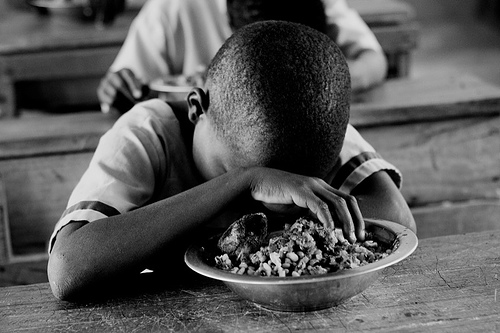
When I began this ministry of prayer, I did not have a clue as to what praying would mean. I took on too much. I felt too much. I was a child playing with fire. I carried other people’s pain. I became ill. There were periods when I strongly identified with Christ on the cross in ways I wondered if I was going crazy. Over time I learned what God was teaching me about suffering and redemption, vulnerability, and the presence of Christ in our lives.
Some people do suffer in prayer for others. Saint Therese of Lisieux saw this as her vocation as a Carmelite nun. 18th century Presbyterian missionary, David Brainerd wrote: “God enabled me to agonize in prayer. My soul was drawn out very much for the world. I grasped for a multitude of souls.”
Evelyn Underhill notes, “As the personality of the saints grew in strength and expanded in adoration so they were drawn on to heroic wrestling for souls..Real saints do feel and fear the weight of the sins and pains of the world. It is the human soul’s greatest privilege that we can thus accept redemptive suffering for another.”
I believe we all suffer for one another within the larger mystery of Christ’s suffering. However I also believe Walter Wink’s caution: “We must not try to bear the suffering of creation ourselves…We can only give it expression and let the groaning pass through us to God. Only the heart of God can endure such suffering. Our attempts to bear them are masochistic, falsely messianic, and finally idolatrous.”
We have limits. We need to know the difference between suffering with another at God’s invitation and when it is merely tragic and spiritualized self-abuse. There is a difference between prayer and acts which are codependent, manipulative, ego driven meddling, and prayer and acts which are life-giving. Knowing when to back off, what is truly my concern, how to protect myself with clear boundaries, and when one’s work is finished comes with experience.

It is difficult to open your heart and mind to the raw suffering before you and remain there steadfast and watching in someone else’s Gethsemane. Yet to wait in faith and hope at the foot of your neighbor’s cross is one of the most healing acts we can offer one another. This is because here in the darkness at the end of the road is where divine action meets human limitation and leaps from heart to heart.
Maybe you light a candle, say the rosary, ask others to pray with you. Maybe you go outside and spread yourself over the ground and let all the sorrow and pain drain out of you into Mother Earth. You might pound on the table or the wall. You might shout to the heavens, “Do something! Be merciful! Be God for us.” You reach out, call a friend or a hotline, write a letter, or paint a picture of the great groaning earth crying for mercy. One way or another we each funnel a piece of the anguish of this broken world through our being to the One we believe can help.
Your prayer does not have to sound beautiful. It just needs to be honest. Carry what you have been blessed to bear over the terrain of your day into the heart of God.
Pretty soon your life will be etched with little channels running between the ocean of suffering in this world and the endless mercy of God.
Read entire issue here: Holy Ground, Intercede, Part 2 – Summer 2014
To receive your issue 4 times a year in mail or electronic version, please subscribe here:
http://shop.fromholyground.org/Publications_c2.htm
Thomas’ Lament
Well it’s finished
I would have to go all out
purge myself of doubt
hold on till the final hour
push for verification
of the one veritable transitory power*
to seal what happened
what was and is and ever more shall be
with the indisputable fact,
the terminating stamp,
of my own story.
Why not take their word?
I trusted them enough.
We saw him risen in the light!
Our own eyes feasted on the sight!
Where was I then
delayed in darkness
caught in traffic
held up by bandits
lost down blind alleys?
And when I arrived,
he had come and gone
the meeting was adjourned.
Was it so wrong to have yearned
to know for myself,
not only to have heard,
of what glory they were so assured?
How could he come when I was gone
and leave me, coming,
to be slapped with that second hand joy?
I did not know how he had spared me
how my delay was grace.
So I choking, sputtered
strutted through their glee:
Not me.
Not me.
I shall not believe what I cannot see!
Then you came back.
What were we doing then
eating lunch
talking about the Cubs
debating the umpire’s call?
You came back
or forward
or was it we who moved?
You came and went
climbing out of centuries
striding through solid wall
and stood once more before us all.
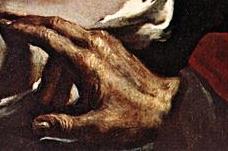
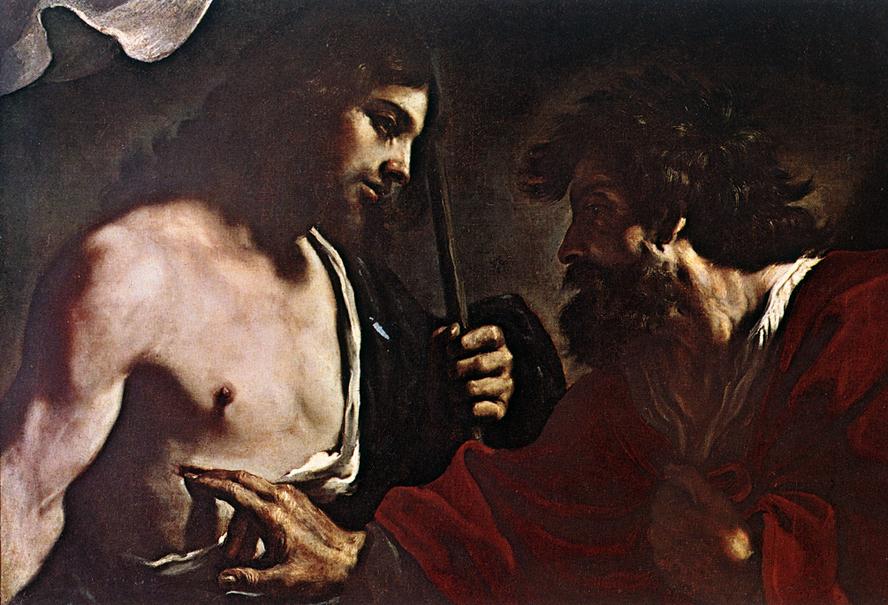
“Here, here,” you said
and slipped my hand
into your side pocket
wrapping me with your anguish.
The room spun round.
My skin turned inside out
and my soul’s raw quick
swaddled in the mitten of your wound
chafed next to your rib.
I shrunk
till I was no bigger
than a speck
upon your shoe.
I had loved you
of that I had no doubt.
But your gaping spaces opened my ears
to the triumph shout
of life’s Word
and seared me,
sealed me with the sight
of what till then I had only heard:
that you loved me before I ever knew
that you came back all torn
and maimed for me to see
that I would see
you love me too.
So now I sit
unable to pretend I never wore
the ring of your palm round my finger,
unable to deny
we have been wedded by your pain,
unable to forget
the moist seam of your wound
and the intimacy
in asking me to touch you there.
Unable to swill in perplexity
to feign ignorance
to sulk amidst the heart’s strivings
or fume when things go all awry,
for that which I had heard
which I saw with my eye
which I looked upon
and touched with my own hand
that which has completed my joy
has completed me.
And I am finished,
through
for now, my dearest, dearest love,
there is only you.
____________________
As the Father has loved me, so have I loved you. Now remain in my love. If you keep my commands, you will remain in my love, just as I have kept my Father’s commands and remain in his love. I have told you this so that my joy may be in you and that your joy may be complete. My command is this: Love each other as I have loved you. John 15: 9-12
*the one veritable transitory power, from T.S. Eliot’s, Ash Wednesday
Special Note
for Topeka, Kansas Area Readers

Topeka area residents, watch for a fun way to support local charities, including The Sanctuary Foundation. Save this date: June 3, 7:00 am – 6:00 pm, at Fairlawn Mall.
On that day your gift to The Sanctuary Foundation fund will be increased by a pro-rated match gift from The Topeka Community Foundation. Watch for more details on how to stretch your dollars in supporting the wonderful work being done in Topeka.
- We are looking for helpers to sit at our booth for an half hour or so to share with people why The Sanctuary is important to you.
- We also need comments from those we serve about what The Sanctuary means to you, how we may have made a difference in your life, stories, anecdotes, etc to help us let others learn more about us. You can comment here, or at our website , on our Facebook page, by emailing us at lross@fromholyground.org.
Thanks to all your help over the past twenty five years
we are still going strong!

Posted in Easter, faith, Resurrection, The praying life
Tagged belief, doubt, John 15: 9-12, John 20: 25-28, poetry, resurrection, The disciple Thomas
Winter Gifts

My soul shall be filled as with a banquet.
– Psalm 63: 2-9
At dawn my sleepy lab whines softly. I rise and let him out to sniff his boundaries and empty his bladder. A few minutes later he pounces on the door. Eyes glinting light, he shakes off the blanket of snow on his back. Then lifting one front leg after the other, he prances in the kitchen, pulls a dish towel off the counter and waves it toward me. The toaster, jar of peanut butter, and humming refrigerator sparkle like icicles in the sun.

I love winter – all of it – grey dishwater skies, wind rattling the siding on the house, cold, ice, blizzards, early sunsets, long nights, and dogs ploughing glad furrows in the snow.
I love that winter is a force I cannot control, but only yield to with humility and respect.
I love winter’s summons to gather up the scattered pieces of myself, burrow down deeply, and simmer in darkness, drawing strength for spring.
I love having to wait and trust in what is unknown and unseen.
Winter grows gratitude in my heart for the privilege of shelter, warmth, running water, and the freedom to stay home. Winter also blooms with compassion and sends me out to help those for whom winter is not some cozy spiritual experience.
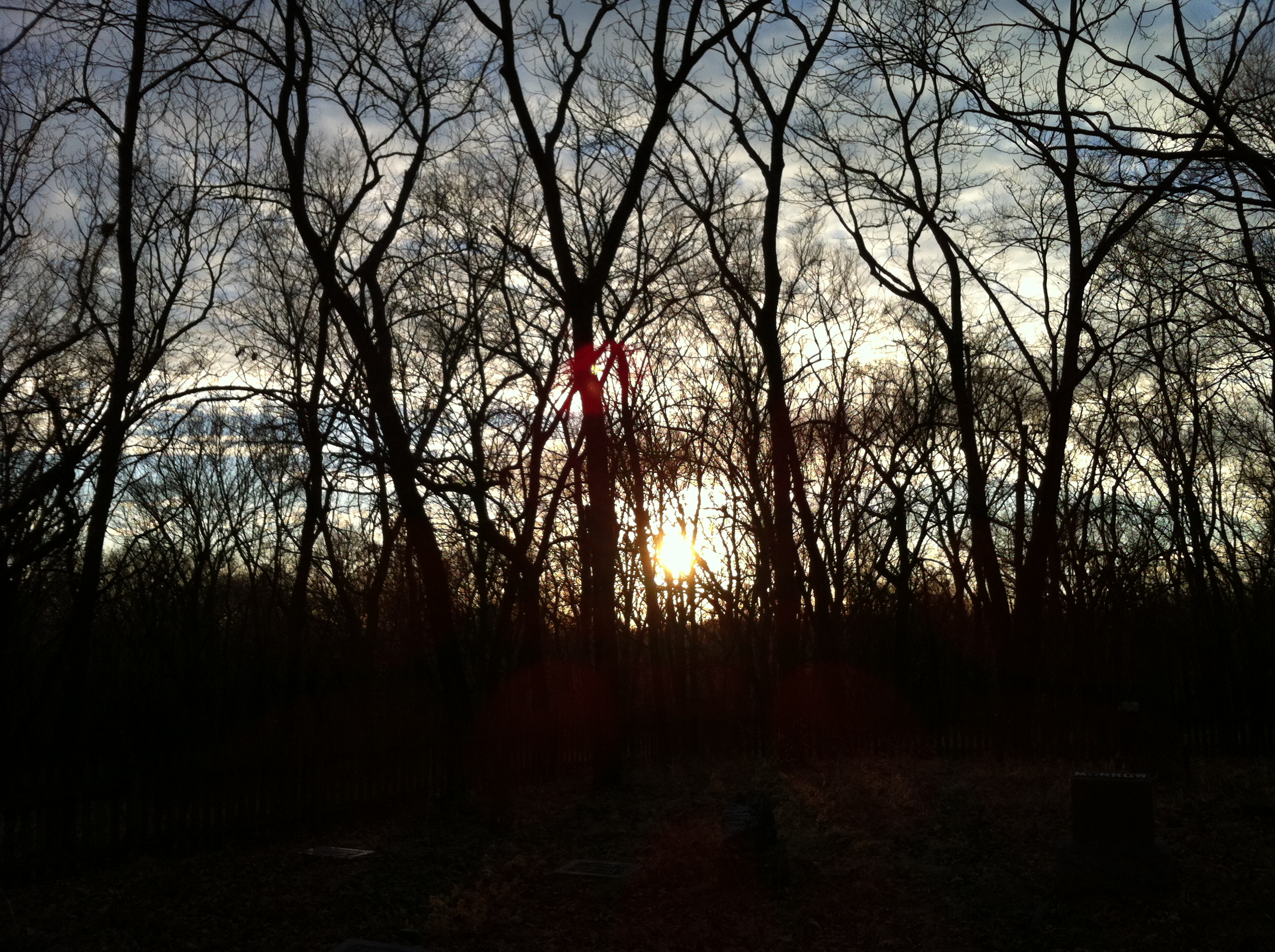
Winter spirituality is a less-is-more Holiness of pared down praise. Winter speaks in koans and says, “Behold the fullness of this emptiness!” Now excess in prayer and lifestyle seem gauche and redundant in a world, stripped down to its bare essentials – all bones and angles, holding out its harsh, nonnegotiable truths.
I had had enough of winter thirty five years ago, when I pulled out of my drive in Kalamazoo, Michigan and headed south to Kentucky. I had spent the previous thirty three years of my life in Michigan and Iowa. I am not sure why I am so hungry for ice and snow now.

In contrast to the world of humans with our getting and spending, the natural world never tries to impress or persuade me of its opinion. It has nothing to market. It simply is in its implacability, given over to being what it is – a dead maple limb in my front lawn after the storm, a dried tomato vine, a fox checking the garbage can, a rabbit without regret or apology leaving tracks in the snow.
What is implacable about me, unchanging, or nonnegotiable? I wonder. I am a hermit at heart and welcome snow days. I love people and I love being with people. And love for them burns in me like a furnace and pours out molten in my prayers.
And there is this other love – a love of absence, silence, solitude, simplicity – a winter of the soul, where I sit down to a great feast so satisfying that I need nothing else.

Posted in apophatic spirituality, Contemplation, prayer, faith, Nature, spirituality
Tagged hermit, nature, Prayer, Psalm 63: 2-9, solitude, winter spirituality
“Burned Out on Religion?”

St. Clare of Assisi
We become what we love
and who we love shapes what we become.
If we love things, we become a thing.
If we love nothing, we become nothing.
Imitation is not a literal mimicking of Christ,
rather it means becoming the image of the beloved,
an image disclosed through transformation.
This means… we are to become vessels
of God´s compassionate love for others.
~ St. Clare of Assisi
Many years ago I deliberately chose a path of what I called “downward mobility.” I chose to become a minister and made a subsequent choice to become the sort of minister for which there were few or no models, namely, to consider prayer as the heart of what I offered. I took up work which I knew would not reward me financially and might well require other sacrifices. Instead of remaining on a career track of higher education administration and teaching, I followed a Love that would not let me go anywhere else, but into its heart.
I was naïve. I thought ministry would be different from the stressful, competitive world of higher education and academia. I thought I would be able to focus on prayer and help others who were struggling with their relationships with the Holy One. Of course, I brought along all of my own unfinished business and the issues that had plagued me in that other world were all waiting for me on the doorstep of the church. And, yes, this is where ministry and personal/communal growth always occurs: right in the midst of a stressful, competitive environment, with full of personal, unfinished business.
I soon discovered that downward mobility included more than lesser income, status, and pension benefits. Downward mobility included the inner life as well. Over and over, my attachment to lesser gods, my selfishness, my controlling ego, and my pride are exposed, as Jesus invites me to come down off my high horse and revel with him in the lowly, fertile ground of humility. I do mean revel. Getting myself close to the ground is often painful. I am a master at resistance. Yet it is so much fun, so full of delight and joy, it is well worth whatever it takes to get there.
In the midst of the muck Love seems always to meet me with a different agenda than my own. I call it Love’s way and it haunts me day and night, as I both run from and plead to be conformed to this path of humble trust in God.
Love’s way, which is described extensively in scripture, is accessible, freely available to everyone, and is being offered to us moment by moment. And in Love’s way is where I long to dwell all the time.
I fail over and over. When that happens I am like a child lost in a dark woods. A kind of desperate panic comes over me, until I fumblingly discover where I got off the path and make my way back to joy and peace. I need at least an hour a day of contemplative prayer to maintain this deep abiding in Christ. If I want to work with others and help them in their prayer and relationship with God, I need another hour. If I want to deepen and grow in knowledge and understanding of God, I need still more time.
I do not for the life of me understand how faith can deepen and flourish in the hearts of people without a serious commitment to spending time alone with God in prayer. And further, few activities I engage in take me further from this humble dwelling in the way of Love, than spending too much time on the internet. I see how easily the internet cheapens me, makes me shallow, feeds my surface hungers, plays upon and manipulates my opinions, my understanding of myself and the world.
Let’s take a deeper look at the way of Love. Here is how Jesus described it:
Come to me, all you who are struggling hard and carrying heavy loads, and I will give you rest. Put on my yoke, and learn from me. I’m gentle and humble. And you will find rest for yourselves. My yoke is easy to bear, and my burden is light. Matthew 11:28-30, (CEB)
I especially like the way Eugene Peterson puts it in his paraphrase of Matthew 11: 28-30, The Message:
Are you tired? Worn out? Burned out on religion? Come to me. Get away with me and you’ll recover your life. I’ll show you how to take a real rest. Walk with me and work with me – watch how I do it. Learn the unforced rhythms of grace. I won’t lay anything heavy or ill-fitting on you. Keep company with me and you’ll learn to live freely and lightly.
To put on Christ’s yoke and learn from him is to become gentle and humble and to find rest. To become an image of Christ is to put down our heavy loads and bend our necks beneath a yoke, which is easy and light.
Peterson enriches Matthew’s words with the beautiful phrase unforced rhythms of grace. That’s it! How would it be if what characterized our lives was not harried, stress-filled days, constant multi-tasking, distracted, pushing and shoving, controlling and anger, but rather the unforced rhythms of grace?
I suspect many of you know those graceful rhythms, when you find yourself in step with the Spirit and your day unfolds with beauty. I also suspect such days do not occur as much as you would like. How would your life look if you put on Jesus’ easy, light yoke more consciously and deliberately? What might change or what would you do differently?
What if your goal was not success and achievement, but gentleness and humility?
How do we do this? Is it even possible in the world we live in? Matthew tells us how. Jesus tells us how in these verses from Matthew. Go back and read them again.
Quite simply, becoming like God and wearing the easy yoke, has to do with the company we keep. “Come to me,” Jesus, says. “Keep company with me.”
The only return Love asks for the gift of living in its way is our love – not our money, time, talents – but first and foremost, Love desires our love. This always slays me. The Love that animates life, binds the whole universe, flows into our hearts with joy and delight wants our love! Love wants to be loved. Jesus affirmed this divine desire in the greatest commandment:
You shall love the Lord your God with all your heart and with all your soul and with all your strength and with all your mind, and your neighbor as yourself. (Luke 10:27)
I know how important it is to me to be loved by my children and family, my dog, and my friends. Here is what we may miss: God finds it very important to be loved by us. God desires our attention.
Perhaps, this is because, as St. Clare has written, we become what we love.
What the Trees Said – Where Prayers Go

Your prayers
birdwings
flutter among our leaves
settle in the crotch
where eagle builds her nest
cushion and cling
to the little talons of her brood
who carry them off to towering
cliffs, broad rivers, wetlands, tundra,
borne on ascending thermals
to deliver your hearts’ longing back
to your frail lives
transformed,
untamed, fierce,
windswept.
A bald eagle’s nest weighs on average 1000 pounds, but can reach 2000 pounds.
Posted in Contemplation, prayer, faith, Prayer
 The Praying Life