Category Archives: contemplation

Word – Eventide Psalm of Longing Love

The Father spoke one word, which was his Son,
and this word he speaks always in eternal silence.
 St. John of the Cross.

Sundown

At the woods’ edge I wait for you
to come heal the violence in me.

I look and look at the trees,
scrawled limbs
framing the plum stained sky.

I look and look at the fawn in the clearing,
the cedar with blue berries,
the red sun sliding under the horizon.
I look and look at the dark
creeping over the countryside.

At vespers you
peer in windows,
meow at the door,
home into my heart.
I cannot get enough
of you 
filling my senses
with sweet awareness. 

You, the Word
in whom our wordiness dissolves,*
silence us.

As leaves loosen and float to the earth,
we tumble over, lay our bodies upon the path.
You come, finger over your lips – Hush, be still –
to take back territories in our souls,
lands occupied by greed, fear, envy.

It is 5:28 pm, and I am weary of words,
the fury of opinions, righteous indignation,
and ideas clanking in the mind like heavy coins.

The vain prattle cannot muffle the murmur
of Herods plotting to kill innocents,
nor the hiss of evil waiting under every rock.

Yet I do believe that all we say and do
counts as nothing next to you,
inexorable Word,
bearing down
into us from on high.

His father opened his mouth
spoke mercy
out came Jesus.
Jeshua. Hush! 

His mother squatted over cold stones,
pushed, out came an infant
wailing, wrinkled.
Hush!

The child gazes into our faces.
A hand reaches toward us.
You – absorb our isolation,
sponge up our misery –
a soft warm cheek
to hold against the dark.

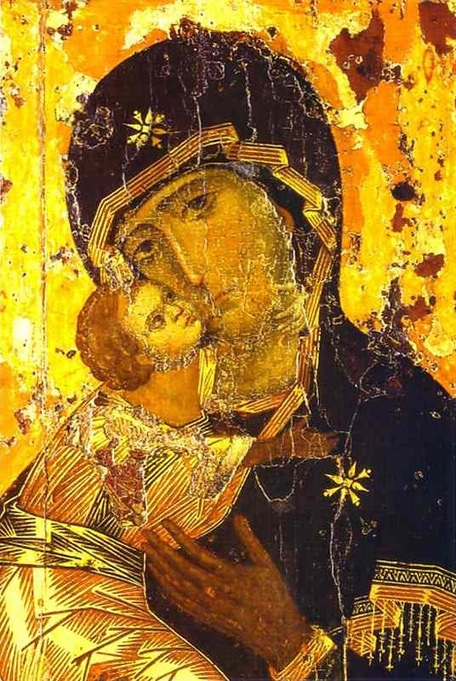
image

*The phrase, Word, in whom our wordiness dissolves, appears in the poem, Without Ceremony by Vassar Miller.

Black Friday Still Life

teaandtoastMy 96 year old mother
dozes in her chair
toast half eaten on the tray.

Frost last night,
morning sun streams
through icy windows.
Refrigerator hums.

Outside gnarly cedar
silvered bark
thick trunk
when did it get so big?
spreads shelter
like a heavy old quilt.

The dog stirs, turns on his side,
inhales deeply, exhales long and slow.

Memories –
laughter, faces,
snatches of conversation,
four dogs romping in the backyard,
mashed potatoes, pumpkin pie –
twinkle, ignite, and go out
on the mind’s firmament.

Only twenty eight days  ‘til Christmas.
No rush here. No need to shop.

In the house on Madison Street,
whatever it was we thought we needed, or must do
has given way to being,
to watching leaf shadows dance on the  brown grass
and peering long into the deep blue sky.

 This is a revised version of a blog previously posted in 2009.

_________________________________

Keep your eye out for holiday Still Life works of art 

My mother, who died in 2012 was raised as a Quaker on a farm near Salem, Iowa. Here are a few words from Thomas Kelly,  American Quaker mystic, to put on your refrigerator door to help you not miss the tender, mild moments of grace unfolding right before your eyes. 

This amazing simplification comes when we center down, when life is lived with singleness of eye, from a holy center, where breath and stillness of Eternity are heavy upon us and we are wholly yielded to Him. 

Some of you know this holy, recreating center of eternal peace and joy and now live in it day and night. Some of you may see it over the margin and wistfully long to slip into that amazing center where the soul is a home with God. Be very faithful to that wistful longing.  It is the Eternal Goodness calling you to return home, to feed upon green pastures and walk beside still waters and live in the peace of the Shepherd’s presence.  It is the life beyond fevered strain.

We are called beyond strain to peace and power and joy and love through abandonment of self.  Thomas Kelly,  A Testament of Devotion

Please share your “Still Life”  in the comments  here, or with your  photos on The Sanctuary Facebook Page . Let’s gather a whole gallery of “the amazing simplification where the breath and stillness of Eternity are heavy upon us.”
Tender peace and love to you in the season of gratitude. 
                                                                                                Loretta

What the Trees Said – Coyote

coyote

Last night coyote,
whose mother
raven said
was hit
on the highway,
turned himself
three times
scratched
sank
midst the gnarled
knees
of grandfather oak
tucked his face
beneath his tail
and slept til dawn

May we all find among the trees resting places for our sorrow.
Go out among trees today.

Wake Up!

Man Waking to Alarm Clock

Contemplation is about waking up. Simply defined, to be contemplative is to experience an event fully, in all its aspects. Biblically this is expressed as knowing “face to face.” What is implied in that phrase … is that we are in contemplation when we stand before reality and experience it without the limits and distortions that are created by narcissism, pragmatism, and excessive restlessness.   Ronald Rolheiser, The Shattered Lantern


Prayer wakes us up to what is so, not to our dreams, illusions, wishes, and desires for what is so, but to the sacred reality of each moment.

How grim you may think. How boring – this dirty kitchen, this cluttered desk, this sagging body, this pock-marked, disappointing, and flailing world?  From here it is a short, sad trip to the dark pit of the if onlys, the why nots, and maybe whens. Or perhaps I look around for someone or some event to blame for my shabby reality. Maybe I plot a way to get even, or tune out and play a game on my cell phone, fool around on Facebook, go shopping, or eat something.

We live in a culture which makes an art and a virtue out of avoiding the truth of our deep need, our sadness,  grief, and anger –  at what? Let’s put it like this: at being human. For buried beneath  much of our striving, stress, and anxiety I often discover a kind of contempt for ourselves and our vulnerability. We persistently look outwardly for relief for the painful human condition, which plays neatly into the agenda of  our culture of consumption, as we seek to find our worth through other persons, power, prestige, and possessions.

Over time prayer may eventually shatter such agendas and expose their superficiality and ultimate inability to satisfy our deep need. We find ourselves sitting in the midst of reality, still mundane, yet strangely shot through with beauty, wonder, and joy.

“You are a ruby embedded in granite. How long will you pretend it’s not true?” asks the poet Rumi. Contemplative prayer wakes us up to see through the granite of illusion to the splendor of the ruby.

FREE !

In gratitude to Praying Life readers and to all who comment, like, and share our posts here, please help yourself to a free pdf version of the most recent issue of Holy Ground Winter 2013. This issue is about waking up and finding that ruby.

If you find this to be something you would like to receive on a regular basis, please subscribe! You can receive your own copy delivered to your home mailbox or electronically online. Just indicate which version you prefer in the drop down box when you subscribe.

By subscribing you will also help support The Sanctuary Foundation as it reaches out to people of many faith traditions to nourish inner peace in a chaotic and complex world. We cannot do it without you. Really.

Holy Ground issue

Love – In Small Doses for the Sin Sick Soul # 1


Crosswalk

Wait

for the sign

to change

step off the edge

For your reflection: What signs in your life have changed, which  call you to step off the edge of certainty and comfortable beliefs?

Note to readers:  This blog is part of a series of Lenten “short takes” on the themes of lent, which follow more or less the lectionary Scripture lessons for this season. Like a note you find tucked under the bark of a tree, a lozenge to let melt in your mouth, an amulet to wear around your neck, I hope these little reflections may hold a small dose of truth or comfort  or challenge for your life on the way to Easter.

In the abundance of words which inundate us daily, it is easy for the message of redemption to be buried under the latest disaster, outrage or scandal. Likewise the familiar stories and passages of lent may grow dull and trite to ears and minds already stuffed with words.

I have noticed in my work as spiritual director that it is hard for many of us to take in the goodness and grace, as well as the challenge of the story of Jesus and God’s redeeming love. Perhaps we need to titrate the gospel. Sometimes a well- timed, tiny dose, carefully administered, may be what the Physician orders for our healing. And so, slowly, we build up our tolerance for love and more and more joy finds the faith in us through which to invade our being.

Dose titration:  adjustment of the dose until the medication has achieved the desired effect

Morning News Pre-Empted by Older Story

Today while listening to the morning news, I heard an old hymn edging its way between the story on the election and the update on survivors of the hurricane.

I will tell you what it was in a minute, but first I offer you my Op-Ed.

I am not counting on my vote getting the leadership I want us to have. Nor am I counting on getting my views on our responsibility to the suffering of others to prevail.

What I count on and lay down my life for, is the goodness of a Reality larger than politics, economics, global warming, war, and corporate interests. I am putting my support on a Being greater and more graceful than the tiny brains of human beings. My candidate is the invincible  Substance of things hoped for, which sees beyond what is, yet dwells in the midst of our chaos and sings in the human heart.

Under my fears I can hear the wondrous freedom song that nothing can separate us from the love of God, not human sin, stupidity, or weakness, not death or life, not angels or rulers, not present things or future things, not powers or height or depth, or any other thing that is created. (Romans 8: 38-39 CEV)

The Holy One dwells as ground beneath our feet in astonishing humility – wiser, brighter, and kinder than we are – who will hold us up and see us through.

In this season of distress, polarities, and uncertainty, I am banking on the hidden connections among our species, those channels of mercy that run deeper than ideologies and seep into the crevices of our vulnerability, which is both our great flaw and our greater glory, penetrating down into the solid rock of compassion, imagination, and strength.

The world does not need our anger, our outrage, our fear, or our grasping need to get others to believe as we do. I believe the world needs our humility and our faith.

For my part I can think of nothing better to offer this little piece of history than these simple gifts of the soul.

Now, here is the hymn which intruded into my morning news:

On Christ the solid Rock I stand,
All other ground is sinking sand;
All other ground is sinking sand.
                                          Edward Mote

You Will Die Before You Finish This Prayer

“I think what is going to help you most when you start your prayer – and it doesn’t matter whether it is long or short – is to make quite sure that you are certain that you will die by the time it is ended, that you will finish before your prayer does!” cheerfully advises the fourteenth century English author of the Epistle of Prayer.

The author, most likely a country parson, is writing to a young person, who asked for advice on how to control the mind when saying prayers. This is a request I often hear. Some things never change in the praying life.

I recently tried the parson’s advice and it about did me in. I attempted to make certain I would die before I completed my prayer, and learned that there is little like death to focus the mind:

The world rushed in with her fetching beauty, her clear blue sky, and yellowing maple leaves, waving, “Don’t forget about me, and me, and the red bird house, and the wren, and the dragonfly and the glaciers gripping the ground, and the wild horses pounding over the plains. The wind, whooshing leaves down the street, sent a shower of glimmering memories – babies, kitchens, ginger snaps, story books – I gave thanks for galoshes to help me wade through all the goodness. I will be ancient or dead before I finish stringing the pearls of this gratitude.

After the gratitude came the love, flowing up to the porch, running under the door, pooling at my feet and rising, slowly to my knees. I climbed up on the table and the love still mounted. Love is the color of spring and snow and fire. It moans and sings and weeps. It tastes bittersweet, smooth and creamy, warm and rich as hot chocolate. Then I grew bold and dared to believe that I could breathe in it, could breathe under-love, and that I would not drown or melt in it. So I slipped off the table and swam a few strokes around the room, then let the love sweep me out an open window into the world, buoyant and giggling.

When I came across the English parson, I had been feeling little gratitude and not the least bit buoyant. Instead of gratitude and this exuberant love, sorrow and longing for God had occupied my heart. My praying life had honed down to a narrow naked ache, like a thorn, for several weeks. I hurt. I went to sleep with the thorn and woke with it, a stab of incompletion and desire, lodged like a fish hook in the center of my being. There was no one thing I could name that would satisfy or heal this pain, but only the one whose name was above all names, who was before there were names.

The thorn was part grief and a prickly call to deeper freedom. As I grieved recent and old losses in the midst of many present blessings and considerable gladness, I was being weaned from some of the things of this world, which are lesser than God. And it hurt. I sensed there was something I was to let go of, but I couldn’t quite see what that was, though it seemed to have to do with some of my mental constructs, attitudes, ways of naming and holding what I knew as reality. It seemed to have to do with who I thought I was and how I held myself together. And this felt really, really scary.

So I prayed, meditated, read holy words, exercised, talked with friends, listened to and felt deep compassion for others. I also played a lot of mindless solitaire on my phone.

I went to the Antiochian Orthodox church down the street, where, except for the jean clad worshippers, I felt I had stepped into an ancient Syrian synagogue where Paul might step out and begin preaching any moment. I let the tonal chants in four part harmony wrap around me, as the icon saints gazed out from all four walls. Each word and act in worship was directed, not to audience appeal, market demographics, or video screens, but to the Holiness that filled the space. It was clear most of the people, as well as all those saints with their sorrowful eyes, also had thorns of longing love in their hearts too.

I have had periods of prayer like this before and trusted God was at work somehow. I know that uncertainty, alienation, and disorientation are part of growing in faith. The temptation during such times is to turn in disgust on oneself, dredging up failures, mistakes, weaknesses, and falling into a dark pit of self-negation. Yet I have learned over the years, that it is precisely, when we feel the most pitiful, that we are most in need of our own tender compassion and love.

During this time I gobbled up The Cloud of Unknowing, another fourteenth century English classic I first read years before. The writer affirmed what I was experiencing and assured me that it was God at work in me. He counsels “to reconcile yourself to wait in this darkness as long as is necessary, but still go on longing after God whom you love. … Your whole life now must be one of longing… And this longing must be in the depths of your will, put there by God, with your consent.” Rats, there seems to be no escape, short of solitaire or The Voice.

I recently realized with relief that the thorn was gone. The longing remains, but the acute pain is gone. This was a few days after I imagined that I would die before I finished my prayer. I have no idea why or how it left. I am just grateful to not feel so gripped and mournful reaching out to the heavens. Living in the cloud of unknowing and uncertainly is difficult to those of us who take pride in our intellect, our ability to be in control, to know things, and manage our own destinies.

Some religion is all suffering and damnation. Some religion is all sweetness and happy thoughts. Mine is sorrow and love. In the painful friction of sorrow and love new life ignites, leaps forth, and gives light in the darkness. Lately the words to When I Survey the Wondrous Cross have been singing themselves in my mind. So much of Christianity is mystery and wonder to me. I am clueless. I go walk around the block with my dog, praying that God make something holy of my life. I do not care what it is.

When I Survey the Wondrous Cross

See, from His head, His hands, His feet
Sorrow and love flow mingled down
Did e’er such love and sorrow meet
Or thorns compose so rich a crown?

Were the whole realm of nature mine
That were a present far too small
Love so amazing, so divine
Demands my soul, my life, my all.
– Isaac Watts

Have you ever found yourself wandering in the cloud of unknowing without a prayer, but the longing of your heart, the aching desire for God?
If you wish, share a little of your experience here.

The Writers Workshop, A Love Story

Lovers entwined, a kiss-print still/singeing your collarbone come morning,

Buzzing cicadas, whose mouthparts reek of root juice.

A splayed hand
nailed to tar shingle
on a Texarkana roof.

A silo squats in kindling grass, kneeling like a giant monk,

Laundry day debunks the laws of physics, where the personal is the thermodynamic, for this homemaker

A Requiem for a shoe: a shabby wingtip with broken ties ….lying on its side in the byway … becomes, somehow holy.

A teacher singing show tunes and weeping in a middle school classroom, filling empty space with melody, another period/full of lyrics; accidents.

These images and snatches of experience, have been resonating in my mind, calling out to me, reflecting parts of myself, and connecting me to someone else’s story, passion, or singular beating hope.

The lines are the work of the following poets in the order in which the excerpts appear:
Timothy Volpert, “Love, don’t limit me to looking,” (untitled poem, first line)
Leah Sewell , The Cicada Fling, excerpt
Ben Cartwright,  Accidents, excerpt
Peter Wright, The Silo, excerpt
Cale Herreman, The Personal Is the Thermodynamic
Sandy Morgan, Requiem for a Shoe, excerpt
Ben Cartwright, Melody and Empty Space, excerpt

The Topeka Writers Workshop

I spent evenings this past summer in the company of a small group of local writers. Mainly younger than I, they are part of what I like to think of as “the hip scene of Topeka creative life”- that outpouring of energy among young artists, musicians, writers, thinkers, and entrepreneurs of the past five or six years.  We meet after hours at the Blue Planet Café to drink coffee and munch the cookies the owner leaves for her writers.

The Topeka Writers Workshop was founded three years ago by Leah Sewell, who facilitates it as well. Leah gently leads us in writing exercises and the workshop model of critique. I joined the group because I wanted to get out of a box and mix it up with people different from me around a passion we share in common, good writing.

The group turned out to be mostly poets. At first I was afraid to tell them I am poet too, having written and published poetry since I was ten or so. But these were real poets, serious poets, the kind, who say they are addicted to poetry and take big risks for it.  One is a PhD candidate in creative writing, another is an MFA candidate. Besides, what I was bringing to the workshop was prose, chapters from a book I have been revising forever.


Confession, Mom and the Starlit Road

Yet I need to confess that poetry is in my blood. I remember gathering with my family around the radio in the evenings to listen to Len Howe read mom’s poems, broadcast from WHO radio in Des Moines, Iowa. I recently found in her files a sheaf of postcards dating back to 1948 from the radio station telling her when her poems would be read on the show Starlit Road.  Over 79 of her poems were read,  some more than once.

In the kitchen mom often stopped mid task to grab a towel, wipe her hands, and scratch out a line of poetry on the back of an envelope. I recall her urgency to get a phrase or image written before it went down the drain with the dishwater. Sometimes I sat on a chair while she ironed and read aloud from the first poetry book she owned, Untermeyer’s Modern American and British Poetry, (1928). I loved Edna St Vincent Millay, Robert Frost, and Walter De La Mere.

Only much later would I learn of mother’s inner struggle between longing to be a poet and the demands of wife and mother. When she asked the poet, Paul Engle, why through the ages only men had become great writers, he told her, “Women simply do not have the stamina for rigorous creative arts. It happens in all the other arts as well as writing.” He went on to say that great writing required the writer to suffer great tragedy which apparently the obtuse fellow assumed only came to men.

Poets Exposed

I never took a creative writing class. I skirted around the edges of poetry, deciding to perform it rather than create it. My undergraduate and M.A. degrees were in speech and theatre with a minor in English. I only began to claim being a writer in my mid thirties.

So I sneak into the group with my prose to be critiqued, and, of course, they go after it like poets. Write that paragraph like a prose poem. Take out all the extraneous words. These economical sifters of sound and meaning hone in to the spare, bare truth. They sculpt experience and meaning until reality is exposed, glistening on the page – a newly delivered child wet luminous – like a miracle:

 her long legs dawn strawberry blonde
 & I am an old wolf maintaining the furnace

(Peter Wright, teaching me to swim, excerpt)

They talk about my writing, while I listen:

I don’t think this fits here. It’s good, but use it elsewhere, says one.

This is contemplative. You pose a question and then approach and answer in different ways, notes another, getting what I am up to.

If you can’t already tell, I have fallen in love with them. The tall pianist who lopes in, plays a prelude, and reads his hilarious ironic piece on the ill-fated love story of two workers in a call center for a sex hotline. (Ok, I did blush a little.) The house-husband with a gentle soul needing to talk of something other than lunch boxes, cartoons, and laundry and be known as more than dad and husband. The unassuming woman, who quietly grieves the unspeakable loss of her dearly beloved. The PhD candidate who sends me to the dictionary to look up anamorphic and writes poems that turn over in my mind like ancient runes. The young woman, who shyly offers her poem, anticipating abundance in the putting together of two lives. And our guide, Leah, who tosses off these stanzas:

Above my head a dark sight
thrums and swoops, careens
fast to the blunt flatness
of a fence post. Fallen starling,

parted beak, gasp of dread
glint-wing broken open
in a sinister cape. I cup
its gloss in my palm.

The children fret and coo as I carry the bird
to a canopied place, wish it peace,
and bow away from its pointing eye.

The storm’s outskirt arrives
in black overhead. The wind
grips my face, tells me to get inside.

(Leah Sewell, Backyard,  excerpt)

(By the way, you must read this poem excerpt out loud to taste and feel the wonder of its consonants and rhythm in your mouth.)

Each member brings poems which stun me with their beauty, jolt me with clarity, slap me with surprise, intrigue and invite me into the warm mystery of another human being.

And I like it that they are not churchy. Trust the reader more, they tell me. (Don’t preach.) Let us make the connections. (Don’t patronize.) Let us have our own meaning. (Don’t proselytize.) We are open and welcoming, but please don’t write like the kind of Christian, we were afraid you might be, when you first joined the group. Like hound dogs, they sniff out my defensiveness, my need to please, and expose my vulnerability.

They confront me with my own prejudices and what it means to write about God and even use the J word (Jesus) in a culture where the word, Christian, makes many people, including me sometimes, squirm.

Flannery O’Connor called poetry the accurate naming of the things of God. Taking their cue from the great southern writer, these poets simply inspire me to write poems, to trim away the fat, to consider just what I am trying to accomplish here, and cast off all self consciousness. They make me more contemplative and honest.

Psychologist Carl Jung observed,

Loneliness does not come from having no people about one, but from being unable to communicate the things that seem important to oneself, or from holding certain views which others find inadmissible.

I am interested in communion, that co-union of minds and hearts, that bridges the isolation and the apparent inadmissible truths between us, where we find a home,  if only for a moment or two, in one another. I found it with these poets, reaching beyond their isolation with the things that seem important to them.

Don’t Miss This

If you are looking for a home, a little clarity for yourself, and some good entertainment, come to the Blue Planet Café on Friday evening, September 21 from 6:00-8:00 pm for Topeka Writers Workshop READS. Be there to listen and meet these writers. I think you will fall in love too.

______________

Leah Sewell is a poet, book designer, magazine editor and MFA candidate at the University of Nebraska. She is a past recipient of the Association for Women in Communications Women Making Headlines Award in media and the Penwomen Scholar Award for Letters. Her poems have or are expected to appear in PANK Magazine, Midwestern Gothic, Roufus City Review, Weave Magazine and Begin Again: 150 Kansas Poems. She is the founder and facilitator of the Topeka Writers Workshop in Topeka, Kansas where she lives with her family.

Do You Know What You Know?

Four Great Questions

The word is very close to you.
It’s in your mouth and in your heart, waiting for you to do it.

 I was putting away some of the books which had clustered around my reading chair:  David Brooks, The Social Animal; Contemplation Nation, edited by Mirabai Bush;  poetry by Wendell Berry, The Hunger Games; The Cloud of Unknowing… when I randomly opened one of the books and found Four Great Questions.

The questions are in the book, Yoga and Anxiety – Meditations and Practices for Calming Body and Mind by Mary and Rick NurrieSterns on page 102. I will tell you what they are in just a minute.

I find the world fascinating and cannot get full of the knowledge and wonder of it all. I usually am reading four or five books at the same time. Often what I read opens doors of understanding and appreciation. Other times reading confirms my own intuitions and understanding, or it invites me into whole new places and realities I have never experienced or imagined.

“He doesn’t know what he doesn’t know. He’s actually kind of dangerous,” a friend recently said to me about a young professional on his way up the ladder to “success.” Sometimes we do not know what we don’t know. We may then set out to decrease our ignorance, or remain self-deceived, uninformed, arrogant, and even dangerous.

On the other hand there are occasions when we don’t know what we know, which could also be dangerous. The questions I found on my way to my book shelves are aimed at uncovering truths we already know, but are ignoring, denying, or deceiving ourselves about.

For example, we may know more about what is the best course of action for us, than we allow ourselves to own. Sometimes I play dumb in my relationship with God. I will go back to God over and over with some question I really already have the answer to. Yet I insist on double checking, second guessing, and reconfirming. It is my anxiety and doubt that send me back for continual assurance. I almost seem to prefer wringing my hands and hemming and hawing, than striding confidently, calmly into the next step.

This commandment that I’m giving you right now is definitely not too difficult for you.  It isn’t unreachable.  It isn’t up in heaven somewhere so that you have to ask, “Who will go up for us to heaven and get it for us that we can hear it and do it?”  Nor is it across the ocean somewhere so that you have to ask, “Who will cross the ocean for us and get it for us that we can hear it and do it?”  Not at all! The word is very close to you.  It’s in your mouth and in your heart, waiting for you to do it.   Deuteronomy 30:11-14, Common English Bible (CEB)

Four Great Questions

Sometimes we are not ready to face a truth for various reasons, so we choose to remain ignorant. These questions help you consciously acknowledge a truth that you know deep inside, or to bring into the light a nagging realization that keeps popping up.

1. (Fill in the blank) The truth about this relationship is ______________.

2. I know I need to _______________________________________.

3. The real truth is _______________________________________.

4. What do I know about myself and my life that I haven’t been listening to?

Take some time this week with these questions. Find out what you already know and let me know how it goes.  “The word is very close to you.”

Questions from Yoga and Anxiety – Meditations and Practices for Calming Body and Mind by Mary and Rick NurrieSterns

Boring Church and the Vulnerable God

There is a bit of the scientist in anyone who sets out to test in his or her own life if Jesus Christ is really all he is cracked up to be. “Prove it,” the contemplative says to God. Here are all these promises: freedom, joy, abundance, peace, wholeness, justice, truth, and life eternal. “Show me,” says the contemplative, setting out to experiment with divinity in the laboratory of experience.

In the beginning God is the object of the search. At some point God may peremptorily rise out of the test tube and take over the experiment. I find myself being dissected. My soul is flayed open by truth. I am blinded by glaring light and toasted over a Bunsen burner, where my impurities are burned away and I am distilled into my essence. I am no longer in control of this process. The knower and the known have shifted places. And truth is not something I can find, but something that has me in its grasp.

Theologian Lesslie Newbigin observes, “Reason, even the most acutely critical reason cannot establish truth.” … [This is because] You cannot criticize a statement of what claims to be the truth except on the basis of some other truth-claim – which at the moment – you accept without criticism. But that truth-claim on which your critique is based must in turn be criticized. Any claim to know truth is, therefore, simply a concealed assertion of power.” (Truth to Tell, The Gospel as Public Truth, Eerdmans, 1991, pp 29-30.)

The work of scientist Michael Polanyi reminds us that “all knowing involves the personal participation of the knower, that knowing always involves the risk of being wrong, and that the struggle to know calls for the fullest exercise of personal responsibility.” Truth to Tell,  p.51)

Instead of seeking proofs of God from reason or experience, the contemplative finds fulfillment simply and humbly dwelling in love in God’s presence.  The contemplative gives God entry into the world, not through a claim of truth, but through a believing heart. Instead of an exercise of power through the assertion of my reality over yours via dazzling argument or feats of spiritual prowess, the contemplative takes the vulnerable route of allowing God to make God’s own appeal through the context of his or her surrendered life.

I acknowledge my vulnerability when I say, “I cannot know it all. I may be wrong. This is what I see. This is what I am responsible for articulating as clearly as I can.” We might characterize the spiritual journey as the process of discovering right relationship to this vulnerability, which we meet in ourselves, others and in God.

By vulnerability I mean capable of being wounded and wrong, open to attack or damage. Our vulnerability may include our sin and temptation to evil, our failure and weakness – wherever we are not whole, wherever we fall short of the glory which is our promised inheritance as God’s children.

We can relate to our woundedness in many ways: with anger, resentment, impatience, contempt, deceit, shame, and blame. We can so identify ourselves with our vulnerability that we know ourselves only as victim. Then, committed to our suffering and stubbornly resistant to healing, we may defend our wounds with fierce loyalty.

God sends into our consciousness, into the heart of matter, Holy Vulnerability in the form of Jesus. It teaches, heals, suffers, dies, and rises saying, “Look, watch me. This is what it means to be human. It is all right. Everyone is wounded. Follow me and be healed.”

Over and over Jesus’ ministry reached out to the vulnerable ones. He brought home the lost and the misfits saying, “You belong too.” He didn’t bring them back to turn them into Jews or folks like him. He just brought them back saying, “You, just as you are, are important. You have a contribution to make. We need you. You belong.”

Loving Jesus takes away our shame for being human like nothing else can. For he shows us how to be poor, how to value and appreciate our vulnerability. He tells us the vulnerable ones will see God and inherit the kingdom of heaven. He helps us get off our high horse and come down where we ought to be on our knees.

In the painful encounter with our vulnerability and diminishment, we meet the diminished suffering God and our own holiness. For in my poverty I discover my true worth. Stripped of what I can do, what I possess, how I am known by others – all the external ways I have attempted to create worth for myself, I find my true self in the center of my humility, which is also the dwelling place of the Trinity.

I used to read my children a story about a little girl who was born with a long tail like a dragon. Various characters seek to help the child with what is perceived by some as her disability. I liked Mike the cat’s approach best. “Teach her to love her tail,” he sagely advised. He shows her how to switch her tail back and forth, wind it around the fire escape railing and hang upside down. Teach her to love her tail.

Part of the task of the church is to teach us to love our tails and God’s tail, Jesus. Spirituality without Jesus Christ is spirituality that may be resisting the fundamental truth of our vulnerability. It may be a spirituality that, well or ill disguised, is exercising power, trying to be God.

The world holds vulnerability with fear and contempt. The church ought to teach us to hold it in our arms and love it. But the church is, of course, vulnerable too.

I was trying on a new hat when eleven year old Cicelia observed that you should always wear a hat to church. “It protects you from boredom, mom. The boredom rays, like the ultra violet rays from the sun are in church and sometimes at school. If you have a hat, you will be protected from the boredom.”

I hope the place where you worship is not boring. Maybe if churches had more to do with being with God and less to do with talking about God, things wouldn’t be so boring for Cicelia and others. As EvelynUnderhillobserved, “God is the interesting thing.”

A good deal of church seems to have little to do with God and is conducted as though God were, if not absent, at least very far away. Little time is given for God to get a word in edgewise. Our frantic activity and anxious busyness comprise our faithless creed that not much of anything can happen without our doing it ourselves.

Perhaps it is just too risky, too frightening. What if nothing happens? Nothing is changed or accomplished? Once Cicelia put a sign on her door painted in large red letters: KNOK or ELSE! Red paint ominously dripped from the letters like blood.

Jesus, we know you stand at the door and knock, but beware! We are resistant to transformation, devoted to our losses and the sins of others against us, and do not really trust your power in our lives.

The church will always be imperfect. It will be unimaginative and boring and rigid sometimes, because we are unimaginative and boring and rigid sometimes. Thank goodness God’s presence doesn’t depend on our winning academy awards in best Pentecost service of the year.

I have been in so many churches where you wonder why anybody comes at all. What with the dozen dusty arrangements of silk flowers and the sappy pictures of Jesus and the bad roller rink organ music you wonder what the appeal could be.

The appeal is, of course, Jesus. Jesus is there and active, because the people believe in him. Their vulnerable belief holds the door open for the vulnerable God to enter.

Knok or Else.  He is likely to walk right on in.

This post is an excerpt from my book written about learning to pray as I raised children in small town, Holton, Kansas. Loretta Ross (Ross-Gotta),  Letters from the Holy Ground – Seeing God Where You Are, Sheed and Ward, 2000,  pp 119-122.