Category Archives: Christianity

Pretense and True Belief


This is my body, peeled back, broken open for you.
In my palm blazed Suchness, a torn fragrant crust of What Is So.


Oh, Common One, you are so plain, so familiar, so simple that we miss you in our desire for some other novelty. We seek you in mystery, ritual, knowledge, magic – all the things we hope will take away our pain and imperfection. We think that if we can just become enlightened, then we will be one with you. But here you are, hurrying toward us, loving us so much, broken hearted, risking everything to be with us in our unenlightenment.
Jesus, you are things as they are. Here is where I meet you in such unassuming splendor and fullness. Over and over, as I bump up against imperfection, resistance, and fear I find you –
grinning at me, sanctifying the moment, redeeming in streaming satin rivers of Grace what is so.

When the dancer becomes the dance, the veil lifts. When the pray-er becomes the prayer, when nothing separates us from God – no self to comment, evaluate, compare – then the forms of prayer drop away and the heavenly hosts arrive packing picnic lunches and lawn chairs and settle in to watch the show.

Someone ought to open a School of True Belief where we could learn how to believe until there was nothing in us that was not a believer. Every June we could put on a recital. There we would solo in some show stopping number where we would cease watching what we are doing and just do it in the free spontaneous expression of the passion of our souls.

True believers are rare these days. There are many schools which teach us how to hone deceit and conceit to a fine art. To know nothing but Christ and him crucified, to be wholly available to God as God desires, one must be free of pretense. We cannot be pretending about what is real. Rather we must be full of faith in the context of the essential truths of our life.

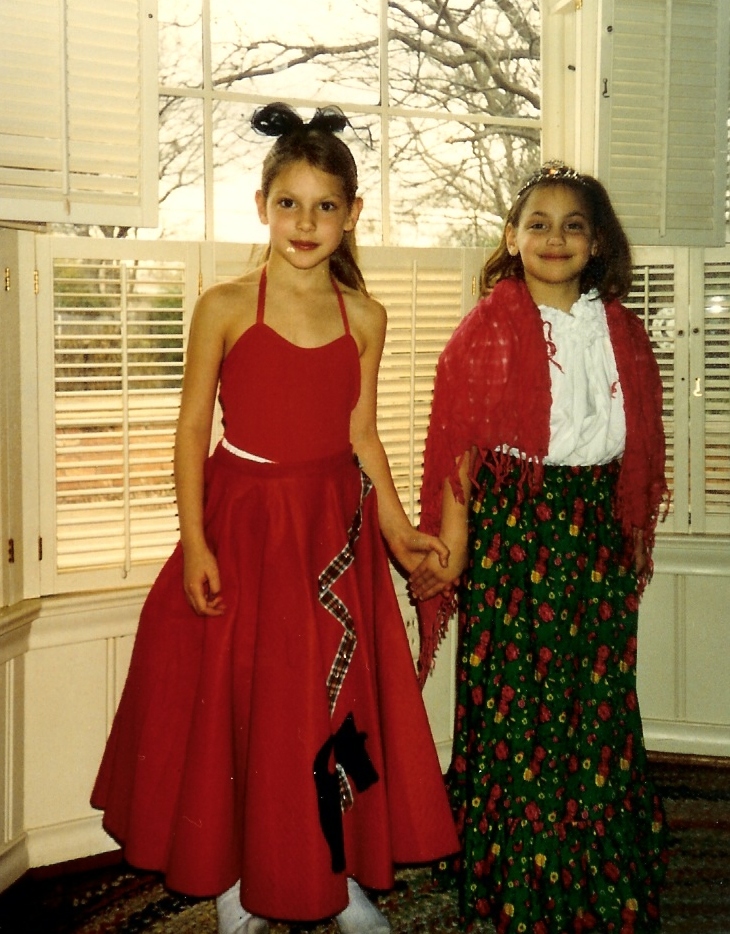
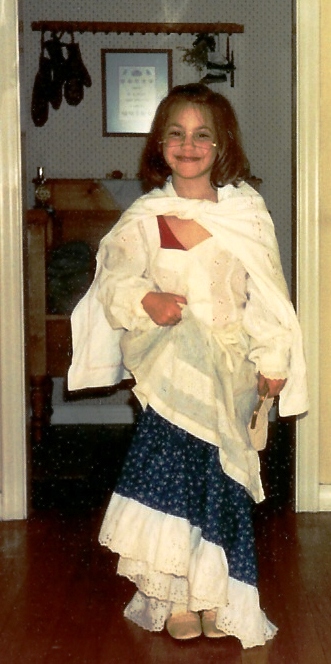
Yet we learn by pretending. It may be a necessary step on the journey.  Pretending may be evidence of both our unbelief, and our devotion. Through the gift of the ability to make believe we can try out and imagine what seems unimaginable. The foundation of spiritual growth and theological hope lies in the ability to risk into what doesn’t make sense or seem possible. A lot of the time we look like kids traipsing around in mom’s high heels and old prom dress. We smear on lipstick and crouch in the tree house being the squirrel sisters, famous ice skating stars and novelists. We giggle and sip Kool Aid from the stemmed goblets we stole from the kitchen. It is all a sham of course. Pretty soon Karen’s little brother will come around and throw tomatoes at us. But we are practicing the fine and awesome art of becoming our dearest dreams.

I remember the wild longing of age ten when I sat in the sun eating purple grapes, warm and sweet, spitting out the seeds at my brother. Summer was interminable and nothing ever happened except the daily routine of my hopelessly mundane family and Andy Griffith reruns. That longing took me to the cool dim corridors of the public library hunting ecstasy. I would haul home stacks of Nancy Drew mysteries and American Girl magazines and read about other times and places where Nancy motored about the countryside in her roadster and something more interesting than hanging out the wash and canning chili sauce was always happening.

Can we share in the wonder and deep need of the Great Pretenders? Can we cherish our vulnerability and say:  “Go for it, pretend your hearts out! Go on. You be the Goddess of the Moon and I’ll be the Wise King. The back porch is our kingdom and the dogs can be our ladies-in-waiting. Here, you can walk on water and I’ll heal the sick.” Pretend and dress up and play until your dreams come true.

And this is how dreams come true. One day when you are playing, the ladies-in-waiting suddenly bolt, trailing their gowns made of old curtains across the lawn, to chase a squirrel. One day the Moon Goddess gets a mean streak and scribbles crayon all over your royal decrees. The castle you made of boxes gets rained on and the whole kingdom disintegrates. On a day like that, when all your pretending is exposed and you are just a little kid filled with an ache for bliss you cannot name, then someone like a Mother or a Father will come to you and pick you up and wipe your nose and tell you that you are beautiful just the way you are. And the wild hunger to be known and honored and loved for the Holy Child you are is at last met by the Holy Child of God.

And all the rules we made up when we were pretending will seem silly and useless. Like how you are supposed to eat your chips in your sack lunch first and save the gummy bears for last. How if you get home before your sister after school that means dad will take us out for a Dairy Queen after supper. How if you pray this way or believe that or wear this totem or light this candle things will turn out okay for you.

And then the very powerlessness and need of childhood that drove us to pretending in the first place, the very unacceptability of ordinary being, that tender vulnerability at the mercy of powers greater than us, and all that we did to impose sense and order – then that unfinished irredeemable self becomes the holy ground of redemption.

I do not know if our pretense amuses or offends God. I do know there is a time for us to stop pretending about what is not and bless what is. For when I stop acting out my fantasies and stay here to drink this cup poured out and eat the bread of this moment, then I meet Jesus, the one who came and keeps on coming into the world just the way it is, not to condemn it, but that it might be saved through him.

This post is adapted from my book Letters from the Holy Ground – Seeing God Where You Are
Read more about prayer at The Sanctuary Foundation for Prayer website
Read our Emews;etter Tracking Holiness – Newsletter
Become a fan of the The Sanctuary Foundation

Contact the author by email: lross@fromholyground.org ; on Facebook: www.fbook.me/sanctuary
Follow at http://twitter.com/lfross

A Goodly Theme

This post is an adaptation of a post first published July 5, 2010.

My heart overflows with a goodly theme
as I sing my ode to the King. Psalms 45:1

The kingdom of God will come when men and women are willing to be penetrated by bliss.
-M.C. Richards – Centering in Pottery, Poetry, and the Person

Her words stopped me in my tracks and resonated like a struck gong. Little seemed blissful in my life at the time. It was 1973. I was living alone in an apartment in Ann Arbor, Michigan, working at a job I hated, depressed, and hurting deeply. These words of artist M.C. Richards penetrated my defenses, self pity, and sense of worthlessness like a swift shining sword. For the first time in a season of sadness I felt hope.

The notion that the rule of God, the peaceable kingdom, the promise of wholeness for all people is a function, not of ridding the earth of evil, not of righting all injustice, not in overcoming human sin and limitation, but rather our willingness to receive goodness and mercy into our being  has animated my life ever sense.

“Put down your sword!” Jesus tells Peter in the garden of Gethsemane. Peter, in a desire to protect his master, had taken a sword to the ear of one of the Roman soldiers who had come to arrest Jesus. However, Jesus’ kingdom was not of this world. It is a Reality already here, present, and accessible to all. Jesus says, it is within you and everywhere like a seed, common and transforming as leaven. The winsome, disarming Jesus manifested that kingdom wherever he went and invited his followers to do the same.

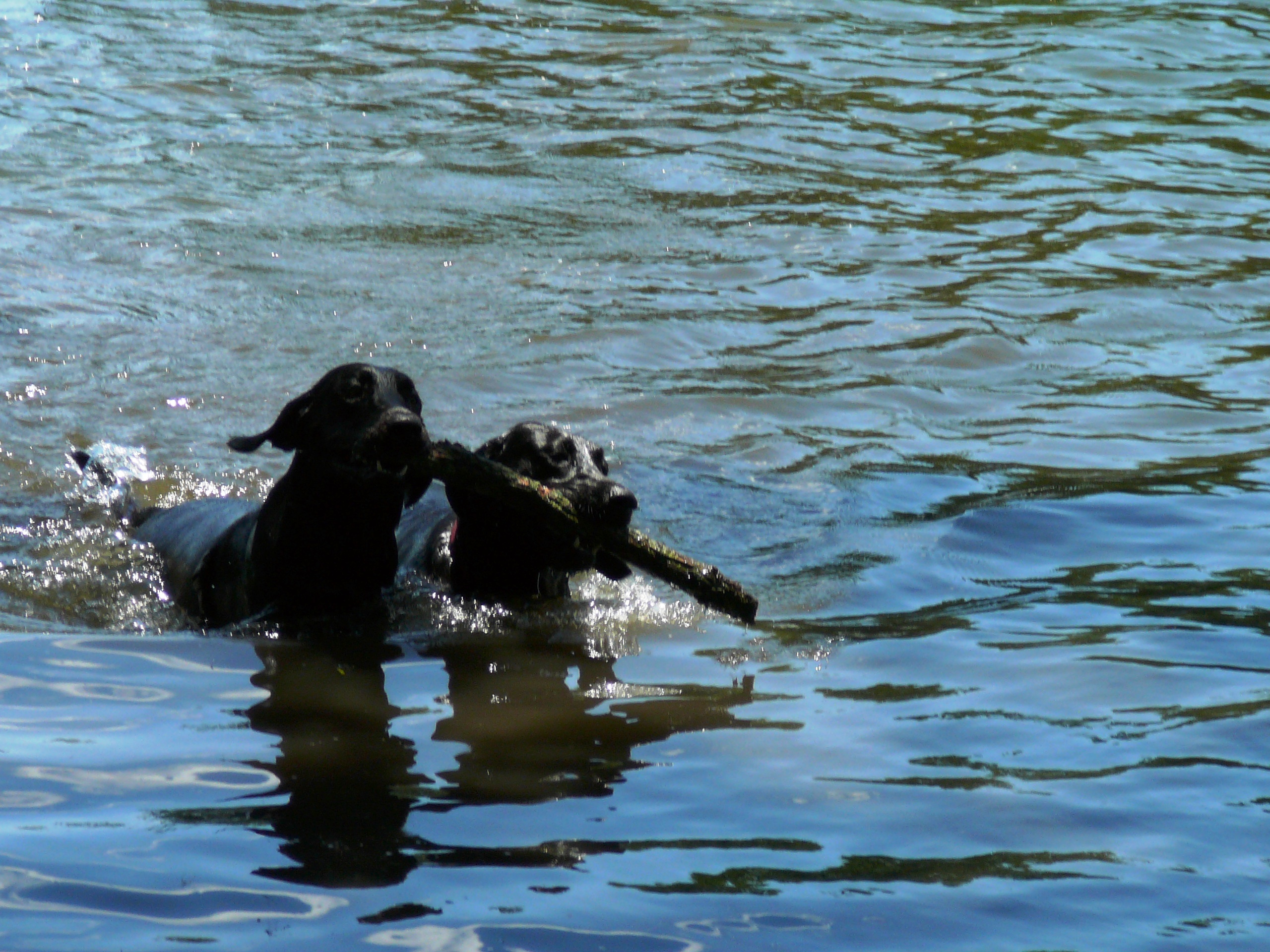
Two disarming black labs, my Elijah and Jean Luc Picard, who arrived with some house guests, have been teaching me about bliss. The dogs met for the first time a week ago with the hearty delight of Adam, when God introduced to him the woman he had made of Adam’s rib.

“Ah, at last a fit companion! Bone of my bones, flesh of my flesh,” Adam exults. Though not recorded in the scripture, I figure Adam then wiggled all over just like my dog, Elijah.

The best-friends-forever have been inseparable – wrestling, play fighting, swimming, fetching, and sprawling, here and there, exhausted and snoring. Holding back nothing, these fellows have allowed bliss to penetrate and animate every cell of their bodies. Bliss surrounds, follows them, spills out of their eyes, and rolls off their shoulders. Even the cat has a spring in her step and an amused quality to her feline reserve.

I believe the great challenge of our time and all mortal time is holding our hearts open to the rain of grace – the glorious reign of delight that ceaselessly offers itself to the whole creation.

“But hold on!” you say. What about climate change eating away our coasts and killing off species? What about health care crisis?  What about the lives and shores devastated by oil spills? What about your own personal crisis and impasse, your unemployment, your grief, your illness? What about the suffering ones everywhere we turn?

Could you, will you, permit the tiny possibility of joy to penetrate your darkness, to kiss you on the face, to pounce upon you from behind? Maybe, before you know it, it will jump up into your lap and go to sleep in your arms.

To notice, delight in, and allow ourselves to be penetrated by the goodness of God does not mean we ignore the places where that goodness is obscured or sorrow and pain exist.

The amazing opportunity to be a member of the homo sapiens species alive on this earth at this time is an incredible gift.  Our willingness to receive, to lay down and roll on our backs in, the sheer bliss of being alive is what allows God to transform that vortex of darkness, greed, and hate through us. What evil and sin target and destroy is joy, because joy is a unfallable sign of the presence and power of God.

The world does not need our disgust, outrage, anger, and rage. It needs the Reign of Christ’s joy with its unfailing hope, faith, and love. The world – sucked into the whirlpool of greed, violence, and  suffering – will not enter the Kingdom of God through our anger, retaliation, and swords, but through our bliss, the utter delight and lab-lucious joy of being children of the Father of Goodness and the Mother of Mercy.

Let no one and no circumstance rob you of such a splendid birthright.

Download and read latest issue of Holy Ground – A Quarterly Reflection on the Contemplative Life,  “Try a Little Tenderness”

Holy Ground Spring 2017

The Morning After

Well, it’s over, thank
goodness.
The lilies droop.
The chocolate bunnies hunch
half eaten in the plastic grass.
Mrs. Mitchell runs the sweeper
in the sanctuary
sucking up the alleluias.
It’s over
and we made it.
We said it wouldn’t be easy.
We said we would be taking up the cross.
But the pain catches us
off guard
and we hunt
for other causes.
We said, “Yes, Lord, we will follow,”
and sauntered into lent
with the nonchalance of toddlers reeling
along some sheer drop off
all ignorant of our peril.
So when it comes.
The event, the person, the inner turmoil
which nudges us to embrace
the cross’s hideous face,
we forget
and call it irreconcilable differences
or stress or heartburn.
_____________
Once I went through a very painful period of deep suffering. When I talked with my spiritual director about it, he asked, “What have you been praying for?”
“To be conformed to God’s will.”
“Well, what did you expect?” he said.
We have an uncanny way of compartmentalizing our life in God. For some of us the things we say to God in church, the prayers, and songs, appear to have little connection to the life we lead outside church. How many times have we prayed “thy kingdom come, thy will be done on earth as it is in heaven” and then gone home and worried all week about the state of the economy, our nation, or our families?
Several people lately confided to me how afraid they are about the world. These are deeply faithful people, yet they are afraid. As for me, I, too, fretted most of last week – those useless “what should I do next” worries. The one we follow has explicitly told us not to fear. Yet we try to justify our fear by hunting around for the cause of our discomfort and call it whatever is fashionable – midlife crisis, the government, the economy.
In doing that we subvert the process of growth and maturity God has initiated within us, usually at our request. Think about it. What sort of things have you been asking of God lately?
The sacred action of transformation within our souls as individuals and nations will create turmoil, uncertainty, painful loss, and suffering. This is the cross. At the same time it is purposeful, hopeful, and to those who remain grounded in faith will, absolutely, result in new life and greater freedom to love and serve one another.
For me the bottom line is this, where do I get my news?  What is my foundation, the central fact and eternal truth of my life?  CNN, FOX News, my wimpy ego, or the Risen One calling me to trust in the hidden life and power of God around every bend in the road?
Now – go eat the rest of that chocolate bunny and have a day full of wonders!

Read more about prayer at  www.fromholyground.org Tracking Holiness – Newsletter
Contact Loretta at  lross@fromholyground.org www.fbook.me/sanctuary
Follow at http://twitter.com/lfross
Become a fan of the The Sanctuary Foundation for Prayer

Whatever

Turning and turning in the widening gyre
The falcon cannot hear the falconer;
Things fall apart; the center cannot hold;
Mere anarchy is loosed upon the world,
The blood-dimmed tide is loosed,
And everywhere
The ceremony of innocence is drowned;
The best lack all conviction, while the worst
Are full of passionate intensity.
Surely some revelation is at hand . . .
W.B. Yeats

The animals were talking about taking a trip. The holidays were over. They had eaten their treats and chewed up their toys.  A kind of malaise had settled over them. “Is this all there is,” they wondered, “an empty bag of kitty treats and a few shreds of raw hide doggie chews?”

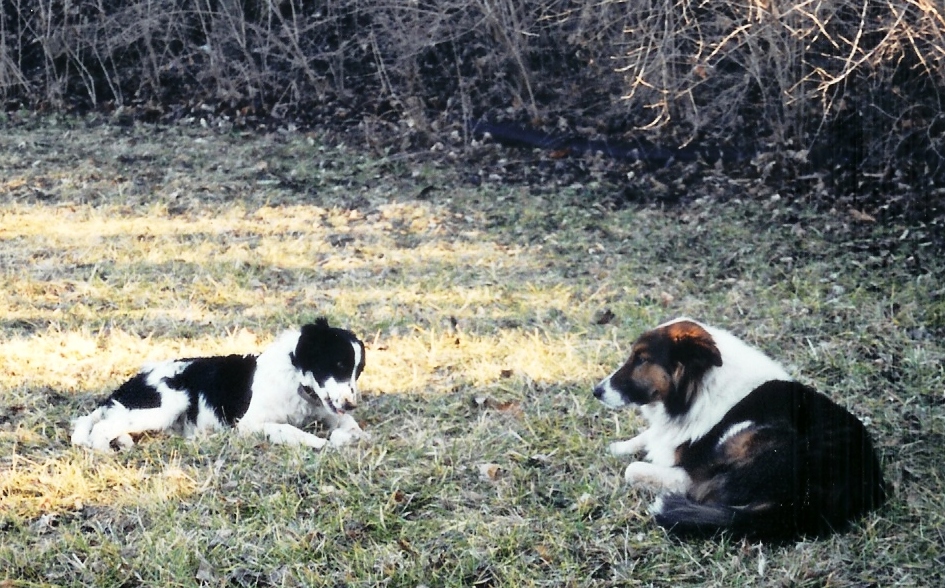
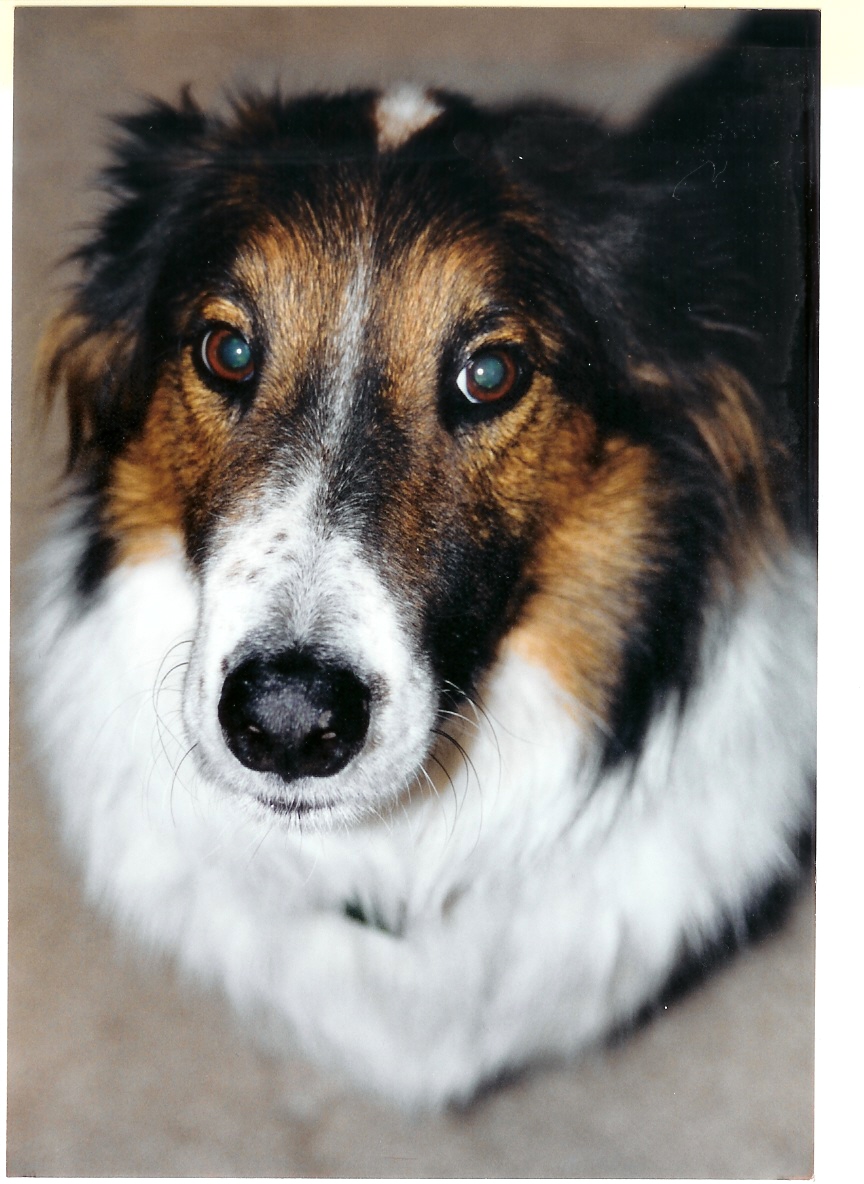
Ahs, the collie dog, stretched and yawned. A few months back he lost his best friend, Amos Moses Wigglesworth. The exuberant pup gave Ahs a new lease on life. The two wrestled and tore about the yard, chewing up flower pots and dragging tools from the garage. Then one night while chasing rabbits Amos found an opening in the woods and followed the scent to the highway where he was killed chasing cars.

Seal, the grey cat, said, “I told you he was dumb as a stump.”

Her son Gavin, who avoided the ill-mannered canine as much as possible, came out of the woods, “Whatever. It was all so random. A dog comes. A dog goes. Hey, would you like to see my new tattoo? I’m thinking about getting my nose pierced too.” His mother sighed and wondered why he couldn’t be happy just catching mice like cats did when she was young.

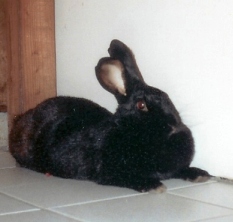
Unlike Gavin, the black rabbit, Captain Midnight missed the dog. He shared his food with Amos, who had a taste for alfalfa, and Captain got a kick out of watching him chase the possum.

“Do you think I will ever see Amos again?” Ahs asked Captain Midnight. There had been altogether too many deaths and departures in the household for Ahs’ taste. Captain’s sister, beautiful Isabella Hepzibah died barely two years before of a virus. The girl who fed Ahs left last fall and didn’t come back for months. Creatures, coming and going all the time, who ought to stay put in the fold, were making him cranky. How could he keep track of things? And now there was a new dog, a big nosy golden retriever named Gregorian Chance, who wanted to be the lead dog.

That was how the idea of a trip came into his head. Maybe I just need to get away. Maybe I can find Amos. Then the star came out. After that it wasn’t hard to convince the others to go with him. A star tossed into the heavens like an enormous twinkling ball shone brighter than the full moon. Gregorian Chance said right away they should go fetch it. Captain Midnight said they should just follow it and see where it led them.

Gavin said, “Whatever.”

Seal said they had all that they needed right here and everyone would feel better, if they just had a little tuna fish and took a nap.

_______________________

The season following Epiphany (January 6) to Ash Wednesday, the beginning of lent, moves us from the intimate scene of Jesus’ birth toward the task of sharing a personal truth with the rest of the world.

The lectionary scriptures for these Sundays emphasize that in God’s sight there are no distinctions that make some people clean and others unclean, nor differences that leave some people outside the embrace of God’s care. The focus is that Jesus came for all people.

The challenge today as well as in the first century is that Jesus is a gift many have no desire to receive or see any use for. Theologian Marva Dawn writes that “the major characteristic of the postmodern condition is the repudiation of any truth that claims to be absolute or truly true. ‘Christianity might be true for you, but not for me,’ our children used to say with modernist relativity – but now they are learning in their schools and from the media that any claim to truth is merely a means of hiding an oppressive will to power. The result is the malaise of meaninglessness, the inability to trust anything or anyone, the loss of any reference point or ‘web of reality’ by which to construct one’s life.”

Little appears in our postmodern culture to hold the human family together in a shared focus of purpose and meaning beyond the latest escape into entertainment or sensationalized news event.

Dawn says that the effects of postmodern life “on young people seem more like catastrophe, confusion and chaos.” She notes along with other scholars that “postmodernism has moved young people from the alienation of the 1960s to the schizophrenia or mutiphrenia (a legion of selves with no constant core of character) of the 1990s and 2000s. Having no point of reference, no overarching story, no master narrative, people don’t know who they are.”

_______________________

Then the star came out. Of course it had to be something like that – something bigger than they, beyond their ken. It needed to be something they couldn’t chew up, pee on, or hide in the hay.

What they were looking for was something worthy of their faith, worthy of making the trip – worth the courage and energy it would require. They were looking for something to kneel before.  Was there anything in the world to lay out their passion for like that? Was there anything commensurate with the largeness of their souls, anything worth being valiant and noble for?

Hearts are made for giving away, yet it seemed every time they did, something bad would happen. Usually it meant one of them would get lost or die or be betrayed. They were seeking one true thing – but they were afraid that the only true thing might be that there was no true thing.

The star glimmered in the bitter air. “That is so random,” said Gregorian Chance.

“Whatever,” said Gavin.

Would they hear the voice of the falconer?

Would they risk getting hurt again? Would they make the trip?

Will you?

Read more about prayer at  www.fromholyground.org

Contact Loretta at
lross@fromholyground.org, www.fbook.me/sanctuary

Follow at http://twitter.com/lfross

Become a fan of the The Sanctuary Foundation for Prayer

When Hope Fails


Hope is what gets a lot of people through the Christmas season. And the failure of hope is what leaves some souls shipwrecked on the treacherous rocks of the sin and imperfection of this world.

What is it for you this year? Death of a loved one? Spouse in Afghanistan? Unemployed? House foreclosed? Cancer?

Hope is the presentiment that the imagination is more real, and reality less real, than we had thought. It is the sensation that the last word does not belong to the brutality of facts with their oppression and repression.  It is the suspicion that reality is far more complex than realism would have us believe, that the frontiers of the possible are not determined by the limits of the present, and that miraculously and surprisingly, life is readying the creative event that will open the way to freedom and resurrection.  Rubem Alves

She was fourteen. She sat next to me as we drove home after the Christmas Eve service. Lights sparkled from distant homes across the snow covered fields. Shattered with pain and trying not to show it, I tried to focus on driving. After a while she spoke out of the darkness, “Mom, things aren’t ever going to be the same, are they?”

That year, our family had been struck by a blow from which we would never fully recover. In spite of  brave efforts, prayer, and sacrifice we could not put back together what was broken and, perhaps, fatally flawed.

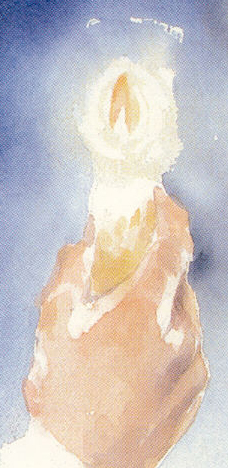
During that season of suffering, hope became nearly eclipsed by fear, anger, shame, and pain. Each evening I turned briefly from my grief in defiance of “the brutality of facts with their oppression and repression,” and lit a candle for hope. Even though I felt no hope, I let the candle hold my hope for hope.

In those days I clung to the verse of scripture the minister preached at our wedding. Remember thy word to thy servant in which thou hast made me hope. This is my comfort in my affliction, that thy word gives me life. Psalm 119: 49-50 What an odd text for a wedding, you may think. Yet as the years unfolded it became more and more meaningful. I prayed it, holding God accountable to the goodness promised to me in scripture and whispered to my soul. God’s promise of joy, peace, and love comforted me and gave me the ability to keep breathing in my affliction.

Carmelite writer Constance Fitzgerald writes about the movement in our spiritual journey from “naïve hope to theological hope.” Through experiences of loss and suffering, naïve hope in a Santa Claus god and other illusions nurtured by our egos give way to a different, richer kind of hope. We let go of placing our hope in our own efforts, our own goodness, our own “luck” or deservedness. We let go of our “right” to ourselves and our way. Or perhaps it is more accurate to say, we numbly watch our way wrenched from our grasp. We face our helplessness and the truth that we are not in control. Hope in oneself and one’s little plans and projects dies on the cross of our life experience.

It is there in that stillness of a drive back home on the worst Christmas Eve in one’s life, while a child’s heartbreaking question hangs in the air, that hope in God is born.

You may miss it at first, especially if the pain is choking you. But refuse to let the last word be the brutality of facts. Go ahead and light that tiny candle. Defy the darkness. And pay attention. A baby is on its way. Something fragile and new and unimaginably sweet is making its way into your consciousness. 

I tell my daughter, “Yes, honey, things will not be the same. But I believe somehow or other, things will be all right.”

And they were.

Special thanks to artist Anne Emmons for her permission to use “Hope” in this blog. You can reach Anne at anneemmons_8@msn.com or on Facebook. 

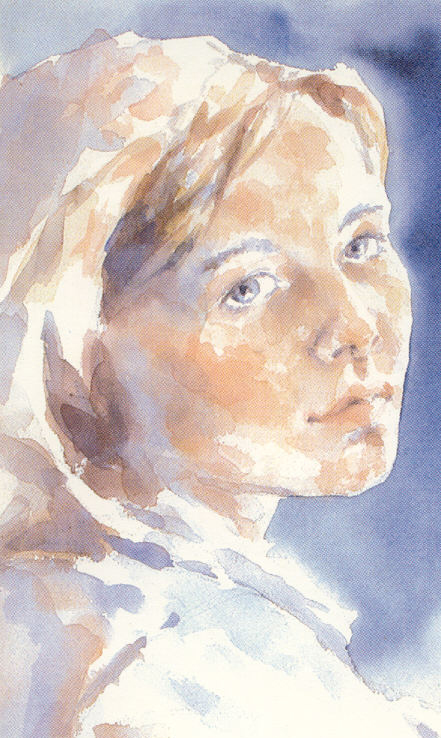
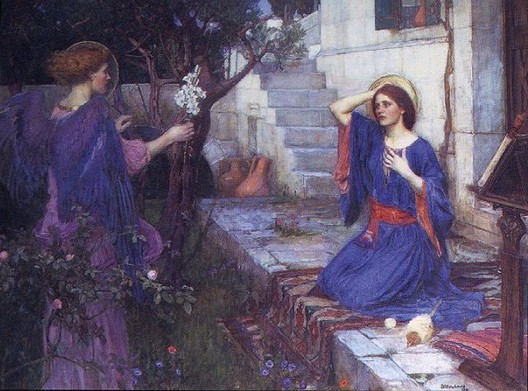
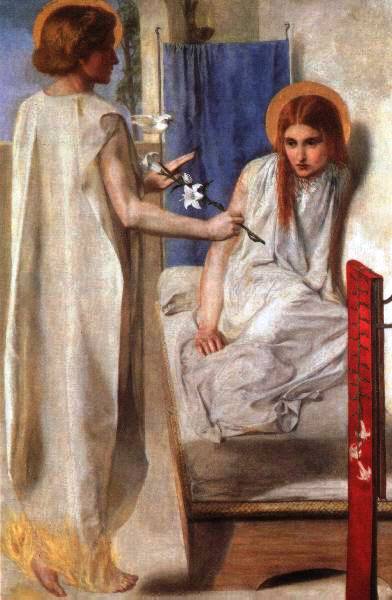
Here is Anne’s story about this painting:  I was trying to think of one moment in the Biblical narrative which captures the theme of hope.  Each year I have made a new image for Christmas since 1997, and in 2000, I was struck by the idea of hope as the source of light. The images in this series reflect the thought that Christ came, the Light of the world, into darkness. So I was thinking about one single moment in the story and I realized the moment Mary heard the announcement from the Archangel Gabriel must be the moment hope found a form, in her face. At the time, my daughter was almost 14, the estimated age of the Virgin Mary, and I suddenly connected with the story in a particular way. I kept her home from school that morning to have her sit for the painting. What struck me, and this has since been confirmed from other sources, most recently Anthony Bloom’s book, Beginning to Pray, was that the Incarnation was possible only through God’s will in union with the “yes” of the young Mary, who became the bearer of the Uncontainable God. Just after I painted this I saw the Pontormo Annuciation in a small side chapel in Florence, and Mary had the same sort of look of wonder I tried to catch.  Now my daughter Claire has a two year old son, Theodore. She is a single mother who said yes to the birth of this child, whose name she chose, not knowing it means “gift of God.”

Read more about prayer at www.fromholyground.org

Contact Loretta at
lross@fromholyground.org, www.fbook.me/sanctuary

 Follow at http://twitter.com/lfross

The Virgin Daughter of Jerusalem

A virgin is someone who is free of all false images and is detached
toward God’s dearest wish and ready to fulfill it unceasingly, as was Jesus.  Meister Eckhart


 My small daughter, playing with the holy family in the wooden stable sings her lullaby: Round yon urgent mother and child, holy infant so tender and wild.

 This mother, more urgent than virgin, smiles: Yes, Holy Infant tender and wild, you are so wild, so undomesticated, so radically other than anything known and familiar. No matter how hard we coax, you will not eat out of our hands, but remain out in the timber hidden in the brush. We set out bait, offerings on the snow. Cowboy theologians toss ropes into the forest and lasso decoys.  And roughrider ecclesiastics try to corral you in sedate doctrines.          

_______________

The virgin daughter of Jerusalem sings at the gate. In the dark we lay a trail of bread crumbs to our door. We wait, stilled, hushed. Come,  Lord Jesus.

But who can stand when you appear? The earth shudders, mountains topple, creatures shiver with fear. Shots ring out in the forest. Innocence awakens and moves toward us and the rough hand grasps for its lost treasure.

The virgin daughter of Jerusalem stands on the path and suddenly she is falling, falling into the blue sea into the wide sky, falling through pain and fear and despair, falling faster and faster, picking up speed, plummeting like a stone, falling through a tunnel formed at the intersection of the cross hairs in the telescopic sight aimed at redemption where opposites meet and all things come together.

She is whizzing down the tunnel like a child’s slide, sleek and silent, silver in the sun, falling free. And the kingdom does not suffer violence, and she is not taken by force and the two, who have been made for each other, delight to have found ground holy enough to hold each other’s purity, ground strong enough to bear each other’s pain. And in her joy she funnels greatness from the wideness of her hope down the narrow passage of her being into us.

So now I pray for passionate virgins who have died for love and dwell beyond the clutch and fever of desire. I pray for eccentric virgins who live on the outskirts of propriety and raise geese and talk to trees. I pray for violated virgins and their reconsecration. I pray for virgins who find the courage to reject the lie that eats away their souls and leads them down a winding path of mirages and fun house mirrors that mock Truth.

I pray for virgins who know they are only as holy as they are willing to see how horribly they have been profaned, and how horribly they profane.. . .I pray for revolutionary virgins who despise the shame and take up the suffering for the joy that awaits. I pray for virgins whose land, enclosed by strength, is untouched and guarded by a flaming sword. I pray for virgins, who with unveiled eyes gaze unflinchingly at evil and at God and live to tell the tale. I pray for virgin martyrs who are witnesses with the conviction to believe their own eyes. I pray for chaste, intrepid, impeccable virgins incapable of doubt.

I pray for virgins who apply themselves to prayer until their souls become clear focused lenses, through which we spy enlarged for us the intricate dazzling structures of divinity. And God, hidden in the forest, is magnified by them; and glory sprints across the clearing kicking up a cloud of blessing.

And I pray for a virgin with a heart which dilates. A bold virgin, who when she has grown as big as she can be, when she has come to the outer reaches of her being and all that she thinks and knows and hums to herself, will give up encompassing Plentitude. I pray for a virgin who becomes Emptiness, who will let go of her edges, the taut boundaries that separate this from that, and flinging herself like crumbs in a fragrant trail from what was once her heart to the forest will say: Let it be to me according to your word.

And the shy, tender God takes the bait. And she and holiness are won. And their child tumbles wet and wild into the wounded world to heal us with his stripes.


 _______________

Virgin comes from Latin and means literally slender branch, twig or shoot. The original sense of the word is a person who is one in him or herself. Such a person is free from possession and possessiveness and capable of the total giving of self, body as well as soul. The virgin aspect is that which is unpenetrated, unowned by humanity. It does not need to be validated or approved by anyone to know its own innate worth. Virgin carries much of the same intent as the word for holy, which means set apart, the temple. The parthenon (literally the virgin’s place) was the temple to Athena on the acropolis in Athens. In the New Testament virgin is used to depict the host of the redeemed in Revelation and to refer to the community as the bride of Christ. But by far the most frequent use of the word virgin is in the Bible’s figurative description of cities, nations, and communities. We often find virgin daughter as an expression for Jerusalem.

Excerpted from  Letters from the Holy Ground, Chapter 10, “Urgent Mother and Child – Holy Indifference and the Repose of the Virgin,” 39-43.

More about prayer at
www.fromholyground.org

Contact Loretta at
lross@fromholyground.org, www.fbook.me/sanctuary

 Follow at http://twitter.com/lfross

Prayer Boots – Part 1

I am off to do some teaching and visiting with family. This week and next, I offer here in two parts a chapter from my book, Letters from the Holy Ground. Get some boots and go pray.

bootsI went to Holton Farm and Home Store last week and bought some praying gear, boots, warm socks and gloves.  I selected a pair of sturdy waterproof boots from the row of five buckle galoshes next to the watering troughs.  I think I am ready now.  I purchased the boots with money friends at the church I served gave me when I left. I kept the money, which came attached to the leaves of a prayer plant, for a whole year not knowing just how to spend it.  I considered books, office supplies and liturgical accouterments.  Now I see that proper prayer vestments include boots for walking over this land we call holy.
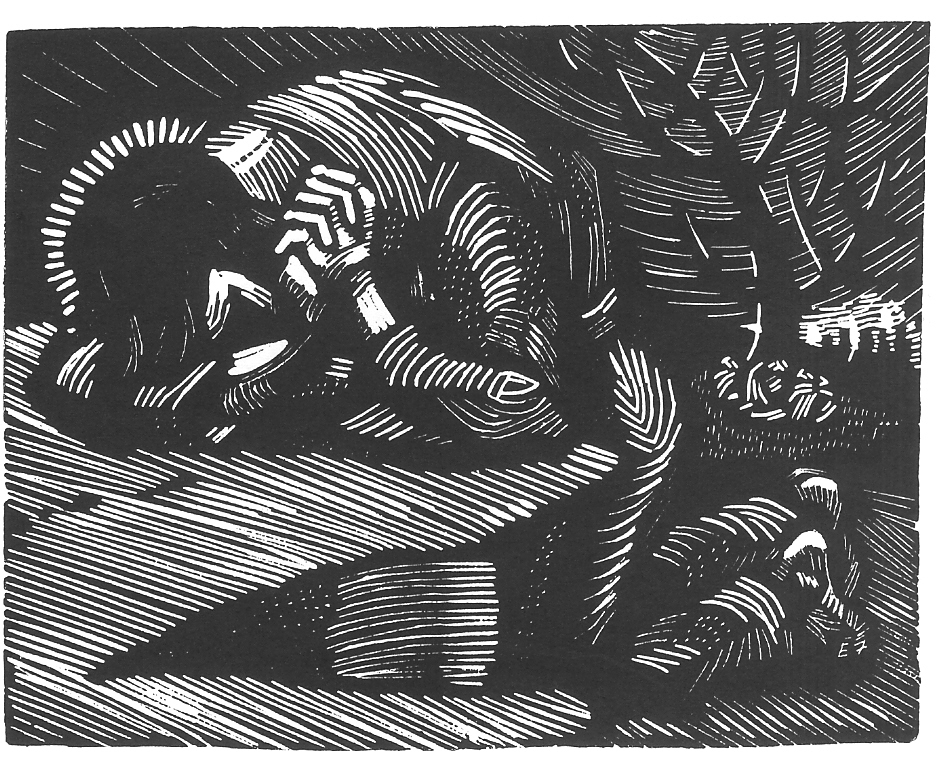
The more we pray, the more we discover prayer’s richness and power, and the more we hunger for it.  In its essence prayer is simply paying attention to God.  And that turning of the will to God, that choice to attend to God, is how we participate in making holy ground.

There is a temptation in the spiritual life to talk about praying, to read about it, to write about it, to attend workshops on it, to preach sermons about it, to feel guilty about not doing it, to build edifices where it is supposed to happen- anything but the scandalously simple, yet arduous task of doing it.  In contrast to our institutions of theological and religious education, the one thing the disciples asked Jesus to teach them was how to pray; and Jesus taught them by simply praying. “Here, do it like this,” he said.

So I am praying, turning my attention to God more intentionally and for longer periods of time with no particular result in mind beyond a simple open presence to the Holy One.  A good deal of this praying is happening on the land.  And when you stalk holiness in autumn in Kansas, you need a good pair of boots.

Crouched under the cedar in the rain, sloshing along the winding creek, following the deer trail up the gully, I try tocedar branch forget myself in prayer that I might remember who I really am.  I imagine hiking toward a place of being so self-forgotten in God that one needs nothing external to validate oneself.  Is it possible to follow the path to holy ground where the communion of prayer alone feeds and sustains us and the earth?

Perhaps our task is not so much making holy space in our lives, as becoming holy space ourselves. One way of becoming holy ground is to remember who we are.  And we are often quite convinced that we most certainly have been forgotten. That may be because we just can’t bear the wonder and joy of love.  Is that why Love stood before us that night before we killed Love and told us: “This bread is my body…this wine, a new promise sealed in my blood.  Don’t forget!”?

“Don’t forget,” Love said.  “I beg you not to forget.  For when you forget, you hang me back on the cross with your lies and self deception and fear and heedless stampede over my tender presence in all creation.”

communionStill we do forget.  Psychiatrist Gerald May writes that we often do not remember experiences of communion with God, because they are so threatening to our egos. The loss of self-definition characteristic of unitive experiences arouses unconscious fear. Wiping off the chalkboard of our spiritual experience, our officious ego scolds, “Let’s just forget this ever happened and go back to worshiping me as almighty in your life.”

 What might you need to remember?

 More next week…

 Gerald May in Will and Spirit (San Francisco: Harper & Row, 1987) Chapter 5.

Read more about prayer at
www.fromholyground.org

Contact Loretta at
lross@fromholyground.org, www.fbook.me/sanctuary

 Follow at http://twitter.com/lfross

Holy Spirit Contracting

 Demolition, Alterations, Renovations, Disaster Reconstruction

His delight is not in the strength of the horse,
nor his pleasure in the speed of a runner;
but the Lord takes pleasure in those who fear him,
in those who hope in his steadfast love.   Psalm 147: 10-11

j0432555I have been freaking out. Jesus is in my interior space and he is rearranging the furniture. He pushes a couch across the room. What! Are you going to put that over there? He opens a closet door and starts sorting through things I had hidden away. He is making piles of stuff to haul to the landfill and take to Good Will. Wait, Jesus! I might need that!  The place is a mess.  I hope nobody stops by unannounced.

Jesus doesn’t seem to mind the chaos he is making and pretty much ignores me. He pulls out something and holds it up. “Here take a look at this,” he says. Then I cringe, or weep, or shudder, or feel a tiny bit hopeful.

I asked for this. I prayed one of those reckless prayers which come upon us occasionally. Then I went and asked others to pray for me too. Really reckless. The prayer was to remove those things in me that blocked my receptivity to the Grace of God. What prompted the prayer was my need. You know – the frustration, weariness, sadness, loneliness, fear – it comes in many forms – that eats away at your peace and joy.

You start thinking, well if I could just get this thing changed, or add this or subtract that from Big Sale sign in red over white backgroundmy life – ah then I would feel so much better. As you know, this is the basic doctrine of The  Church of  Unholy Consumption, in which most of us are credit card carrying members. We get our daily devotions from TV commercials and the advertising that permeates every nook and cranny of our lives. We are reassured over and over that our problems may be solved by satisfying our desires. Figure out what you want and then go get it. You deserve it. Don’t know what you want? Well may we make a suggestion? We just got this new ratchet in today!

Of course we have desires and need to respect them and get them met appropriately. But desires may quickly become disordered and increasingly demanding. Ian Matthews (The Impact of God-Soundings from St. John of the Cross) writes, “When desire is out of order, it increasingly causes fatigue, anxiety, confusion, a sense of guilt, and finally an inability to do anything about it. It is a picture of addiction where the person’s dependence is killing him. … Disorder here, while it may bring gratification, ultimately kills joy.” (Page 41)

Jesus, no snake oil salesman of salvation, offers something radically different and – let’s be honest here – painful. John of the Cross writes about the process of deeper communion with Christ, “To come to what you know not, you must go by way of where you know not.”

To simply to be present to a need without having to blame someone, rush out and fill it, or feel ashamed is something people recovering from addictions understand very well. Iain Matthews continues: “Not filling the gap can feel like starving, but it allows the genuinely new to be disclosed. It allows one to live not as a consumer among objects, but as a person among persons fit for communion, for the love which can hold the other, and be held with open palms. That is the level of spirit: availability as a person for communion: the space for the gift of the Other. This is more than just a rearrangement of the pieces.” (pages 44-45)

Albert Einstein said, “No problem was ever solved by the same mind that created it.” Yet we think our problems will be resolved by a rearrangement of the pieces, that is, changing the organization of our lives, our relationships, our jobs, our life partners, our churches, our institutions. We think we can bring wholeness for ourselves by restructuring, redistribution, reimagining, and redesigning. We think strong horses and fast runners will solve our problems. Such thinking keeps us at the surface level and relying on ourselves – our intellect, creativity, and flexibility – for the answers. We refuse to tolerate the painful “gap” through which the genuinely new may be disclosed and Grace may emerge.

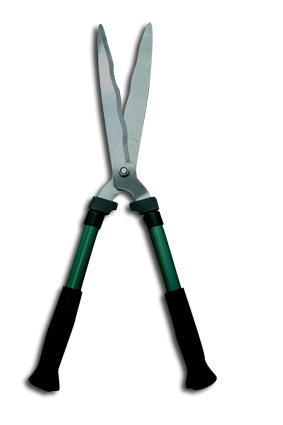
cyclone_hedgeshearwavyThere may come a time when you just get sick of it. You see the shallowness, the lack of freedom, the treadmill nature of operating our lives on the level of our senses. You are tired of watching the shadows of your ever shifting, ever insatiable surface desires. You may see a need for a deep down fundamental shift, a conversion of your heart. You may say, “Jesus, I want more than a rearrangement of the pieces. I want you.”

That’s Jesus’ cue. And he hops right to it. He sets to work, not on your external reality – the things you thought needed to be improved – but on reordering your desires themselves. He shifts your priorities, your values. He prunes runaway pride. He hacks out dead attitudes. He fires up a chainsaw and cuts away whole walls of rigid thinking. And friends, it is just as he told us. It feels terrible. It feels like you are dying, because you are.

Eugene Peterson paraphrases the verses from Psalm 147 above in this way: He’s not impressed with horsepower; the size of our muscles means little to him. Those who fear God, get God’s attention; they can depend on his strength. j0178928

Christ opens the gate on that pen of strong horses you had corralled and sets them free. He dismisses all the fast runners – the thinkers, the experts, the latest technologies. And you are left with your fear, your wonder, and your love for this God who cares enough about you to enter into you and create such a rumpus. There in the mess you untie your hope from your own efforts and strength and attach it to the strength of God. And little by little you begin to trust that something new and amazing is emerging, something which you could never think of or make happen in a thousand years.

Now tell me, who wouldn’t love a God like this?


More about prayer –
www.fromholyground.org

Contact Loretta –
lross@fromholyground.org, www.fbook.me/sanctuary

Follow on Twitter

What Is Truth?

 Butterscotch and Ahs Discuss Epistemology

In this time of crumbling institutions, conflict and rapid change, the question of what is truth emerges as we weigh in for and against various approaches to solving our problems. How do you express and live out truth as you know and experience it? How do you respond when your truth collides with someone else’s? What does Jesus mean when he says he is the truth?

Butterscotch, the golden rex rabbit, and Ahs, the collie, reclined in the shade under the pear tree. A gentle breeze lifted the hair on their necks. Butterscotch stretched her hind legs out behind her stubby tail. Ahs lay with his chin on the ground, nose close to her cage, eyes watchful. He heaved a long sigh.

Butterscotch 3“Stinky Dog, it is rude for you to drool like that when you look at me,” Butterscotch said. “Don’t think for a minute that I don’t notice how your jaw goes slack and you begin to salivate every time you see me. A prey species never has a moment’s rest. Which is why I say Jesus is getting a bad rap. Folks sniffing him up one side and down the other, running circles around him, chasing him into the brush, cornering him with their philosophies and theologies, poking him with their politics, trapping him in their minds – like he was some wild thing somebody wanted to make a hat or mittens out of.”

The dog sighed again. The rabbit pointedly rubbed her nose with her paw. Carnivores have terrible breath. “How do you know he doesn’t like it? Hasn’t even brought it all about?” asked the dog.

“Well, if you really knew him like I do, you’d see my point,” she sniffed.

The topic for the afternoon was epistemology – truth, and how you know what you know. Specifically, the two creatures were discussing the quest for the historical Jesus, the search by Biblical scholars to determine the historical reliability of the gospels. Their findings are seen by some as a frontal attack on Christianity.Ahs

Not that the rabbit put much store in two legged saviors. But she was able to recognize truth when she saw it. Ahs, on the other hand, slavishly worshiped two leggeds, followed them about, whined and begged to eat their food, and lie next to them. She knew for a fact that he let them pet him and never cleaned up afterward.

Since the pair could not read they hadn’t got as far as taking votes on whether Jesus really said and did the things that scripture claimed. Besides the sun was warm on their backs, the wind just right to waft the fragrance of honeysuckle their way, and neither believed the veracity of scriptural witness was the real issue.

068_le_christ_redempteur  14th CHow does one know what one knows? On what do we base our hope? On what authority does one make a claim? And just what does real mean anyway?  Butterscotch, like the blind man in John, rested her case on the indisputable facts of her experience. “Whether this man is a sinner or not, I do not know. One thing I know, that once I was blind, now I see!” Her reality was corroborated by the testimony of witnesses. Toad in the flower bed south of the house agreed that she was indeed a changed creature following some kind of encounter with this Jesus. Mourning Dove reported that the rabbit was more humble and compassionate.

Ahs, on the other hand, more faithful or more gullible, relied on the testimony of tradition and the dogma of the church. Yet each appreciated the limitations of his or her perspective. Neither the uncritical acceptance of systematic dogmatics, nor the subjective witness of the inner bunny could completely satisfy the inquiring mind. In the end the two were left with the disquieting notion that everything might be in the eye of the beholder, the universe a dream, and the two of them, snoozing under the pear tree, only the imagination of some mind greater than their own.

There is a bit of the scientist in every mystic, who sets out to test in his or her own life if Jesus Christ is really all he is cracked up to be. “Prove it,” he says to God. Here are all these promises: freedom, joy, abundance, peace, wholeness, justice, truth, and life eternal. “Show me,” says the mystic and sets out to experiment with divinity in the laboratory of her experience.

In the beginning God is the object of the search. At some point God may peremptorily rise out of the test tube and take over the experiment. I find myself being dissected. My soul is flayed open by truth.light and trees I am blinded by glaring light and toasted over a Bunsen burner, where my impurities are burned away and I am distilled into my essence. I am no longer in control of this process. The knower and the known have shifted places. And truth is not something I can find, but something that has me in its grasp.

Theologian Lesslie Newbigin observes, “Reason, even the most acutely critical reason cannot establish truth.” … [This is because] You cannot criticize a statement of what claims to be the truth except on the basis of some other truth-claim – which at the moment – you accept without criticism. But that truth-claim on which your critique is based must in turn be criticized. Any claim to know truth is, therefore, simply a concealed assertion of power.” 

The work of scientist Michael Polanyi reminds us that “all knowing involves the personal participation of the knower, that knowing always involves the risk of being wrong, and that the struggle to know calls for the fullest exercise of personal responsibility.”

Instead of seeking proofs of God from reason or experience, the contemplative finds fulfillment simply and humbly dwelling in love in God’s presence.  The contemplative gives God entry into the world, not through a claim of truth, but through a believing heart. Instead of an exercise of power through the assertion of my reality over yours via dazzling argument or feats of spiritual prowess, the contemplative takes the vulnerable route of allowing God to make God’s own appeal through the context of his or her surrendered life.

That’s how Jesus did it. He seems to me to be asking us to do the same.

Agony in the Garden

Excerpts from Letters from the Holy Ground – Seeing God Where You Are, Loretta Ross (-Gotta), Sheed & Ward, 2002, p 118-120.  Read more….

More about prayer –
www.fromholyground.org

Contact Loretta –
lross@fromholyground.org, www.fbook.me/sanctuary

Follow on Twitter

Solving Problems Elijah’s Way

Elijah and leaseI took my puppy, Elijah, for a walk to chew over something I had read by Nicolas Berdyaev. “There is something morally repulsive about modern activistic theories which deny contemplation and recognize nothing but struggle. For them, not a single moment has value in itself, but is only a means for what follows.”

Berdyaev was a Russian Christian philosopher who spent a lot of time in exile, first for criticizing the institutional church (Russian Orthodox), and then for not accepting the  Bolshevik government.

Contemplation as a “legitimate,” widely recognized means for understanding and finding resolution for the issues we face is largely denied or relegated to something one might do for a few minutes in the shower, or before drifting off to sleep. The prevailing images for our corporate approach to problems include struggle, battle, war, and exertion of power, control, or persuasion. Such approaches assume winners and losers, victories, and defeat. The struggle approach both creates and thrives on resistance.

Elijah, I am discovering, is a dog with a contemplative bent. He stops still in the middle of the quiet street, sits down, and looks at the house on our right. He looks at the roof, the yellow flag waving in the breeze, the rows of orange, magenta, white, and yellow mums. He looks at the front door with the flowered wreath. He watches a flock of starlings rise out of the oak tree and scatter across the blue sky.

I tug on the leash. “Elijah, come. Let’s go.” He, intent on his reflection, will not budge. He gazes at the windows. He tiElijah contemplatinglts his head and looks at the shrubs. He sniffs the air. “Elijah, come!” I have to write a blog, do bookkeeping, and clean off my desk. I want to cross off “take dog for walk” on my list and get on with things. He looks at me calmly, sighs, rises, and trots along.

Contemplation begins and ends with surrender, with saying I do not know the answer and with recognizing the truth that we all see truth from different perspectives – “through a glass darkly.”  It is sitting down in the middle of things and looking long and hard and sniffing the air. It is refusing to be dragged along by someone else’s agenda. Contemplation is the willingness to walk around an issue, nose, nudge it, and tilt one’s head in order to view reality deeply and truly.

Contemplation requires one to divest oneself from a particular outcome, to detach, let go and trust the Spirit working in the spaces we create by our self-emptying. Contemplation is not about being efficient and productive, nor does it promise quick resolution. Contemplation cannot be made to be a means to anybody’s end. Instead contemplation asks us to see ourselves and whatever dilemmas we face as subjects of the ends and purposes of One who is greater than we.

Pink zinniaBerdyaev makes another point about the denial of contemplation: “Not a single moment has value in itself, but only as a means for what follows.” When we seek to respond to the difficulties and problems we face from a contemplative stance we have a different perspective on time. A moment is not just the means to some greater end. A moment and all it contains has value in itself, for itself: A dog sitting in the street watching the man mow his lawn.  The gray cat sunning herself on the flowered bedspread. The hot pink zinnia licking up the light.  Such are some of the moments in this day free for the seeing and appreciating, each whole and holy in itself. Time is not given so we may accomplish our agendas, so that we can plow through the moments of our day gouging out what we figure we will need for the next moment. We are not given time in order to be ruthless strip miners of the ground of our being, carting off what we can sell or store up in barns or banks.

Elijah stops again. He gazes at the swings in the park, the slide and merry go round. He looks up at the tall pine trees with their thick drooping branches. I follow his gaze and see the branches riddled with slender yellow pods of young pine cones.

A shift occurs in us as we begin to comprehend and appreciate the infinite worth and endless wonder inherent in each moment of our existence. The pragmatic, narcissistic, restlessness which ruthlessly turns everything and everyone into a cog in its agenda of efficiency and accomplishment sits down on its haunches in the middle of everything and looks at what is so. At last it is quieted and stilled by the fullness of a larger Reality than itself.seal sunning

What riches we miss, when our heads are full of our own answers and solutions. What truth remains hidden in those unseen, unsavored moments, when the dog pauses, when the cat yawns, and when the yearning of your heart stops you in your tracks to feast on the beauty of your own precious life.

Elijah sends his love and is available for walks at the drop of a hat.

Elijah lease 2

More about prayer –
www.fromholyground.org

Contact Loretta –
lross@fromholyground.org, www.fbook.me/sanctuary

Follow on Twitter