Tag Archives: God

Exploring Solitude: Tomb Time

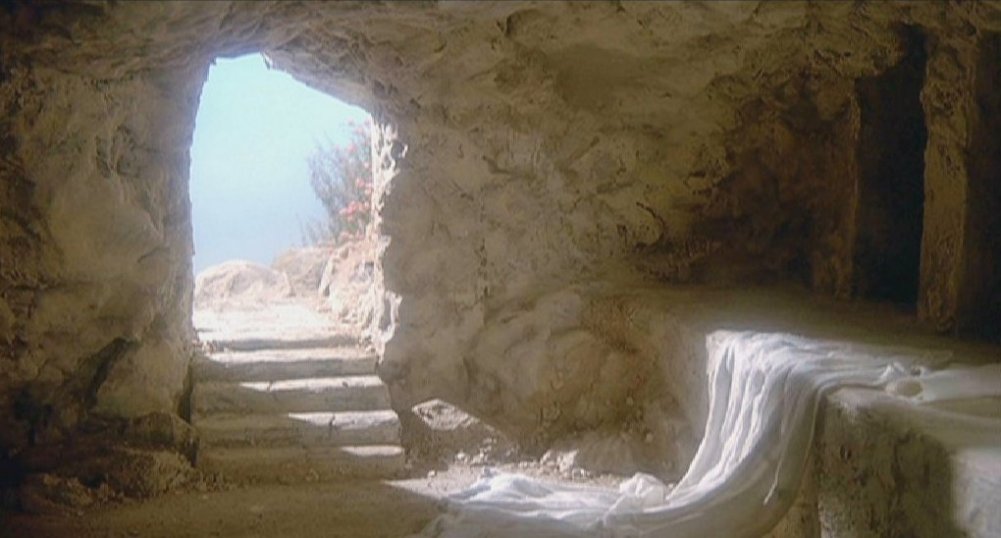
Something strange is happening – there is a great silence on earth today, a great silence and stillness. The whole earth keeps silence because the King is asleep. The earth trembled and is still, because God has fallen asleep in the flesh, and he has raised up all who have slept ever since the world began. God has died in the flesh and hell trembles with fear. 

 – from an ancient homily on Holy Saturday used in the monastic tradition


Holy Saturday

Holy Saturday is one of my favorite days of the church year. I want to savor the richness of this day, but our rush to Easter Vigils, Easter Sunrise Services, Easter Breakfasts, Easter Cantatas, Easter Dramas, and Easter Egg Hunts does not give one much opportunity to enter the soundless, solemn peace of Christ asleep. I want to halt the parade of Easter soirees to discover the grace of this moment in the story of saving Love.

Such a pause doesn’t seem to be in our nature.

Over ten years ago US News and World Report solicited readers’ answers to the question, “Does America have ADD?”  According to the article, “Since 1965, the average news sound bite has shrunk from 42 seconds to just 8. The average network TV ad has shrunk from 53 seconds to 25. Fifteen second ads are on the rise. Multi-tasking is in. Downtime is out.” Millions of children and quite a few adults have been diagnosed with attention deficit disorder, a brain imbalance that is thought to be the root of unusual hyperactivity, impulsivity, and poor concentration. Wired magazine calls ADD the “official brain syndrome of the information age.”

What does it take to sit us down, stop us in our tracks, and shut our mouths? When have you been brought to your knees and cast face down, prostrate, by some overwhelming mystery of suffering love? Have you been able to stop the frenzied round of your life’s demands without feeling guilty, lazy, or neglectful?

What is alarming to me about our culture’s distracted, harried quality is that, as I understand redemption, transforming love requires a lot of focus and concentrated effort. I really cannot participate with Christ in his death and resurrection, and simultaneously answer my E-mail, pick up the dry cleaning, plan supper, and listen to my teenager.  Not that any of these activities cannot hold saving power, but servants of transforming love need to be able to act with attentive one-pointed concentration, and a wholeness of mind, heart, and body that require our doing one thing at a time. What is implied in such loving attentiveness is that this task, this person here, now, is worthy of my entire attention. As I am able to set aside or die to other competing calls for my concern, greater love and healing may pour through me.

Rest

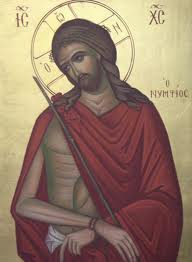
Tradition holds that after Jesus died on the cross, he went to preach to the souls in hell and retrieve Adam.

16th century Russian icon of the Descent into ...

I certainly hope not. Hadn’t he already done enough preaching, enough sacrificing?

I’d rather think he rested. After all it was the Sabbath. Surely his ministry and the hard saving labor of his passion and death had worn him out. What  wondrous grace then to be placed in a soundless chamber safe and secure from all alarm – not to mention, answering machines, faxes, cell phones and pagers.

Not all silence is the graced silence of Christ’s tomb. Silence is the expression of a multitude of experiences: embarrassed, sweaty-palmed pauses, numbed shock, dissociated trauma; dull tedious droning; the excruciating stillness of shunning, loneliness and betrayal; the thick pouting silence of blame and resentment; the angry choking silence of the oppressed; and the isolated silence of the deaf.

In contrast –

The silence of the grave has a solemn feel.
After great pain a formal feeling comes-
The nerves sit ceremonious like tombs, wrote Emily Dickinson.

The solemnity of Holy Saturday carries a weight that presses us down to the earth where we are no longer able to flit and flutter away from truth.

The flimsy props we use to hold ourselves upright slide to the ground and we along with them. Like sheets stretched across a sagging clothesline until the wet and windblown linens drape upon the earth, the weight of death drags us down, lays us down in a voluminous sweet surrender.

The Resurrection Power of Truth Telling

Truth is a friend of this silence. The silence of God reveals what is false, what words confuse, conceal, deny, or destroy. I love how Jesus just stands there when Pilate asks, “What is truth?”  Truth is right before us, standing in this present moment. Truth simply offers itself. It does not argue its case, defend itself, or plead. It just gives itself to us in love for those who have ears to hear, eyes to see, and hearts to know. As I embrace the truth of the present moment with love, the next moment is redeemed.

“The power of the kingdom is the spirit of the Risen Christ seen in the strength of truth as it continues to break through human limitation and sinwrites Jacqueline Bergan. The Risen Lord enters my world with his redeeming grace and power through the door made my truth telling. What truths have I entombed in silence? I meet the Risen Lord as I speak truth as best I can moment by moment.

Freedom

The silence of the tomb is full of freedom. One feels a releasing and relaxing throughout one’s whole being – like taking off your shoes, loosening your belt, slipping into comfortable old clothes. You are not in charge. You do not have to make things happen. You do not have to figure things out. This silence is the celebration and sanctification of being itself – your being.

So how do we get there- off the cross and into the tomb? How might we enter into such a silence and know its sweetness and its eternal freedom? I do not think we do a very good job of teaching ourselves how to surrender. We may move through lent and Eastertide watching and reflecting on Jesus who dies for our sins – trying to figure out just what it really means and what difference it makes, working up an appropriate attitude of contrition and sorrow – yet somehow distanced from it all.

Lent and Easter become a sort of mythic cardboard backdrop to our lives as unreal and one dimensional as a child’s drawing. What we may miss is that the paschal mystery played out before us in scripture, hymn, and ritual is simultaneously going on in our own lives and hearts. Jesus is dying and rising in the circumstances of your life. Knowing that, believing that transforms your every act, every thought into something holy with sacred potential to give new life.

So to what do we surrender? Evil, sin, death – a rabid crowd roaring for someone to crucify? We surrender to Love – to how Love is having its way with us in our lives – through the tedious, joyful, painful days of getting up in the morning, fixing breakfast, setting out to do what needs to be done. I know many saints who quietly surrender to love and love’s inscrutable purposes day after day, until spent with loving in the simplest, most unassuming ways they are drawn into Love itself.

Home

A freight train sounded its mournful whistle as it rattled past my father’s window at the nursing home. Sometimes a light behind his eyes would ignite and for the briefest second he remembered trains. Love had hallowed him out. He was getting ready to enter the final tomb. Every time I see a hawk I remember when he told me how he loved to lie in the fields as a boy and watch the hawks ride the currents of the wind.  My mother called the place where my father waited for God, the “rest home.” Its actual name is Pleasant Manor Care Center. We have modern names for these places – skilled nursing facilities, residential care, assisted living. I rather like rest home myself.

The tomb of Holy Saturday is a kind of rest home where we wait to be lifted into resurrection.

Go ahead.  Surrender to Love.  You have nothing to lose, but death.
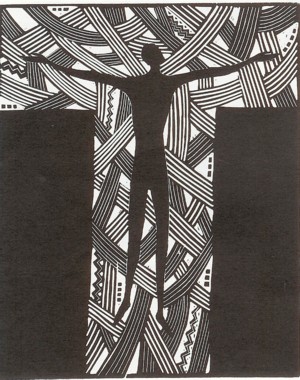
 

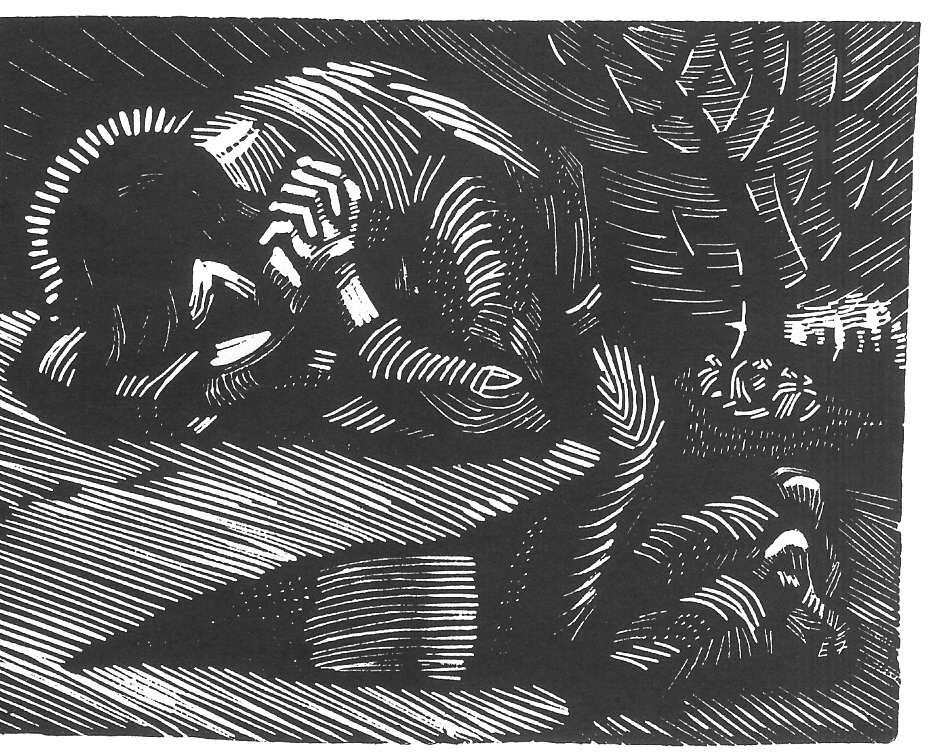
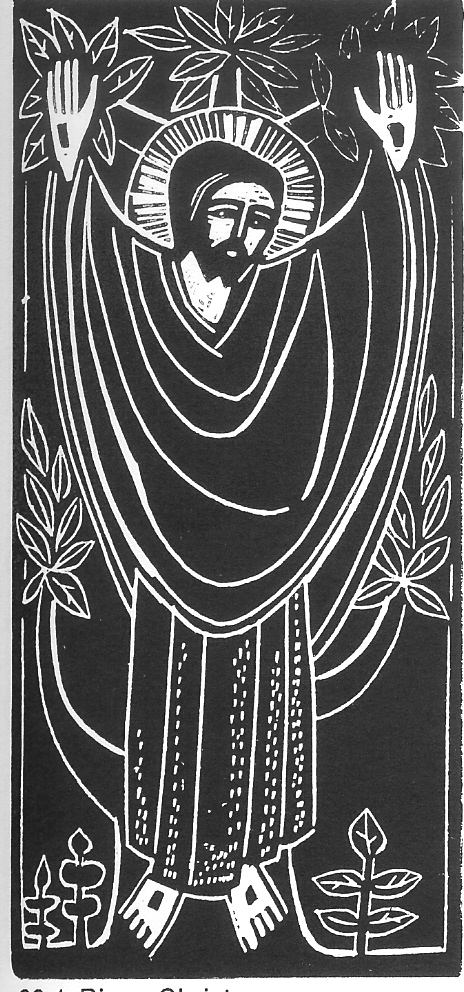
Images in this post are from Liturgical Art, Meinrad Craighead, 1998, Sheed & Ward

Solitude Practice:

  • Look around the tomb. What truths have you hidden away?
  • Do one thing today slowly, attentively, mindfully. Perhaps you prepare a meal, listen to a child, take a walk or a shower. Open yourself fully to the task with loving generosity. What do you learn?

Next post in this series –  Exploring Solitude:  Leaving solitude, gone to Galilee.

______________________________________

  Praying Life Readers,

I am leading a workshop this month here in Topeka. Hope to see you there!

Look and See: Nurturing a Shining, Festive Life of Prayer

Saturday, April 21, 2012
8:30-12:00
$20.00
First Congregational Church
1701 SW Collins, Topeka, KS  

www.embracethequestions.com

Please register early to assure a place by calling or emailing First Congregational UCC. 785-233-1786; info@embracethequestions.com


Exploring Solitude: Meeting the Crucified One

God is simplicity and one-foldedness,
inaccessible height and fathomless depth,
incomprehensible breadth and eternal length,
 a dim silence and a wild desert.

So wrote John of Ruysbroeck in the 14th century.

God is also a man, whose name is Jesus,

born in a middle eastern city,

of a woman named Mary.

Firmly anchored in time and space,

he walked the paths of Nazareth,

ate,  and laughed,  and loved.

God is also this same man,

now beaten,  bleeding,  and dying,

executed on a cross.

For in Jesus

the Inaccessible Height and Fathomless Depth

had inserted

itself into

the messy specificity and limitation

of humanity,

and consented

to occupy

suffering,

injustice,

cruelty,

fear,

defeat,

and death.

So now,  all that suffers,  loses,  messes up,  and bleeds finds welcome in that dim silence and wild desert of the cross.  All that is lost or broken is gathered and folded into the height and depth and breadth and length of God. Every precious particle of God’s making  is held with infinite tenderness in the simplicity of love.

There are moments,  days,  even years for some,  where the work of solitude involves suffering.  Alone with God,  we are presented with painful truths. We are refined and purified.  We gradually learn to be present to God,  not on our terms,  but on God’s terms in the context of our own specificity.

This is the work of letting go and letting be. This is the journey of ever deepening faith and radical trust. This is the door that sets us loose to roam forever free.

During the observance of Holy Week,  the specificity of God made known in Jesus,  enters into the lonely anguish of surrender to the terms of his Father.  The one who has been surrounded by crowds and encircled by his chosen disciples,  makes the solitary journey into death to return to the heart of all being.

We find an account of this journey in the gospel of Mark.  Mark’s gospel is characterized by a simple,  direct,  unpretentious style.  The gospel has an urgency about it.  Mark’s  frequent use of the dramatic present tense contributes to the immediacy.  The emphasis is on the action – the deeds and words of Jesus – as he confronts and responds to the religious establishment,  the disciples,  and the crowds.  This action moves compellingly to the crucifixion.  The story unfolds in a hurry,  as though the very presence of Jesus has set in motion forces which lead inevitably to the cross.

Then at the cross,  in striking contrast to the preceding scenes,  Jesus becomes the receiver of the action in total surrender.  The syntax changes from active voice to passive voice,  as the Greek word,  paradidomai,  appears more and more frequently.  Paradidomai means handed over,  or to give into the hands of another,  to be given up to custody,  to be condemned,  to deliver up treacherously by betrayal.  This is the same word the gospels,  as well as St. Paul, use repeatedly to describe the crucifixion.

As the resurrected Jesus tells Peter on the lake shore,  there comes a time when we will be carried where we do not wish to go. (John 21: 18)  Then we find ourselves being handed over to our life circumstances,  the limits,  sins, injustices,  and frailties of human existence.

At the cross in Jesus the Limitless,  Inaccessible,  Unfathomable God makes things very plain, very simple:

Watch me. Trust me. Do it like this. All is forgiven. Surrender. Allow yourself to be carried into darkness. There is a place beyond your knowing or naming, where I am and you are. Follow me.

All transformation,  all redemption require moments such as these:

the passivity of the seed buried in the earth,

the passion of love poured out to the last dregs for the beloved,

the prostration of oneself in the dim silence and wild desert,

where all things are born anew.

The moral revival that certain people wish to impose will be much worse than the condition it is meant to cure.  If our present suffering ever leads to revival, this will not be brought about through slogans, but in silence and moral loneliness, through pain, misery and terror, in the profoundest depths of each person’s  spirit.      Simone Weil


Solitude Practice:

  • What do you need to surrender, let go of, or let be this week?
  • Not all, but much of our suffering may be tied to our defiant resistance to letting go and refusal to accept the suffering of self denial. Do you agree with Simone Weil that broad social change could be gained, not by imposition of morality, but through the struggle in the depths of individual souls?
  • What is it like for you to shift from being the prime mover and actor in your life story, to becoming the receiver of the action of others? How might God be handing you over this Holy Week?
  • Is there a relationship between your consent to being carried where you do not wish to go and experiences of healing and redemption in your life?

Next post in this series –  Exploring Solitude:  Leaving solitude, gone to Galilee.

______________________________________

 News for Praying Life Readers!

I am leading a workshop in April here in Topeka, KS. Hope to see some of you there!

Look and See: Nurturing a Shining, Festive Life of Prayer

Saturday, April 21, 2012
8:30-12:00
$20.00
First Congregational Church
1701 SW Collins, Topeka, KS  

Please register early to assure a place by calling or emailing First Congregational UCC. 785-233-1786; info@embracethequestions.com
 

Exploring Solitude: The Wild Things Within

He said to the disciples, “Stay here while I go and pray over there.” When he took Peter and Zebedee’s two sons, he began to feel sad and anxious. Then he said to them, “I’m very sad. It’s as if I’m dying. Stay here and keep alert with me.” Then he went a short distance farther and fell on his face and prayed . .              Matthew 26: 36- 38 (CEV)


The season of lent invites us into wilderness solitude to encounter the wild things and places within us.  In a world of extraversion, solitude allows space for introspection and encounters with untamed and little known parts of ourselves.

On her way out of church one Sunday morning, a member told me a story about her granddaughter, who had come with her that day. My custom is to invite the congregation to a period of silent prayer before I offer the pastoral prayer. At the conclusion of my prayer, five year old Lindy whispered to her grandma, “Loretta took so long before she started praying, that I had to start praying for people I didn’t even like.”

Yes. Silence does that to us, doesn’t it? It brings us to the end of the list of our own needs and concerns and opens out our prayerful awareness of people and inner realities, which we do not even like. Many avoid solitude for this reason. When I stop doing, accomplishing, distracting, and numbing myself with various opiates, I am left with my wounds, enemies, and alienation. The wilderness of the self opens before us and we reach for the phone, turn on the television, or pour ourselves a glass of wine. 

He came back to the disciples and found them sleeping. He said to Peter, “Couldn’t you stay alert one hour with me? Stay alert and pray so that you won’t give in to temptation. The spirit is eager, but the flesh is weak.” Matthew 26: 40-41 (CEV)

The work of solitude includes the slow, patient task of befriending the darkness, of being present with compassion to my inner wildness, and of staying awake one hour with ourselves in our misery, as Jesus asked his disciples to do for him.

The followers of Jesus were unable to offer him such companionship. It is likewise very difficult for us to offer ourselves such gentle, present love. Yet if one can manage it, if only for a few minutes, that ache, that knife in the heart, the sick all encompassing grief  will begin to lessen just a bit, and a peace will slowly seep into the space of your silence.

This is where the deep work of contemplative transformation begins. The pleasant, consoling moments of contemplative prayer are important to our growth and infect us with the love of God. Sometimes they arrive unbidden, unexpected as sheer gifts. Other times we enter deeper communion with God through the ongoing practice of contemplation in some form: centering prayer, lectio divina, prayer of quiet, meditation.

Several years ago a friend confessed to me, “I am so over spiritual “disciplines.” She had reached a point beyond practicing prayer, because she wanted something from God, or because she ought to, or because it was interesting, or helpful to her daily life. Prayer for her was becoming much more demanding than a nice idea or exercise in personal improvement.

Thomas Merton wrote, “True prayer and love are learned in the hour when prayer becomes intolerable and the heart has turned to stone.” The deeper work begins when silence and solitude may be the last thing we want and the only thing we cannot live without. When just sitting still reveals to us a pervasive sadness, or the reality of a loss or truth we are denying or running from, silence is not some syrupy, cozy me-and-Jesus picnic. Silence is a summons to face into who I am and who God is becoming for me in a perilous confrontation with the truths of my life and who God will or will not be for me.

Again he came and found them sleeping.
Their eyes were heavy with sleep.
But he left them and again went
and prayed the same words for the third time.
Matthew 26: 43-44 (CEV)

Yet it is here – when facing fear, betrayal, or deep sorrow– that the encompassing and spreading love of God begins to open within us with its healing balm. Sometimes we need a companion to help us, as Jesus asked for from his friends in his hour of need. We may need to enter the silence in small doses at first. Tiny little sips of God may be all we can manage. Gradually that contact with God will begin to soothe our souls and bring a peace that will exceed our understanding.

It may not seem like much, this tiny bite of calm. You are still in your wilderness, up against a wall, facing an impasse, with little hope. Yet you keep going back for little sips of silence, as quiet fills you and you surrender to the moment.

My Forty Days in the Wilderness
One autumn over twenty years ago I spent forty days in the wilderness. I was sick and doctors were unable to diagnose or treat whatever was causing the unrelenting headaches and fatigue. Weary of the tests and drugs, I went off alone each day and several nights. I did not watch television, use the computer, talk on the phone, read mail or much of anything, except scripture. My only human interaction was with my immediate family.

Day after day and into the night I waited for that little sip of calm, that spark of life and hope. I learned to tend the spark, gather kindling, shavings, combustible scraps of living goodness: birdsong, the quail feeding along the lakeshore, the way a spider walked up the side of my tea cup. These and the stars over my head began to fuel the flame, which grew and illuminated the way for me.

Here is some of what happened as I tell it in my book, Letters from the Holy Ground:

I came to the wilderness in part because I heard Jesus crying and saying he was lonely for us.  I came out of a growing sense of God’s hunger and need for us and for one who would stay with him one hour.  I came to discover how it would be to delight in and enjoy God for God, and not for what God could do for me or the world.

And I found along with my brother, Simon Peter,  that the spirit is willing, but the flesh is weak.  And to pray with Christ is more difficult than praying to Christ.

Are there some among us who are willing to watch with Christ one hour? Are there some willing to turn in radical trust toward God and away from the forces within and without that seek to deny Christ?

Is there one willing to pay the cost of staying one hour, of tasting and knowing God’s suffering in her bones, of being bereft of all mortal assistance, of contending with a near constant onslaught of devils, of serving as a bridge between heaven and earth and thereby, bearing in his body, mind, and psyche on the one hand, the immaculate tenderness and the surging ferocity of Divine Love; and on the other hand, the immense ocean of mortal sorrow?

Like Peter, I couldn’t do it. For along with my good intentions I brought my weariness and poverty and dependence on God’s mercy.  And my eyes grew heavy and I slept.

But God slept too.  Christ rested too.  For Christ brought to the wilderness the same as I:  weariness and poverty and dependence on my mercy.  And so like two homeless children huddled in an alley, like two lovers entwined, we slept while the owl hooted and the bullfrogs boomed and the little grey mouse nibbled bread in the corner.

In the wilderness of solitude our suffering becomes bound up with, informed by, and transformed by the suffering of Jesus in his solitude.

By such fierce mercy and vulnerable love are we redeemed.


Solitude Practice:

  •  Have you had the experience of hurting too much to pray? Or have you avoided praying because you do not want to be still long enough to start feeling your pain?

  • What are some of the ways you distract yourself from entering silence and solitude?

  •  Have you found that place of peace in the midst of your chaos and suffering? How do you describe that experience? What would you tell someone who has never been there and is afraid to be alone in seeking it?

  •  Take some time today to be still and alone. Be with yourself with all the gentleness and love you can muster. Be with yourself as you would want to be with Jesus in his suffering. What do you notice or learn?

Next post in this series:
Exploring Solitude: Deadly Acedia, or Too Bored to Care 

I would love to hear about your experience of silence and facing the wild things within yourself, what you have learned, what helped ease your suffering and what did not. We offer our companionship to others as we tell our stories. You may comment below, on our Facebook Page, or email me at lross@fromholyground.org

Where Miracles Occur

Bristlecone Pines, California

The tension in my shoulders is melting. The tightness and ache in my jaw and throat are releasing. The constant, exhausting, mental jabber is growing silent.  The resolute soldiering on, pushing forward without awareness, without seeing anything, but a goal which constantly recedes over the horizon, is giving way to being    here      now.

The tunnel vision squint and laser focus are opening and broadening to a wide spacious plain that keeps revealing more and more. Reality unfolds like an undulating wave continuously turning up complexities, beauties, grace, and both harsh and comforting aspects of what is really going on.

I have been decelerating and decompressing over the past several weeks.  This process is not over, for it is the work of a lifetime. I need more time to shed the brain debris and external and internal clutter. I need to continue to tame the habit of acceleration, and restrain my inner harpy, that merciless harridan of self aggrandizement.

Though I have tried to practice and teach this for years, I feel like a rank beginner. And, as is the way of the Spirit, I am being shown how far I have to go. I am watching my many-faceted resistance, as I begin the slow, groaning, screeching grind to a halt. For ironically, in order to go further on this journey, I have to stop.

Sabbath means, literally, to stop. I am aiming for a Sabbath life, a life lived contemplatively, steeped in the awareness of the presence of the Holy, which initiates, and infuses my work and play. I like the broader definition of Sabbath, which Donna Schaper offers:

Sabbath sense is anything that makes spacious what is cramped. That makes large out of small, simple out of complex, choice out of obligation. Sabbath sense is anything that reconnects the necessities of drudgery to the marvelous uselessness of beauty. Sabbath sense is acknowledgment of the presence of Spirit in the petty and the profound.

In this time of beginning and transition, of halting and rest, I have discovered a different kind of urgency, than the urgency of schedule, production, and accomplishment. This is the urgency of a compass, a magnet, an urgency so primal it is like breath itself. This is the urgent love of the Maker of All honing into each particle of creation, boring into us and drawing us inexorably to itself.

"Tarfala Valley"

I have always been attracted to sparse, barren, open spaces – the high alpine tundra, and the edges of the tree line. There for over five thousand years the bent and twisted Bristlecone Pines dance their gnarled tango with the howling storms and eye the prize for the oldest continuous living residents on this planet. I look at maps for the wind-scoured boulder fields, the isolated islands, and the endless expanse of ice sheets at the poles. These places both fascinate, and frighten the wits out of me.

In a lovely blog, Being Poetry, I came across this quote from poet William Stafford:

Each poem is a miracle that has been invited to happen. I must be willingly fallible in order to deserve a place in the realm where miracles occur. 


Stafford, pacifist and formed in The Church of the Brethren, grew up in the semi arid high plains of western Kansas. He was also formed by those windswept plains, where you can see for miles. In these recent weeks I have been unwillingly confronted with my fallibility, my utter inability to live and be all that I desire. I hear Stafford advising, “Forget about overcoming anything. Embrace it all and live honestly from it.”

So I am heading out to the edges of my infallibility, that terrifying point where I and all I can think and do and figure out and hum to myself ends, and God begins.

Today I say that to live a life of prayer, I must go out to the edges of myself and my security. I must go beyond my ego to the outer banks, to my own fallibility, where the edges of the sea of God wash over my toes and beg me to fling myself into that deep Immensity.

I do not want to be safe. I do not want any part of a faith or a God or a religion that is safe. I want to stand in the barren field of the world, strewn with boulders, with only our wounds and fallibility, and without a prayer, a blog, a book, or a penny in my pocket, but the brooding mercy of God.

It is not a comfortable, quiet life of ease that God is calling me to, here in my retirement. It is to a life of surrendered love, where my meat and drink, and every breath are drawn from the grace of God. I am fearfully and gratefully being towed through fallibility to a place in the realm where miracles occur.

You come too.

English: Bristlecone Pines on a spur ridge bel...

Re-tired: Embracing the Call to Solitude

I need to be still for a while.

I need to savor and integrate a month of bounty, a year of gratitude.

I need to listen long

to the captivating resonance of relationships,

that singing bowl of community.

A Japanese rin marks the beginning of moments ...

I recently made a big change in my life and how I will spend my hours in the coming years. I retired. When I hear this word, retire, I see myself driving my car over to the repair shop and saying, “Hoist me up, Mike, and put on some Michelin Pilot Sport Pluses all around this dune buggy. I need something sturdy that will hold me to the road in all weather. Mike, my man, I got places to go and things to see.”


As the old year closed I said goodbye to a community I served for over twelve years and began my retirement from traditional parish ministry. The Sanctuary Foundation, which I founded over twenty years ago, will continue. In the coming year I will offer spiritual guidance, teach a little, and finish a new book.


Most importantly, I will practice what I have preached. I will allow the stillness to feed the hunger of my heart, and offer my life with greater integrity to what I feel most deeply called and what the church, regardless of all its good intentions, seems least able to support.


Mind you, I do not leave parish ministry burned out, beaten down, or resentful as some do. This may be because I worked part-time. I also did not carry the same responsibility, which a head of staff carries. And I continued my long established practice of taking a day a week for solitude and prayer through those twelve years. Besides, even though they work hard and balance multiple tasks and responsibilities, clergy continue to show statistically that they are among the happiest professionals. 


I continue to believe in the church, which is to say, that I believe in the wonder of people stepping out of their daily lives to come together to sing, and to lift their hearts and minds to something beyond their own manipulation and control. I believe in the miracle of people, who seek to love, forgive, and work together in spite of their differences. I believe in the Power that inspires their faith and surrender to One kinder and wiser than they. I believe in the Grace which meets us in vulnerability, admitting failures, and in opening our lives to the scrutiny of a loving God. I believe in the Compassion that leads people to acts of justice and mercy and the Love that empowers them to lay down their lives for each other.


In this sense church is a singular, unique mystery, which has grasped the human species. It startles the wits out of me every time I walk into or stumble upon such church in one of its many manifestations.


To leave parish ministry and my particular community of faith felt like parts of my heart were being pulled out by the roots. So deep was the love we shared and the goodness of God in our midst.


So why leave? Over the past thirty years of my service to the church I have found the traditional forms of ministry, as much as I have loved the work, have always seemed to require a compromise of what I hold most deeply – a life lived prayerfully, mindfully, steeped in the substance of the living God. Too often the church seemed to ask me to live more of the world, than in the world. The church, like each of us, is deeply influenced and captive to the values, practices, and gods of a secular culture. I find it very difficult to stand against that tide of endless production, pragmatism, and focus on self and survival.


Instead of becoming of the world, Paul calls the church to a transformation of its mind, its self understanding as it exists in the world.

Don’t become so well-adjusted to your culture that you fit into it without even thinking. Instead, fix your attention on God. You’ll be changed from the inside out. Readily recognize what he wants from you, and quickly respond to it. Unlike the culture around you, always dragging you down to its level of immaturity, God brings the best out of you, develops well-formed maturity in you. Romans 12: 2 The Message

I never fit in. My personal tension with the church is not because the church has failed. It is a because I am a monk, albeit a gregarious one. Monk, which means solitary is in direct conflict with church and its sense of gathering. And there’s the rub and the glory.  Service, whether in the hermitage or in the pulpit, on one’s knees or at the bedside of a suffering soul, listening to the pain of the poor or raising money for mission,  always requires a death, a sacrifice of some desire or another. I do not blame the church for this, but, rather, the church has educated and purified me through the very conflicts which tried and tempered my soul.


I, alone, am responsible for following the call of God in my life. I am grateful to my denomination, Presbyterian Church(USA), those intelligent, imaginative, decent and orderly ones, and the Presbytery of Northern Kansas  for making space for their solitary, monkish sister. Now at the end of her service and the beginning of her honorable retirement, she will embrace what called her out of darkness and back to the church thirty three years ago, in a way more congruent with her heart’s deepest desires.


So as you can see, I have some things to mull over. I need time to downshift and decelerate as I make for myself a life more congruent with the word of God as it sings in my heart and speaks to me in the ancient texts. Besides I have a big pile of thank you notes to write, and I need to get over to Mike’s and get those new tires.


I will take a couple weeks off from writing The Praying Life. And I will be back  before you know it. In the meantime I will post occasional thoughts and links here and on the 
Sanctuary Foundation Facebook page.

Holy God,
in your will is our peace.
In this moment is your will.
Here, now.

Let’s hit the road.


With deep love and gratitude to The Reverends Paul Waters, Ron Schultz and Rob Winger and the members and friends of Crestview UMC in Topeka, Kansas.

Dear Reader, I am interested in hearing from you. What do you need? How might this blog speak more directly to the hunger of your heart in the coming year? Email your ideas, questions, and suggestions here , or comment below.

I am looking forward to the journey ahead!

When Hope Fails – Redux

Hope is what gets a lot of people through the Christmas season. And the failure of hope is what leaves some souls shipwrecked on the treacherous rocks of the sin and imperfection of this world.

What is it for you this year? Death of a loved one? Spouse in Afghanistan? Unemployed? House foreclosed? Cancer?

Hope is the presentiment that the imagination is more real, and reality less real, than we had thought. It is the sensation that the last word does not belong to the brutality of facts with their oppression and repression.  It is the suspicion that reality is far more complex than realism would have us believe, that the frontiers of the possible are not determined by the limits of the present, and that miraculously and surprisingly, life is readying the creative event that will open the way to freedom and resurrection.           Rubem Alves
 

She was fourteen. She sat next to me as we drove home after the Christmas Eve service. Lights sparkled from distant homes across the snow-covered fields. Shattered with pain and trying not to show it, I tried to focus on driving. After a while she spoke out of the darkness, “Mom, things aren’t ever going to be the same, are they?”

That year, our family had been struck by a blow from which we would never fully recover. In spite of  brave efforts, prayer, and sacrifice we could not put back together what was broken and, perhaps, fatally flawed.

During that season of suffering, hope became nearly eclipsed by fear, anger, shame, and pain. Each evening I turned briefly from my grief in defiance of “the brutality of facts with their oppression and repression,” and lit a candle for hope. Even though I felt no hope, I let the candle hold my hope for hope.

In those days I clung to the verse of scripture the minister preached at our wedding. Remember thy word to thy servant in which thou hast made me hope. This is my comfort in my affliction, that thy word gives me life. Psalm 119: 49-50

What an odd text for a wedding, you may think. Yet as the years unfolded it became more and more meaningful. I prayed it, holding God accountable to the goodness promised to me in scripture and whispered to my soul. God’s promise of joy, peace, and love comforted me and gave me the ability to keep breathing in my affliction.

Carmelite writer Constance Fitzgerald writes about the movement in our spiritual journey from “naïve hope to theological hope.”

Through experiences of loss and suffering, naïve hope in a Santa Claus god and other illusions nurtured by our egos and culture give way to a different, richer kind of hope.

We let go of placing our hope in our own efforts, our own goodness, our own “luck” or worthiness. We let go of our “right” to ourselves and our way. Or perhaps it is more accurate to say, we numbly watch our way wrenched from our grasp. We face our helplessness and the truth that we are not in control. Hope in oneself and one’s little plans and projects dies on the cross of our life experience.

It is there in that stillness of a drive back home on the worst Christmas Eve in one’s life, while a child’s heartbreaking question hangs in the air, that hope in God is born.

You may miss it at first, especially if the pain is choking you.
But refuse to let the last word be the brutality of facts.
Go ahead and light that tiny candle.
Defy the darkness.
And pay attention.
A baby is on its way.
Something fragile and new and unimaginably sweet
is making its way into your consciousness.

I tell my daughter, “Yes, honey, things will not be the same. But I believe somehow or other, things will be all right.”

And they were.


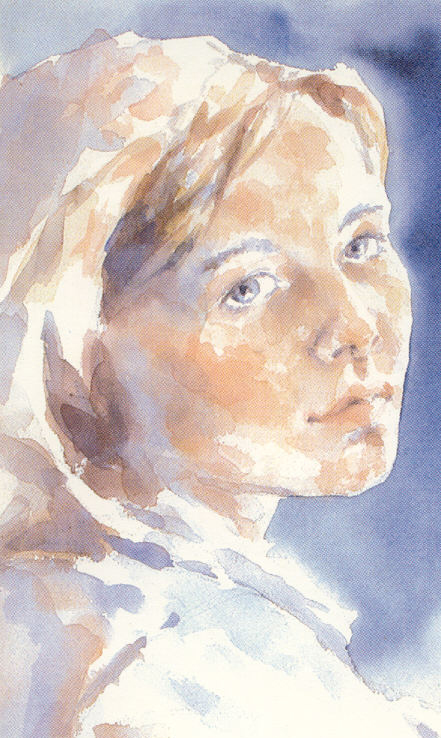
Special thanks to artist Anne Emmons for her permission to use “Hope” in this blog. You can reach Anne at anneemmons_8@msn.com or on Facebook.

Here is Anne’s story about this painting:  I was trying to think of one moment in the Biblical narrative which captures the theme of hope.  Each year I have made a new image for Christmas since 1997, and in 2000, I was struck by the idea of hope as the source of light. The images in this series reflect the thought that Christ came, the Light of the world, into darkness. So I was thinking about one single moment in the story and I realized the moment Mary heard the announcement from the Archangel Gabriel must be the moment hope found a form, in her face. At the time, my daughter was almost 14, the estimated age of the Virgin Mary, and I suddenly connected with the story in a particular way. I kept her home from school that morning to have her sit for the painting. What struck me, and this has since been confirmed from other sources, most recently Anthony Bloom’s book, Beginning to Pray, was that the Incarnation was possible only through God’s will in union with the “yes” of the young Mary, who became the bearer of the Uncontainable God. Just after I painted this I saw the Pontormo Annuciation in a small side chapel in Florence, and Mary had the same sort of look of wonder I tried to catch.  Now my daughter Claire has a two year old son, Theodore. She is a single mother who said yes to the birth of this child, whose name she chose, not knowing it means “gift of God.”

This is a previously published post (December 2009)  with some light editing.

Empty Pockets and Trust in God

The way I see it, a mystic takes a peek at God and then does her best to show the rest of us what she saw.  She’ll use image-language, not discourse. Giving an image is the giving of gold, the biggest thing she’s got… Hurling and wielding the best stuff she can imagine, insisting on an unmediated Way of Wakefulness,…she agrees to the quiet morning hour in front of God in exchange for a bit of revelation.  She doesn’t ditch tradition as much as take it for its word and peer inside its cavernous shell.  There must still be something worth saying. There must still be something worth pointing to.
 -Jessie Harriman in God Laughs and Plays by David James Duncan

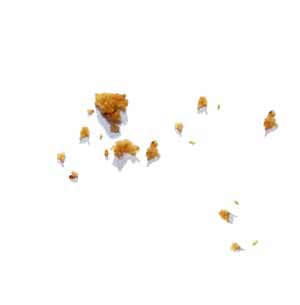
 I greet you with my pockets turned inside out, holding out a few crumbs I picked from the seam.

Most every time I write this blog, I write from such a place of intellectual and spiritual poverty, that I feel like I am scraping gum off the sidewalk to offer you.

Oh, I have plenty of previously written material. Some of it you might like or find useful. I also seem to have an endless supply of ideas, opinions, and questions we could take up together here. However the longer I sit in that quiet morning hour waiting for a bit of revelation, the more stale and the less true all my previous thinking and posturing appear to be.

Something in me insists on peering into the Mystery anew each time I write. This is both an irresistible delight and a harrowing encounter with my own empty pockets.

I haul myself and the collected wear and tear of personal and world events before the throne of Great Stillness. There I reach out beyond my limits and press my palm in the face of Mystery and say, “Here. Here. Put it here.”

Then I wait.

In that waiting there is only the ache of love – nameless, infinite, ever beyond my control.

“Trust” was the word I found in my palm this week. Trust? That old thing? How many times does this word turn up in scripture and in the words we say to each other? How about something new, fresh, maybe a little edgier? 

Thousands of children with stick legs and arms are dying in the horn of Africa. A young man just nineteen years old came home to the little town up the road, where he was buried with military honors. Global markets, drunk on anxiety, dip and sway, fall and crawl up again. Politicians argue. A self-styled prophet of God goes to prison for doing unspeakable things to little girls.

Holy One, the world is going to hell in a hand basket and all you can offer is trust?

Trust in the Lord with all your heart, 
And lean not on your own understanding; 
In all your ways acknowledge Him, 
And He shall direct   your paths.
Do not be wise in your own eyes; 
Fear the Lord and depart from evil.
It will be health to your flesh,
And strength to your bones.
         Proverbs 3:5-8, New King James Version

So – help yourself these crumbs:


Trust in what you cannot fully know or name or understand, or write about.

Trust in the enduring love in your heart that weeps with compassion and yearns for justice and struggles
to know what to do in these challenging times. 

Trust in your conviction that God will not be defeated by the evil and sin of humans.

Trust that Someone is afoot, knitting together the broken bones of Christ’s body.

And most amazing of all:

Trust that our trust and faith are the salve,

which heals all wounds.


And he could do no miracle there except he laid hands
on a few sick people and healed them.
And he wondered at their unbelief. Mark 6:5-6

God and the Salad Luncheon

In the spring of the year in small towns in Kansas ladies often gather in church basements for their annual salad luncheon. This event summons forth the culinary creativity of the local community. Here you may find things done to beets and broccoli, which no respectable vegetable or fruit would ever dream of. Featured ingredients of these marvels include Jell-O, cool whip, Eagle brand condensed milk, and cherry pie filling.

The salads, spread out over several tables, accented with canning jars of lilacs, are something to behold, maybe, for some, even to kneel before. Chicken salad, cucumber salad, pasta salad, bean salad, and seven layered pea salad are served in big bowls and platters. Rainbow colored Jell-O salads hold bits of carrots, celery, fruit and nuts under layers of cream cheese and shredded cabbage.

After the meal, the women clear the tables, refill the glasses of ice tea, and settle back to listen to the guest speaker from out of town.

On one of these occasions over twenty five years ago I was that out of town guest speaker. This fact alone made me an expert on something which these women already knew plenty about: prayer.

So this is how I came to be finishing up my cranberry fluff salad, as my hostess was introducing me. I began to pray, as was my custom, “Lord, what do you want me to tell the people?” This was the prayer I often prayed as I prepared sermons and presentations. Though this prayer was part of my preparation long before my actual presentation, I would check in with God just before I began speaking in case there were any updates.

After I prayed, what I had always heard in the silence of my heart was, “Tell the people that I love them.” Okay, I would think. I can roll with this. Over the years, God was very consistent in the direction: “Here’s the word, sweetie, tell the little boogers I love em. They still need to hear it.”

So it was, that as my hostess was reading off my credentials to the ladies and I was wiping the crumbs from my mouth, I asked my question, what do you want me to tell the people?

And God said:

Tell the people that I miss them.

This post marks the one hundredth post of the Praying Life Blog. Over the past two years, I have been attempting to tell you this in various ways. This post gives it to you straight:

God misses you. God longs for you, pines for you, walks the floor at night for you. God throws himself down on the ground weeping for you. God slumps on the couch, drowning his sorrow, eating three cartons of Haagen-Dazs rocky road ice cream for you.

God misses you.

A whole lot.

This is what you must write to the angel of the church in Ephesus:

I am the one who holds the seven stars in my right hand, and I walk among the seven gold lamp stands. Listen to what I say.

I know everything you have done, including your hard work and how you have endured. I know you won’t put up with anyone who is evil. When some people pretended to be apostles, you tested them and found out that they were liars. You have endured and gone through hard times because of me, and you have not given up.

But I do have something against you!

And it is this:

You don’t have as much love as you used to.                                                Revelation 2: 1-4

A Spare, Bare Love

Spring is coming, maybe. A man, whom much of the world will declare is God, is making his way inexorably to death. He is going to do that ordinary thing people do everyday: he is going to suffer and die.

What makes this different is that it is God, who is doing it, and God overcomes the sting of it all by being God, by being One who attains victory, not by escaping evil or by beating it to a pulp, but by surrendering to it and going right through the heart of it, while remaining God.

As we watch Jesus walking toward the cross, we call out: “Don’t do it. Don’t go that way. And for heaven’s sake, don’t ask us to do it, too.” But he, who has set his face like flint, will not hide from the insult and spitting. No, the amazing claim is that this gray day, this aging body, this meager life, this broken world houses glory. And our reluctant following after Jesus is grounded in the slim hope that somehow, some way, this is true.

Spring doesn’t come from some far distant place like an eagerly awaited guest bringing exotic presents.  Spring recoils, bounces up from the heart of winter, and jiggles before us like a jack-in-the-box. The joke is on us.

We strain to turn the crank that sets free joy, and just when our guard is down and we think life is only a meaningless turning to an idiotic tune, out pops Jesus, winking his eye. “Now, die!” he says. We, who thought we were chasing joy and were hot on its trail, find ourselves swallowed up by Life and dwelling in the inner parts of the God who creates joy.  . . .

Amazingly, God wants to be with us and has gone to great lengths to get our attention, even condensing divinity to fit into a mortal being.  And that is almost more than we can bear. What do we know about being company for God? For thousands of years we have been trying to get it right.


 Someone hears a Word from the Lord and says: “Here do it like this. Here are the answers we are seeking.” We give names to Truth. We compose prayers, and rituals. We sew up little suits for Truth to wear. Over time Truth grows beyond the suits. Its legs stretch below the pant cuffs. Shirt sleeves ride up to the elbows. We try to stuff Truth back in its tearing clothes. We sew patches here and there. We get into fights about the right color of patches. We pay more attention to the clothes than to Truth.

Truth condescends to wear the forms we give it, only briefly. Jesus bursts the wineskin of the tomb we called death. The church shudders, draws in its breath and exhales, bursting its seams. Some panic. Some become weary and simply turn away.

When Truth as we have known and cherished it begins to grow beyond the forms which have mediated it for us; that is, language, institutions, and rituals – we may shrug our shoulders and walk away, feeling betrayed.

For a good part of the journey our relationship with the Holy is largely self serving. We seek God for our and others’ benefit. Then during this tedious lent we go seeking help and find a forlorn God carrying a cross.


Jesus asks, “How long have I been with you and you still do not understand? I want to be with you – not just to bring you peace, joy and good, but even more, because I need a place to lay my head.  Will you stay with me one hour?”

“We usually begin our acquaintance with God from the outside in. Jesus is external, beyond us.  I learn about God from the historical record, the witness of the church, scripture – through forms, rituals, disciplines, words, symbols. Could it not also be possible to know God from the inside out? To experience God from God’s interior reality, a reality which the forms seek to represent or express?  “Where are you staying?” John’s two disciples ask Jesus. “Come and see,” he says. And they went and saw where he lived and remained there with him that day. (John 1: 38-39)

How would it be for you to live in the place where Christ lives? To eat and sleep and move about in his home?

The shift from knowing Jesus from the outside in to the inside out may be perilous. The structures of meaning, categories for naming and holding one’s experience and truth, begin to disintegrate. They no longer work to contain one’s experience of self and Christ. We may feel confused. What was certain and absolute seems less so. We may feel abandoned by the God of our past experience. We may think we are losing our faith.

Spiritual growth may involve the pain of withdrawal we feel, as God is yanking our cherished means of knowing Divine Reality away from us. Our spiritual sense is still too unrefined and accustomed to spiritual glitz to appreciate the more subtle flavor of pure faith. Hence we may feel aridity and dullness. 


As God calls us away from familiar ways of knowing God what is left? Nothing but loss and a cross on hill with a dead man hanging from it? Stay there a bit longer. Wait. Be confused. Consent to not knowing or understanding.

Something you cannot even conceive of is preparing to spring up. Something so new, so radically different your mind cannot name is sending out roots in the silent darkness. Tiny tendrils are thrusting through the heavy earth, threading their way around stones to living water. Wait some more.


Oh, it’s hard to bear the ambiguity, the urge to plow up the soil and rip out the root, to hold it to the light, dissect it, name its parts and feel that secure sense of power and control where we can say this is this and that is that. Yet we can wait. We can trust until it stands before us in the morning sun. Then we reach in joy to touch once more our Beloved.

      “Don’t cling to me,” he says. (John 20:17)

Here is a spare, bare love. All that is left is a man walking alone carrying what will kill him, the merciless weight of mortality. Here is only a naked soul surrendered to God, slung from the pillar of its own predicament.

If God could enter into our humanity with humble love, can it be too much for us to do the same? There is no other way into the Kingdom.

Here this is what is so:  we all screw up. We all are limited and frail. And we can rejoice, because we do not have to lie about it anymore. 

Spring tenses in the roots of the pear tree. And all who were ever carried off in the teeth of jealousy or simply in the way of things, all innocence defiled, all vulnerability exploited sink with a sigh into a white dawn that stretches like a shroud wound round the world.

“Come follow me,” the Dawn whispers. And we are invited to take another step into that place beyond knowing, beyond feeling where everything really is all right.

Excerpted and adapted from Letters from the Holy Ground, by Loretta F. Ross (Ross-Gotta)
The Sanctuary Foundation for Prayer
Read more about prayer www.fromholyground.org,
Contact the author lross@fromholyground.orgwww.fbook.me/sanctuary
Follow at http://twitter.com/lfross

Kyrie, Eleison

I have been pulling out thorns, stick tights and nursing cuts and scrapes. I spent the past couple of weeks in a briar patch. Tangled up in old resentments, anger, and feeling sorry for myself, I had worked myself  into a wadded mat of prickly brambles.

A briar patch with twisting vines, which cut or trip or cling at every turn, may be a good place to begin lent. In some respects, we, like Br’er Rabbit, are born and bred in the briar patch of human existence. I, however, did not find it as comfortable, as my cousin, Brother Rabbit. I felt trapped and wanted to break free of the barbed burden of myself.

My pride and arrogance coiled around one ankle. My entitlement and envy looped in a thorny noose around my throat. And soul smothering self pity sat on my chest like a heavy stone.

I could not seem to untangle myself. All my efforts only bound me more tightly. And, to tell the truth, I do not think I really wanted to get free. An insidious part of me seemed to enjoy how awful I was feeling. At the same time, another voice was asking, when I was willing to listen, “How happy do you want to be?” as if my happiness was somehow up to my simple consent and my willingness to receive what I desired.

Finally at my wits end and the end of my own strength, I prayed – not for God to fix the things that had me trapped, not for God to turn the briar patch into a luxury hotel, not for God to give me insights, knowledge, or explanations, but for mercy. I asked for God’s mercy – unmerited, undeserving, unearned mercy.

I, sick of myself, surrendered and stopped defending, justifying myself, and arguing with imagined foes. I came to my knees and asked for mercy.

And mercy was given

falling softly like a gentle rain.

Later that same day I discovered I had been set free from the briar patch. The heavy weight of myself was gone. I was no longer chaffing and pulling out splinters.

And the word, mercy,

sounded sweet in my ears,

like music,

like birdsong, unbidden and blest.


Perhaps there is no better prayer than to simply commend ourselves, others, and the whole world to the redeeming mercy of him who died and rose for us. According to Balthasar Fischer, this ancient prayer means more than “Help us!” It means:  “Take all of us with you on your journey through death to life.”


The quality of mercy is not strain’d,
It droppeth, as the gentle rain from heaven
Upon the place beneath: it is twice bless’d;
It blesseth him that gives, and him that takes:  . . .
Though justice be thy plea, consider this—
That in the course of justice, none of us
Should see salvation: we do pray for mercy;
And that same prayer, doth teach us all to render
The deeds of mercy.
Shakespeare’s Merchant of Venice
The Sanctuary Foundation for Prayer
Read more about prayer www.fromholyground.org, www.fromholyground.wordpress.org
Contact the author lross@fromholyground.org, www.fbook.me/sanctuary
Follow at http://twitter.com/lfross