Tag Archives: Christianity

Link

Retreat with Loretta F Ross March 22-23

Retreat with Loretta F Ross March 22-23

Between a Rock and a Hard Place:
Obstacles, Resistance, and Pitfalls To Spiritual Growth

All human nature vigorously resists grace,
because grace changes us and change is painful.
-Flannery O’Connor, Letters

I am leading a retreat at the  Magnificat Center for Unity and Reconciliation March 22-23 in Wichita, Kansas.

This is a beautiful center with great accomodations, good food, and the warm embrace of a loving community of sisters. I would love to see you there!

Loretta F RossWe say we want to deepen our faith. We plan to pray more. We tell ourselves this month I will take some time off to listen to God. We read books about faith, we get devotional emails, yet we still find ourselves harried, anxious, and burdened.

Where are  the freedom, the joy, and the generous compassion of life in God?

This retreat will take a look at some attitudes and behaviors which may block our spiritual development and maturity.You will have an opportunity to identify some of the barriers that obscure your contact with the Holy in your life. We will consider changes that might help open our awareness and connection with the Giver of Joy and Peace. Time for individual and group reflection will be offered along with informal presentations.

For more info and to register:  Retreat with Loretta F Ross March 22-23

Love – in Small Doses for the Sin Sick Soul #5


And we are put on earth a little space, 
That we may learn to bear the beams of love.
– William Blake

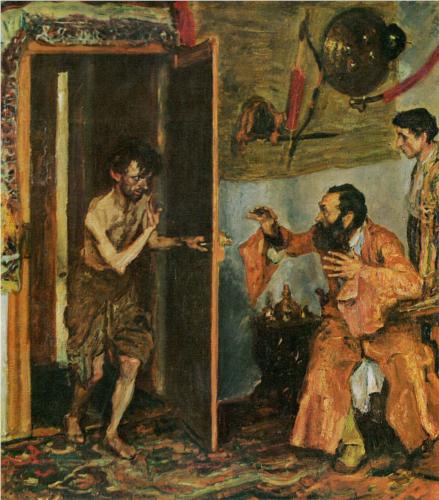
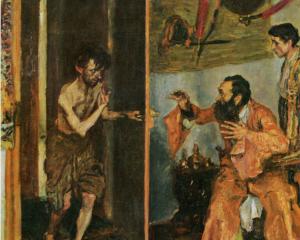
the-prodigal-son.jpg!Blog


The Lost Son Wakes from His Dream

Up to your knees in hog dung

eyeing hungrily

corn stubble

slop bucket

egg shells, coffee grounds

black banana peels

rancid grease, moldy bread.

Rouse yourself

from this putrid

dream of your demise.

Awake.

Tune in to your reality show.

Walk off the set of this drama

and come to yourself.

Reach down

pull that dying man out of the muck

wash his stinking feet.

Take a chance on mercy.

Go ahead. Say it.

You had it all wrong.

Spit out the words stuck in your craw

like a piece of broken glass:

            I am sorry.

And come on home.

Besides,

there will be a party

and presents.

ring

Luke  15: 11-32

___________

Note to readers:  This blog is part of a series of Lenten “short takes” on the themes of lent, which follow more or less the lectionary Scripture lessons for this season. Like a note you find tucked under the bark of a tree, a lozenge to let melt in your mouth, an amulet to wear around your neck, I hope these little reflections may hold a small dose of truth or comfort  or challenge for your life on the way to Easter.

In the abundance of words which inundate us daily, it is easy for the message of redemption to be buried under the latest disaster, outrage or scandal. Likewise the familiar stories and passages of lent may grow dull and trite to ears and hearts already stuffed with words. 

I have noticed in my work as spiritual director that it is hard for many of us to take in the goodness and grace, as well as the challenge of the story of Jesus and God’s redeeming love. Perhaps we need to titrate the gospel. Sometimes a well- timed, tiny dose, carefully administered, may be what the Physician orders for our healing. And so slowly we build up our tolerance for love and more and more joy finds the faith in us through which to invade our being.

Dose titration:  adjustment of the dose until the medication
has achieved the desired effect

Love – in Small Doses for the Sin Sick Soul #4


And we are put on earth a little space, 

That we may learn to bear the beams of love.
William Blake

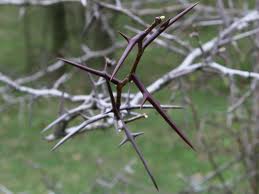
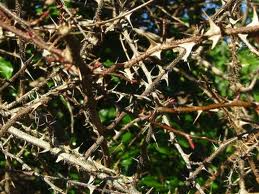
thorns

Fast


Bound

breathless and blind

open your eyes.

Unclasp the clutch

of the  hand

around your throat.

Fast

to break the fast

of the barbed hooks

and thorns

of dissolute gods

boring into the bleeding brow

of your howling  soul.

thornbush

  • Where are addictions or unhealthy attachments tying up your freedom to be available to God on God’s terms – however  God would have you?
  • What dissolute, lying gods have their merciless hands around your throat?
  • Will you open your eyes?

______________________________

Note to readers:  This blog is part of a series of Lenten “short takes” on the themes of lent, which follow more or less the lectionary Scripture lessons for this season. Like a note you find tucked under the bark of a tree, a lozenge to let melt in your mouth, an amulet to wear around your neck, I hope these little reflections may hold a small dose of truth or comfort  or challenge for your life on the way to Easter.

In the abundance of words which inundate us daily, it is easy for the message of redemption to be buried under the latest disaster, outrage or scandal. Likewise the familiar stories and passages of lent may grow dull and trite to ears and hearts already stuffed with words. 

I have noticed in my work as spiritual director that it is hard for many of us to take in the goodness and grace, as well as the challenge of the story of Jesus and God’s redeeming love. Perhaps we need to titrate the gospel. Sometimes a well- timed, tiny dose, carefully administered, may be what the Physician orders for our healing. And so slowly we build up our tolerance for love and more and more joy finds the faith in us through which to invade our being.

Dose titration:  adjustment of the dose until the medication
has achieved the desired effect

Love – in Small Doses for the Sin Sick Soul #3


And we are put on earth a little space, 

That we may learn to bear the beams of love.
William Blake

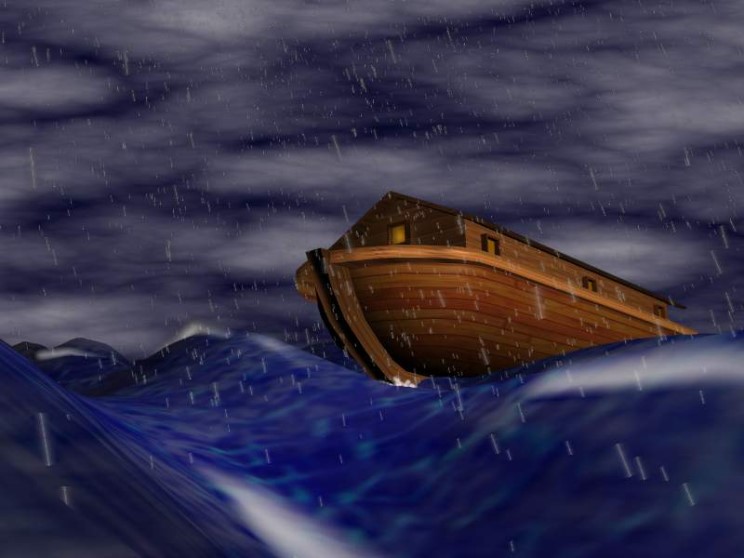
NoahsArkPitch

The Flood

It crept up slowly.

You did not notice at first,

though your feet were always cold ,

socks soggy.

Accustomed to the damp

you pulled on galoshes

then hip waders.

You didn’t know why

you were always so tired

like walking against a strong current, you’d say.

By the time the force of the tide

sucked  your heart

out by the roots

it was too late.

You plunged

into that dark torrent

gasping for air

clawing

for something to hang onto.

The ark you

unbelieving

had refused

rocked  above the waters.

The old man leaned

over the side

extended  a wooden

beam.

I see you are ready now, he said.

Grab on,

there is room for one more.

__________________

Is something threatening to drown you, which you keep ignoring?
What keeps you from reaching out for help?
If you are safe in your arc, is there someone out there who needs a hand up into the boat?
What are you waiting for?

______________________________

Note to readers:  This blog is part of a series of Lenten “short takes” on the themes of lent, which follow more or less the lectionary Scripture lessons for this season. Like a note you find tucked under the bark of a tree, a lozenge to let melt in your mouth, an amulet to wear around your neck, I hope these little reflections may hold a small dose of truth or comfort  or challenge for your life on the way to Easter.

In the abundance of words which inundate us daily, it is easy for the message of redemption to be buried under the latest disaster, outrage or scandal. Likewise the familiar stories and passages of lent may grow dull and trite to ears and hearts already stuffed with words. 

I have noticed in my work as spiritual director that it is hard for many of us to take in the goodness and grace, as well as the challenge of the story of Jesus and God’s redeeming love. Perhaps we need to titrate the gospel. Sometimes a well- timed, tiny dose, carefully administered, may be what the Physician orders for our healing. And so slowly we build up our tolerance for love and more and more joy finds the faith in us through which to invade our being.

Dose titration:  adjustment of the dose until the medication
has achieved the desired effect

Love – In Small Doses for the Sin Sick Soul #2

And we are put on earth a little space, 
That we may learn to bear the beams of love
 – William Blake


expulsion 2

Leaving Paradise

Trip

fall

splat

face down into

the ground.

Sink into softness

that gives

and for

gives.

Come home

to your loamy beginning

and your end.

For your reflection: Recall a time when you fell, took a hard blow, or were brought down by some loss or disappointment. What awareness did you have of your own brokenness and shame?  Could you forgive yourself? What did you learn in your humiliation? How did you change?

Note to readers:  This blog is part of a series of Lenten “short takes” on the themes of lent, which follow more or less the lectionary Scripture lessons for this season. Like a note you find tucked under the bark of a tree, a lozenge to let melt in your mouth, an amulet to wear around your neck, I hope these little reflections may hold a small dose of truth or comfort  or challenge for your life on the way to Easter.

In the abundance of words which inundate us daily, it is easy for the message of redemption to be buried under the latest disaster, outrage or scandal. Likewise the familiar stories and passages of lent may grow dull and trite to ears and minds already stuffed with words.

I have noticed in my work as spiritual director that it is hard for many of us to take in the goodness and grace, as well as the challenge of the story of Jesus and God’s redeeming love. Perhaps we need to titrate the gospel. Sometimes a well- timed, tiny dose, carefully administered, may be what the Physician orders for our healing. And so, slowly, we build up our tolerance for love and more and more joy finds the faith in us through which to invade our being.

Dose titration:  adjustment of the dose until the medication
has achieved the desired effect

You Will Die Before You Finish This Prayer

“I think what is going to help you most when you start your prayer – and it doesn’t matter whether it is long or short – is to make quite sure that you are certain that you will die by the time it is ended, that you will finish before your prayer does!” cheerfully advises the fourteenth century English author of the Epistle of Prayer.

The author, most likely a country parson, is writing to a young person, who asked for advice on how to control the mind when saying prayers. This is a request I often hear. Some things never change in the praying life.

I recently tried the parson’s advice and it about did me in. I attempted to make certain I would die before I completed my prayer, and learned that there is little like death to focus the mind:

The world rushed in with her fetching beauty, her clear blue sky, and yellowing maple leaves, waving, “Don’t forget about me, and me, and the red bird house, and the wren, and the dragonfly and the glaciers gripping the ground, and the wild horses pounding over the plains. The wind, whooshing leaves down the street, sent a shower of glimmering memories – babies, kitchens, ginger snaps, story books – I gave thanks for galoshes to help me wade through all the goodness. I will be ancient or dead before I finish stringing the pearls of this gratitude.

After the gratitude came the love, flowing up to the porch, running under the door, pooling at my feet and rising, slowly to my knees. I climbed up on the table and the love still mounted. Love is the color of spring and snow and fire. It moans and sings and weeps. It tastes bittersweet, smooth and creamy, warm and rich as hot chocolate. Then I grew bold and dared to believe that I could breathe in it, could breathe under-love, and that I would not drown or melt in it. So I slipped off the table and swam a few strokes around the room, then let the love sweep me out an open window into the world, buoyant and giggling.

When I came across the English parson, I had been feeling little gratitude and not the least bit buoyant. Instead of gratitude and this exuberant love, sorrow and longing for God had occupied my heart. My praying life had honed down to a narrow naked ache, like a thorn, for several weeks. I hurt. I went to sleep with the thorn and woke with it, a stab of incompletion and desire, lodged like a fish hook in the center of my being. There was no one thing I could name that would satisfy or heal this pain, but only the one whose name was above all names, who was before there were names.

The thorn was part grief and a prickly call to deeper freedom. As I grieved recent and old losses in the midst of many present blessings and considerable gladness, I was being weaned from some of the things of this world, which are lesser than God. And it hurt. I sensed there was something I was to let go of, but I couldn’t quite see what that was, though it seemed to have to do with some of my mental constructs, attitudes, ways of naming and holding what I knew as reality. It seemed to have to do with who I thought I was and how I held myself together. And this felt really, really scary.

So I prayed, meditated, read holy words, exercised, talked with friends, listened to and felt deep compassion for others. I also played a lot of mindless solitaire on my phone.

I went to the Antiochian Orthodox church down the street, where, except for the jean clad worshippers, I felt I had stepped into an ancient Syrian synagogue where Paul might step out and begin preaching any moment. I let the tonal chants in four part harmony wrap around me, as the icon saints gazed out from all four walls. Each word and act in worship was directed, not to audience appeal, market demographics, or video screens, but to the Holiness that filled the space. It was clear most of the people, as well as all those saints with their sorrowful eyes, also had thorns of longing love in their hearts too.

I have had periods of prayer like this before and trusted God was at work somehow. I know that uncertainty, alienation, and disorientation are part of growing in faith. The temptation during such times is to turn in disgust on oneself, dredging up failures, mistakes, weaknesses, and falling into a dark pit of self-negation. Yet I have learned over the years, that it is precisely, when we feel the most pitiful, that we are most in need of our own tender compassion and love.

During this time I gobbled up The Cloud of Unknowing, another fourteenth century English classic I first read years before. The writer affirmed what I was experiencing and assured me that it was God at work in me. He counsels “to reconcile yourself to wait in this darkness as long as is necessary, but still go on longing after God whom you love. … Your whole life now must be one of longing… And this longing must be in the depths of your will, put there by God, with your consent.” Rats, there seems to be no escape, short of solitaire or The Voice.

I recently realized with relief that the thorn was gone. The longing remains, but the acute pain is gone. This was a few days after I imagined that I would die before I finished my prayer. I have no idea why or how it left. I am just grateful to not feel so gripped and mournful reaching out to the heavens. Living in the cloud of unknowing and uncertainly is difficult to those of us who take pride in our intellect, our ability to be in control, to know things, and manage our own destinies.

Some religion is all suffering and damnation. Some religion is all sweetness and happy thoughts. Mine is sorrow and love. In the painful friction of sorrow and love new life ignites, leaps forth, and gives light in the darkness. Lately the words to When I Survey the Wondrous Cross have been singing themselves in my mind. So much of Christianity is mystery and wonder to me. I am clueless. I go walk around the block with my dog, praying that God make something holy of my life. I do not care what it is.

When I Survey the Wondrous Cross

See, from His head, His hands, His feet
Sorrow and love flow mingled down
Did e’er such love and sorrow meet
Or thorns compose so rich a crown?

Were the whole realm of nature mine
That were a present far too small
Love so amazing, so divine
Demands my soul, my life, my all.
– Isaac Watts

Have you ever found yourself wandering in the cloud of unknowing without a prayer, but the longing of your heart, the aching desire for God?
If you wish, share a little of your experience here.

The Writers Workshop, A Love Story

Lovers entwined, a kiss-print still/singeing your collarbone come morning,

Buzzing cicadas, whose mouthparts reek of root juice.

A splayed hand
nailed to tar shingle
on a Texarkana roof.

A silo squats in kindling grass, kneeling like a giant monk,

Laundry day debunks the laws of physics, where the personal is the thermodynamic, for this homemaker

A Requiem for a shoe: a shabby wingtip with broken ties ….lying on its side in the byway … becomes, somehow holy.

A teacher singing show tunes and weeping in a middle school classroom, filling empty space with melody, another period/full of lyrics; accidents.

These images and snatches of experience, have been resonating in my mind, calling out to me, reflecting parts of myself, and connecting me to someone else’s story, passion, or singular beating hope.

The lines are the work of the following poets in the order in which the excerpts appear:
Timothy Volpert, “Love, don’t limit me to looking,” (untitled poem, first line)
Leah Sewell , The Cicada Fling, excerpt
Ben Cartwright,  Accidents, excerpt
Peter Wright, The Silo, excerpt
Cale Herreman, The Personal Is the Thermodynamic
Sandy Morgan, Requiem for a Shoe, excerpt
Ben Cartwright, Melody and Empty Space, excerpt

The Topeka Writers Workshop

I spent evenings this past summer in the company of a small group of local writers. Mainly younger than I, they are part of what I like to think of as “the hip scene of Topeka creative life”- that outpouring of energy among young artists, musicians, writers, thinkers, and entrepreneurs of the past five or six years.  We meet after hours at the Blue Planet Café to drink coffee and munch the cookies the owner leaves for her writers.

The Topeka Writers Workshop was founded three years ago by Leah Sewell, who facilitates it as well. Leah gently leads us in writing exercises and the workshop model of critique. I joined the group because I wanted to get out of a box and mix it up with people different from me around a passion we share in common, good writing.

The group turned out to be mostly poets. At first I was afraid to tell them I am poet too, having written and published poetry since I was ten or so. But these were real poets, serious poets, the kind, who say they are addicted to poetry and take big risks for it.  One is a PhD candidate in creative writing, another is an MFA candidate. Besides, what I was bringing to the workshop was prose, chapters from a book I have been revising forever.

 

Confession, Mom and the Starlit Road

Yet I need to confess that poetry is in my blood. I remember gathering with my family around the radio in the evenings to listen to Len Howe read mom’s poems, broadcast from WHO radio in Des Moines, Iowa. I recently found in her files a sheaf of postcards dating back to 1948 from the radio station telling her when her poems would be read on the show Starlit Road.  Over 79 of her poems were read,  some more than once.

In the kitchen mom often stopped mid task to grab a towel, wipe her hands, and scratch out a line of poetry on the back of an envelope. I recall her urgency to get a phrase or image written before it went down the drain with the dishwater. Sometimes I sat on a chair while she ironed and read aloud from the first poetry book she owned, Untermeyer’s Modern American and British Poetry, (1928). I loved Edna St Vincent Millay, Robert Frost, and Walter De La Mere.

Only much later would I learn of mother’s inner struggle between longing to be a poet and the demands of wife and mother. When she asked the poet, Paul Engle, why through the ages only men had become great writers, he told her, “Women simply do not have the stamina for rigorous creative arts. It happens in all the other arts as well as writing.” He went on to say that great writing required the writer to suffer great tragedy which apparently the obtuse fellow assumed only came to men.

Poets Exposed

I never took a creative writing class. I skirted around the edges of poetry, deciding to perform it rather than create it. My undergraduate and M.A. degrees were in speech and theatre with a minor in English. I only began to claim being a writer in my mid thirties.

So I sneak into the group with my prose to be critiqued, and, of course, they go after it like poets. Write that paragraph like a prose poem. Take out all the extraneous words. These economical sifters of sound and meaning hone in to the spare, bare truth. They sculpt experience and meaning until reality is exposed, glistening on the page – a newly delivered child wet luminous – like a miracle:

 her long legs dawn strawberry blonde
 & I am an old wolf maintaining the furnace

(Peter Wright, teaching me to swim, excerpt)

They talk about my writing, while I listen:

I don’t think this fits here. It’s good, but use it elsewhere, says one.

This is contemplative. You pose a question and then approach and answer in different ways, notes another, getting what I am up to.

If you can’t already tell, I have fallen in love with them. The tall pianist who lopes in, plays a prelude, and reads his hilarious ironic piece on the ill-fated love story of two workers in a call center for a sex hotline. (Ok, I did blush a little.) The house-husband with a gentle soul needing to talk of something other than lunch boxes, cartoons, and laundry and be known as more than dad and husband. The unassuming woman, who quietly grieves the unspeakable loss of her dearly beloved. The PhD candidate who sends me to the dictionary to look up anamorphic and writes poems that turn over in my mind like ancient runes. The young woman, who shyly offers her poem, anticipating abundance in the putting together of two lives. And our guide, Leah, who tosses off these stanzas:

Above my head a dark sight
thrums and swoops, careens
fast to the blunt flatness
of a fence post. Fallen starling,

parted beak, gasp of dread
glint-wing broken open
in a sinister cape. I cup
its gloss in my palm.

The children fret and coo as I carry the bird
to a canopied place, wish it peace,
and bow away from its pointing eye.

The storm’s outskirt arrives
in black overhead. The wind
grips my face, tells me to get inside.

(Leah Sewell, Backyard,  excerpt)

(By the way, you must read this poem excerpt out loud to taste and feel the wonder of its consonants and rhythm in your mouth.)

Each member brings poems which stun me with their beauty, jolt me with clarity, slap me with surprise, intrigue and invite me into the warm mystery of another human being.

And I like it that they are not churchy. Trust the reader more, they tell me. (Don’t preach.) Let us make the connections. (Don’t patronize.) Let us have our own meaning. (Don’t proselytize.) We are open and welcoming, but please don’t write like the kind of Christian, we were afraid you might be, when you first joined the group. Like hound dogs, they sniff out my defensiveness, my need to please, and expose my vulnerability.

They confront me with my own prejudices and what it means to write about God and even use the J word (Jesus) in a culture where the word, Christian, makes many people, including me sometimes, squirm.

Flannery O’Connor called poetry the accurate naming of the things of God. Taking their cue from the great southern writer, these poets simply inspire me to write poems, to trim away the fat, to consider just what I am trying to accomplish here, and cast off all self consciousness. They make me more contemplative and honest.

Psychologist Carl Jung observed,

Loneliness does not come from having no people about one, but from being unable to communicate the things that seem important to oneself, or from holding certain views which others find inadmissible.

I am interested in communion, that co-union of minds and hearts, that bridges the isolation and the apparent inadmissible truths between us, where we find a home,  if only for a moment or two, in one another. I found it with these poets, reaching beyond their isolation with the things that seem important to them.

Don’t Miss This

If you are looking for a home, a little clarity for yourself, and some good entertainment, come to the Blue Planet Café on Friday evening, September 21 from 6:00-8:00 pm for Topeka Writers Workshop READS. Be there to listen and meet these writers. I think you will fall in love too.

______________

Leah Sewell is a poet, book designer, magazine editor and MFA candidate at the University of Nebraska. She is a past recipient of the Association for Women in Communications Women Making Headlines Award in media and the Penwomen Scholar Award for Letters. Her poems have or are expected to appear in PANK Magazine, Midwestern Gothic, Roufus City Review, Weave Magazine and Begin Again: 150 Kansas Poems. She is the founder and facilitator of the Topeka Writers Workshop in Topeka, Kansas where she lives with her family.

Not Ten Best Practices for Prayer

prayer..

“Your writing has changed lately,” a friend who reads these blogs said last week. “Is that related to the retreat you went on?”

I have been thinking I ought to write a more accessible, timely post, something about the weather we have endured here in Kansas,  the contentious world of politics, an entertaining piece about my dog, or a list: Ten Best Practices for Prayer. Copy Writer tells me that lists always get lots of views and shares.

Yet, if this is a blog about prayer, it ought to reflect the experience of one who is praying. So at least for today I bring you another update from the silence. One word is really all I have to say: longing, deep vast yearning, reaching toward what I cannot really name.

And as some of you know, my friends, such longing is really kind of awful. Awful in the sense of how it stretches and stretches one ever beyond one’s self. Awful in the sense that it has no end. Awful in the sense that it is out of one’s control or naming. Awful in the sense that it is love that ever seeks its fulfillment in the beloved.

The writer of the Cloud of Unknowing called such prayer a naked intention of love directed to God alone.

 ___________________

A Failure to Communicate

I would like to stand and hold my balance on the threshold
with the wind whistling through the space
where my heart used to be
and watch the birth and death of beings
the coming and going of existence
and somehow fasten myself in that place,

the Alpha and Omega, the beginning and the end.

I have had it with these little cages
we stuff full of significance
and string out across a page
like a rumbling circus parade of gaudy wagons drawn by camels.

The penned beasts of meaning pace back and forth
while we snap the whip and totally miss the show.

Nor is communication a fortune cookie “thought for the day.”

Flirting on the edge of my awareness
where words dissolve
and nothing separates

love broods.

I bang against the bars.
Let me out.
Set me free of me.

Why I long to escape the confines of language I do not know
for when I meet you there,
in that other country, our native land
I will have nothing to say or offer

because you will already have all you ever need.

____________

I tell you this: it is more profitable to your soul’s health, more worthwhile, more pleasing to God and the hosts of heaven – yes, more helpful to your friends, natural and spiritual, dead or alive – that you should have this blind outreaching love to God himself, this secret love pressing upon the cloud of unknowing, that you should have this as your spiritual affection, than that you should contemplate and gaze on the angels and saints in heaven and hear the happy music of the blessed.     The Cloud of Unknowing and Other Works


The Writing Exercise

Write a letter to a landscape or scene you pass through today.
For example, “Dear Branner Trafficway.”

Dear Mom,

You rest now in my way.
The plastic cartons I put you in
clutter the path
from
kitchen
to office.

I step around the contents of your dismembered
life
trying not to trip,
coffee cup in one hand
sheaf of papers in the other.

Squeezing past a bin
I stumble upon
your journals
tales of trips
to the woods
wildlife sightings
what happened last Tuesday,
and how Gladys brought over a pan of sweet rolls,
still warm from the oven
poems about birds and babies
dragonflies
and things you cannot change and break your heart
word snapshots and watercolor sketches –

scattered orange road construction cones
confuse the once familiar scene.

The blue china sectioned dish you fed me from,
when I kicked my legs in the high chair,
peeks over the top of another box.

Photo albums, the ducks you carved,
and all the letters and cards I ever sent you
occupy the landscape of my life
and I am no longer sure
how to get from here to there.

Periods of disorientation are part of the spiritual life Biblical theologian Walter Brueggemann tells us. Such periods precede what he calls new orientation. Brueggemann charts how the history of Israel tells the story of orientation, confusion and loss of direction, and new clarity over and over. The story culminates in the crucifixion and resurrection and then continues with the church and our individual journeys as well.

What are the inner and outer landscapes you are passing through today? Take a moment to share what you are witnessing so we all may grow closer to seeing the big picture.

Thanks to Melissa Sewell and Leah Sewell and the Topeka Writers’ Workshop for inviting me to pay attention to my landscape.

The Dancing God


Do you want to know what goes on in the core of the Trinity?
I will tell you.

In the core of the Trinity
the Father laughs
and gives birth to the Son.
The Son laughs back at the Father
and gives birth to the Spirit.
The whole Trinity laughs
and gives birth to us.       Meister Eckhart

Western Christianity used the Latin word circuminsessio to describe the activity of the Trinity. In contrast Eastern Christianity used the Greek word, perichoresis. Circuminsessio means broadly to sit around in a circle. Perichoresis means to dance in a circle.

 Needless to say, I prefer dancing.

BLEST COMMUNITY

 O Most Holy Trinity
Undivided Unity,
teach us the gentle deference
of your dance of surrendered love
how with infinite tenderness
and utmost esteem
you so gently
adoringly
are present
to one another.

Teach us your perichoresis,
your grand circle dance,
where you eternally birth joy
from the womb of reverence.

Teach us your unending,
enfolding regard
for the pure holiness
you hold and behold.

You,
sweet breath and the lungs of creation,
eternally giving,
empty
and eternally receiving
are filled.

You release and bind,
but never push nor pull.
You hold accountable,
but never blame.

You incline yourselves to one another
as a grove of green willows
bending in the breeze
bowing to each other’s grace
known and cherished
on the broad plain of mutuality.

Deepen our trust, O Blest Community,
that we may enter such intimacy.

                                                                Loretta F. Ross

Once a group of Western theologians traveled to the East to speak with a group of Buddhist monks, and asked, Will you tell us how you do theology?

 The monks thought for a while and then responded, I do not think we do theology.

 We dance.

Here is another post from The Praying Life on the Trinity: https://theprayinglife.com/2010/05/30/a-god-who-dances/