Tag Archives: Bible

Is It I, Lord?

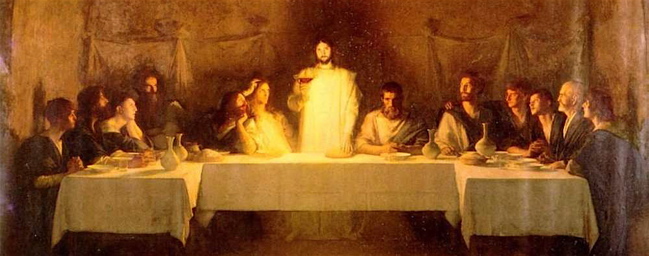
“One of you will betray me.” The question hangs in the air.
The followers look at each other. And back at Jesus.
This week, I will share a few voices from that evening as the disciples
ponder this alarming accusation.

SIMON

This is a meal of liberation, and he speaks of a betrayer? What is wrong, my Lord?
Here I am, your Simon. You are the one who bids us to joy and laughter. Such long faces!
This sobriety does not befit the one who gives us mirth and life. Being with you is just so much fun.

Before you, I never knew such exuberance and high spirits. My foot was heavy, weighed down with many cares. Now, I run lightly. I laugh until my sides ache. I no longer worry about what others think of me. You cut loose all the voices within that condemned and taunted me. Fear vanished. Every day is a new adventure. I once thought happiness was a dream known only to children. I hoped only for a good living as I grew old. Now, I have grown younger in your presence, bolder, and full of joy. Sometimes, I just can’t stand so much happiness and weep for its sheer beauty.
But, my Lord, come smile, lift the cup. My brothers, he must be joking.

JAMES, The LESSER

The wind blows through the open window.
Somewhere, an animal screams.
A wolf leaps for the lamb’s throat.
The hawk soars across the moon’s passive face.

So he is betrayed. Will the Earth note it? Care?
Will I, James?
Betrayal is the way of things.
Whoever said the universe is trustworthy?
Thieves and murderers wait by the roadside.
Lovers are unfaithful. Children deceitful.
I should have known it would come to this.
For a few moments, I hoped he could change things,
had begun to believe there was safety in creation.

Yet, look at me, a creature myself.
How many times have I been false?
How many times have I sold out, given up, turned
away in anger, disappointment, or jealousy, and given
those around me to the powers of death,
the beasts and executioners who reside in me?

I am numb.

Oh Christ, don’t let them kill you!
I came with you, believed
staked all I had on you.
Lord, it is I who am betrayed!

PHILIP

He sits there so calmly with his arms outstretched. I hurt to see the pain in his face. His palm is open, accepting. There is no anger, no bitterness, no revenge, no resistance. He is like a lamb going to slaughter. I see only great sorrow.

What kind of man would announce to his betrayer the knowledge of his treachery? He loses all advantage. He may as well open his chest to the knife.
What kind of man is he? How is it that after spending so many days and nights together, he is still somehow a stranger? Despite his commonness and accessibility, he remains mysterious, ineffable.

What am I doing here? How did I get mixed up with these people? I am in over my head. I never thought it would go this far, get this out of hand. Someone is apt to get killed. I want to run back down the roads and valleys, run through the crowds, the villages, along the shores. I want to run back in time and space to where the word betrayer does not hang like a noose over this table.

Is It I, Lord first appeared in 1986 in the Presbyterian Survey.

This liturgical drama was initially commissioned by Westminster Presbyterian Church in Topeka, KS

Copyright 1994 Loretta Ross. All rights reserved.

Lent 2   The Body of Our Humiliation 

For many live as enemies of the cross of Christ; I have often told you of them, and now I tell you even with tears. Their end is destruction, their god is the belly, and their glory is in their shame; their minds are set on earthly things.But our citizenship is in heaven. It is from there that we are expecting a Savior, the Lord Jesus Christ. He will transform the body of our humiliation that it may be conformed to the body of his glory by the power that also enables him to make all things subject to himself. Philippians 3: 19-4-1 

One of the most painful experiences a person may encounter is humiliation. We do all we can to escape the possibility, let alone actual experiences of humiliation. You may remember a few occasions of humiliation and shame. These memories stick around.  Humiliation may be a moment of embarrassment or deeply soul crushing. 

Humiliation assaults our sense of worth and dignity. It signals the limbic part of our brain, which is self-protecting, and tells us to fight, flee, or freeze in the face of our disgrace.  

Dignity violations leave deep wounds. The scars of ridicule and scorn may disfigure us. Jesus’s choice to endure such humiliation is remarkable. He chose the most painful path, which appeared to be the total failure of his mission, to show his followers that humiliation is not the last word.  

Our culture has become a global forum of blaming and humiliating each other. We are hardwired to retaliate to such indignities. We have little appreciation of the depth and breadth and tender goodness of the human heart. So many times, it has been scorned, mocked, beaten and tossed in an alley. 

We seek success, wins, the “Greatest of All Time,” to be the best and the first. We do all we can to keep our failures hidden in filtered selfies and struggle to find our sense of self-worth.   

Who do we think we are fooling? 

Our egocentric experience is only a small slice of reality. This is why we need each other and to learn from each other. “Alongside the protection reaction of fight or flight, we are also hardwired for primal empathy, an emotional connection that fosters openness to others and is needed to take in each other’s experiences at the core of healthy social development.
Donna Hicks, Dignity – Its Essential Role in Resolving Conflict, p 23. 

Humiliation both challenges our innate dignity and opens a door to humility.  In the painful sacrifice of our egos, we are liberated from our pride and desperate need for esteem, control and fame. Here in the heart of our disgrace – we may discover new freedom to be simply ourselves, our raggedy, messed up, imperfect, beautiful selves. Here,as Paul tells the Philippians, our body of humiliation is conformed to the glory in the body of Christ. 

In your midst I will leave a humble and lowly people; those who remain will seek their refuge inYahweh. Zephaniah 3:12

BREAKING NEWS

The first week of Lent begins with a Liar

The Father of Lies has been given a holiday of his own! Long neglected and maligned, The Great Deceiver will also be honored with a month of remembrance and celebration of the overlooked history of liars. The Fraudster, also known as Satan, the Devil, the Accuser, Beelzebub, and Lucifer, has been treated unfairly and harassed by so-called Biblical scholars and the media.

Chaos, Contempt and Control have been hired to plan the special events. Falsehood, Fabrication and Deception will be catering the food. The keynote speakers, Slurs, Smears, and Slanders will offer tips for the latest frauds, cons, and embezzlement schemes.

If they show up at all,  (We all know how they are.) Fibs, Duplicity, and Menace will provide musical entertainment. And the eau de parfum, Essence of Arrogance will be infused throughout the venue to inflate further the egos of all who attend!

Small Print:
Of course, the event will be prepared for the enemy: Mercy, Love, and Compassion. We expect them to be in them to be in the streets with their signs: Integrity for Americans. Tell the Truth. They will have soap and water to wash out the mouths of any repentant liars and put out any fires in the liars ‘ pants.

The devil, that proud spirit can’t bear to be mocked. – Martin Luther

After his baptism, Jesus spends forty days in the wilderness. Here the Devil meets Jesus and tempts him. Each temptation is a bid from Satan for Jesus to grasp for power, control, and saving his own skin.(Luke 4: 1-13) Temptation targets our egos, which want to know everything, control everything, and be right. In the wilderness scene with the Father of Lies, Jesus demonstrates that any power he might have is not used to show off, control others, line his pockets with gold, or use force.

Because you compete with others
Others will compete with you. Tao De Ching

How might my ego get in the way of sharing the gifts God has given to me?
What tempts me to lie or misuse the gifts I have been given?

See you next week! Love and peace, Loretta

Take and Read

The sheer activity of reading scripture … is itself an act of faith, hope, and love, an act of humility and patience. It is a way of saying that we need to hear a fresh word, a word of grace, perhaps even a word of judgment as well as healing, warning as well as welcome.  To open the Bible is to open a window toward Jerusalem, as Daniel did, no matter where our exile may have taken us.         ~ After You Believe, N.T. Wright

A temptation in the contemplative life is to step away from our theological and Biblical underpinnings and become self absorbed in one’s own experience of God. Prayer, meditation, and contemplation are important practices, but without turning and returning to the Word of God in scripture we may lose our bearings. The witness of those who came before us, which we find recorded in the narratives, histories, wisdom literature, and poetry of the Bible forms us in the mystery of the human experience of the Holy One.

Yes, the Bible is sexist, racist, contradictory, bound by historical events, political realities, tribal animosities, tedious, nonsensical, and  a host of other limitations imp0sed by the motley crew of human beings, who have put their hands on it. The Bible also has the hands of the Holy One on it. It is  shot through with the sublime and transcendent Holy Spirit, who has chosen to associate with our species  (only God knows  why) and expose itself to all our messes, as it calls us and holds us accountable to a Being  greater than we ourselves.

Reading the Bible is like opening up a dusty old trunk in the attic full of family records, dim photos, grade cards, farm records, yellowed newspaper clippings, diaries,  bills of sale, and baby booties. Why did they save this? What was so important about this clipping that someone put it away so carefully? Oh, look, there is great great grandpa by the old homestead. Hey, listen to this entry. It’s about great uncle Harry’s trial for stealing horses, “They led the disheveled man in chains into the courtroom…”

In scripture we learn about our roots, who God is and who God calls us to be. We come to know the nature of God, the limitations and weakness of the creation and what it means to be in right relationship with God, with ourselves and with one another. Scripture is a privileged place of meeting the Holy One and a powerful means of spiritual growth.

The discipline of daily Bible reading and reflection holds our feet to the fire. We are unable to squirm away from confronting difficult texts, hard sayings, and truths we may not want to hear. Being moored to scripture keeps us from floating off into philosophical abstraction and metaphysical flights of fancy, by anchoring us to the specific ground of God’s revelation in time and space in particular communities and individuals. Likewise reading scripture encourages us to pay attention to God’s revelation in the concrete messy details of our own lives.

Here is a resource for daily Bible Study I highly recommend.

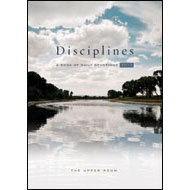
Disciplines – A Book of Daily Devotions 2013.  Find light for your daily walk with God through The Upper Room Disciplines. In this best-selling devotional book, 53 writers from diverse Christian backgrounds and locales help you explore the Bible’s message for your life. 

New in 2013: Each week opens with a Scripture Overview, followed by four questions or suggestions for reflection for personal or small-group use. Widely available online and at your local bookstore in Kindle and paperback, Disciplines 2013 makes a thoughtful gift for Sunday school teachers, pastors, or anyone who wants to mine the rich treasures of scripture.  

I am honored to again be invited to contribute a week of reflections on the readings from the Revised Common Lectionary. But don’t buy the book just to read my thoughts. You will discover fifty three other writers, waiting to guide you into the transforming encounter with the Word of God. ~ Loretta F. Ross Take and Read
Here is a little story about the power of reading the Bible.

I  was . . . .weeping in the most bitter contrition of my heart, when, lo, I heard the voice as of a boy or girl, I know not which, coming from a neighboring house, chanting, and oft repeating, “Take and read; take and read.” 

Immediately my countenance was changed, and I began most earnestly to consider whether it was usual for children in any kind of game to sing such words; nor could I remember ever to have heard the like. So, restraining the torrent of my tears, I rose up, interpreting it no other way than as a command to me from Heaven to open the book, and to read the first chapter I should light upon.

For I had heard of Antony, that, accidentally coming in whilst the gospel was being read, he received the admonition as if what was read were addressed to him, “Go and sell that thou hast, and give to the poor, and thou shalt have treasure in heaven; and come and follow me.” And by such oracle was he forthwith converted unto Thee.

So quickly I returned to the place where . . . . I had put down the volume of the apostles, when I rose thence. I grasped, opened, and in silence read that paragraph on which my eyes first fell, — “Not in rioting and drunkenness, not in chambering and wantonness, not in strife and envying; but put ye on the Lord Jesus Christ, and make not provision for the flesh, to fulfil the lusts thereof.”

No further would I read, nor did I need; for instantly, as the sentence ended, — by a light, as it were, of security infused into my heart, — all the gloom of doubt vanished away.      ~ St. Augustine, Confessions

Stepping Back from the Glib Café

I have been dining at the glib café too frequently.    I have been listening to too many bitter, angry, paper-hearted ones, locked in their own glare. I am turning from the table of TV dinners of MSNBC, CNN, and POX News – that alphabet soup of garish headlines,  cynicism, blame, and eternally breaking bad news.

Instead, I am taking in the words of scripture. Poet and scholar, David Rosenberg  exposes anew the dive of imposters, held captive in their own minds. His translation of  Psalm 1 feeds me with the truth of the word of the infinite.

Psalm 1

Happy the one
stepping lightly over
the hearts of men

and out of the way
of mind-locked reality
the masks of sincerity

he steps from his place at the glib café
to find himself in the word
of the infinite

embracing it
in his mind
with his heart

parting his lips for it
lightly
day into night

transported like a tree
to a riverbank
sweet with fruit in time

his heart unselfish
whatever he does
ripens

while bitter men turn dry
blowing in the wind like yesterday’s paper

unable to stand in the gathering
light

they fall
faded masks
in love’s spotlight

burning hearts of paper
unhappily
locked in their own glare

but my Lord opens
his loving one
to breathe embracing air

David Rosenberg, A Poet’s Bible

Oh won’t you meet me there for dinner in that living word
and embracing air?

Shall we together part our lips lightly for this feast?

Yielding to Grace

Maybe you have taken on a very difficult and demanding task. Maybe you have been engaged in a burst of creative activity. Or perhaps, you have been involved in the long, slow, steady, outpouring of yourself for family, friends, or your job.

You may have noticed the signs: an anxious, sleepless night here or there; drinking too much caffeine or alcohol; not enough time to get to the grocery store; a sudden attraction to playing solitaire, and a rush of those Please-Lord-give-me-the-strength-to-do-this prayers.

In my case I was following my own devices again, rushing ahead of the Spirit, plowing my own path. Finally I was stopped by a sharp, shard of sorrow in my heart, a sense of restless unease, and the accompanying guilt and self-recrimination about my lack of motivation. I did not miss God’s irony that this should assail me over the Labor Day holiday.

After thirty years of devoting myself to prayer, I am amazed at how hard it still is to expose myself to the direct presence of Christ. I really think I would be the one in the back of the crowd, wanting desperately to push through to touch his robe, but fearful and cautious, and resigned to making the best of things on my own.

Many of us find it easy to read about faith and prayer. Books on these topics are best sellers. Countless people read the Bible. Most of us do not have much trouble telling God what we need. We may even write out a list of our needs and longings and hand it to the person in front of us, asking, “Would you pass this on up to Jesus, for me?”

What I hadn’t done was the simple, radical exposure of myself and my need to God. What I hadn’t done for several weeks was a sustained, still, silent offering of my being to the being of God. This is what I believe truly heals and redeems: contact with Holiness, that mysterious communion and co-mingling of my spirit with the Spirit, a dance of love beyond my understanding or control.

I know why I avoid it and why I, suppose, that I have to write about it. The reason is that this communion may hurt at first. The exposure of a raw, chaffed heart to the burning brightness of Grace can be excruciating. (Yes, that is the word for it: ex- crucifix, from the cross.) It may be the last thing we want to do. So we often just tell God about it, then get up and go on fretting, and look about for something to do, anything other than just sitting there in that fear and pain.

Now think for a moment. If you were sick, would you not pay attention to your symptoms, maybe check them out on the internet, and go to a physician and describe what you are feeling? And then, would you get up from your chair and go home, before the doctor had a chance to ask questions, to examine you, run tests, and prescribe your treatment?

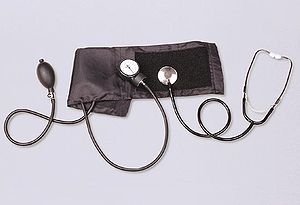
Surely you would you wait for the examination. You would answer questions. You would you lie down on the table, bare your chest to the stethoscope, your arm to the blood pressure cuff, and take whatever tests the doctor advised. You would take your medicine and follow a treatment plan.

I had been making drive-by visits to God, where I would drop off my laundry or tell God what I need for today. I was sipping those devotions for busy people, spouting sound bite prayers on the run. I was not coming before God and disrobing. I was not holding still for God to search my heart and probe my mind.  I would not wait for his grace to move into me, to absorb the pain, to refresh and heal me. Further, it was all about me. I was all about me. I had nary a thought of what God might desire or need from me.

We fool ourselves if we think a quick shot of God, a pithy quote, or Bible verse alone will do it. God desires a relationship with us, not a power lunch, and depth relationships require leisure, attention, vulnerability, and mutuality.

Part of us really does desire this. However, another part of us is just not that interested. I hear about this internal conflict over and over in my practice of spiritual direction. People are sincere and have good intentions. Yet nearly everyone I know finds him or herself facing obstacles to a sustained presence to God.

Try it. Find a quiet place where you will not be interrupted. Set a timer. Twenty minutes is good. Ten minutes will do. Even five minutes can hold a miracle. Breathe a while. Just be there and allow yourself to be open to Christ, the patient physician, who has been waiting for you for an eternity. Now right off, you may notice all sorts of responses in yourself: a sudden urge to get up and tend to some task; some buried pain rising up, burning and stinging like really bad heart burn. You will take little sorties into the past and into future. You will write fiction, little novellas, about your life. You will discover some hurt or slight or worry to gnaw on.

Just stay there. Hold still. You are getting a CT scan. Don’t move. This time is for God’s examination of you. What you think and how you feel about this isn’t all that important. The physician is at work. Trust that. You may feel panic or anger or despair. You may feel deep peace and joy. Whatever you feel, just stay there opening yourself to the one who loves and cares for you beyond your wildest dreams.

When the timer rings, give thanks as honestly as you can. Then do the same thing the next day and the day after and the day after. Don’t look for “results,” just be obedient in allowing the doctor to heal you. Thomas Keating calls this form of centering prayer “divine therapy.” You, of course, may also read the Bible, pray in other ways that you are drawn to, do acts of love and service, and whatever else that seems right for you.

Sometimes this prayer is like detox, a weaning from some addiction, and we go through the painful withdrawal of whatever we may have been substituting for God in our lives. Other times this prayer is like the surrendered offering of Mary to the angel, Let it be to me according to thy word.

Always such yielded prayer is an act of faith in the mystery of God’s love and purposeful activity in the human heart and soul.


Hold your eyes on God and leave the doing to him.
That is all the doing you need to worry about.  St. Jeanne de Chantal

Have Thine Own Way – Organ Improvisation

We invite you to our Facebook Page: The Sanctuary Foundation for Prayer
Read more about prayer at www.fromholyground.org
Read Tracking Holiness – Newsletter
Contact the author at lross@fromholyground.org, www.fbook.me/sanctuary
Follow at http://twitter.com/lfross