Rx for a Crisis

The man, unemployed for two years now, leans his elbows on the kitchen table, puts his face in his hands and weeps.
Be still and know that I am God.

The family, numb with shock and grief, stare into the abyss the sudden death of their child has opened before them.

Be still and know that I am God.

The couple – run ragged with work, child care, and keeping up with the Joneses – gaze across the room at each other and wonder how their love turned to resentment and anger.

Be still and know that I am God.

All the while the nation’s public discourse rages on with the clamor and clang of opinions, self righteous indignation, and attack.
Be still and know that I am God.
So much of our lives seems to be fueled by fear and hyperbole, or hype, as the word has morphed into. The fear and anxiety tend to compress our perception into narrow tunnel vision and demand that we act immediately, often at the expense of reasoned consideration, and gathering all the facts. Hyperbole, the fetching sister of fear, exaggerates, escalates, and glamorizes her brother. We feed on sensationalism, scandal, and worst case scenarios.
In the context of this culture of fear and hype, when we encounter the pain and loss of being human, in whatever form it shows up in our life, we may feel overwhelmed, isolated, or ashamed.
Our times are difficult. We face as individuals, as a nation, and as global citizens immense challenges. People are suffering. The planet is suffering. We must act and act wisely. Will our action, our response to the crises we face, rise from our faith or our fear? Will the choices we make be fueled by hysteria, anger, discouragement, or the wisdom and grace of something greater and mightier than we?
Be still and know that I am God. Well, what good will that do? Is that going to improve the job opportunities in my town? Is that going to bring back our son from the grave? Is that going to bring back the love and joy we used to know as a couple?
No. It may or may not change the crisis you are facing. However, it will change you. Absolutely. Being still and knowing that God is God and you are God’s creation will shift how you perceive yourself in the midst of your crisis, and how you perceive the crisis itself.
Being still and knowing that God is God will establish you in the depths of God’s Being within you. Here you will discover a strange peace that doesn’t make sense, that passes all understanding as St. Paul wrote (Philippians 4:7). You will begin to live and act and make decisions from that deep well of peace, rather than your fear and anxiety.
The New English Bible translates this verse from Psalm 46 in this way: Let be then: learn that I am God. Let things be as they are, stop strategizing, blaming, figuring out solutions, or how to get even. Stop your action and thinking. Be in that energetic stillness that is God’s presence within you.
In doing this you will learn that God dwells within you, speaks within you, and is moving in your life and world. You are not in charge, never have been. You do not have to figure this all out and get it right somehow. Relax. Trust.
God is our shelter and our refuge,
a timely help in trouble;
so we are not afraid when the earth heaves
and the mountains are hurled into the sea,
when its waters seethe in tumult
and the mountains quake before his majesty.
There is a river whose streams gladden the city of God
which the Most High has made his holy dwelling;
God is in that city; she will not be overthrown,
And he will help her at the break of day.
The Lord of hosts is with us,
the God of Jacob is our refuge.    from Psalm 46


Become a fan of the The Sanctuary Foundation for Prayer

Read more about prayer at www.fromholyground.org

www.theprayinglife.wordpress.com
Tracking Holiness – Newsletter
Contact the author at  lross@fromholyground.org, www.fbook.me/sanctuary
Follow at http://twitter.com/lfross

A Legacy of Love

My brother reads from a letter my sister sent to my parents in 1956. She was a young bride living in Washington, DC in her first teaching job. “Here is your history,” he says, handing her the pile of typed correspondence. Neatly bound in boxes tied with string, stacked in baskets, stashed in closets, my mother saved every greeting card and letter she received.
We find our baby clothes – tiny booties, bonnets, and blankets – saved in the original boxes. My sister looks over a list of the names of people who came to visit when she was born. Holding the evidence in her hands, she says, “I was well loved. I was doted on.”
There are other treasures, Grandma’s pin, which on sight immediately conjures the navy blue dress she wore it on, and her austere, no nonsense personality. We all agreed that the most boring place on earth was Grandma’s house on an endless Sunday afternoon, listening to the clock ticking.
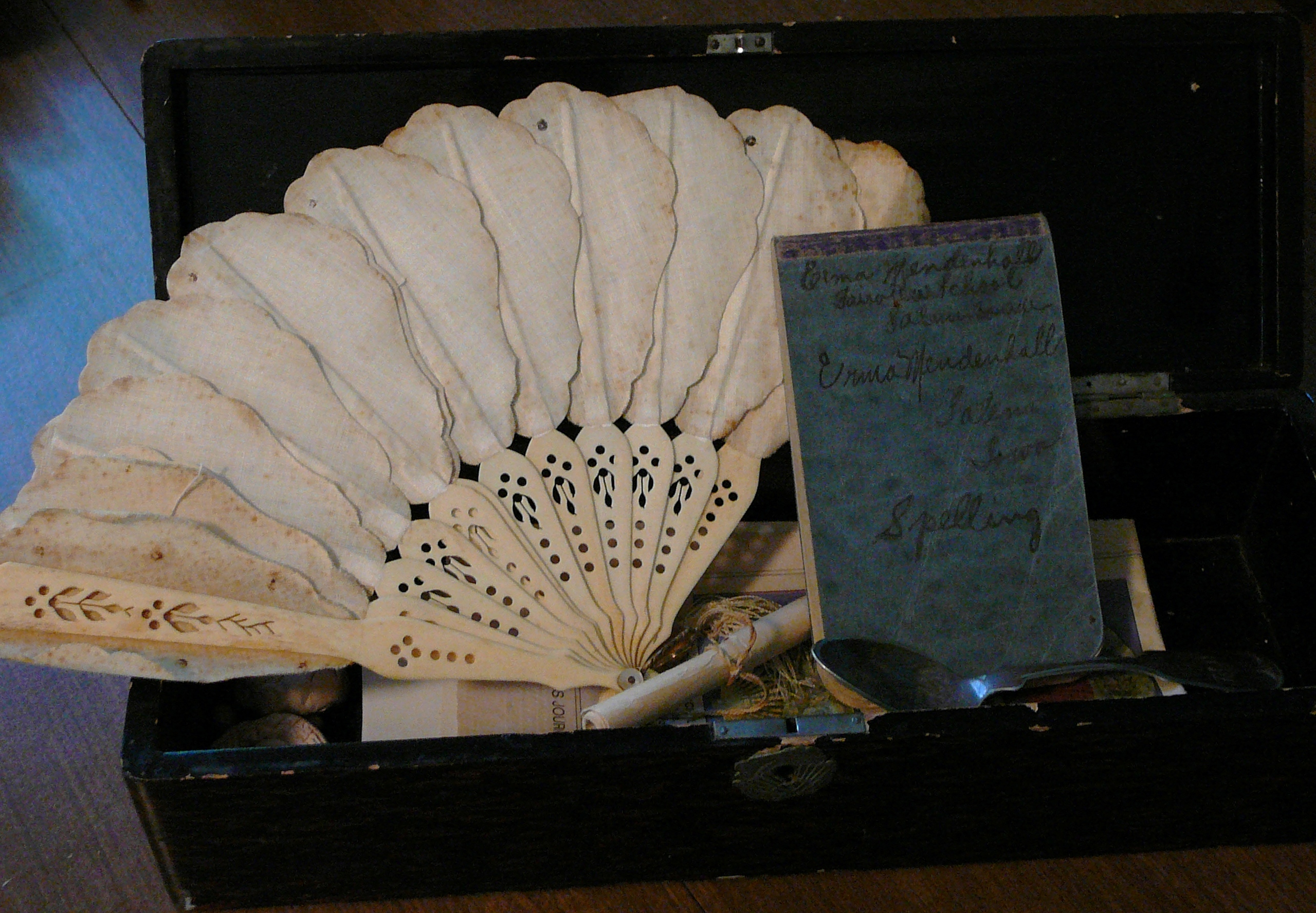
We find Great Grandmother’s worn, wooden butter paddle, carefully preserved and handed down to the eldest granddaughter. The paddle was saved in an enameled box along with an ivory fan from Switzerland. The enclosed note explained that the fan was brought back from a trip abroad by one of two women preachers in the family, Great Aunt Hannah Beard.
We are sifting the memories, treasures, and love from the chaff of well lived lives. As a friend put it, we are discovering the essence, the pure, best parts of what our parents and their parents and their parents have given us. My father died in 2001 at ninety three. My mother celebrates her ninety seventh birthday this week.
When I went to visit her, after a day of sorting and remembering, we ate some pop corn. Before she put a kernel in her mouth, she told me she likes to look at it to see what is there. “Look! Two eyes, ears.. a rabbit! Now what is in this one?” She turns the kernel over and then laughs, “Oh dear. Well, here is one leg, and another, and see what is in between?” We hoot and cackle till tears run down our cheeks, and we give that one to the dog. She holds out another kernel, “Now this one, tell me what you see in it.”
She has a poet’s ear, an artist’s eye, and a sense of humor born of suffering, endurance, and the grace of God. She sees the hidden essence of things and then sets out to show the rest of us. The house is full of paintings, wood carvings, sketch books, poetry, and natural history books. My father’s notebooks of clippings and tales of local history line the book shelves.
Dad, hunting arrow heads in the soil heaved up by spring plowing, and Mom, peering into pop corn kernels, were always scratching below the surface, turning up treasures their whole lives. My siblings and I wonder if we need a dumpster or a museum.
Love – between the legs, the eyes, the ears, and the beat of our hearts – expresses itself and leaves traces all over the place. Love sees beneath the surface of things, hopes enough to save what is special and worth doting on, passes on its truth and generosity, and leaves a priceless legacy. “We loved you so. You are so special to us,” the piles of boxes say.

Read more about prayer at www.fromholyground.org Tracking Holiness – Newsletter
Contact the author at lross@fromholyground.org, www.fbook.me/sanctuary
Follow at http://twitter.com/lfross
Become a fan of the The Sanctuary Foundation for Prayer

Barefoot

“Do not come any closer. Take off your sandals,
for the place where you are standing is holy ground.” Exodus 3: 5
I loved it, even though I was always stubbing my toes. All summer long my big toes, painted bright orange with Mercurochrome, were recovering from some new assault. I stopped my play long enough to howl and go inside for a band aid, which always fell off and turned up later in the sandbox or on the kitchen floor.
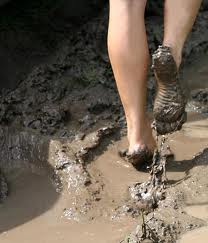
I went everywhere barefoot. Rides in the car with the ribbed, rubber mats on the floor, to the A & P, where the linoleum was slick and a little sticky, to the Dime Store where the oiled floor was smooth and fragrant, and you could watch the cashews riding a little merry go round under a heat lamp and buy them warm and salty. I sprinted over the hot blacktop parking lot to place my order for a chocolate dipped cone at the Dairy Queen. Creeping over sharp edged dirt clods in the garden, hobbling over rocks in the alley, running up and down the streets and walks and through dew drenched grass, I picked up information about the world through the soles of my feet.
I used my bare feet to climb up the playground slide, perch on the jungle gym, and entertain my friends by picking up pencils with my toes.  At my neighbor, Mrs. Wendel’s house, I sat on chair swinging my feet in the air and eating a cookie. I found Nancy Drew mysteries at the public library with its cool polished floors and lovely smell of books. In winter I toasted my tootsies over the oil furnace grate. Summers I challenged my brother to contests over who could hold his bare foot on an ice cube the longest.
Out at Grandpa’s in the country, I stepped carefully around the chicken droppings. I was acquainted with the slimy feel of the stuff between my toes. I ambled through my world digging my feet in warm beach sand, kicking up the soft talcum puff of dirt roads, splashing in creeks, slipping on mossy rocks, and screaming to discover that the strips of gooey mud clinging to my feet turned out to be leeches.
Off I would go, banging my toes against uneven sidewalk, where tree roots heaved the concrete into toe catching traps for children and the elderly. I caught my toes on furniture, had them run over with tricycles, wheel barrows and stomped on by my brother. (He will deny this.) There was the occasional sickening goo of dog manure and the large disgusting toad, who had a habit of taking a snooze in the cool of the evening just outside the back door. I checked the bottom of my foot for warts for weeks after that encounter.
Other hazards included stickers, splinters, bee stings, broken glass, and the horror of my mother, a rusty nail. The Rusty Nail loomed nearly as dangerous as polio or a communist in my childhood.  Once, running across a dock to leap in the lake, I caught a dock cleat between two toes. I played and swam all day. In the evening mom took me to Doc Jackson’s office where he cleaned out the debris between my toes and gave me a shot.
I even fought with my feet. My brother and I staged what we called feet-foot battles on the couch in the living room. We were trapped on a cliff with a thousand foot drop off and had enough food for only one of us to live for a year. We also had broken our arms in this scenario, so we had to fight for our survival with our feet and kick the other into oblivion.
When a trip required shoes, I usually couldn’t find them. I remember when mom finally put her properly shod foot down.
“Put your shoes on! You can’t go uptown barefoot.”
“Why not, Mom?”
“Because old men spit on the sidewalks.”
Well, that did give me pause. Uptown there were no signs that said No shoes. No shirts. No service. I do recall signs with dripping blue icicles and the invitation, Come in. It’s cool inside! To this day even though she has had air conditioning for years, my mother’s idea of a special treat is going out somewhere for a “cool drink,” which means lemonade or  Seven Up.
I go barefoot much less these days. Arthritis has set into the joint of one of my toes. Something called Morton’s neuroma led me to the purchase of orthotic insoles.
I don’t know if my distaste for shoes had anything to do with my love for God, though the Holy One does seem to have a preference for a bare foot. When God told Moses to remove his sandals before the burning bush, he didn’t say take off your hat or your cloak or your tunic. Removing shoes is a sign of respect inmany faiths. Perhaps God is asking us to put nothing between our naked selves and the holy ground of God’s being.  No pricy Manolo, Gucci, or Louis Vuitton’s, butrather, the simple and sometimes stinky vulnerability of a bare foot is what pleases the Lord.
You can pick up an amazing amount of information through the soles of your feet. They also hold countless memories.  Maybe buried in our DNA is a holiness sensing device, which only works when we take off our shoes.
Holiness demands honesty and simplicity. Pretense, denial, deceit, and anything I might put on to cover up the truth of my own weakness and deep need must be removed, as we move closer to holiness. There are so many things we can put between ourselves and direct contact with the holiness of God on this good earth. God’s partiality for a bare foot over a resume wipes away any illusions that my worth is related to my bank account, or accomplishments. Maybe God is only a sucker for a well turned ankle, but I think it is our childlike, barefoot vulnerability and humility which he can’t resist.
I miss those barefoot days. I think I was closer to something essential, earthy and real. These days I walk back and forth in sensible shoes in the ivory tower of my head, rather than trod the messy ecstasy of the naked sole.
I do go out, weather permitting, without shoes to pick up my morning paper. I feel the rough walk under my feet and the wet grass between my toes. I look at the sky, the birds. I say:
Good Morning, Lord.
Help me this day to take off
whatever I try to put on
between myself
and your wondrous love.
Read more about prayer at www.fromholyground.org Tracking Holiness – Newsletter
Contact the author at lross@fromholyground.org,  www.fbook.me/sanctuary
Follow at http://twitter.com/lfross
Become a fan of the The Sanctuary Foundation for Prayer
My Own Devices

You don’t have time for this. Who can afford to dally about in the woods and meadows at the start of a busy day? So much to do, tasks to complete, bills to pay. The little dimwitted tyrant in the basement of your soul has already been up for hours, pacing and shoveling coal on your furnace of anxiety.
Here, right now, is the crux, the moment on which everything turns. Here is your choice.
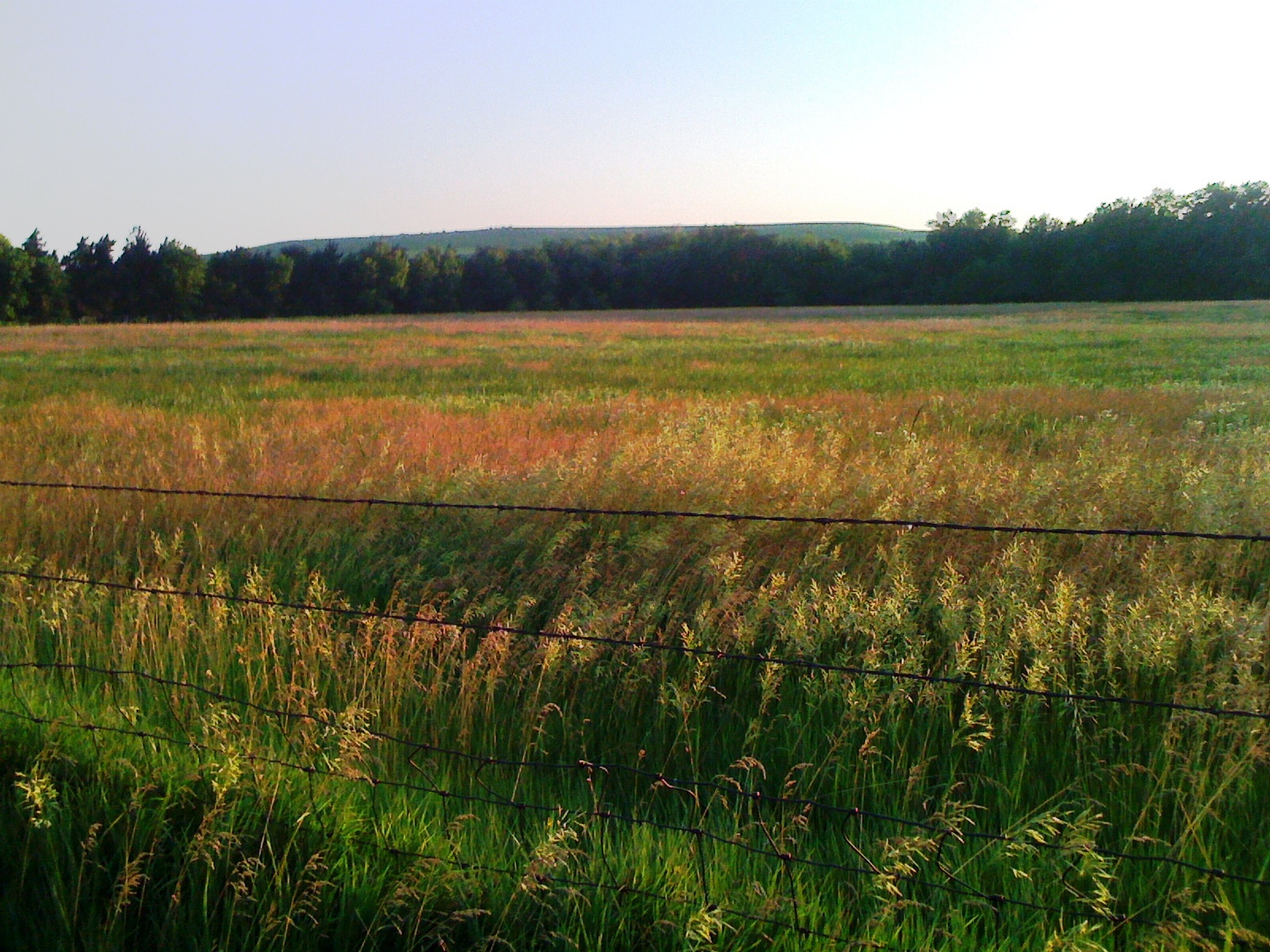
That quiet place within is always there – the woods, the mountains, the meadow, the shore – where the waters of life perpetually flow and splash.
Likewise, the summons never ends. Each day is an engraved invitation, each moment, an extended hand.
Here is what I want you to do: find a quiet secluded place so that you won’t be tempted to role play before God. Just be there as simply and honestly as you can manage. The focus will shift from you to God, and you will begin to sense his grace. Matthew 6:6 (The Message)
Will you calm the little bully in the basement, who doesn’t know much more than how to push, grab, worry, and pout? Will you find that place where you can be fully yourself and just be there simply and honestly?
Can you feel yourself relaxing, your tunnel vision widening, and grace softening your rough edges? Do you notice how your perception changes, how something is reordered or realigned within?
It’s your choice. You are endowed with an immense and crucial freedom. You can leave peace and beauty on the mountain, in the woods, or up in the attic in a box next to the Christmas decorations, or you can take the hand of Love in this moment and be led into delight.
As you offer yourself to God and enter into communion, this interpenetration of your being and the being of God heals, transforms, and mutually satisfies you and Holiness. Here is what amazes me. God desires, even longs to be with us in conscious relationship.
Ours is a God who, yearning for our companionship, plaintively asks his people,
Why was there no one when I came? Why did no one answer when I called? … I was ready to be sought by those who did not ask, to be found by those who did not seek me. I said, “Here I am, here I am,” to a nation that did not call on my name. I held out my hands all day long to a rebellious people, who walk in a way that is not good, following their own devices… Isaiah 50: 2; 65: 1-2
Up at dawn, checking my calendar on my hand held device, I am stopped in my tracks by these words of Isaiah.
St. Therese of Liseaux put it like this:

God has no need of our works. God has need of our love.

Read more about prayer at www.fromholyground.org
Tracking Holiness – Newsletter
Contact the author at  lross@fromholyground.org, www.fbook.me/sanctuary
Follow at http://twitter.com/lfross
Become a fan of the The Sanctuary Foundation for Prayer
How the Light Gets In

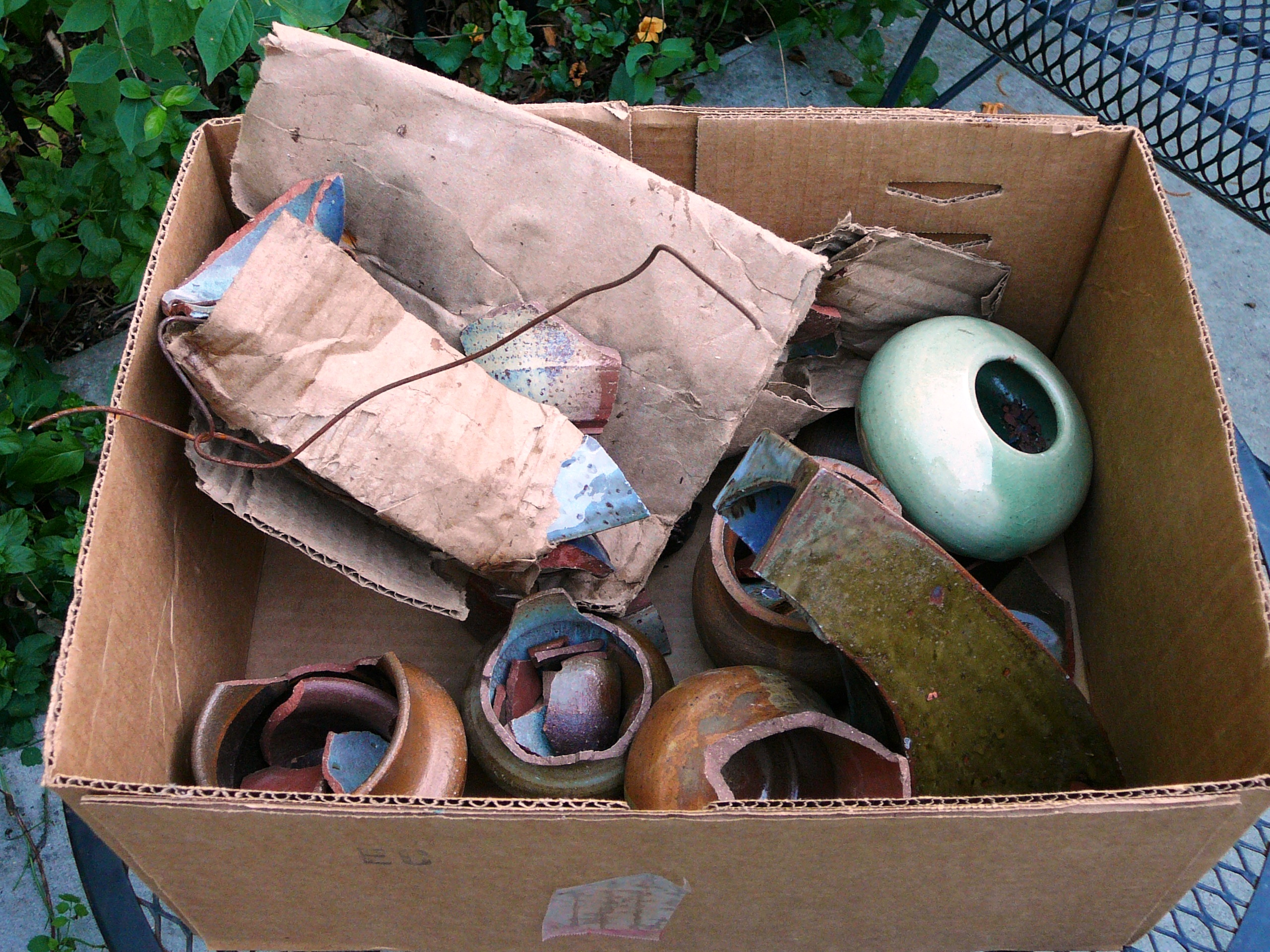
Weeping before the box, she lifts out the pieces and places them on the counter. All but one or two are broken.
Two weeks before when the boxes arrived, I had carried, heartsick, this one filled with the chink and clatter of broken pottery to the basement. Then I forgot all about the box of broken dreams, until I heard her carrying it up the stairs, shards rattling like a chest of huge coins.
She moves the pieces on the counter, sorting and fitting parts together.
In a distant city another young woman also picks out the ruins of herself from the broken jar of illusion.
So much is broken – plans, relationships, jobs, dreams – and rattles around inside us. We take out the pieces, hold them to the light, and try to fit them together. This confrontation with our fallibility and that nothing earthly lasts forever brings deep suffering. Loss is always more painful than the books can say, the scriptures convey, or the prophets of prosperity preach. We need a picture.
A man at the end of his own dance with mortality, hunched over on his knees in a dark garden, tears rolling down his face. He says to his father, the Heaven Dweller, “Take this cup from me.” And to his friends, “Can you not stay with me one hour in this agony?”
There may be something harder than watching one’s children suffer, but on this day I do not know what it is. The hardest thing I do in this work of ministry, prayer, and listening to souls in their journey to God is staying awake with others in their pain. This is to say, that the hardest thing is staying awake with Jesus as he suffers in others.
Some days I fail. I numb out. I fall asleep. I deny the suffering, blame the sufferer, quibble and become annoyed and irritated with how the person expresses her pain. The other day I thought of one family, “Always lots of drama in this family system.” I suppose, applying the same cynical criteria, one would have to say that Jesus was the all time drama queen.
Can’t you just stay with me in this torment? Can we just be there, trusting God and the soul to figure things out? Respecting the power and presence of the Holy Spirit in the awesome autonomy of an individual life, while lifting up the candles of faith, hope, and love seem to be my task.
I fidget. I want to fix things, pass out band aids. Leaning over her shattered treasures, she tries to wire one sculpture back together, fashioning a frame of cardboard.
“We need some glue. I’ll get some glue,” I say. “Let’s go to the store and get some good glue.”
She refuses.
Finally I stop.
Several days later I ask about the box of jumbled shards on the porch. “Oh, I don’t care what you do with it,” she tells me, as she heads off with her eyes on new heights.
To love, to know passion, and bliss is also to have our hearts broken. I know of no way to get around this and anyone who tries to tell you different is a liar. To live, we must die. To touch transcendence and eternity is also to gaze upon and weep over the box of our own finitude, our broken handiwork, our illusions, and limited understanding. “Forget your perfect offering. There is a crack in everything. That’s how the light gets in,” sings Leonard Cohen.
The man in the dark garden gets up. It is time, he says, to be broken.
It is time
for us to be made whole.

The birds they sang
at the break of day
Start again
I heard them say
Don’t dwell on what
has passed away
or what is yet to be.

Ah the wars they will
be fought again
The holy dove
She will be caught again
bought and sold
and bought again
the dove is never free.
Ring the bells that still can ring
Forget your perfect offering
There is a crack in everything
That’s how the light gets in.
Leonard Cohen
Dear Hearts: Don’t give up. Don’t ever give up. For fun – A couple of video versions of Cohen’s Anthem.
You Tube: Cohen in concert singing Anthem
You Tube: Photo interpretation of Anthem
Read more about prayer at www.fromholyground.org
Tracking Holiness – Newsletter
Contact the author at      lross@fromholyground.org, www.fbook.me/sanctuary
Follow at http://twitter.com/lfross
Become a fan of the The Sanctuary Foundation for Prayer

A Goodly Theme

This post is an adaptation of a post first published July 5, 2010.

My heart overflows with a goodly theme
as I sing my ode to the King. Psalms 45:1

The kingdom of God will come when men and women are willing to be penetrated by bliss.
-M.C. Richards – Centering in Pottery, Poetry, and the Person

Her words stopped me in my tracks and resonated like a struck gong. Little seemed blissful in my life at the time. It was 1973. I was living alone in an apartment in Ann Arbor, Michigan, working at a job I hated, depressed, and hurting deeply. These words of artist M.C. Richards penetrated my defenses, self pity, and sense of worthlessness like a swift shining sword. For the first time in a season of sadness I felt hope.

The notion that the rule of God, the peaceable kingdom, the promise of wholeness for all people is a function, not of ridding the earth of evil, not of righting all injustice, not in overcoming human sin and limitation, but rather our willingness to receive goodness and mercy into our being  has animated my life ever sense.

“Put down your sword!” Jesus tells Peter in the garden of Gethsemane. Peter, in a desire to protect his master, had taken a sword to the ear of one of the Roman soldiers who had come to arrest Jesus. However, Jesus’ kingdom was not of this world. It is a Reality already here, present, and accessible to all. Jesus says, it is within you and everywhere like a seed, common and transforming as leaven. The winsome, disarming Jesus manifested that kingdom wherever he went and invited his followers to do the same.

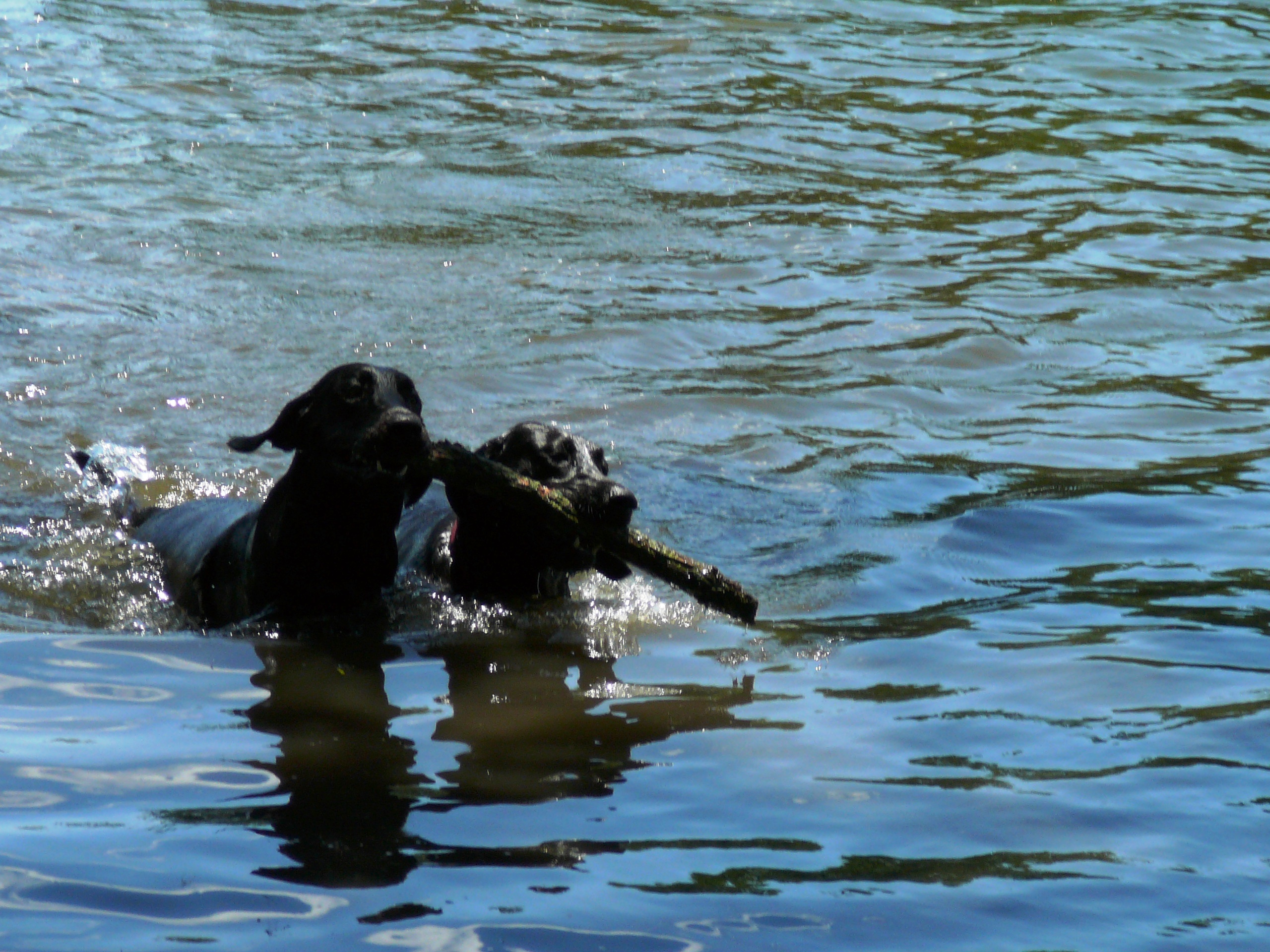
Two disarming black labs, my Elijah and Jean Luc Picard, who arrived with some house guests, have been teaching me about bliss. The dogs met for the first time a week ago with the hearty delight of Adam, when God introduced to him the woman he had made of Adam’s rib.

“Ah, at last a fit companion! Bone of my bones, flesh of my flesh,” Adam exults. Though not recorded in the scripture, I figure Adam then wiggled all over just like my dog, Elijah.

The best-friends-forever have been inseparable – wrestling, play fighting, swimming, fetching, and sprawling, here and there, exhausted and snoring. Holding back nothing, these fellows have allowed bliss to penetrate and animate every cell of their bodies. Bliss surrounds, follows them, spills out of their eyes, and rolls off their shoulders. Even the cat has a spring in her step and an amused quality to her feline reserve.

I believe the great challenge of our time and all mortal time is holding our hearts open to the rain of grace – the glorious reign of delight that ceaselessly offers itself to the whole creation.

“But hold on!” you say. What about climate change eating away our coasts and killing off species? What about health care crisis?  What about the lives and shores devastated by oil spills? What about your own personal crisis and impasse, your unemployment, your grief, your illness? What about the suffering ones everywhere we turn?

Could you, will you, permit the tiny possibility of joy to penetrate your darkness, to kiss you on the face, to pounce upon you from behind? Maybe, before you know it, it will jump up into your lap and go to sleep in your arms.

To notice, delight in, and allow ourselves to be penetrated by the goodness of God does not mean we ignore the places where that goodness is obscured or sorrow and pain exist.

The amazing opportunity to be a member of the homo sapiens species alive on this earth at this time is an incredible gift.  Our willingness to receive, to lay down and roll on our backs in, the sheer bliss of being alive is what allows God to transform that vortex of darkness, greed, and hate through us. What evil and sin target and destroy is joy, because joy is a unfallable sign of the presence and power of God.

The world does not need our disgust, outrage, anger, and rage. It needs the Reign of Christ’s joy with its unfailing hope, faith, and love. The world – sucked into the whirlpool of greed, violence, and  suffering – will not enter the Kingdom of God through our anger, retaliation, and swords, but through our bliss, the utter delight and lab-lucious joy of being children of the Father of Goodness and the Mother of Mercy.

Let no one and no circumstance rob you of such a splendid birthright.

Download and read latest issue of Holy Ground – A Quarterly Reflection on the Contemplative Life,  “Try a Little Tenderness”

Holy Ground Spring 2017

Eating God

I have been on study leave the past month in order to work on a new book. The generosity of Crestview United Methodist Church, where I work part time, and several generous donors to the Sanctuary Fund have made this gift of time and space possible. I have prayed, listened, written, and rested in the stunning abundance and goodness of God. Did I make progress on the book? Oh yes. I also discovered how much more there is to do. My goal is to complete it by the end of  this January. I tell you this so you will hold my feet to the fire. All of you are in my heart and thoughts. Thank you so much for your support and presence in this conversation about our lives together in God.

Here is a sneak preview of the work in progress:

God is voluptuous and delicious. Meister Eckhart
O taste and see that the Lord is good, promises the psalmist. (Psalm 34:8) Yet many people find God hard to swallow, not to mention the side dishes served up with God: religion, piety, doctrine, rules, austerity, judgment, conflict, and war. According to contemporary research quite a few people are not swallowing Christianity.
Over one third of the people in this country looking at Christianity from the outside have a bad impression. Researcher David Kinnaman writes, “The growing hostility for Christians is very much a reflection of what outsiders feel they receive from believers. One outsider I met put it this way: ‘Most people I meet assume that Christian means very conservative, entrenched in their thinking, antigay, antichoice, angry, violent, illogical empire builders; they want to convert everyone and generally cannot live peacefully with anyone who doesn’t believe as they do.’
In a time when faith didn’t have such a bad image, Thomas Merton, teaching a group of monks about swallowing God, used this approach, recorded in a poem by Ron Seitz:
So, you see, it’s something like this, to use an image or a metaphor.
…In total inhalation, in the act of the Eucharist, you eat the Mystical Body,
the Cosmic Christ by accepting, by participating, by celebrating, in joy
the total charity of your Being in creation! …
And in total exhalation you offer up, give back, go home in redemption.
You do this by curing the inner spirit between you and God the Incarnate Creator,
what we oftentimes call in Mystical Theology, original sin.
That’s why you go to the monastery, the primary reason anyway.
It’s to do that, to heal the illusion of separation, the separation of you from your true person,
from the world in creation, and especially from God.
It’s all, we’re all one. So relax. Quit apologizing.
We really don’t have anything to be afraid of, now do we?
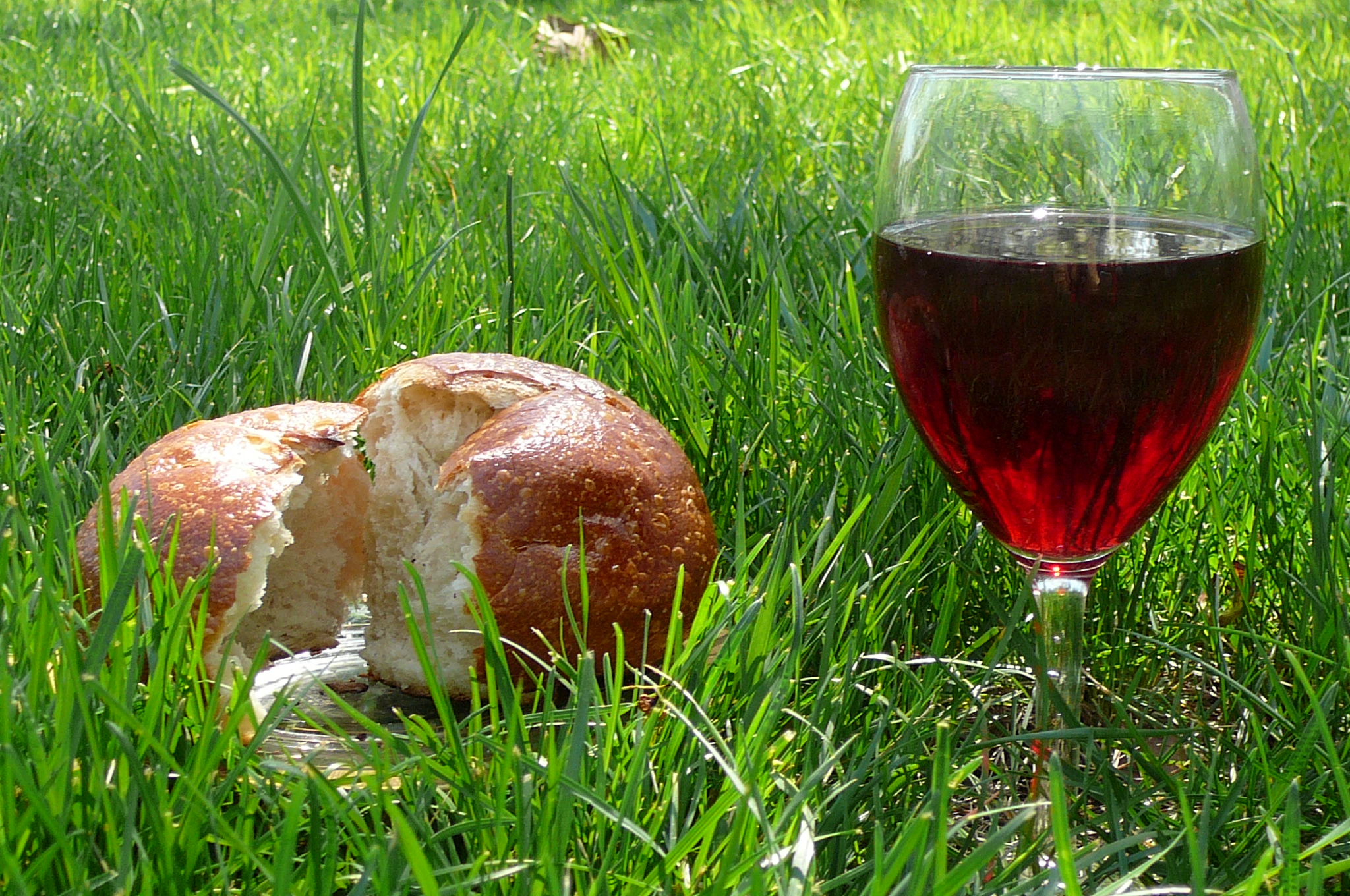
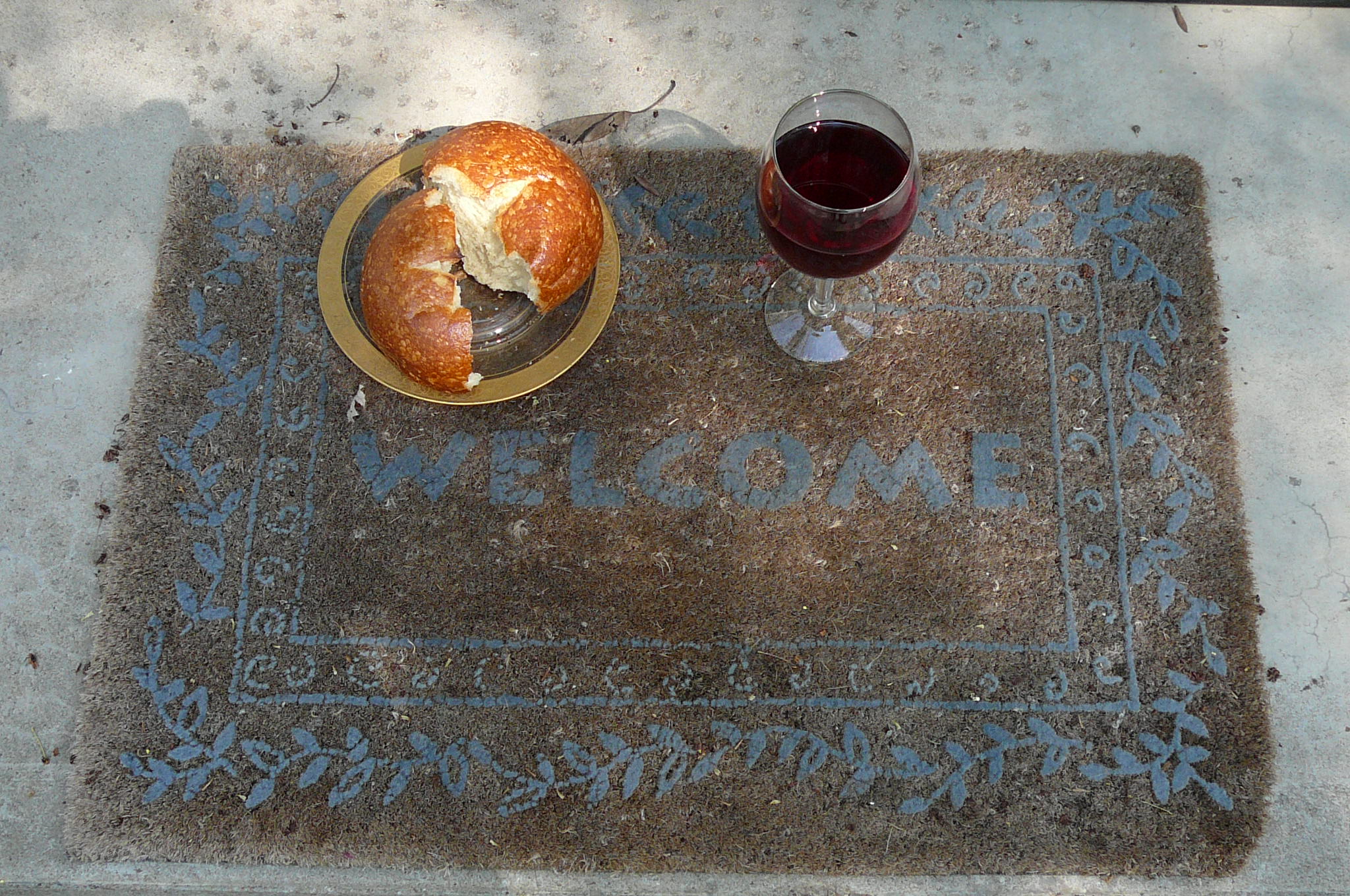
If Merton is too abstract for you, try this: Seeing the communion elements being passed down the row the little girl exclaims, “O look Grandma, we are getting snacks!”
Holiness seeks intimacy, asks to be consumed, taken in and digested by us in a fundamental, earthy way as food. Fruit of the vine, wheat from the fields grown in the soil, watered by rain, tempered by wind, kissed by the sun. Simple ordinary food becomes transformed by the presence of the one who said, “Here, this bread, this wine is my body. Drink it and it will become your body too.” We get snacks.
Merton continues,
See. Either we are one with the Holy Spirit or not, eh.
And if the incarnation, the Word make flesh is a living reality,
then the whole cosmos is sacramentalized, is sacred and holy.
Is really church,
see (laughing) and you cannot get out, eh, can’t escape that, even if you wanted to.
Not everyone understands God as Merton. A friend and long time church member once confided that one Sunday when the pastor tore off a chunk of bread and handed it to her with the words, This is the body of Christ, “Something happened. I almost gagged and suddenly this seemed like some primitive cannibalistic ritual of eating the body of some person to gain his prana. It seemed repulsive.” She hasn’t been back to a communion service since. Another friend, victimized by a satanic cult, has excruciating flash backs when she goes to receive the Eucharist. Add a few verses of the old hymn “Nothing But the Blood,” and one can imagine most any curious new comer beating a path out the door before the pastor gets out the benediction.
As one of my daughters would say when she was little with her hands on her hips, “Mom, you have a lot of splaining to do about this.”
For starters let’s take a larger, metaphorical view. God invites us to eat what is before us, the fundamental reality of our lives, no matter how unsatisfactory. As we taste and see, chew and digest our experience and truth, we are nourished and transformed by the sacred reality of this world. We grow into the likeness of God, holiness itself. In placing us in this life, God has asked us to swallow this world and one another with an inclusive unconditional love.
Many times I have preferred to spit it all out.
Read more about prayer at
www.fromholyground.org,
T
racking Holiness – Newsletter
Contact the author at lross@fromholyground.org, www.fbook.me/sanctuary
Follow at http://twitter.com/lfross
Become a fan of the The Sanctuary Foundation for Prayer

A Crisis of Contemplation

The latest issue of Holy Ground is out. This little reflection on the contemplative life comes out quarterly. In this issue I write about our struggle to be prayerfully present to our work, our tendency in a crisis to rely on what we can know and do, rather than on what God may be offering us, and the revolutionary effect of digital media on how we function in our society and churches. Goodness, that is a lot to cover in one essay.

Here is an except:
After worship we got down to business. However, I felt I wasn’t finished worshipping. I wanted to say, “Wait a minute. God is still speaking.” I wanted to keep pondering the texts, and to listen and reflect together about what we were hearing. The day’s agenda initiated a shift in the attitude and attention of the group from an intentional awareness of God to the task at hand. This is precisely why I had been asked to pray for the group: to serve as a visible reminder of our communal connection and listening to God. One man, thanking me after the meeting said, “I forgot that you were here. Then I happened to look over and saw you praying. It meant a lot.”
I wonder how things would go, if someone were kneeling or bowed in prayer at all our tasks and business. Try it in your imagination. Look across the room. See someone, Christ, a friend, or stranger praying for you there. Is the person sitting in a chair, kneeling, or prostrate? What happens to you when you see this? Ah, a softening of the shoulders maybe? A sigh. Some of the strain releases. A hush of peace. The comfort of trust.
We struggle to be simultaneously present to God and to our work. So we bookend our days and activities with prayer, often a perfunctory invocation and a quickie closing prayer “to get us all on the road.” We are split in a way which sickens, wearies, and drains the life out of me. I struggle every day to bring an attentive awareness of the holy God into all I do. I fail over and over. I know when I have failed by the tension in my neck and shoulders, the eyelid twitch, the strain that comes over me when my ego has been bossing and shoving me around. I know I have failed when the space in my head has been crammed with words, ideas, opinions, fears and there is no room for Jesus. I know the deadening effect of too much talk, too much human need trying to meet human need, and no silence and space for God to meet any of it. …
The capacity to be simultaneously present to God and the task at hand is nurtured in many spiritual direction training programs. Such steadfast awareness of Christ is something the Holy Spirit accomplishes within us, not so much taught as encouraged by those who help us trust and let go into God. Such a deep integration of Christ and abiding at all times in his peace, wisdom and gentle love is God’s will for us all.
Still, mostly, I fail. I turn my back on Jesus in a way that feels brutal and violent to the Spirit within me. My rebellion consists of the bullying intrusion of myself into events, relationships, and conversations, as a mean little god, insisting on its own way and trusting only in itself.
Bringing a conscious awareness of Christ into whatever I do requires me to release power, die to myself and my way, and bend low. It means I move more slowly and mindfully. I stay in the present moment. I rest in trust and faith in God. And I have the capacity to be useless and to not know. All of which is to say, I am contemplative.
Writing nearly fifty years ago, Carlo Carretto, noted,
When there is a crisis in the church, it is always a crisis of contemplation. The church wants to feel able to explain about her spouse even when she has lost sight of him; even when, although she has not been divorced, she no longer knows his embrace, because curiosity has gotten the better of her and she has gone searching for other people and other things.
Where might curiosity be getting the best of you?

What if we expanded Carretto’s words to other situations? What if the oil crisis, the terrorism crisis, the health care crisis, and the environmental crisis were seen as crises in contemplation? How would that temper and affect how we respond to the issues we face?
What if we could see Jesus kneeling down in high level talks, on the barges of clean up crews in the gulf, and in mountain villages of Afghanistan?
Perhaps the crises we face are not a failure of human integrity or intelligence, but a failure of imagination, that eternally creating, mother of faith.

_______________

To read the entire issue, contact me at address below. I will be a happy to send you a free sample issue. Or to get four issues a year and Holy Ground you can hold in your hand, carry in your pocket, spill coffee on, and take with you to the beach subscribe now to Holy Ground on line. You’ll be glad you did.
Read more about prayer at www.fromholyground.org,
Tracking Holiness – Newsletter
Contact the author at lross@fromholyground.org, www.fbook.me/sanctuary
Follow at http://twitter.com/lfross
Become a fan of the The Sanctuary Foundation for Prayer

Where’s The Grace?

A quick perusal of online comments, letters to the editor, talk shows, and news commentaries reveal that forbearance for the sins of others is in short supply. Politics and many businesses appear to have expunged mercy and generosity from their operations.
Theologian Miraslov Volf in his book, Free of Charge – Giving and Forgiving in a Culture Stripped of Grace, writes, “Mainly we’re set up to sell and buy, not to give and receive… To give is to lose.”  We do not know how to receive our lives. We try to earn our worth, or demand it because we feel entitled to it. We see the other as either a potential rival or a target market. We are quick to blame, slow to forgive, and eager to sue. Getting and spending, beating and winning, we are oblivious to the ocean of care and delight in which we have been placed by the sheer goodness of God.
You guessed it. I have been watching television and reading newspapers too much. Our culture distracts us from the truth of the totally unearned, undeserved gift of our precious lives. In contrast to the world, faith teaches us that we are not here to achieve our own purposes, but rather to be instruments of God’s grace and peace.
Volf closes his book with a long series of questions:
So why do so many of us take the “sword” into our hands so readily? Why do we visit vengeance on our enemies, when we should, inspired by the cross, forgive?….Why have many of our Christian fathers and mothers throughout history, greedy and vengeful as they were, left so much suffering in their trail?… Why do we refuse the God-given bridge that would transport us from selfishness to self-giving, from vengeance to forgiveness? That’s a mystery that should make us tremble – tremble before the God who gives to the ungrateful and the God who forgives the ungodly.
These are huge questions, questions that need to be asked and considered. However I think the way out of the morass of human resistance to grace is probably not in looking at our tangled, twisted selves, but rather in lifting our eyes to the Transcendent Goodness in our midst. Gazing on love, mercy, and justice cleanses, refreshes, and  re orders our priorities.
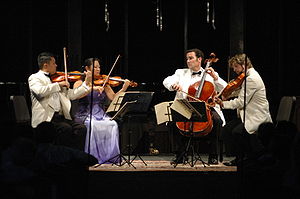
And here in Topeka, Kansas you may receive such a grace filled vision, actually free of charge. The Sunflower Music Festival is in town. For nine evenings you can listen to some of the world’s best musicians play Mozart, Beethoven, Ives, Gershwin, and others.
Little kids, youth, and the elderly, bussed in from care centers, will sit hushed in the packed concert hall each night. We watch the conductor lean over his orchestra, calling forth lilting melodies of heart breaking beauty and thundering power. We fall into the wonder of the pianist’s hands, the French horn’s smooth haunting call, and the sobbing sweep of violins.
We take part in the miracle of humans cooperating, denying themselves, as they lose their lives to create together something larger, finer, than any one of us could do alone. We surrender to the gift of grace among us that is manifested as we give and receive, bend and bow, rest, and watch the hand of the one who can weave out of our lives together on this earth something that thrills, frees, and heals.

The Miro Quartet

Where’s the grace? Why right in your own back yard. And here in Topeka at the Sunflower Festival, it won’t cost you a cent.
Read more about prayer at  www.fromholyground.org Tracking Holiness – Newsletter
Contact the author at lross@fromholyground.org, www.fbook.me/sanctuary
Become a fan of the The Sanctuary Foundation for Prayer
Follow at http://twitter.com/lfross

Thirsty

The result of prayer is life.
Prayer irrigates the heart.  -St. Francis

Every day love corners me somewhere
and surrounds me with peace
without having to look very far or very hard
or do anything special.  -Thomas Merton

Watering the parched heart
sprinkling prayer into the deep cracks
permitting the moisture to run
in tiny rivers into the crannies
the chaffed soul absorbing the balm for all wounds,

abruptly I draw my lips from the cup.

A wild cry like a lone goose lost in an endless sky –

I am not worthy.

My coarse palate cannot savor these subtle flavors,
this blend of spreading oaks, ocean spray, the notes of birdsong,
the aftertaste of tears.

Nor may I make myself gentle enough,
still and pure, for the sweet delicacy of love.

I, oafish, gulp the gift, lurch clumsy through the beauty.

Have mercy.

Yet everywhere, everywhere
you are there
streaming your silken waters through creation
calling,

Ho, everyone who thirsts, come!

You compose webs
across our path.
Sticky strands cling to us.
You fill our throats with laughter.

All day from my shoulder trails a ribbon of light.

Read more about prayer at  www.fromholyground.org Tracking Holiness – Newsletter
Contact the author at lross@fromholyground.org, www.fbook.me/sanctuary
Follow at http://twitter.com/lfross
Become a fan of the The Sanctuary Foundation for Prayer