Category Archives: spirituality

Prairie Lamentation

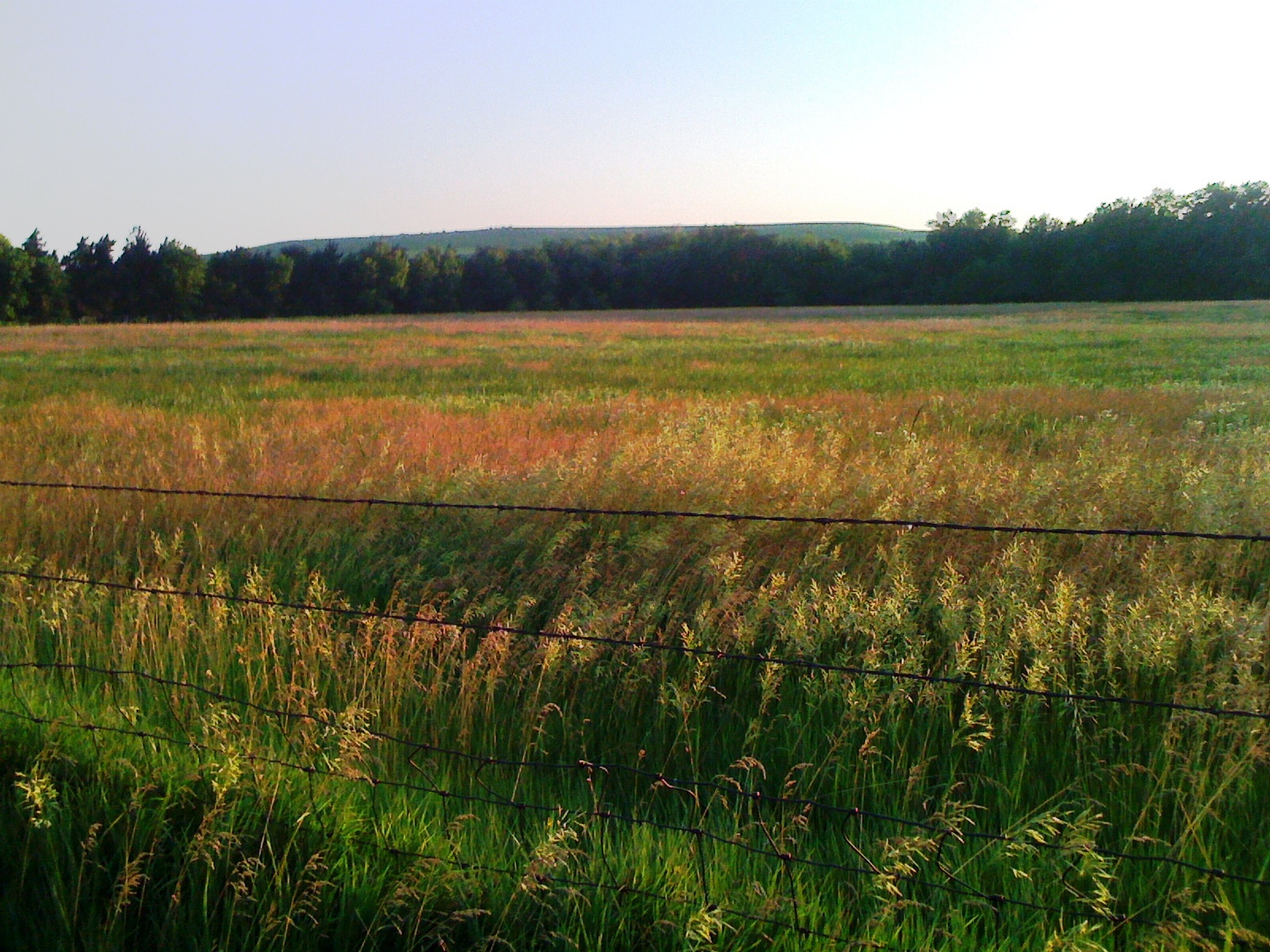
Driving west on Interstate 70 from Topeka, Kansas around ten in the morning, I plunged into that green swath of oceanic beauty called the Flint Hills. Named by explorer Zebulon Pike in 1806, the majestic sweep of bluestem prairie extends north to Nebraska and south all the way to Oklahoma.

Formed 250 million years ago when Kansas and Oklahoma were covered with shallow seas, the land is compared to the undulating roll of a great body of water. The shallow soil rests on seabed layers of flint, shale, and the fossilized remains of sea animals.

Reveling in the beauty, I was sailing down the road, when I came abruptly upon a sight that brought my heart to my throat and sent a chill down my spine. A huge shimmering whiteness moved off to the north along the road. Bigger than the side of a barn, it lifted and fell back to the ground. It seemed alive somehow, but no animal could be that large.

I slowed, curious and wary. The highway was deserted. Was this a UFO? Maybe I should look for an exit and turn back. I drove a bit further, then coasted onto the shoulder, and stopped about 100 yards away, watching that white thing waving.

It looked like huge wings. One wing spread up the side of a hill, the other lay nearer to the road in the valley. A few iridescent feathers lifted in the wind and reflected the blue sky like mirrors. The wings were rising and falling slightly in a convulsive shudder.

It’s hurt. It needs help. But it’s huge. Would I scare it? Would it attack me? And what is it?

I looked up and down the road. Still no traffic. I opened the car door and slid out. A sudden rush of wind whipped past and slammed the door shut. The air was cool and smelled of grass. The only sound was the soft swish of shuddering feathers. Standing by the side of the road between earth and heaven, I pressed my hands over my mouth and stepped forward. I had taken a few more steps when, suddenly, the thing, the bird hiccupped. It convulsed and heaved in a ragged sob.

I nearly jumped out of my skin, but I saw that it was crying. The beautiful bird had spread herself over the sea of grass to weep. Don’t ask me how, I just seemed to know the bird was a she.

I moved a little closer, wondering if I could be of comfort. May I help you? But before I could finish the thought, a river of grief and anguish engulfed me and I tumbled over and over, gasping for air, drowning in sorrow. A deafening roar of cries and sorrow filled my senses. Then a battering wind and hellish screams pulverized me into tiny pieces, flinging me into darkness. After that, nothing.

When I came back together as myself, I was there in the quiet August morning with the hills, the sky, the empty highway, and the still bird. She seemed calmer now. The shuddering had stopped.

Are you all right? I asked. Are you able to fly? And again, instantly, I was drawn out of myself in a sickening swoop over mountains. We dove into the depths of the sea, peered into the eye of a whale, and crawled with a crab on a shore. I saw the molecules of a heart valve, and plummeted into the shrunken belly of a child in Sudan. We whooshed through glittering palaces of power and stood on the floor of the New York Stock Exchange. She laid those wings over a pile of bodies in Pakistan and sat on the shoulder of a man holding an AK47 rifle. We splashed in a child’s swimming pool with a little girl in a pink and green striped bathing suit. She whispered to an artist bent over a painting, and coursed up the stem of a tomato vine in Fremont, Nebraska.

This time, reeling and breathless, I didn’t want to ask any more questions, or bear the answers. I gazed upon her wings spread over the prairie grass and the reflection of the blue sky, the puffy white clouds, and the tall grass waving. In the play of light and color I caught of glimpse of a woman peering back at me and realized with a start that the woman was myself.

Then she lifted one wing. She drew her head out from under it and turned her eyes on me. A bolt of love and compassion seared through me with the crackle and snap of flames rising from dry wood.

I sank down beside the bird. What do you want of me?

Tell them.
To stop.
Hurting me.

I cringed, shaking my head. I can’t. I am complicit. I have blood on my hands, too.

She waited for me. The wind ruffled her feathers. The puffy clouds moved across the sky. Somewhere a meadowlark called.

Okay. How?

Be brave.
Be brave, she told me.
Be brave.

_____________________________

Let no unwholesome word proceed from your mouth, but only such a word as is good for edification according to the need of the moment, so that it will give grace to those who hear.  Do not grieve the Holy Spirit of God, by whom you were sealed for the day of redemption. Let all bitterness and wrath and anger and clamor and slander be put away from you, along with all malice. Be kind to one another, tender-hearted, forgiving each other, just as God in Christ also has forgiven you. Ephesians 4: 29-32 (NASV)

Don’t grieve God. Don’t break his heart. His Holy Spirit, moving and breathing in you, is the most intimate part of your life, making you fit for himself. Don’t take such a gift for granted. Ephesians 4: 29 (The Message)

We invite you to become a fan of the The Sanctuary Foundation for Prayer

Read more about prayer at www.fromholyground.org,
Tracking Holiness – Newsletter
Contact the author at lross@fromholyground.org, www.fbook.me/sanctuary
Follow at http://twitter.com/lfross

Rx for a Crisis

The man, unemployed for two years now, leans his elbows on the kitchen table, puts his face in his hands and weeps.
Be still and know that I am God.

The family, numb with shock and grief, stare into the abyss the sudden death of their child has opened before them.

Be still and know that I am God.

The couple – run ragged with work, child care, and keeping up with the Joneses – gaze across the room at each other and wonder how their love turned to resentment and anger.

Be still and know that I am God.

All the while the nation’s public discourse rages on with the clamor and clang of opinions, self righteous indignation, and attack.
Be still and know that I am God.
So much of our lives seems to be fueled by fear and hyperbole, or hype, as the word has morphed into. The fear and anxiety tend to compress our perception into narrow tunnel vision and demand that we act immediately, often at the expense of reasoned consideration, and gathering all the facts. Hyperbole, the fetching sister of fear, exaggerates, escalates, and glamorizes her brother. We feed on sensationalism, scandal, and worst case scenarios.
In the context of this culture of fear and hype, when we encounter the pain and loss of being human, in whatever form it shows up in our life, we may feel overwhelmed, isolated, or ashamed.
Our times are difficult. We face as individuals, as a nation, and as global citizens immense challenges. People are suffering. The planet is suffering. We must act and act wisely. Will our action, our response to the crises we face, rise from our faith or our fear? Will the choices we make be fueled by hysteria, anger, discouragement, or the wisdom and grace of something greater and mightier than we?
Be still and know that I am God. Well, what good will that do? Is that going to improve the job opportunities in my town? Is that going to bring back our son from the grave? Is that going to bring back the love and joy we used to know as a couple?
No. It may or may not change the crisis you are facing. However, it will change you. Absolutely. Being still and knowing that God is God and you are God’s creation will shift how you perceive yourself in the midst of your crisis, and how you perceive the crisis itself.
Being still and knowing that God is God will establish you in the depths of God’s Being within you. Here you will discover a strange peace that doesn’t make sense, that passes all understanding as St. Paul wrote (Philippians 4:7). You will begin to live and act and make decisions from that deep well of peace, rather than your fear and anxiety.
The New English Bible translates this verse from Psalm 46 in this way: Let be then: learn that I am God. Let things be as they are, stop strategizing, blaming, figuring out solutions, or how to get even. Stop your action and thinking. Be in that energetic stillness that is God’s presence within you.
In doing this you will learn that God dwells within you, speaks within you, and is moving in your life and world. You are not in charge, never have been. You do not have to figure this all out and get it right somehow. Relax. Trust.
God is our shelter and our refuge,
a timely help in trouble;
so we are not afraid when the earth heaves
and the mountains are hurled into the sea,
when its waters seethe in tumult
and the mountains quake before his majesty.
There is a river whose streams gladden the city of God
which the Most High has made his holy dwelling;
God is in that city; she will not be overthrown,
And he will help her at the break of day.
The Lord of hosts is with us,
the God of Jacob is our refuge.    from Psalm 46


Become a fan of the The Sanctuary Foundation for Prayer

Read more about prayer at www.fromholyground.org

www.theprayinglife.wordpress.com
Tracking Holiness – Newsletter
Contact the author at  lross@fromholyground.org, www.fbook.me/sanctuary
Follow at http://twitter.com/lfross

A Legacy of Love

My brother reads from a letter my sister sent to my parents in 1956. She was a young bride living in Washington, DC in her first teaching job. “Here is your history,” he says, handing her the pile of typed correspondence. Neatly bound in boxes tied with string, stacked in baskets, stashed in closets, my mother saved every greeting card and letter she received.
We find our baby clothes – tiny booties, bonnets, and blankets – saved in the original boxes. My sister looks over a list of the names of people who came to visit when she was born. Holding the evidence in her hands, she says, “I was well loved. I was doted on.”
There are other treasures, Grandma’s pin, which on sight immediately conjures the navy blue dress she wore it on, and her austere, no nonsense personality. We all agreed that the most boring place on earth was Grandma’s house on an endless Sunday afternoon, listening to the clock ticking.
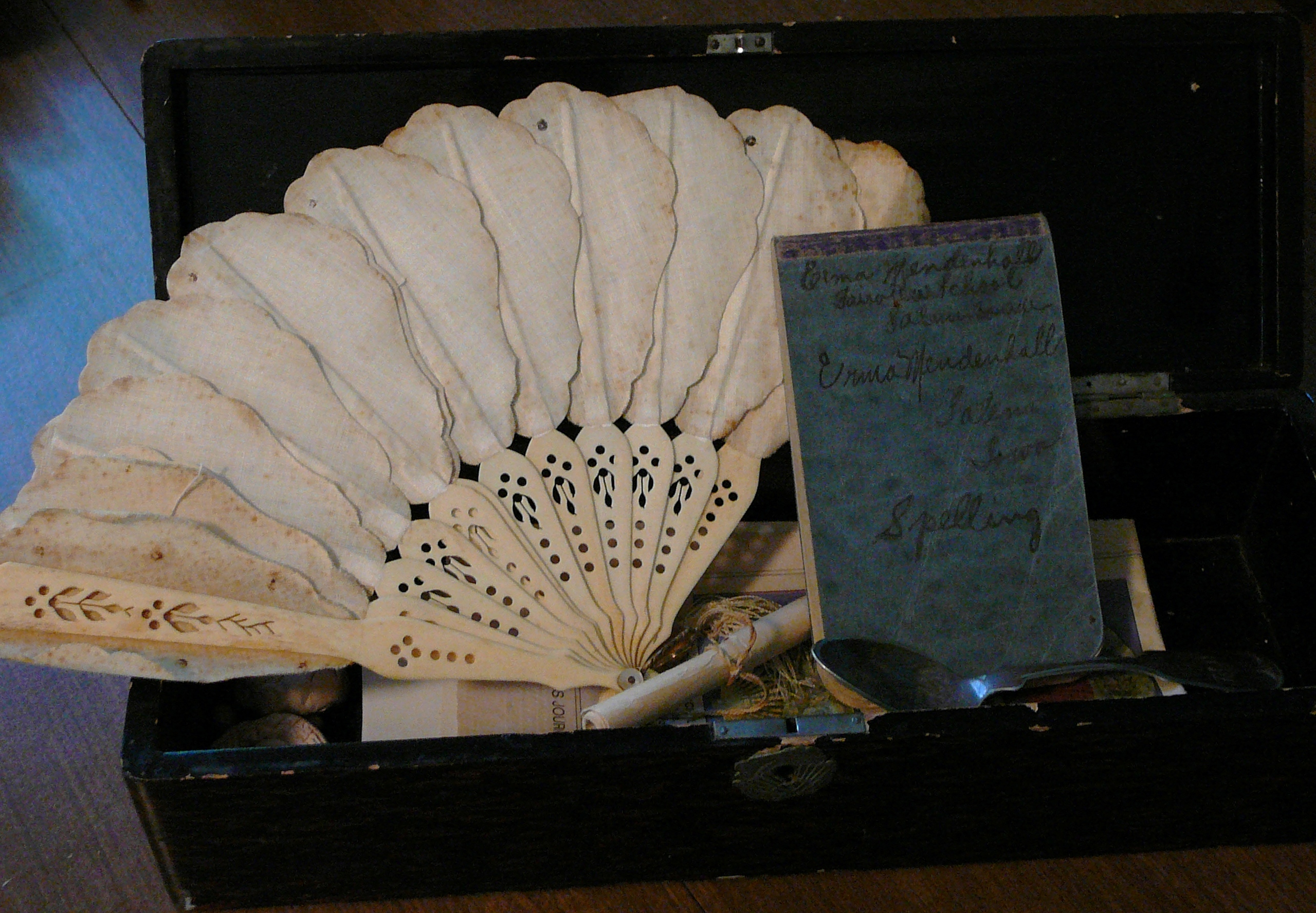
We find Great Grandmother’s worn, wooden butter paddle, carefully preserved and handed down to the eldest granddaughter. The paddle was saved in an enameled box along with an ivory fan from Switzerland. The enclosed note explained that the fan was brought back from a trip abroad by one of two women preachers in the family, Great Aunt Hannah Beard.
We are sifting the memories, treasures, and love from the chaff of well lived lives. As a friend put it, we are discovering the essence, the pure, best parts of what our parents and their parents and their parents have given us. My father died in 2001 at ninety three. My mother celebrates her ninety seventh birthday this week.
When I went to visit her, after a day of sorting and remembering, we ate some pop corn. Before she put a kernel in her mouth, she told me she likes to look at it to see what is there. “Look! Two eyes, ears.. a rabbit! Now what is in this one?” She turns the kernel over and then laughs, “Oh dear. Well, here is one leg, and another, and see what is in between?” We hoot and cackle till tears run down our cheeks, and we give that one to the dog. She holds out another kernel, “Now this one, tell me what you see in it.”
She has a poet’s ear, an artist’s eye, and a sense of humor born of suffering, endurance, and the grace of God. She sees the hidden essence of things and then sets out to show the rest of us. The house is full of paintings, wood carvings, sketch books, poetry, and natural history books. My father’s notebooks of clippings and tales of local history line the book shelves.
Dad, hunting arrow heads in the soil heaved up by spring plowing, and Mom, peering into pop corn kernels, were always scratching below the surface, turning up treasures their whole lives. My siblings and I wonder if we need a dumpster or a museum.
Love – between the legs, the eyes, the ears, and the beat of our hearts – expresses itself and leaves traces all over the place. Love sees beneath the surface of things, hopes enough to save what is special and worth doting on, passes on its truth and generosity, and leaves a priceless legacy. “We loved you so. You are so special to us,” the piles of boxes say.

Read more about prayer at www.fromholyground.org Tracking Holiness – Newsletter
Contact the author at lross@fromholyground.org, www.fbook.me/sanctuary
Follow at http://twitter.com/lfross
Become a fan of the The Sanctuary Foundation for Prayer

Barefoot

“Do not come any closer. Take off your sandals,
for the place where you are standing is holy ground.” Exodus 3: 5
I loved it, even though I was always stubbing my toes. All summer long my big toes, painted bright orange with Mercurochrome, were recovering from some new assault. I stopped my play long enough to howl and go inside for a band aid, which always fell off and turned up later in the sandbox or on the kitchen floor.
I went everywhere barefoot. Rides in the car with the ribbed, rubber mats on the floor, to the A & P, where the linoleum was slick and a little sticky, to the Dime Store where the oiled floor was smooth and fragrant, and you could watch the cashews riding a little merry go round under a heat lamp and buy them warm and salty. I sprinted over the hot blacktop parking lot to place my order for a chocolate dipped cone at the Dairy Queen. Creeping over sharp edged dirt clods in the garden, hobbling over rocks in the alley, running up and down the streets and walks and through dew drenched grass, I picked up information about the world through the soles of my feet.
I used my bare feet to climb up the playground slide, perch on the jungle gym, and entertain my friends by picking up pencils with my toes.  At my neighbor, Mrs. Wendel’s house, I sat on chair swinging my feet in the air and eating a cookie. I found Nancy Drew mysteries at the public library with its cool polished floors and lovely smell of books. In winter I toasted my tootsies over the oil furnace grate. Summers I challenged my brother to contests over who could hold his bare foot on an ice cube the longest.
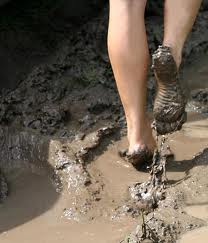
Out at Grandpa’s in the country, I stepped carefully around the chicken droppings. I was acquainted with the slimy feel of the stuff between my toes. I ambled through my world digging my feet in warm beach sand, kicking up the soft talcum puff of dirt roads, splashing in creeks, slipping on mossy rocks, and screaming to discover that the strips of gooey mud clinging to my feet turned out to be leeches.
Off I would go, banging my toes against uneven sidewalk, where tree roots heaved the concrete into toe catching traps for children and the elderly. I caught my toes on furniture, had them run over with tricycles, wheel barrows and stomped on by my brother. (He will deny this.) There was the occasional sickening goo of dog manure and the large disgusting toad, who had a habit of taking a snooze in the cool of the evening just outside the back door. I checked the bottom of my foot for warts for weeks after that encounter.
Other hazards included stickers, splinters, bee stings, broken glass, and the horror of my mother, a rusty nail. The Rusty Nail loomed nearly as dangerous as polio or a communist in my childhood.  Once, running across a dock to leap in the lake, I caught a dock cleat between two toes. I played and swam all day. In the evening mom took me to Doc Jackson’s office where he cleaned out the debris between my toes and gave me a shot.
I even fought with my feet. My brother and I staged what we called feet-foot battles on the couch in the living room. We were trapped on a cliff with a thousand foot drop off and had enough food for only one of us to live for a year. We also had broken our arms in this scenario, so we had to fight for our survival with our feet and kick the other into oblivion.
When a trip required shoes, I usually couldn’t find them. I remember when mom finally put her properly shod foot down.
“Put your shoes on! You can’t go uptown barefoot.”
“Why not, Mom?”
“Because old men spit on the sidewalks.”
Well, that did give me pause. Uptown there were no signs that said No shoes. No shirts. No service. I do recall signs with dripping blue icicles and the invitation, Come in. It’s cool inside! To this day even though she has had air conditioning for years, my mother’s idea of a special treat is going out somewhere for a “cool drink,” which means lemonade or  Seven Up.
I go barefoot much less these days. Arthritis has set into the joint of one of my toes. Something called Morton’s neuroma led me to the purchase of orthotic insoles.
I don’t know if my distaste for shoes had anything to do with my love for God, though the Holy One does seem to have a preference for a bare foot. When God told Moses to remove his sandals before the burning bush, he didn’t say take off your hat or your cloak or your tunic. Removing shoes is a sign of respect inmany faiths. Perhaps God is asking us to put nothing between our naked selves and the holy ground of God’s being.  No pricy Manolo, Gucci, or Louis Vuitton’s, butrather, the simple and sometimes stinky vulnerability of a bare foot is what pleases the Lord.
You can pick up an amazing amount of information through the soles of your feet. They also hold countless memories.  Maybe buried in our DNA is a holiness sensing device, which only works when we take off our shoes.
Holiness demands honesty and simplicity. Pretense, denial, deceit, and anything I might put on to cover up the truth of my own weakness and deep need must be removed, as we move closer to holiness. There are so many things we can put between ourselves and direct contact with the holiness of God on this good earth. God’s partiality for a bare foot over a resume wipes away any illusions that my worth is related to my bank account, or accomplishments. Maybe God is only a sucker for a well turned ankle, but I think it is our childlike, barefoot vulnerability and humility which he can’t resist.
I miss those barefoot days. I think I was closer to something essential, earthy and real. These days I walk back and forth in sensible shoes in the ivory tower of my head, rather than trod the messy ecstasy of the naked sole.
I do go out, weather permitting, without shoes to pick up my morning paper. I feel the rough walk under my feet and the wet grass between my toes. I look at the sky, the birds. I say:
Good Morning, Lord.
Help me this day to take off
whatever I try to put on
between myself
and your wondrous love.
Read more about prayer at www.fromholyground.org Tracking Holiness – Newsletter
Contact the author at lross@fromholyground.org,  www.fbook.me/sanctuary
Follow at http://twitter.com/lfross
Become a fan of the The Sanctuary Foundation for Prayer

My Own Devices

You don’t have time for this. Who can afford to dally about in the woods and meadows at the start of a busy day? So much to do, tasks to complete, bills to pay. The little dimwitted tyrant in the basement of your soul has already been up for hours, pacing and shoveling coal on your furnace of anxiety.
Here, right now, is the crux, the moment on which everything turns. Here is your choice.
That quiet place within is always there – the woods, the mountains, the meadow, the shore – where the waters of life perpetually flow and splash.
Likewise, the summons never ends. Each day is an engraved invitation, each moment, an extended hand.
Here is what I want you to do: find a quiet secluded place so that you won’t be tempted to role play before God. Just be there as simply and honestly as you can manage. The focus will shift from you to God, and you will begin to sense his grace. Matthew 6:6 (The Message)
Will you calm the little bully in the basement, who doesn’t know much more than how to push, grab, worry, and pout? Will you find that place where you can be fully yourself and just be there simply and honestly?
Can you feel yourself relaxing, your tunnel vision widening, and grace softening your rough edges? Do you notice how your perception changes, how something is reordered or realigned within?
It’s your choice. You are endowed with an immense and crucial freedom. You can leave peace and beauty on the mountain, in the woods, or up in the attic in a box next to the Christmas decorations, or you can take the hand of Love in this moment and be led into delight.
As you offer yourself to God and enter into communion, this interpenetration of your being and the being of God heals, transforms, and mutually satisfies you and Holiness. Here is what amazes me. God desires, even longs to be with us in conscious relationship.
Ours is a God who, yearning for our companionship, plaintively asks his people,
Why was there no one when I came? Why did no one answer when I called? … I was ready to be sought by those who did not ask, to be found by those who did not seek me. I said, “Here I am, here I am,” to a nation that did not call on my name. I held out my hands all day long to a rebellious people, who walk in a way that is not good, following their own devices… Isaiah 50: 2; 65: 1-2
Up at dawn, checking my calendar on my hand held device, I am stopped in my tracks by these words of Isaiah.
St. Therese of Liseaux put it like this:

God has no need of our works. God has need of our love.

Read more about prayer at www.fromholyground.org
Tracking Holiness – Newsletter
Contact the author at  lross@fromholyground.org, www.fbook.me/sanctuary
Follow at http://twitter.com/lfross
Become a fan of the The Sanctuary Foundation for Prayer

How the Light Gets In

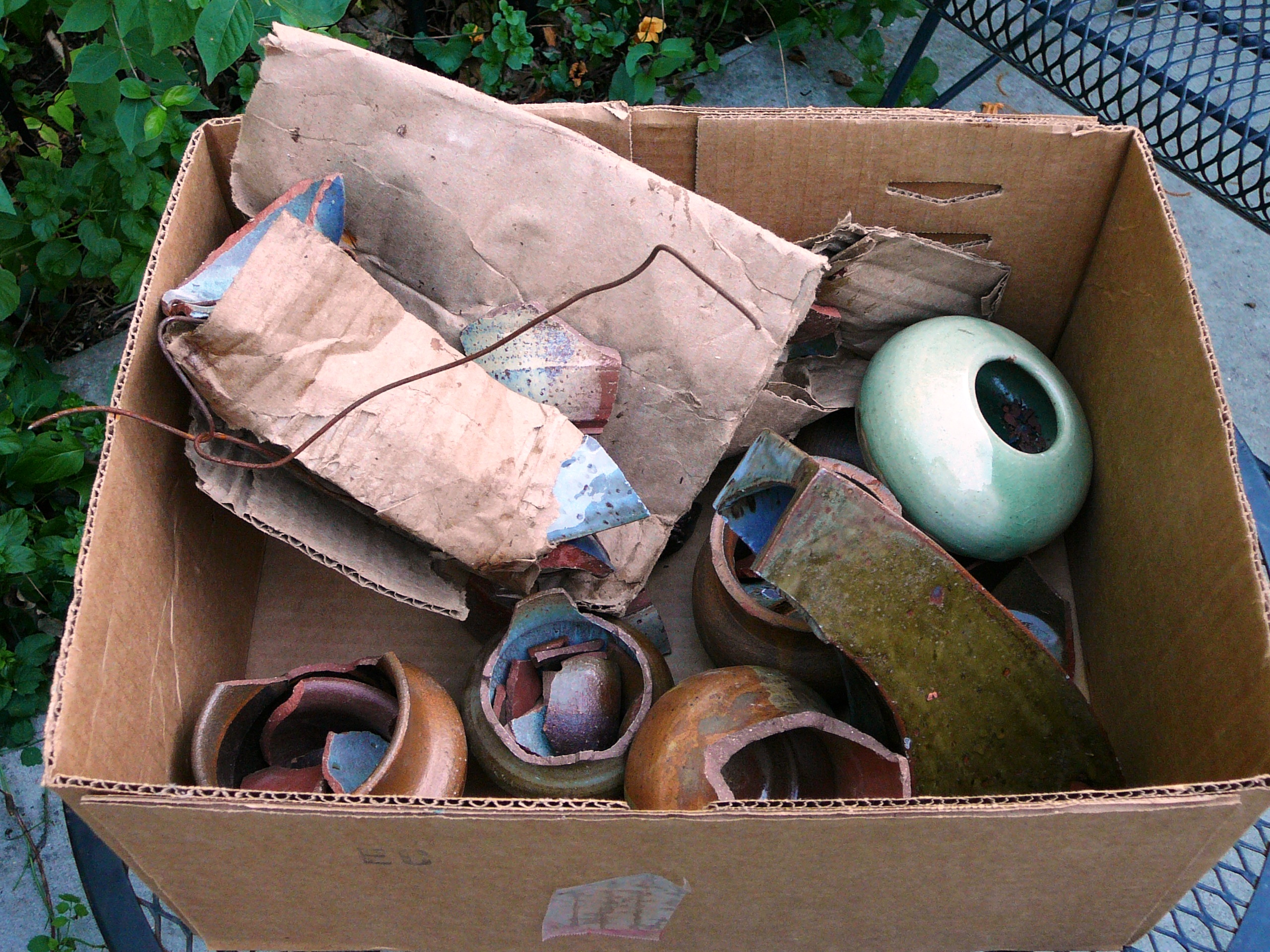
Weeping before the box, she lifts out the pieces and places them on the counter. All but one or two are broken.
Two weeks before when the boxes arrived, I had carried, heartsick, this one filled with the chink and clatter of broken pottery to the basement. Then I forgot all about the box of broken dreams, until I heard her carrying it up the stairs, shards rattling like a chest of huge coins.
She moves the pieces on the counter, sorting and fitting parts together.
In a distant city another young woman also picks out the ruins of herself from the broken jar of illusion.
So much is broken – plans, relationships, jobs, dreams – and rattles around inside us. We take out the pieces, hold them to the light, and try to fit them together. This confrontation with our fallibility and that nothing earthly lasts forever brings deep suffering. Loss is always more painful than the books can say, the scriptures convey, or the prophets of prosperity preach. We need a picture.
A man at the end of his own dance with mortality, hunched over on his knees in a dark garden, tears rolling down his face. He says to his father, the Heaven Dweller, “Take this cup from me.” And to his friends, “Can you not stay with me one hour in this agony?”
There may be something harder than watching one’s children suffer, but on this day I do not know what it is. The hardest thing I do in this work of ministry, prayer, and listening to souls in their journey to God is staying awake with others in their pain. This is to say, that the hardest thing is staying awake with Jesus as he suffers in others.
Some days I fail. I numb out. I fall asleep. I deny the suffering, blame the sufferer, quibble and become annoyed and irritated with how the person expresses her pain. The other day I thought of one family, “Always lots of drama in this family system.” I suppose, applying the same cynical criteria, one would have to say that Jesus was the all time drama queen.
Can’t you just stay with me in this torment? Can we just be there, trusting God and the soul to figure things out? Respecting the power and presence of the Holy Spirit in the awesome autonomy of an individual life, while lifting up the candles of faith, hope, and love seem to be my task.
I fidget. I want to fix things, pass out band aids. Leaning over her shattered treasures, she tries to wire one sculpture back together, fashioning a frame of cardboard.
“We need some glue. I’ll get some glue,” I say. “Let’s go to the store and get some good glue.”
She refuses.
Finally I stop.
Several days later I ask about the box of jumbled shards on the porch. “Oh, I don’t care what you do with it,” she tells me, as she heads off with her eyes on new heights.
To love, to know passion, and bliss is also to have our hearts broken. I know of no way to get around this and anyone who tries to tell you different is a liar. To live, we must die. To touch transcendence and eternity is also to gaze upon and weep over the box of our own finitude, our broken handiwork, our illusions, and limited understanding. “Forget your perfect offering. There is a crack in everything. That’s how the light gets in,” sings Leonard Cohen.
The man in the dark garden gets up. It is time, he says, to be broken.
It is time
for us to be made whole.

The birds they sang
at the break of day
Start again
I heard them say
Don’t dwell on what
has passed away
or what is yet to be.

Ah the wars they will
be fought again
The holy dove
She will be caught again
bought and sold
and bought again
the dove is never free.
Ring the bells that still can ring
Forget your perfect offering
There is a crack in everything
That’s how the light gets in.
Leonard Cohen
Dear Hearts: Don’t give up. Don’t ever give up. For fun – A couple of video versions of Cohen’s Anthem.
You Tube: Cohen in concert singing Anthem
You Tube: Photo interpretation of Anthem
Read more about prayer at www.fromholyground.org
Tracking Holiness – Newsletter
Contact the author at      lross@fromholyground.org, www.fbook.me/sanctuary
Follow at http://twitter.com/lfross
Become a fan of the The Sanctuary Foundation for Prayer

A Goodly Theme

This post is an adaptation of a post first published July 5, 2010.

My heart overflows with a goodly theme
as I sing my ode to the King. Psalms 45:1

The kingdom of God will come when men and women are willing to be penetrated by bliss.
-M.C. Richards – Centering in Pottery, Poetry, and the Person

Her words stopped me in my tracks and resonated like a struck gong. Little seemed blissful in my life at the time. It was 1973. I was living alone in an apartment in Ann Arbor, Michigan, working at a job I hated, depressed, and hurting deeply. These words of artist M.C. Richards penetrated my defenses, self pity, and sense of worthlessness like a swift shining sword. For the first time in a season of sadness I felt hope.

The notion that the rule of God, the peaceable kingdom, the promise of wholeness for all people is a function, not of ridding the earth of evil, not of righting all injustice, not in overcoming human sin and limitation, but rather our willingness to receive goodness and mercy into our being  has animated my life ever sense.

“Put down your sword!” Jesus tells Peter in the garden of Gethsemane. Peter, in a desire to protect his master, had taken a sword to the ear of one of the Roman soldiers who had come to arrest Jesus. However, Jesus’ kingdom was not of this world. It is a Reality already here, present, and accessible to all. Jesus says, it is within you and everywhere like a seed, common and transforming as leaven. The winsome, disarming Jesus manifested that kingdom wherever he went and invited his followers to do the same.

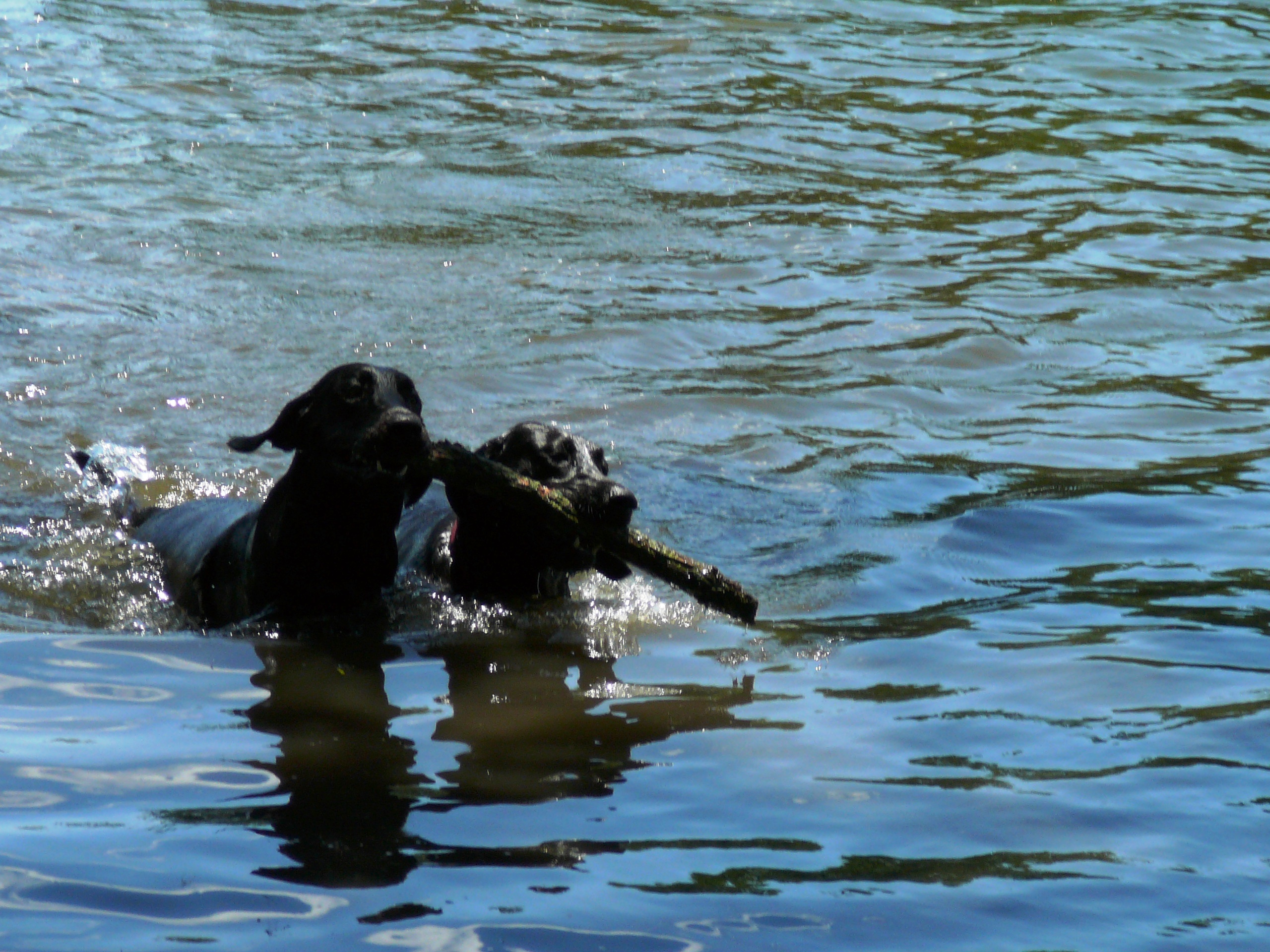
Two disarming black labs, my Elijah and Jean Luc Picard, who arrived with some house guests, have been teaching me about bliss. The dogs met for the first time a week ago with the hearty delight of Adam, when God introduced to him the woman he had made of Adam’s rib.

“Ah, at last a fit companion! Bone of my bones, flesh of my flesh,” Adam exults. Though not recorded in the scripture, I figure Adam then wiggled all over just like my dog, Elijah.

The best-friends-forever have been inseparable – wrestling, play fighting, swimming, fetching, and sprawling, here and there, exhausted and snoring. Holding back nothing, these fellows have allowed bliss to penetrate and animate every cell of their bodies. Bliss surrounds, follows them, spills out of their eyes, and rolls off their shoulders. Even the cat has a spring in her step and an amused quality to her feline reserve.

I believe the great challenge of our time and all mortal time is holding our hearts open to the rain of grace – the glorious reign of delight that ceaselessly offers itself to the whole creation.

“But hold on!” you say. What about climate change eating away our coasts and killing off species? What about health care crisis?  What about the lives and shores devastated by oil spills? What about your own personal crisis and impasse, your unemployment, your grief, your illness? What about the suffering ones everywhere we turn?

Could you, will you, permit the tiny possibility of joy to penetrate your darkness, to kiss you on the face, to pounce upon you from behind? Maybe, before you know it, it will jump up into your lap and go to sleep in your arms.

To notice, delight in, and allow ourselves to be penetrated by the goodness of God does not mean we ignore the places where that goodness is obscured or sorrow and pain exist.

The amazing opportunity to be a member of the homo sapiens species alive on this earth at this time is an incredible gift.  Our willingness to receive, to lay down and roll on our backs in, the sheer bliss of being alive is what allows God to transform that vortex of darkness, greed, and hate through us. What evil and sin target and destroy is joy, because joy is a unfallable sign of the presence and power of God.

The world does not need our disgust, outrage, anger, and rage. It needs the Reign of Christ’s joy with its unfailing hope, faith, and love. The world – sucked into the whirlpool of greed, violence, and  suffering – will not enter the Kingdom of God through our anger, retaliation, and swords, but through our bliss, the utter delight and lab-lucious joy of being children of the Father of Goodness and the Mother of Mercy.

Let no one and no circumstance rob you of such a splendid birthright.

Download and read latest issue of Holy Ground – A Quarterly Reflection on the Contemplative Life,  “Try a Little Tenderness”

Holy Ground Spring 2017

Saved by Poetry

(Caution, rant alert.)
I am really tired of people who are in charge of things – leaders, authorities, and grown ups – fighting. I am annoyed with how much of the “news” consists of offering ringside seats at the latest knock down, drag out. I am sickened by sarcasm, cynicism, stridency and the legitimizing of fear, anger, and blame as reasonable and acceptable points of view in communal problem solving. I am annoyed by emails which trumpet, Read and weep and conclude with This is bad…..real bad….these guys MUST be stopped, stopped now, and stopped HARD!!!!
Thank goodness, April is poetry month. It has arrived just in time to save you from the black hole of my self righteous indignation.
When my brother and I picked, poked, badgered and teased each other into tears and blows at bedtime, my poet mom would holler up the stairs, “You kids settle down or I am coming up there with a stick with a bee on the end of it.” Mom rarely raised her voice or showed anger, but that image of her bounding up the steps waving a stick with a bee attached would hush us up and settle us down right smart. Just contemplating mom doing such a thing was sobering. So we turned over in our beds, sighed, and fell into the sleep we so sorely needed.
Flannery O’Conner wrote that poetry is the accurate naming of the things of God. For me that means everything, for what does not belong to God? For accuracy we must step away from bombast, pontification, egotism and fear to look courageously into what is so. Rather than exalting anger and fear and attempting to defend truth by diminishing all other competing truths, poetry invites us to gaze generously upon the reality of our common experience that points in the direction of truth, which poetry would never claim to possess, but only to love.
Poetry is the sensuous earthy praise of dirt, color, and detail. Poetry holds in its open palm the transformative reality of the winged sparks of sun bouncing off the blackbird’s belly, and the piercing sting of a stick with a bee on the end of it.
God, who consented in Jesus to be tethered to time, space, race, nation – the unique, speckled, flecked and marked human form of one homo sapiens, has in that startling incarnation blessed and made holy the spare, the absurd, and singular. In each particle of creation the deity scintillates, and truth shouts for those with eyes to see and ears to hear.
A poem has been haunting me for the past two weeks. Remembering only snatches, It’s lemonade. It’s lemonade. It’s April, I finally hunted it up. Read it out loud right now to your cat, your friend, or just for the glorious sound of it.
It’s lemonade, it’s lemonade, it’s daisy.
It’s a roller-skating, scissor-grinding day;
It’s gingham waisted, chocolate flavored, lazy
With the children flower-scattered at their play.
It’s the sun like watermelon,
And the sidewalks overlaid
With a glaze of yellow yellow
Like a jar of marmalade.
It’s the mower gently mowing,
And the stars like startled glass,
While the mower keeps on going
In a waterfall of grass.
Then the rich magenta evening
Like a sauce upon the walk,
And the porches softly swinging
With a hammockful of talk.
It’s the hobo at the corner
With his lilac-sniffing gait,
And the shy departing thunder
Of the fast departing skate.
It’s lemonade, it’s lemonade, it’s April!
A water sprinkler, puddle winking time,
When a boy who peddles slowly, with a smile remote and holy
Sells you April chocolate flavored for a dime.
-Marcia Masters
I recall this poem every April, but I probably hadn’t read it for more than 35 years. Hmm, things have changed. Some of the images sound dated. Scissors grinder? What’s that?
The polite soft spoken man showed up every spring with his neat kit and folded soft rags that smelled of oil. He would sit on the front steps, while I watched him sharpen my mother’s scissors. A small man with creases in his face, he worked carefully, thoughtfully as he ground, polished, oiled and then replaced his tools, and folded the cloth he wiped the scissors with. I smell the oil and metal, see the dandelions on the lawn, and feel the warm sidewalk under my bare feet. He told me he lived in Florida in the winter. From spring to fall he worked his way through towns across the country, sharpening scissors and knives, talking to children, and carefully folding his rags.
Other images sound out of touch: The happy hobo pausing to smell the lilacs has been replaced by large numbers of homeless people – most not so happy.
However, the rich magenta evening like a sauce upon the walk, trips over the tongue like a tap dance and coats the mouth with the aftertaste of expensive chocolate. Just the other night, I watched that magenta evening spread its warm sauce over the streets and sidewalks of my neighborhood.
You can see how a poem can evoke, expand and unfold within your own experience, taking you to places you have long forgotten and inviting you to see your present with new eyes.
I used to think our problems would be solved if all politicians were required to take a weekly ballet class. The intense focus on the body with its specific articulation of holiness, seemed to be good for the soul. To pay attention to the turn out of the leg, the strength of the abdomen, and the way the arm and wrist occupy space would ground lofty ideologies and silence talking heads. The sweet and humbling honesty of doing all this surrounded by mirrors would level the playing field. The thrilling self surrender of a grande jeté would put many things into perspective.
Maybe all it would take is a few good poems.
Why not write one yourself this week? Stretch yourself to accurately name some of the things of God. With a smile remote and holy, post it here or on the Sanctuary Facebook Page, and add your singular, sane and supple sanctity to the dance.

Read more about prayer at www.fromholyground.org
Tracking Holiness – Newsletter
Contact Loretta at lross@fromholyground.org, www.fbook.me/sanctuary
Follow at http://twitter.com/lfross
Become a fan of the The Sanctuary Foundation for Prayer

To Err Is Human, To Forgive Divine

This Week’s Puzzler!

Name a three letter word, which will stop a conversation. Say it and watch people avert their eyes, stiffen, and slip away as quickly as possible. Psychiatrist Karl Menninger wrote a book about whatever happened to it.

You’re right!  The word is sin.

Here is Menninger: But first I must return to the promise to review the events in the recent rapid decline and disappearance of the word “sin,” not because any particular word is so important in itself, but because its obsolescence may be a clue to fundamental changes in the moral philosophy of our civilization. (Whatever Happened to Sin? 1973, p 27)

Thirty seven years later, sin sounds even more archaic. Sin grates against the ear like some antiquated puritanical rant. In a culture with license to say any swear word or expletive one can come up with, the taboo word is, ironically, sin.

Part of this may be due to a trivialization of the meaning of sin and the distortions we bring to it. For many, sin carries negative connotations of judgment, intolerance, hellfire and brimstone. However, sin is not a moralistic judgment. Sin, which is separation from God, is a description of the condition of creation, a condition of alienation and estrangement from our highest good.

Eugene Peterson writes, Sinner means something is awry between humans and God. In that state people may be wicked, unhappy, anxious, and poor. Or, they may be virtuous, happy, and affluent. Those items are not part of the judgment. The theological fact is that humans are not close to God and are not serving God. The Contemplative Pastor

As reasons for the decline of sin as a category for understanding the human condition, psychiatric nurse, Norman L. Keltner, cites four factors: First, the influence of psychology on our understanding of human behavior. Second, the erosion of personal responsibility.

A third factor is the focusing away from behaviors to one’s feelings about those behaviors. .. The implications of such views were that if individuals could get in touch with their feelings and understand their motivation, then many unacceptable behaviors were acceptable. While not totally devoid of some standard, the overwhelming move to openmindedness blurred the lines. When coupled with the growing philosophical view that right and wrong are better conceptualized as personal values than as community values, tolerance of once frowned upon or forbidden behaviors occurred.

Keltner finds a fourth tendency in our society’s whole notion of individualism. As Robert Bellah and his colleagues (1991) note, “… individualistic achievement and self-fulfillment make it difficult for people to sustain their commitment to others, either in intimate relationships or in the public sphere.” Whatever Became of Sin – Revisiting Menninger’s Question

A world view that includes both God  and sin, assumes that persons are responsible for their behavior, that some behaviors draw us closer to God and other behaviors lead us away.

Without sin as part of our understanding of human behavior, we are left with explanations that fall short and miss the mark of a satisfactory remedy. Without sin we do not need God, Jesus, or that nasty thing called religion. Without sin the crucifixion is just one more state execution and Easter, an interesting ghost story.

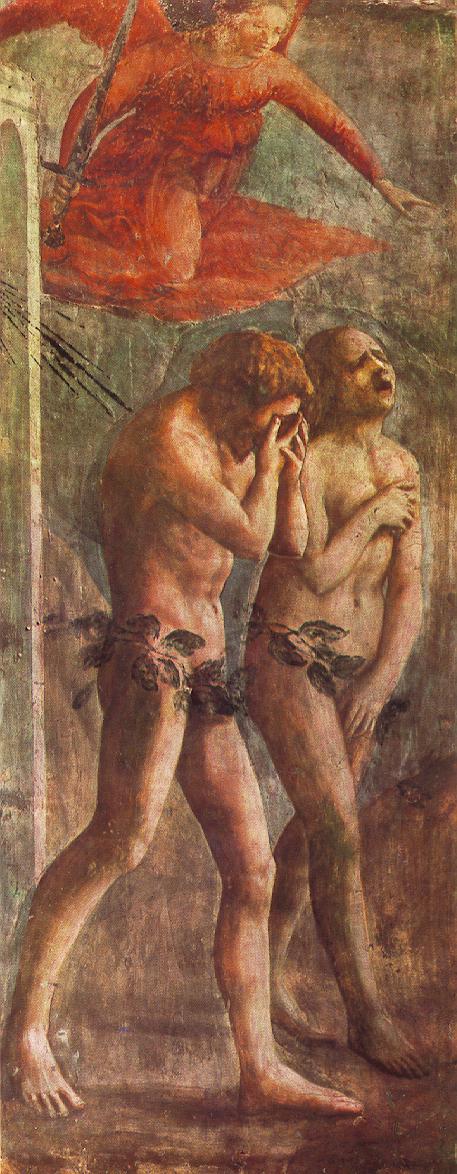
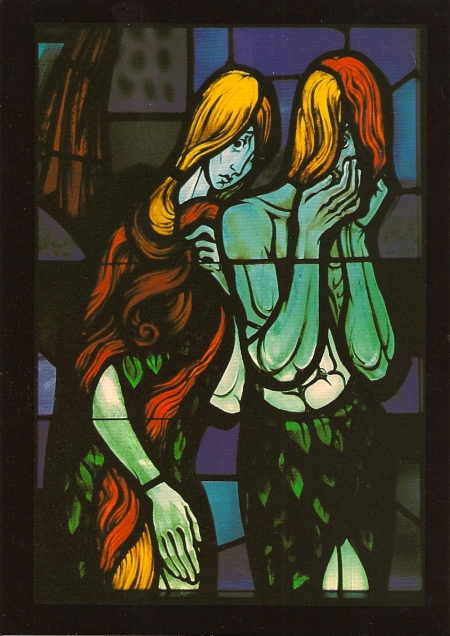
Without a serious reckoning with sin, we fashion a god and a religion which suits us, which condones the behavior we want, and urges us to satisfy our desires at others’ expense. The word for this, another taboo word, is idolatry. Without sin, we delude ourselves into thinking that we have accomplished what Adam and Eve were hoping for, when they succumbed to the temptation to disobey and replace God with themselves as sovereign in their lives.

As St. Paul wrote, “If we say we have no sin, we are deluding ourselves and strangers to the truth.” Avoiding the word, does not remove the reality of sin. Denial of sin does cut us off from the remedy – the mercy and grace of God, which free us from the crushing burden of guilt, shame, and having always to be perfect and right.

We, alone, cannot extricate ourselves from the mess of human existence. We can fight about whose fault it is. We can politicize and theorize. We can gather all the brilliant thinkers, artists, and scientists of the world to bring their expertise to bear. We can possess all the wealth of the world, yet we, on our own, cannot save ourselves. We cannot defeat the greed, the lust for power, the envy, the deceit, and the selfishness of the human heart. So we flounder, cry out, slashing at one another, bent over in pain and fear like souls in torment lost in a maze of fun house mirrors.

To see oneself or another as a sinner is like the child telling the obvious truth that the emperor had no clothes. There is wondrous freedom here to be honest about who we are and to be healed and forgiven. As Eugene Peterson writes, “To call a man a sinner is not a blast at his manners or his morals. It is a theological belief that the thing that matters most to him is forgiveness and grace.”

Read more about prayer at www.fromholyground.org
Contact Loretta at lross@fromholyground.org, www.fbook.me/sanctuary
Follow at http://twitter.com/lfross
Become a fan of the The Sanctuary Foundation for Prayer

The Second Happiest State

Happy are the poor in spirit for theirs is the kingdom of Heaven. Matthew 5:3

Kansas is not at its best right now. Day after day of colorless, dishwater skies, slushy piles of dirty snow, and car eating potholes are taking a toll on our general cheer.  The dog is tracking in mud, and both he and the listless cat are shedding. Our legislature is in session and arguing about out how the state can stay in business. The letters to the editor in the newspaper bristle with hostility and cynicism. Some Kansans, who are out of work, feel betrayed by those whom they thought they could trust.

The stunning, wrenching facts of human limitation and sin in the face of factors beyond our capacity to control or fully understand have left many disheartened and bitter. This is described as “populist discontent” – a response of anger and frustration by those slammed the hardest by the recession.

I vacuum and re-vacuum dog and cat hair. I mop up the mud. The dog mopes after being scolded for chewing up a shoe, his bed, and pulling out the edging from my flower beds. The cat stretches herself out on my computer keyboard or clings to me like lint.

You may be surprised to know that Kansas ranks second in a tie with Nebraska, after number one Hawaii as happiest state in the US.

The Centers for Disease Control and Prevention conducted research on frequent mental distress (FMD) in America. Frequent mental distress was defined as 14 or more bad days out of 30. In the most recent survey (2003-2006) 10.2% of Americans were suffering from frequent mental distress. The saddest state was Kentucky with 14.4%. You can probably guess that Hawaii was the happiest state at 6.6%. But get this: Kansas and Nebraska tied for second happiest states at 7.5%. Clearly those surveys were not conducted in January.  Time Magazine

In periods of FMD the temptation is great to kick the dog, toss out the cat and find someone to blame and pay for my losses and pain. Justice does require accountability. Justice also requires faith. And faith requires belief for no good reason, belief in something unknown, unseen. Faith asks us to trust when it appears that nothing is worthy of our trust.

Such a season of perseverance, of faith and hope withoutpositive leading indicators or pollster confirmation is upon us. For the spiritually inclined it is an invitation for deepening maturity and service to God as vessels of hope and light in a time of darkness and confusion. It is a time to dig down for the promised Kingdom of Heaven promised to the poor in spirit.

Here in the second happiest state, I can’t get Haiti off my mind and really do not want to – the orphans, the ocean of grief, the suffering, the sudden swift severing of meaning, purpose, and security.

I listen to a woman singing, “Alleluia, Alleluia, Alleluia, Alleluia. Amen”

I hear about a concert violinist keeping himself alive in his buried tomb of rubble by replaying in his mind every piece he had ever performed.

I see a world rushing to give their best to Haiti’s worst.

The big eyed child asks, “Mister, have you seen my mama, my papa?

Here in Kansas, the second happiest state, I have no problems even in a recession.

But somehow I think I would be happier in Haiti.

may Haiti bring an earthquake in my soul – a leveling of all that is unnecessary
and a re-formation of the infrastructure of my being

Read more about prayer at
www.fromholyground.org

Contact Loretta at
lross@fromholyground.org, www.fbook.me/sanctuary

Follow at http://twitter.com/lfross

Become a fan of the The Sanctuary Foundation for Prayer