 Maybe you have taken on a very difficult and demanding task. Maybe you have been engaged in a burst of creative activity. Or perhaps, you have been involved in the long, slow, steady, outpouring of yourself for family, friends, or your job.
You may have noticed the signs: an anxious, sleepless night here or there; drinking too much caffeine or alcohol; not enough time to get to the grocery store; a sudden attraction to playing solitaire, and a rush of those Please-Lord-give-me-the-strength-to-do-this prayers.
In my case I was following my own devices again, rushing ahead of the Spirit, plowing my own path. Finally I was stopped by a sharp, shard of sorrow in my heart, a sense of restless unease, and the accompanying guilt and self-recrimination about my lack of motivation. I did not miss God’s irony that this should assail me over the Labor Day holiday.
After thirty years of devoting myself to prayer, I am amazed at how hard it still is to expose myself to the direct presence of Christ. I really think I would be the one in the back of the crowd, wanting desperately to push through to touch his robe, but fearful and cautious, and resigned to making the best of things on my own.
Many of us find it easy to read about faith and prayer. Books on these topics are best sellers. Countless people read the Bible. Most of us do not have much trouble telling God what we need. We may even write out a list of our needs and longings and hand it to the person in front of us, asking, “Would you pass this on up to Jesus, for me?”
What I hadn’t done was the simple, radical exposure of myself and my need to God. What I hadn’t done for several weeks was a sustained, still, silent offering of my being to the being of God. This is what I believe truly heals and redeems: contact with Holiness, that mysterious communion and co-mingling of my spirit with the Spirit, a dance of love beyond my understanding or control.
I know why I avoid it and why I, suppose, that I have to write about it. The reason is that this communion may hurt at first. The exposure of a raw, chaffed heart to the burning brightness of Grace can be excruciating. (Yes, that is the word for it: ex- crucifix, from the cross.) It may be the last thing we want to do. So we often just tell God about it, then get up and go on fretting, and look about for something to do, anything other than just sitting there in that fear and pain.

Now think for a moment. If you were sick, would you not pay attention to your symptoms, maybe check them out on the internet, and go to a physician and describe what you are feeling? And then, would you get up from your chair and go home, before the doctor had a chance to ask questions, to examine you, run tests, and prescribe your treatment?
Surely you would you wait for the examination. You would answer questions. You would you lie down on the table, bare your chest to the stethoscope, your arm to the blood pressure cuff, and take whatever tests the doctor advised. You would take your medicine and follow a treatment plan.
I had been making drive-by visits to God, where I would drop off my laundry or tell God what I need for today. I was sipping those devotions for busy people, spouting sound bite prayers on the run. I was not coming before God and disrobing. I was not holding still for God to search my heart and probe my mind. I would not wait for his grace to move into me, to absorb the pain, to refresh and heal me. Further, it was all about me. I was all about me. I had nary a thought of what God might desire or need from me.
We fool ourselves if we think a quick shot of God, a pithy quote, or Bible verse alone will do it. God desires a relationship with us, not a power lunch, and depth relationships require leisure, attention, vulnerability, and mutuality.
Part of us really does desire this. However, another part of us is just not that interested. I hear about this internal conflict over and over in my practice of spiritual direction. People are sincere and have good intentions. Yet nearly everyone I know finds him or herself facing obstacles to a sustained presence to God.
Try it. Find a quiet place where you will not be interrupted. Set a timer. Twenty minutes is good. Ten minutes will do. Even five minutes can hold a miracle. Breathe a while. Just be there and allow yourself to be open to Christ, the patient physician, who has been waiting for you for an eternity. Now right off, you may notice all sorts of responses in yourself: a sudden urge to get up and tend to some task; some buried pain rising up, burning and stinging like really bad heart burn. You will take little sorties into the past and into future. You will write fiction, little novellas, about your life. You will discover some hurt or slight or worry to gnaw on.
Just stay there. Hold still. You are getting a CT scan. Don’t move. This time is for God’s examination of you. What you think and how you feel about this isn’t all that important. The physician is at work. Trust that. You may feel panic or anger or despair. You may feel deep peace and joy. Whatever you feel, just stay there opening yourself to the one who loves and cares for you beyond your wildest dreams.
When the timer rings, give thanks as honestly as you can. Then do the same thing the next day and the day after and the day after. Don’t look for “results,” just be obedient in allowing the doctor to heal you. Thomas Keating calls this form of centering prayer “divine therapy.” You, of course, may also read the Bible, pray in other ways that you are drawn to, do acts of love and service, and whatever else that seems right for you.

Sometimes this prayer is like detox, a weaning from some addiction, and we go through the painful withdrawal of whatever we may have been substituting for God in our lives. Other times this prayer is like the surrendered offering of Mary to the angel, Let it be to me according to thy word.
Always such yielded prayer is an act of faith in the mystery of God’s love and purposeful activity in the human heart and soul.
Hold your eyes on God and leave the doing to him.
That is all the doing you need to worry about. St. Jeanne de Chantal
Posted in contemplation, Prayer, Spiritual Practices, spirituality
Tagged Bible, centering prayer, Christianity, God, Jesus, Religion and Spirituality, surrender, Thomas Keating

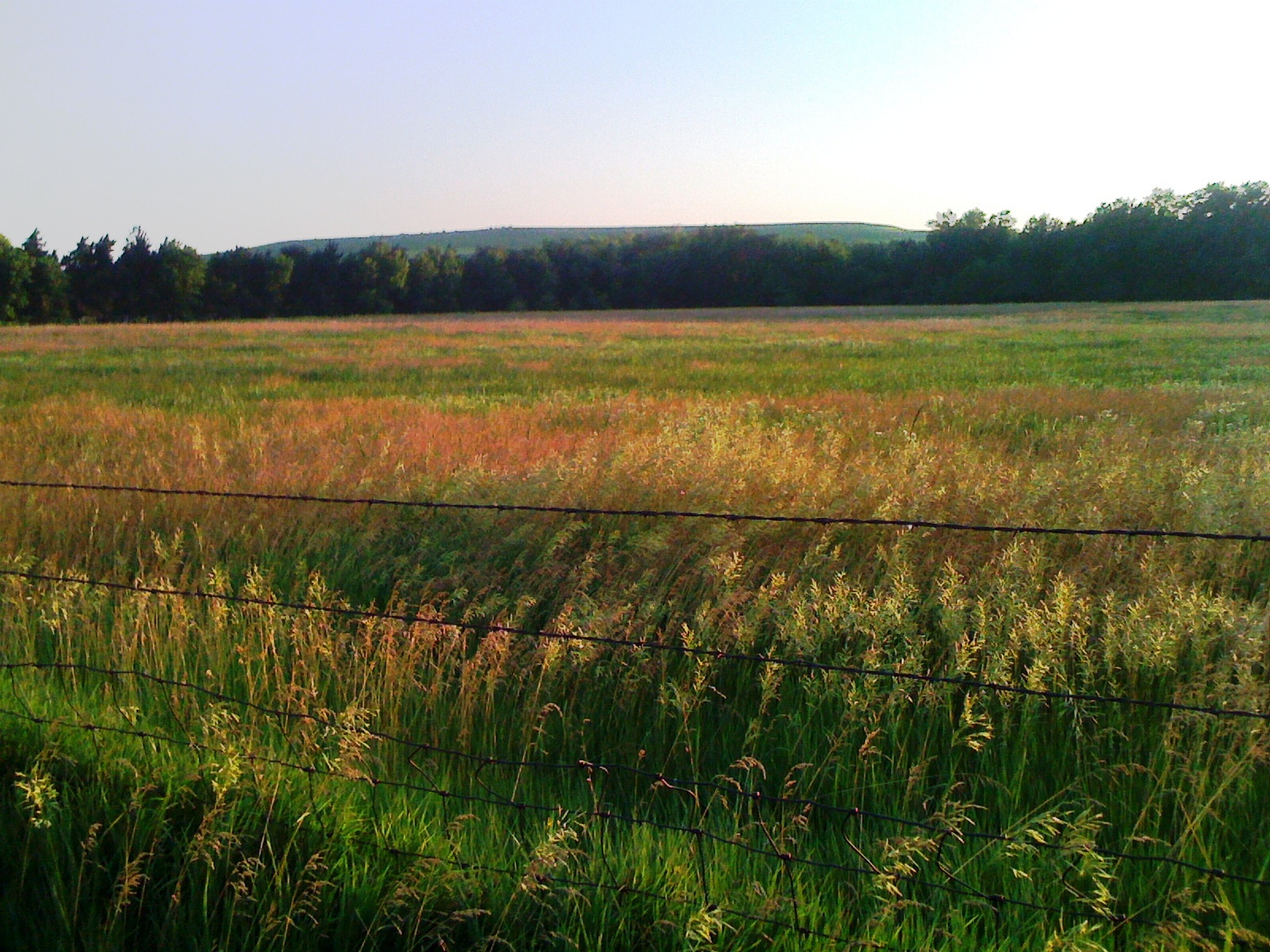
Driving west on Interstate 70 from Topeka, Kansas around ten in the morning, I plunged into that green swath of oceanic beauty called the Flint Hills. Named by explorer Zebulon Pike in 1806, the majestic sweep of bluestem prairie extends north to Nebraska and south all the way to Oklahoma.
Formed 250 million years ago when Kansas and Oklahoma were covered with shallow seas, the land is compared to the undulating roll of a great body of water. The shallow soil rests on seabed layers of flint, shale, and the fossilized remains of sea animals.
Reveling in the beauty, I was sailing down the road, when I came abruptly upon a sight that brought my heart to my throat and sent a chill down my spine. A huge shimmering whiteness moved off to the north along the road. Bigger than the side of a barn, it lifted and fell back to the ground. It seemed alive somehow, but no animal could be that large.
I slowed, curious and wary. The highway was deserted. Was this a UFO? Maybe I should look for an exit and turn back. I drove a bit further, then coasted onto the shoulder, and stopped about 100 yards away, watching that white thing waving.
It looked like huge wings. One wing spread up the side of a hill, the other lay nearer to the road in the valley. A few iridescent feathers lifted in the wind and reflected the blue sky like mirrors. The wings were rising and falling slightly in a convulsive shudder.
It’s hurt. It needs help. But it’s huge. Would I scare it? Would it attack me? And what is it?

I looked up and down the road. Still no traffic. I opened the car door and slid out. A sudden rush of wind whipped past and slammed the door shut. The air was cool and smelled of grass. The only sound was the soft swish of shuddering feathers. Standing by the side of the road between earth and heaven, I pressed my hands over my mouth and stepped forward. I had taken a few more steps when, suddenly, the thing, the bird hiccupped. It convulsed and heaved in a ragged sob.
I nearly jumped out of my skin, but I saw that it was crying. The beautiful bird had spread herself over the sea of grass to weep. Don’t ask me how, I just seemed to know the bird was a she.
I moved a little closer, wondering if I could be of comfort. May I help you? But before I could finish the thought, a river of grief and anguish engulfed me and I tumbled over and over, gasping for air, drowning in sorrow. A deafening roar of cries and sorrow filled my senses. Then a battering wind and hellish screams pulverized me into tiny pieces, flinging me into darkness. After that, nothing.
When I came back together as myself, I was there in the quiet August morning with the hills, the sky, the empty highway, and the still bird. She seemed calmer now. The shuddering had stopped.
Are you all right? I asked. Are you able to fly? And again, instantly, I was drawn out of myself in a sickening swoop over mountains. We dove into the depths of the sea, peered into the eye of a whale, and crawled with a crab on a shore. I saw the molecules of a heart valve, and plummeted into the shrunken belly of a child in Sudan. We whooshed through glittering palaces of power and stood on the floor of the New York Stock Exchange. She laid those wings over a pile of bodies in Pakistan and sat on the shoulder of a man holding an AK47 rifle. We splashed in a child’s swimming pool with a little girl in a pink and green striped bathing suit. She whispered to an artist bent over a painting, and coursed up the stem of a tomato vine in Fremont, Nebraska.
This time, reeling and breathless, I didn’t want to ask any more questions, or bear the answers. I gazed upon her wings spread over the prairie grass and the reflection of the blue sky, the puffy white clouds, and the tall grass waving. In the play of light and color I caught of glimpse of a woman peering back at me and realized with a start that the woman was myself.
Then she lifted one wing. She drew her head out from under it and turned her eyes on me. A bolt of love and compassion seared through me with the crackle and snap of flames rising from dry wood.
I sank down beside the bird. What do you want of me?
Tell them.
To stop.
Hurting me.
I cringed, shaking my head. I can’t. I am complicit. I have blood on my hands, too.
She waited for me. The wind ruffled her feathers. The puffy clouds moved across the sky. Somewhere a meadowlark called.
Okay. How?
Be brave.
Be brave, she told me.
Be brave.

_____________________________
Let no unwholesome word proceed from your mouth, but only such a word as is good for edification according to the need of the moment, so that it will give grace to those who hear. Do not grieve the Holy Spirit of God, by whom you were sealed for the day of redemption. Let all bitterness and wrath and anger and clamor and slander be put away from you, along with all malice. Be kind to one another, tender-hearted, forgiving each other, just as God in Christ also has forgiven you. Ephesians 4: 29-32 (NASV)
Don’t grieve God. Don’t break his heart. His Holy Spirit, moving and breathing in you, is the most intimate part of your life, making you fit for himself. Don’t take such a gift for granted. Ephesians 4: 29 (The Message)
We invite you to become a fan of the The Sanctuary Foundation for Prayer
Posted in Christianity, contemplation, faith, Holy Spirit, Spiritual Practices, spirituality
Tagged Bravery, Compassion, Ephesians 4: 29-32, Flint Hills, Grieving, Holy Spirit, Kansas, suffering, Topeka
The man, unemployed for two years now, leans his elbows on the kitchen table, puts his face in his hands and weeps.
Be still and know that I am God.
The family, numb with shock and grief, stare into the abyss the sudden death of their child has opened before them.
Be still and know that I am God.
The couple – run ragged with work, child care, and keeping up with the Joneses – gaze across the room at each other and wonder how their love turned to resentment and anger.
Be still and know that I am God.
All the while the nation’s public discourse rages on with the clamor and clang of opinions, self righteous indignation, and attack.
Be still and know that I am God.
So much of our lives seems to be fueled by fear and hyperbole, or hype, as the word has morphed into. The fear and anxiety tend to compress our perception into narrow tunnel vision and demand that we act immediately, often at the expense of reasoned consideration, and gathering all the facts. Hyperbole, the fetching sister of fear, exaggerates, escalates, and glamorizes her brother. We feed on sensationalism, scandal, and worst case scenarios.
In the context of this culture of fear and hype, when we encounter the pain and loss of being human, in whatever form it shows up in our life, we may feel overwhelmed, isolated, or ashamed.
Our times are difficult. We face as individuals, as a nation, and as global citizens immense challenges. People are suffering. The planet is suffering. We must act and act wisely. Will our action, our response to the crises we face, rise from our faith or our fear? Will the choices we make be fueled by hysteria, anger, discouragement, or the wisdom and grace of something greater and mightier than we?
Be still and know that I am God. Well, what good will that do? Is that going to improve the job opportunities in my town? Is that going to bring back our son from the grave? Is that going to bring back the love and joy we used to know as a couple?
No. It may or may not change the crisis you are facing. However, it will change you. Absolutely. Being still and knowing that God is God and you are God’s creation will shift how you perceive yourself in the midst of your crisis, and how you perceive the crisis itself.
Being still and knowing that God is God will establish you in the depths of God’s Being within you. Here you will discover a strange peace that doesn’t make sense, that passes all understanding as St. Paul wrote (Philippians 4:7). You will begin to live and act and make decisions from that deep well of peace, rather than your fear and anxiety.
The New English Bible translates this verse from Psalm 46 in this way: Let be then: learn that I am God. Let things be as they are, stop strategizing, blaming, figuring out solutions, or how to get even. Stop your action and thinking. Be in that energetic stillness that is God’s presence within you.
In doing this you will learn that God dwells within you, speaks within you, and is moving in your life and world. You are not in charge, never have been. You do not have to figure this all out and get it right somehow. Relax. Trust.
God is our shelter and our refuge,
a timely help in trouble;
so we are not afraid when the earth heaves
and the mountains are hurled into the sea,
when its waters seethe in tumult
and the mountains quake before his majesty.
There is a river whose streams gladden the city of God
which the Most High has made his holy dwelling;
God is in that city; she will not be overthrown,
And he will help her at the break of day.
The Lord of hosts is with us,
the God of Jacob is our refuge. from Psalm 46

Become a fan of the The Sanctuary Foundation for Prayer
Read more about prayer at www.fromholyground.org
Posted in Contemplation, prayer, Prayer, Spiritual Practices, spirituality
Tagged contemplation, peace, Prayer, Psalm 46, silence, stillness, the praying life

“Do not come any closer. Take off your sandals,
for the place where you are standing is holy ground.” Exodus 3: 5
I loved it, even though I was always stubbing my toes. All summer long my big toes, painted bright orange with Mercurochrome, were recovering from some new assault. I stopped my play long enough to howl and go inside for a band aid, which always fell off and turned up later in the sandbox or on the kitchen floor.
I went everywhere barefoot. Rides in the car with the ribbed, rubber mats on the floor, to the A & P, where the linoleum was slick and a little sticky, to the Dime Store where the oiled floor was smooth and fragrant, and you could watch the cashews riding a little merry go round under a heat lamp and buy them warm and salty. I sprinted over the hot blacktop parking lot to place my order for a chocolate dipped cone at the Dairy Queen. Creeping over sharp edged dirt clods in the garden, hobbling over rocks in the alley, running up and down the streets and walks and through dew drenched grass, I picked up information about the world through the soles of my feet.
I used my bare feet to climb up the playground slide, perch on the jungle gym, and entertain my friends by picking up pencils with my toes. At my neighbor, Mrs. Wendel’s house, I sat on chair swinging my feet in the air and eating a cookie. I found Nancy Drew mysteries at the public library with its cool polished floors and lovely smell of books. In winter I toasted my tootsies over the oil furnace grate. Summers I challenged my brother to contests over who could hold his bare foot on an ice cube the longest.
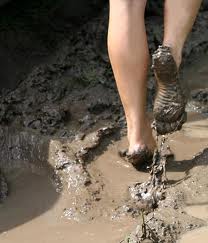 Out at Grandpa’s in the country, I stepped carefully around the chicken droppings. I was acquainted with the slimy feel of the stuff between my toes. I ambled through my world digging my feet in warm beach sand, kicking up the soft talcum puff of dirt roads, splashing in creeks, slipping on mossy rocks, and screaming to discover that the strips of gooey mud clinging to my feet turned out to be leeches.
Off I would go, banging my toes against uneven sidewalk, where tree roots heaved the concrete into toe catching traps for children and the elderly. I caught my toes on furniture, had them run over with tricycles, wheel barrows and stomped on by my brother. (He will deny this.) There was the occasional sickening goo of dog manure and the large disgusting toad, who had a habit of taking a snooze in the cool of the evening just outside the back door. I checked the bottom of my foot for warts for weeks after that encounter.
Other hazards included stickers, splinters, bee stings, broken glass, and the horror of my mother, a rusty nail. The Rusty Nail loomed nearly as dangerous as polio or a communist in my childhood. Once, running across a dock to leap in the lake, I caught a dock cleat between two toes. I played and swam all day. In the evening mom took me to Doc Jackson’s office where he cleaned out the debris between my toes and gave me a shot.
I even fought with my feet. My brother and I staged what we called feet-foot battles on the couch in the living room. We were trapped on a cliff with a thousand foot drop off and had enough food for only one of us to live for a year. We also had broken our arms in this scenario, so we had to fight for our survival with our feet and kick the other into oblivion.
When a trip required shoes, I usually couldn’t find them. I remember when mom finally put her properly shod foot down.
“Put your shoes on! You can’t go uptown barefoot.”
“Why not, Mom?”
“Because old men spit on the sidewalks.”
Well, that did give me pause. Uptown there were no signs that said No shoes. No shirts. No service. I do recall signs with dripping blue icicles and the invitation, Come in. It’s cool inside! To this day even though she has had air conditioning for years, my mother’s idea of a special treat is going out somewhere for a “cool drink,” which means lemonade or Seven Up.
I go barefoot much less these days. Arthritis has set into the joint of one of my toes. Something called Morton’s neuroma led me to the purchase of orthotic insoles.
I don’t know if my distaste for shoes had anything to do with my love for God, though the Holy One does seem to have a preference for a bare foot. When God told Moses to remove his sandals before the burning bush, he didn’t say take off your hat or your cloak or your tunic. Removing shoes is a sign of respect in many faiths. Perhaps God is asking us to put nothing between our naked selves and the holy ground of God’s being. No pricy Manolo, Gucci, or Louis Vuitton’s, butrather, the simple and sometimes stinky vulnerability of a bare foot is what pleases the Lord.
You can pick up an amazing amount of information through the soles of your feet. They also hold countless memories. Maybe buried in our DNA is a holiness sensing device, which only works when we take off our shoes.
Holiness demands honesty and simplicity. Pretense, denial, deceit, and anything I might put on to cover up the truth of my own weakness and deep need must be removed, as we move closer to holiness. There are so many things we can put between ourselves and direct contact with the holiness of God on this good earth. God’s partiality for a bare foot over a resume wipes away any illusions that my worth is related to my bank account, or accomplishments. Maybe God is only a sucker for a well turned ankle, but I think it is our childlike, barefoot vulnerability and humility which he can’t resist.
I miss those barefoot days. I think I was closer to something essential, earthy and real. These days I walk back and forth in sensible shoes in the ivory tower of my head, rather than trod the messy ecstasy of the naked sole.
I do go out, weather permitting, without shoes to pick up my morning paper. I feel the rough walk under my feet and the wet grass between my toes. I look at the sky, the birds. I say:
Good Morning, Lord.
Help me this day to take off
whatever I try to put on
between myself
and your wondrous love.

 You don’t have time for this. Who can afford to dally about in the woods and meadows at the start of a busy day? So much to do, tasks to complete, bills to pay. The little dimwitted tyrant in the basement of your soul has already been up for hours, pacing and shoveling coal on your furnace of anxiety.
Here, right now, is the crux, the moment on which everything turns. Here is your choice.
That quiet place within is always there – the woods, the mountains, the meadow, the shore – where the waters of life perpetually flow and splash.
Likewise, the summons never ends. Each day is an engraved invitation, each moment, an extended hand.
Here is what I want you to do: find a quiet secluded place so that you won’t be tempted to role play before God. Just be there as simply and honestly as you can manage. The focus will shift from you to God, and you will begin to sense his grace. Matthew 6:6 (The Message)
Will you calm the little bully in the basement, who doesn’t know much more than how to push, grab, worry, and pout? Will you find that place where you can be fully yourself and just be there simply and honestly?
Can you feel yourself relaxing, your tunnel vision widening, and grace softening your rough edges? Do you notice how your perception changes, how something is reordered or realigned within?
It’s your choice. You are endowed with an immense and crucial freedom. You can leave peace and beauty on the mountain, in the woods, or up in the attic in a box next to the Christmas decorations, or you can take the hand of Love in this moment and be led into delight.
As you offer yourself to God and enter into communion, this interpenetration of your being and the being of God heals, transforms, and mutually satisfies you and Holiness. Here is what amazes me. God desires, even longs to be with us in conscious relationship.
Ours is a God who, yearning for our companionship, plaintively asks his people,
Why was there no one when I came? Why did no one answer when I called? … I was ready to be sought by those who did not ask, to be found by those who did not seek me. I said, “Here I am, here I am,” to a nation that did not call on my name. I held out my hands all day long to a rebellious people, who walk in a way that is not good, following their own devices… Isaiah 50: 2; 65: 1-2
Up at dawn, checking my calendar on my hand held device, I am stopped in my tracks by these words of Isaiah.
St. Therese of Liseaux put it like this:
God has no need of our works. God has need of our love.


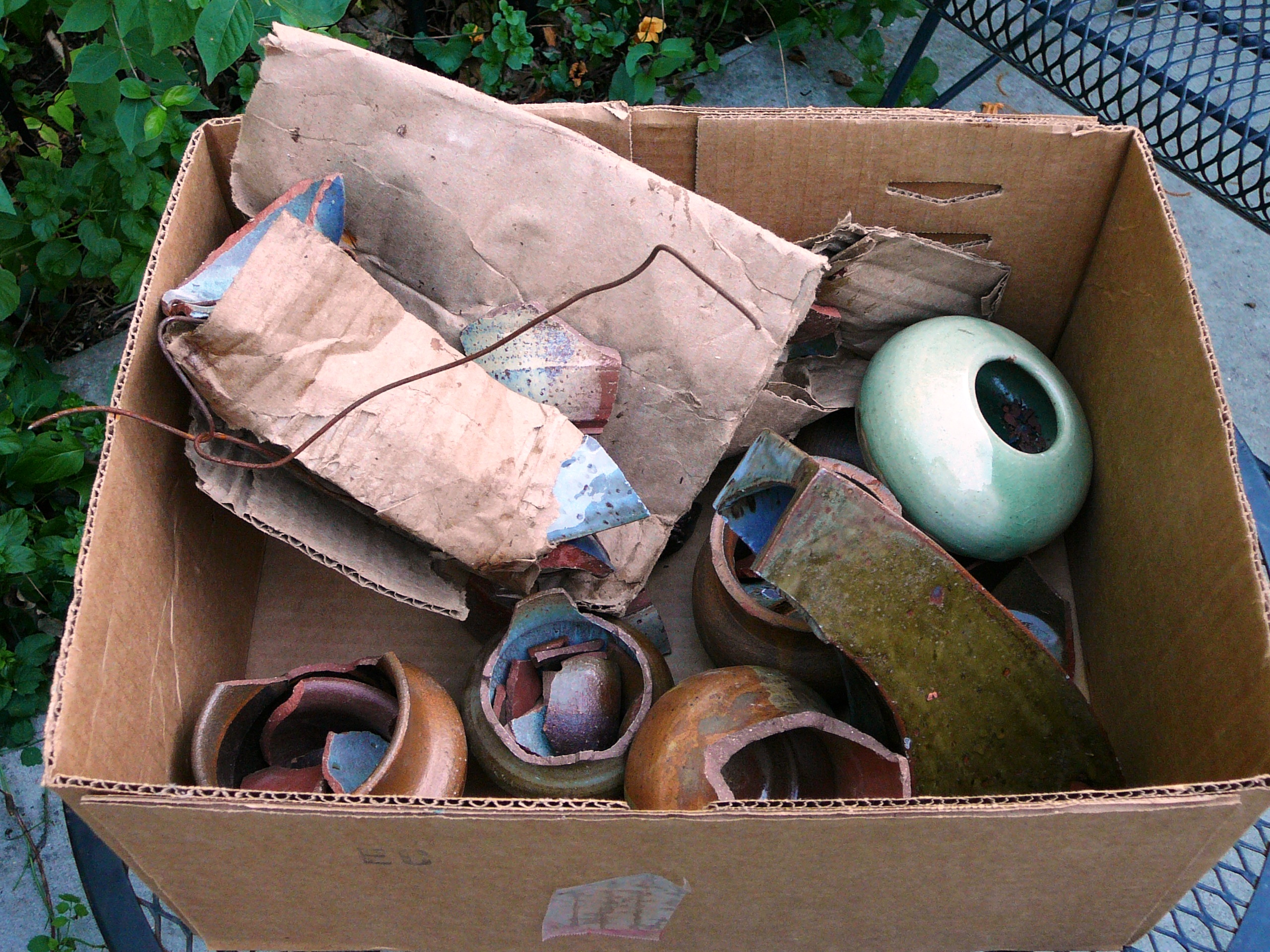
Weeping before the box, she lifts out the pieces and places them on the counter. All but one or two are broken.
Two weeks before when the boxes arrived, I had carried, heartsick, this one filled with the chink and clatter of broken pottery to the basement. Then I forgot all about the box of broken dreams, until I heard her carrying it up the stairs, shards rattling like a chest of huge coins.
She moves the pieces on the counter, sorting and fitting parts together.
In a distant city another young woman also picks out the ruins of herself from the broken jar of illusion.
So much is broken – plans, relationships, jobs, dreams – and rattles around inside us. We take out the pieces, hold them to the light, and try to fit them together. This confrontation with our fallibility and that nothing earthly lasts forever brings deep suffering. Loss is always more painful than the books can say, the scriptures convey, or the prophets of prosperity preach. We need a picture.
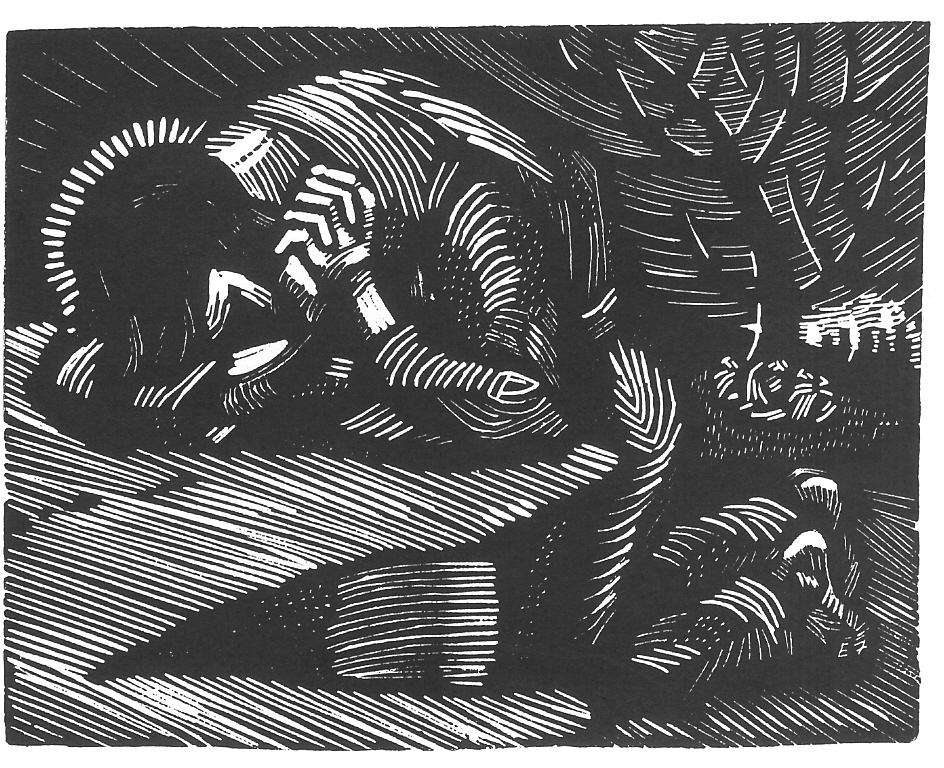
A man at the end of his own dance with mortality, hunched over on his knees in a dark garden, tears rolling down his face. He says to his father, the Heaven Dweller, “Take this cup from me.” And to his friends, “Can you not stay with me one hour in this agony?”
 There may be something harder than watching one’s children suffer, but on this day I do not know what it is. The hardest thing I do in this work of ministry, prayer, and listening to souls in their journey to God is staying awake with others in their pain. This is to say, that the hardest thing is staying awake with Jesus as he suffers in others.
Some days I fail. I numb out. I fall asleep. I deny the suffering, blame the sufferer, quibble and become annoyed and irritated with how the person expresses her pain. The other day I thought of one family, “Always lots of drama in this family system.” I suppose, applying the same cynical criteria, one would have to say that Jesus was the all time drama queen.
Can’t you just stay with me in this torment? Can we just be there, trusting God and the soul to figure things out? Respecting the power and presence of the Holy Spirit in the awesome autonomy of an individual life, while lifting up the candles of faith, hope, and love seem to be my task.
I fidget. I want to fix things, pass out band aids. Leaning over her shattered treasures, she tries to wire one sculpture back together, fashioning a frame of cardboard.
“We need some glue. I’ll get some glue,” I say. “Let’s go to the store and get some good glue.”
She refuses.
Finally I stop.
Several days later I ask about the box of jumbled shards on the porch. “Oh, I don’t care what you do with it,” she tells me, as she heads off with her eyes on new heights.
To love, to know passion, and bliss is also to have our hearts broken. I know of no way to get around this and anyone who tries to tell you different is a liar. To live, we must die. To touch transcendence and eternity is also to gaze upon and weep over the box of our own finitude, our broken handiwork, our illusions, and limited understanding. “Forget your perfect offering. There is a crack in everything. That’s how the light gets in,” sings Leonard Cohen.
The man in the dark garden gets up. It is time, he says, to be broken.
It is time
for us to be made whole.

The birds they sang
at the break of day
Start again
I heard them say
Don’t dwell on what
has passed away
or what is yet to be.
Ah the wars they will
be fought again
The holy dove
She will be caught again
bought and sold
and bought again
the dove is never free.
Ring the bells that still can ring
Forget your perfect offering
There is a crack in everything
That’s how the light gets in.
Leonard Cohen
Dear Hearts: Don’t give up. Don’t ever give up. For fun – A couple of video versions of Cohen’s Anthem.
Posted in faith, God, Prayer, Spiritual Practices, spirituality
Tagged crucifixion, hope, Leonard Cohen, letting go, Loss, love, Mark 14: 32-41, sin, suffering
The latest issue of Holy Ground is out. This little reflection on the contemplative life comes out quarterly. In this issue I write about our struggle to be prayerfully present to our work, our tendency in a crisis to rely on what we can know and do, rather than on what God may be offering us, and the revolutionary effect of digital media on how we function in our society and churches. Goodness, that is a lot to cover in one essay.
Here is an except:
After worship we got down to business. However, I felt I wasn’t finished worshipping. I wanted to say, “Wait a minute. God is still speaking.” I wanted to keep pondering the texts, and to listen and reflect together about what we were hearing. The day’s agenda initiated a shift in the attitude and attention of the group from an intentional awareness of God to the task at hand. This is precisely why I had been asked to pray for the group: to serve as a visible reminder of our communal connection and listening to God. One man, thanking me after the meeting said, “I forgot that you were here. Then I happened to look over and saw you praying. It meant a lot.”
I wonder how things would go, if someone were kneeling or bowed in prayer at all our tasks and business. Try it in your imagination. Look across the room. See  someone, Christ, a friend, or stranger praying for you there. Is the person sitting in a chair, kneeling, or prostrate? What happens to you when you see this? Ah, a softening of the shoulders maybe? A sigh. Some of the strain releases. A hush of peace. The comfort of trust.
We struggle to be simultaneously present to God and to our work. So we bookend our days and activities with prayer, often a perfunctory invocation and a quickie closing prayer “to get us all on the road.” We are split in a way which sickens, wearies, and drains the life out of me. I struggle every day to bring an attentive awareness of the holy God into all I do. I fail over and over. I know when I have failed by the tension in my neck and shoulders, the eyelid twitch, the strain that comes over me when my ego has been bossing and shoving me around. I know I have failed when the space in my head has been crammed with words, ideas, opinions, fears and there is no room for Jesus. I know the deadening effect of too much talk, too much human need trying to meet human need, and no silence and space for God to meet any of it. …
The capacity to be simultaneously present to God and the task at hand is nurtured in many spiritual direction training programs. Such steadfast awareness of Christ is something the Holy Spirit accomplishes within us, not so much taught as encouraged by those who help us trust and let go into God. Such a deep integration of Christ and abiding at all times in his peace, wisdom and gentle love is God’s will for us all.
Still, mostly, I fail. I turn my back on Jesus in a way that feels brutal and violent to the Spirit within me. My rebellion consists of the bullying intrusion of myself into events, relationships, and conversations, as a mean little god, insisting on its own way and trusting only in itself.
Bringing a conscious awareness of Christ into whatever I do requires me to release power, die to myself and my way, and bend low. It means I move more slowly and mindfully. I stay in the present moment. I rest in trust and faith in God. And I have the capacity to be useless and to not know. All of which is to say, I am contemplative.
Writing nearly fifty years ago, Carlo Carretto, noted,
When there is a crisis in the church, it is always a crisis of contemplation. The church wants to feel able to explain about her spouse even when she has lost sight of him; even when, although she has not been divorced, she no longer knows his embrace, because curiosity has gotten the better of her and she has gone searching for other people and other things.
Where might curiosity be getting the best of you?
What if we expanded Carretto’s words to other situations? What if the oil crisis, the terrorism crisis, the health care crisis, and the environmental crisis were seen as crises in contemplation? How would that temper and affect how we respond to the issues we face?
What if we could see Jesus kneeling down in high level talks, on the barges of clean up crews in the gulf, and in mountain villages of Afghanistan?
Perhaps the crises we face are not a failure of human integrity or intelligence, but a failure of imagination, that eternally creating, mother of faith.
_______________
To read the entire issue, contact me at address below. I will be a happy to send you a free sample issue. Or to get four issues a year and Holy Ground you can hold in your hand, carry in your pocket, spill coffee on, and take with you to the beach subscribe now to Holy Ground on line. You’ll be glad you did.
The moral revival that certain people wish to impose will be much worse than the condition it is meant to cure. If our present suffering ever leads to revival, this will not be brought about through slogans, but in silence and moral loneliness, through pain, misery and terror, in the profoundest depths of each man’s spirit. Simone Weil
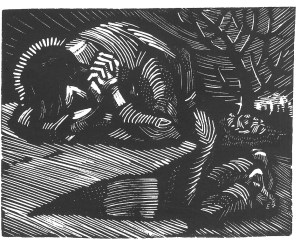 To accept defeat, to accept suffering for love of God and in obedience to God’s will is extraordinarily difficult. Yet such surrender is what saves us. The purification of our intention, the corrections in our thinking, the deepening compassion, and the redemptive power released from the profoundest depths of a person’s spirit transforms, heals, and frees. The church, as the place which could most clearly articulate and live out how to die to oneself, personally and corporately, seems to avoid any direct attention to such a notion. More often we find ourselves caught up in the push and glamour of success, the tasks of survival, and pumping up egos, rather than teaching them how to die.
That I must die to myself and suffer loss and pain and that such a death might be participation with Christ in a redemptive mystery goes against the grain of the independent self reliant spirit and the “me first” character of our times. However, when we settle for slogans, consultants, and committees, we circumvent the opportunity to discover strength in weakness and victory in failure. We build our case on ideology and successful practices, rather than a witness to God and faith. We succumb to a simplistic understanding of God’s saving action in history as winners or losers, and do not know ourselves as active participants in the redeeming of a broken world.
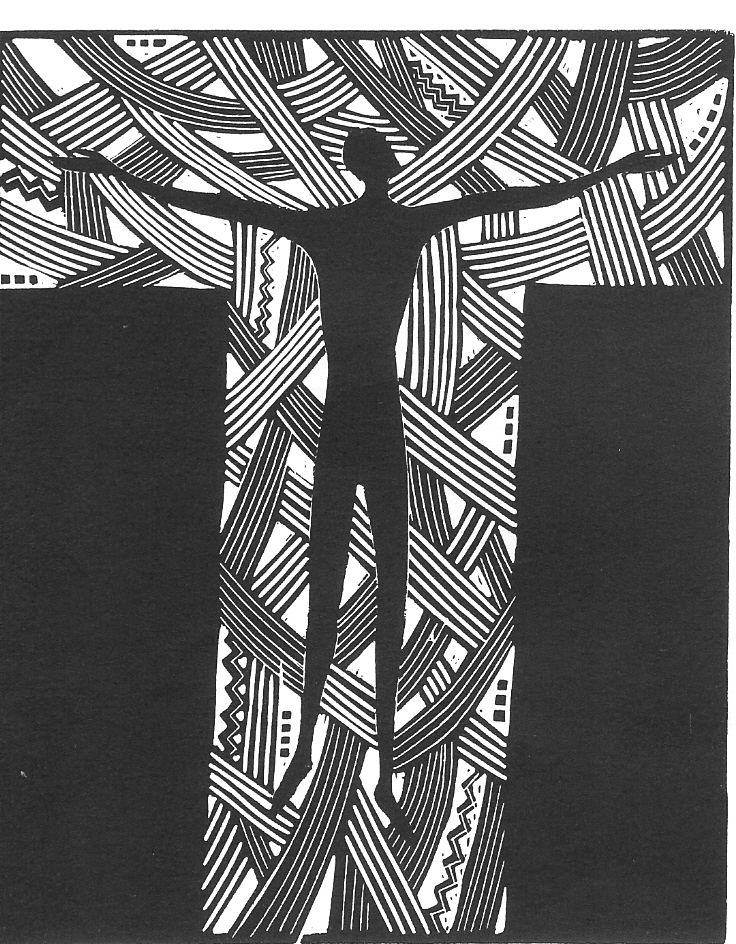
I am not sure why we don’t get this. Christians are a people who bow before a man dying on a cross, for heaven’s sake.
Christians the world over are about celebrate that dying man. They will tell again the ancient story of their God and how he came to be betrayed, humiliated, beaten and nailed to a tree. They will recall how this God, who was supposed to bring an end to their sorrow and oppression, failed miserably.
They will remember, too, how they failed miserably. How they betrayed, abandoned, and killed their God. They will see again how they had got things all wrong, how they had so horribly misperceived the truth with their narrow minds, jealous hearts, and faithless souls.
And they will be astonished by the Grace, which rolled away the stone of their rigidity and fear, and defied their wildest imaginations. What they thought was ruined and dead now stood before them in the bright morning sun and spoke, “Go and tell the others to go to Galilee. They will see me there.”
This was an old story. Calling something names, beating up something, and killing it to take away our pain and anger and sin wasn’t new. For thousands of years, we had been killing things and one another and offering them up to God as a way to set things right, get what we want, and make up for the messes we made.
But this time was different. In their fury and fear, this time they killed God, divinity itself. And Holiness let them. God wore their spit upon his face, their rage upon his back. He opened wide his arms to be penetrated by their malice.
This time God said, “OK. I will show you. This is what it looks like to kill God. This is what it means to see the truth about yourselves. This is how to love.
I am willing to bear the pain of your sins against me and against yourselves. This is what forgiveness looks like. This is what peace costs.”
With that willingness and love their God sucked the poison out of sin. He defused the power and grip of evil on the human heart. He took the hell out of everlasting damnation and gave them eternal life.
And he told his followers to do the same with the suffering in their lives.
Today many Christians wear little replicas of that cross of execution like tiny gold electric chairs or lethal injection needles. They wear death on a string and carry life in their hearts.
For having died with their God, they rise with him. And from the profoundest depths of their spirits flow rivers of living water. This is what a moral revival looks like.

Everyone who is thirsty, come.
 Spring was on the way, and Ahs was feeling sorry for himself. “I am just pitiful,” whined the dog. “Pitiful is what it is. My pen is pitiful. My food is pitiful. My body is pitiful. My life is pitiful.”
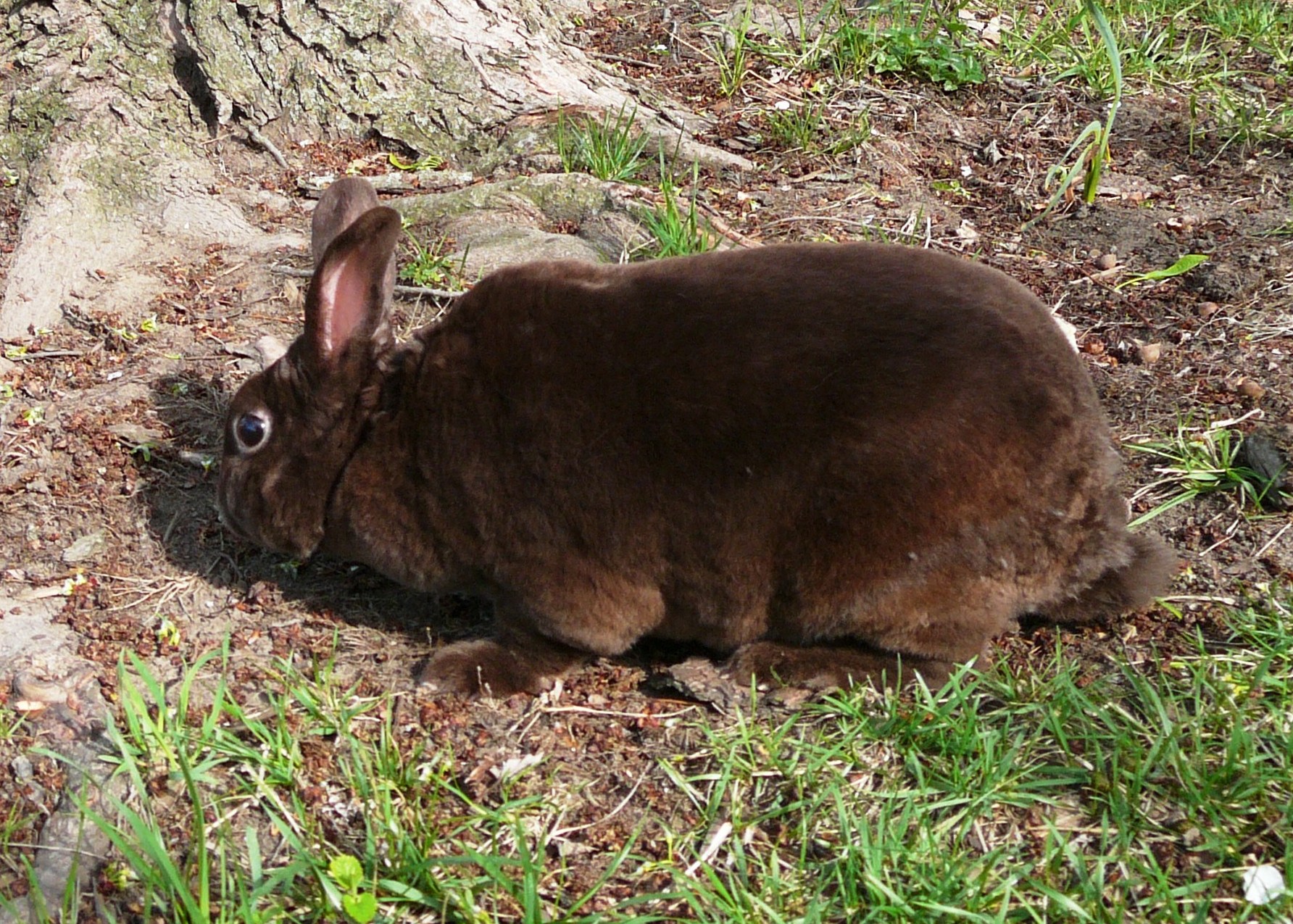
Isabella and Captain Midnight, the two new rabbits, were itching to scratch their toes in the dirt. They had their eyes on the soft earth with the leaf mold under the hedge south of the house. They would soon rake back the leaves, scrape out a nice trough to stretch out in, and flop over in the moist dirt on their backs.
___________________________
What does the Lord require? Acts of justice, a love of kindness, and a humble walk with God, according to Amos. For some people the requirements of justice and love do not seem to be as difficult to offer God as humility. Perhaps that is because humility is allusive. Once you think you’ ve got it, you’ve lost it. Though difficult I think it is well worth aiming for. It is a key to happiness. As the Irish say, “Humility, that low sweet root from which all heavenly virtues shoot.”
Humility comes from the word humus. Humus, which is what Isabella is itching to stretch out in, refers to the brown or black material resulting from decomposition of plant or animal matter and forming the organic portion of the soil. The virtue of humility and the earth are intrinsically connected.
A lot about being Christian has to do with coming down where we ought to be and staying there. Here four-legged critters might have an advantage. Any significant brush with the holy can leave us reeling and unsteady with a tendency for grandiosity and fanaticism. This is why the more one prays, the more one needs to go around barefoot, sit down, lie down, stretch down upon the earth, and stay in close touch with brothers and sisters who crawl, gallop, trot, and slither.
To be humble is not to make comparisons, observed Dag Hammarskjöld: “To have humility is to experience reality, not in relation to ourselves, but in its sacred independence. It is to see, judge, and act from the point of rest in ourselves.”
To be human is to encounter limits and to suffer. Through our suffering we have the opportunity to greet and love the sacred vulnerability that resides in the heart of matter and to forgive ourselves for being human. The dying God, all bloody, hanging on a tree, may repulse, offend, scandalize, or leave us unmoved and detached. Our response may mirror our inner relationship to our own human frailty. How much compassion and generosity can you bring to yourself in your situation? Not denial, resentment, or blame – but rather, gentle acceptance of who you are in your sacred independence and trust that you have been created and loved by God and are therefore worthy of your own affection and regard.
What is pitiful is when we get the notion we ought not to be pitiful and then take an attitude of contempt toward ourselves. The fact is we are pitiful – all of us, poor and meager, sinners. Can we lower ourselves enough to enter our pitiful reality, live there, and love it with Jesus?
 The name Adam in the creation story in Genesis derives from adamah, which means “the ground.” It refers to God’s forming humanity from the earth. A friend translates Adam as “mudbabe.”
You don’t like the way you are, the way things are? You see room for improvement, need for change? One of the lessons of Lent and Easter is that transformation, healing, and new life come not from a magical deus ex machina that drops out of the sky to change whatever it is that doesn’t suit us. Rather, as Jesus turns his face to Jerusalem, he invites us to rub our noses in the mud and honestly face the painful realities of our lives and world, as he does the same on the cross.
Feeling a little pitiful yourself? That is why the Almighty came down to earth and let us treat holiness as we treat one another. God comes to teach us to show mercy to one another. God says in Jesus, “Look, my mudbabes, I am not above being human. You ought not to be either. You are going to fail and hurt one another. You are going to make mistakes and come to the limits of your flesh, your mind, and your faith.”
Sometimes I do not know what prayer is beyond the long worn rag of human longing waved toward the heavens like a tattered flag. Today I think prayer has to do with putting down one foot after the other upon this earth, while being honest with ourselves and God about our limitations. Today I think prayer is stretching out in the dirt.
 Try this. Go find a place outdoors where there is no concrete smothering the ground. Take off your shoes. Put one bare foot down upon the earth and then the other. Then kneel down on all fours and press your forehead into the ground. Feel the self-importance, pretense, and the absurd seriousness with which you take yourself drain off. Smell the earth. Take a good look at the dust from which you came and to which you will return.
Then go have a sandwich and give thanks that you are human and just exactly who you are. Savor and honor the piece of humanity you represent. And taste the goodness of humility.

Adapted from Letters from the Holy Ground – Seeing God Where You Are, Loretta F. Ross, Sheed & Ward, 2000
For I resolved to know nothing while I was with you except Jesus Christ and him crucified. I Corinthians 2:2
 “He went out, not knowing where he was going,” says the writer of Hebrews. Abraham, the father of our faith, didn’t have a clue where he was headed, no map, five year plan, or GPS device. Just faith.
Most of us want a little more than simple obedience to the word of the Lord burning in our hearts. We want a backup plan, some insurance policy to guarantee that our wandering about in the dark and hard work will be justified. We do not want to look back in shame or sorrow at the choices we made.
Most of all, when someone asks what our plans are for this year, we want that calm sense of security that comes with being able to answer clearly: My goal for this year is to plant a garden, go to Greece, or graduate from the Neuroscience Institute. You need something with a nice ring, which wins a nod of approval, or even better envy. So we consult a bevy of advisors. How long do I have, Doc? Madame Sylvia looks in her crystal ball. We check our horoscope and give our broker a call.
In our sleepless nights we pray, “God… please… let me know things will be all right.”
Instead of a five year plan in the mail, we get the present moment.
This frayed and tattered now.
My old buddy, Oswald Chambers, writes in his January 2 entry in “My Utmost for His Highest”:
One of the most difficult questions to answer in Christian work is, “What do you expect to do?” You do not know what you are going to do. The only thing you know is that God knows what he is doing….. Have you been asking God what He is going to do? He will never tell you. God does not tell you what he is going to do – He reveals to you who He is. … You must learn to “go out” through your own convictions, creeds, or experiences until you come to the point in your faith where there is nothing between yourself and God.
Wanting to know the future, and to possess absolute clarity about where one is going is the last stronghold of the ego and a defense against intimacy with God, where the way is revealed only as I have surrendered my desire to know anything, except, as St. Paul puts it, “Christ and him crucified.”
 We are nearest to God when we have gone out from our egos – our own knowing, our worries, and desires – and are vulnerably present to Holiness. As we become present to the Presence, we discover a relationship so wholesome, nourishing, and tender in its embrace that our notion of direction and purpose is transformed. My life’s direction is not something I grasp by knowing, but rather is given to me as I allow myself to be known in the mutual exchange of love that is our relationship with Christ.
This seeking, palpable, grace filled Presence of Christ is what allows us to go out into the unknown, empty handed and clueless. Jesus told his followers: “Take nothing for the journey – no staff, no bag, no bread, no money, no extra tunic.” Luke 9: 3
We learn to trust more in the ever present power of the One who sends us, than in our own preparations. And oh how much easier life becomes then!
How does one do this? Be aware. Allow space in your consciousness for God. Shovel away your lists and agendas, goals and objectives. Make a clear path through the snow drifts of your ego to the great I Am.
 This is how I tried to do that today. All morning I prayed in the sunshine pouring through my window. I began with a list. A stream of words and worries that gradually slowed to a trickle. Still in my pajamas and robe at 11:00, I am happy as a clam. Wrapped in love, I do not want to stop.
Often when I pray with others it is like this. Saying amen is a strain; lifting my head and opening my eyes, an effort. The magnetic pull of God captures me. To pull away is a sorrow, a sudden brutal severing from the heart’s true home. But the hour is up, the person who has come for prayer needs to go and is wondering if I am half crazy. So I return to “normal,” which seems ever more strange and artificial to me.
I know. I am weird. I also know many of you share this sense of God drawing you into Love.
I prayed for you this morning, for nothing in particular beyond peace, love, and joy. It is true I may not know you, yet I feel an oceanic rush of love and desire for your well being that hollows me out and leaves me breathless. I think it must be God’s love for you passing through my awareness. I hope it sweeps you off your feet today and tosses you hither and yon without a clue as to where you are going.
And on this cold day may you, beloved object of God’s devotion,
feel His warm breath upon your cheek.
Tell me about your prayer, the love song God is singing to you today.
Read more about prayer at www.fromholyground.org
Contact Loretta at lross@fromholyground.org, www.fbook.me/sanctuary
Follow at http://twitter.com/lfross
Become a Fan of the The Sanctuary Foundation for Prayer
Posted in Contemplation, prayer, faith, God, Prayer, Spiritual Practices
Tagged Abraham, direction, Hebrews 11:8, I Corinthians 2:2, Oswald Chambers, present moment, the praying life
















 The Praying Life