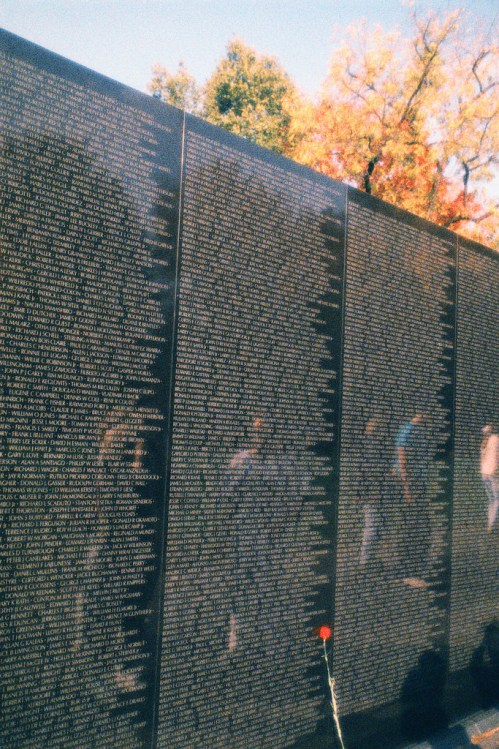
If the Judeo-Christian ferment is not dead, it must be engaged in an obscure struggle against deeper and deeper layers of the essential complicity between violence and human culture. Rene Girard
Only a few weeks ago on Easter Sunday we sang “The strife is o’er, the battle done; the victory of life is won; the song of triumph has begun: Alleluia!”
Something in me wants to say: Not!
Just what kind of strife is over, what sort of battle won? The constant drumbeat of war and strife seem to drown out any victory for life. Battles erupt and spread through the world like wild fire. Reading Shane Claiborne and Chris Haw’s Jesus for President , I came across these statistics about defense spending:
The US arsenal is the largest stockpile of nuclear weaponry in the world, equivalent to over 150,000 Hiroshima bombs. US military budget is over 450 billion per year, and it would take the combined budgets of the next 15 countries to equal that of the US (Russia is the next biggest spender at around 70 billion, China at 50 billion, and the entire “Axis of Evil” is less than 10 billion. (p.178)
Then last week we learned of a decisive, courageous act of violence which seeks, if not to end the war on terror, to seriously debilitate it, while attempting to obtain justice for those so horribly wronged.
On the surface I felt a mixture of relief, satisfaction, and a sober resignation to the violence. As the days passed I kept asking, was not the state sponsored violent execution, to which the Son of God surrendered, supposed to end all this? Why are we still killing each other in the effort to preserve peace, when we have already killed the Prince of Peace who shook off death and rose to proclaim the forgiveness of sins?
Christians declare that in Christ’s death and resurrection a momentous, wrenching, earth shattering shift occurred in our relationship with God and with one another. So why is it business as usual? Sin, evil, resentment, lust, greed, war continue to thrive and spread.
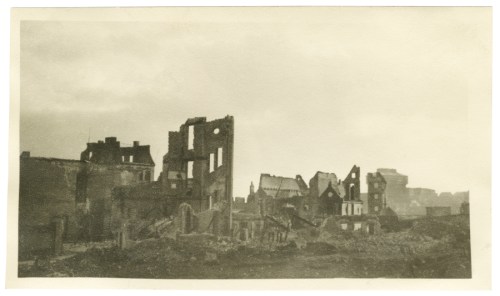
With the Judeo-Christian ferment still strong in my heart, the killing of Osama Bin Laden has engaged me in that obscure struggle, which anthropologist Girard describes, against the deeper and deeper layers of the essential complicity between violence and human culture.
The very fact that I may live safely on a quiet street in Kansas, as I leisurely consider such questions, is a tip of my hat to countless individuals whose struggles, deaths, and acts of preemptive and retaliatory violence, have helped to preserve the peace I enjoy.
That peace was troubled six weeks ago, when I woke in the night terrified by a dream. I was staying in the home I grew up in, where I had been sorting through family treasures, photos, records, and sixty years of lives well lived. My father is deceased and mom now lives in a care center. My siblings and I are preparing the home for sale. I was in town that weekend to attend the auction of my father’s collection of Indian relics. The stone tools, arrow points, ax heads, and weapons had been his passion, a focus of a life-long study of the early people who lived in Southeast Iowa and whose history extends back thousands of years.

The dream was deeply disturbing. A demonic, ghostly presence is in the house moving about. A small white poodle lies under a table. Suddenly its fur turns bright red, like blood, as though a red light were shining upon it. I place my hands on the side of the dog where the light was shining. When I pull them away, my palms have real blood on them.
I want to show my hands to my brother. Then suddenly a terrifying presence is with me. I scream very loudly and in screaming, cough up a wad of phlegm, which flies out of my mouth into the air. I think to myself my brother will be here soon, and I wake myself up screaming.
Good grief, I thought, shaken, what was that about? As I lay fearful and pondering the blood on my hands, the blood seemed to change in my memory from wet blood to a small rust colored stain in the center of the palm of each hand.

I got up and walked through the house, past the stacks of old photographs and the large ornate memorial pictures commemorating the deaths of various family members. A blue willow plate that traveled in a covered wagon with my Great Aunt Ethel sat among old family dishes. A china chamber pot leaned next to a pile of scrap books containing local history.
The process of closing a home is disorienting, chaotic, and uprooting. Objects handled by generations are stirred up, turned over, lifted out of boxes, hauled down from attics, and exposed to the light. Once Dad took me to Indian mounds under excavation. I remember walking along a wooden platform that circled the mound and looking down at the tiers of the remains.
There are whispered stories of violence in my family history – suicide, murder, conflict, suffering, grief. Who am I to rail against war, when my hands have blood on them in ways both known and unknown to me? My civilized life is complicit with violence. In fact “civilization” stands on the shoulders of violence and layers upon layers of sacred bones.

The story does not end here, nor the gift of my dream. Though the roots of terror and violence run deep in the human heart, succumbing to violence to end violence is only a temporary solution.
Anthropologist Gil Bailie writes:
Violence is immensely compelling. Those who witness spectacles of violence can be seduced by its logic even when – perhaps especially when – they are morally scandalized by it. Violence is labyrinthine. It turns back on itself in serpentine ways. The paths that seem to exit from its madness so often lead deeper into its maze.
… We may no longer be able and willing to turn violence into religion [as in primitive approaches to violence, such as human sacrifice and scapegoating], but neither are we able to turn the other cheek, and the conventional way of resisting evil causes the contagion of evil to spread, perpetrated by those who are most determined to eradicate it. How to resist evil in ways that prevent its spread is now history’s most fundamental dilemma. Gil Bailie, Violence Unveiled – Humanity at the Crossroads, (p. 90)
How do we resist evil in ways that prevent its spread and prevent our own vulnerability to its contagion? For the followers of Christ, the Way is in the manger and hanging from the cross. The Way is meeting us as we remember Christ’s suffering and resurrection. The Way is obedience to the greatest commandment: to love the Lord, your God, with all your heart, with all your soul, and with all your mind. (Matthew 22:37)
Perfect love is what casts out terror, not more terror.
There is no terror in love. But perfect love drives out terror, because terror has to do with punishment. The one who fears is not made perfect in love.
I John 4: 18.
When our love is divided, when our love is parceled out and diffused among many desires, we are like a branch cut off from the vine. When we succumb to fear and anxiety, we wither, wilt, and die. When other desires stand between our hearts and that supreme Love, the power given to us in the cross of Christ is diluted, blocked, and becomes irrelevant to us.

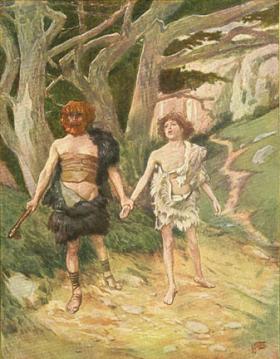
Cain Leads Abel to Death
After I walked through the house, I went back to bed and a fervent prayer rose up in me. I prayed against that dark presence and for each family member, going back through the generations, all the way to Cain and Abel. I prayed for the ancient people, whose relics had been in my family’s respectful care for close to sixty years. The artifacts, now scattered, rested in unfamiliar hands. I prayed for all my relations, my brothers and sisters throughout time and space. I prayed for their protection, for forgiveness, healing, freedom, and peace. I prayed for their fullest joy in God. I prayed with the authority of my baptism for anything evil to depart and leave these ones alone. I prayed through the victory of Jesus won by his shed blood, once, for all. I prayed like a house afire for everyone I could think of. Recalling my dream, I not only spit on the devil, I hocked a big loogie. Then I turned over and slept like a baby.
Gil Bailie illuminates the significance of the mysterious redemptive power of the crucifixion and the implications for our time with his anthropological perspective.
Humans in crisis easily succumb to social contagions that end in violence that is accompanied by a primitive form of religious intoxication. In the final analysis, the only alternative to the simulated transcendence of social contagion and violence is another experience of religious transcendence, one at the center of which is a God who chooses to suffer violence rather than sponsor it. (Violence Unveiled – Humanity at the Crossroads, p 66)
“Put down your weapon!” Jesus told Peter, when Peter drew his sword to defend his master and severed the soldier’s ear.
The choice to suffer violence, rather than sponsoring it, is made possible by an extraordinary love for God, the Transcendent Power of the Universe. This is the greatest and first commandment. Only as this is followed may the second commandment of love for neighbor and self be fully embraced. For it is love for God, which gives one the strength for suffering the sins of others, the capacity to forgive, the faith to believe in the unseen possibility of new life, and the hope to endure. Love of God bestows the deeply sustaining and transforming inner communion with Love itself. Love of God releases the rushing river of redemption to flow through us into the world.
.
We are all complicit. We all have blood on our hands. The strife is o’er, the battle done; the victory of life is won for those who have suffered, along with Jesus, the crucifixion in themselves of all that is not love. These carry the stain of the blood of the Lamb in their palms.
Love wins.
For love is
as strong as death, passion fierce as the grave.
Its flashes are flashes of fire,
a raging flame.
Many waters cannot quench love,
neither can floods drown it. Song of Songs 8: 6b-7
The Sanctuary Foundation for Prayer
More about Prayer
Posted in Contemplation, prayer, Easter, Good Friday, Spiritual Practices
Tagged dying to self, generational sin, Gil Bailie, Jesus, love, peace, René Girard, Shane Claiborne, the praying life, Warfare and Conflict
I woke to a list of tasks and projects to complete – important, worthwhile, necessary duties.
But the Holy One said, “Rest.”
I argued. “Lord, I have to do this. I need to get that done. And the yard needs raking.”
“Stop!” the Lord said to me. Stop it.
So I turned on myself, flaying myself with guilt and shame. “What’s wrong with you? Why can’t you get more accomplished?”
“Shabbat.” God said. Shabbat.
We drain ourselves with too much doing, striving, and succeeding. We push past our limits and strain our bodies and make ourselves sick. The neglected soul shrivels and turns dry and hard like the dusty, wrinkled slice of apple I swept up from under my table.
Shabbat or Sabbath means literally to stop. Interestingly, the Hebrew “Shabbat” sounds a little like “stop it.”

Remember the Sabbath Day and keep it holy. Six days you shall labor and do all your work. But the seventh day is a Sabbath to the Lord your God; you shall not do any work – you, your son or your daughter, your male or female slave, your livestock, or the alien resident in your towns. For in six days the Lord made heaven and earth, the sea, and all that is in them, but rested the seventh day; therefore the Lord blessed the Sabbath day and consecrated it. Exodus 20:8-11
What Israel learned from the fourth commandment is that Sabbath rest is an alternative to aggressive anxiety, writes Walter Brueggemann in Journey to the Common Good (pp 25-26) .
Most Christians think of Sabbath as a day of worship, which may actually turn into a day of production, activity, and achievement, as many clergy will tell you. Though church seemed long and boring to me as a child, endless Sunday afternoons at my Mennonite Grandmother’s home, sitting on a couch with prickly upholstery and listening to the clock tick was not an improvement. At least at church we had music. At grandma’s my brother and I itched and fidgeted to go outside and play.
However, at its origin, Sabbath was not about worship. Brueggemann continues, “It is about work stoppage. It is about withdrawal from the anxiety system of Pharaoh, the refusal to let one’s life be defined by production and consumption and the endless pursuit of private well-being.”
To cease working for a day is an act of defiance in a godless system of aggressive production and accumulation. To keep Sabbath is an act of rebellion against Pharaoh’s kingdom of scarcity where there is never enough. To keep Sabbath is a statement of faith in the abundance and provision of the Kingdom of God, where sharing by all will mean scarcity for none. Finally, “to stop it” is an act of obedient trust in God’s goodness, as one rests and enjoys the wonder of all that God has made.

Recently, people, who come to me for spiritual guidance, seek not so much counsel or suggestions for how to pray, but, rather, the permission and opportunity to be still and rest in God.
A woman tells me, “I think what I need today is to just be quiet and for you to lead me in meditation.” A little music, Psalm 27, and an extended silence followed.
We sat together facing our internal distractions and anxious mental sorties away from our intention of presence to God. We calmed our fretful souls, and held ourselves steady before the voluminous mystery of love. Over time this Sabbath being, this doing nothing, will change the quality and the character of all our active doing. By disengaging from Pharaoh’s system of scarcity and anxiety, we root more deeply into the realm of the endless mercy and providence of the Holy One.
Here is a god, who had so much fun doing and creating that he took a day off in order to rest and delight in his own handiwork. Then God, tickled with himself, commanded all his creation, including livestock and resident aliens, to enter into the joy of such rest. “Go outside and play. Take a look at what a marvelous universe I have made. I can’t get over how wonderful it all is.”
As the woman, who needed rest, and I participated together in the wonder of the gift of our being, the silence thickened, ebbed and flowed, smooth as satin and softly throbbing. We drank deeply from that well. When the session came to an end, we drew back reluctantly from the living water.
“You were very thirsty?” I asked. Yes, she nodded.
“Me too.” I said.

Learn by little the desire for all things
which perhaps is not desire at all
but undying love which perhaps
is not love at all but gratitude
for the being of all things which
perhaps is not gratitude at all
but the maker’s joy in what is made,
the joy in which we come to rest.
Wendell Berry
May you discover the maker’s joy in your Sabbath rest.
Shabbat Shalom!
“In returning and rest you shall be saved.
In quiet and trust shall be your strength.” Isaiah 30: 15
This is the second in a series of posts this year on
Isaiah 30:15. Read the first post on this verse here: Returning
The Sanctuary Foundation for Prayer
Read more about prayer www.fromholyground.org:
emaillross@fromholyground.org,
Follow at http://twitter.com/lfross
Posted in Contemplation, prayer, Lent, Sabbath, Spiritual Practices, spirituality, The praying life
Tagged Biblical Sabbath, Isaiah 30:15, Prayer, rest, Wendell Berry, workaholic
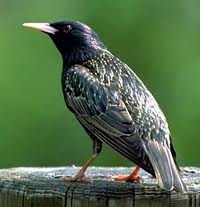
Black grackles and speckled starlings,
with yellow beaks and rusty throated chatter
clatter up and down the branches
gleaning the leavings of winter’s suet cakes.
A pile of must-read books
litter my desk and the chair before the window
where I come to pray.
Wisdom and knowledge at my fingertips,
and the perfect YouTube video of a good life,
forwarded from friend to friend,
promises to change everything.
Click here now.
How long do you stand on the street corner,
listening to the preachers and barkers?
How long do you slurp up the news,
opinions, and seductions of others?
How long do you sit on the couch
of the world consuming secondhand notions,
lies, and rumors?
When will you sit down before mystery
and invite it to come rest in your lap,
your lap, I mean, your heart and singular, scintillating body?
When do you stop singing somebody else’s song
and chasing somebody else’s god
and coveting somebody else’s experience?

When, oh when,
dear, irreplaceable you,
will you lay
yourself down in your own true,
blue bonnet strewn field of a life?
And say to the starling –
Here come, with your little orange feet and strange black eye.
How precious you are in that freckled jacket.
And I ask you,
how many prayer breakfasts,
committee meetings, and strategy sessions,
how many well-intentioned,
and not so well-intentioned,
soldiers of truth
gathering to plot their version of a perfect world
must we salute?
Just how long will it take, do you think,
for us to be safe enough
and gentle enough
and humble enough
for the shy weary God to come and lay his head?

Jesus replied, “Foxes have holes and birds of the air have nests,
but the Son of Man has no place to lay his head.” Matthew 8: 18-22
A YouTube video on Matthew 8: 18-22

Image via Wikipedia
Listen to this, you who grind the destitute and plunder the humble, you who say,
“When will the new moon be over so that we may sell corn? When will the Sabbath be past so that we may open our wheat again, giving short measure in the bushel and taking overweight in the silver, tilting the scales fraudulently, and selling the dust of the wheat; that we may buy the poor for silver and the destitute for a pair of shoes?”
The Lord has sworn by the pride of Jacob:
I will never forget any of their doings. Amos 8: 4-7

A new day coming, change breathing fear and conflict down our necks, we bow before the gods of Scarcity and Me First. An old order, feverish, on its death bed, hollers, flails, clutches its bedclothes with restless fingers, and sees leering phantoms rise from its bedpan.
A cry rises up out of Egypt. Here in this land the child of Compassion once found safety from another ruler’s wrath.
“Let our people go!” rings out in Libya. Rulers tremble. Politicians abandon reason and rush to protect their interests. The homeless crowd the streets. The sick are told to leave their sheltered care and fend for themselves. And truth, which finds its voice, its shape, its story, its song in art,
is silenced
as the rich and powerful cling to their gold.
A huge share of the nation’s economic growth over the past 30 years has gone to the top one-hundredth of one percent, who now make an average of $27 million per household. The average income for the bottom 90 percent of us? $31,244.
Tell them this.
Put down this.
Be still.
Or be stilled.
And Know who I Am.

And know this –
there are rules:
Love, serve, and trust God rather than trusting systems which exploit and destroy life in its many forms.
Take care of neighbors. Welcome, respect, and protect the stranger, the alien, and the orphan. Look out for the weak, children, women, and the elderly.
Don’t kill each other, or steal or tell lies about each other. Don’t be unfaithful to your commitments to each other.
Don’t engage in practices which exploit or prey upon the vulnerable.
Once a week back away from the system of anxious scarcity, production, and consumption. Stop working and rest. Do not allow your life to be defined by endless producing and doing, and no being.
and there are consequences:
I will not forget any of your doings.
Be still, and know that I am God;
I will be exalted among the nations,
I will be exalted in the earth. Psalm 46: 10 NIV

.
With gratitude to the prophets, Joel and Amos, and modern prophet and Biblical scholar,Walter Brueggemann and his book, Journey to the Common Good
- Love and the Wind (theprayinglife.wordpress.com)
- Waiting: The Threats (theprayinglife.wordpress.com)
- The Stranger (theprayinglife.wordpress.com)
Posted in Christianity, Contemplation, prayer, faith, Justice, sin, Spiritual Practices
Tagged Amos, Prophet, Psalm 46, Ten commandments, Walter Brueggemann
Farmer, poet, lover of the land – Wendell Berry:
I know that I have life
only insofar as I have love.
I have no love
except it come from Thee.
Help me, please, to carry
this candle against the wind.
One could not put truth more succinctly.
Isn’t this what most of us battle – the dying of the light?
The wind is a wily deceiver,
a furious demon,
a double minded,
shape shifting,
hair splitting,
breeder
of separation.
Don’t listen.
Pray for help to carry
the love we are blessed to bear.
We,
love,
and the light
are
One.
The wind is only the wind.

Painting by Dorothy Frager
To Look
at
Any Thing
To look at any thing,
If you would know that thing,
You must look at it long:
To look at this green and say
‘I have seen spring in these
Woods,’ will not do – you must
Be the thing you see:
You must be the dark snakes of
Stems and ferny plumes of leaves,
You must enter in
To the small silences between
The leaves,
You must take your time
And touch the very peace
They issue from. ~ John Moffit
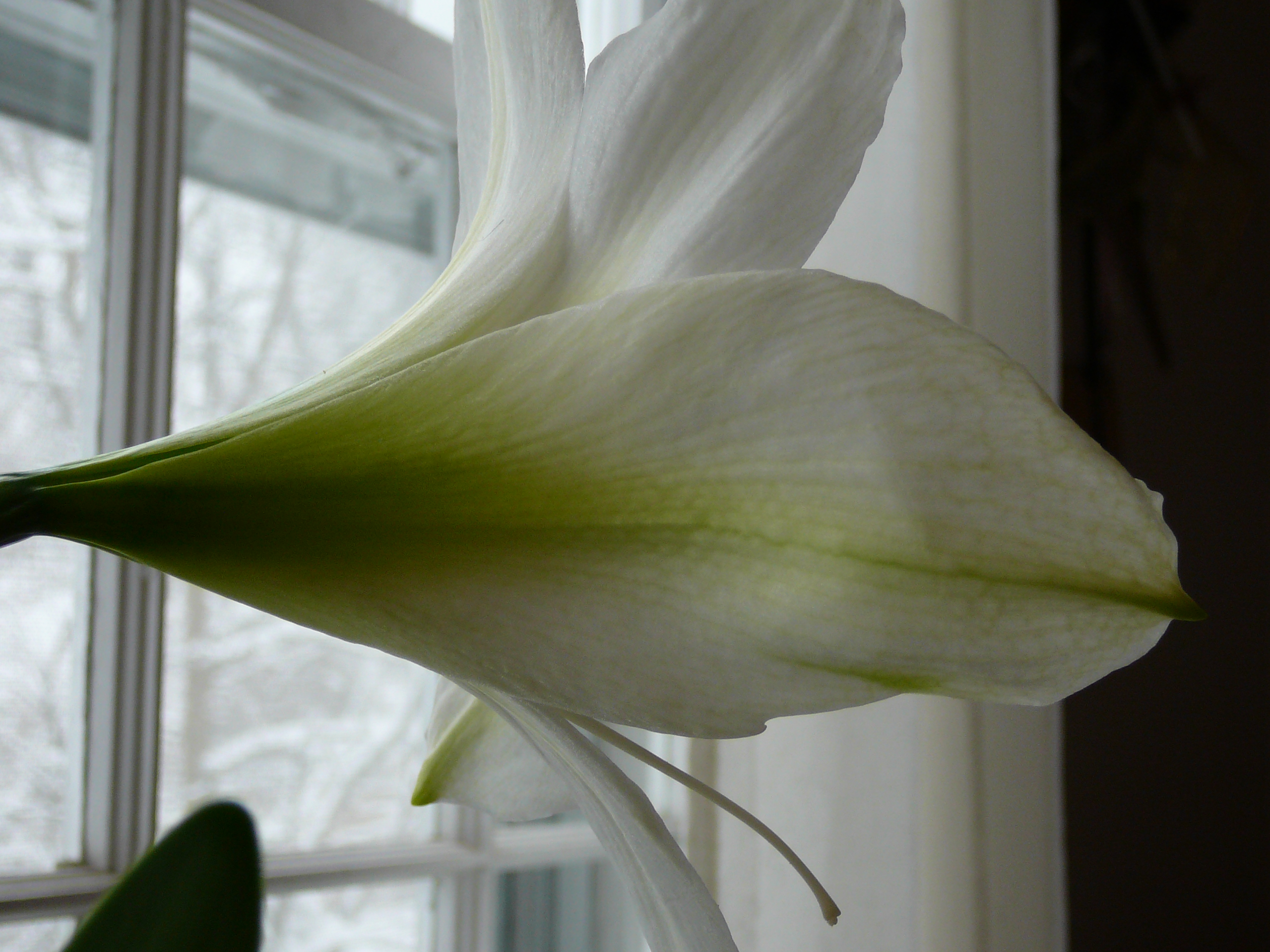
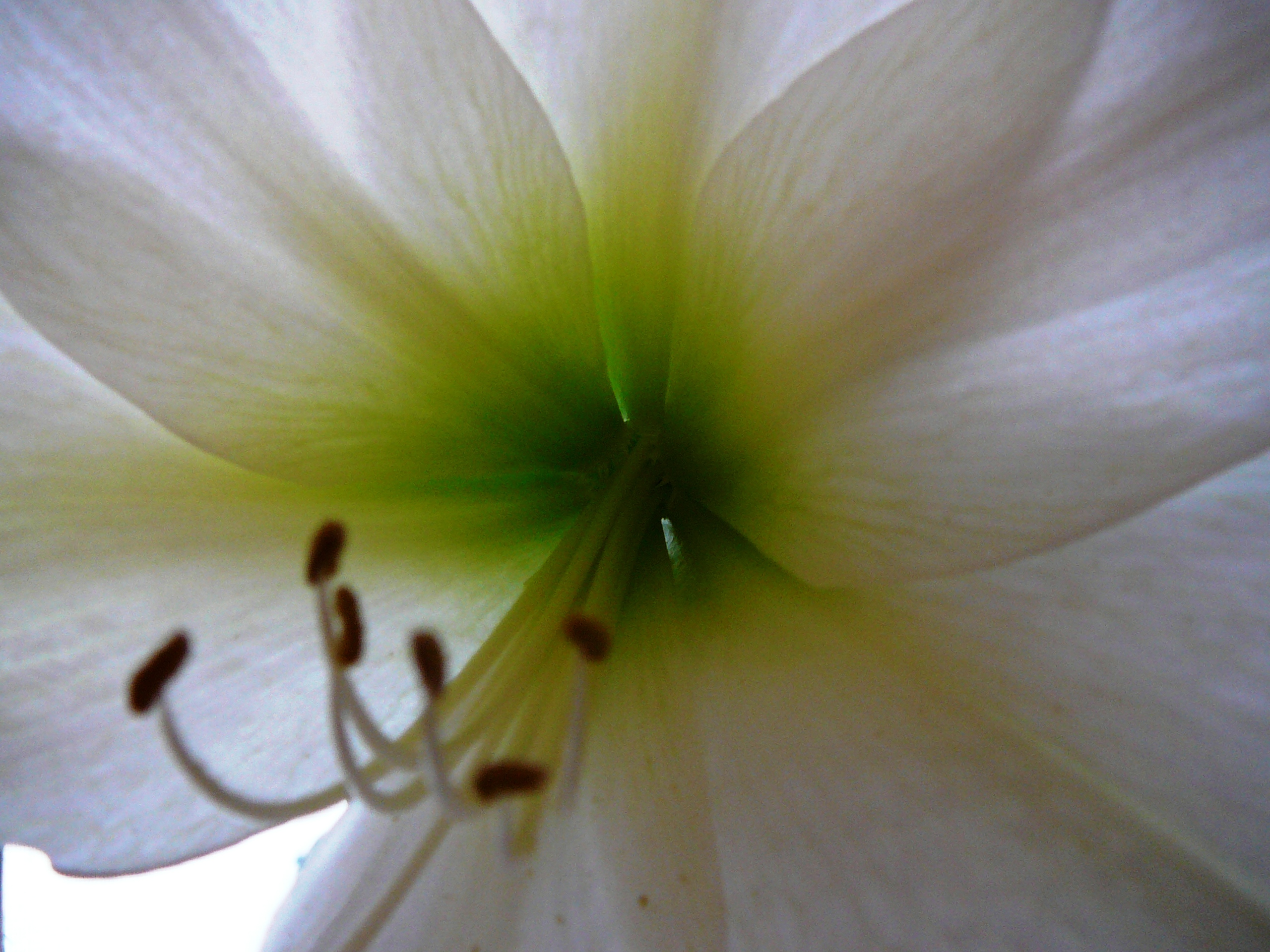
I am looking at the blossom of a white amaryllis, rising on a thick green stalk before my window. Outside it is snowing hard.
A woodpecker drills at the suet cake, swinging from the feeder. A brown squirrel plows down the power line, shoving clumps of snow to the ground. I am looking long at the amaryllis and that green seam shading into pale yellow tracing along the underside of a blossom.

I look and look – at the milky, translucent petals, the flared green heart of the blossom, the seven curved stamens with their golden haired anthers, the fluted, serrated fringe at the tip of the petals, and that tiny pale shoot rising up between the two large petals – the pistil and three legged stigma. I look at the split sheath covering of the three large blooms. The two pieces now hang limp, shriveling, spent from such sundering.

And I am
breathless
with the wonder
and beauty.
Last evening my home was filled with teenagers. Thirteen kids crowded into my tiny den to watch a video about faith called Beyond Our Differences. Earlier we took a pared down version of a survey conducted by the Pew Research Forum on Religion and Public Life. The survey, conducted last year, measured Americans’ knowledge of their own religions and their neighbors’ religions. On average Americans got only sixteen questions out of the thirty two correct.
The teens and I are learning about different religions this year in our desire to build understanding with our neighbors on this planet, discover points of common ground, and to become clearer and more articulate about our own beliefs.

On January 6 many Christians celebrated Epiphany, the visit of the wise men from a far away land with their gifts to the infant Jesus. Now we enter the stretch of Sundays after Epiphany that carry us all the way to Ash Wednesday and the beginning of lent.
Epiphany means a showing, a revealing and was applied early on in the Church to this event in Jesus’ life. The previously obscured and hidden God of the Jews unveils his divinity for all people in the Christ child, and folks from a long way out of town show up to see it.
The themes of the scripture readings which carry us through the next eight Sundays focus on the mission of the church as making disciples and reaching out into the world as evangelists. Some churches also use this season as an opportunity to foster fellowship, to repent of our sins of bigotry, hatred and prejudice, and work toward healing the divisions in church and society.

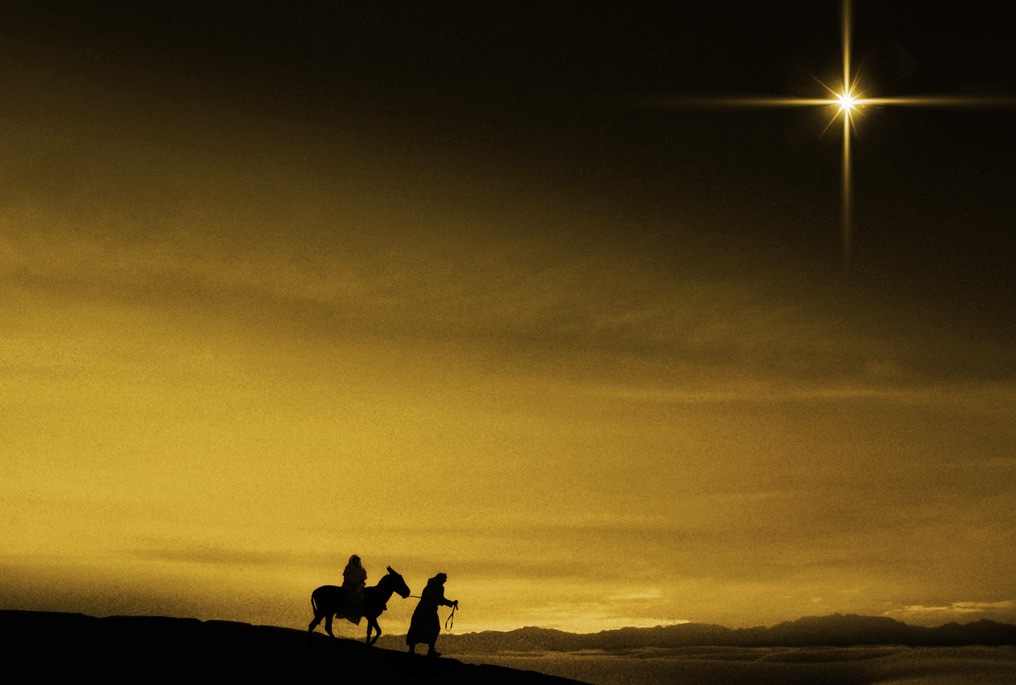
Soon after his birth Christ is introduced to his first cross cultural, interfaith experience in the form of the visitors from afar. Next, fleeing Herod’s wrath, he and his parents become aliens, refugees, in a foreign culture in their escape to Egypt.
History is full of stories of the church’s awkward, failed, and sometimes brutal and horrendous attempts to share what they have seen at the manger. History also is full of astounding stories of love, forgiveness, freedom and justice as the gospel has been shared.

At the beginning of Advent the youth group read Isaiah’s prophecy of the coming messiah:
He grew up before him like a tender shoot,
and like a root out of dry ground.
He had no beauty or majesty to attract us to him,
nothing in his appearance that we should desire him. Isaiah 53: 2
I held up a dry, flaky amaryllis bulb with a wad of pale spindly roots. This is where advent begins, I told the kids. This is where God begins to come into our world –through something ugly and apparently useless that you may think ought to be thrown out in the trash. God arrives as things appear hopeless, beyond repair, and we are realizing that there is no way we can figure this out and make things right on our own. When we realize we need help, we are ready to meet Jesus.
A few days later I planted the bulb in a green ceramic pot my daughter made. She would be embarrassed to see it in this pot. Not up to her standards, the pot has some flaws. I love it.
A month later, gazing at the blooming beauty heals my soul. I wonder what it would be to become those long smooth fleshy spears of leaves. I have been busy the past week with numerous contacts, encounters, preparations, and meetings. I have gazed into the pure white petals of many souls. Each person was stunningly beautiful and deserving of longer attention than I had time to give.
 Today I gaze long upon the white amaryllis. A prayer wells up for those thirteen young people and for their parents and grandparents. I love them all like the mother rabbit I saw in a video once. The rabbit was chasing a snake away from her nest. She followed and pounced and picked it up, thrashing in her mouth, until the snake escaped and slithered up a tree. I want no harm to disturb the growth of these souls. I tremble too, at the responsibility entrusted to those engaged in the care of the souls of others.
I am not absolutely sure what it means to be an evangelist. I do think it has to do with telling the stories of what we have seen. We need to share with one another those epiphanies which bring us to our knees, call us to make long journeys, and inspire us to give away our precious treasures.
I also believe that being an evangelist has to do with offering the gold of our time,
with inviting the poor and needy into our lives,
and looking long and hard at each other
until we touch the very peace we issue from.

Thank you to Dorothy Frager, who looks long and hard, for permission to use her painting!
The Sanctuary Foundation for Prayer
Contact the author: lross@fromholyground.org www.fbook.me/sanctuary
Follow at http://twitter.com/lfross
Posted in Advent, Christianity, Contemplation, prayer, Epiphany, Evangelism, Spiritual Practices
Tagged amaryllis, evangelism, Isaiah 53:2, mission, Religion and Spirituality, Themes of epiphany, wonder
 For thus said the Lord God; the Holy One of Israel:
In re
turning
and
rest
you shall be
saved;
in quietness
and in
trust
shall be
your strength. Isaiah 30: 15
The verse was not what I expected or hoped for. I wanted a word from the Lord, which was snappier with more glory and fortune cookie flair. For example, “So the Lord restored Job’s fortunes and doubled all his possessions. … and all his brothers and sisters and former acquaintances and friends gave him a sheep and a gold ring.” Job 42: 10-11
Instead, Isaiah 30:15 dropped into my consciousness almost before I had finished my request: Holy One, give me a verse of scripture to guide me in the coming year. I need a point of true north to align myself with and measure my life against, a place of solid ground in the midst of chaos.
One of my Facebook friends took suggestions for her verse from friends, who offered rich verses for her to reflect on in 2011. She came up with her own: Paul’s lovely advice to the Philippians: “Finally, beloved, whatever is true…, honorable…, just, pure, pleasing, commendable, if there is anything worthy of praise, think about these things.” Philippians 4: 8. There is enough in these words to keep one’s head on straight for a whole year.
I got unbidden, rushing in even before I could think of something better or ask my friends, this humble little verse, from Isaiah. No Sweetie, no high drama, livestock, or gold rings for you. Turn back. Sit down. Be still. There you will find all you need.
I chaff with this because I have already carried (or been carried) by this verse for years. Haven’t I gnawed all the meat off it and sucked it dry of all its juices? Apparently not. So in obedience to the one I serve, in 2011 from time to time I will post about some aspect of this unpretentious verse.
Today, we start with the first two words – In returning. Around 734 BCE the prophet, Isaiah, spoke these words to the people of God as part of a scathing denunciation of the blindness and incompetence of their leaders. He was speaking to those who relied on their own resources rather than the power and wisdom of God. He pointed out their pride, idolatry, and greed. Rather than trusting in God, they trusted in deceit and oppression. The remedy to this path of destruction began with a returning to something once known, but tossed aside in a frenzy of anxiety and lack of faith.

Returning, turning, going back is what I have been doing a lot of the past year and will continue to do in the year ahead. Every month or so I go back to the small town in Iowa, where I grew up, and gather with my brother and sister to sort through over sixty years of accumulated household goods and memories in my parents’ home. I turn over the remnants of our lives together, lift them out of dusty boxes, and sweep cobwebs away. I pull down an aged, wooden Kraft Cheese box tucked under the eaves in the garage. I unfold yellowed, newspaper clippings and read letters I sent to mom and dad from Cedar Falls, Iowa; Ann Arbor and Kalamazoo, Michigan; and Louisville, Kentucky.
I gaze at a photo of myself I had not seen before. Who is that little girl sitting on the chair? I peer at a snapshot of mom and dad at some fancy dinner, both dressed to kill, vibrant and smiling. In one Father’s Day card we found, mom wrote, “You are a wonderful husband, lover, and father.” We whooped and giggled.

At week’s end I arrange the piles and boxes, run the sweeper, turn down the furnace, and lock the door. Elijah, my black lab, and I walk to the car. He jumps into the back seat, littered with rawhide chews and toys, and we return to Kansas, driving west across southern Iowa to catch I35 south down to Missouri, and then turning back west on I70 to Topeka.
I do not know how many more returns I will make before the auction is over, the papers signed, and the house keys turned over to a new owner. In such returning the prophet promises salvation, healing, some kind of cure for his nation’s disease. In such turning back and turning toward, life unwinds and furls us out, then draws us back again to lie curled round some center like the string of a yoyo.
Isaiah tells the people, flinging themselves toward their own devices, that it is the Lord they are to return to. The question is where in our turning do we find that hidden manger, that center, that core of unnameable, untameable truth? Is in the Tupperware, breeding plastic cartons on the floor of the pantry, or the stack of Styrofoam cups mom washed and saved? Is it in the notebooks, where dad recorded the dates when he replaced the faucet washers, changed the oil in the car, or put in a new furnace filter?
The other night, back here in Kansas in my bed, I heard my cat scratching outside my door, wanting to return to me and rest on my bed, where she likes to lay as close to my face as possible and tickle me softly with her whiskers. Somewhat allergic to cats, I rarely let her in. Having been alone, except for the boy who comes to feed and water her, she reached her paw under the door, pulling a throw rug and making an insistent ruckus.

In the morning I held her while I drank my coffee. She turned and turned on my lap, kneading my stomach, finally resting curled and purring, pressing her head against my chest.
Going back to recover old ground is an ancient dance. Any given life is so full of wonder, terror, and mystery that it deserves returning to over and over. There is always more to be seen and learned about the hands which wrote the note, “This wooden butter paddle belonged to my grandmother Van Doren.”
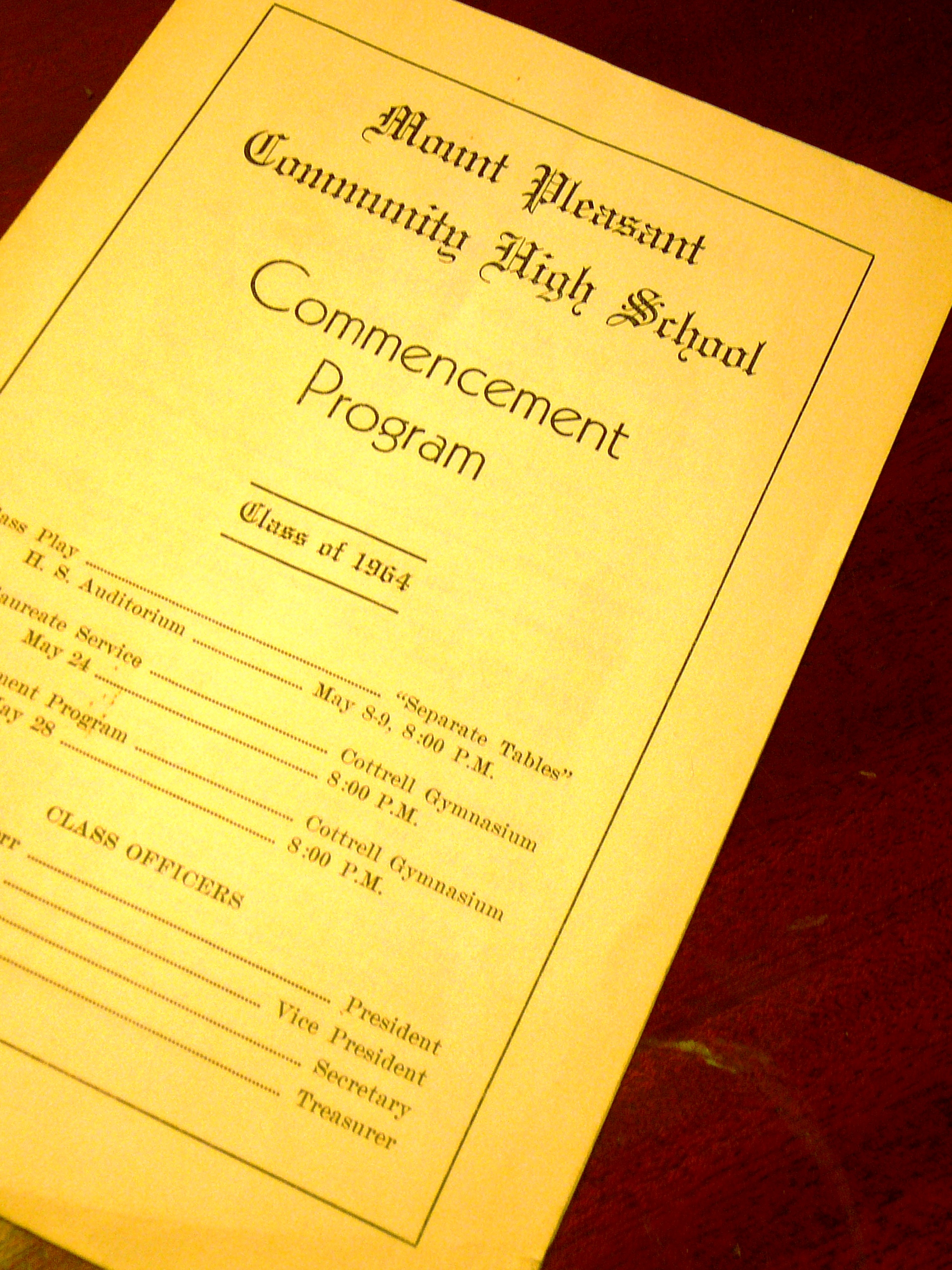
In one box mom saved programs from important events of family members. I found my high school commencement program. The top six scholars in my class spoke on the topic: 1960-1964 Years of Achievement and Turmoil, Events that Have and Will Affect Our Lives. Individual speeches covered Man’s Progress through Science; The American Image – Latin America; Tensions – Europe and Southeast Asia; The Passing of an Era – November 22, 1963 (the assassination of John F.Kennedy). One of the few African Americans in my class, Kathy Wells, spoke on Man’s Attempt to Overcome Bigotry. My title was Progress – Local and State.
No one can turn up his nose at the quality of the education at my alma mater.

I recently heard someone speak about “God’s plan” for us. The phrase sort of grated on me. “Plan” seems to me to be such a human notion with its linear quality, bound by time, space, and mortal reason. I do not think God has plans in the way we might think of them – a neat ending to a story, a way everything will make sense to us, or a satisfying tying up of all our loose ends.
Rather, I think of God as eternal unfurling with ever increasing nuance and connection until we see all lives as dancing flames rising and falling and rising again.
Meaning is something we tack on to Reality to comfort ourselves with a sense of having a handle on things. But Reality more likely slips through our fingers, whizzing past us, leaving trails of newspaper clippings, baby shoes, an old watch, and a tortoise shell comb worn by your great grandmother.
Today I think, rather than One who has plans, God is an endless returning, retracing, weaving in and out, a grand do si do in waltz time, circling back and forward, all the while holding out his hand for us to join the dance, seeing the same place over and over, as if for the first time.
What we call the beginning is often the end.
And to make an end is to make a beginning.
The end is where we start from.
T.S. Eliot “Little Gidding”
I would love to know the wisdom you will be carrying with you in 2011. What is your verse, or piece of direction to see you through the coming year? Leave it here in the comments, or post it on our Facebook page.
A very blessed New Year to you!
The Sanctuary Foundation for Prayer
Read more about prayer www.fromholyground.org
Contact the author lross@fromholyground.org, www.fbook.me/sanctuary
Follow at http://twitter.com/lfross
Part One of Four Parts
 A friend recently asked me for the key to success in surviving a child’s thirteenth year. She told me she ate some truly nasty broccoli at dinner one night in a desperate attempt to do something good for herself. She swallowed the stuff in the hope that it would help her live long enough to see her son become the parent of a thirteen-year-old.
Longevity and sheer perseverance have a lot to do with justice and salvation. If you can live long enough, you may see the triumph of good with your own eyes. Being able to hang on, to wait through periods when all seems turned against you, to survive and prevail is a central activity of a Christian.
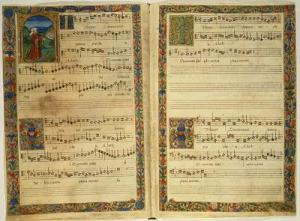
Some pastors struggle to get congregations to sing the more somber and penitential advent hymns before the favorite Christmas carols. I am not surprised. Our culture’s mindless celebration of Christmas distorts the basic truth of the season, namely, our need for redemption and what might be required of us to receive it. We gloss over our appalling sin and ruin, skip past the eager groan of creation’s need for healing. We drug ourselves against the suffering of dark nights. We grow numb and fall asleep before the TV instead of keeping alert and obedient watch for God’s saving action in our lives. We succumb to the temptation to consume more and more as we race to gratify desires.

In contrast, Christ tells us that here is where we are to linger, to stay awake, to wait and be ready,
here in the bleak and barren heart of our need.
Timing is everything. Should one push, move ahead and make something happen or lay low, wait, and watch for the hand of the Lord to act? Tolerating ambiguity, not knowing and uncertainty can be excruciating. In our anxiety and fear we may take things into our own hands.
As a general rule of discernment, when in doubt, wait. The stance of faith waits, trusts, praises, and gives thanks. Faith joined with love bears all things, believes all things, hopes all things, and endures all things.
Why is that hard for us? Perhaps we fear that we won’t be vindicated, that our longing will not be fulfilled, that our cause will not redeemed, that things will not be made right and goodness will not prevail.
My friend with the thirteen-year-old told me her family motto: “Learn to bear what must be borne.” This stern admonition carries for me a puritanical severity, a life of gritted teeth, pursed lips, and making the best of one trial after another. But when I shared the proverb with another friend, “What a great theme for advent,” she exclaimed, seeing a possibility I had missed. My understanding shifted from regarding what must be borne as some heavy load and having to slog along through life like a drudge to the exhilarating task of the labor and delivery of a baby.
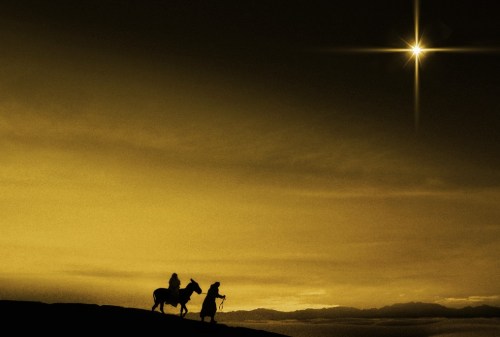
“Love in real life is a harsh and dreadful thing compared to love in dreams,” observed Dostoevsky. The advent season invites us to the harsh and dreadful task of giving birth to a love that will ask more of us than we thought we could bear. Learning to bear the one who must be born, the Christ, into our lives, families, communities, and world requires us to wait, persevere, and overcome fear with faith.
As the promises of God are delivered through our lives, we can rejoice with St. Simeon, whom Orthodox Christians call “The God Receiver.” Old Simeon was waiting to see the Christ before he died. Led by the Spirit, Simeon showed up at the temple when Mary and Joseph brought their son to present him to the Lord, according to the law of Moses. Taking the infant into his arms with a heart full of love and eyes full of tears, the old man uttered these words:
Lord, now let Your servant depart in peace,
according to Your word,
for my eyes have seen Your salvation,
a Light to lighten the Gentiles,
the Glory of Your people Israel.
Luke 2:25-32

Watch for Part Two of this series on waiting, The Promise, coming soon.
Not enough time, not enough energy, not enough hope, not enough money, not enough jobs, not enough room, not enough love, not enough peace …
not enuf nuthin !
So goes the lie.
As the holiday season of plenty, hope, and generosity opens its arms to us, some individuals are pained by and suspicious of the season’s glittering wares. The family, who have lost their home to foreclosure, the unemployed factory worker, and other despairing and heartsick souls may feel plenty is beyond their reach and scarcity their new normal.
The media depictions of holiday cheer play on our insecurity and sense of lack. They insinuate that no matter how much we have, we do not have the latest and greatest. Advertisers lure us with promises of more. We may find ourselves stumbling after ghostly phantoms in the desperate hope that this year we might find that illusive wholeness we are seeking.
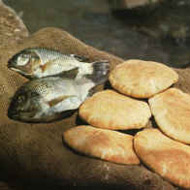
How does one feel whole and fulfilled, when one is more aware of scarcity in one’s life? Perhaps abundance in the midst of scarcity occurs for us as it did for Jesus, when he fed five thousand people with five barley loaves and two small fish.
We welcome what we have, however meager. We give thanks, and watch it multiply.
Here is a simple, yet demanding, exercise to practice such a miracle in your own life. It is called The Welcoming Prayer. It was developed by Mary Mrozowski, one of Thomas Keating‘s closest associates and a prime mover in the development of centering prayer. She based the Welcoming Prayer on the 17th-century French spiritual classic Abandonment to Divine Providence by Jean-Pierre de Caussade as well as Fr. Keating’s teachings and her own lived experience of transformation with its underlying attitude of surrender. There are a number of variations on this prayer. Here is one.
WELCOMING PRAYER
Focus and Sink In:
Become aware of what is troubling you or occupying your mind. For example, your sadness, anger, or fear regarding scarcity of some kind in your life. Focus on your feelings, both cognitively and physically, noting how and where the feeling affects your body.
Instead of resisting, or feeling ashamed or denying, welcome the truth of what is troubling you. Welcome the feelings with curiosity and compassion.
Let Go:
(Here is the hard part)
Let go of your desire for power and control over the situation. Release your desire to be “right.”
Let go of your desire for affection and esteem from others.
Let go of your desire for survival and security.
Let go of your desire to change the way things are.
Rest :
Allow yourself to sink into the abundant flowing love of this moment. French priest, Jeanne Pierre de Caussade, describes this love:
The present is ever filled with infinite treasure; it contains more than you have capacity to hold. … The will of God is at each moment before us like an immense, inexhaustible ocean that no human heart can fathom; but none can receive from it more than he has capacity to contain, it is necessary to enlarge this capacity by faith, confidence, and love…
You may find the letting go section of the prayer difficult to do. One or two of the desires may be harder to release than others. Think of this as useful information about what things, other than God, are of primary importance in your life. Notice which desires might be getting in the way of your freedom in Christ. If you find you cannot release one of these, you might simply pray that God give you the desire to desire to let go.
The Welcoming Prayer invites us to trust in God’s presence and providence and to discover the infinite wealth of God available to us in each moment. “The divine will is a deep abyss of which the present moment is the entrance. If you plunge into this abyss you will find it infinitely more vast than your desires,” writes de Caussade.
I believe this is absolutely true. Over and over in the midst of distress, I have wrung my hands about there not being enough of one thing or another in my life. Yet as I have focused and welcomed the feelings and my present reality, let go of my ego’s desires, and rested in God, my need has been supplied with an abundant depth and power that swept away all my grasping and anxiety.

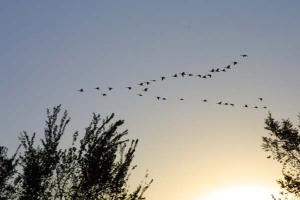
I heard the geese honking at dawn last week. My dog halted at the door and cocked his head and we listened together in wonder. I love the sound of them moving over head, giving themselves to the skies. Trusting in their ancient faith they make their way.
In spite of all appearances to the contrary, I believe there is enough.
The Wild Geese
Abandon, as in love or sleep,
Holds them to their way
clear in the ancient faith:
what we need is here.
And we pray not for new earth or heaven,
but to be quiet in heart
and in eye clear.
What we need is here. Wendell Berry
I trust in you, O Lord. You are my God.
My times are in your hands. Psalm 30:1
What we need is here.
Become a fan of the The Sanctuary Foundation for Prayer
Read more about prayer www.fromholyground.org,www.fromholyground.wordpress.org
Contact the author lross@fromholyground.org, www.fbook.me/sanctuary
Follow at http://twitter.com/lfross
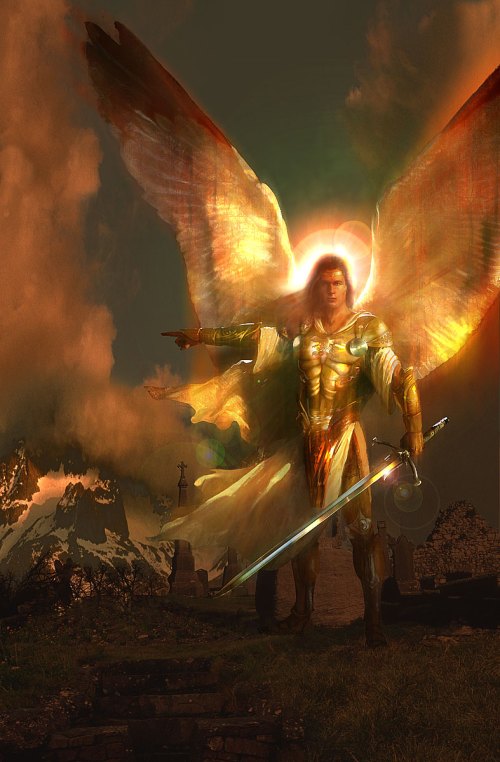
They are all screaming at the top of their lungs. A gargantuan angel with bushy hair and a dark, cavernous throat bellows from a starry sky. A couple of space ships pass in the distance and a few screaming angels flit among the stars. Four other angels hover at the large angel’s feet, with neat rows of white teeth framing their gaping mouths. These angels are playing musical instruments: a violin, a harp, and one angel is hitting a cow bell with a drum stick.
The cartoon’s caption, printed on a scroll held by the big angel, reads:
PRAY. Everything else is ___! (expletive removed)
The cartoon is the irreverent work of Robert Therrien, aka Bad Bob, who made a name for himself in the 90’s drawing Screaming Man cartoons, which featured a fellow who had consumed five or six too many cups of coffee.
This framed cartoon has stood on my desk for over fifteen years. I loved its no-nonsense; just do it approach to prayer. Those ugly hysterical angels seemed to say, “Get over yourself, sweet cakes, and turn to God. Now!” I doubt if Bad Bob of Mad Magazine fame intended such a response. None the less, the cartoon neatly cut through my own (expletive removed) and shifted my focus from my almighty self to One greater and wiser and kinder than I.
A few weeks ago my Black Lab, Elijah, named for the Tishbite prophet who bested the prophets of Baal, and heard the still, small voice of God, chewed up Bad Bob’s profane angels. By the time I caught him gnawing on pieces of the wooden frame, he had already eaten one of the smaller angels. I don’t remember what instrument he was playing. I do not think Elijah had a quarrel with the angels or Bad Bob. The satisfying crunch and shred of the wooden frame was his delight. That angel he ate was just an after dinner mint.

Once in a while I have the urge to yell at someone, “Pray!” But usually the person already feels tormented, guilty, and vulnerable enough without me adding to his or her pain.
How does one enter into relationship with the most high God? We hesitate on the threshold, dilly dallying around reading books and blogs, talking about prayer, and about God, holding opinions about religion and other people’s expressions of faith, all the while avoiding that vulnerable exposure of our raw need to the Holy One, intolerably awesome and other than us.
Maybe we need a herd of fierce, raucous, over-caffeinated angels to descend and scare the wits out of us. If not such a rude kick in the seat of the pants, we may need at least someone to take us by the hand and say, “Okay, let’s do it like this. And then sit down with us and pray. Maybe we need someone who will stay with us, as we flail about. Maybe we need someone who will bang a cowbell with a stick, when we start to nod off. Maybe we need someone whose faith, at the moment, is larger than ours, whose belief is deeper, and whose hope is wider. Whether we find such support and compassion with one other person or a hundred, this is what I call church.
Bad Bob’s screaming angel appears to have no doubt in our ability to pray or in prayer’s power and effectiveness. Yet the heavenly being, along with the other hosts, has had it up to here with a people, who persist in looking for answers to their troubles only in solutions that amount to the manure of bulls.
Come to think of it, I have had it too. Pray!
Let me know if you need some help.

Read more about at www.fromholyground.org Tracking Holiness – Newsletter




























 The Praying Life