Category Archives: Spiritual Formation

How to Pray

Want to learn how to pray? Forget words. Forget about getting the right name for God. Forget fidgeting about how to sit or stand or hold your hands. Forget whatever you have been taught about prayer. Forget yourself.

And go gaze upon something or someone you love. Look long and deeply at something which gives joy or peace –

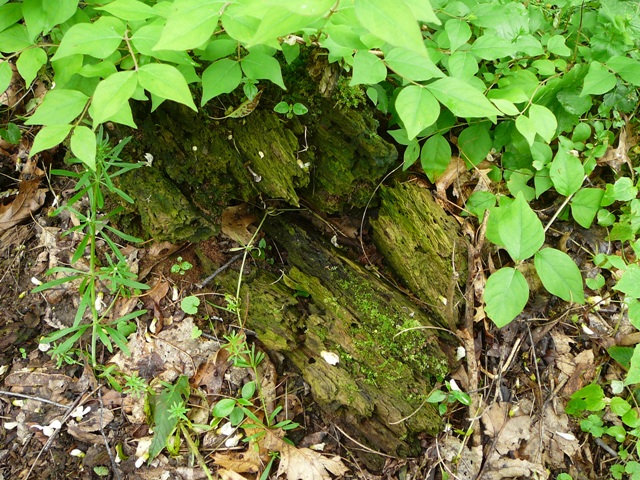
that penetrating lime green of the spring woods, and the wet black branches like some ancient language of scribbles and runes scrawled all over the forest

the path of the sun, trailing like a golden ribbon across the floor, climbing up the table and tying itself neatly around your tea cup

the sleeping boy in his Superman PJs, smelling of grass and child sweat

Next: Let yourself be held there in your looking and wonder. Do you feel that subtle magnetic force that seems to gently grasp and suspend you before your beloved?

Breathe. Relax.

Notice what wells up in you and what recedes. Various feelings and thoughts – some positive, some negative. Simply observe the play of your inner life as you gaze upon beauty.

Notice the voice which says, “You need to get moving. There is a lot to do. Should I fix potato soup for supper? I really can’t stand that woman.” Keep returning to what you love. Allow your love and appreciation of this portion of the world draw you in to its Creator and Author, that pulse of the Spirit which animates all of existence.

For that is what Holiness is doing in the creation – luring us, catching us up, and reeling us into the Heart of Reality and Divinity through the things of this world. God threads us through and beyond what we love to deeper love and freedom in the realm of Grace that is called God’s kingdom.

Really. God will use anything, anyone to draw us into God’s self, God’s being, and into  truth, into love, into amazement, and wonder. What draws you into this prayer will likely be something uniquely suited to you, your aspirations, your interests, your peculiar, and particular existence. So specific is God’s summons to you. So beloved are you by God.

All that is required is your consent – your yes, your willingness to take the bait, to bite into creation with appetite and hope.

After looking at God in this way for a while, a word or two, a spoken prayer may emerge from your heart. Something you want to say to God. Something you desire from God. Go ahead and whisper your words to God. Then be silent and listen.

A Peace will come and settle over you, a calm, perhaps, a gentleness, an assurance of some kind.

Afterwards, before you turn back to getting things done, do a little self inventory:

Have you changed in any way after this time of gazing? Is there a difference in how you are feeling or thinking? Is there something from this time you need to stay with or return to? What would you like to say to God about this time? What would you like to hear in response from God?

And this, my friends, is a prayer.

This is a way God speaks.

This is a way the Word Made Flesh calls our name.

This is a way we answer.

Other Praying Life posts on prayer you might enjoy:

What Is a Prayer

Contemplation – Circling a Definition

Paying Attention and Taking Your Time

A Calm and Quiet Soul

You can help support The Praying Life by donating to The Sanctuary Foundation for Prayer. Just five or ten dollars will make a difference and help pay some of our costs. Your gift is tax deductible. Donate Here. Thank you so much!

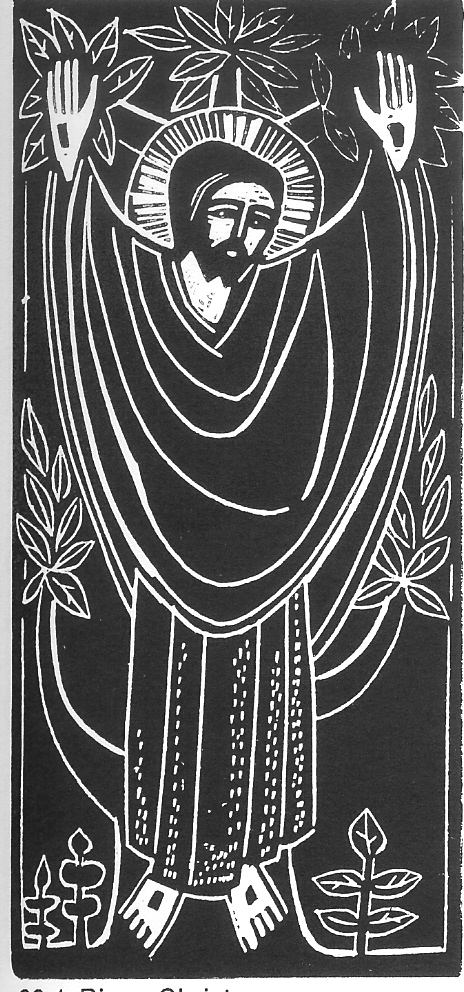
Exploring Solitude: Meeting the Crucified One

God is simplicity and one-foldedness,
inaccessible height and fathomless depth,
incomprehensible breadth and eternal length,
 a dim silence and a wild desert.

So wrote John of Ruysbroeck in the 14th century.

God is also a man, whose name is Jesus,

born in a middle eastern city,

of a woman named Mary.

Firmly anchored in time and space,

he walked the paths of Nazareth,

ate,  and laughed,  and loved.

God is also this same man,

now beaten,  bleeding,  and dying,

executed on a cross.

For in Jesus

the Inaccessible Height and Fathomless Depth

had inserted

itself into

the messy specificity and limitation

of humanity,

and consented

to occupy

suffering,

injustice,

cruelty,

fear,

defeat,

and death.
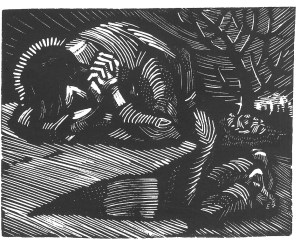
So now,  all that suffers,  loses,  messes up,  and bleeds finds welcome in that dim silence and wild desert of the cross.  All that is lost or broken is gathered and folded into the height and depth and breadth and length of God. Every precious particle of God’s making  is held with infinite tenderness in the simplicity of love.

There are moments,  days,  even years for some,  where the work of solitude involves suffering.  Alone with God,  we are presented with painful truths. We are refined and purified.  We gradually learn to be present to God,  not on our terms,  but on God’s terms in the context of our own specificity.

This is the work of letting go and letting be. This is the journey of ever deepening faith and radical trust. This is the door that sets us loose to roam forever free.

During the observance of Holy Week,  the specificity of God made known in Jesus,  enters into the lonely anguish of surrender to the terms of his Father.  The one who has been surrounded by crowds and encircled by his chosen disciples,  makes the solitary journey into death to return to the heart of all being.

We find an account of this journey in the gospel of Mark.  Mark’s gospel is characterized by a simple,  direct,  unpretentious style.  The gospel has an urgency about it.  Mark’s  frequent use of the dramatic present tense contributes to the immediacy.  The emphasis is on the action – the deeds and words of Jesus – as he confronts and responds to the religious establishment,  the disciples,  and the crowds.  This action moves compellingly to the crucifixion.  The story unfolds in a hurry,  as though the very presence of Jesus has set in motion forces which lead inevitably to the cross.

Then at the cross,  in striking contrast to the preceding scenes,  Jesus becomes the receiver of the action in total surrender.  The syntax changes from active voice to passive voice,  as the Greek word,  paradidomai,  appears more and more frequently.  Paradidomai means handed over,  or to give into the hands of another,  to be given up to custody,  to be condemned,  to deliver up treacherously by betrayal.  This is the same word the gospels,  as well as St. Paul, use repeatedly to describe the crucifixion.

As the resurrected Jesus tells Peter on the lake shore,  there comes a time when we will be carried where we do not wish to go. (John 21: 18)  Then we find ourselves being handed over to our life circumstances,  the limits,  sins, injustices,  and frailties of human existence.

At the cross in Jesus the Limitless,  Inaccessible,  Unfathomable God makes things very plain, very simple:

Watch me. Trust me. Do it like this. All is forgiven. Surrender. Allow yourself to be carried into darkness. There is a place beyond your knowing or naming, where I am and you are. Follow me.

All transformation,  all redemption require moments such as these:

the passivity of the seed buried in the earth,

the passion of love poured out to the last dregs for the beloved,

the prostration of oneself in the dim silence and wild desert,

where all things are born anew.
The moral revival that certain people wish to impose will be much worse than the condition it is meant to cure.  If our present suffering ever leads to revival, this will not be brought about through slogans, but in silence and moral loneliness, through pain, misery and terror, in the profoundest depths of each person’s  spirit.      Simone Weil


Solitude Practice:

  • What do you need to surrender, let go of, or let be this week?
  • Not all, but much of our suffering may be tied to our defiant resistance to letting go and refusal to accept the suffering of self denial. Do you agree with Simone Weil that broad social change could be gained, not by imposition of morality, but through the struggle in the depths of individual souls?
  • What is it like for you to shift from being the prime mover and actor in your life story, to becoming the receiver of the action of others? How might God be handing you over this Holy Week?
  • Is there a relationship between your consent to being carried where you do not wish to go and experiences of healing and redemption in your life?

Next post in this series –  Exploring Solitude:  Leaving solitude, gone to Galilee.

______________________________________

 News for Praying Life Readers!

I am leading a workshop in April here in Topeka, KS. Hope to see some of you there!

Look and See: Nurturing a Shining, Festive Life of Prayer

Saturday, April 21, 2012
8:30-12:00
$20.00
First Congregational Church
1701 SW Collins, Topeka, KS  

Please register early to assure a place by calling or emailing First Congregational UCC. 785-233-1786; info@embracethequestions.com

 

Exploring Solitude: Deadly Acedia, or Too Bored to Care

Sooner or later even the most devoted hermit or spiritual seeker will discover that this solitude and silence shtick does not seem to be all that it is cracked up to be.
Saintly souls and books far and wide, which recommend and extol solitude, may not include the whole truth of the experience. At some point the solitary pray-er is likely to ask this question:


What on earth do I think I am doing out here
in the middle 
of nowhere by myself!

Next the individual may pace back and forth in his holy abode, while the walls begin to close in. A suffocating boredom descends upon the person like a choking cloud. Her whole spiritual exploration takes on the character of a really bad afternoon spent as a child with an insufferably tedious old aunt. You sit fidgeting in the rocking chair with your feet wagging in the air looking at old Readers Digest magazines and listening to tiresome adults drone on and on about dead relatives.

Now your lovely hermitage grows dull and lifeless and smells faintly of mothballs and Vicks VapoRub. You are sure all your friends are going to wonderful places and having exciting experiences, while you are trapped at Great Aunt Hannah’s and doomed to a lackluster life of gradually increasing obscurity and dull mediocrity. Your back itches. Your tummy hurts. Your neck has a cramp in it. Your brother keeps sticking his tongue out at you. And you realize now that you actually hate him. Your mom ignores you, even when you fake a faint, slide off the rocker, and lie on the floor in a lump.

It can be like this, my friends, as some of you know. You pick up a Bible, read a verse, and it leaves a taste in your mouth like an open bottle of soda that has been in the fridge for a month. A kind of angsty horror rises up in your craw and an overpowering desire to get out of there floods your being.

If someone has not seriously questioned Love’s call, and has not encountered an all- encompassing indifference, even, perhaps at times, revulsion, toward the things of God, I would suggest they simply have not been at it very long. When we enter solitude, whether we find it in the bathroom or at the lovely cottage on the beach, we bring along our retreat provisions, books, journals, music, food, as well as our illusions, expectations, hopes and dreams of what this time will be like. Here we may be in for a rude confrontation of fantasy with Reality, or my will with the will of the One I am seeking.

When I hosted guests at The Sanctuary Foundation hermitage, I watched them haul bags of books and provisions up the slope to the cabin.

“I hope to plan my sermons for the next six months,” some would tell me brightly.

“I hope not.” I would say to myself.

We bring an agenda to our solitude: I want to deepen my awareness of God. I need help in discerning the next steps of my life. I am looking for peace and resolution of conflict.

We come hoping to accomplish some task, relieve pain, even to be entertained. Then lo and behold, we are met with dryness of spirit, dullness of mind and heart, a ho hum listlessness, and growing sense that nothing fun or good is going to happen to me here.

What we fail to see is that God comes to the hermitage as well us. And God has an agenda too. At some point God’s agenda may include a healthy dose of the demon of the noonday sun.

The name the early Christians gave for the dullness can settle over us is acedia.
The desert fathers and mothers called this oppressive state of spiritual apathy the demon of the noonday sun. Evagrius warned, AThis demon attacks the monk towards the fourth hour and besieges the soul until the eighth hour. He begins by giving the impression that the sun is hardly moving or not moving at all, and the day has at least forty hours. Ardor and passion for the things of God are replaced by indifference and boredom. The miserable soul is sick both of God and self.  

Acedia, engraving by Hieronymus Wierix, 16th c...


The purpose of this dry discontent is seen as part of the final purification of the will so that it may be merged without any reserve in God. Acedia abolishes spiritual gluttony as it strips us of our fascination with glamour, ease and sensory delights. Since God is spirit and must be worshiped in spirit, a soul’s worship of God grows over time to be less founded in the satisfaction and entertainment of the senses and more in the dark knowing called faith. Through the harsh succor of the demon of acedia the soul is weaned from its attachment to sensory gratifications to a more mature love.
From my book: Letters from the Holy Ground, Seeing God Where You Are (Chapter 24)

As unpleasant as it is, I believe that acedia helps to rid us of the three tendencies of our age, which militate against contemplation, according to Ronald Rolheiser. Rolheiser identifies these tendencies as our narcissism, pragmatism, and unbridled restlessness. The Shattered Lantern – Rediscovering a Felt Presence of God  (Chapter 2)

The excessive self preoccupation of narcissism makes everything we encounter about us and our needs. The cult of the individual deifies the personal and encourages focus on our private concerns and preferences.

“Pragmatism,” Rolheiser writes, “asserts that the truth of an idea lies in its practical efficacy. What that means is that what is true is what works.” We become obsessed with what Thomas Merton identified as the leading spiritual disease of our time: efficiency.

Our unbridled restlessness fuels our driven, compulsive, hyper lifestyles of multi-tasking and instant gratification.


So what’s a body to do? You have come all the way out here. Are you going to turn tale and sneak back home?

Try this: Sit there or go for a walk. Watch your discomfort. Settle into your body. Be curious about your indifference and learn from it. Breathe deeply, as the anxiety and pain of withdrawal from narcissism, pragmatism, and unbridled restlessness grip your soul and cramp your body.

Surrender your agenda. Stop demanding things to be different. Cease resisting what is so, what is real for you.

Gradually a shift will occur.

Perhaps you notice the splotch of light on the wall across from Great Aunt Hannah’s china hutch. Where did the light come from? The late afternoon sun is stretching its long arms across the carpet and up the china hutch, where it touches a crystal goblet which has sat there for thirty years, and just now catches fire as your eyes lay upon it, dazzling you with brightness. You lean back in the rocker, feeling your back sink into the cushion, and watch the dust motes moving lazily above the carpet. You notice the pictures woven into the carpet – a man on a white horse, a house with a red roof, people in olden clothes walking down a lane.

The light splotch on the wall moves and dances. Why? You look at the flaming goblet across from the wall and back to the wall. Then you see through the window in the wall tree branches swaying, sweeping back and forth covering and uncovering the path of the sun.

For a moment you and the dancing splotch and the fiery goblet and the man on the horse and the tree branches swaying, and your great aunt are all laced together with tiny tendrils of light and you yourself catch fire. And you say to yourself, oh this is the way the world is. Everything is all hooked up and intertwined together.

The grown ups are still talking. You feel safe. You see your brother reading his comic book. A sudden rush of love and gratitude for him pours over you. You decide to take a nap. As you doze off, you think, I really like that mothbally VapoRub smell.

Come to me all you who are weak and heavy burdened.
And I will give you rest.     Matthew 11:28


Solitude Practice:

  • Have you been afflicted by the demon of the noonday sun? How did it manifest in your life. How did you respond?

  • Does it help to learn that the negative experience of indifference might be a necessary part of your deepening love for God?

  • In the essay above what do you think happened as the child character moves from fidgeting to discovering peace. Do you see anything here that might help you in your acedia attacks?

  • How do narcisscism, pragmatism, and unbridled restlessness hinder your contemplation?

  • Want to learn more about acedia? Here is a good article: Acedia, Bane of Solitaries  See also Katheleen Norris’ book, Acedia & Me: A Marriage, Monks, and a Writer’s Life

Next post in this series: Exploring Solitude: Becoming Real

Exploring Solitude: Where the Wild Things Are

Come away by yourselves to a lonely place,” Jesus

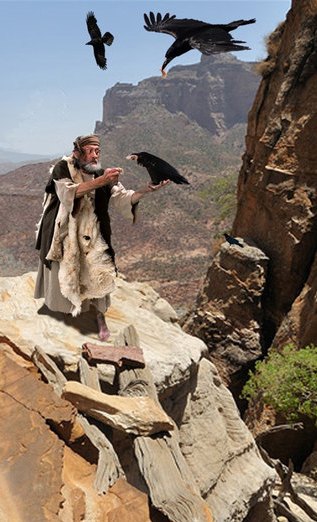
God then told Elijah, “Get out of here, and fast. Head east and hide out at the Kerith Ravine on the other side of the Jordan River. You can drink fresh water from the brook; I’ve ordered the ravens to feed you.”  Elijah obeyed God’s orders. He went and camped in the Kerith canyon on the other side of the Jordan. And sure enough, ravens brought him his meals, both breakfast and supper, and he drank from the brook. I Kings 17: 2-6 (Msg)

Nothing better expresses the urgent call of the wild for me than John Masefield’s Sea Fever.

I must  go down to the sea again, to the lonely sea and the sky,
And all I ask is a tall ship and a star to steer her by, . . .
I must go down to the sea again, for the call of the running tide
Is a wild call and a clear call that may not be denied; . . .
I must go down to the sea again, to the vagrant gypsy life,
To the gull’s way and the whale’s way where the wind’s like a whetted knife; . . .

Wild places and wild things invite us to themselves. If not the sea, perhaps, the mountains, the desert, the plains, or the forest draw you. The trout in the stream, the grizzly bear turning in his sleep, the mushroom popping up in the moist woods, the redwood tree dwarfing all else in its magnificence summon us to gaze in wonder and appreciation and share in the communion of all beings.

Shifting from Virtual Reality to Reality
In the wilderness we smell, and see, and touch, and hear, and taste – not a virtual reality, but reality. And here, we are likewise smelled, seen, touched, heard, and tasted. We not only change and act upon our surroundings, we are also changed and acted upon by those same surroundings. In the wilderness, we find again our place as a member of one of the species of beings on this planet. We leave our thermostatically, controlled environments and modern conveniences to feel the bracing chill of  the wind in our face, the tickling blurred vision through snow dusted eye lashes, the heavy ache in our calves after walking several miles.

In the process of wilderness dwelling, we shed the heavy brittle shells of our self importance and settle in with all our relations – brother sun, sister moon, and cousin fox. We discover the deer we are watching are also watching us.


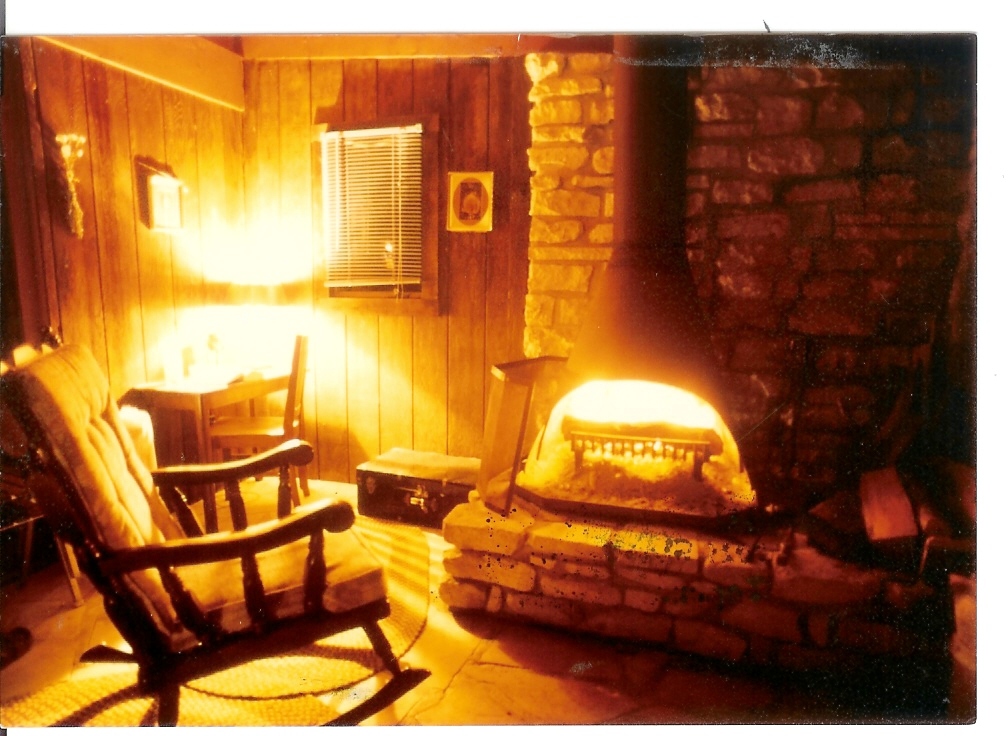
Solitude may occur, of course, away from wilderness in the midst of a noisy crowd, in a beehive high rise apartment, or on the back porch with city sirens screaming past. However, many of us find solitude most easily and fully in a place apart in some natural setting. For over twenty years I found my wilderness solitude in a one room cabin with a stone floor, built into the side of hill on a small lake in northeast Kansas.

The call to the wilderness runs deep in some people, and expresses itself as unappeasable longing, or a palpable need to be in wild places among wild things. These persons often feel compelled to seek out remote spots away from power grids, traffic, concrete, and housing developments. Some struggle to explain and justify their desire to family and friends.

Wilderness as Arena for Spiritual Growth
The Biblical Hebrew word for wilderness is often used interchangeably with desert and includes many varied kinds of terrain, arid and semi arid, pasture land, mountains, and the sea.

The wilderness, a place uninhabited by the human species, is a significant location for the spiritual journey, both in its literal and figurative senses. The Bible understands transformation and spiritual growth as a process, which involves the experience of both physical and psychic dis-location and re-location. The experiences of being lost and being found, of moving from a familiar land to a strange new country appear over and over in the Biblical narratives.

An important aspect, then to solitude and our development in faith, is that exposure to wilderness, both in the physical geographic sense, and in the internal experience of the self. I will set aside consideration of internal wilderness to another post, and focus here on the external physical places and settings in which we find solitude.

As a species and as varied races and ethnicities, we have been formed in part by the land in which we and our ancestors have made our living. The lay of the land itself, the richness or poverty of its soil, the vegetation, wild-life, presence or absence of water, winds, and temperature have shaped our economies, our languages, our diets, our health, what we value, and our religions.

David Abram in his masterful book, The Spell of the Senses – Perception and Language  in a More-than-Human World, writes about this relationship of humankind to the earth and its features and all that dwell upon, within, above, and in its waters.

our bodily rhythms, our moods, cycles of creativity and stillness, and even our thoughts are readily engaged and influenced by shifting patterns of the land. Yet our organic attunement to the local earth is thwarted by our ever-increasing intercourse with our own signs. Transfixed by our technologies, we short-circuit the sensorial reciprocity between our breathing bodies and the bodily terrain. Human awareness folds in upon itself, and the senses – once the crucial site of our engagement with the wild and animate earth – become mere adjuncts of an isolate and abstract mind bent on overcoming an organic reality that now seems disturbingly aloof and arbitrary. (p. 267)

Abram writes of our relationship with the whole of creation as an interpenetration and mutuality in which all parties are affected, changed, and interdependent. The creation is not something I act upon, seek to dominate, or control, but rather the creation is a whole gathering of life with which I may enter into a relationship of mutual benefit.

In the past seven years the consequences of our lack of communion with nature has received attention and comment as Nature Deficit Disorder. The lack of time spent out doors by children and adults is suggested as a factor influencing several illnesses, including obesity.

Starving for the Undomesticated God


Over many years I have observed person after person starving for such connection and communion. Some would trek across the country just to sit in a simple cabin without  running water in a Kansas pasture in order to touch in to such a relationship. With some notable exceptions, namely camp and conference ministries, the church has largely ignored this fundamental need. Though our faith was formed in our ancestors in deserts, tents, mountain tops, sea shores, ship wrecks, storms, and many solitary encounters with the Holy One, we insist that most of our faith be nurtured in buildings and classrooms under florescent lights. We further claim that knowledge of God may be gained by memorizing a set of propositions articulated by theologians, who gained most of their credentials in similar buildings and classrooms.

In contrast, we meet an undomesticated God in the wilderness, an unpredictable, wholly other God, who is neither tamed by sedate doctrines, nor penned up in church polity, nor leashed to political issues. The waves and meadowlark give testimony, the stones hold the stories of the ancient ones, the Spirit hovers over the waters, the prophet emerges from his cave, and hears the still small voice of the Lord.

Most pastors have heard from the person, who apologetically recounts the familiar reason for his Sunday morning absence. “I am closer to God on the golf course or in my boat out on the lake.”  

But can’t you do that on Saturday, wonders the pastor, whose district superintendent keeps count of his worship attendance. He needs to show an increase this year. “You need to worship with the community too, and we need to have you with us,” he tells the fisherman.

Both are right, of course. We need the solitude and nature and we need the gathered  community of believers. Yet, perhaps, rather than feeling defensive, our pastor could become genuinely curious about her parishioner’s life in God and what he is telling her. “Could we get together sometime? I’d like to hear about what these times mean to you and how you experience the Lord.”

A Cabin in the Woods
My brother and his wife recently moved and their first project was to build a small cabin in the woods behind their new home. The one room cabin perches part way down a steep ravine in the woods, above a pond and a river beyond. My brother spends hours down there and confesses, most of the time he just sits and looks out the window, watching the birds and critters, and resting his sore eyes on a vista absent of manipulation by his own species.

Formerly a hunter of deer, my brother is now living in more intimate and complementary relationship with his relatives. He rises early each day to put out food. Keeping track of them, he gives some of them names. He is respectful of the space they need and watches for signs of illness, or overcrowding of the herd. He worries about the invasive mustard grass, which chokes out the native plants.

Likewise the animals of this ravine are more intimate with my brother. They are eating well, unafraid, and willing to share more of themselves with this human. My brother is changing too. He has lost weight and strengthened his legs from making the steep climb down and back from the cabin to the house. He has become an evangelist for the gifts of that little structure. “Solitude is magnetic,” he tells me. Yes, indeed.

He shows me a little book he keeps for guests to write their impressions of time spent in his cabin. I open the cover and read the longing and gratitude in their comments.

The Force which Draws All Things Together
Solitude and the wilderness, where we find it, are magnetic. The wild things and places draw us to them by the force of our common relationship with each other as creatures on this earth. We are drawn by our desire to connect with and to enter into communion with Reality in a deeper, truer way than we find in the glib, sound bite assessments that surround us constantly. Such communion changes how we see ourselves and one another. Thomas Merton writes in his second chapter of Thoughts in Solitude that the wilderness invites us to stand back from our lives so we see things in a new perspective.

We cannot see things in perspective until we cease to hug them to our own bosom. When we let go of them, we begin to appreciate them as they really are. Only then can we begin to see God in them. Not until we find Him in them, can we start on the road to dark contemplation at whose end we shall be able to find them in Him.

 Get the Stink Blown Off
Do you postpone going down to your wild places until the time is right, until you have several days free, until you finish this or that project? I will tell you a secret. You don’t have to wait. Just go with whatever time you have. As Eugene Peterson, paraphrases I Kings 17: 2, “Get out of here and fast!” My mom’s version was, “You kids go on outside right now and get the stink blown off ya.” God receives what little time you can offer, a day, an afternoon, or ten minutes, and turns it into abundance with enough leftovers for you to eat on for the rest of week.

So go on. Get out. Go for a walk. Drive over to the lake or the beach. Take a blue highway home. Look around. Breathe. Smell.  Feel. Gaze into the eyes of a deer. Watch the eagle land and fold its wings on its perch above the river. Be seen by the squirrel, be blown by the wind. Be changed and shaped by the interplay and exchange of the animate world of which you are a beloved part.


Solitude Practice:

  • To what kind of wild places are you drawn? Have you been there recently? What keeps you from going?

  • What happens when you go? What changes or shifts do you notice in yourself?

  • Take some time to pray about your need for solitude and wilderness places. Listen for God’s response.

Next Post in this series on Exploring Solitude : The Wild Things Within


You can help support this series by donating to The Sanctuary Foundation for Prayer. Just five or ten dollars will make a difference and help pay some of our costs. Your gift is tax deductible. Donate Here. Thank you so much!

Exploring Solitude: Why Bother?

Come away by yourselves to a lonely place,” Jesus

 What is said here about solitude is not just a recipe for hermits.
It has a bearing on the whole future of humankind and the world:
and especially, of course, on the future of religion. Thomas Merton


Over the next several weeks I will be reflecting on selected passages from Thomas Merton’s little book, Thoughts in Solitude. First published in 1956 the book is a collection of Merton’s musings about time he spent alone in a hermitage at Gethsemane Abbey in Kentucky. Merton had been a monk for a while before he finally gained the Abbot’s permission to spend an extended time alone. An outgoing, gregarious fellow, he struggled throughout his life with finding a balance between his need for solitude and for community. His prolific, engaging writing brought seekers to the monastery and his ability to teach about the spiritual life attracted many followers.

If you have a copy of the book, you might want to get it out and follow along. You can easily find a used copy online, or check your local library for Thoughts in Solitude.

I confess that my relationship with this Trappist priest has been rocky. He has both deeply inspired and deeply disappointed me. There is much I admire in his life and writing and a few things I do not. Just as I decide I am finished with the man, I am drawn back. Like us all, Father Tom, as a friend calls him, has his sin and warts, yet God has used him mightily. We may all give thanks that falling short of the aim which God intends for us (the literal meaning of sin) has never been a road block to the power of God working through human lives.

I choose this book, not because I consider it among the best on the subject. We have over 2500 years of excellent material on the spiritual practice of solitude. I hope you will share your favorite resources in the comments section below, or on the Sanctuary Foundation Face Book Page, or email me. I will be happy to compile your suggestions with others and make them available to The Praying Life readers.

Thomas Merton
Thomas Merton (Photo credit: jimforest)

So let’s begin with the Preface. Here Merton lays out what he is up to in this book and makes his disclaimers. He tells us his “thoughts here are simply thoughts on the contemplative life, fundamental intuitions which seemed, at the time, to have a basic importance.” His writing comes from his “relationship with God in solitude and silence and that “interrelation of our personal solitudes with one another,” which are for Merton “essential to his own peculiar way of life.”

Then he launches into a broad societal justification for such peculiarity. A number of internal and external obstacles make it difficult for most of us to develop and nurture a practice of spiritual solitude. I have listened to many people who struggle to claim the “legitimacy” of the practice, to respond to this call of God, and to be consistent in the “coming away to a lonely place” with Jesus.

I feel guilty. Isn’t it selfish? Shouldn’t  I be doing something – working at the mission, helping out at church, serving on committees? My friends don’t understand. My pastor doesn’t get it. I can’t even explain why I do this or even what happens. Am I only fooling myself and being lazy and wasting time?

I hope this series will offer some support for your practice and a rationale which gives permission and value to a pursuit largely neglected in our culture and religious institutions, but sorely needed. In the end, though, you must come to your own rationale and your own “thoughts in solitude.” For each of us will experience solitude in different ways at different times, and God will speak within you the language of the unique nature of the intimacy you share. And each must make his or her own witness to the truth.

Merton begins his book by looking at the larger culture in which he found himself in 1956:

In an age when totalitarianism has striven, in every way, to devaluate and degrade the human person, we hope it is right to demand a hearing for any – and every sane reaction in favor of man’s [ok, from now on in this blog series I will make Merton’s gender nouns and pronouns neutral] inalienable solitude and interior freedom. The murderous din of our materialism cannot be allowed to silence the independent voices which will never cease to speak: whether they are the voices of Christian saints, Oriental sages like Lao-Tse or the Zen Masters, or the voices of persons like Thoreau, or Martin Buber, or Max Picard. It is all very well to insist that people are “social animals” – the fact is obvious enough. But that is no justification for making them into a mere cog in a totalitarian machine—or a religious one for that matter.”

Thomas Merton's hermitage at The Abbey of Our ...

Hermitage of Thomas Merton at Gethsemane Abbey

Society, for Merton, depends for its very existence on the inviolable solitude of its members. This is because, as he writes, “to be a person is to possess responsibility and freedom, and both of these imply a certain interior solitude, a sense of personal integrity, a sense of one’s own reality and of one’s own ability to give oneself to society – or to refuse that gift.”

He ends his preface with: “What is said here about solitude is not just a recipe for hermits. It has a bearing on the whole future of humankind and the world: and especially, of course, on the future of religion.”

One of my pet peeves about Merton, especially in his early writing, is his penchant for sweeping generalizations and pronouncements. I happen to agree with this one. How might such a claim be true?  Is there really a relationship between the time you take to create some space and time to be alone with God and our future as a race and the future of religion? I think so. And I am not alone.

When there is a crisis in the church, it is always a crisis of contemplation. The church wants to feel able to explain about her spouse even when she has lost sight of him; even when, although she has not been divorced, she no longer knows his embrace, because curiosity has gotten the better of her and she has gone searching for other people and other things.
Carlo Carretto


Might part of our struggle with keeping solitude be because we have our arms around the wrong lover?

Solitude Practice:

  • Ask the lover of your soul to show what you are hugging closer to yourself than the Holy One.

  • Identify competing lovers.

  • What might it take for you rediscover God’s embrace and forsake all others? It might be easier than you think.

As Paul Simon sang to us, there are fifty ways to leave your lover.

Next Post: The Wilderness of Solitude

You can help support this series by donating to The Sanctuary Foundation for Prayer. Just five or ten dollars will make a difference and help pay some of our costs. Your gift is tax deductible. Donate Here. Thank you so much!

Church Meeting Postmortem


I cannot for the life of me
figure out
how people who love God
good people
 faithful people


are able to spend so much time
talking about God
reading about God
and running here and there
doing God’s work


and not have to stop.

And bow.
Awestruck.
Lost in love.


Every five minutes or so.

I know well the sweet seduction
of anxiety, power, and that little harlot,
ego.


I have fallen for their whispered lies,
and empty promises.


I have wakened from a night
in their arms,
unsatisfied, restless, and fretful.


But, I ask you,
do we not have a clue
that the Beloved is in the room
disrobing
right before our eyes?


How many epiphanies are omitted
from the minutes
of last month’s meeting?


How can we go on pretending
that Holiness is not breathing
shivers of ecstasy
down our necks?


Am I crazy?
Probably.


But I am also sick and weary of sitting on this Wonder.
Don’t be surprised then,
when I rise up and prostrate
myself
during Carl Mitchell’s report
on the cost of replacing the pews
with movable chairs.


I just couldn’t go on pretending any longer,
and this hungry Love has taken me

beyond propriety,
decency,
and order.

The kingdom of Heaven will come when men and women
allow themselves 
to be penetrated by bliss.    M.C. Richards

Spineless Christians and the Courage to Be

Courage is being scared to death – but saddling up anyway.  John Wayne

“Church people are too nice to each other. They need to grow spines,” a friend said to me the other day. My friend was commenting on the surface relationships, which exist in some faith communities, where we all want to get a long at almost any price and work really hard at being nice. A member’s problematic behavior is tolerated, at the expense of developing a healthy community. Neither the deep needs of the member, nor the needs of the community as a whole, are addressed, and both suffer.

Perhaps you have heard someone comment about a member who is overbearing, controlling, or in some other way hard to take, “Oh that’s the way he is. That’s just how he does things. He means well. Don’t take it personally.”

From my vantage point of thirty years of pastoral ministry and thousands of hours spent listening to church members and pastors in spiritual direction sessions, people do take it seriously, when they are run over, ignored, or otherwise misused. They take it very seriously. I have watched new people walk away and never return after a hurtful encounter. I have seen older members pull back and clergy stymied by power struggles. I have observed churches stuck in relational impasses for years.

Why does no one speak up? Why does a church system seem to harbor and implicitly support bad behavior in the body of Christ? Where did we get the notion that following Jesus meant that we were supposed to be nice? The word nice originates in a Latin word meaning ignorant, literally, not + knowing. In its original use in the thirteenth century nice meant foolish, stupid, or senseless. Today nice means agreeable, pleasant, or satisfactory.

Jane Austin captured the tired, feeble sense of the word in this passage from Northanger Abbey:

“I am sure,” cried Catherine, “I did not mean to say anything wrong; but it is a nice book, and why should I not call it so?” “Very true,” said Henry, “and this is a very nice day, and we are taking a very nice walk; and you are two very nice young ladies. Oh! It is a very nice word indeed! It does for everything.”

When Christianity is reduced to being nice people, it loses its spine and the energetic power of Christ among us.

Many factors may foster spineless Christians. Maybe I am related to the irritating individual or live with him. Perhaps the person has influential friends, or contributes a lot of money. We keep still, because we are afraid of offending others, or being attacked, or rocking the boat.

 We also may be enmeshed as integral parts of a codependent church system in which we find ourselves manipulated by another. Codependency is a psychological condition, which develops when one’s behavior is controlled or determined by another, who is ill with an addiction to a substance or a behavior.

In such cases we walk on eggshells, work behind the scenes, have parking lot conversations, protect, and placate the person in question, while the system stays stuck. We help perpetuate the dysfunction and become sick ourselves.

Most people do not like confrontation. We shy away from speaking the truth as we see it, because it doesn’t seem safe. Instead we swallow our truth, question our own perceptions, try to make do, and from time to time acquiesce to bullies.

Of course, there are times, when we have good reason to be afraid. And, likewise, there may be occasions, when it is best to not confront someone, who contributes to problems in congregational life. There are times to step back, pray, and wait on the Holy Spirit to resolve impasses. There are times for us to grow in our understanding of ourselves and others. We always will see only part of what is going on, and our particular analysis may be incorrect.

Further, it is important to note that the so-called problem is not with the so-called problem person. The issue is not what we need to do about him or how we can control or manipulate her. The issue is ultimately with us, who are experiencing it. The issue rests with my particular and limited view, and my responsibility and willingness, not to change someone I do not like, but to share my perspective with humility and love in service to the greater community.

My responsibility is to be an expert witness to my reality and experience. Such witness might sound like this: when Susan does this or says that, I feel like this – angry, controlled, sad, hurt, left out, etc.

Such responsible truth-telling with love and humility may open doors of deeper understanding and freedom for everyone.  Fear can grip an individual, a family, or a community in such a way that the fear becomes a lie, which obscures or distorts a larger truth. Such a lie may seriously compromise the mission of a church. Whenever fear and its expression in “being nice,” become a bigger motivator, than love and honesty, something is seriously amiss.

Jesus offered a different answer to a religious establishment and an empire, which used fear, threat of ostracism, and power to control its members. Instead of becoming terrorized, or becoming a terrorist, Jesus “set his face like flint,” as he turned to Jerusalem to look fear in the eye, calmly grounded in a sense of something larger, more loving, more powerful, and stronger than fear, which would sustain him and the whole world with him.

And then he said to those who watched, “Follow me.”

What would the world look like, if we were motivated by faith and love, instead of fear?  The fear response, lodged in the brain stem, is primal and necessary to survival. Yet what does fear motivate us to do – circle the wagons, huddle together, adopt a world view of scarcity, and become rigid, defensive, offensive, and suspicious?  Such postures hinder generosity and imagination. Faith, which requires trust in the unseen, is blocked by fear. Without faith, the flow of the Spirit through hearts in love with God is obstructed.

I am not sure that we know how to speak our truth and disagree without resorting to anger, blame, and attack. I am not sure we really believe there is a common ground beyond our dissent. Deeper truth is revealed as smaller truths are shared with courage and love. Discovering God’s will for our communities requires all parties to surrender to something greater than their individual points of view. We need, both to hear individual perspectives, and to bow to a larger more encompassing vision, which asks something heroic of each one of us; namely, to give up our way, even our lives, for the larger good of the whole.

I believe there are Christians with spines and with the courage to be Christian, who create spaces where the bullied and the bullies, the controlling and those who feel controlled, the powerful and those without power come together in mutual appreciation and surrender to the One beyond fear who offers abundance and sanctuary to all her children.

We all need to hear and be heard, to listen and to speak. The Holy Spirit with her bright wings dwells in the naked soul of each member of the body of Christ. We dare not silence any voice. It only takes a few divinely inspired souls to change the course of history or the climate of a local church.

May we all find the courage to set our faces like flint against the ghostly shroud of fear, which diminishes us and turns our spines to Jell-O.  Then let’s saddle up and head out toward the Reign of God with possibility, love, freedom, and justice for all.

Trapped? Got a Noose around Your Neck?

You know the feeling: the noose slowly tightening around your neck, or that heavy ball and chain around your ankle, which you drag through the day.

Or, perhaps for you, it is the windowless room of your mind with that mean interrogator under the bare bulb, harping all day long and into the night: “You will never . . . You will always . . . You can’t … Who do you think you are?”

When I first heard the phrase, “areas of unfreedom,” I didn’t understand my teachers. (My spell checker doesn’t understand either.) I was just beginning to learn about the dynamics of spiritual growth, what in a simpler time we used to call discipleship or sanctification. “Huh? I’m free,” I thought. “This is the USA.”  The Spirit had yet to show my inner prison.

My jailors were the assumptions, unexamined beliefs, and negative thoughts which operated below my awareness. This gang of ignorant, fear mongers, and liars had formed a portion of my self identity, that is, who I thought I was, and what I could, or could not do with my life.

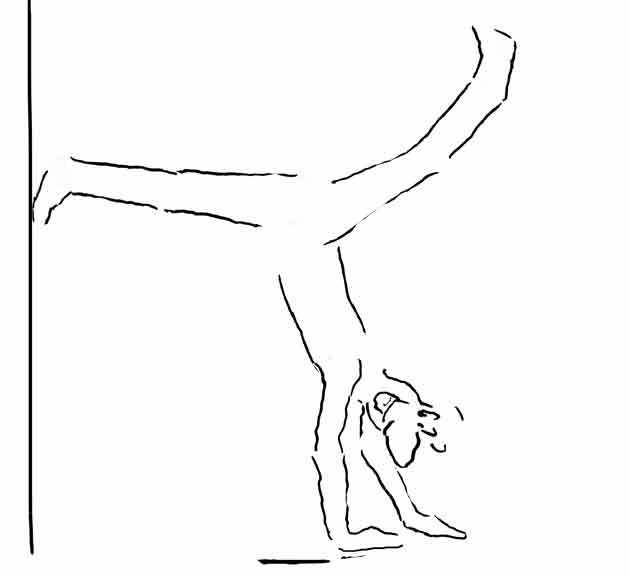
The other day one of these creepy little sadists gave me a swift kick in my solar plexus. Our teacher asked us to put our hands on the floor and kick our legs up into the air against a wall and balance on our arms.  “Just try it,” she said, urging us on, “like when you were a kid. Your arms are strong enough to hold you.”

“Oh, yes. I can do this!” I thought. I have done many head stands and arm balances in my life. “Now just bend over, straighten your arms, and kick yourself up against the wall. No problem.”

As I took a few steps toward the wall, a dark, choking fear suddenly rose up in me and stopped me in my tracks. I was stunned. It had been over twenty years since my last hand stand, but I had stayed in shape and my arms were stronger now than ever. Where had this fear come from? I was safe here. There were people to catch me, if I fell or stumbled. I was dumbfounded. How did this happen in me?

“You’re too old,” my jailor sneered. “You can’t do things like this anymore. Pay attention to me or you will hurt yourself.”

Most of us have places of impasse in our interior world, where we feel stuck, fated, or chained to a particular understanding of ourselves, which limits our future unnecessarily. Sometimes these aspects of how we see ourselves are unconscious. Though not apparent to us, such beliefs may deeply affect our lives.

I have a little pile of quotations and scripture verses above my desk. The other day I pulled this one out and put it on top.

And the day came when the risk
to remain tight in a bud was more painful than to bloom.

This is a poem by Anais Nin, a woman whose life I do not entirely recommend, but certainly demonstrates that wisdom is not the property of only the straight-laced and conventional.

The path of spiritual growth calls us to break out of the constraints of our tight little buds. There is a point where the risk of opening to an unknown possibility is less than the pain of remaining bent over in the tight room of a constraining self conception.

Nin’s words remind me of Jesus’ urgency to break the boundaries of his ministry and his own chosen human mortality with his words:

 I’ve come to start a fire on this earth—how I wish it were blazing right now! I’ve come to change everything, turn everything right side up—how I long for it to be finished!                   (Luke 12:50 Message)

Jesus expresses the urgency of his desire to burst beyond the expectations of his disciples and followers to fully express his purpose on the cross. There was so much more he had to offer than the healings, miracles, and teaching along those dusty roads and little villages.

The process of spiritual transformation confronts us over and over with those places of unfreedom in ourselves, which have us tied in knots, weighed down, or locked into a tiny cell. With a punch in the gut the Spirit may reveal how we are imposing limitations on ourselves, which have nothing to do with God’s will for us, but a lot to do with what others have told us, or assumptions we have picked up from the culture.

Paul reminds the Galatians, who were caging themselves with religious rules, “Christ has set us free to live a free life. So take your stand! Never again let anyone put a harness of slavery on you.” (Galatians 5:1 Message)

I am standing about six feet from the wall in my living room. My teacher thought I could do this. I know there are people older than I who do this. I have a choice. I can stay in the tight bud of my fear and be safe and be too old for this. Or I can keep trying until I do it.

Your goal might not be a handstand. For that matter, mine may not be a handstand either. I just whacked my foot on a piece of furniture, giving it another try.

However, more is at stake here than gymnastics. Spiritual growth requires flexibility, strength, and elasticity of soul. What might be keeping you in a constrained and incorrect conception of what you are capable of?

Simply recognizing the fear, or the faulty belief, allows it to dissipate. The sun is shining. Come on, sweetie, you know you can no longer resist its warming rays. You can do this.

I am yours, kicking up my heels, here in Kansas.

If would like to try a hand stand yourself, click here for a little help.

Somebody Driving You Nuts? Try This

I am indebted to insufferable stinkers for a good deal of the understanding I possess. The people I dislike the most, usually have the most to teach me.

I enjoy nearly everyone I meet, but I have come across some corkers. I think this is because God has so much to teach me about myself and love. When I hit a learning plateau, the Almighty with a sly grin sends a new teacher into my life to help me over the hump.

I work in a profession where my job description is to love everyone, including my enemies. Such an expectation holds one’s nose to the grindstone, as the Holy Spirit sets out to polish and refine her servants in the friction of human relationships.

I am grateful that love is deepened in us in this way, because if I could have discounted the difficult, or avoided the boring I would be far more difficult and boring myself. So I give thanks for all the needy, self-centered, mean-spirited, self-pitying, abrasive, annoying, and crazy, scary people, whom Christ places before me to welcome and love.

Without these opportunities I never would have discovered how much I have in common with such lack luster, irritating souls. I would have felt no responsibility to change my impression of them or curiosity about the source of my aversion. I would have missed out on the wealth of gifts they bring to me in their outstretched arms and infuriating ways.

I think you know the sort of people I am talking about: the ones who enrage you, disgust you, upset you, or frighten you. Among these are people who are so easy to dislike, that you may take a perverse joy in dwelling on their shortcomings and talking with friends about just how awful they are.

Forbearance is a word seldom heard these days, except in its legal sense as an agreement to delay a mortgage foreclosure. As the word appears in the Greek scriptures, to forbear means to refrain from doing something and refers to patient endurance and self-control. Forbearance is the virtue of bearing with another’s sins and weaknesses. Forbearance is more than refraining from saying what is on the tip of your tongue, rolling your eyes, or wringing someone’s neck. Love enables us to bear with one another;  and disciplined prayer and self-examination help us to love.

Sometimes my negative response to another may involve my unconscious projection of some unattractive attribute of myself, which I have not fully accepted. We tend to see our own flaws more clearly, when they show up in others. The offending party mirrors my own vexing habit. Or perhaps the negative feelings I carry for some other person in my life become attached to the person before me, who has some resemblance to my nemesis, and the unwitting soul must endure my unconscious dislike of him.

Or maybe – I just do not know the whole story.

He stopped me at the end of the meeting. He was the kind of person who, if you were in a hurry, you might duck down a hallway to avoid one of his tedious monologues. The man took forever to get to the point and gave you a whole lot of details that didn’t seem all that important and led to long, winding digressions.

As I listened, I felt the impatience and irritation rising up in me. Yet, because I was called to love and accept him, I took a breath, prayed and listened. I watched my internal irritation, wondering what it might have to tell me about the man and about myself.

I began to see that what I was feeling was instructive and likely how others felt listening to him. How hard that must be for him. What was going on here? Why was it so hard for him to be clear and concise?

I sensed in myself anxiety. Was he anxious too? Yes, I could see that now. He was anxious to be heard, fearful of being dismissed, of being devalued, or ignored. I recognized that needy feeling to be approved and valued in myself.

Who had made him feel this way? Where did it come from in me? That was when, in a flash, I glimpsed his suffering and all I wanted to do was give this man my total attention and acceptance. I realized that it didn’t really matter what he was saying as much as receiving someone’s caring attention.  There might be a time later to explore the roots of his digressions. For now I wanted him to know how it felt to be heard without worrying the person you were talking to was eager to walk away.

Compassion rearranged my calendar, and I had all the time in the world to listen.

Rudy Rasmus is the pastor of Houston’s, St. John’s Downtown, a church with one of the most culturally diverse memberships in the country. Speaking to the United Methodist Kansas East Conference in 2010, Rudy said, “The kingdom is big enough for all the people you are afraid of, or think are wrong, or that you can’t love.”

Of the 9000 members at St. John’s 3000 are or were formerly homeless. Part of Rasmus’ success is due to his ability to help his members learn to move past judgment to compassion. In his address last year he asked his audience to practice compassion. His exercise went like this:

With attention on the person [you are judging] say to yourself:

Just like me this person has known sadness, loneliness, and despair in his or her life.

Just like me this person is trying to avoid suffering in his or her life.

Just like me this person is learning about life.

Then he shared what his Auntie used to tell him, “Rudy, people only do what they know to do.” The safer and more valued a person feels in my presence, the more they share of themselves and the more compassionate I become, as I grow in understanding and appreciation of the child of God before me.

The words of Oswald Chambers have helped me over and over to listen, to be curious, and open my heart to another, even when I don’t feel like it:

“Of every person there is always one more fact of which you know nothing.”

Put up with each other,
and forgive anyone who does you wrong, 
just as Christ has forgiven you. Colossians 3:13

Disclaimer: Any resemblance here to former or current church members, clients, friends, relatives, or dear readers of this blog is purely coincidental.
All the corkers I have known are now dead or live on Mars.

Stepping Back from the Glib Café

I have been dining at the glib café too frequently.    I have been listening to too many bitter, angry, paper-hearted ones, locked in their own glare. I am turning from the table of TV dinners of MSNBC, CNN, and POX News – that alphabet soup of garish headlines,  cynicism, blame, and eternally breaking bad news.

Instead, I am taking in the words of scripture. Poet and scholar, David Rosenberg  exposes anew the dive of imposters, held captive in their own minds. His translation of  Psalm 1 feeds me with the truth of the word of the infinite.

Psalm 1

Happy the one
stepping lightly over
the hearts of men

and out of the way
of mind-locked reality
the masks of sincerity

he steps from his place at the glib café
to find himself in the word
of the infinite

embracing it
in his mind
with his heart

parting his lips for it
lightly
day into night

transported like a tree
to a riverbank
sweet with fruit in time

his heart unselfish
whatever he does
ripens

while bitter men turn dry
blowing in the wind like yesterday’s paper

unable to stand in the gathering
light

they fall
faded masks
in love’s spotlight

burning hearts of paper
unhappily
locked in their own glare

but my Lord opens
his loving one
to breathe embracing air

David Rosenberg, A Poet’s Bible

Oh won’t you meet me there for dinner in that living word
and embracing air?

Shall we together part our lips lightly for this feast?