Category Archives: Lent

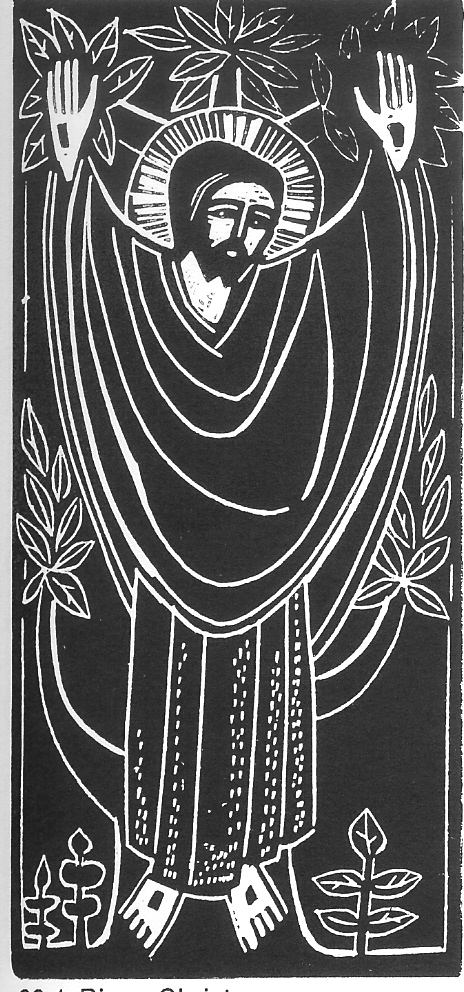
Exploring Solitude: Meeting the Crucified One

God is simplicity and one-foldedness,
inaccessible height and fathomless depth,
incomprehensible breadth and eternal length,
 a dim silence and a wild desert.

So wrote John of Ruysbroeck in the 14th century.

God is also a man, whose name is Jesus,

born in a middle eastern city,

of a woman named Mary.

Firmly anchored in time and space,

he walked the paths of Nazareth,

ate,  and laughed,  and loved.

God is also this same man,

now beaten,  bleeding,  and dying,

executed on a cross.

For in Jesus

the Inaccessible Height and Fathomless Depth

had inserted

itself into

the messy specificity and limitation

of humanity,

and consented

to occupy

suffering,

injustice,

cruelty,

fear,

defeat,

and death.
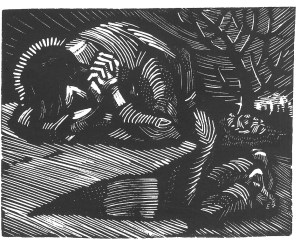
So now,  all that suffers,  loses,  messes up,  and bleeds finds welcome in that dim silence and wild desert of the cross.  All that is lost or broken is gathered and folded into the height and depth and breadth and length of God. Every precious particle of God’s making  is held with infinite tenderness in the simplicity of love.

There are moments,  days,  even years for some,  where the work of solitude involves suffering.  Alone with God,  we are presented with painful truths. We are refined and purified.  We gradually learn to be present to God,  not on our terms,  but on God’s terms in the context of our own specificity.

This is the work of letting go and letting be. This is the journey of ever deepening faith and radical trust. This is the door that sets us loose to roam forever free.

During the observance of Holy Week,  the specificity of God made known in Jesus,  enters into the lonely anguish of surrender to the terms of his Father.  The one who has been surrounded by crowds and encircled by his chosen disciples,  makes the solitary journey into death to return to the heart of all being.

We find an account of this journey in the gospel of Mark.  Mark’s gospel is characterized by a simple,  direct,  unpretentious style.  The gospel has an urgency about it.  Mark’s  frequent use of the dramatic present tense contributes to the immediacy.  The emphasis is on the action – the deeds and words of Jesus – as he confronts and responds to the religious establishment,  the disciples,  and the crowds.  This action moves compellingly to the crucifixion.  The story unfolds in a hurry,  as though the very presence of Jesus has set in motion forces which lead inevitably to the cross.

Then at the cross,  in striking contrast to the preceding scenes,  Jesus becomes the receiver of the action in total surrender.  The syntax changes from active voice to passive voice,  as the Greek word,  paradidomai,  appears more and more frequently.  Paradidomai means handed over,  or to give into the hands of another,  to be given up to custody,  to be condemned,  to deliver up treacherously by betrayal.  This is the same word the gospels,  as well as St. Paul, use repeatedly to describe the crucifixion.

As the resurrected Jesus tells Peter on the lake shore,  there comes a time when we will be carried where we do not wish to go. (John 21: 18)  Then we find ourselves being handed over to our life circumstances,  the limits,  sins, injustices,  and frailties of human existence.

At the cross in Jesus the Limitless,  Inaccessible,  Unfathomable God makes things very plain, very simple:

Watch me. Trust me. Do it like this. All is forgiven. Surrender. Allow yourself to be carried into darkness. There is a place beyond your knowing or naming, where I am and you are. Follow me.

All transformation,  all redemption require moments such as these:

the passivity of the seed buried in the earth,

the passion of love poured out to the last dregs for the beloved,

the prostration of oneself in the dim silence and wild desert,

where all things are born anew.
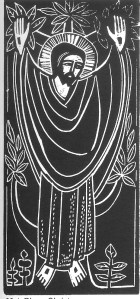
The moral revival that certain people wish to impose will be much worse than the condition it is meant to cure.  If our present suffering ever leads to revival, this will not be brought about through slogans, but in silence and moral loneliness, through pain, misery and terror, in the profoundest depths of each person’s  spirit.      Simone Weil


Solitude Practice:

  • What do you need to surrender, let go of, or let be this week?
  • Not all, but much of our suffering may be tied to our defiant resistance to letting go and refusal to accept the suffering of self denial. Do you agree with Simone Weil that broad social change could be gained, not by imposition of morality, but through the struggle in the depths of individual souls?
  • What is it like for you to shift from being the prime mover and actor in your life story, to becoming the receiver of the action of others? How might God be handing you over this Holy Week?
  • Is there a relationship between your consent to being carried where you do not wish to go and experiences of healing and redemption in your life?

Next post in this series –  Exploring Solitude:  Leaving solitude, gone to Galilee.

______________________________________

 News for Praying Life Readers!

I am leading a workshop in April here in Topeka, KS. Hope to see some of you there!

Look and See: Nurturing a Shining, Festive Life of Prayer

Saturday, April 21, 2012
8:30-12:00
$20.00
First Congregational Church
1701 SW Collins, Topeka, KS  

Please register early to assure a place by calling or emailing First Congregational UCC. 785-233-1786; info@embracethequestions.com

 

Exploring Solitude: Learning to Be

So What Do You Do Out There All Day Alone?

 “You must love the Lord your God with all your heart, with all your being,
with all your strength, and with all your mind . . .” Luke 10: 27(CEV)

“Why not? I thought this is what it is all about. I have this list. I told some of the people I would. You are not making any sense!”

I was on my second circuit around the lake arguing with God. This was the first day of an extended period of solitude at the hermitage and things had started off with a big fight.

I had made arrangements for my family, shared my plans with friends and clients, packed my provisions, gathered up my good intentions, and stepped into solitude with considerable self importance.

God went right to work on me. On the first day I ran into a wall. That was why I had thrown my journal on the floor and stomped off to the pasture. That was why I was walking around the lake pleading and arguing with the Holy One.

The word of the Lord that had come unto me was this:

Thou shalt not pray for other people or projects or events while here. Thou shalt not worry and fret about them or their futures. Thou shalt not dwell on the past.


Thou shalt pray on my terms.  Any intercession will be at my invitation,  not your over-functioning,  good intended, works righteous,  anxiety ridden,  guilty, controlling ego.


Thou shalt partner with me in bringing in my kingdom not by being available to the world, but by being available to me. Thou shalt get the first commandment well established in thy heart before thou shalt be ready for the second.

So it had come to this. My will versus God’s will.

I had planned to pray for others and for the needs of the world, while I was at the hermitage. God’s word to me shook my very foundations. Huh? What am I going to do out here then? This is a question people often ask me when I tell them I take a day a week for solitude.

It has taken me years to untangle myself from relationships and assuming too much responsibility for others’ well being. The notion that just being with God without doing anything in particular is foreign to many. It may take us a while to learn how to simply be present to God and enjoy our relationship with the Source of All Being.

We learn to detach ourselves from the things of creation in order to more fully attach ourselves to the Creator, in whom we rediscover the creation. In this new context my relationship to the world is transformed. Where my attachment to the creation was enmeshed, codependent, grasping, urgent, and possessive, it becomes freer, less sticky, as I allow others to be as they are. No longer do I demand things of people or of the world. No longer do I attempt to control or manipulate them, because my deepest needs are being met my God.

So what does one “do out there all day long?” All kinds of things: read, listen, watch, pray, walk, rest, create. . . .as one slowly is weaned from “doing” itself. One gives up the addiction to producing, efficiency, and ego enhancing, controlling behaviors in favor of the freedom of being, to joining with the One who gave the divine name to Moses as the holiest of names: I am. One discovers the gratitude and joy in sheer being. In this shift of perspective the things of creation are no longer “objects” for me to manipulate, persuade, desire, or possess, but holy beings themselves, each shimmering in their own goodness and beauty.

How this transformation occurs, I believe, is a process over a life time. It is different for each person, according to the work of the Holy Spirit. You may be called to suffer, to face hidden truths about yourself, to encounter evil, to repent, to grieve, and to experience ecstasy and bliss. You may also have periods of very ordinary, grounded experience with little drama or fireworks.

The common thread through the variety and intensity of experience and activity that may occur in solitude is surrender of the self, a kind of dying and letting go of whatever you may be hanging onto in place of God, who wants no less than all of you.

Whether you argue or whine, pout or throw your journal across the room, the task, over and over, is to forsake all other lovers and lay down your life before the One Shining, Sweet, and Unfathomable Power without whom you are nothing.

God has no need of our works.

God has need of our love.  

Therese of Liseaux


Solitude Practice:

  • How does the need to produce and “do” express itself in you? Through overworking, anxiety, fear, trying to control others?
  • Recall a time when you were able to just be with God. Where were you, what enabled that kind of awareness and presence? How did such a time affect your subsequent presence to your work and other people?
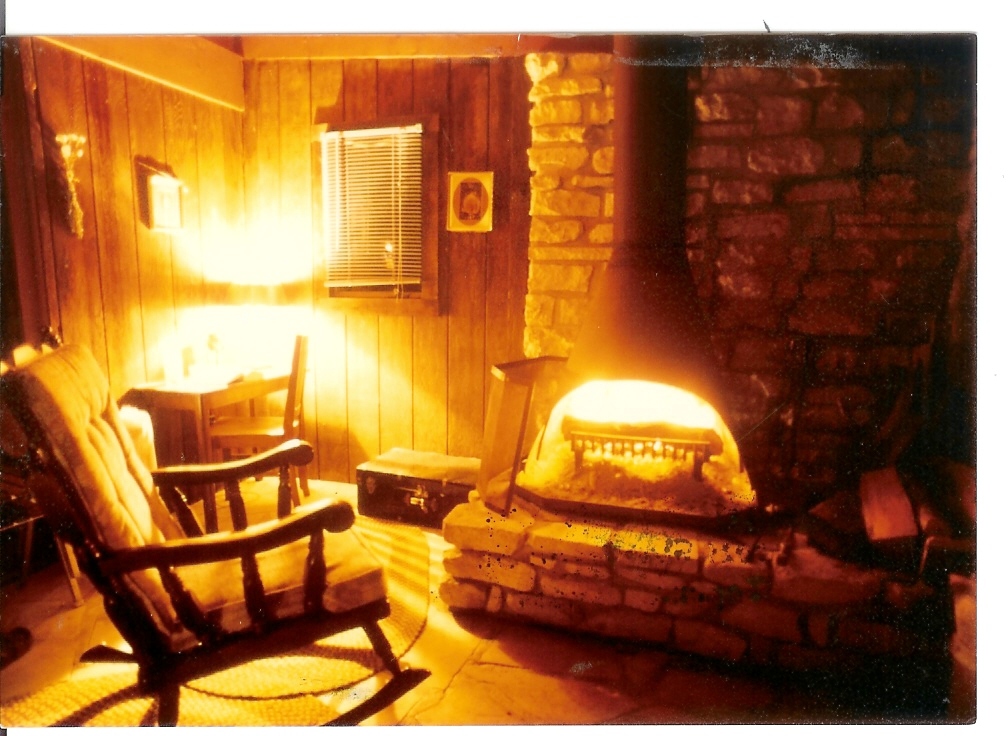
  • When they were little, my children used to tell me at times: “Mom, you need to go out to the cabin.” What helps you become aware of your need for solitude?

Next post in this series: Exploring Solitude: Meeting the Crucified One

Exploring Solitude: Deadly Acedia, or Too Bored to Care

Sooner or later even the most devoted hermit or spiritual seeker will discover that this solitude and silence shtick does not seem to be all that it is cracked up to be.
Saintly souls and books far and wide, which recommend and extol solitude, may not include the whole truth of the experience. At some point the solitary pray-er is likely to ask this question:


What on earth do I think I am doing out here
in the middle 
of nowhere by myself!

Next the individual may pace back and forth in his holy abode, while the walls begin to close in. A suffocating boredom descends upon the person like a choking cloud. Her whole spiritual exploration takes on the character of a really bad afternoon spent as a child with an insufferably tedious old aunt. You sit fidgeting in the rocking chair with your feet wagging in the air looking at old Readers Digest magazines and listening to tiresome adults drone on and on about dead relatives.

Now your lovely hermitage grows dull and lifeless and smells faintly of mothballs and Vicks VapoRub. You are sure all your friends are going to wonderful places and having exciting experiences, while you are trapped at Great Aunt Hannah’s and doomed to a lackluster life of gradually increasing obscurity and dull mediocrity. Your back itches. Your tummy hurts. Your neck has a cramp in it. Your brother keeps sticking his tongue out at you. And you realize now that you actually hate him. Your mom ignores you, even when you fake a faint, slide off the rocker, and lie on the floor in a lump.

It can be like this, my friends, as some of you know. You pick up a Bible, read a verse, and it leaves a taste in your mouth like an open bottle of soda that has been in the fridge for a month. A kind of angsty horror rises up in your craw and an overpowering desire to get out of there floods your being.

If someone has not seriously questioned Love’s call, and has not encountered an all- encompassing indifference, even, perhaps at times, revulsion, toward the things of God, I would suggest they simply have not been at it very long. When we enter solitude, whether we find it in the bathroom or at the lovely cottage on the beach, we bring along our retreat provisions, books, journals, music, food, as well as our illusions, expectations, hopes and dreams of what this time will be like. Here we may be in for a rude confrontation of fantasy with Reality, or my will with the will of the One I am seeking.

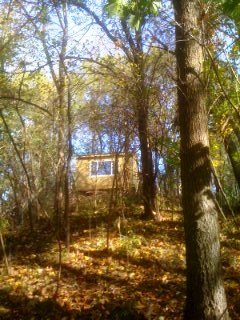
When I hosted guests at The Sanctuary Foundation hermitage, I watched them haul bags of books and provisions up the slope to the cabin.

“I hope to plan my sermons for the next six months,” some would tell me brightly.

“I hope not.” I would say to myself.

We bring an agenda to our solitude: I want to deepen my awareness of God. I need help in discerning the next steps of my life. I am looking for peace and resolution of conflict.

We come hoping to accomplish some task, relieve pain, even to be entertained. Then lo and behold, we are met with dryness of spirit, dullness of mind and heart, a ho hum listlessness, and growing sense that nothing fun or good is going to happen to me here.

What we fail to see is that God comes to the hermitage as well us. And God has an agenda too. At some point God’s agenda may include a healthy dose of the demon of the noonday sun.

The name the early Christians gave for the dullness can settle over us is acedia.
The desert fathers and mothers called this oppressive state of spiritual apathy the demon of the noonday sun. Evagrius warned, AThis demon attacks the monk towards the fourth hour and besieges the soul until the eighth hour. He begins by giving the impression that the sun is hardly moving or not moving at all, and the day has at least forty hours. Ardor and passion for the things of God are replaced by indifference and boredom. The miserable soul is sick both of God and self.  

Acedia, engraving by Hieronymus Wierix, 16th c...


The purpose of this dry discontent is seen as part of the final purification of the will so that it may be merged without any reserve in God. Acedia abolishes spiritual gluttony as it strips us of our fascination with glamour, ease and sensory delights. Since God is spirit and must be worshiped in spirit, a soul’s worship of God grows over time to be less founded in the satisfaction and entertainment of the senses and more in the dark knowing called faith. Through the harsh succor of the demon of acedia the soul is weaned from its attachment to sensory gratifications to a more mature love.
From my book: Letters from the Holy Ground, Seeing God Where You Are (Chapter 24)

As unpleasant as it is, I believe that acedia helps to rid us of the three tendencies of our age, which militate against contemplation, according to Ronald Rolheiser. Rolheiser identifies these tendencies as our narcissism, pragmatism, and unbridled restlessness. The Shattered Lantern – Rediscovering a Felt Presence of God  (Chapter 2)

The excessive self preoccupation of narcissism makes everything we encounter about us and our needs. The cult of the individual deifies the personal and encourages focus on our private concerns and preferences.

“Pragmatism,” Rolheiser writes, “asserts that the truth of an idea lies in its practical efficacy. What that means is that what is true is what works.” We become obsessed with what Thomas Merton identified as the leading spiritual disease of our time: efficiency.

Our unbridled restlessness fuels our driven, compulsive, hyper lifestyles of multi-tasking and instant gratification.


So what’s a body to do? You have come all the way out here. Are you going to turn tale and sneak back home?

Try this: Sit there or go for a walk. Watch your discomfort. Settle into your body. Be curious about your indifference and learn from it. Breathe deeply, as the anxiety and pain of withdrawal from narcissism, pragmatism, and unbridled restlessness grip your soul and cramp your body.

Surrender your agenda. Stop demanding things to be different. Cease resisting what is so, what is real for you.

Gradually a shift will occur.

Perhaps you notice the splotch of light on the wall across from Great Aunt Hannah’s china hutch. Where did the light come from? The late afternoon sun is stretching its long arms across the carpet and up the china hutch, where it touches a crystal goblet which has sat there for thirty years, and just now catches fire as your eyes lay upon it, dazzling you with brightness. You lean back in the rocker, feeling your back sink into the cushion, and watch the dust motes moving lazily above the carpet. You notice the pictures woven into the carpet – a man on a white horse, a house with a red roof, people in olden clothes walking down a lane.

The light splotch on the wall moves and dances. Why? You look at the flaming goblet across from the wall and back to the wall. Then you see through the window in the wall tree branches swaying, sweeping back and forth covering and uncovering the path of the sun.

For a moment you and the dancing splotch and the fiery goblet and the man on the horse and the tree branches swaying, and your great aunt are all laced together with tiny tendrils of light and you yourself catch fire. And you say to yourself, oh this is the way the world is. Everything is all hooked up and intertwined together.

The grown ups are still talking. You feel safe. You see your brother reading his comic book. A sudden rush of love and gratitude for him pours over you. You decide to take a nap. As you doze off, you think, I really like that mothbally VapoRub smell.

Come to me all you who are weak and heavy burdened.
And I will give you rest.     Matthew 11:28


Solitude Practice:

  • Have you been afflicted by the demon of the noonday sun? How did it manifest in your life. How did you respond?

  • Does it help to learn that the negative experience of indifference might be a necessary part of your deepening love for God?

  • In the essay above what do you think happened as the child character moves from fidgeting to discovering peace. Do you see anything here that might help you in your acedia attacks?

  • How do narcisscism, pragmatism, and unbridled restlessness hinder your contemplation?

  • Want to learn more about acedia? Here is a good article: Acedia, Bane of Solitaries  See also Katheleen Norris’ book, Acedia & Me: A Marriage, Monks, and a Writer’s Life

Next post in this series: Exploring Solitude: Becoming Real

Exploring Solitude: The Wild Things Within

He said to the disciples, “Stay here while I go and pray over there.” When he took Peter and Zebedee’s two sons, he began to feel sad and anxious. Then he said to them, “I’m very sad. It’s as if I’m dying. Stay here and keep alert with me.” Then he went a short distance farther and fell on his face and prayed . .              Matthew 26: 36- 38 (CEV)


The season of lent invites us into wilderness solitude to encounter the wild things and places within us.  In a world of extraversion, solitude allows space for introspection and encounters with untamed and little known parts of ourselves.

On her way out of church one Sunday morning, a member told me a story about her granddaughter, who had come with her that day. My custom is to invite the congregation to a period of silent prayer before I offer the pastoral prayer. At the conclusion of my prayer, five year old Lindy whispered to her grandma, “Loretta took so long before she started praying, that I had to start praying for people I didn’t even like.”

Yes. Silence does that to us, doesn’t it? It brings us to the end of the list of our own needs and concerns and opens out our prayerful awareness of people and inner realities, which we do not even like. Many avoid solitude for this reason. When I stop doing, accomplishing, distracting, and numbing myself with various opiates, I am left with my wounds, enemies, and alienation. The wilderness of the self opens before us and we reach for the phone, turn on the television, or pour ourselves a glass of wine. 

He came back to the disciples and found them sleeping. He said to Peter, “Couldn’t you stay alert one hour with me? Stay alert and pray so that you won’t give in to temptation. The spirit is eager, but the flesh is weak.” Matthew 26: 40-41 (CEV)

The work of solitude includes the slow, patient task of befriending the darkness, of being present with compassion to my inner wildness, and of staying awake one hour with ourselves in our misery, as Jesus asked his disciples to do for him.

The followers of Jesus were unable to offer him such companionship. It is likewise very difficult for us to offer ourselves such gentle, present love. Yet if one can manage it, if only for a few minutes, that ache, that knife in the heart, the sick all encompassing grief  will begin to lessen just a bit, and a peace will slowly seep into the space of your silence.

This is where the deep work of contemplative transformation begins. The pleasant, consoling moments of contemplative prayer are important to our growth and infect us with the love of God. Sometimes they arrive unbidden, unexpected as sheer gifts. Other times we enter deeper communion with God through the ongoing practice of contemplation in some form: centering prayer, lectio divina, prayer of quiet, meditation.

Several years ago a friend confessed to me, “I am so over spiritual “disciplines.” She had reached a point beyond practicing prayer, because she wanted something from God, or because she ought to, or because it was interesting, or helpful to her daily life. Prayer for her was becoming much more demanding than a nice idea or exercise in personal improvement.

Thomas Merton wrote, “True prayer and love are learned in the hour when prayer becomes intolerable and the heart has turned to stone.” The deeper work begins when silence and solitude may be the last thing we want and the only thing we cannot live without. When just sitting still reveals to us a pervasive sadness, or the reality of a loss or truth we are denying or running from, silence is not some syrupy, cozy me-and-Jesus picnic. Silence is a summons to face into who I am and who God is becoming for me in a perilous confrontation with the truths of my life and who God will or will not be for me.

Again he came and found them sleeping.
Their eyes were heavy with sleep.
But he left them and again went
and prayed the same words for the third time.
Matthew 26: 43-44 (CEV)

Yet it is here – when facing fear, betrayal, or deep sorrow– that the encompassing and spreading love of God begins to open within us with its healing balm. Sometimes we need a companion to help us, as Jesus asked for from his friends in his hour of need. We may need to enter the silence in small doses at first. Tiny little sips of God may be all we can manage. Gradually that contact with God will begin to soothe our souls and bring a peace that will exceed our understanding.

It may not seem like much, this tiny bite of calm. You are still in your wilderness, up against a wall, facing an impasse, with little hope. Yet you keep going back for little sips of silence, as quiet fills you and you surrender to the moment.

My Forty Days in the Wilderness
One autumn over twenty years ago I spent forty days in the wilderness. I was sick and doctors were unable to diagnose or treat whatever was causing the unrelenting headaches and fatigue. Weary of the tests and drugs, I went off alone each day and several nights. I did not watch television, use the computer, talk on the phone, read mail or much of anything, except scripture. My only human interaction was with my immediate family.

Day after day and into the night I waited for that little sip of calm, that spark of life and hope. I learned to tend the spark, gather kindling, shavings, combustible scraps of living goodness: birdsong, the quail feeding along the lakeshore, the way a spider walked up the side of my tea cup. These and the stars over my head began to fuel the flame, which grew and illuminated the way for me.

Here is some of what happened as I tell it in my book, Letters from the Holy Ground:

I came to the wilderness in part because I heard Jesus crying and saying he was lonely for us.  I came out of a growing sense of God’s hunger and need for us and for one who would stay with him one hour.  I came to discover how it would be to delight in and enjoy God for God, and not for what God could do for me or the world.

And I found along with my brother, Simon Peter,  that the spirit is willing, but the flesh is weak.  And to pray with Christ is more difficult than praying to Christ.

Are there some among us who are willing to watch with Christ one hour? Are there some willing to turn in radical trust toward God and away from the forces within and without that seek to deny Christ?

Is there one willing to pay the cost of staying one hour, of tasting and knowing God’s suffering in her bones, of being bereft of all mortal assistance, of contending with a near constant onslaught of devils, of serving as a bridge between heaven and earth and thereby, bearing in his body, mind, and psyche on the one hand, the immaculate tenderness and the surging ferocity of Divine Love; and on the other hand, the immense ocean of mortal sorrow?

Like Peter, I couldn’t do it. For along with my good intentions I brought my weariness and poverty and dependence on God’s mercy.  And my eyes grew heavy and I slept.

But God slept too.  Christ rested too.  For Christ brought to the wilderness the same as I:  weariness and poverty and dependence on my mercy.  And so like two homeless children huddled in an alley, like two lovers entwined, we slept while the owl hooted and the bullfrogs boomed and the little grey mouse nibbled bread in the corner.

In the wilderness of solitude our suffering becomes bound up with, informed by, and transformed by the suffering of Jesus in his solitude.

By such fierce mercy and vulnerable love are we redeemed.


Solitude Practice:

  •  Have you had the experience of hurting too much to pray? Or have you avoided praying because you do not want to be still long enough to start feeling your pain?

  • What are some of the ways you distract yourself from entering silence and solitude?

  •  Have you found that place of peace in the midst of your chaos and suffering? How do you describe that experience? What would you tell someone who has never been there and is afraid to be alone in seeking it?

  •  Take some time today to be still and alone. Be with yourself with all the gentleness and love you can muster. Be with yourself as you would want to be with Jesus in his suffering. What do you notice or learn?

Next post in this series:
Exploring Solitude: Deadly Acedia, or Too Bored to Care 

I would love to hear about your experience of silence and facing the wild things within yourself, what you have learned, what helped ease your suffering and what did not. We offer our companionship to others as we tell our stories. You may comment below, on our Facebook Page, or email me at lross@fromholyground.org

A Spare, Bare Love

Spring is coming, maybe. A man, whom much of the world will declare is God, is making his way inexorably to death. He is going to do that ordinary thing people do everyday: he is going to suffer and die.

What makes this different is that it is God, who is doing it, and God overcomes the sting of it all by being God, by being One who attains victory, not by escaping evil or by beating it to a pulp, but by surrendering to it and going right through the heart of it, while remaining God.

As we watch Jesus walking toward the cross, we call out: “Don’t do it. Don’t go that way. And for heaven’s sake, don’t ask us to do it, too.” But he, who has set his face like flint, will not hide from the insult and spitting. No, the amazing claim is that this gray day, this aging body, this meager life, this broken world houses glory. And our reluctant following after Jesus is grounded in the slim hope that somehow, some way, this is true.

Spring doesn’t come from some far distant place like an eagerly awaited guest bringing exotic presents.  Spring recoils, bounces up from the heart of winter, and jiggles before us like a jack-in-the-box. The joke is on us.

We strain to turn the crank that sets free joy, and just when our guard is down and we think life is only a meaningless turning to an idiotic tune, out pops Jesus, winking his eye. “Now, die!” he says. We, who thought we were chasing joy and were hot on its trail, find ourselves swallowed up by Life and dwelling in the inner parts of the God who creates joy.  . . .

Amazingly, God wants to be with us and has gone to great lengths to get our attention, even condensing divinity to fit into a mortal being.  And that is almost more than we can bear. What do we know about being company for God? For thousands of years we have been trying to get it right.


 Someone hears a Word from the Lord and says: “Here do it like this. Here are the answers we are seeking.” We give names to Truth. We compose prayers, and rituals. We sew up little suits for Truth to wear. Over time Truth grows beyond the suits. Its legs stretch below the pant cuffs. Shirt sleeves ride up to the elbows. We try to stuff Truth back in its tearing clothes. We sew patches here and there. We get into fights about the right color of patches. We pay more attention to the clothes than to Truth.

Truth condescends to wear the forms we give it, only briefly. Jesus bursts the wineskin of the tomb we called death. The church shudders, draws in its breath and exhales, bursting its seams. Some panic. Some become weary and simply turn away.

When Truth as we have known and cherished it begins to grow beyond the forms which have mediated it for us; that is, language, institutions, and rituals – we may shrug our shoulders and walk away, feeling betrayed.

For a good part of the journey our relationship with the Holy is largely self serving. We seek God for our and others’ benefit. Then during this tedious lent we go seeking help and find a forlorn God carrying a cross.


Jesus asks, “How long have I been with you and you still do not understand? I want to be with you – not just to bring you peace, joy and good, but even more, because I need a place to lay my head.  Will you stay with me one hour?”

“We usually begin our acquaintance with God from the outside in. Jesus is external, beyond us.  I learn about God from the historical record, the witness of the church, scripture – through forms, rituals, disciplines, words, symbols. Could it not also be possible to know God from the inside out? To experience God from God’s interior reality, a reality which the forms seek to represent or express?  “Where are you staying?” John’s two disciples ask Jesus. “Come and see,” he says. And they went and saw where he lived and remained there with him that day. (John 1: 38-39)

How would it be for you to live in the place where Christ lives? To eat and sleep and move about in his home?

The shift from knowing Jesus from the outside in to the inside out may be perilous. The structures of meaning, categories for naming and holding one’s experience and truth, begin to disintegrate. They no longer work to contain one’s experience of self and Christ. We may feel confused. What was certain and absolute seems less so. We may feel abandoned by the God of our past experience. We may think we are losing our faith.

Spiritual growth may involve the pain of withdrawal we feel, as God is yanking our cherished means of knowing Divine Reality away from us. Our spiritual sense is still too unrefined and accustomed to spiritual glitz to appreciate the more subtle flavor of pure faith. Hence we may feel aridity and dullness. 


As God calls us away from familiar ways of knowing God what is left? Nothing but loss and a cross on hill with a dead man hanging from it? Stay there a bit longer. Wait. Be confused. Consent to not knowing or understanding.

Something you cannot even conceive of is preparing to spring up. Something so new, so radically different your mind cannot name is sending out roots in the silent darkness. Tiny tendrils are thrusting through the heavy earth, threading their way around stones to living water. Wait some more.


Oh, it’s hard to bear the ambiguity, the urge to plow up the soil and rip out the root, to hold it to the light, dissect it, name its parts and feel that secure sense of power and control where we can say this is this and that is that. Yet we can wait. We can trust until it stands before us in the morning sun. Then we reach in joy to touch once more our Beloved.

      “Don’t cling to me,” he says. (John 20:17)

Here is a spare, bare love. All that is left is a man walking alone carrying what will kill him, the merciless weight of mortality. Here is only a naked soul surrendered to God, slung from the pillar of its own predicament.

If God could enter into our humanity with humble love, can it be too much for us to do the same? There is no other way into the Kingdom.

Here this is what is so:  we all screw up. We all are limited and frail. And we can rejoice, because we do not have to lie about it anymore. 

Spring tenses in the roots of the pear tree. And all who were ever carried off in the teeth of jealousy or simply in the way of things, all innocence defiled, all vulnerability exploited sink with a sigh into a white dawn that stretches like a shroud wound round the world.

“Come follow me,” the Dawn whispers. And we are invited to take another step into that place beyond knowing, beyond feeling where everything really is all right.

Excerpted and adapted from Letters from the Holy Ground, by Loretta F. Ross (Ross-Gotta)
The Sanctuary Foundation for Prayer
Read more about prayer www.fromholyground.org,
Contact the author lross@fromholyground.orgwww.fbook.me/sanctuary
Follow at http://twitter.com/lfross

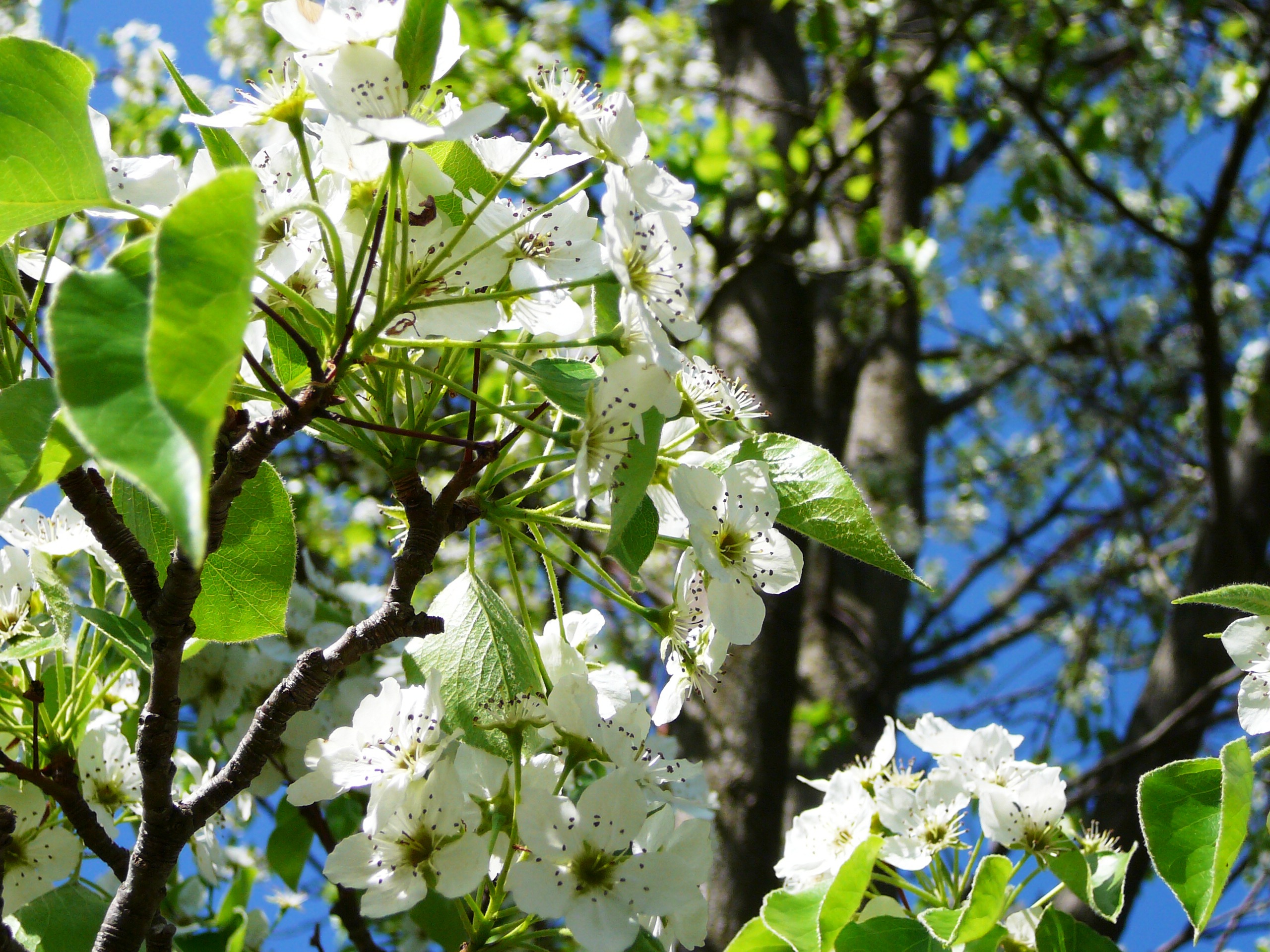
Pear Blossom Blessings

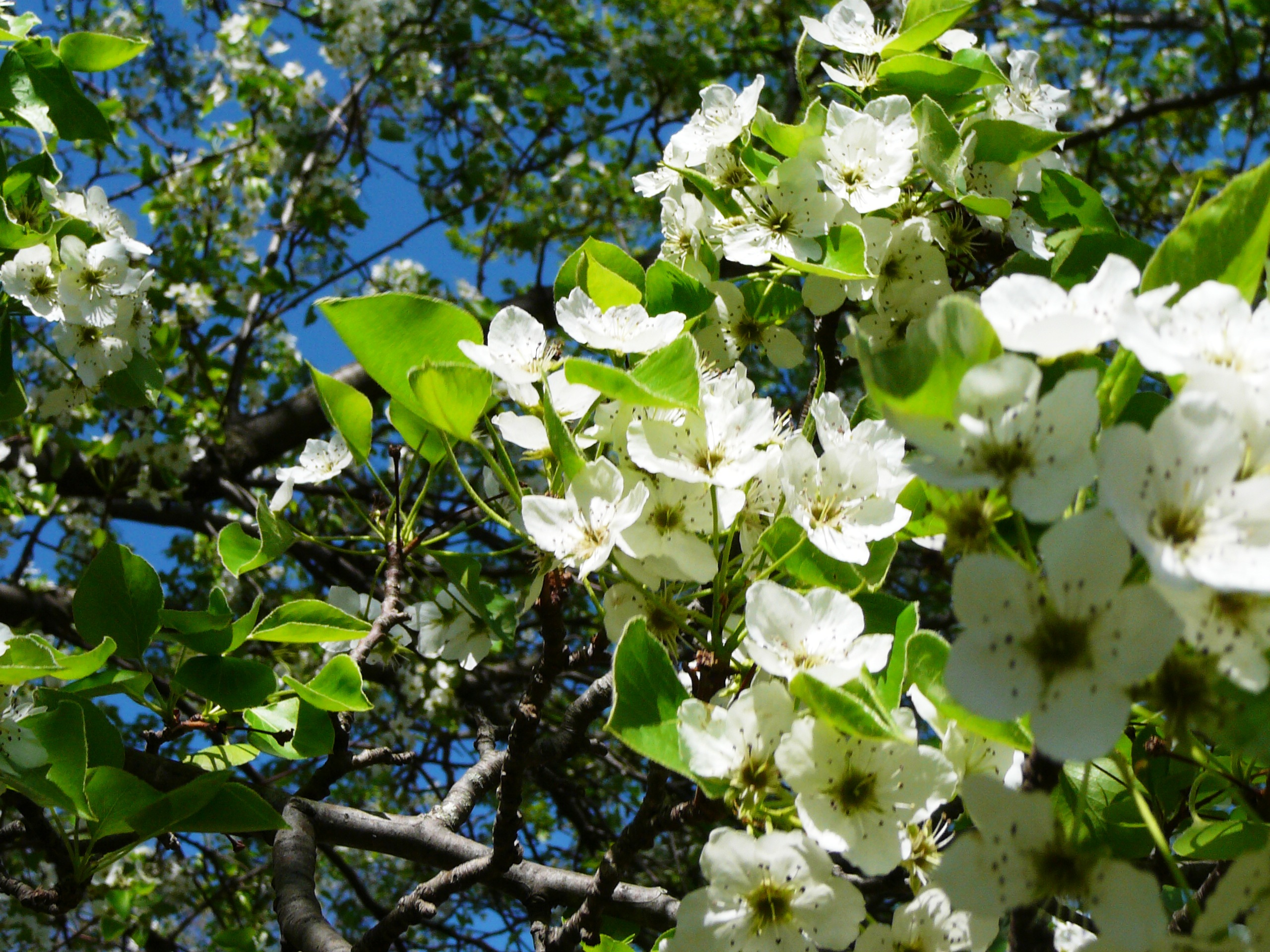
It snowed pear blossoms here in Kansas this week. Tiny white petals floated down like confetti and drifted into the corners of my patio. They festooned the back of my black lab, Elijah, and rode into my kitchen stuck to the soles of my shoes.

The pear flurries crept up on us quickly and then were over. All week I planned to stand under the tree and gaze up through that lacy veil to the branched blue sky above. When I finally went out to behold this beauty, the green shoots of leaves were already pushing off the petals and the moment was over.

Dripping with blossoms, the tree was stunning in the sun, lifting her arms like a bride to her beloved. Then, impetuously, she dropped her gown, sending her skirts floating past my windows.

Watching the petals fall on the lawn, I remembered the poem my mother read to me one spring, years ago.

The Pear Tree
In this squalid, dirty dooryard,
Where the chickens scratch and run,
White, incredible, the pear tree
Stands apart and takes the sun,
Mindful of the eyes upon it,
Vain of its new holiness,
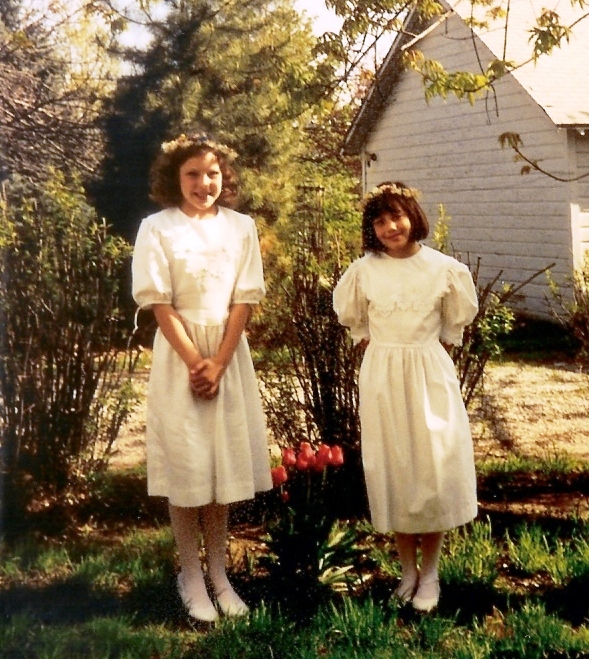
Like the waste-man’s little daughter
In her first communion dress.
        Edna St. Vincent Millay, 1919

Spring comes like a sudden lump in the throat, a sharp stab to the heart, a pear blossom falling too soon. Beauty does that to us. Beauty, a thing we cannot possess, or control, belongs, finally, to the Creator. The waste-man’s little daughter will outgrow her communion dress. She will move past her vanity and grow into holiness, as her girlish charm gives way to the inner radiance of the Bread of Life she takes between her lips.

Like the woman of Bethany, hastening through the streets with her perfume for the beautiful Savior, soon to die, spring spills her treasures over us, and then is gone.  The pear tree blooms for a week. Too soon her splendor falls softly, grows transparent, yellows, and dries in the cracks of the sidewalk.

Last week I saw a man with a pear blossom petal caught in his eyebrow. He wore it, perched like a tiny cap, over the arch above his spectacles.

I would like to be so baptized with pear blossoms. May you each have your transcendent moment in the sun, and see yourself as the stunning beauty you are.

Ought we not always be pouring the priceless gift of our attentive love on every particle of this world? Ought we not be running recklessly through the streets and fields, smitten and ravished?  We, here so briefly, so soon to be released and blown to rest in the softly greening grass, are surely born to be pierced through by such beauty and spendthrift love.

Are not we here for this above all reasons:

to lift our arms like brides,
and to wear the kiss of God upon our brows?

Aware of this, Jesus said to them, “Why are you bothering this woman? She has done a beautiful thing to me. The poor you will always have with you, but you will not always have me. When she poured this perfume on my body, she did it to prepare me for burial. Truly I tell you, wherever this gospel is preached throughout the world, what she has done will also be told, in memory of her.”        Matthew 26: 6-13 (NIV)


The Sanctuary Foundation for Prayer
Read more about prayer www.fromholyground.org,
Contact the author lross@fromholyground.orgwww.fbook.me/sanctuary
Follow at http://twitter.com/lfross

Stop It!

I woke to a list of tasks and projects to complete – important, worthwhile, necessary duties.

But the Holy One said, “Rest.”

I argued. “Lord, I have to do this. I need to get that done. And the yard needs raking.”

“Stop!” the Lord said to me. Stop it.

So I turned on myself, flaying myself with guilt and shame. “What’s wrong with you? Why can’t you get more accomplished?”

“Shabbat.” God said. Shabbat.  

We drain ourselves with too much doing, striving, and succeeding. We push past our limits and strain our bodies and make ourselves sick. The neglected soul shrivels and turns dry and hard like the dusty, wrinkled slice of apple I swept up from under my table.

Shabbat or Sabbath means literally to stop. Interestingly, the Hebrew “Shabbat” sounds a little like “stop it.” 


Remember the Sabbath Day and keep it holy. Six days you shall labor and do all your work. But the seventh day is a Sabbath to the Lord your God; you shall not do any work – you, your son or your daughter, your male or female slave, your livestock, or the alien resident in your towns. For in six days the Lord made heaven and earth, the sea, and all that is in them, but rested the seventh day; therefore the Lord blessed the Sabbath day and consecrated it.                                                                     Exodus 20:8-11

What Israel learned from the fourth commandment is that Sabbath rest is an alternative to aggressive anxiety, writes Walter Brueggemann in Journey to the Common Good (pp 25-26) .

Most Christians think of Sabbath as a day of worship, which may actually turn into a day of production, activity, and achievement, as many clergy will tell you. Though church seemed long and boring to me as a child, endless Sunday afternoons at my Mennonite Grandmother’s home, sitting on a couch with prickly upholstery and listening to the clock tick was not an improvement. At least at church we had music. At grandma’s my brother and I itched and fidgeted to go outside and play.

However, at its origin, Sabbath was not about worship. Brueggemann continues, “It is about work stoppage. It is about withdrawal from the anxiety system of Pharaoh, the refusal to let one’s life be defined by production and consumption and the endless pursuit of private well-being.”

To cease working for a day is an act of defiance in a godless system of aggressive production and accumulation. To keep Sabbath is an act of rebellion against Pharaoh’s kingdom of scarcity where there is never enough. To keep Sabbath is a statement of faith in the abundance and provision of the Kingdom of God, where sharing by all will mean scarcity for none. Finally, “to stop it” is an act of obedient trust in God’s goodness, as one rests and enjoys the wonder of all that God has made.


Recently, people, who come to me for spiritual guidance, seek not so much counsel or suggestions for how to pray, but, rather, the permission and opportunity to be still and rest in God.

A woman tells me, “I think what I need today is to just be quiet and for you to lead me in meditation.” A little music, Psalm 27, and an extended silence followed.

We sat together facing our internal distractions and anxious mental sorties away from our intention of presence to God. We calmed our fretful souls, and held ourselves steady before the voluminous mystery of love. Over time this Sabbath being, this doing nothing, will change the quality and the character of all our active doing. By disengaging from Pharaoh’s system of scarcity and anxiety, we root more deeply into the realm of the endless mercy and providence of the Holy One. 

Here is a god, who had so much fun doing and creating that he took a day off in order to rest and delight in his own handiwork. Then God, tickled with himself, commanded all his creation, including livestock and resident aliens, to enter into the joy of such rest. “Go outside and play. Take a look at what a marvelous universe I have made. I can’t get over how wonderful it all is.”

As the woman, who needed rest, and I participated together in the wonder of the gift of our being, the silence thickened, ebbed and flowed, smooth as satin and softly throbbing. We drank deeply from that well. When the session came to an end, we drew back reluctantly from the living water.

“You were very thirsty?” I asked. Yes, she nodded.

“Me too.” I said.

Learn by little the desire for all things
which perhaps is not desire at all
but undying love which perhaps
is not love at all but gratitude
for the being of all things which
perhaps is not gratitude at all
but the maker’s joy in what is made,
the joy in which we come to rest.   
                                          Wendell Berry

May you discover the maker’s joy in your Sabbath rest.  

Shabbat Shalom!


“In returning and rest you shall be saved.

In quiet and trust shall be your strength.” Isaiah 30: 15

This is the second in a series of posts this year on
Isaiah 30:15. Read the first post on this verse here:  Returning

The Sanctuary Foundation for Prayer
Read more about prayer www.fromholyground.org
email
lross@fromholyground.org
Follow at 
http://twitter.com/lfross 


Homeless

Black grackles and speckled starlings,
with yellow beaks and rusty throated chatter
clatter up and down the branches
gleaning the leavings of winter’s suet cakes.

A pile of must-read books
litter my desk and the chair before the window
where I come to pray.

Wisdom and knowledge at my fingertips,
and the perfect YouTube video of a good life,
forwarded from friend to friend,
promises to change everything.
Click here now.

How long do you stand on the street corner,
listening to the preachers and barkers?

How long do you slurp up the news,
opinions, and seductions of others?

How long do you sit on the couch
of the world consuming secondhand notions,
lies, and rumors?

When will you sit down before mystery
and invite it to come rest in your lap,

your lap, I mean, your heart and singular, scintillating body?

When do you stop singing somebody else’s song
and chasing somebody else’s god
and coveting somebody else’s experience?

When, oh when,
dear, irreplaceable you,
will you lay
yourself down in your own true,
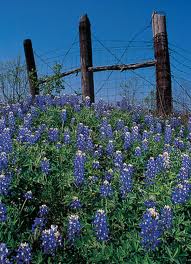
blue bonnet strewn field of a life?

And say to the starling –
Here come, with your little orange feet and strange black eye.
How precious you are in that freckled jacket.

And I ask you,
how many prayer breakfasts,
committee meetings, and strategy sessions,
how many well-intentioned,
and not so well-intentioned,
soldiers of truth
gathering to plot their version of a perfect world
must we salute?

Just how long will it take, do you think,
for us to be safe enough
and gentle enough
and humble enough

for the shy weary God to come and lay his head? 


Jesus replied, “Foxes have holes and birds of the air have nests,
but the Son of Man has no place to lay his head.” Matthew 8:  18-22 


A YouTube video on Matthew 8: 18-22

The Sanctuary Foundation for Prayer
Read more about prayer www.fromholyground.org, www.fromholyground.wordpress.org
Contact the author lross@fromholyground.org, www.fbook.me/sanctuary
Follow at http://twitter.com/lfross

Kyrie, Eleison

I have been pulling out thorns, stick tights and nursing cuts and scrapes. I spent the past couple of weeks in a briar patch. Tangled up in old resentments, anger, and feeling sorry for myself, I had worked myself  into a wadded mat of prickly brambles.

A briar patch with twisting vines, which cut or trip or cling at every turn, may be a good place to begin lent. In some respects, we, like Br’er Rabbit, are born and bred in the briar patch of human existence. I, however, did not find it as comfortable, as my cousin, Brother Rabbit. I felt trapped and wanted to break free of the barbed burden of myself.

My pride and arrogance coiled around one ankle. My entitlement and envy looped in a thorny noose around my throat. And soul smothering self pity sat on my chest like a heavy stone.

I could not seem to untangle myself. All my efforts only bound me more tightly. And, to tell the truth, I do not think I really wanted to get free. An insidious part of me seemed to enjoy how awful I was feeling. At the same time, another voice was asking, when I was willing to listen, “How happy do you want to be?” as if my happiness was somehow up to my simple consent and my willingness to receive what I desired.

Finally at my wits end and the end of my own strength, I prayed – not for God to fix the things that had me trapped, not for God to turn the briar patch into a luxury hotel, not for God to give me insights, knowledge, or explanations, but for mercy. I asked for God’s mercy – unmerited, undeserving, unearned mercy.

I, sick of myself, surrendered and stopped defending, justifying myself, and arguing with imagined foes. I came to my knees and asked for mercy.

And mercy was given

falling softly like a gentle rain.

Later that same day I discovered I had been set free from the briar patch. The heavy weight of myself was gone. I was no longer chaffing and pulling out splinters.

And the word, mercy,

sounded sweet in my ears,

like music,

like birdsong, unbidden and blest.


Perhaps there is no better prayer than to simply commend ourselves, others, and the whole world to the redeeming mercy of him who died and rose for us. According to Balthasar Fischer, this ancient prayer means more than “Help us!” It means:  “Take all of us with you on your journey through death to life.”


The quality of mercy is not strain’d,
It droppeth, as the gentle rain from heaven
Upon the place beneath: it is twice bless’d;
It blesseth him that gives, and him that takes:  . . .
Though justice be thy plea, consider this—
That in the course of justice, none of us
Should see salvation: we do pray for mercy;
And that same prayer, doth teach us all to render
The deeds of mercy.
Shakespeare’s Merchant of Venice
The Sanctuary Foundation for Prayer
Read more about prayer www.fromholyground.org, www.fromholyground.wordpress.org
Contact the author lross@fromholyground.org, www.fbook.me/sanctuary
Follow at http://twitter.com/lfross

Lent, Suffering, and Weary Pastors

“The reason why pastors are so tired around Easter is because they have to preach about something they don’t really believe and it just wears them out,” announced a colleague to the group of clergy.  Some clergy will tell you their fatigue is due to all the extra services, studies and observances that cluster around the season.  One wonders what it is that calls out the sudden burst of piety and round of religious soirees, if it is not the need to reinforce our sagging faith.


Evelyn Underhill describes spiritual growth as a “series of oscillations between states of pleasure and states of pain which fatigue the immature transcendental powers.” (E. Underhill, Mysticism, p. 381.)  Whatever the cause, the amazing truth of Good Friday and Easter is more than most of us can swallow, let alone integrate in such a way that we remain in possession of the power of the Risen Christ, while at the same time surrendered to that power.


Death is wearisome.  Suffering is wearisome.  Evil wears us down, grinds us down.  As the opposite of creativity, evil employs repetition as one of its weapons.  The slow steady accumulation of minor abuses and violations turn over time into an onslaught, which erodes our best intentions.  Sick and tired of it all, we finally succumb with a yawn and let death have its way with us.


Jesus says, “It is lent. Come on.  Take up your cross and follow me.” Jesus does not summon us to a quick easy death.  He says cross – that slow torment that keeps you hanging around, conscious, gasping, while the body strains and sags against the nails that pin us to our own circumstances and the slow agonizing drag of gravity does its job.


We sink slowly into the earth, the forces of the universe pulverizing us over eons into dust.  At such a prospect, heartily endorsed from pulpits far and wide, one’s transcendental powers, mature or immature, might well benefit from a swig of Geritol.


“Have a Happy Death,” my friend says.  And I go read about those eccentric saints who extol the joy of suffering and actually prayed to share in Christ’s pain.  What did they know I don’t know?


A while back I got a large envelope in the mail with the words SECRETS THAT CAN BANISH PAIN emblazoned across the front.  Inside a Mr. Mark Bricklin promised to send me secrets that would save my life and show me HUNDREDS OF WAYS TO GET FAST RELIEF.  I looked over his offer and decided to take a nap.


Our culture has little capacity to find anything redeeming in anyone who would deliberately seek to suffer. We have a difficult time distinguishing between the suffering of sacrificial love and suffering that is meaningless and self-defeating. It is hard for us to believe that suffering consciously chosen and accepted could be anything other than dysfunctional behavior.


This may be part of the reason why the season wears us out.  This Jesus hanging on a cross for our sakes appears hardly functional.  He makes none of the promises of Mr. Mark Bricklin who exhorts me not to deprive myself and my loved ones of the chance to truly banish pain.  (Mail the enclosed card today!) The effort of leaning up against that cross in a culture that seeks to banish pain, and the real spiritual work of extending ourselves past our exposed doubt deeper into God is more than a little fatiguing.


Spiritual growth may be seen as slowly deepening belief, or the steady erosion of our hypocrisy.  Layers of pretense and self deceit  peel away to expose our fear.  What is revealed is the limit of our belief, its edges.  A good deal of our suffering is that raw exposure of our doubt, our unbelief, to the light of the Risen Christ.  It stings, smarts.  We think we are dying, losing everything.


Perhaps the difference between tragic suffering and the redemptive suffering in which Christ invites us to participate lies not in the amount, kind or quality of the pain, nor in its cause.  What makes one kind of suffering sacred and healing, and another simply one more case of horror and abuse inflicted upon an innocent victim may lie in the extent of our personal freedom to choose how we respond to the pain we experience when others trespass against us.


And here we might look to Jesus, the pioneer and perfecter, “who for the joy that awaited him, endured the cross, despising the shame…” (Hebrews 12: 1-2)  We do not have to love our suffering; we just have to bear it.  We take up our crosses.  We consciously receive the pain that comes our way, not for the pain we must endure, but for the joy that awaits.  In this way we become martyrs, not in self abasing, whining, self-righteous martyrdom, but in the original sense of the word.  Martyr in Greek means witness, one who has seen God and is willing to testify by one’s life that God lives – even in the midst of death and evil and defeat.


Perhaps what those long-suffering saints know that I and Mr. Mark Bricklin haven’t yet grasped, is that what makes suffering redemptive is enduring the cross despising the shame, making light of its disgrace. The self which dies is the ego, the grasping, controlling, faithless part of ourselves which believes everything is up to us.  Unlike Jesus, we do not despise the shamefulness of our suffering.  We despise ourselves instead.  We are humiliated and contemptuous of ourselves in situations of disgrace, defeat and loss which expose our limits.


We want an explanation for our pain.  The ego anxiously searches for meaning in the mistaken notion that in understanding we may find relief.  Jesus does not seek to justify himself.  His focus is not on the cause of his suffering, but on obedience to the One he loves and from whom he came and to whom he is headed in joyful reunion. Jesus does not despise himself, instead he despises that which seeks to humiliate and destroy his identity as the holy Child of God, in other words, his innate goodness and sanctity.  Jesus does not stop loving himself or God in his suffering.


To be beaten, to be rejected, to be abandoned and despised without beating, rejecting, abandoning, and despising oneself is to know oneself as a child of the Holy One.  To suffer, despising the shame, is to remain grounded in one’s essential goodness, even when one has reached the limits of one’s ability to do good.


A blessed lent to you and to Mr. Bricklin too.  May we all enjoy a happy death, a good rest, and steadily maturing transcendental powers.


This post adapted from Letters from the Holy Ground, Sheed & Ward, 2000, written by Loretta F. Ross (Ross-Gotta).
The Sanctuary Foundation for Prayer

Read more about prayer www.fromholyground.org
Contact the author lross@fromholyground.org, www.fbook.me/sanctuary
Follow at http://twitter.com/lfross