Category Archives: Contemplation, prayer

Waiting: Broccoli and Perseverance

Part One of Four Parts

A friend recently asked me for the key to success in surviving a child’s thirteenth year. She told me she ate some truly nasty broccoli at dinner one night in a desperate attempt to do something good for herself. She swallowed the stuff in the hope that it would help her live long enough to see her son become the parent of a thirteen-year-old.

Longevity and sheer perseverance have a lot to do with justice and salvation. If you can live long enough, you may see the triumph of good with your own eyes. Being able to hang on, to wait through periods when all seems turned against you, to survive and prevail is a central activity of a Christian.

Some pastors struggle to get congregations to sing the more somber and penitential advent hymns before the favorite Christmas carols. I am not surprised. Our culture’s mindless celebration of Christmas distorts the basic truth of the season, namely, our need for redemption and what might be required of us to receive it. We gloss over our appalling sin and ruin, skip past the eager groan of creation’s need for healing. We drug ourselves against the suffering of dark nights. We grow numb and fall asleep before the TV instead of keeping alert and obedient watch for God’s saving action in our lives. We succumb to the temptation to consume more and more as we race to gratify desires.

In contrast, Christ tells us that here is where we are to linger, to stay awake, to wait and be ready,

here in the bleak and barren heart of our need.

Timing is everything. Should one push, move ahead and make something happen or lay low, wait, and watch for the hand of the Lord to act? Tolerating ambiguity, not knowing and uncertainty can be excruciating. In our anxiety and fear we may take things into our own hands.

As a general rule of discernment, when in doubt, wait. The stance of faith waits, trusts, praises, and gives thanks. Faith joined with love bears all things, believes all things, hopes all things, and endures all things.

Why is that hard for us? Perhaps we fear that we won’t be vindicated, that our longing will not be fulfilled, that our cause will not redeemed, that things will not be made right and goodness will not prevail.

My friend with the thirteen-year-old told me her family motto: “Learn to bear what must be borne.” This stern admonition carries for me a puritanical severity, a life of gritted teeth, pursed lips, and making the best of one trial after another. But when I shared the proverb with another friend, “What a great theme for advent,” she exclaimed, seeing a possibility I had missed. My understanding shifted from regarding what must be borne as some heavy load and having to slog along through life like a drudge to the exhilarating task of the labor and delivery of a baby.
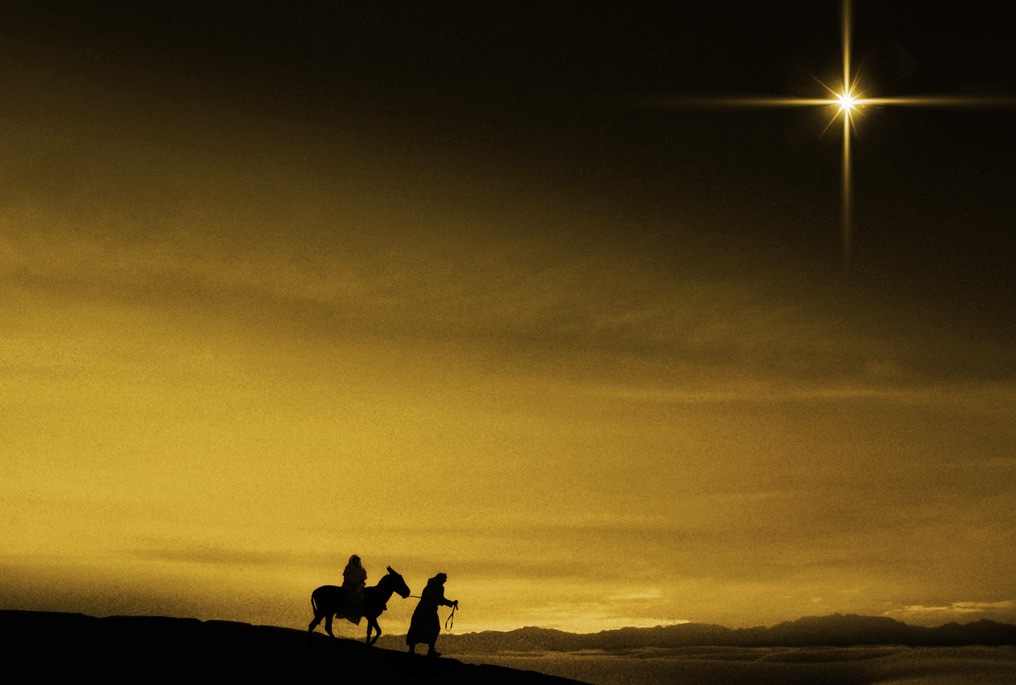
“Love in real life is a harsh and dreadful thing compared to love in dreams,” observed Dostoevsky. The advent season invites us to the harsh and dreadful task of giving birth to a love that will ask more of us than we thought we could bear. Learning to bear the one who must be born, the Christ, into our lives, families, communities, and world requires us to wait, persevere, and overcome fear with faith.

As the promises of God are delivered through our lives, we can rejoice with St. Simeon, whom Orthodox Christians call “The God Receiver.” Old Simeon was waiting to see the Christ before he died. Led by the Spirit, Simeon showed up at the temple when Mary and Joseph brought their son to present him to the Lord, according to the law of Moses. Taking the infant into his arms with a heart full of love and eyes full of tears, the old man uttered these words:

Lord, now let Your servant depart in peace,
according to Your word,
for my eyes have seen Your salvation,
a Light to lighten the Gentiles,
the Glory of Your people Israel.
Luke 2:25-32

Watch for Part Two of this series on waiting, The Promise, coming soon.

Adapted from the author’s book, Letters from the Holy Ground – Seeing God Where You Are, Loretta (Ross-Gotta) F. Ross, Sheed & Ward, 2000.
The Sanctuary Foundation for Prayer
Read more about prayer www.fromholyground.org,www.fromholyground.wordpress.org
Contact the author lross@fromholyground.orgwww.fbook.me/sanctuary
Follow at http://twitter.com/lfross

Christmas and the Recollected Soul

The ferocious intensity and strain that many of us bring to Christmas must suggest to some onlookers that, on the whole, Christians do not seem to have gotten the point of it.

“Without me you can do nothing,” said Jesus.  Yet we act, for the most part, as though without us, God can do nothing. We think we have to make Christmas come, which is to imply that we think we have to bring about the redemption of the universe on our own. However, all that God needs is a willing womb, a place of safety, nourishment and love. “Oh, but nothing will get done,” you say. “If I don’t do it, Christmas won’t happen.”

God asks us to give everything of ourselves away. The gift of greatest power that we can offer God and creation is not our skills, talents, or possessions. The wise men had their gold, frankincense and myrrh.  Paul and Peter had their preaching. Poor Mary had only interior space, love, belief – her being.

What is it that delivers Christ into the world? Is it preaching, art, writing, scholarship, social justice, mission? These are gifts well worth sharing, but preachers lose their charisma, scholarship grows pedantic, and justice alone cannot save us. When all other human gifts have met their inevitable limitation, it is the recollected one, the bold virgin with a heart in love with God who makes a sanctuary of her life, who delivers Christ, who then delivers us.

Recollection is an old-fashioned word, rarely heard anymore. In the spiritual sense recollection means quiet tranquility of mind and self-possession. Recollection is the gentle art of prayerful gathering in in preparation for deeper prayer. One calls back the scattered, fragmented self, strewn about one’s world like trash on a windy day. I pick up the pieces, sweep out the psychic debris, reorder the clutter and bring back to the center – wholeness. All about me that is frantic and frayed, dispersed helter skelter, leaving me anxious, confused and overwhelmed is drawn back.  I am no longer like a cracked and broken bowl which leaks and spills its contents, but I am mended and suitable once again for holding my life, for containing safely and serviceably who I am.

Try it. Leave behind your briefcase and notes and proof texts. Leave behind your honed skills and knowledge. Leave the Christmas decorations up in the attic. Go to someone in need and say, “Here, all I have is Christ.” And find out that is enough.

Imagine a Christmas service where the worshipers come in their holiday finery to find a sanctuary empty of all the glittering decorations, silent of holiday carols. What if this year you canceled the church decoration committee and the worship committee and called off the extra choir rehearsals and the church school pageant?

What if on Christmas Eve people came and sat in the dim pews and someone stood up and said, “Something happened here while we were all out at the malls, while we were baking cookies and fretting about whether we bought our brother- in- law the right gift. Christ was born. God is here.”?

We wouldn’t need the glorious choruses, the harp, the bell choir, and the organ. We wouldn’t need the tree strung with lights. We wouldn’t have to deny that painful dissonance between the promise and hope of Christmas and a world wracked with sin and evil. There wouldn’t be that embarrassing conflict over the historical truth of the birth stories and whether Mary was really a virgin. And no one would have to preach sermons to work up our belief.

All that would seem gaudy and shallow in comparison to the sanctity of that still sanctuary. And we, hushed and awed by something greater and wiser and kinder than we, would kneel of one accord in the stillness. A peace would settle over the planet like a velvet coverlet drawn over a sleeping child. The world would recollect itself and discover itself held in the womb of the Mother of God. We would be filled with all the fullness of God.

You might try a small experiment this year. Deliberately do not do something you usually do at Christmas. Choose something that feels like a burden, or is no longer a source of fun or delight. Instead of doing something, be something. Be womb. Be dwelling for God.

Be recollected.

Adapted from Letters from the Holy Ground – Seeing God Where You Are, Loretta (Ross-Gotta) F. Ross, Sheed & Ward, 2000.
The Sanctuary Foundation for Prayer
Read more about prayer www.fromholyground.org
Contact the author lross@fromholyground.orgwww.fbook.me/sanctuary
Follow at http://twitter.com/lfross

Sick of Words

I am word weary. I am tired of tedious characters marching stiffly like tiny soldiers in regiments of paragraphs across a page.

I am wary of shady words with their cruel thorns, sleek seductions, hidden agendas, and high fashion wardrobes. I am annoyed by shifty words with their little beady periods punctuating deceit. I am bored with dreary, weak words, always minding their p’s and q’s. I am fed up with grandiose words mincing truth into carefully parsed packets of freeze-dried candor.

Because I do not know words – tender, true, and worthy enough to tread upon the pristine sweep of your soul,

I give up on words

and offer you the integrity of silence,

the undefiled page,

and the wordless wonder of your own beloved self.

Linger here in this moment on an autumn day.

Oh, for once, do not rush down the labyrinthine corridors of dense vocabularies to the echoing mortuaries, where truth lies shriveled in drawers pulled in and out by experts.

Be stilled.

Soon truth will rise up and burst from the cramped
tomb of your preconceptions.

Then you will hear it sing its little freedom song  —

a soft whirr, a buzzing hum

like a cat purring to herself in the sun.


God Goes to Podcamp

Looking around the room, I saw a lot of smart phones, iPads, laptops, as well as salon haircuts, and expensive eye glasses with predominately black frames.  I picked out grungy geeks, staid state employees, hip local media moguls, and a few old dudes like me among the crowd. One stunning young woman arrived, wearing tight black leggings and a short black jacket. Her stiletto boots with open toes showed off her bright red pedicure. She carried an equally beautiful baby on one hip.

I sat down at a table with two young web design entrepreneurs from Iowa. College students and high school buddies, they had made the nine hour drive to spend the day at of all places, the Topeka and Shawnee County Public Library.

The event, sponsored by my local public library, is the brain child of librarian, David Lee King, who is definitely nothing like Miss Mabel Hrencher, who presided at the check out counter in the library of my childhood. PodCamp Topeka, billed as the “best unconference in the Midwest” is “Topeka’s annual low-cost unconference focused on social media, podcasting, audio and video production, and the web. Our goal? To learn about social media from social media experts, to network with fellow bloggers, podcasters & social media creators … and to have a blast!”  Which, as far as I am concerned, we did. Though I skipped the Tweet-Up event at a local bar at the end of the day in order to walk my dog, I left thinking, “Wow! Topeka, Kansas just keeps getting better and better.”

I purchased a new TV remote a month ago after my dog, Elijah, ate most of my old one. The new remote still sits in its box, because I can’t figure out how to get the darn thing to work. So how did I come to be sitting among tech cool, social media movers and shakers, learning tricks for emerging web technology? What was I, a hermit, solitary type, who needs large, sustained doses of silence, and thinks about God a lot, doing here? What could the keynote speaker, social media guru, Patrick O’Keefe, owner of I Froggy Network , have to say of interest to me? The last Froggy I had heard of “went a’courtin’” years ago.

Why did I go? Simple. The event was all about communication,  joining together, communion. This, you may recall, was a particular concern for Jesus. In the intimate moment in the gospel of John, where we listen in on Jesus’ prayer for his disciples, we overhear Jesus’ deep yearning that somehow, someway his followers might taste and enjoy the communion and oneness he shared with the Creator, whom he called Father. “Please let them be one, as we are one, not just kind of one, but completely, perfectly one. And Father,  I don’t want just these here, my disciples, to be part of this joining together, I want also those, who believe in me through my followers’ words about me, to be one with us. (John 17: 20-22, paraphrase)

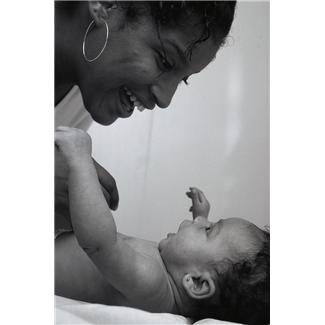
Part of the nature of the Holy One and those created in God’s image and likeness is the ability to communicate – to extend oneself out of oneself in order to interact in some meaningful way with another. An infant expresses his needs and learns trust, as his caregivers respond to his cries with comfort and nurture. Hopefully, the infant learns that when he expresses a need, someone beyond him will respond with kindness. The child experiences the deep satisfaction and relief of being heard, and understood. If for some reason its need is not met, if the infant is unable to successfully connect, to attach to another, and get his or her needs met, the baby may waste away and develop a host of difficulties in communing with others.

Communication forms the basis of human community and a reflection, for the believer, of the Trinitarian nature of God. Theologian Miraslov Volf in a recent article in Christian Century writes:

If the One God is utterly unique and beyond number, why do Christians speak of divine triunity? Christians believe the word [God’s communication] was made flesh in Jesus Christ. From this belief it follows that the one utterly unique God who is beyond all counting, is internally differentiated as the Speaker, the Word and the Breath.

We live in the midst of the praised and condemned transition from print and broadcast communication to digital communication. This is one more passage in the long journey that began at the campfire, where we gathered to hear the hunters tell us the story of how they stalked and killed our supper. We have now arrived at the blog, podcast, and webinar to tell our stories of conquest and to instruct others in monetizing, ROI (return of investment), and how to put supper on the table. According to M. Rex Miller, author of The Millennium Matrix, the movements from oral communication, to print media, broadcast, and digital media have each brought about sweeping changes in how we believe, how we know, how we live together, how we see beauty, and how we work and trade. Our institutional structures, our architecture, our religions, our art, our self understanding, even our brains have been conditioned by how we communicate.

What is an unconference? you may wonder. According to Wikipedia, “an unconference is a facilitated, participant-driven conference centered on a theme or purpose. The term ‘unconference’ has been applied, or self-applied, to a wide range of gatherings that try to avoid one or more aspects of a conventional conference, such as high fees and sponsored presentations.” An unconference moves away from a top down, gathering of authorities, experts, and hierarchical structures. Power in the form of information and know-how is no longer controlled by Miss Mabel Hrencher with her tight grip on your library card.

We, along with the Holy One yearn to know and be known, to receive another and to be received, to see and be seen. We find deep satisfaction in that moment of mutual apprehension: the yes! the nod, the I-get-you-baby. We seem to never tire of the joy of recognition, affirmation, acceptance, and to be heard and understood. “Hey, Mom, watch. See how I do this! Dad, look at me!”

The glance of another is a blessing beyond words, the bestowal of understanding is a gift of great price. During a break at the Podcamp, the hip young mom came toward me down the hall. I stopped and told her, “You are just beautiful.” She smiled and her baby looked at me and crowed.

At Podcamp most of us contained our look-at-me tendencies, but they were not far below the surface. The longing to enter into the sweet and deeply satisfying experience of communion runs like a subtext of desire through many human interactions. The man, who came for the fall check up of my furnace, the day after the midterm elections, visited with me a bit about politics and the state of the nation. At one point I said, “It sounds like you have thought deeply about these things.” The earnest, intelligent fellow perked up and talked for another half hour. Somebody cared.

It takes so little in the dance of communication – a comment, response, the slightest gesture of recognition, the click of the Like button. We possess great power to enlarge one another or to diminish and demean.

Prayer, as I understand it, is communication with the Holy One, an exchange in which we speak and listen ourselves into ever fuller being and carry with us our whole community into that fullness.  We reach beyond ourselves and our essential isolation to enter another’s reality, and in that moment of communion, however momentary, virtual or real, is the opportunity for expansion, mutual exchange, and transformation.

A warning: death is involved in such communion. Life changing communication requires a dying to self and an opening out in trust to the other. I die to my personal exclusivity as an authority or expert, as I reach out to the collective, communal wisdom of my brothers and sisters. I find I am dying all the time, as I bump up against my perceptions, opinions, and personal critiques of those around me, only to discover just how dead wrong I am and how much more is going on in the realm of the Spirit, than I am aware of, or which I discount in my arrogance.

There is no room for a cozy “me and Jesus” theology in such communion. Theologian Miroslav Volf explains,

Because the Christian God is not a lonely God, but rather a communion of three persons, faith leads human beings into the divine communion. One cannot, however, have a self-enclosed communion with the Triune God- a “foursome,” as it were– for the Christian God is not a private deity. Communion with this God is at once also communion with those others who have entrusted themselves in faith to the same God. Hence one and the same act of faith places a person into a new relationship both with God and with all others who stand in communion with God. After our Likeness: The Church as the Image of the Trinity

The words, love, forgiveness, God, and Jesus were not mentioned at the unconference. Those young men at my table might have moved if they knew I was an ordained minister, not a popular profession in many circles. There was some bowing before the God of Technology. However, there was also an awareness of boundaries, rules, and internet etiquette:  Act nice, or you will be deleted.

Some final words from M. Rex Miller:

The internet is fundamentally about connecting with people of common interest, facilitating person-to-person conversations, collaboration, assistance, and collective learning. The internet inverts the power curve away from centralized control and content to distributed power and member-generated content. The internet is about the exponential value of networks, the power of conversation, and liberation from past obstacles of time, location, gender, age, ethnicity, disability, and tradition.(The Millennium Matrix, p 205)

Though Christ, in whom St. Paul tells us there is neither Jew nor Gentile, male nor female, is not mentioned in this description, digital communication offers, for those with eyes to see, a mortal and incomplete reflection of the image of  self-giving communion we find in the Trinity. The heart of digital communication sounds a lot like like church to me. That’s why I went to PodCamp.

As for God, I figure the Almighty, having created the people who made it, must love digital communication, and is surely showing up in black leggings toting her son at every Podcamp she can.

Become a fan of the The Sanctuary Foundation for Prayer
Read more about prayer www.fromholyground.org,www.fromholyground.wordpress.org
Contact the author lross@fromholyground.orgwww.fbook.me/sanctuary
Follow at http://twitter.com/lfross

The Stranger

At first glance he wasn’t all that attractive, a little too rough and edgy for me. He wore a nice pair of pants, but his shoes were beat up and had a hole in one toe. He had a scruffy beard, neatly trimmed nails, and a smart fedora tilted over one eye. He staggered slightly and stumbled once, as he approached. Tall, lean, all angles and contradiction, he gave off a raw, muscular energy that seemed both sinister and alluring.

He looked in some ways like the type of kid, who back in the 50’s would wear his hair slicked back in a ducktail and carry his cigarettes rolled up in his tee shirt sleeve. The fact that he had been eyeing me for some time made me nervous in a kind of silly, excited, middle school way.

He was definitely not my type. Besides I have long passed the era of swaggering boys and dangerous glances. Yet he was coming straight toward me, with a lazy, loping walk, totally at ease with himself and his own incongruity.

His eyes seemed older than his body. Compassionate and understanding, his gaze invited me in like some grandma holding out a cup of tea and plate of cookies. I better get out of here, I thought.

But before I could slip away he was suddenly before me, leaning over, and asking, “Would you like to dance?”

I glanced around, “Me? You want to dance with me?”

“Of course,” he said, smiling now.

“Why?”

“Isn’t it time we became friends?”

_____________

At a recent gathering in Kansas City, I was struck by a quotation from German philosopher Rudolf Bahro shared by Margaret Wheatley, well known management consultant, who studies organizational behavior, change, and chaos theory:

When an old culture is dying,
the new culture is born from a few people
who are not afraid to be insecure.

O yikes, I thought. I spend a lot of time and energy figuring out how not to be insecure. Now I am supposed to get comfortable with it?


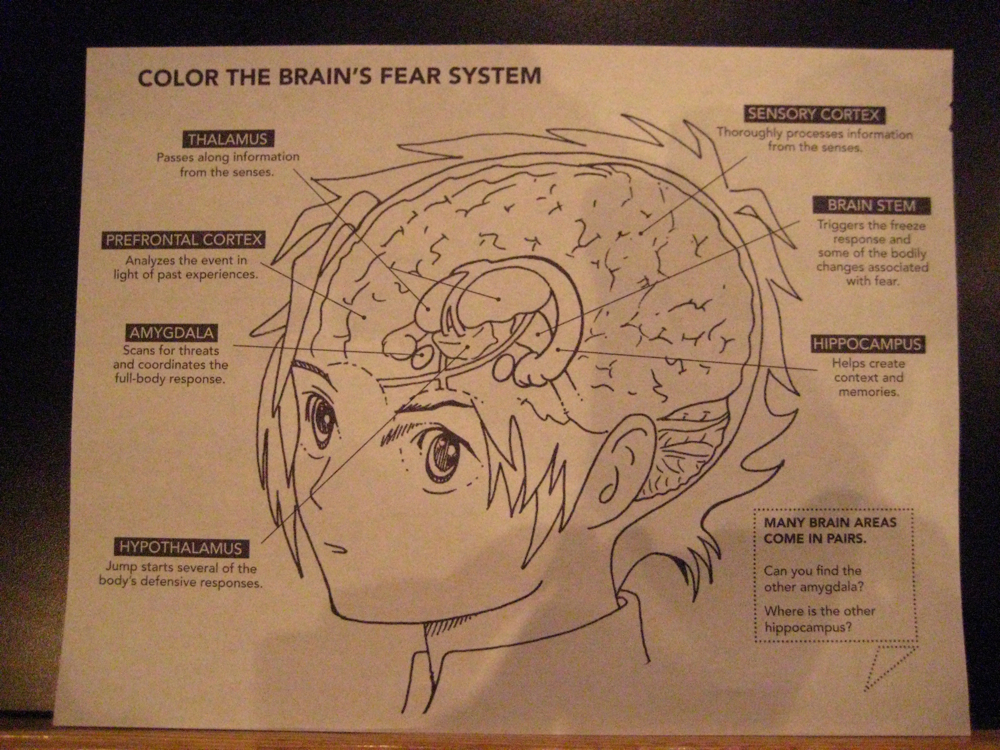
Who has not had a terrifying encounter with fear, which kicks all reason out of your mind and fills you with the powerful instinct to run, to hide, to attack, or to kill?  

Fear is an emotional response to a perceived or suspected threat to our security and safety. It both helps to insure our survival, and may also hold us back from moving forward. Because of its primal power expressed through our biochemistry, we may be manipulated by fear into silence, passivity, numbness, or reckless action.


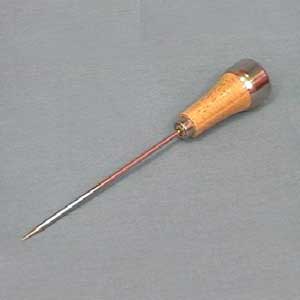
The reality of fear runs through the Biblical narrative, like a long steel ice pick between the shoulders of the people of God. The gift of fear as warning, and as impetus to take some saving action, is often distorted and misapplied. Fear becomes the excuse for lack of faith, and for failure of nerve. We find ourselves unwilling to trust in a power and reality greater than the lying, sniveling fear, which makes us feel we are nothing, but grasshoppers in a world full of overpowering giants with very large feet.

(But the others said, “We can’t attack those people; they’re way stronger than we are.” They spread scary rumors among the People of Israel. They said, “We scouted out the land from one end to the other—it’s a land that swallows people whole. Everybody we saw was huge. Why, we even saw the Nephilim giants (the Anak giants come from the Nephilim). Alongside them we felt like grasshoppers. And they looked down on us as if we were grasshoppers.” Numbers 13: 31-32  Message)

Not counting the frequent admonitions to fear God, that is, to offer God respect and reverence (which is not the kind of fear I am speaking of here), the Biblical admonitions to not fear pile up, filling up several columns in my concordance. God tells us not to fear. Jesus tells us not to fear. Psalmists, prophets, and angels tell us not to fear. Peter and Paul tell us not to fear.

Like most good advice. This is easier said than done.

Though love is not the opposite of fear, it does seem to be the antidote. In I John we find the familiar verses, “Perfect love casts out fear. There is no fear in love. But perfect love drives out fear, because fear has to do with punishment. The one who fears is not made perfect in love.” (I John 4: 18)

At our core, perhaps, what we fear is the separation from the love which promises us protection, care, and life itself. When the gifts of love in our lives are threatened in some way, we fear the loss of the source of these gifts, as well. Love, itself, shall surely be extinguished. We often confuse the gift with the Source. The gifts are  fragmentary, finite, always shifting, changing, and inevitably imperfect. The Source, however, is unchanging, eternal, and utterly worthy of our trust. Losing that which is the core and center of all our desire is, of course, a lie, an illusion. For nothing can separate us from the Love of God as Paul assures us:

For I am convinced that neither death nor life, neither angels nor demons, neither the present nor the future, nor any powers, neither height nor depth, nor anything else in all creation, will be able to separate us from the love of God that is in Christ Jesus our Lord. (Romans 8:38-39  New International Version)

Margaret Wheatley suggests that during this time of tumultuous change and insecurity that what is needed in every organization are patience, forgiveness, compassion, generosity, and an acknowledgement that we will fail sometimes and that is okay. These virtues sound like love to me, perfect love, which casts out the fear that stifles creativity, freedom, and innovation. Perfect love breaks the chains, which bind us to a past we cannot change. Perfect love exposes the dark fiction we write about a future we cannot control. Perfect love empowers us to respond to the present, ripe with possibility and brimming over with life.

_____________

We make an odd couple, this older woman and her shape shifter of a partner. “I don’t know the steps,” I protest.

“Trust me,” he whispers, as he guides me onto the dance floor. “We will make the steps up as we go along.”

“Your name?” I ask gazing into those eyes.

He hesitates for a moment. “People call me Uncertainty,” he says, pulling me closer.

Become a fan of the The Sanctuary Foundation for Prayer
Read more about prayer www.fromholyground.org, www.fromholyground.wordpress.org
Contact the author lross@fromholyground.orgwww.fbook.me/sanctuary
Follow at http://twitter.com/lfross


Still Not Saved?

The summer is over, the harvest is in and we are not saved.  Jeremiah

You might chalk it up to the waning of the light, or to the overcast skies. Regardless of the cause, the change from summer to fall often stirs up a case melancholy in our souls. The shrubs I purchased last July and watered in their containers through the hot summer are still waiting for me to plant them. A year is winding down and I am looking at what remains undone, unsatisfied, and unfulfilled in my life.

A little mouse has found the bird feeder outside my window. He shimmies up the pole each day and gobbles the sunflower seeds and cracked corn. I suppose I should sic my cat after him, but I haven’t the heart to intrude on his salvation with her teeth in his throat.

Autumn’s teeth are biting into my heart. I don’t notice the pain as long as I am working. Then there it is, asking for my attention. A young woman described to me the pain she was feeling as like a splinter working itself out. “I think I need to just feel the pain I have stuffed for so long.” Another woman avoids sitting still to pray and listen to God. When I asked if it was because that was so painful, she began to weep in recognition.

What is it that will save us? What will rescue us from our incurable wound, as Jeremiah calls the distress of his people? Will the politicians scrambling for public offices? Will the latest technology? Will scientific advances? Will new leadership? Will my working night and day save us?

In the growing dark of autumn, reality appears more nuanced, layered, and resonant to me, than life as we tend to live it — skimming over the surface, subsisting on sound bites, condensation, slogans, and bumper stickers. In my fall funk I am suspicious of easy answers, human arrogance, and frenzied activity.

I am not alone in this assessment. People come for spiritual guidance. They sit down and reflect prayerfully upon their lives. They unpack their days and their opinions, lift and hold them to the light. They savor, grieve, rage, and weep. Sometimes they talk about how they do not fit in at their churches. Some are looking for more depth. Sometimes they ramble and are hard to follow. One person sits and simply says, “I do not know. I don’t know,” over and over.  Sometimes they thank me for the safety and freedom they feel here.

I listen and pray and observe the Spirit’s dance in their stories. I witness the subtle shifts and changes in their hearts. These individuals possess that rare gift, an inner life, an examined inner life. They have taken responsibility for what is going on in that inner life. They understand how the truth of their interior reality shapes their outer experience. They are engaged in the serious and critically important work of personal transformation, self understanding, and deepening faith.

What I do is to stay with them in their pain, even when they can’t stand to stay with themselves. I believe, when they cannot believe. I hold up a light, as they discover the healing and freedom that wait beyond their darkness.

Many of us want to foster change in our world and institutions without doing the deep and painful inner work of our own transformation. How can I ask a whole community to change without being intimate with my own pain and my resistance to the cross of suffering in my life?

Thomas Keating invites us to understand our personal pain in a larger context, “Whatever you are going through is your invitation to participate in the redemption of the world.” The implication here is that healing for us all is made available through how we as individuals respond to the pain in our lives. This redemptive, life giving power of suffering love is modeled for us by Jesus.

The French activist and mystic, Simone Weil, writing in the late 1930s, observed that “The moral revival that certain people wish to pose will be much worse than the condition it is meant to cure.  If our present suffering ever leads to revival, this will not be brought about through slogans, but in silence and moral loneliness, through pain, misery and terror, in the profoundest depths of each man’s spirit.”

We are all trying to get by the best we can, taking our harvest where we find it. We are still not saved. The cat lurks. The market falls. You can’t find a job.

Perhaps what is called for in this waning of the light is the ability to be compassionately present to our collective suffering with love and faith. Could we not trust that out of the profoundest depths of our spirits, as we die to ourselves and the way we want things to be, unimaginable new life is already putting out tiny rootlets, waiting to emerge in some distant spring?

If you can’t believe that, I do not fault you.
We all have days like that. Besides, it’s autumn.

In the mean time, lean on me.


Become a fan of the The Sanctuary Foundation for Prayer
Read more about prayer www.fromholyground.org, Tracking Holiness – Newsletter
Contact the author lross@fromholyground.orgwww.fbook.me/sanctuary
Follow at http://twitter.com/lfross

Christian Atheists

“If yas gonna pray – then yas don haft ta worry.
If yas gonna worry, then why bother to pray?”
Anne Lamott, Traveling Mercies


Though a majority of Americans claim they believe in God, most of us function in our lives as atheists. Little seems to cause us more trouble than the godless belief that the ultimate responsibility for everything rests with us. Parker Palmer calls this “functional atheism.”

This is the unconscious, unexamined conviction that if anything decent is going to happen here, we are the ones who make it happen – a conviction held even by people who talk a good game about God.

This shadow causes pathology on every level of our lives. It leads us to impose our will on others… stressing our relationships, sometimes to the point of breaking. It often eventuates in burnout, depression, and despair, as we learn the world will not bend to our will and we become embittered about that fact. Functional atheism is the shadow that drives collective frenzy as well. It explains why the average group can tolerate no more than fifteen seconds of silence: if we are not making noise, we believe, nothing good is happening and something must be dying.

~Parker J. Palmer, Let Your Life Speak

Functional atheism is not a new affliction for the believer’s soul. Remember the story of the father of the epileptic child who asked for Jesus’ help? Jesus said to the man, “If you are able! – All things can be done for the one who believes.” Immediately the father of the child cried out, “I believe, help my unbelief!” (Mark 9: 23-24)

The rough and tumble scramble of our daily lives reveals our hidden atheist. Our unbelief makes itself known in our worry and irritability. We see our betrayal of God in the way we clamp down on having things our way and in insisting that we are right. Such unbelief gives us heartburn, high blood pressure, sleepless nights, and anxious days. Try as we might, we will always fall short of being able to be God in our own lives. Such an enterprise only leads to misery.

So, let’s practice belief. Slowly, step by step, stumble by stumble, we can move more deeply into the conversion of our unbelief.

Here is a prayer exercise to try.

Find a quiet spot. Let yourself relax. Take five or six deep breaths in through your nose, and release each one slowly through your mouth.

Now, imagine yourself in a vast open spacious field: a mountain top, a plain, a meadow, and a lake or ocean shore. See the space on all sides stretching into the distance.

Next, put the things you are worrying about: finances, work, family, various tasks, or responsibilities — whatever has you tied in knots, into that spaciousness. Once you have spread out your concerns at some distance from yourself, simply be there, breathing.

Imagine the Holy Spirit is moving among and penetrating the many tasks, people, and issues with a vibrant, pulsating energy you cannot see, but may sense. As you remain in peace, centered in Christ, the work of God goes forth into all your concerns through your faith, your consent, and your belief that God is more powerful and effective in your life and the world, than you could ever be.

Watch. Wait. Trust. If you become anxious, ask God to help your unbelief.

After taking time to be present to God’s activity in your life concerns, ask if there are any specific responses or actions you are to take. Allow God’s response to rise up from your center of peace, rather than your anxiety or fear.

Here in the field of your life the One who knows you better than you know yourself is always healing, creating, mending, and summoning.

Relax. It is not all up to you. You are not alone. You are not even in charge.

You are just part of the field, a member of the family.

Amen.

Become a fan of the The Sanctuary Foundation for Prayer
Read more about prayer www.fromholyground.org,  Tracking Holiness – Newsletter
Contact the author lross@fromholyground.org, www.fbook.me/sanctuary
Follow at http://twitter.com/lfross

Pray! For God’s Sake


They are all screaming at the top of their lungs. A gargantuan angel with bushy hair and a dark, cavernous throat bellows from a starry sky. A couple of space ships pass in the distance and a few screaming angels flit among the stars. Four other angels hover at the large angel’s feet, with neat rows of white teeth framing their gaping mouths. These angels are playing musical instruments: a violin, a harp, and one angel is hitting a cow bell with a drum stick.

The cartoon’s caption, printed on a scroll held by the big angel, reads:

PRAY. Everything else is  ___! (expletive removed)

The cartoon is the irreverent work of Robert Therrien, aka Bad Bob, who made a name for himself in the 90’s drawing Screaming Man cartoons, which featured a fellow who had consumed five or six too many cups of coffee.

This framed cartoon has stood on my desk for over fifteen years. I loved its no-nonsense; just do it approach to prayer. Those ugly hysterical angels seemed to say, “Get over yourself, sweet cakes, and turn to God. Now!” I doubt if Bad Bob of Mad Magazine fame intended such a response. None the less, the cartoon neatly cut through my own (expletive removed) and shifted my focus from my almighty self to One greater and wiser and kinder than I.

A few weeks ago my Black Lab, Elijah, named for the Tishbite prophet who bested the prophets of Baal, and heard the still, small voice of God, chewed up Bad Bob’s profane angels. By the time I caught him gnawing on pieces of the wooden frame, he had already eaten one of the smaller angels. I don’t remember what instrument he was playing. I do not think Elijah had a quarrel with the angels or Bad Bob. The satisfying crunch and shred of the wooden frame was his delight. That angel he ate was just an after dinner mint.

Once in a while I have the urge to yell at someone, “Pray!” But usually the person already feels tormented, guilty, and vulnerable enough without me adding to his or her pain.

How does one enter into relationship with the most high God? We hesitate on the threshold, dilly dallying around reading books and blogs, talking about prayer, and about God, holding opinions about religion and other people’s expressions of faith, all the while avoiding that vulnerable exposure of our raw need to the Holy One, intolerably awesome and other than us.

Maybe we need a herd of fierce, raucous, over-caffeinated angels to descend and scare the wits out of us. If not such a rude kick in the seat of the pants, we may need at least someone to take us by the hand and say, “Okay, let’s do it like this. And then sit down with us and pray. Maybe we need someone who will stay with us, as we flail about. Maybe we need someone who will bang a cowbell with a stick, when we start to nod off. Maybe we need someone whose faith, at the moment, is larger than ours, whose belief is deeper, and whose hope is wider. Whether we find such support and compassion with one other person or a hundred, this is what I call church.

Bad Bob’s screaming angel appears to have no doubt in our ability to pray or in prayer’s power and effectiveness. Yet the heavenly being, along with the other hosts, has had it up to here with a people, who persist in looking for answers to their troubles only in solutions that amount to the manure of bulls.

Come to think of it, I have had it too. Pray!

Let me know if you need some help.

Become a fan of the The Sanctuary Foundation for Prayer

Read more about at www.fromholyground.org Tracking Holiness – Newsletter
Contact the author at lross@fromholyground.org, www.fbook.me/sanctuary
Follow at http://twitter.com/lfross

Pretense and True Belief


This is my body, peeled back, broken open for you.
In my palm blazed Suchness, a torn fragrant crust of What Is So.


Oh, Common One, you are so plain, so familiar, so simple that we miss you in our desire for some other novelty. We seek you in mystery, ritual, knowledge, magic – all the things we hope will take away our pain and imperfection. We think that if we can just become enlightened, then we will be one with you. But here you are, hurrying toward us, loving us so much, broken hearted, risking everything to be with us in our unenlightenment.
Jesus, you are things as they are. Here is where I meet you in such unassuming splendor and fullness. Over and over, as I bump up against imperfection, resistance, and fear I find you –
grinning at me, sanctifying the moment, redeeming in streaming satin rivers of Grace what is so.

When the dancer becomes the dance, the veil lifts. When the pray-er becomes the prayer, when nothing separates us from God – no self to comment, evaluate, compare – then the forms of prayer drop away and the heavenly hosts arrive packing picnic lunches and lawn chairs and settle in to watch the show.

Someone ought to open a School of True Belief where we could learn how to believe until there was nothing in us that was not a believer. Every June we could put on a recital. There we would solo in some show stopping number where we would cease watching what we are doing and just do it in the free spontaneous expression of the passion of our souls.

True believers are rare these days. There are many schools which teach us how to hone deceit and conceit to a fine art. To know nothing but Christ and him crucified, to be wholly available to God as God desires, one must be free of pretense. We cannot be pretending about what is real. Rather we must be full of faith in the context of the essential truths of our life.

Yet we learn by pretending. It may be a necessary step on the journey.  Pretending may be evidence of both our unbelief, and our devotion. Through the gift of the ability to make believe we can try out and imagine what seems unimaginable. The foundation of spiritual growth and theological hope lies in the ability to risk into what doesn’t make sense or seem possible. A lot of the time we look like kids traipsing around in mom’s high heels and old prom dress. We smear on lipstick and crouch in the tree house being the squirrel sisters, famous ice skating stars and novelists. We giggle and sip Kool Aid from the stemmed goblets we stole from the kitchen. It is all a sham of course. Pretty soon Karen’s little brother will come around and throw tomatoes at us. But we are practicing the fine and awesome art of becoming our dearest dreams.

I remember the wild longing of age ten when I sat in the sun eating purple grapes, warm and sweet, spitting out the seeds at my brother. Summer was interminable and nothing ever happened except the daily routine of my hopelessly mundane family and Andy Griffith reruns. That longing took me to the cool dim corridors of the public library hunting ecstasy. I would haul home stacks of Nancy Drew mysteries and American Girl magazines and read about other times and places where Nancy motored about the countryside in her roadster and something more interesting than hanging out the wash and canning chili sauce was always happening.

Can we share in the wonder and deep need of the Great Pretenders? Can we cherish our vulnerability and say:  “Go for it, pretend your hearts out! Go on. You be the Goddess of the Moon and I’ll be the Wise King. The back porch is our kingdom and the dogs can be our ladies-in-waiting. Here, you can walk on water and I’ll heal the sick.” Pretend and dress up and play until your dreams come true.

And this is how dreams come true. One day when you are playing, the ladies-in-waiting suddenly bolt, trailing their gowns made of old curtains across the lawn, to chase a squirrel. One day the Moon Goddess gets a mean streak and scribbles crayon all over your royal decrees. The castle you made of boxes gets rained on and the whole kingdom disintegrates. On a day like that, when all your pretending is exposed and you are just a little kid filled with an ache for bliss you cannot name, then someone like a Mother or a Father will come to you and pick you up and wipe your nose and tell you that you are beautiful just the way you are. And the wild hunger to be known and honored and loved for the Holy Child you are is at last met by the Holy Child of God.

And all the rules we made up when we were pretending will seem silly and useless. Like how you are supposed to eat your chips in your sack lunch first and save the gummy bears for last. How if you get home before your sister after school that means dad will take us out for a Dairy Queen after supper. How if you pray this way or believe that or wear this totem or light this candle things will turn out okay for you.

And then the very powerlessness and need of childhood that drove us to pretending in the first place, the very unacceptability of ordinary being, that tender vulnerability at the mercy of powers greater than us, and all that we did to impose sense and order – then that unfinished irredeemable self becomes the holy ground of redemption.

I do not know if our pretense amuses or offends God. I do know there is a time for us to stop pretending about what is not and bless what is. For when I stop acting out my fantasies and stay here to drink this cup poured out and eat the bread of this moment, then I meet Jesus, the one who came and keeps on coming into the world just the way it is, not to condemn it, but that it might be saved through him.

This post is adapted from my book Letters from the Holy Ground – Seeing God Where You Are
Read more about prayer at The Sanctuary Foundation for Prayer website
Read our Emews;etter Tracking Holiness – Newsletter
Become a fan of the The Sanctuary Foundation

Contact the author by email: lross@fromholyground.org ; on Facebook: www.fbook.me/sanctuary
Follow at http://twitter.com/lfross

Rx for a Crisis

The man, unemployed for two years now, leans his elbows on the kitchen table, puts his face in his hands and weeps.
Be still and know that I am God.

The family, numb with shock and grief, stare into the abyss the sudden death of their child has opened before them.

Be still and know that I am God.

The couple – run ragged with work, child care, and keeping up with the Joneses – gaze across the room at each other and wonder how their love turned to resentment and anger.

Be still and know that I am God.

All the while the nation’s public discourse rages on with the clamor and clang of opinions, self righteous indignation, and attack.
Be still and know that I am God.
So much of our lives seems to be fueled by fear and hyperbole, or hype, as the word has morphed into. The fear and anxiety tend to compress our perception into narrow tunnel vision and demand that we act immediately, often at the expense of reasoned consideration, and gathering all the facts. Hyperbole, the fetching sister of fear, exaggerates, escalates, and glamorizes her brother. We feed on sensationalism, scandal, and worst case scenarios.
In the context of this culture of fear and hype, when we encounter the pain and loss of being human, in whatever form it shows up in our life, we may feel overwhelmed, isolated, or ashamed.
Our times are difficult. We face as individuals, as a nation, and as global citizens immense challenges. People are suffering. The planet is suffering. We must act and act wisely. Will our action, our response to the crises we face, rise from our faith or our fear? Will the choices we make be fueled by hysteria, anger, discouragement, or the wisdom and grace of something greater and mightier than we?
Be still and know that I am God. Well, what good will that do? Is that going to improve the job opportunities in my town? Is that going to bring back our son from the grave? Is that going to bring back the love and joy we used to know as a couple?
No. It may or may not change the crisis you are facing. However, it will change you. Absolutely. Being still and knowing that God is God and you are God’s creation will shift how you perceive yourself in the midst of your crisis, and how you perceive the crisis itself.
Being still and knowing that God is God will establish you in the depths of God’s Being within you. Here you will discover a strange peace that doesn’t make sense, that passes all understanding as St. Paul wrote (Philippians 4:7). You will begin to live and act and make decisions from that deep well of peace, rather than your fear and anxiety.
The New English Bible translates this verse from Psalm 46 in this way: Let be then: learn that I am God. Let things be as they are, stop strategizing, blaming, figuring out solutions, or how to get even. Stop your action and thinking. Be in that energetic stillness that is God’s presence within you.
In doing this you will learn that God dwells within you, speaks within you, and is moving in your life and world. You are not in charge, never have been. You do not have to figure this all out and get it right somehow. Relax. Trust.
God is our shelter and our refuge,
a timely help in trouble;
so we are not afraid when the earth heaves
and the mountains are hurled into the sea,
when its waters seethe in tumult
and the mountains quake before his majesty.
There is a river whose streams gladden the city of God
which the Most High has made his holy dwelling;
God is in that city; she will not be overthrown,
And he will help her at the break of day.
The Lord of hosts is with us,
the God of Jacob is our refuge.    from Psalm 46


Become a fan of the The Sanctuary Foundation for Prayer

Read more about prayer at www.fromholyground.org

www.theprayinglife.wordpress.com
Tracking Holiness – Newsletter
Contact the author at  lross@fromholyground.org, www.fbook.me/sanctuary
Follow at http://twitter.com/lfross