Category Archives: Christianity

The Writers Workshop, A Love Story

Lovers entwined, a kiss-print still/singeing your collarbone come morning,

Buzzing cicadas, whose mouthparts reek of root juice.

A splayed hand
nailed to tar shingle
on a Texarkana roof.

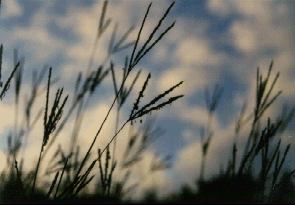
A silo squats in kindling grass, kneeling like a giant monk,

Laundry day debunks the laws of physics, where the personal is the thermodynamic, for this homemaker

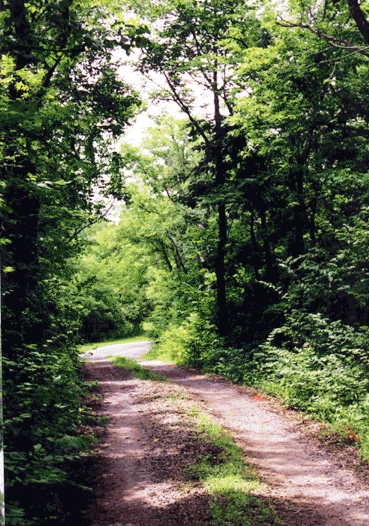
A Requiem for a shoe: a shabby wingtip with broken ties ….lying on its side in the byway … becomes, somehow holy.

A teacher singing show tunes and weeping in a middle school classroom, filling empty space with melody, another period/full of lyrics; accidents.

These images and snatches of experience, have been resonating in my mind, calling out to me, reflecting parts of myself, and connecting me to someone else’s story, passion, or singular beating hope.

The lines are the work of the following poets in the order in which the excerpts appear:
Timothy Volpert, “Love, don’t limit me to looking,” (untitled poem, first line)
Leah Sewell , The Cicada Fling, excerpt
Ben Cartwright,  Accidents, excerpt
Peter Wright, The Silo, excerpt
Cale Herreman, The Personal Is the Thermodynamic
Sandy Morgan, Requiem for a Shoe, excerpt
Ben Cartwright, Melody and Empty Space, excerpt

The Topeka Writers Workshop

I spent evenings this past summer in the company of a small group of local writers. Mainly younger than I, they are part of what I like to think of as “the hip scene of Topeka creative life”- that outpouring of energy among young artists, musicians, writers, thinkers, and entrepreneurs of the past five or six years.  We meet after hours at the Blue Planet Café to drink coffee and munch the cookies the owner leaves for her writers.

The Topeka Writers Workshop was founded three years ago by Leah Sewell, who facilitates it as well. Leah gently leads us in writing exercises and the workshop model of critique. I joined the group because I wanted to get out of a box and mix it up with people different from me around a passion we share in common, good writing.

The group turned out to be mostly poets. At first I was afraid to tell them I am poet too, having written and published poetry since I was ten or so. But these were real poets, serious poets, the kind, who say they are addicted to poetry and take big risks for it.  One is a PhD candidate in creative writing, another is an MFA candidate. Besides, what I was bringing to the workshop was prose, chapters from a book I have been revising forever.


Confession, Mom and the Starlit Road

Yet I need to confess that poetry is in my blood. I remember gathering with my family around the radio in the evenings to listen to Len Howe read mom’s poems, broadcast from WHO radio in Des Moines, Iowa. I recently found in her files a sheaf of postcards dating back to 1948 from the radio station telling her when her poems would be read on the show Starlit Road.  Over 79 of her poems were read,  some more than once.

In the kitchen mom often stopped mid task to grab a towel, wipe her hands, and scratch out a line of poetry on the back of an envelope. I recall her urgency to get a phrase or image written before it went down the drain with the dishwater. Sometimes I sat on a chair while she ironed and read aloud from the first poetry book she owned, Untermeyer’s Modern American and British Poetry, (1928). I loved Edna St Vincent Millay, Robert Frost, and Walter De La Mere.

Only much later would I learn of mother’s inner struggle between longing to be a poet and the demands of wife and mother. When she asked the poet, Paul Engle, why through the ages only men had become great writers, he told her, “Women simply do not have the stamina for rigorous creative arts. It happens in all the other arts as well as writing.” He went on to say that great writing required the writer to suffer great tragedy which apparently the obtuse fellow assumed only came to men.

Poets Exposed

I never took a creative writing class. I skirted around the edges of poetry, deciding to perform it rather than create it. My undergraduate and M.A. degrees were in speech and theatre with a minor in English. I only began to claim being a writer in my mid thirties.

So I sneak into the group with my prose to be critiqued, and, of course, they go after it like poets. Write that paragraph like a prose poem. Take out all the extraneous words. These economical sifters of sound and meaning hone in to the spare, bare truth. They sculpt experience and meaning until reality is exposed, glistening on the page – a newly delivered child wet luminous – like a miracle:

 her long legs dawn strawberry blonde
 & I am an old wolf maintaining the furnace

(Peter Wright, teaching me to swim, excerpt)

They talk about my writing, while I listen:

I don’t think this fits here. It’s good, but use it elsewhere, says one.

This is contemplative. You pose a question and then approach and answer in different ways, notes another, getting what I am up to.

If you can’t already tell, I have fallen in love with them. The tall pianist who lopes in, plays a prelude, and reads his hilarious ironic piece on the ill-fated love story of two workers in a call center for a sex hotline. (Ok, I did blush a little.) The house-husband with a gentle soul needing to talk of something other than lunch boxes, cartoons, and laundry and be known as more than dad and husband. The unassuming woman, who quietly grieves the unspeakable loss of her dearly beloved. The PhD candidate who sends me to the dictionary to look up anamorphic and writes poems that turn over in my mind like ancient runes. The young woman, who shyly offers her poem, anticipating abundance in the putting together of two lives. And our guide, Leah, who tosses off these stanzas:

Above my head a dark sight
thrums and swoops, careens
fast to the blunt flatness
of a fence post. Fallen starling,

parted beak, gasp of dread
glint-wing broken open
in a sinister cape. I cup
its gloss in my palm.

The children fret and coo as I carry the bird
to a canopied place, wish it peace,
and bow away from its pointing eye.

The storm’s outskirt arrives
in black overhead. The wind
grips my face, tells me to get inside.

(Leah Sewell, Backyard,  excerpt)

(By the way, you must read this poem excerpt out loud to taste and feel the wonder of its consonants and rhythm in your mouth.)

Each member brings poems which stun me with their beauty, jolt me with clarity, slap me with surprise, intrigue and invite me into the warm mystery of another human being.

And I like it that they are not churchy. Trust the reader more, they tell me. (Don’t preach.) Let us make the connections. (Don’t patronize.) Let us have our own meaning. (Don’t proselytize.) We are open and welcoming, but please don’t write like the kind of Christian, we were afraid you might be, when you first joined the group. Like hound dogs, they sniff out my defensiveness, my need to please, and expose my vulnerability.

They confront me with my own prejudices and what it means to write about God and even use the J word (Jesus) in a culture where the word, Christian, makes many people, including me sometimes, squirm.

Flannery O’Connor called poetry the accurate naming of the things of God. Taking their cue from the great southern writer, these poets simply inspire me to write poems, to trim away the fat, to consider just what I am trying to accomplish here, and cast off all self consciousness. They make me more contemplative and honest.

Psychologist Carl Jung observed,

Loneliness does not come from having no people about one, but from being unable to communicate the things that seem important to oneself, or from holding certain views which others find inadmissible.

I am interested in communion, that co-union of minds and hearts, that bridges the isolation and the apparent inadmissible truths between us, where we find a home,  if only for a moment or two, in one another. I found it with these poets, reaching beyond their isolation with the things that seem important to them.

Don’t Miss This

If you are looking for a home, a little clarity for yourself, and some good entertainment, come to the Blue Planet Café on Friday evening, September 21 from 6:00-8:00 pm for Topeka Writers Workshop READS. Be there to listen and meet these writers. I think you will fall in love too.

______________

Leah Sewell is a poet, book designer, magazine editor and MFA candidate at the University of Nebraska. She is a past recipient of the Association for Women in Communications Women Making Headlines Award in media and the Penwomen Scholar Award for Letters. Her poems have or are expected to appear in PANK Magazine, Midwestern Gothic, Roufus City Review, Weave Magazine and Begin Again: 150 Kansas Poems. She is the founder and facilitator of the Topeka Writers Workshop in Topeka, Kansas where she lives with her family.

Not Ten Best Practices for Prayer

prayer..

“Your writing has changed lately,” a friend who reads these blogs said last week. “Is that related to the retreat you went on?”

I have been thinking I ought to write a more accessible, timely post, something about the weather we have endured here in Kansas,  the contentious world of politics, an entertaining piece about my dog, or a list: Ten Best Practices for Prayer. Copy Writer tells me that lists always get lots of views and shares.

Yet, if this is a blog about prayer, it ought to reflect the experience of one who is praying. So at least for today I bring you another update from the silence. One word is really all I have to say: longing, deep vast yearning, reaching toward what I cannot really name.

And as some of you know, my friends, such longing is really kind of awful. Awful in the sense of how it stretches and stretches one ever beyond one’s self. Awful in the sense that it has no end. Awful in the sense that it is out of one’s control or naming. Awful in the sense that it is love that ever seeks its fulfillment in the beloved.

The writer of the Cloud of Unknowing called such prayer a naked intention of love directed to God alone.

 ___________________

A Failure to Communicate

I would like to stand and hold my balance on the threshold
with the wind whistling through the space
where my heart used to be
and watch the birth and death of beings
the coming and going of existence
and somehow fasten myself in that place,

the Alpha and Omega, the beginning and the end.

I have had it with these little cages
we stuff full of significance
and string out across a page
like a rumbling circus parade of gaudy wagons drawn by camels.

The penned beasts of meaning pace back and forth
while we snap the whip and totally miss the show.

Nor is communication a fortune cookie “thought for the day.”

Flirting on the edge of my awareness
where words dissolve
and nothing separates

love broods.

I bang against the bars.
Let me out.
Set me free of me.

Why I long to escape the confines of language I do not know
for when I meet you there,
in that other country, our native land
I will have nothing to say or offer

because you will already have all you ever need.

____________

I tell you this: it is more profitable to your soul’s health, more worthwhile, more pleasing to God and the hosts of heaven – yes, more helpful to your friends, natural and spiritual, dead or alive – that you should have this blind outreaching love to God himself, this secret love pressing upon the cloud of unknowing, that you should have this as your spiritual affection, than that you should contemplate and gaze on the angels and saints in heaven and hear the happy music of the blessed.     The Cloud of Unknowing and Other Works


The Writing Exercise

Write a letter to a landscape or scene you pass through today.
For example, “Dear Branner Trafficway.”

Dear Mom,

You rest now in my way.
The plastic cartons I put you in
clutter the path
from
kitchen
to office.

I step around the contents of your dismembered
life
trying not to trip,
coffee cup in one hand
sheaf of papers in the other.

Squeezing past a bin
I stumble upon
your journals
tales of trips
to the woods
wildlife sightings
what happened last Tuesday,
and how Gladys brought over a pan of sweet rolls,
still warm from the oven
poems about birds and babies
dragonflies
and things you cannot change and break your heart
word snapshots and watercolor sketches –

scattered orange road construction cones
confuse the once familiar scene.

The blue china sectioned dish you fed me from,
when I kicked my legs in the high chair,
peeks over the top of another box.

Photo albums, the ducks you carved,
and all the letters and cards I ever sent you
occupy the landscape of my life
and I am no longer sure
how to get from here to there.

Periods of disorientation are part of the spiritual life Biblical theologian Walter Brueggemann tells us. Such periods precede what he calls new orientation. Brueggemann charts how the history of Israel tells the story of orientation, confusion and loss of direction, and new clarity over and over. The story culminates in the crucifixion and resurrection and then continues with the church and our individual journeys as well.

What are the inner and outer landscapes you are passing through today? Take a moment to share what you are witnessing so we all may grow closer to seeing the big picture.

Thanks to Melissa Sewell and Leah Sewell and the Topeka Writers’ Workshop for inviting me to pay attention to my landscape.

Boring Church and the Vulnerable God

There is a bit of the scientist in anyone who sets out to test in his or her own life if Jesus Christ is really all he is cracked up to be. “Prove it,” the contemplative says to God. Here are all these promises: freedom, joy, abundance, peace, wholeness, justice, truth, and life eternal. “Show me,” says the contemplative, setting out to experiment with divinity in the laboratory of experience.

In the beginning God is the object of the search. At some point God may peremptorily rise out of the test tube and take over the experiment. I find myself being dissected. My soul is flayed open by truth. I am blinded by glaring light and toasted over a Bunsen burner, where my impurities are burned away and I am distilled into my essence. I am no longer in control of this process. The knower and the known have shifted places. And truth is not something I can find, but something that has me in its grasp.

Theologian Lesslie Newbigin observes, “Reason, even the most acutely critical reason cannot establish truth.” … [This is because] You cannot criticize a statement of what claims to be the truth except on the basis of some other truth-claim – which at the moment – you accept without criticism. But that truth-claim on which your critique is based must in turn be criticized. Any claim to know truth is, therefore, simply a concealed assertion of power.” (Truth to Tell, The Gospel as Public Truth, Eerdmans, 1991, pp 29-30.)

The work of scientist Michael Polanyi reminds us that “all knowing involves the personal participation of the knower, that knowing always involves the risk of being wrong, and that the struggle to know calls for the fullest exercise of personal responsibility.” Truth to Tell,  p.51)

Instead of seeking proofs of God from reason or experience, the contemplative finds fulfillment simply and humbly dwelling in love in God’s presence.  The contemplative gives God entry into the world, not through a claim of truth, but through a believing heart. Instead of an exercise of power through the assertion of my reality over yours via dazzling argument or feats of spiritual prowess, the contemplative takes the vulnerable route of allowing God to make God’s own appeal through the context of his or her surrendered life.

I acknowledge my vulnerability when I say, “I cannot know it all. I may be wrong. This is what I see. This is what I am responsible for articulating as clearly as I can.” We might characterize the spiritual journey as the process of discovering right relationship to this vulnerability, which we meet in ourselves, others and in God.

By vulnerability I mean capable of being wounded and wrong, open to attack or damage. Our vulnerability may include our sin and temptation to evil, our failure and weakness – wherever we are not whole, wherever we fall short of the glory which is our promised inheritance as God’s children.

We can relate to our woundedness in many ways: with anger, resentment, impatience, contempt, deceit, shame, and blame. We can so identify ourselves with our vulnerability that we know ourselves only as victim. Then, committed to our suffering and stubbornly resistant to healing, we may defend our wounds with fierce loyalty.

God sends into our consciousness, into the heart of matter, Holy Vulnerability in the form of Jesus. It teaches, heals, suffers, dies, and rises saying, “Look, watch me. This is what it means to be human. It is all right. Everyone is wounded. Follow me and be healed.”

Over and over Jesus’ ministry reached out to the vulnerable ones. He brought home the lost and the misfits saying, “You belong too.” He didn’t bring them back to turn them into Jews or folks like him. He just brought them back saying, “You, just as you are, are important. You have a contribution to make. We need you. You belong.”

Loving Jesus takes away our shame for being human like nothing else can. For he shows us how to be poor, how to value and appreciate our vulnerability. He tells us the vulnerable ones will see God and inherit the kingdom of heaven. He helps us get off our high horse and come down where we ought to be on our knees.

In the painful encounter with our vulnerability and diminishment, we meet the diminished suffering God and our own holiness. For in my poverty I discover my true worth. Stripped of what I can do, what I possess, how I am known by others – all the external ways I have attempted to create worth for myself, I find my true self in the center of my humility, which is also the dwelling place of the Trinity.

I used to read my children a story about a little girl who was born with a long tail like a dragon. Various characters seek to help the child with what is perceived by some as her disability. I liked Mike the cat’s approach best. “Teach her to love her tail,” he sagely advised. He shows her how to switch her tail back and forth, wind it around the fire escape railing and hang upside down. Teach her to love her tail.

Part of the task of the church is to teach us to love our tails and God’s tail, Jesus. Spirituality without Jesus Christ is spirituality that may be resisting the fundamental truth of our vulnerability. It may be a spirituality that, well or ill disguised, is exercising power, trying to be God.

The world holds vulnerability with fear and contempt. The church ought to teach us to hold it in our arms and love it. But the church is, of course, vulnerable too.

I was trying on a new hat when eleven year old Cicelia observed that you should always wear a hat to church. “It protects you from boredom, mom. The boredom rays, like the ultra violet rays from the sun are in church and sometimes at school. If you have a hat, you will be protected from the boredom.”

I hope the place where you worship is not boring. Maybe if churches had more to do with being with God and less to do with talking about God, things wouldn’t be so boring for Cicelia and others. As EvelynUnderhillobserved, “God is the interesting thing.”

A good deal of church seems to have little to do with God and is conducted as though God were, if not absent, at least very far away. Little time is given for God to get a word in edgewise. Our frantic activity and anxious busyness comprise our faithless creed that not much of anything can happen without our doing it ourselves.

Perhaps it is just too risky, too frightening. What if nothing happens? Nothing is changed or accomplished? Once Cicelia put a sign on her door painted in large red letters: KNOK or ELSE! Red paint ominously dripped from the letters like blood.

Jesus, we know you stand at the door and knock, but beware! We are resistant to transformation, devoted to our losses and the sins of others against us, and do not really trust your power in our lives.

The church will always be imperfect. It will be unimaginative and boring and rigid sometimes, because we are unimaginative and boring and rigid sometimes. Thank goodness God’s presence doesn’t depend on our winning academy awards in best Pentecost service of the year.

I have been in so many churches where you wonder why anybody comes at all. What with the dozen dusty arrangements of silk flowers and the sappy pictures of Jesus and the bad roller rink organ music you wonder what the appeal could be.

The appeal is, of course, Jesus. Jesus is there and active, because the people believe in him. Their vulnerable belief holds the door open for the vulnerable God to enter.

Knok or Else.  He is likely to walk right on in.

This post is an excerpt from my book written about learning to pray as I raised children in small town, Holton, Kansas. Loretta Ross (Ross-Gotta),  Letters from the Holy Ground – Seeing God Where You Are, Sheed and Ward, 2000,  pp 119-122.

Ravished by Love

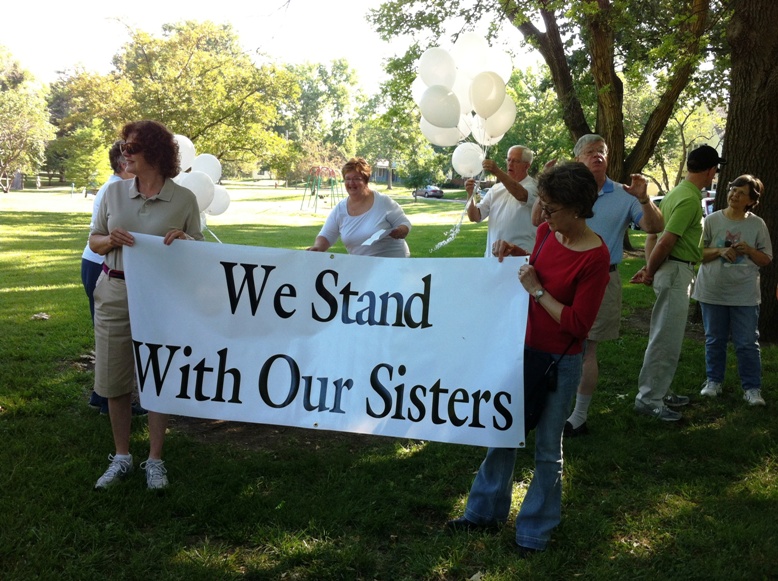
I attended a protest march and prayer vigil last week here in Topeka, Kansas. In response to recent criticism and censure from the Vatican,  a group of protestants, Catholics, and some Zen Buddhists gathered in support of Roman Catholic sisters.

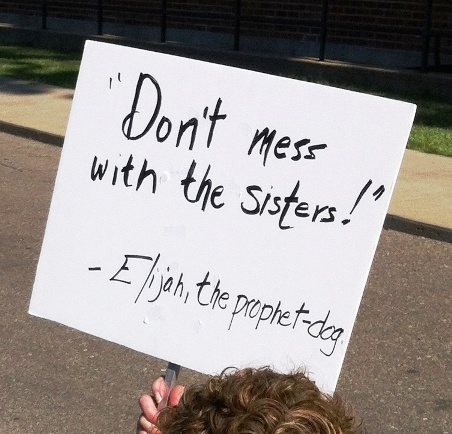
Thus the day came when, Elijah the Tishbite, my Labrador retriever named for the Biblical prophet, who spent much of his ministry in protests of various kinds, began to live up to his namesake. Elijah, the prophet-dog, rose near dawn the day of the march, and spoke in his canine way, “Don’t mess with the sisters! Thus saith the Lord.” We put his prophetic utterance on a placard. I donned my clergy collar, and off we went.

Ever since the woman of Bethany ran across the city to pour out the oil of her love on Jesus, women of God have endured criticism, ostracism, and hostility to the ways they express their faith and serve Christ. It only takes the breeding of a sheep dog to attempt to corral religious orders into neat doctrinal boundaries, and lines and rows pleasant to those who seek to control what they cannot understand. It is quite another thing to fathom the love and devotion of a soul, who is willing to give up possessions, power, prestige, and marriage for love of God.

I wrote a poem some years ago, about women and men, who take prayer seriously, who are ravished by love, and willing to give themselves to it with total devotion. Such people are often misunderstood by the prevailing culture.  I titled the poem, Ekklesia, which is the Greek word we translate as church. It means a gathering or assembly. Just what ought to happen in such a gathering has been under dispute for centuries, though most agree ekklesia should have something to do with prayer, worship, and love for God and others.

The poem draws images and some of its style from The Song of Songs (also known as The Song of Solomon). This book of the Hebrew Bible extols the wonders of human love and it has often been interpreted as a metaphor of the love between Christ and the church, or between an individual soul and God.

I offer the poem today in praise of all those women and men who have given radically of themselves to God, even in the face of criticism, ridicule, and suffering.


EKKLESIA

Sustain me with raisins,
refresh me with apples,
for I am sick with love. – Song of Solomon 2: 5

Who is that coming up from the forest
leaning on her beloved
coming up
dripping apple blossoms
crazed and drooling?

I adjure you, O daughters of Jerusalem,
by the gazelles or the hinds of the field,
that you stir not up nor awaken Love until it please.
                                                       Song of Solomon 2: 7

They are coming
coming up
from the forest
smelling of earth
and musk
naked
staggering
trailing shreds of God stuff
God dander
God sweat
God hairs
coral streaks upon their cheeks
stumbling into the light
falling to their knees
rolling in balls
splayed upon their faces
dizzy
begging for raisins and apples
sick with Love.

Called forth from nuptial beds
summoned, half-ravished
to tie a shoe
to feed
to lead
to plant
to mend
to make all new
with rapture round their eyes
and power in their step
and mouthwash on their breath,
swilled to hide the scent
the sweet taste of God,
thick and smooth on the tongue
as honeysuckle in the throat of night.

When they spoke
it was like being in the forest.
Birds chirped.
Rabbits hopped.
The air was alive
and twigs cracked under foot.

Hillsides
held them in the night
tucked under arms of trees
prostrate and panting
luminous
beneath pale light
of lunar ooze
smeared cross a starry sheet.

They lay trembling, hushed
listening for the rush
the fleet beat of wings
so soft, so hard
and ah!
so sweet.

At dawn
sun’s blaze
and dusk
they came up
in the sleet
the cold
the mud
the snow
the heat
coming up
out of the forest
at dawn
sun’s blaze
and dusk
to hover round the manger –
pale flickering fires,
pleasing incense,
consuming themselves in ever rising prayer.

There they sat
silent
crystal prisms
receiving light
in stillness
and shattering it
in myriad dancing rainbows of delight.

Meanwhile
Janet
with the yellow sweats
under her blue dress
cleaning up on a Saturday morn
in the rest room of the public library
paused
in her ablutions
to talk to the children
who were entranced by the pedal flush toilets
and to their mother
who smelled the over familiarity
and felt the ache and loneliness of Janet
who announced she was a realist and a humanist.
I don’t take everything in the Bible.
Like spare the rod and spoil the child.
That’s bad. A kind word turns away wrath.
My mother always used to say that. That’s hard to do,
said Janet.

She followed them out to the car
asking if they were going to have lunch now
and could she ride along.

kyrie
eleison

Lotuses,
awash with Love
spinning slender crystal threads
from tangled, matted mind,
are they surprised
they, who hoist holiness from murky depths,

waiting
birthing
dying
rising
gifting

waiting
birthing
dying
rising
gifting

saying the seasons’ cycles
strung like beads on the Spirit’s breath,

are they surprised
that on a Saturday morning
a humanist and a realist
washing up at the library miles away
slams into their prayer,
Our Bag Lady full of grace,
preying on us sinners until we die?

kyrie
eleison

Are they surprised
the woeful world beyond the woods
wakes from its sorrow
and sniffs the nectar of their blooming silence?

Ah they think they are alone.
Their solitude is filled with throngs.
Their restless nights passed
in company with crowds.
They thought their anguish hidden
in the vines.
It is a rushing current
cutting channels for compassion’s surge
down hillsides and across the plains.

The terms!
The terms
do not forget the terms
in small print at the bottom
on the private underside of bird wings
where soft down separates
air into feathery streams,
on the pale intimate flesh of the underside of leaves
under rocks and fingernails,
whatever clutters, clamors underfoot
and in the book they keep.
There are the terms
conditions
limitations,
extremities.

To read the terms stand under
but do not seek to understand.

The terms consist most of obedience.
Love
Serve
Die

Follow orders and do not ask too many questions.
Those who do, don’t stay
or lose their hearts
and can no longer pray,
deranged and dribbling,
bewitched by reason.

They ate God
slowly there
chewing carefully
in spite of their hunger
and flooded their thirst
with tiny sips.

This food for you, they said to one another.
I am not worthy
that Thou shouldst come under
come under
my roof
under me.

I will stand under Thee
and looking up,
say but the word, I healed,
shall see,
the underparts of Three in One:

the soft belly
the wing
and the hum
that dwells beneath Silence.

You can go there if you dare.
They will invite you in
into infinite unappeasable longing
into insatiable hunger
into the belly of God.

There you can watch Desire smack its lips
Sisyphus roll his stone
while you, shivering, groan
to be swallowed up by life
and find your home at last
next to a hayfield
in some celestial timber.

They will invite you in.
Watch out,
hospitable spiders all!
It is a trap.
Their tactic:
evangelism by voyeurism.
For the main attraction
their ravishing belly dancer
will seduce you through diaphanous veils
of flesh and matter.
This epiphany burlesque
is rated X.
Admission free.
The only catch –
the show lasts till eternity
and death the only exit be.

And you
dear foolish you
only looking for a rest
now must spend your life in making love,
this ardent Lover’s guest.

You want to go?
You cannot miss them.
They are a haggard bunch
ragged, wrecked souls in a crunch
having totaled their hearts in prayer.

Their name is Servant.
It isn’t far. Around the block
beyond the lake –
you needn’t search.

And the name of the place?

is church.

Many waters cannot quench love,
Neither can floods drown it.    Song of Solomon 8: 7

Elijah, the Prophet-Dog, Protests Rome


Prairie Lamentation

Driving west on Interstate 70 from Topeka, Kansas around ten in the morning, I plunged into that green swath of oceanic beauty called the Flint Hills. Named by explorer Zebulon Pike in 1806, the majestic sweep of bluestem prairie extends north to Nebraska and south all the way to Oklahoma.

Formed 250 million years ago when Kansas and Oklahoma were covered with shallow seas, the land is compared to the undulating roll of a great body of water. The shallow soil rests on seabed layers of flint, shale, and the fossilized remains of sea animals.

Reveling in the beauty, I was sailing down the road, when I came abruptly upon a sight that brought my heart to my throat and sent a chill down my spine. A huge shimmering whiteness moved off to the north along the road. Bigger than the side of a barn, it lifted and fell back to the ground. It seemed alive somehow, but no animal could be that large.

I slowed, curious and wary. The highway was deserted. Was this a UFO? Maybe I should look for an exit and turn back. I drove a bit further, then coasted onto the shoulder, and stopped about 100 yards away, watching that white thing waving.

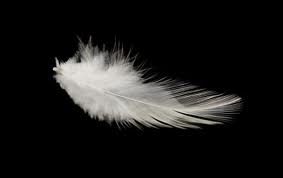
It looked like huge wings. One wing spread up the side of a hill, the other lay nearer to the road in the valley. A few iridescent feathers lifted in the wind and reflected the blue sky like mirrors. The wings were rising and falling slightly in a convulsive shudder.

It’s hurt. It needs help. But it’s huge. Would I scare it? Would it attack me? And what is it?

I looked up and down the road. Still no traffic. I opened the car door and slid out. A sudden rush of wind whipped past and slammed the door shut. The air was cool and smelled of grass. The only sound was the soft swish of shuddering feathers. Standing by the side of the road between earth and heaven, I pressed my hands over my mouth and stepped forward. I had taken a few more steps when, suddenly, the thing, the bird hiccupped. It convulsed and heaved in a ragged sob.

I nearly jumped out of my skin, but I saw that it was crying. The beautiful bird had spread herself over the sea of grass to weep. Don’t ask me how, I just seemed to know the bird was a she.

I moved a little closer, wondering if I could be of comfort. May I help you? But before I could finish the thought, a river of grief and anguish engulfed me and I tumbled over and over, gasping for air, drowning in sorrow. A deafening roar of cries and sorrow filled my senses. Then a battering wind and hellish screams pulverized me into tiny pieces, flinging me into darkness. After that, nothing.

When I came back together as myself, I was there in the quiet August morning with the hills, the sky, the empty highway, and the still bird. She seemed calmer now. The shuddering had stopped.

Are you all right? I asked. Are you able to fly? And again, instantly, I was drawn out of myself in a sickening swoop over mountains. We dove into the depths of the sea, peered into the eye of a whale, and crawled with a crab on a shore. I saw the molecules of a heart valve, and plummeted into the shrunken belly of a child in Sudan. We whooshed through glittering palaces of power and stood on the floor of the New York Stock Exchange. She laid those wings over a pile of bodies in Pakistan and sat on the shoulder of a man holding an AK47 rifle. We splashed in a child’s swimming pool with a little girl in a pink and green striped bathing suit. She whispered to an artist bent over a painting, and coursed up the stem of a tomato vine in Fremont, Nebraska.

This time, reeling and breathless, I didn’t want to ask any more questions, or bear the answers. I gazed upon her wings spread over the prairie grass and the reflection of the blue sky, the puffy white clouds, and the tall grass waving. In the play of light and color I caught of glimpse of a woman peering back at me and realized with a start that the woman was myself.

Then she lifted one wing. She drew her head out from under it and turned her eyes on me. A bolt of love and compassion seared through me with the crackle and snap of flames rising from dry wood.

I sank down beside the bird. What do you want of me?

Tell them.
To stop.
Hurting me.

I cringed, shaking my head. I can’t. I am complicit. I have blood on my hands, too.

She waited for me. The wind ruffled her feathers. The puffy clouds moved across the sky. Somewhere a meadowlark called.

Okay. How?

Be brave.
Be brave, she told me.
Be brave.

_____________________________

Don’t grieve God. Don’t break his heart. His Holy Spirit, moving and breathing in you, is the most intimate part of your life, making you fit for himself. Don’t take such a gift for granted. Ephesians 4: 29 (The Message)
 
 
Let no unwholesome word proceed from your mouth, but only such a word as is good for edification according to the need of the moment, so that it will give grace to those who hear. Do not grieve the Holy Spirit of God, by whom you were sealed for the day of redemption. Let all bitterness and wrath and anger and clamor and slander be put away from you, along with all malice. Be kind to one another, tender-hearted, forgiving each other, just as God in Christ also has forgiven you. Ephesians 4: 29-32 (NASV)
Prairie Lamentation was first posted on August 31, 2010.


Exploring Solitude: Leaving Solitude, Gone to Galilee

“Don’t be afraid.  I know you’re looking for Jesus the Nazarene, the One they nailed on the cross.  He’s been raised up; he’s here no longer.  You can see for yourselves that the place is empty.  Now—on your way.  Tell his disciples and Peter that he is going on ahead of you to Galilee.  You’ll see him there, exactly as he said.”

They got out as fast as they could, beside themselves, their heads swimming.  Stunned, they said nothing to anyone. (Mark 16: 6-7  The Message)

Contemplation is the world becoming luminous from within as one plunges breathlessly into human activity, wrote paleontologist, and priest, Pierre Teilhard de Chardin.

Eventually, that which calls us into solitude will also send us out of solitude. Communion with God by ourselves leads to communion with God with others and everything that is. The longing to connect with God returns us to all that is in God.  As Jesus prayed:

 I pray that they will one, Father, just as you are in me and I am in you. I pray that they also will be in us…I’ve given them the glory that you gave me so that they can be one just as we are one. John 17: 21-22 


Solitude deepens our appreciation and concern for all that is in God’s creation. Thomas Merton wrote that it was in solitude where he became capable of deep love for others.

I do not mean to imply that entering solitude means that we are without companions there. A jostling, rowdy, crowd of the saints and angels may join you from time to time. I believe the saints approve of our going off alone to pray and will show up to share their love, make wise cracks, and steal our cookies. Or – maybe it is the mice you hear in the night, muttering and munching your Cheetos. Yet other energies come and go – ancestors, spirits, the great chorus of prayer lifted night and day throughout time and space, the Trinitarian exchange of love that holds the stars in their courses.  Call it what you may. We are never alone. Yet one day, an angel of sorts will intrude on your cozy peace and tell you to go back to the crowds of Galilee.

Time to Go?
Many of us may live for long stretches with little major change in our lives. We complain and fret about the way things are, but we are comfortable in our complaining. Some kind of restriction, suffering, or limitation has become as familiar and predictable as on old friend. Or perhaps, we have grown beyond a wineskin, which once served us well, yet we continue to conform to it, cramming and squeezing ourselves in something which no longer serves us well.

Ways of living end. Even the lovely gifts of solitude come to an end. And it is time to go back home, or wherever home will be for us now. I have come to recognize an organic sense within me, which sits up, looks around, and begins to think of the world beyond my solitude. New energy, clarity, and purpose quicken within me. I know it is time to go back to the world. I am ready – rested, realigned, and serviceable for God’s good pleasure.

Or perhaps we wake one morning, rub our eyes, and say, “Well this is enough of this!” Maybe it’s the cross we are stuck on, clutching at our suffering, reviewing, blaming, nursing resentment, and bitterness.

So, we put down our fork and decide to stop eating sour grapes. And we go out to see if there is somebody who needs a hand to help them climb down from whatever they are hanging from or hanging onto.

Or maybe, you are stuck, numb, and passive in the tomb, playing out some kind of death drama. Then one day you sit up, look around and say, “Oh Rats. Guess I better get up. This is just plain silly. The door has been wide open for days. And I am missing out on all the fun.”

The Summons to Life
The Word of the Lord goes out to the mountains, the lake shores, the forests, and deserts. The Word of the Lord seeps under doorsills, writes itself upon your mirror, and grabs you by the throat in the doctor’s office.

Come, come! Follow me. I am not here. I have risen! Come plunge into the heart of the world, the hurly burly, the bustling shove and rush of life. Come, dive into the chaos. Let go of the death in your life. Follow me down the main streets crying, “Life is winning! Love is winning!”

And you, once basking in the silence and beauty of your Love, now ignite, burn incandescent, and, running with fire, immerse yourself in the midst of the darkness, blossoming like the night sky on the Fourth of July.

Isn’t this why you have been made, to be a rag, soaked in God, burning hot with truth and molten laughter? What good is all your suffering, your losses, and solitude, if they do not thrust you into the throng, wearing the fragrance of God?

People can tell you know, that fragrance, that scent of holiness, that wafts from you, when you have been spending time with God. Dogs and children will follow you. Birds will sing for you. And love-starved souls will line up at your door.

The world does not need your knowledge, your money, and competence. The world does not need your fear, your anxiety, your worry, your pitiful soul sagging from a cross, and your grim tales of death and woe.

The world needs your faith. The worlds longs for one authentic God-smitten soul, who can no longer hold back the Spirit, rising like an orange sun, like a soaring bird, like a great flag unfurling, shouting from every cell, “He is not here. He is risen. He is gone. Gone. To Galilee!”

Get over yourself. Stop sniveling and cringing.

Be a flame in the darkness, faith in the unfaith, hope in the despair, love in the hate, laughter in the gloom.

Go ahead. Rouse the dead! Stomp your foot, and cry, out, “Live!”

Pass out roses. Prepare a feast. You have died and risen with Christ. Nothing can stop you now from bearing grace into the world with every breath you breathe.

So good is this Good News.

So good is this raucous community filled with light.


 Solitude Practice:

  •  In a world full of fear, anxiety, and efforts by many to amplify that fear, how and where do you convey a different message?
  • Have you noticed ways in which your solitude practice helps you to love others more?
  •  What has you sniveling or cringing? Is it time to let it go for faith and trust in Christ?


This is the last post in the Exploring Solitude Series for now.  I am sure I will take up this topic again in the future.  Thank you for all the likes, shares, retweets, comments, and emails. You are each a beautiful treasure to me!

 Next post:  Something You Do Not Want to Miss   :  )

___________________________

 Praying Life Readers,

I am leading a workshop this month here in Topeka. Hope to see you there!

Look and See: Nurturing a Shining, Festive Life of Prayer

Saturday, April 21, 2012
8:30-12:00
$20.00
First Congregational Church
1701 SW Collins, Topeka, KS  

www.embracethequestions.com

Please register early to assure a place by calling or emailing First Congregational UCC. 785-233-1786; info@embracethequestions.com

 Related articles

Exploring Solitude: Tomb Time

Something strange is happening – there is a great silence on earth today, a great silence and stillness. The whole earth keeps silence because the King is asleep. The earth trembled and is still, because God has fallen asleep in the flesh, and he has raised up all who have slept ever since the world began. God has died in the flesh and hell trembles with fear. 

 – from an ancient homily on Holy Saturday used in the monastic tradition


Holy Saturday

Holy Saturday is one of my favorite days of the church year. I want to savor the richness of this day, but our rush to Easter Vigils, Easter Sunrise Services, Easter Breakfasts, Easter Cantatas, Easter Dramas, and Easter Egg Hunts does not give one much opportunity to enter the soundless, solemn peace of Christ asleep. I want to halt the parade of Easter soirees to discover the grace of this moment in the story of saving Love.

Such a pause doesn’t seem to be in our nature.

Over ten years ago US News and World Report solicited readers’ answers to the question, “Does America have ADD?”  According to the article, “Since 1965, the average news sound bite has shrunk from 42 seconds to just 8. The average network TV ad has shrunk from 53 seconds to 25. Fifteen second ads are on the rise. Multi-tasking is in. Downtime is out.” Millions of children and quite a few adults have been diagnosed with attention deficit disorder, a brain imbalance that is thought to be the root of unusual hyperactivity, impulsivity, and poor concentration. Wired magazine calls ADD the “official brain syndrome of the information age.”

What does it take to sit us down, stop us in our tracks, and shut our mouths? When have you been brought to your knees and cast face down, prostrate, by some overwhelming mystery of suffering love? Have you been able to stop the frenzied round of your life’s demands without feeling guilty, lazy, or neglectful?

What is alarming to me about our culture’s distracted, harried quality is that, as I understand redemption, transforming love requires a lot of focus and concentrated effort. I really cannot participate with Christ in his death and resurrection, and simultaneously answer my E-mail, pick up the dry cleaning, plan supper, and listen to my teenager.  Not that any of these activities cannot hold saving power, but servants of transforming love need to be able to act with attentive one-pointed concentration, and a wholeness of mind, heart, and body that require our doing one thing at a time. What is implied in such loving attentiveness is that this task, this person here, now, is worthy of my entire attention. As I am able to set aside or die to other competing calls for my concern, greater love and healing may pour through me.

Rest

Tradition holds that after Jesus died on the cross, he went to preach to the souls in hell and retrieve Adam.

16th century Russian icon of the Descent into ...

I certainly hope not. Hadn’t he already done enough preaching, enough sacrificing?

I’d rather think he rested. After all it was the Sabbath. Surely his ministry and the hard saving labor of his passion and death had worn him out. What  wondrous grace then to be placed in a soundless chamber safe and secure from all alarm – not to mention, answering machines, faxes, cell phones and pagers.

Not all silence is the graced silence of Christ’s tomb. Silence is the expression of a multitude of experiences: embarrassed, sweaty-palmed pauses, numbed shock, dissociated trauma; dull tedious droning; the excruciating stillness of shunning, loneliness and betrayal; the thick pouting silence of blame and resentment; the angry choking silence of the oppressed; and the isolated silence of the deaf.

In contrast –

The silence of the grave has a solemn feel.
After great pain a formal feeling comes-
The nerves sit ceremonious like tombs, wrote Emily Dickinson.

The solemnity of Holy Saturday carries a weight that presses us down to the earth where we are no longer able to flit and flutter away from truth.

The flimsy props we use to hold ourselves upright slide to the ground and we along with them. Like sheets stretched across a sagging clothesline until the wet and windblown linens drape upon the earth, the weight of death drags us down, lays us down in a voluminous sweet surrender.

The Resurrection Power of Truth Telling

Truth is a friend of this silence. The silence of God reveals what is false, what words confuse, conceal, deny, or destroy. I love how Jesus just stands there when Pilate asks, “What is truth?”  Truth is right before us, standing in this present moment. Truth simply offers itself. It does not argue its case, defend itself, or plead. It just gives itself to us in love for those who have ears to hear, eyes to see, and hearts to know. As I embrace the truth of the present moment with love, the next moment is redeemed.

“The power of the kingdom is the spirit of the Risen Christ seen in the strength of truth as it continues to break through human limitation and sinwrites Jacqueline Bergan. The Risen Lord enters my world with his redeeming grace and power through the door made my truth telling. What truths have I entombed in silence? I meet the Risen Lord as I speak truth as best I can moment by moment.

Freedom

The silence of the tomb is full of freedom. One feels a releasing and relaxing throughout one’s whole being – like taking off your shoes, loosening your belt, slipping into comfortable old clothes. You are not in charge. You do not have to make things happen. You do not have to figure things out. This silence is the celebration and sanctification of being itself – your being.

So how do we get there- off the cross and into the tomb? How might we enter into such a silence and know its sweetness and its eternal freedom? I do not think we do a very good job of teaching ourselves how to surrender. We may move through lent and Eastertide watching and reflecting on Jesus who dies for our sins – trying to figure out just what it really means and what difference it makes, working up an appropriate attitude of contrition and sorrow – yet somehow distanced from it all.

Lent and Easter become a sort of mythic cardboard backdrop to our lives as unreal and one dimensional as a child’s drawing. What we may miss is that the paschal mystery played out before us in scripture, hymn, and ritual is simultaneously going on in our own lives and hearts. Jesus is dying and rising in the circumstances of your life. Knowing that, believing that transforms your every act, every thought into something holy with sacred potential to give new life.

So to what do we surrender? Evil, sin, death – a rabid crowd roaring for someone to crucify? We surrender to Love – to how Love is having its way with us in our lives – through the tedious, joyful, painful days of getting up in the morning, fixing breakfast, setting out to do what needs to be done. I know many saints who quietly surrender to love and love’s inscrutable purposes day after day, until spent with loving in the simplest, most unassuming ways they are drawn into Love itself.

Home

A freight train sounded its mournful whistle as it rattled past my father’s window at the nursing home. Sometimes a light behind his eyes would ignite and for the briefest second he remembered trains. Love had hallowed him out. He was getting ready to enter the final tomb. Every time I see a hawk I remember when he told me how he loved to lie in the fields as a boy and watch the hawks ride the currents of the wind.  My mother called the place where my father waited for God, the “rest home.” Its actual name is Pleasant Manor Care Center. We have modern names for these places – skilled nursing facilities, residential care, assisted living. I rather like rest home myself.

The tomb of Holy Saturday is a kind of rest home where we wait to be lifted into resurrection.

Go ahead.  Surrender to Love.  You have nothing to lose, but death.


Images in this post are from Liturgical Art, Meinrad Craighead, 1998, Sheed & Ward

Solitude Practice:

  • Look around the tomb. What truths have you hidden away?
  • Do one thing today slowly, attentively, mindfully. Perhaps you prepare a meal, listen to a child, take a walk or a shower. Open yourself fully to the task with loving generosity. What do you learn?

Next post in this series –  Exploring Solitude:  Leaving solitude, gone to Galilee.

______________________________________

  Praying Life Readers,

I am leading a workshop this month here in Topeka. Hope to see you there!

Look and See: Nurturing a Shining, Festive Life of Prayer

Saturday, April 21, 2012
8:30-12:00
$20.00
First Congregational Church
1701 SW Collins, Topeka, KS  

www.embracethequestions.com

Please register early to assure a place by calling or emailing First Congregational UCC. 785-233-1786; info@embracethequestions.com


Exploring Solitude: Where the Wild Things Are

Come away by yourselves to a lonely place,” Jesus

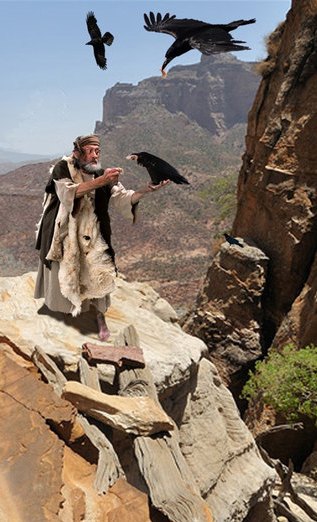
God then told Elijah, “Get out of here, and fast. Head east and hide out at the Kerith Ravine on the other side of the Jordan River. You can drink fresh water from the brook; I’ve ordered the ravens to feed you.”  Elijah obeyed God’s orders. He went and camped in the Kerith canyon on the other side of the Jordan. And sure enough, ravens brought him his meals, both breakfast and supper, and he drank from the brook. I Kings 17: 2-6 (Msg)

Nothing better expresses the urgent call of the wild for me than John Masefield’s Sea Fever.

I must  go down to the sea again, to the lonely sea and the sky,
And all I ask is a tall ship and a star to steer her by, . . .
I must go down to the sea again, for the call of the running tide
Is a wild call and a clear call that may not be denied; . . .
I must go down to the sea again, to the vagrant gypsy life,
To the gull’s way and the whale’s way where the wind’s like a whetted knife; . . .

Wild places and wild things invite us to themselves. If not the sea, perhaps, the mountains, the desert, the plains, or the forest draw you. The trout in the stream, the grizzly bear turning in his sleep, the mushroom popping up in the moist woods, the redwood tree dwarfing all else in its magnificence summon us to gaze in wonder and appreciation and share in the communion of all beings.

Shifting from Virtual Reality to Reality
In the wilderness we smell, and see, and touch, and hear, and taste – not a virtual reality, but reality. And here, we are likewise smelled, seen, touched, heard, and tasted. We not only change and act upon our surroundings, we are also changed and acted upon by those same surroundings. In the wilderness, we find again our place as a member of one of the species of beings on this planet. We leave our thermostatically, controlled environments and modern conveniences to feel the bracing chill of  the wind in our face, the tickling blurred vision through snow dusted eye lashes, the heavy ache in our calves after walking several miles.

In the process of wilderness dwelling, we shed the heavy brittle shells of our self importance and settle in with all our relations – brother sun, sister moon, and cousin fox. We discover the deer we are watching are also watching us.


Solitude may occur, of course, away from wilderness in the midst of a noisy crowd, in a beehive high rise apartment, or on the back porch with city sirens screaming past. However, many of us find solitude most easily and fully in a place apart in some natural setting. For over twenty years I found my wilderness solitude in a one room cabin with a stone floor, built into the side of hill on a small lake in northeast Kansas.

The call to the wilderness runs deep in some people, and expresses itself as unappeasable longing, or a palpable need to be in wild places among wild things. These persons often feel compelled to seek out remote spots away from power grids, traffic, concrete, and housing developments. Some struggle to explain and justify their desire to family and friends.

Wilderness as Arena for Spiritual Growth
The Biblical Hebrew word for wilderness is often used interchangeably with desert and includes many varied kinds of terrain, arid and semi arid, pasture land, mountains, and the sea.

The wilderness, a place uninhabited by the human species, is a significant location for the spiritual journey, both in its literal and figurative senses. The Bible understands transformation and spiritual growth as a process, which involves the experience of both physical and psychic dis-location and re-location. The experiences of being lost and being found, of moving from a familiar land to a strange new country appear over and over in the Biblical narratives.

An important aspect, then to solitude and our development in faith, is that exposure to wilderness, both in the physical geographic sense, and in the internal experience of the self. I will set aside consideration of internal wilderness to another post, and focus here on the external physical places and settings in which we find solitude.

As a species and as varied races and ethnicities, we have been formed in part by the land in which we and our ancestors have made our living. The lay of the land itself, the richness or poverty of its soil, the vegetation, wild-life, presence or absence of water, winds, and temperature have shaped our economies, our languages, our diets, our health, what we value, and our religions.

David Abram in his masterful book, The Spell of the Senses – Perception and Language  in a More-than-Human World, writes about this relationship of humankind to the earth and its features and all that dwell upon, within, above, and in its waters.

our bodily rhythms, our moods, cycles of creativity and stillness, and even our thoughts are readily engaged and influenced by shifting patterns of the land. Yet our organic attunement to the local earth is thwarted by our ever-increasing intercourse with our own signs. Transfixed by our technologies, we short-circuit the sensorial reciprocity between our breathing bodies and the bodily terrain. Human awareness folds in upon itself, and the senses – once the crucial site of our engagement with the wild and animate earth – become mere adjuncts of an isolate and abstract mind bent on overcoming an organic reality that now seems disturbingly aloof and arbitrary. (p. 267)

Abram writes of our relationship with the whole of creation as an interpenetration and mutuality in which all parties are affected, changed, and interdependent. The creation is not something I act upon, seek to dominate, or control, but rather the creation is a whole gathering of life with which I may enter into a relationship of mutual benefit.

In the past seven years the consequences of our lack of communion with nature has received attention and comment as Nature Deficit Disorder. The lack of time spent out doors by children and adults is suggested as a factor influencing several illnesses, including obesity.

Starving for the Undomesticated God


Over many years I have observed person after person starving for such connection and communion. Some would trek across the country just to sit in a simple cabin without  running water in a Kansas pasture in order to touch in to such a relationship. With some notable exceptions, namely camp and conference ministries, the church has largely ignored this fundamental need. Though our faith was formed in our ancestors in deserts, tents, mountain tops, sea shores, ship wrecks, storms, and many solitary encounters with the Holy One, we insist that most of our faith be nurtured in buildings and classrooms under florescent lights. We further claim that knowledge of God may be gained by memorizing a set of propositions articulated by theologians, who gained most of their credentials in similar buildings and classrooms.

In contrast, we meet an undomesticated God in the wilderness, an unpredictable, wholly other God, who is neither tamed by sedate doctrines, nor penned up in church polity, nor leashed to political issues. The waves and meadowlark give testimony, the stones hold the stories of the ancient ones, the Spirit hovers over the waters, the prophet emerges from his cave, and hears the still small voice of the Lord.

Most pastors have heard from the person, who apologetically recounts the familiar reason for his Sunday morning absence. “I am closer to God on the golf course or in my boat out on the lake.”  

But can’t you do that on Saturday, wonders the pastor, whose district superintendent keeps count of his worship attendance. He needs to show an increase this year. “You need to worship with the community too, and we need to have you with us,” he tells the fisherman.

Both are right, of course. We need the solitude and nature and we need the gathered  community of believers. Yet, perhaps, rather than feeling defensive, our pastor could become genuinely curious about her parishioner’s life in God and what he is telling her. “Could we get together sometime? I’d like to hear about what these times mean to you and how you experience the Lord.”

A Cabin in the Woods
My brother and his wife recently moved and their first project was to build a small cabin in the woods behind their new home. The one room cabin perches part way down a steep ravine in the woods, above a pond and a river beyond. My brother spends hours down there and confesses, most of the time he just sits and looks out the window, watching the birds and critters, and resting his sore eyes on a vista absent of manipulation by his own species.

Formerly a hunter of deer, my brother is now living in more intimate and complementary relationship with his relatives. He rises early each day to put out food. Keeping track of them, he gives some of them names. He is respectful of the space they need and watches for signs of illness, or overcrowding of the herd. He worries about the invasive mustard grass, which chokes out the native plants.

Likewise the animals of this ravine are more intimate with my brother. They are eating well, unafraid, and willing to share more of themselves with this human. My brother is changing too. He has lost weight and strengthened his legs from making the steep climb down and back from the cabin to the house. He has become an evangelist for the gifts of that little structure. “Solitude is magnetic,” he tells me. Yes, indeed.

He shows me a little book he keeps for guests to write their impressions of time spent in his cabin. I open the cover and read the longing and gratitude in their comments.

The Force which Draws All Things Together
Solitude and the wilderness, where we find it, are magnetic. The wild things and places draw us to them by the force of our common relationship with each other as creatures on this earth. We are drawn by our desire to connect with and to enter into communion with Reality in a deeper, truer way than we find in the glib, sound bite assessments that surround us constantly. Such communion changes how we see ourselves and one another. Thomas Merton writes in his second chapter of Thoughts in Solitude that the wilderness invites us to stand back from our lives so we see things in a new perspective.

We cannot see things in perspective until we cease to hug them to our own bosom. When we let go of them, we begin to appreciate them as they really are. Only then can we begin to see God in them. Not until we find Him in them, can we start on the road to dark contemplation at whose end we shall be able to find them in Him.

 Get the Stink Blown Off
Do you postpone going down to your wild places until the time is right, until you have several days free, until you finish this or that project? I will tell you a secret. You don’t have to wait. Just go with whatever time you have. As Eugene Peterson, paraphrases I Kings 17: 2, “Get out of here and fast!” My mom’s version was, “You kids go on outside right now and get the stink blown off ya.” God receives what little time you can offer, a day, an afternoon, or ten minutes, and turns it into abundance with enough leftovers for you to eat on for the rest of week.

So go on. Get out. Go for a walk. Drive over to the lake or the beach. Take a blue highway home. Look around. Breathe. Smell.  Feel. Gaze into the eyes of a deer. Watch the eagle land and fold its wings on its perch above the river. Be seen by the squirrel, be blown by the wind. Be changed and shaped by the interplay and exchange of the animate world of which you are a beloved part.


Solitude Practice:

  • To what kind of wild places are you drawn? Have you been there recently? What keeps you from going?

  • What happens when you go? What changes or shifts do you notice in yourself?

  • Take some time to pray about your need for solitude and wilderness places. Listen for God’s response.

Next Post in this series on Exploring Solitude : The Wild Things Within


You can help support this series by donating to The Sanctuary Foundation for Prayer. Just five or ten dollars will make a difference and help pay some of our costs. Your gift is tax deductible. Donate Here. Thank you so much!

Exploring Solitude: Why Bother?

Come away by yourselves to a lonely place,” Jesus

 What is said here about solitude is not just a recipe for hermits.
It has a bearing on the whole future of humankind and the world:
and especially, of course, on the future of religion. Thomas Merton


Over the next several weeks I will be reflecting on selected passages from Thomas Merton’s little book, Thoughts in Solitude. First published in 1956 the book is a collection of Merton’s musings about time he spent alone in a hermitage at Gethsemane Abbey in Kentucky. Merton had been a monk for a while before he finally gained the Abbot’s permission to spend an extended time alone. An outgoing, gregarious fellow, he struggled throughout his life with finding a balance between his need for solitude and for community. His prolific, engaging writing brought seekers to the monastery and his ability to teach about the spiritual life attracted many followers.

If you have a copy of the book, you might want to get it out and follow along. You can easily find a used copy online, or check your local library for Thoughts in Solitude.

I confess that my relationship with this Trappist priest has been rocky. He has both deeply inspired and deeply disappointed me. There is much I admire in his life and writing and a few things I do not. Just as I decide I am finished with the man, I am drawn back. Like us all, Father Tom, as a friend calls him, has his sin and warts, yet God has used him mightily. We may all give thanks that falling short of the aim which God intends for us (the literal meaning of sin) has never been a road block to the power of God working through human lives.

I choose this book, not because I consider it among the best on the subject. We have over 2500 years of excellent material on the spiritual practice of solitude. I hope you will share your favorite resources in the comments section below, or on the Sanctuary Foundation Face Book Page, or email me. I will be happy to compile your suggestions with others and make them available to The Praying Life readers.

Thomas Merton
Thomas Merton (Photo credit: jimforest)

So let’s begin with the Preface. Here Merton lays out what he is up to in this book and makes his disclaimers. He tells us his “thoughts here are simply thoughts on the contemplative life, fundamental intuitions which seemed, at the time, to have a basic importance.” His writing comes from his “relationship with God in solitude and silence and that “interrelation of our personal solitudes with one another,” which are for Merton “essential to his own peculiar way of life.”

Then he launches into a broad societal justification for such peculiarity. A number of internal and external obstacles make it difficult for most of us to develop and nurture a practice of spiritual solitude. I have listened to many people who struggle to claim the “legitimacy” of the practice, to respond to this call of God, and to be consistent in the “coming away to a lonely place” with Jesus.

I feel guilty. Isn’t it selfish? Shouldn’t  I be doing something – working at the mission, helping out at church, serving on committees? My friends don’t understand. My pastor doesn’t get it. I can’t even explain why I do this or even what happens. Am I only fooling myself and being lazy and wasting time?

I hope this series will offer some support for your practice and a rationale which gives permission and value to a pursuit largely neglected in our culture and religious institutions, but sorely needed. In the end, though, you must come to your own rationale and your own “thoughts in solitude.” For each of us will experience solitude in different ways at different times, and God will speak within you the language of the unique nature of the intimacy you share. And each must make his or her own witness to the truth.

Merton begins his book by looking at the larger culture in which he found himself in 1956:

In an age when totalitarianism has striven, in every way, to devaluate and degrade the human person, we hope it is right to demand a hearing for any – and every sane reaction in favor of man’s [ok, from now on in this blog series I will make Merton’s gender nouns and pronouns neutral] inalienable solitude and interior freedom. The murderous din of our materialism cannot be allowed to silence the independent voices which will never cease to speak: whether they are the voices of Christian saints, Oriental sages like Lao-Tse or the Zen Masters, or the voices of persons like Thoreau, or Martin Buber, or Max Picard. It is all very well to insist that people are “social animals” – the fact is obvious enough. But that is no justification for making them into a mere cog in a totalitarian machine—or a religious one for that matter.”

Thomas Merton's hermitage at The Abbey of Our ...

Hermitage of Thomas Merton at Gethsemane Abbey

Society, for Merton, depends for its very existence on the inviolable solitude of its members. This is because, as he writes, “to be a person is to possess responsibility and freedom, and both of these imply a certain interior solitude, a sense of personal integrity, a sense of one’s own reality and of one’s own ability to give oneself to society – or to refuse that gift.”

He ends his preface with: “What is said here about solitude is not just a recipe for hermits. It has a bearing on the whole future of humankind and the world: and especially, of course, on the future of religion.”

One of my pet peeves about Merton, especially in his early writing, is his penchant for sweeping generalizations and pronouncements. I happen to agree with this one. How might such a claim be true?  Is there really a relationship between the time you take to create some space and time to be alone with God and our future as a race and the future of religion? I think so. And I am not alone.

When there is a crisis in the church, it is always a crisis of contemplation. The church wants to feel able to explain about her spouse even when she has lost sight of him; even when, although she has not been divorced, she no longer knows his embrace, because curiosity has gotten the better of her and she has gone searching for other people and other things.
Carlo Carretto


Might part of our struggle with keeping solitude be because we have our arms around the wrong lover?

Solitude Practice:

  • Ask the lover of your soul to show what you are hugging closer to yourself than the Holy One.

  • Identify competing lovers.

  • What might it take for you rediscover God’s embrace and forsake all others? It might be easier than you think.

As Paul Simon sang to us, there are fifty ways to leave your lover.

Next Post: The Wilderness of Solitude

You can help support this series by donating to The Sanctuary Foundation for Prayer. Just five or ten dollars will make a difference and help pay some of our costs. Your gift is tax deductible. Donate Here. Thank you so much!