
This post is an adaptation of a post first published July 5, 2010.
My heart overflows with a goodly theme
as I sing my ode to the King. Psalms 45:1

The kingdom of God will come when men and women are willing to be penetrated by bliss.
-M.C. Richards – Centering in Pottery, Poetry, and the Person
Her words stopped me in my tracks and resonated like a struck gong. Little seemed blissful in my life at the time. It was 1973. I was living alone in an apartment in Ann Arbor, Michigan, working at a job I hated, depressed, and hurting deeply. These words of artist M.C. Richards penetrated my defenses, self pity, and sense of worthlessness like a swift shining sword. For the first time in a season of sadness I felt hope.
The notion that the rule of God, the peaceable kingdom, the promise of wholeness for all people is a function, not of ridding the earth of evil, not of righting all injustice, not in overcoming human sin and limitation, but rather our willingness to receive goodness and mercy into our being has animated my life ever sense.
“Put down your sword!” Jesus tells Peter in the garden of Gethsemane. Peter, in a desire to protect his master, had taken a sword to the ear of one of the Roman soldiers who had come to arrest Jesus. However, Jesus’ kingdom was not of this world. It is a Reality already here, present, and accessible to all. Jesus says, it is within you and everywhere like a seed, common and transforming as leaven. The winsome, disarming Jesus manifested that kingdom wherever he went and invited his followers to do the same.
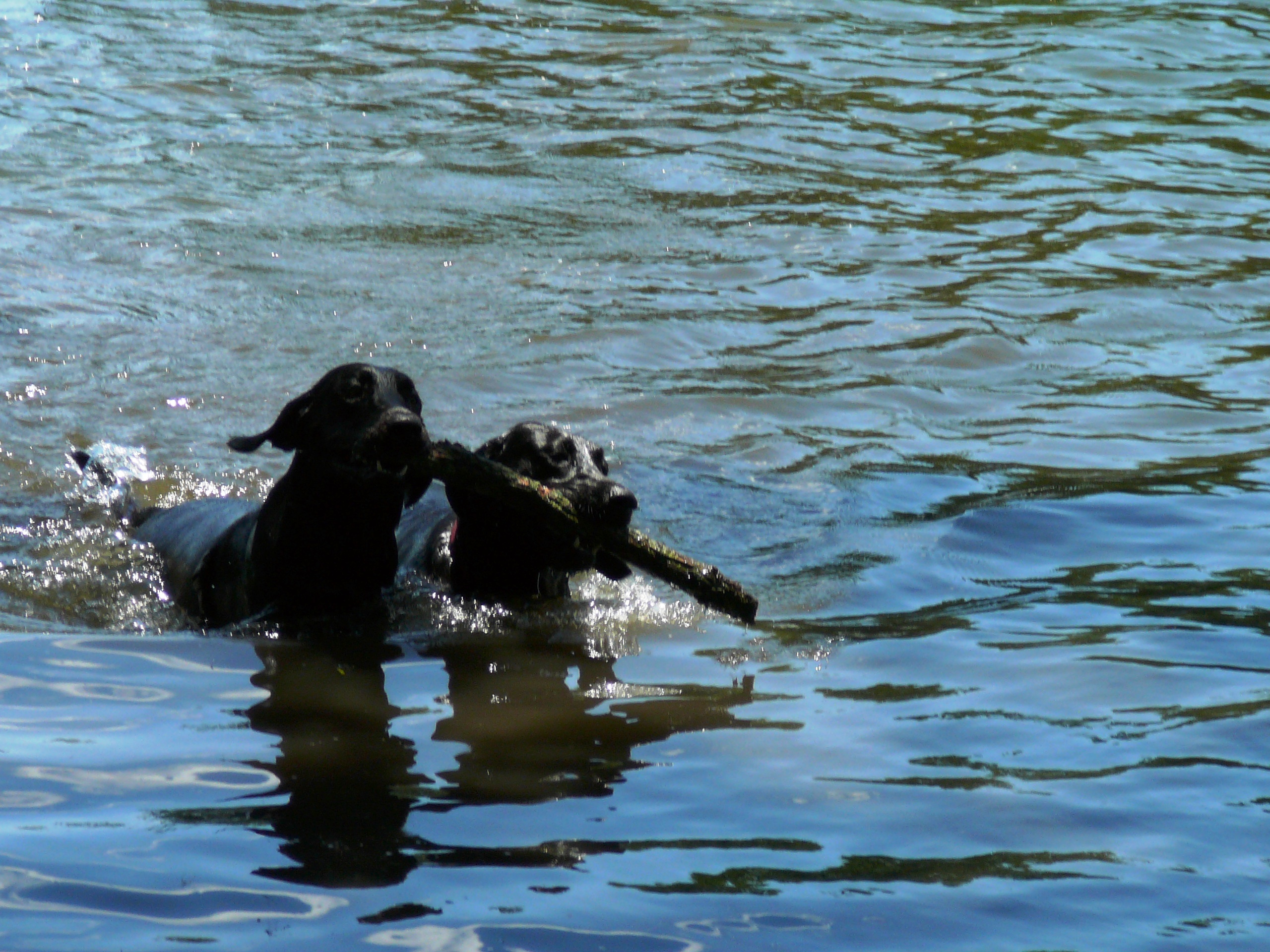
Two disarming black labs, my Elijah and Jean Luc Picard, who arrived with some house guests, have been teaching me about bliss. The dogs met for the first time a week ago with the hearty delight of Adam, when God introduced to him the woman he had made of Adam’s rib.
“Ah, at last a fit companion! Bone of my bones, flesh of my flesh,” Adam exults. Though not recorded in the scripture, I figure Adam then wiggled all over just like my dog, Elijah.
The best-friends-forever have been inseparable – wrestling, play fighting, swimming, fetching, and sprawling, here and there, exhausted and snoring. Holding back nothing, these fellows have allowed bliss to penetrate and animate every cell of their bodies. Bliss surrounds, follows them, spills out of their eyes, and rolls off their shoulders. Even the cat has a spring in her step and an amused quality to her feline reserve.
I believe the great challenge of our time and all mortal time is holding our hearts open to the rain of grace – the glorious reign of delight that ceaselessly offers itself to the whole creation.
“But hold on!” you say. What about climate change eating away our coasts and killing off species? What about health care crisis? What about the lives and shores devastated by oil spills? What about your own personal crisis and impasse, your unemployment, your grief, your illness? What about the suffering ones everywhere we turn?
Could you, will you, permit the tiny possibility of joy to penetrate your darkness, to kiss you on the face, to pounce upon you from behind? Maybe, before you know it, it will jump up into your lap and go to sleep in your arms.
To notice, delight in, and allow ourselves to be penetrated by the goodness of God does not mean we ignore the places where that goodness is obscured or sorrow and pain exist.
The amazing opportunity to be a member of the homo sapiens species alive on this earth at this time is an incredible gift. Our willingness to receive, to lay down and roll on our backs in, the sheer bliss of being alive is what allows God to transform that vortex of darkness, greed, and hate through us. What evil and sin target and destroy is joy, because joy is a unfallable sign of the presence and power of God.
The world does not need our disgust, outrage, anger, and rage. It needs the Reign of Christ’s joy with its unfailing hope, faith, and love. The world – sucked into the whirlpool of greed, violence, and suffering – will not enter the Kingdom of God through our anger, retaliation, and swords, but through our bliss, the utter delight and lab-lucious joy of being children of the Father of Goodness and the Mother of Mercy.
Let no one and no circumstance rob you of such a splendid birthright.
Download and read latest issue of Holy Ground – A Quarterly Reflection on the Contemplative Life, “Try a Little Tenderness”


 The Praying Life