
Tag Archives: Maundy Thursday

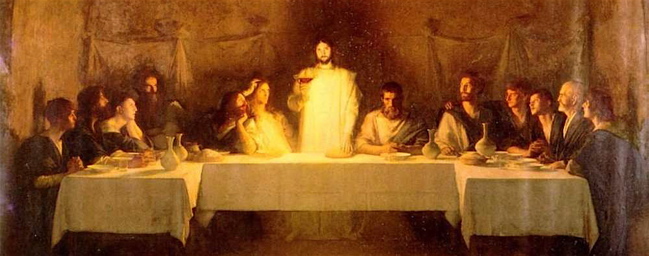
Is It I, Lord?

“One of you will betray me.” The question hangs in the air.
The followers look at each other. And back at Jesus.
This week, I will share a few voices from that evening as the disciples
ponder this alarming accusation.

SIMON

This is a meal of liberation, and he speaks of a betrayer? What is wrong, my Lord?
Here I am, your Simon. You are the one who bids us to joy and laughter. Such long faces!
This sobriety does not befit the one who gives us mirth and life. Being with you is just so much fun.

Before you, I never knew such exuberance and high spirits. My foot was heavy, weighed down with many cares. Now, I run lightly. I laugh until my sides ache. I no longer worry about what others think of me. You cut loose all the voices within that condemned and taunted me. Fear vanished. Every day is a new adventure. I once thought happiness was a dream known only to children. I hoped only for a good living as I grew old. Now, I have grown younger in your presence, bolder, and full of joy. Sometimes, I just can’t stand so much happiness and weep for its sheer beauty.
But, my Lord, come smile, lift the cup. My brothers, he must be joking.

JAMES, The LESSER

The wind blows through the open window.
Somewhere, an animal screams.
A wolf leaps for the lamb’s throat.
The hawk soars across the moon’s passive face.

So he is betrayed. Will the Earth note it? Care?
Will I, James?
Betrayal is the way of things.
Whoever said the universe is trustworthy?
Thieves and murderers wait by the roadside.
Lovers are unfaithful. Children deceitful.
I should have known it would come to this.
For a few moments, I hoped he could change things,
had begun to believe there was safety in creation.

Yet, look at me, a creature myself.
How many times have I been false?
How many times have I sold out, given up, turned
away in anger, disappointment, or jealousy, and given
those around me to the powers of death,
the beasts and executioners who reside in me?

I am numb.

Oh Christ, don’t let them kill you!
I came with you, believed
staked all I had on you.
Lord, it is I who am betrayed!

PHILIP

He sits there so calmly with his arms outstretched. I hurt to see the pain in his face. His palm is open, accepting. There is no anger, no bitterness, no revenge, no resistance. He is like a lamb going to slaughter. I see only great sorrow.

What kind of man would announce to his betrayer the knowledge of his treachery? He loses all advantage. He may as well open his chest to the knife.
What kind of man is he? How is it that after spending so many days and nights together, he is still somehow a stranger? Despite his commonness and accessibility, he remains mysterious, ineffable.

What am I doing here? How did I get mixed up with these people? I am in over my head. I never thought it would go this far, get this out of hand. Someone is apt to get killed. I want to run back down the roads and valleys, run through the crowds, the villages, along the shores. I want to run back in time and space to where the word betrayer does not hang like a noose over this table.

Is It I, Lord first appeared in 1986 in the Presbyterian Survey.

This liturgical drama was initially commissioned by Westminster Presbyterian Church in Topeka, KS

Copyright 1994 Loretta Ross. All rights reserved.
PESACH – PASSAGE, 2

Pesach – Passage,  No. 2

This is the bread of affliction that our fathers ate in the land of Egypt. All who are hungry, come and eat! All in need, come and join in celebrating Pesach!
This year we are here, next year we will be in the land of Israel!
This year we are slaves, next year we will be free men!
                                                – Haggadah
, Gerald Garouste, Marc-Alain Ouaknin

The night we celebrated Pesach –
what did he say, what did he mean
“leaving”
and that we knew the way to where he was going?

I was trying to work it
out when another sea split open
not waters humping up like steel cliffs
but a great scythe slashing
through the middle of everything
and him falling, tumbling down into the rift

a passage
where there had been none before
death leering from either side.

I heard the soldiers coming,
swords clanking, down the path.
My lungs burned in the acrid air
eyes stung to see flames
draped from clouds in smoky sheets.

And while they dragged him off
blood blossomed
over the vast lintel and door posts
of the writhing world
and ran down quietly
like tears.


This is a slightly altered poem from an earlier series of lenten poems I wrote called, Love in Small Doses.  Pesach, or Pasach, also spelled Pascha  is Hebrew for Passover or passage. The verbal form means to protect and to have compassion as well as pass over. Exodus 12 -14; John 14-19

Love – in Small Doses for the Sin Sick Soul #8


And we are put on earth a little space, 

That we may learn to bear the beams of love.
William Blake

 A page from a 14th century German Haggadah

Pasach – Passage, No. 1

After we were passed over
we passed over.

When the waters split
drew back
a shimmering wall
seething strength, waves
smacking, spitting above us

some of us hesitated
to weigh the odds
consider and debate.
Was it more magic?
Who was this son of Abraham
with his stave of almond wood?

Crippled from scrabbling straw in the fields
mixing mortar for the man
meeting his quotas
we dawdled on the shore.

Others, children especially, ran out
skipping over the coral
through the sea grass
past the shipwrecks
and green turtles
raising their mottled beaks, amazed.

We heard hooves pounding,
shouts, thunder of chariot wheels.
Death before, death behind.
Better to drown
than die by the hands of those bastards.

The kids, though,
did not flinch,
tossing up fistfuls of sand,
diamonds in the sun,
playing on the seabed
like shrimp.

We hobbled over,
leaning on each other,
fearful, fretting.
Seems when a soul is crushed
it takes a long time to rinse out the slave.

Though at Pasach, when we gathered,
it would all come back.
We would shake off another chain
see more clearly
sip liberty
like wine.

Pasach – Passage,  No. 2

The night we celebrated Pesach –
what did he say, what did he mean
leaving and that we knew
the way to where he was going?

I was trying to work it
out when another sea split open
not waters humping up like steel cliffs
but a great scythe slashing
through the middle of everything
and him falling, tumbling down into the rift.

A passage
where there had been none before
death leering from either side.

I heard the soldiers coming
swords clanking at their sides.
In the acrid air lungs burned, eyes stung
flames draped from clouds.

And while they dragged him off
blood blossomed
on the vast lintel and door posts
of the writhing world
and dribbled down
like tears.

*Hebrew (Pasach) also spelled Pascha for Passover or passage. The verbal form means to protect and to have compassion as well as pass over. Exodus 12 -14; John 14-19


______________________________

Note to readers:  This blog is part of a series of Lenten “short takes” on the themes of lent, which follow more or less the lectionary Scripture lessons for this season. Like a note you find tucked under the bark of a tree, a lozenge to let melt in your mouth, an amulet to wear around your neck, I hope these little reflections may hold a small dose of truth or comfort  or challenge for your life on the way to Easter.

In the abundance of words which inundate us daily, it is easy for the message of redemption to be buried under the latest disaster, outrage or scandal. Likewise the familiar stories and passages of lent may grow dull and trite to ears and hearts already stuffed with words. 

I have noticed in my work as spiritual director that it is hard for many of us to take in the goodness and grace, as well as the challenge of the story of Jesus and God’s redeeming love. Perhaps we need to titrate the gospel. Sometimes a well- timed, tiny dose, carefully administered, may be what the Physician orders for our healing. And so slowly we build up our tolerance for love and more and more joy finds the faith in us through which to invade our being.

Dose titration:  adjustment of the dose until the medication
has achieved the desired effect