Tag Archives: Jesus

Waiting: Broccoli and Perseverance

Part One of Four Parts

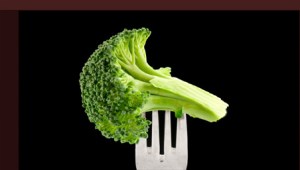
A friend recently asked me for the key to success in surviving a child’s thirteenth year. She told me she ate some truly nasty broccoli at dinner one night in a desperate attempt to do something good for herself. She swallowed the stuff in the hope that it would help her live long enough to see her son become the parent of a thirteen-year-old.

Longevity and sheer perseverance have a lot to do with justice and salvation. If you can live long enough, you may see the triumph of good with your own eyes. Being able to hang on, to wait through periods when all seems turned against you, to survive and prevail is a central activity of a Christian.

Some pastors struggle to get congregations to sing the more somber and penitential advent hymns before the favorite Christmas carols. I am not surprised. Our culture’s mindless celebration of Christmas distorts the basic truth of the season, namely, our need for redemption and what might be required of us to receive it. We gloss over our appalling sin and ruin, skip past the eager groan of creation’s need for healing. We drug ourselves against the suffering of dark nights. We grow numb and fall asleep before the TV instead of keeping alert and obedient watch for God’s saving action in our lives. We succumb to the temptation to consume more and more as we race to gratify desires.

In contrast, Christ tells us that here is where we are to linger, to stay awake, to wait and be ready,

here in the bleak and barren heart of our need.

Timing is everything. Should one push, move ahead and make something happen or lay low, wait, and watch for the hand of the Lord to act? Tolerating ambiguity, not knowing and uncertainty can be excruciating. In our anxiety and fear we may take things into our own hands.

As a general rule of discernment, when in doubt, wait. The stance of faith waits, trusts, praises, and gives thanks. Faith joined with love bears all things, believes all things, hopes all things, and endures all things.

Why is that hard for us? Perhaps we fear that we won’t be vindicated, that our longing will not be fulfilled, that our cause will not redeemed, that things will not be made right and goodness will not prevail.

My friend with the thirteen-year-old told me her family motto: “Learn to bear what must be borne.” This stern admonition carries for me a puritanical severity, a life of gritted teeth, pursed lips, and making the best of one trial after another. But when I shared the proverb with another friend, “What a great theme for advent,” she exclaimed, seeing a possibility I had missed. My understanding shifted from regarding what must be borne as some heavy load and having to slog along through life like a drudge to the exhilarating task of the labor and delivery of a baby.

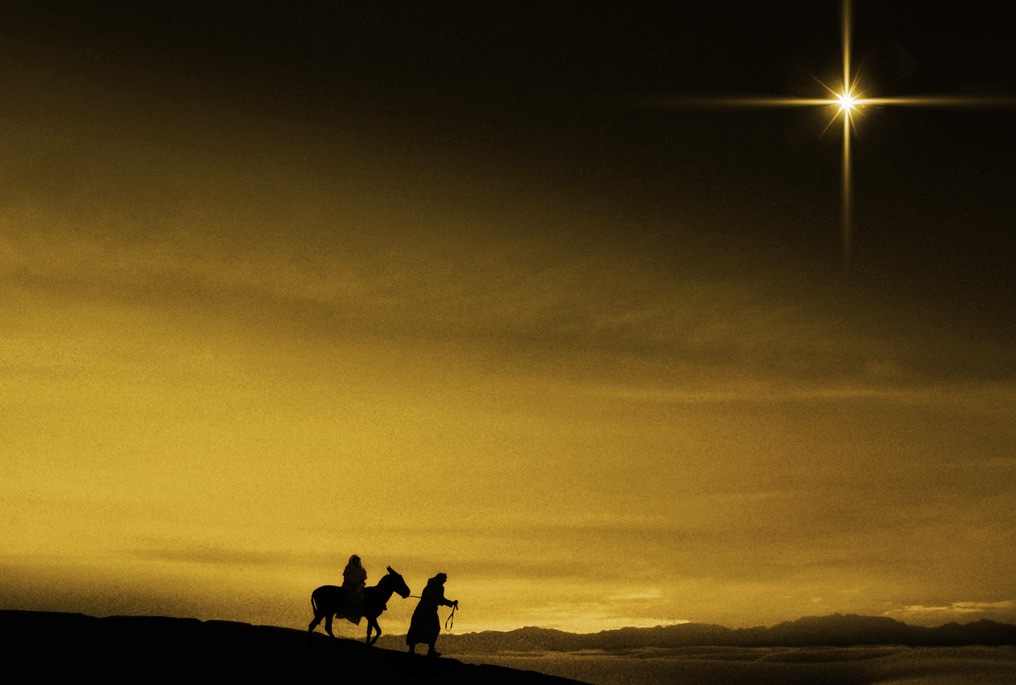
“Love in real life is a harsh and dreadful thing compared to love in dreams,” observed Dostoevsky. The advent season invites us to the harsh and dreadful task of giving birth to a love that will ask more of us than we thought we could bear. Learning to bear the one who must be born, the Christ, into our lives, families, communities, and world requires us to wait, persevere, and overcome fear with faith.

As the promises of God are delivered through our lives, we can rejoice with St. Simeon, whom Orthodox Christians call “The God Receiver.” Old Simeon was waiting to see the Christ before he died. Led by the Spirit, Simeon showed up at the temple when Mary and Joseph brought their son to present him to the Lord, according to the law of Moses. Taking the infant into his arms with a heart full of love and eyes full of tears, the old man uttered these words:

Lord, now let Your servant depart in peace,
according to Your word,
for my eyes have seen Your salvation,
a Light to lighten the Gentiles,
the Glory of Your people Israel.
Luke 2:25-32

Watch for Part Two of this series on waiting, The Promise, coming soon.

Adapted from the author’s book, Letters from the Holy Ground – Seeing God Where You Are, Loretta (Ross-Gotta) F. Ross, Sheed & Ward, 2000.
The Sanctuary Foundation for Prayer
Read more about prayer www.fromholyground.org,www.fromholyground.wordpress.org
Contact the author lross@fromholyground.orgwww.fbook.me/sanctuary
Follow at http://twitter.com/lfross

The Stranger

At first glance he wasn’t all that attractive, a little too rough and edgy for me. He wore a nice pair of pants, but his shoes were beat up and had a hole in one toe. He had a scruffy beard, neatly trimmed nails, and a smart fedora tilted over one eye. He staggered slightly and stumbled once, as he approached. Tall, lean, all angles and contradiction, he gave off a raw, muscular energy that seemed both sinister and alluring.

He looked in some ways like the type of kid, who back in the 50’s would wear his hair slicked back in a ducktail and carry his cigarettes rolled up in his tee shirt sleeve. The fact that he had been eyeing me for some time made me nervous in a kind of silly, excited, middle school way.

He was definitely not my type. Besides I have long passed the era of swaggering boys and dangerous glances. Yet he was coming straight toward me, with a lazy, loping walk, totally at ease with himself and his own incongruity.

His eyes seemed older than his body. Compassionate and understanding, his gaze invited me in like some grandma holding out a cup of tea and plate of cookies. I better get out of here, I thought.

But before I could slip away he was suddenly before me, leaning over, and asking, “Would you like to dance?”

I glanced around, “Me? You want to dance with me?”

“Of course,” he said, smiling now.

“Why?”

“Isn’t it time we became friends?”

_____________

At a recent gathering in Kansas City, I was struck by a quotation from German philosopher Rudolf Bahro shared by Margaret Wheatley, well known management consultant, who studies organizational behavior, change, and chaos theory:

When an old culture is dying,
the new culture is born from a few people
who are not afraid to be insecure.

O yikes, I thought. I spend a lot of time and energy figuring out how not to be insecure. Now I am supposed to get comfortable with it?
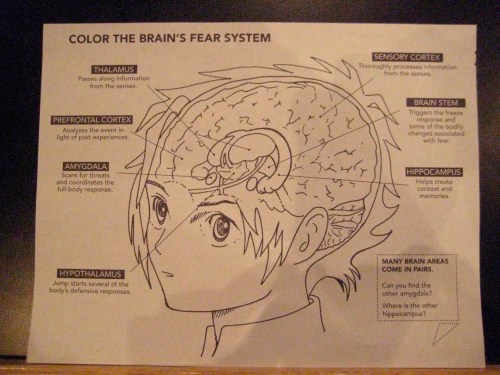

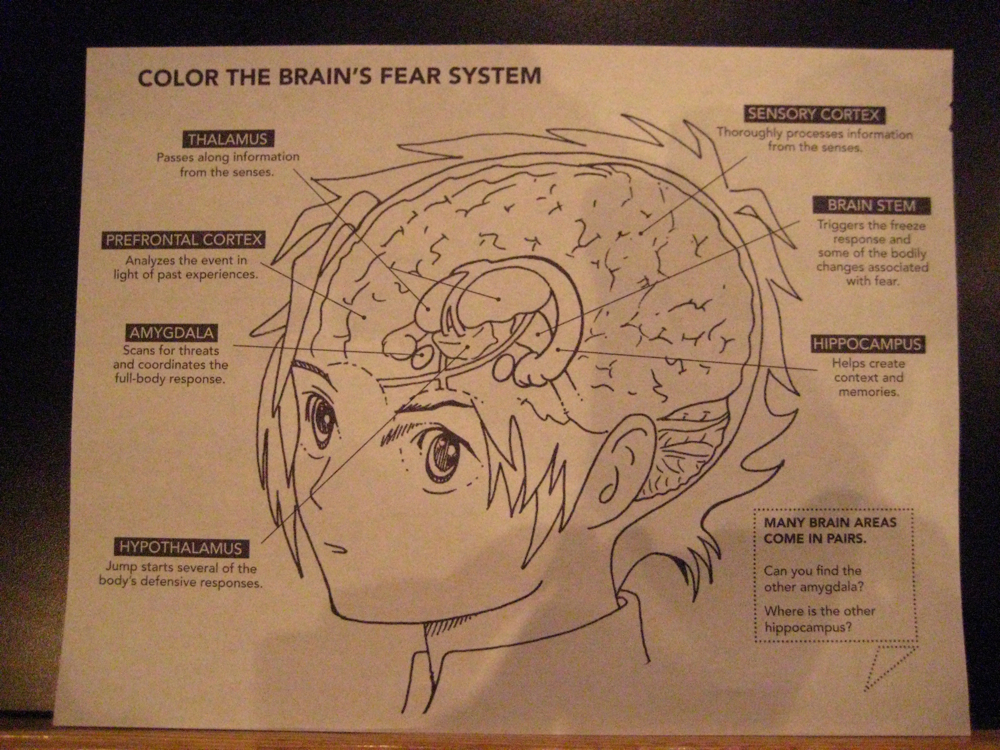
Who has not had a terrifying encounter with fear, which kicks all reason out of your mind and fills you with the powerful instinct to run, to hide, to attack, or to kill?  

Fear is an emotional response to a perceived or suspected threat to our security and safety. It both helps to insure our survival, and may also hold us back from moving forward. Because of its primal power expressed through our biochemistry, we may be manipulated by fear into silence, passivity, numbness, or reckless action.
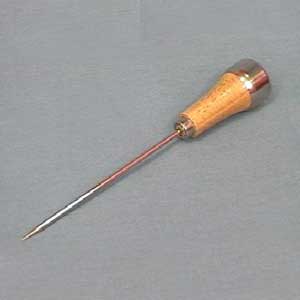
 

The reality of fear runs through the Biblical narrative, like a long steel ice pick between the shoulders of the people of God. The gift of fear as warning, and as impetus to take some saving action, is often distorted and misapplied. Fear becomes the excuse for lack of faith, and for failure of nerve. We find ourselves unwilling to trust in a power and reality greater than the lying, sniveling fear, which makes us feel we are nothing, but grasshoppers in a world full of overpowering giants with very large feet.

(But the others said, “We can’t attack those people; they’re way stronger than we are.” They spread scary rumors among the People of Israel. They said, “We scouted out the land from one end to the other—it’s a land that swallows people whole. Everybody we saw was huge. Why, we even saw the Nephilim giants (the Anak giants come from the Nephilim). Alongside them we felt like grasshoppers. And they looked down on us as if we were grasshoppers.” Numbers 13: 31-32  Message)

Not counting the frequent admonitions to fear God, that is, to offer God respect and reverence (which is not the kind of fear I am speaking of here), the Biblical admonitions to not fear pile up, filling up several columns in my concordance. God tells us not to fear. Jesus tells us not to fear. Psalmists, prophets, and angels tell us not to fear. Peter and Paul tell us not to fear.

Like most good advice. This is easier said than done.

Though love is not the opposite of fear, it does seem to be the antidote. In I John we find the familiar verses, “Perfect love casts out fear. There is no fear in love. But perfect love drives out fear, because fear has to do with punishment. The one who fears is not made perfect in love.” (I John 4: 18)

At our core, perhaps, what we fear is the separation from the love which promises us protection, care, and life itself. When the gifts of love in our lives are threatened in some way, we fear the loss of the source of these gifts, as well. Love, itself, shall surely be extinguished. We often confuse the gift with the Source. The gifts are  fragmentary, finite, always shifting, changing, and inevitably imperfect. The Source, however, is unchanging, eternal, and utterly worthy of our trust. Losing that which is the core and center of all our desire is, of course, a lie, an illusion. For nothing can separate us from the Love of God as Paul assures us:

For I am convinced that neither death nor life, neither angels nor demons, neither the present nor the future, nor any powers, neither height nor depth, nor anything else in all creation, will be able to separate us from the love of God that is in Christ Jesus our Lord. (Romans 8:38-39  New International Version)

Margaret Wheatley suggests that during this time of tumultuous change and insecurity that what is needed in every organization are patience, forgiveness, compassion, generosity, and an acknowledgement that we will fail sometimes and that is okay. These virtues sound like love to me, perfect love, which casts out the fear that stifles creativity, freedom, and innovation. Perfect love breaks the chains, which bind us to a past we cannot change. Perfect love exposes the dark fiction we write about a future we cannot control. Perfect love empowers us to respond to the present, ripe with possibility and brimming over with life.

_____________

We make an odd couple, this older woman and her shape shifter of a partner. “I don’t know the steps,” I protest.

“Trust me,” he whispers, as he guides me onto the dance floor. “We will make the steps up as we go along.”

“Your name?” I ask gazing into those eyes.

He hesitates for a moment. “People call me Uncertainty,” he says, pulling me closer.
Become a fan of the The Sanctuary Foundation for Prayer
Read more about prayer www.fromholyground.org, www.fromholyground.wordpress.org
Contact the author lross@fromholyground.orgwww.fbook.me/sanctuary
Follow at http://twitter.com/lfross


Still Not Saved?

The summer is over, the harvest is in and we are not saved.  Jeremiah

You might chalk it up to the waning of the light, or to the overcast skies. Regardless of the cause, the change from summer to fall often stirs up a case melancholy in our souls. The shrubs I purchased last July and watered in their containers through the hot summer are still waiting for me to plant them. A year is winding down and I am looking at what remains undone, unsatisfied, and unfulfilled in my life.

A little mouse has found the bird feeder outside my window. He shimmies up the pole each day and gobbles the sunflower seeds and cracked corn. I suppose I should sic my cat after him, but I haven’t the heart to intrude on his salvation with her teeth in his throat.

Autumn’s teeth are biting into my heart. I don’t notice the pain as long as I am working. Then there it is, asking for my attention. A young woman described to me the pain she was feeling as like a splinter working itself out. “I think I need to just feel the pain I have stuffed for so long.” Another woman avoids sitting still to pray and listen to God. When I asked if it was because that was so painful, she began to weep in recognition.

What is it that will save us? What will rescue us from our incurable wound, as Jeremiah calls the distress of his people? Will the politicians scrambling for public offices? Will the latest technology? Will scientific advances? Will new leadership? Will my working night and day save us?

In the growing dark of autumn, reality appears more nuanced, layered, and resonant to me, than life as we tend to live it — skimming over the surface, subsisting on sound bites, condensation, slogans, and bumper stickers. In my fall funk I am suspicious of easy answers, human arrogance, and frenzied activity.

I am not alone in this assessment. People come for spiritual guidance. They sit down and reflect prayerfully upon their lives. They unpack their days and their opinions, lift and hold them to the light. They savor, grieve, rage, and weep. Sometimes they talk about how they do not fit in at their churches. Some are looking for more depth. Sometimes they ramble and are hard to follow. One person sits and simply says, “I do not know. I don’t know,” over and over.  Sometimes they thank me for the safety and freedom they feel here.

I listen and pray and observe the Spirit’s dance in their stories. I witness the subtle shifts and changes in their hearts. These individuals possess that rare gift, an inner life, an examined inner life. They have taken responsibility for what is going on in that inner life. They understand how the truth of their interior reality shapes their outer experience. They are engaged in the serious and critically important work of personal transformation, self understanding, and deepening faith.

What I do is to stay with them in their pain, even when they can’t stand to stay with themselves. I believe, when they cannot believe. I hold up a light, as they discover the healing and freedom that wait beyond their darkness.

Many of us want to foster change in our world and institutions without doing the deep and painful inner work of our own transformation. How can I ask a whole community to change without being intimate with my own pain and my resistance to the cross of suffering in my life?

Thomas Keating invites us to understand our personal pain in a larger context, “Whatever you are going through is your invitation to participate in the redemption of the world.” The implication here is that healing for us all is made available through how we as individuals respond to the pain in our lives. This redemptive, life giving power of suffering love is modeled for us by Jesus.

The French activist and mystic, Simone Weil, writing in the late 1930s, observed that “The moral revival that certain people wish to pose will be much worse than the condition it is meant to cure.  If our present suffering ever leads to revival, this will not be brought about through slogans, but in silence and moral loneliness, through pain, misery and terror, in the profoundest depths of each man’s spirit.”

We are all trying to get by the best we can, taking our harvest where we find it. We are still not saved. The cat lurks. The market falls. You can’t find a job.

Perhaps what is called for in this waning of the light is the ability to be compassionately present to our collective suffering with love and faith. Could we not trust that out of the profoundest depths of our spirits, as we die to ourselves and the way we want things to be, unimaginable new life is already putting out tiny rootlets, waiting to emerge in some distant spring?

If you can’t believe that, I do not fault you.
We all have days like that. Besides, it’s autumn.

In the mean time, lean on me.


Become a fan of the The Sanctuary Foundation for Prayer
Read more about prayer www.fromholyground.org, Tracking Holiness – Newsletter
Contact the author lross@fromholyground.orgwww.fbook.me/sanctuary
Follow at http://twitter.com/lfross

Christian Atheists

“If yas gonna pray – then yas don haft ta worry.
If yas gonna worry, then why bother to pray?”
Anne Lamott, Traveling Mercies


Though a majority of Americans claim they believe in God, most of us function in our lives as atheists. Little seems to cause us more trouble than the godless belief that the ultimate responsibility for everything rests with us. Parker Palmer calls this “functional atheism.”

This is the unconscious, unexamined conviction that if anything decent is going to happen here, we are the ones who make it happen – a conviction held even by people who talk a good game about God.

This shadow causes pathology on every level of our lives. It leads us to impose our will on others… stressing our relationships, sometimes to the point of breaking. It often eventuates in burnout, depression, and despair, as we learn the world will not bend to our will and we become embittered about that fact. Functional atheism is the shadow that drives collective frenzy as well. It explains why the average group can tolerate no more than fifteen seconds of silence: if we are not making noise, we believe, nothing good is happening and something must be dying.

~Parker J. Palmer, Let Your Life Speak

Functional atheism is not a new affliction for the believer’s soul. Remember the story of the father of the epileptic child who asked for Jesus’ help? Jesus said to the man, “If you are able! – All things can be done for the one who believes.” Immediately the father of the child cried out, “I believe, help my unbelief!” (Mark 9: 23-24)

The rough and tumble scramble of our daily lives reveals our hidden atheist. Our unbelief makes itself known in our worry and irritability. We see our betrayal of God in the way we clamp down on having things our way and in insisting that we are right. Such unbelief gives us heartburn, high blood pressure, sleepless nights, and anxious days. Try as we might, we will always fall short of being able to be God in our own lives. Such an enterprise only leads to misery.

So, let’s practice belief. Slowly, step by step, stumble by stumble, we can move more deeply into the conversion of our unbelief.

Here is a prayer exercise to try.

Find a quiet spot. Let yourself relax. Take five or six deep breaths in through your nose, and release each one slowly through your mouth.

Now, imagine yourself in a vast open spacious field: a mountain top, a plain, a meadow, and a lake or ocean shore. See the space on all sides stretching into the distance.

Next, put the things you are worrying about: finances, work, family, various tasks, or responsibilities — whatever has you tied in knots, into that spaciousness. Once you have spread out your concerns at some distance from yourself, simply be there, breathing.

Imagine the Holy Spirit is moving among and penetrating the many tasks, people, and issues with a vibrant, pulsating energy you cannot see, but may sense. As you remain in peace, centered in Christ, the work of God goes forth into all your concerns through your faith, your consent, and your belief that God is more powerful and effective in your life and the world, than you could ever be.

Watch. Wait. Trust. If you become anxious, ask God to help your unbelief.

After taking time to be present to God’s activity in your life concerns, ask if there are any specific responses or actions you are to take. Allow God’s response to rise up from your center of peace, rather than your anxiety or fear.

Here in the field of your life the One who knows you better than you know yourself is always healing, creating, mending, and summoning.

Relax. It is not all up to you. You are not alone. You are not even in charge.

You are just part of the field, a member of the family.

Amen.

Become a fan of the The Sanctuary Foundation for Prayer
Read more about prayer www.fromholyground.org,  Tracking Holiness – Newsletter
Contact the author lross@fromholyground.org, www.fbook.me/sanctuary
Follow at http://twitter.com/lfross

The Dance of Suffering and Joy

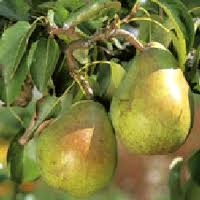
The leaves of the pear tree are glossy and thick on the branches. The pears, a bit larger than walnuts, blush rose near their stems. On my window frame hangs the icon of a skinny naked Jesus. It is the crucifix of San Damiano from which St. Francis heard Jesus tell him to repair His church. This Jesus will not meet my gaze, but looks down some hellish tunnel of sorrow that hallows the space between us. His face is grey, mouth turned down. He is wearing a sheer loin cloth that looks like it came from Frederick’s of Hollywood. I am embarrassed for him in his poverty, his utter abasement. Cheer up Jesus!  You look terrible. The pear tree is laden with fruit this year!

He doesn’t seem to notice the fruit, though he must see it – his eyes are wide open. Pinned like a specimen to the cross where under his arms are gathered stately mourners, he bleeds in tiny spurts from hands and feet. Angels hover over his head in neat rows. One appears to be performing a liturgical dance. No – that’s no angel. It must be Christ on his way to heaven, ascending in a crimson mandala.

The crucified Jesus just hangs there. Has he no shame? It is I who squirm, not he.  For his eyes pin me at the intersection of poverty and abundance where I hang ripening in the Kansas sun in mid September. O Jesus, how long must you hang there suspended in misery, wearing us out with that sorrowful stare?

With an introit of barking dogs, the squirrels soon will come to pluck the half-ripe pears with their agile paws, taking one bite from each, and then carelessly tossing them to the ground to rot. Pray God to preserve us from squirrels that raid at dawn, chattering and chasing up and down the branches, tempting us into thinking that we have been made to be consumed by squirrels. Pray God that we may be left hanging, suspended by the heart’s stem, hidden in the leaves until we’ve ripened properly. And then, at the sharp insistent teeth of need open our flesh sweet and tender to one another.

Then maybe that sad Jesus will get off that rugged cross and come eat the fruit of summer with us.

____________________

We went to Koger’s Variety Store for back to school specials the other day and painstakingly put names on new back packs, glue bottles, scissors, and Big Chief Tablets.  We watched Dad’s jaw drop as he wrote the check for new clothes at the mall.  Then last evening we noted it was getting dark so early.

The air is uneasy, a mix of the eager hope of a brand new lunch box and the painful regret that summer is over and we never got around to making those doll clothes or camping out in the back yard to watch the stars all night.

Jeremiah laments with us, “The harvest is past, the summer is ended and we are not saved.”(8:20)  And we find ourselves at the  intersection of poverty and abundance where the kingdom of God is conceived. Christians seem to perpetually stand on the threshold of a new school year clutching our shiny lunch boxes in one hand and the forsaken dreams of summer in the other. Holy ground is the paradoxical place where we simultaneously live in the Pentecost fullness of the gifts of the Spirit and the power of the Risen One; and in the crucifixion emptiness and cry for redemption of the Suffering One.

Jesus tells us that of God’s own will we have been brought forth to be a kind of first fruits of God’s creatures.  Like the firstborn child or the firstborn of livestock, the first fruits to come ripe in a season were sacred to God.  “When the grain is ripe, ready to be given up, at once the farmer puts in the sickle because the harvest has come,”(Mark 4:29) says Jesus. When one is ready to die, then harvest is come. How odd to be ripening for death, to be growing in Christ only to be handed over.


Just as the cross is the joining of two opposite directions, we live in the creative tension of the union of poverty and abundance.  The tension is great, and it is hard for us to stay in the center of the cross for very long. We want resolution. We are tempted to heave ourselves down one polarity or the other.  But if we can hold both the pear tree laden with fruit and our ongoing need to be nourished, if we can accommodate both the Risen Christ and the Crucified Savior, then we may discover, out of the union of these opposites, new fruit conceived in us which will heal and sustain the earth.

The barrage of demands and the voracious appetite of a culture that seeks to devour, rather than savor its sustenance undermine a quiet patient trust in God’s seasons of growth and harvest.  What is it that finally brings us to fruition? Is it not the sharp insistent teeth of need, our own poverty and the poverty of one another, that finally allows us to fall sweet and tender into each other’s embrace?

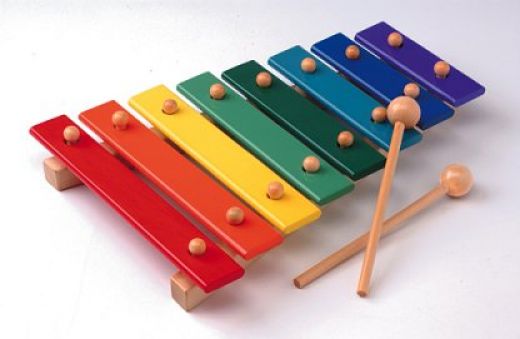
At Toys R Us — Oh my, toys are us! In Proverbs Wisdom tells us, “At the beginning I was playing beside him like a little child and I was daily his delight.”(8:29),  I listened to a tinkling recording of “It’s a Small World, Isn’t It?” while watching a lion and a lamb, a giraffe, a hopping kangaroo, and a waving bear shimmer across a plastic screen. Nearby Cicelia plinked a xylophone in plunking delight.

Then in the department store she asked, “Are shoes alive?”

Her elder sister exclaimed, “No!”

But she persisted, “I saw one talking on TV.”

“Let’s see,” I said, and leaning over a cordovan Bass loafer inquired, “Are you alive?”

“Oh mom,” Diana sighed.

We tried on grown-up perfume. When the saleslady offered to help, we told her we were searching for a fragrance that was really “us.” A spray, and Cicelia, pressing her hands to her cheeks, giggled, “Oh mom, I know this one is me!”

Before boarding the escalator we tried on hats. Cicelia, in a large brimmed red felt with ribbons, and Diana, in a small black veiled cloche, gazed at their images in the narrow mirror on the best day of my life.

We took six dresses from a rack for Diana to choose. Cicelia was her handmaiden, letting it be according to sister’s word, carrying, doing buttons and zippers, and holding up the blue satin fabric like a swatch of heaven against each dress.

Jesus, I thought you were suffering, but I saw streams of light pouring from your head like a fountain, spraying colors – blue, azure, hues of red, green, yellow – shimmering rainbows irradiating in spurts and gushes and rivers from a still small body sagging on a tree. All day I played plinking magic while you spun streams of green leaves, jungles, hay fields in spring, purple hyacinths, beets, cerulean seas, dolphins, berries, mountain mist, and a single red rose flame out of the chaste and tender aureole of your pain.

There in the dance of creation and dissolution, there where our need is met with the abundance of another and our abundance fills another’s lack,

there where it is a small world after all,

there is our joy made complete.


This post is excerpted from the author’s book, Letters from the Holy Ground – Seeing God Where You Are

If you find something here you like, let us know! The Sanctuary Foundation for Prayer

Read more about prayer at www.fromholyground.org ,
Tracking Holiness – Newsletter
Contact the author at lross@fromholyground.org, www.fbook.me/sanctuary
Follow at http://twitter.com/lfross

Yielding to Grace

Maybe you have taken on a very difficult and demanding task. Maybe you have been engaged in a burst of creative activity. Or perhaps, you have been involved in the long, slow, steady, outpouring of yourself for family, friends, or your job.

You may have noticed the signs: an anxious, sleepless night here or there; drinking too much caffeine or alcohol; not enough time to get to the grocery store; a sudden attraction to playing solitaire, and a rush of those Please-Lord-give-me-the-strength-to-do-this prayers.

In my case I was following my own devices again, rushing ahead of the Spirit, plowing my own path. Finally I was stopped by a sharp, shard of sorrow in my heart, a sense of restless unease, and the accompanying guilt and self-recrimination about my lack of motivation. I did not miss God’s irony that this should assail me over the Labor Day holiday.

After thirty years of devoting myself to prayer, I am amazed at how hard it still is to expose myself to the direct presence of Christ. I really think I would be the one in the back of the crowd, wanting desperately to push through to touch his robe, but fearful and cautious, and resigned to making the best of things on my own.

Many of us find it easy to read about faith and prayer. Books on these topics are best sellers. Countless people read the Bible. Most of us do not have much trouble telling God what we need. We may even write out a list of our needs and longings and hand it to the person in front of us, asking, “Would you pass this on up to Jesus, for me?”

What I hadn’t done was the simple, radical exposure of myself and my need to God. What I hadn’t done for several weeks was a sustained, still, silent offering of my being to the being of God. This is what I believe truly heals and redeems: contact with Holiness, that mysterious communion and co-mingling of my spirit with the Spirit, a dance of love beyond my understanding or control.

I know why I avoid it and why I, suppose, that I have to write about it. The reason is that this communion may hurt at first. The exposure of a raw, chaffed heart to the burning brightness of Grace can be excruciating. (Yes, that is the word for it: ex- crucifix, from the cross.) It may be the last thing we want to do. So we often just tell God about it, then get up and go on fretting, and look about for something to do, anything other than just sitting there in that fear and pain.

Now think for a moment. If you were sick, would you not pay attention to your symptoms, maybe check them out on the internet, and go to a physician and describe what you are feeling? And then, would you get up from your chair and go home, before the doctor had a chance to ask questions, to examine you, run tests, and prescribe your treatment?

Surely you would you wait for the examination. You would answer questions. You would you lie down on the table, bare your chest to the stethoscope, your arm to the blood pressure cuff, and take whatever tests the doctor advised. You would take your medicine and follow a treatment plan.

I had been making drive-by visits to God, where I would drop off my laundry or tell God what I need for today. I was sipping those devotions for busy people, spouting sound bite prayers on the run. I was not coming before God and disrobing. I was not holding still for God to search my heart and probe my mind.  I would not wait for his grace to move into me, to absorb the pain, to refresh and heal me. Further, it was all about me. I was all about me. I had nary a thought of what God might desire or need from me.

We fool ourselves if we think a quick shot of God, a pithy quote, or Bible verse alone will do it. God desires a relationship with us, not a power lunch, and depth relationships require leisure, attention, vulnerability, and mutuality.

Part of us really does desire this. However, another part of us is just not that interested. I hear about this internal conflict over and over in my practice of spiritual direction. People are sincere and have good intentions. Yet nearly everyone I know finds him or herself facing obstacles to a sustained presence to God.

Try it. Find a quiet place where you will not be interrupted. Set a timer. Twenty minutes is good. Ten minutes will do. Even five minutes can hold a miracle. Breathe a while. Just be there and allow yourself to be open to Christ, the patient physician, who has been waiting for you for an eternity. Now right off, you may notice all sorts of responses in yourself: a sudden urge to get up and tend to some task; some buried pain rising up, burning and stinging like really bad heart burn. You will take little sorties into the past and into future. You will write fiction, little novellas, about your life. You will discover some hurt or slight or worry to gnaw on.

Just stay there. Hold still. You are getting a CT scan. Don’t move. This time is for God’s examination of you. What you think and how you feel about this isn’t all that important. The physician is at work. Trust that. You may feel panic or anger or despair. You may feel deep peace and joy. Whatever you feel, just stay there opening yourself to the one who loves and cares for you beyond your wildest dreams.

When the timer rings, give thanks as honestly as you can. Then do the same thing the next day and the day after and the day after. Don’t look for “results,” just be obedient in allowing the doctor to heal you. Thomas Keating calls this form of centering prayer “divine therapy.” You, of course, may also read the Bible, pray in other ways that you are drawn to, do acts of love and service, and whatever else that seems right for you.

Sometimes this prayer is like detox, a weaning from some addiction, and we go through the painful withdrawal of whatever we may have been substituting for God in our lives. Other times this prayer is like the surrendered offering of Mary to the angel, Let it be to me according to thy word.

Always such yielded prayer is an act of faith in the mystery of God’s love and purposeful activity in the human heart and soul.


Hold your eyes on God and leave the doing to him.
That is all the doing you need to worry about.  St. Jeanne de Chantal

Have Thine Own Way – Organ Improvisation

We invite you to our Facebook Page: The Sanctuary Foundation for Prayer
Read more about prayer at www.fromholyground.org
Read Tracking Holiness – Newsletter
Contact the author at lross@fromholyground.org, www.fbook.me/sanctuary
Follow at http://twitter.com/lfross

Prayer: Taking the Long View

The contemplative who can stand back from a situation and see it for what it is, is more threatening to an unjust social system than the frenzied activist who is so involved in the situation that he cannot see clearly at all.  ~Protestant theologian, Karl Barth

Look always at the whole. ~ Marcus Aurelius

In the photo my hair is in braids and I am about six years old. I am wearing sunglasses and standing next to my father, who smiles proudly. My three year old brother is perched on our old Chevy next to a dark cloth spread over the hood. He wears a sun suit and is squinting into the sun. On the cloth are the day’s find, a cache of Indian relics. Dad had spent the day walking the plowed fields in the special places known to him, where Indians and, before them, prehistoric dwellers had camped.

He often handed me an ancient tool to hold, showing me how the flint had been worked and chipped to form something useful. “Just think, a little boy or girl long ago held this rock and played with it. This one was used to shoot birds,” he’d say, putting a tiny arrow point in my palm.  He would gesture to the creek saying, “You have to learn to read the signs. They camped here, because there was water and wild life for food. The ground is up high, so they could see a long ways.”  He spoke of the people who made the tools with reverence and a kind of wonder.

When he showed me where a glacier had moved through Iowa and left a particular kind of rock that had come from a place in Canada, and told me how that happened way before the Indians lived here, I realized that I was a tiny being in the sweep of the universe. So many things had happened before I was born and would continue after I died. The notion filled me with awe.

I grew up with rocks and so many arrowheads that Dad once cemented the chipped and broken ones to the edge of the steps leading to our front door. He carefully numbered and cataloged every piece he found with precise location, date, and field notes. He did not confine himself to stone relics, but also found the vertebra of a mammoth and  teeth of a mastodon and a saber tooth tiger. Now that seemed amazing to me… these animals actually once lived where I lived. Dad could point out the creek bank where he found the relics. I loved to gaze at the reproductions of these creatures in the fold out color plates in Life Magazine. I would look at the huge, shaggy, mammoth beast surrounded by the spear wielding, ancient men in the magazine and then up at that tooth, bigger than my fist on the shelf in our dining room.

My father’s interest in history, geology, and archeology expanded my awareness of the world to encompass more than what I could immediately see. His respect for what had come before him and curiosity to keep looking, digging, and learning his entire life taught me that there was always more to see, to understand, and know.

I was not very good at finding artifacts myself. A rock was a rock to me. I would fix my eyes on the ground determined to find one, but rarely did. I think my father’s success was a convergence of understanding the effect, the heave and thrust of rain, ice, and plow on the land, a willingness to put himself in the skin of those early people, and an ability to use his peripheral vision. While focused on the goal, he, at the same time, took in the whole, aware of the plowed rows he had covered, the rows ahead, and those on each side of him.

Lately I have thought often of my father’s way of seeing and how he lived from a big, broad view of the world and his place in it. We as a culture seem in some places to have lost that sense. It is as though we have forgotten how to use our peripheral vision. We spend our time focused on televisions computer screens, cell phones, calendars, and our to do lists. We travel, shut up in vehicles, with the air conditioner on, and radio and ipod babble filling our ears. Many of us, living in cities, have fewer opportunities to rest our eyes on the soothing, panoramic sweep of mountains, plains, forests, and oceans.

We make decisions, express opinions, and live our lives from a constricted field of vision. We obsess and worry. We blow things out of proportion. We lose perspective and a sense of humor. We become rigid, self-righteous, defensive, and dull. (Please forgive me, if you do not do this. I know not all of you are like me).

Specific focus is incredibly useful. To hone in on a project, a piece of art, an idea, or another person brings precision and clarity to our thinking and our actions. However, we can get stuck in that narrow focus and fail to dial back to the bigger picture.

Try it. Focus on a point across the room. Narrow down your vision to look very intently at that single point. Then allow your peripheral vision to come into play. Slowly become aware of what you can see on either side of that point, then on either side of yourself, then behind yourself, and above and below yourself. Of course, you cannot actually see completely behind yourself (unless you have eyes in the back of your head like my mother). Imagine your vision and awareness radiating out from you in 360 degrees for miles and miles. At this point you may want to close your eyes. Go ahead. I will wait for you, while you enjoy the spaciousness.

Now notice what is happening to you. If you keep at this for a while, you will find yourself relaxing, The tension will go out of your neck, your jaw. Your shoulders will release. Your breathing will slow.  A physiological shift occurs in your body and perception as you expand your awareness, taking in more and more. You may feel more peaceful. Some people experience an expansion and freedom in their attitude and approach to problem solving.

Jesus viewed others and himself from the broad perspective of eternity. In his self understanding as the Son of God was the awareness of all that was, all that is, and all that will be. I am the first and the last, the beginning and the end. He saw the specific need of the individual before him in the context of a much bigger picture and this sweeping view impacted what he said and did. While on this earth, Jesus never shook off that telltale scent of heaven, and the vision of the Kingdom of God in his union with the Father and the Holy Spirit.

As we offer ourselves, our world, our troubles, and our conflicts to God in prayer, we step into the sweeping majesty of eternity. We become part of something greater than ourselves. Our vision expands to include the whole. We find gifts we didn’t see before. We discover evidence of life we had no idea was right before us. We are connected to a woolly mammoth, whose 16,000 year old molar we hold in the palm of our hand. We are joined to all that teems and dances in the mind of Christ. I am no longer a “single interest group” rigidly focused on my particular agenda, but have entered the stream of creativity, grace, and vitality that is the Realm of God.

No telling what you might find then!


We invite to you become a fan
of  the The Sanctuary Foundation for Prayer

Read more about prayer at www.fromholyground.org,
Tracking Holiness – Newsletter
Contact the author at lross@fromholyground.org, www.fbook.me/sanctuary
Follow at http://twitter.com/lfross

A Crisis of Contemplation

The latest issue of Holy Ground is out. This little reflection on the contemplative life comes out quarterly. In this issue I write about our struggle to be prayerfully present to our work, our tendency in a crisis to rely on what we can know and do, rather than on what God may be offering us, and the revolutionary effect of digital media on how we function in our society and churches. Goodness, that is a lot to cover in one essay.

Here is an except:
After worship we got down to business. However, I felt I wasn’t finished worshipping. I wanted to say, “Wait a minute. God is still speaking.” I wanted to keep pondering the texts, and to listen and reflect together about what we were hearing. The day’s agenda initiated a shift in the attitude and attention of the group from an intentional awareness of God to the task at hand. This is precisely why I had been asked to pray for the group: to serve as a visible reminder of our communal connection and listening to God. One man, thanking me after the meeting said, “I forgot that you were here. Then I happened to look over and saw you praying. It meant a lot.”
I wonder how things would go, if someone were kneeling or bowed in prayer at all our tasks and business. Try it in your imagination. Look across the room. See someone, Christ, a friend, or stranger praying for you there. Is the person sitting in a chair, kneeling, or prostrate? What happens to you when you see this? Ah, a softening of the shoulders maybe? A sigh. Some of the strain releases. A hush of peace. The comfort of trust.
We struggle to be simultaneously present to God and to our work. So we bookend our days and activities with prayer, often a perfunctory invocation and a quickie closing prayer “to get us all on the road.” We are split in a way which sickens, wearies, and drains the life out of me. I struggle every day to bring an attentive awareness of the holy God into all I do. I fail over and over. I know when I have failed by the tension in my neck and shoulders, the eyelid twitch, the strain that comes over me when my ego has been bossing and shoving me around. I know I have failed when the space in my head has been crammed with words, ideas, opinions, fears and there is no room for Jesus. I know the deadening effect of too much talk, too much human need trying to meet human need, and no silence and space for God to meet any of it. …
The capacity to be simultaneously present to God and the task at hand is nurtured in many spiritual direction training programs. Such steadfast awareness of Christ is something the Holy Spirit accomplishes within us, not so much taught as encouraged by those who help us trust and let go into God. Such a deep integration of Christ and abiding at all times in his peace, wisdom and gentle love is God’s will for us all.
Still, mostly, I fail. I turn my back on Jesus in a way that feels brutal and violent to the Spirit within me. My rebellion consists of the bullying intrusion of myself into events, relationships, and conversations, as a mean little god, insisting on its own way and trusting only in itself.
Bringing a conscious awareness of Christ into whatever I do requires me to release power, die to myself and my way, and bend low. It means I move more slowly and mindfully. I stay in the present moment. I rest in trust and faith in God. And I have the capacity to be useless and to not know. All of which is to say, I am contemplative.
Writing nearly fifty years ago, Carlo Carretto, noted,
When there is a crisis in the church, it is always a crisis of contemplation. The church wants to feel able to explain about her spouse even when she has lost sight of him; even when, although she has not been divorced, she no longer knows his embrace, because curiosity has gotten the better of her and she has gone searching for other people and other things.
Where might curiosity be getting the best of you?

What if we expanded Carretto’s words to other situations? What if the oil crisis, the terrorism crisis, the health care crisis, and the environmental crisis were seen as crises in contemplation? How would that temper and affect how we respond to the issues we face?
What if we could see Jesus kneeling down in high level talks, on the barges of clean up crews in the gulf, and in mountain villages of Afghanistan?
Perhaps the crises we face are not a failure of human integrity or intelligence, but a failure of imagination, that eternally creating, mother of faith.

_______________

To read the entire issue, contact me at address below. I will be a happy to send you a free sample issue. Or to get four issues a year and Holy Ground you can hold in your hand, carry in your pocket, spill coffee on, and take with you to the beach subscribe now to Holy Ground on line. You’ll be glad you did.
Read more about prayer at www.fromholyground.org,
Tracking Holiness – Newsletter
Contact the author at lross@fromholyground.org, www.fbook.me/sanctuary
Follow at http://twitter.com/lfross
Become a fan of the The Sanctuary Foundation for Prayer

Mudbabes and Humility

Spring was on the way, and Ahs was feeling sorry for himself.  “I am just pitiful,” whined the dog. “Pitiful is what it is. My pen is pitiful. My food is pitiful. My body is pitiful. My life is pitiful.”

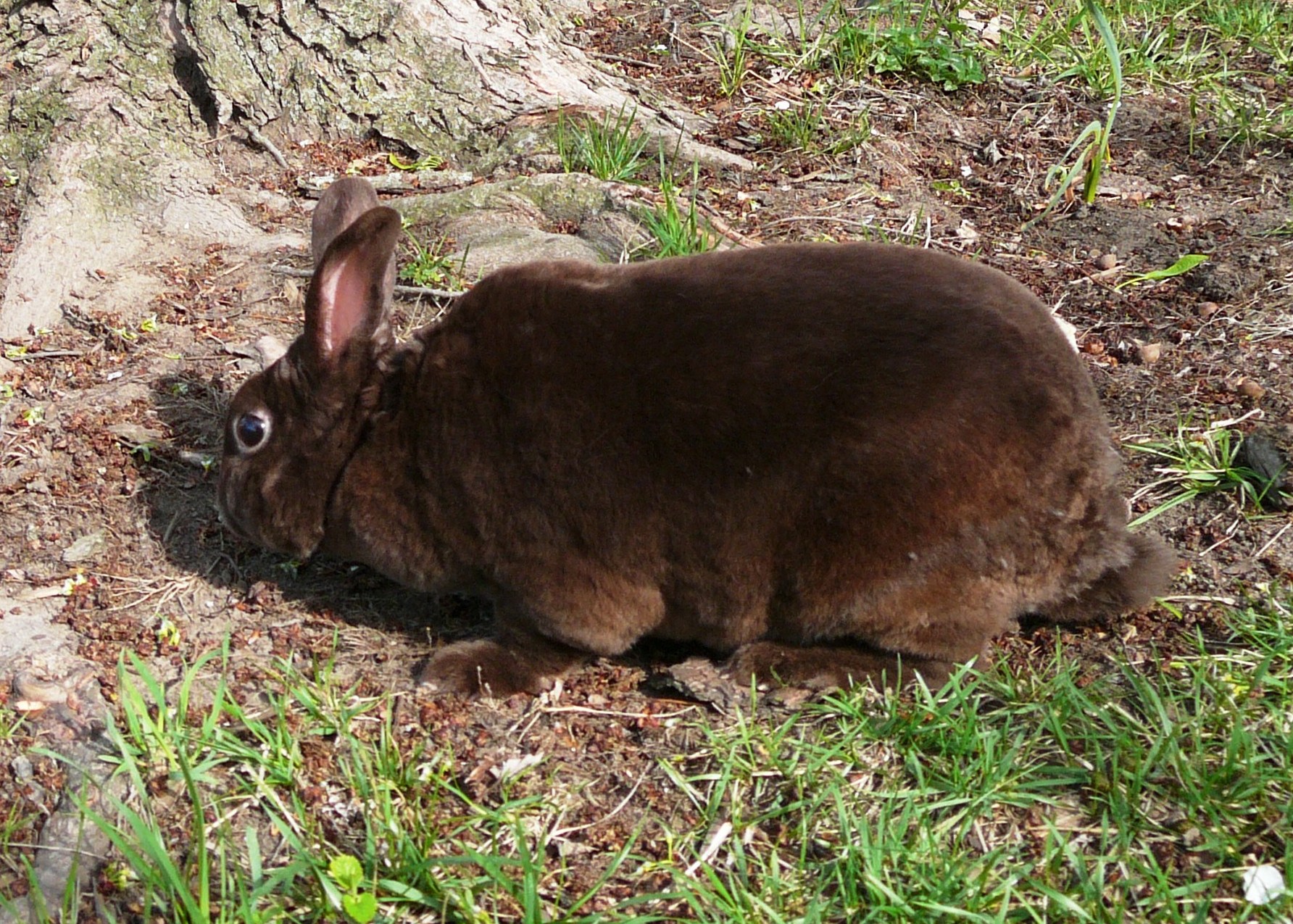
Isabella and Captain Midnight, the two new rabbits, were itching to scratch their toes in the dirt. They had their eyes on the soft earth with the leaf mold under the hedge south of the house. They would soon rake back the leaves, scrape out a nice trough to stretch out in, and flop over in the moist dirt on their backs.

___________________________

What does the Lord require? Acts of justice, a love of kindness, and a humble walk with God, according to Amos. For some people the requirements of justice and love do not seem to be as difficult to offer God as humility. Perhaps that is because humility is allusive. Once you think you’ ve got it, you’ve lost it.  Though difficult I think it is well worth aiming for.  It is a key to happiness. As the Irish say, “Humility, that low sweet root from which all heavenly virtues shoot.”

Humility comes from the word humus. Humus, which is what Isabella is itching to stretch out in, refers to the brown or black material resulting from decomposition of plant or animal matter and forming the organic portion of the soil. The virtue of humility and the earth are intrinsically connected.

A lot about being Christian has to do with coming down where we ought to be and staying there. Here four-legged critters might have an advantage. Any significant brush with the holy can leave us reeling and unsteady with a tendency forgrandiosity and fanaticism. This is why the more one prays, the more one needs to go around barefoot, sit down, lie down, stretch down upon the earth, and stay in close touch with brothers and sisters who crawl, gallop, trot, and slither.

To be humble is not to make comparisons, observed Dag Hammarskjöld: “To have humility is to experience reality, not in relation to ourselves, but in its sacred independence. It is to see, judge, and act from the point of rest in ourselves.”

To be human is to encounter limits and to suffer. Through our suffering we have the opportunity to greet and love the sacred vulnerability that resides in the heart of matter and to forgive ourselves for being human. The dying God, all bloody, hanging on a tree, may repulse, offend, scandalize, or leave us unmoved and detached. Our response may mirror our inner relationship to our own human frailty. How much compassion and generosity can you bring to yourself in your situation? Not denial, resentment, or blame – but rather, gentle acceptance of who you are in your sacred independence and trust that you have been created and loved by God and are therefore worthy of your own affection and regard.

What is pitiful is when we get the notion we ought not to be pitiful and then take an attitude of contempt toward ourselves. The fact is we are pitiful – all of us, poor and meager, sinners. Can we lower ourselves enough to enter our pitiful reality, live there, and love it with Jesus?

The name Adam in the creation story in Genesis derives from adamah, which means  “the ground.” It refers to God’s forming humanity from the earth. A friend translates Adam as “mudbabe.”

You don’t like the way you are, the way things are? You see room for improvement, need for change? One of the lessons of Lent and Easter is that transformation, healing, and new life come not from a magical deus ex machina that drops out of the sky to change whatever it is that doesn’t suit us. Rather, as Jesus turns his face to Jerusalem, he invites us to rub our noses in the mud and honestly face the painful realities of our lives and world, as he does the same on the cross.

Feeling a little pitiful yourself? That is why the Almighty came down to earth and let us treat holiness as we treat one another. God comes to teach us to show mercy to one another. God says in Jesus, “Look, my mudbabes, I am not above being human. You ought not to be either. You are going to fail and hurt one another. You are going to make mistakes and come to the limits of your flesh, your mind, and your faith.”

Sometimes I do not know what prayer is beyond the long worn rag of human longing waved toward the heavens like a tattered flag. Today I think prayer has to do with putting down one foot after the other upon this earth, while being honest with ourselves and God about our limitations. Today I think prayer is stretching out in the dirt.

Try this. Go find a place outdoors where there is no concrete smothering the ground. Take off your shoes. Put one bare foot down upon the earth and then the other. Then kneel down on all fours and press your forehead into the ground. Feel the self-importance, pretense, and the absurd seriousness with which you take yourself drain off. Smell the earth. Take a good look at the dust from which you came and to which you will return.

Then go have a sandwich and give thanks that you are human and just exactly who you are. Savor and honor the piece of humanity you represent. And taste the goodness of humility.

Adapted from Letters from the Holy Ground – Seeing God Where You Are, Loretta F. Ross, Sheed & Ward, 2000
Read more about prayer at www.fromholyground.org
Contact Loretta at lross@fromholyground.org, www.fbook.me/sanctuary
Follow at http://twitter.com/lfross
Become a fan of the The Sanctuary Foundation for Prayer

To Err Is Human, To Forgive Divine

This Week’s Puzzler!

Name a three letter word, which will stop a conversation. Say it and watch people avert their eyes, stiffen, and slip away as quickly as possible. Psychiatrist Karl Menninger wrote a book about whatever happened to it.

You’re right!  The word is sin.

Here is Menninger: But first I must return to the promise to review the events in the recent rapid decline and disappearance of the word “sin,” not because any particular word is so important in itself, but because its obsolescence may be a clue to fundamental changes in the moral philosophy of our civilization. (Whatever Happened to Sin? 1973, p 27)

Thirty seven years later, sin sounds even more archaic. Sin grates against the ear like some antiquated puritanical rant. In a culture with license to say any swear word or expletive one can come up with, the taboo word is, ironically, sin.

Part of this may be due to a trivialization of the meaning of sin and the distortions we bring to it. For many, sin carries negative connotations of judgment, intolerance, hellfire and brimstone. However, sin is not a moralistic judgment. Sin, which is separation from God, is a description of the condition of creation, a condition of alienation and estrangement from our highest good.

Eugene Peterson writes, Sinner means something is awry between humans and God. In that state people may be wicked, unhappy, anxious, and poor. Or, they may be virtuous, happy, and affluent. Those items are not part of the judgment. The theological fact is that humans are not close to God and are not serving God. The Contemplative Pastor

As reasons for the decline of sin as a category for understanding the human condition, psychiatric nurse, Norman L. Keltner, cites four factors: First, the influence of psychology on our understanding of human behavior. Second, the erosion of personal responsibility.

A third factor is the focusing away from behaviors to one’s feelings about those behaviors. .. The implications of such views were that if individuals could get in touch with their feelings and understand their motivation, then many unacceptable behaviors were acceptable. While not totally devoid of some standard, the overwhelming move to openmindedness blurred the lines. When coupled with the growing philosophical view that right and wrong are better conceptualized as personal values than as community values, tolerance of once frowned upon or forbidden behaviors occurred.

Keltner finds a fourth tendency in our society’s whole notion of individualism. As Robert Bellah and his colleagues (1991) note, “… individualistic achievement and self-fulfillment make it difficult for people to sustain their commitment to others, either in intimate relationships or in the public sphere.” Whatever Became of Sin – Revisiting Menninger’s Question

A world view that includes both God  and sin, assumes that persons are responsible for their behavior, that some behaviors draw us closer to God and other behaviors lead us away.

Without sin as part of our understanding of human behavior, we are left with explanations that fall short and miss the mark of a satisfactory remedy. Without sin we do not need God, Jesus, or that nasty thing called religion. Without sin the crucifixion is just one more state execution and Easter, an interesting ghost story.

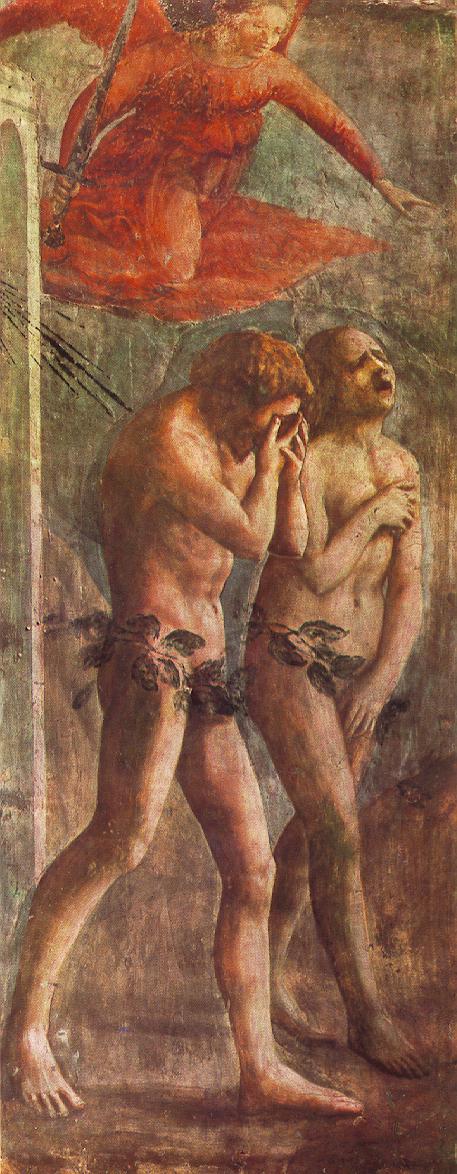
Without a serious reckoning with sin, we fashion a god and a religion which suits us, which condones the behavior we want, and urges us to satisfy our desires at others’ expense. The word for this, another taboo word, is idolatry. Without sin, we delude ourselves into thinking that we have accomplished what Adam and Eve were hoping for, when they succumbed to the temptation to disobey and replace God with themselves as sovereign in their lives.

As St. Paul wrote, “If we say we have no sin, we are deluding ourselves and strangers to the truth.” Avoiding the word, does not remove the reality of sin. Denial of sin does cut us off from the remedy – the mercy and grace of God, which free us from the crushing burden of guilt, shame, and having always to be perfect and right.

We, alone, cannot extricate ourselves from the mess of human existence. We can fight about whose fault it is. We can politicize and theorize. We can gather all the brilliant thinkers, artists, and scientists of the world to bring their expertise to bear. We can possess all the wealth of the world, yet we, on our own, cannot save ourselves. We cannot defeat the greed, the lust for power, the envy, the deceit, and the selfishness of the human heart. So we flounder, cry out, slashing at one another, bent over in pain and fear like souls in torment lost in a maze of fun house mirrors.

To see oneself or another as a sinner is like the child telling the obvious truth that the emperor had no clothes. There is wondrous freedom here to be honest about who we are and to be healed and forgiven. As Eugene Peterson writes, “To call a man a sinner is not a blast at his manners or his morals. It is a theological belief that the thing that matters most to him is forgiveness and grace.”

Read more about prayer at www.fromholyground.org
Contact Loretta at lross@fromholyground.org, www.fbook.me/sanctuary
Follow at http://twitter.com/lfross
Become a fan of the The Sanctuary Foundation for Prayer