Returning

For thus said the Lord God; the Holy One of Israel:

In re
turning
and
rest
you shall be
saved;
in quietness
and in
trust
shall be
your strength.  Isaiah 30: 15

The verse was not what I expected or hoped for. I wanted a word from the Lord, which was snappier with more glory and fortune cookie flair. For example, “So the Lord restored Job’s fortunes and doubled all his possessions. … and all his brothers and sisters and former acquaintances and friends gave him a sheep and a gold ring.” Job 42: 10-11

Instead, Isaiah 30:15 dropped into my consciousness almost before I had finished my request: Holy One, give me a verse of scripture to guide me in the coming year. I need a point of true north to align myself with and measure my life against, a place of solid ground in the midst of chaos.

One of my Facebook friends took suggestions for her verse from friends, who offered rich verses for her to reflect on in 2011. She came up with her own: Paul’s lovely advice to the Philippians: “Finally, beloved, whatever is true…, honorable…, just, pure, pleasing, commendable, if there is anything worthy of praise, think about these things.” Philippians 4: 8. There is enough in these words to keep one’s head on straight for a whole year.

I got unbidden, rushing in even before I could think of something better or ask my friends, this humble little verse, from Isaiah. No Sweetie, no high drama, livestock, or gold rings for you. Turn back. Sit down. Be still. There you will find all you need.

I chaff with this because I have already carried (or been carried) by this verse for years. Haven’t I gnawed all the meat off it and sucked it dry of all its juices? Apparently not. So in obedience to the one I serve, in 2011 from time to time I will post about some aspect of this unpretentious verse.

Today, we start with the first two words – In returning. Around 734 BCE the prophet, Isaiah, spoke these words to the people of God as part of a scathing denunciation of the blindness and incompetence of their leaders. He was speaking to those who relied on their own resources rather than the power and wisdom of God. He pointed out their pride, idolatry, and greed. Rather than trusting in God, they trusted in deceit and oppression. The remedy to this path of destruction began with a returning to something once known, but tossed aside in a frenzy of anxiety and lack of faith.

Returning, turning, going back is what I have been doing a lot of the past year and will continue to do in the year ahead. Every month or so I go back to the small town in Iowa, where I grew up, and gather with my brother and sister to sort through over sixty years of accumulated household goods and memories in my parents’ home. I turn over the remnants of our lives together, lift them out of dusty boxes, and sweep cobwebs away. I pull down an aged, wooden Kraft Cheese box tucked under the eaves in the garage. I  unfold yellowed, newspaper clippings and read letters I sent to mom and dad from Cedar Falls, Iowa; Ann Arbor and Kalamazoo, Michigan; and Louisville, Kentucky.

I gaze at a photo of myself I had not seen before. Who is that little girl sitting on the chair? I peer at a snapshot of mom and dad at some fancy dinner, both dressed to kill, vibrant and smiling. In one Father’s Day card we found, mom wrote, “You are a wonderful husband, lover, and father.” We whooped and giggled.

At week’s end I arrange the piles and boxes, run the sweeper, turn down the furnace, and lock the door. Elijah, my black lab, and I walk to the car. He jumps into the back seat, littered with rawhide chews and toys, and we return to Kansas, driving west across southern Iowa to catch I35 south down to Missouri, and then turning back west on I70 to Topeka.

I do not know how many more returns I will make before the auction is over, the papers signed, and the house keys turned over to a new owner. In such returning the prophet promises salvation, healing, some kind of cure for his nation’s disease. In such turning back and turning toward, life unwinds and furls us out, then draws us back again to lie curled round some center like the string of a yoyo.

Isaiah tells the people, flinging themselves toward their own devices, that it is the Lord they are to return to. The question is where in our turning do we find that hidden manger, that center, that core of unnameable, untameable truth? Is in the Tupperware, breeding plastic cartons on the floor of the pantry, or the stack of Styrofoam cups mom washed and saved? Is it in the notebooks, where dad recorded the dates when he replaced the faucet washers, changed the oil in the car, or put in a new furnace filter?

The other night, back here in Kansas in my bed, I heard my cat scratching outside my door, wanting to return to me and rest on my bed, where she likes to lay as close to my face as possible and tickle me softly with her whiskers. Somewhat allergic to cats, I rarely let her in. Having been alone, except for the boy who comes to feed and water her, she reached her paw under the door, pulling a throw rug and making an insistent ruckus.

In the morning I held her while I drank my coffee. She turned and turned on my lap, kneading my stomach, finally resting curled and purring, pressing her head against my chest.

Going back to recover old ground is an ancient dance. Any given life is so full of wonder, terror, and mystery that it deserves returning to over and over. There is always more to be seen and learned about the hands which wrote the note, “This wooden butter paddle belonged to my grandmother Van Doren.”

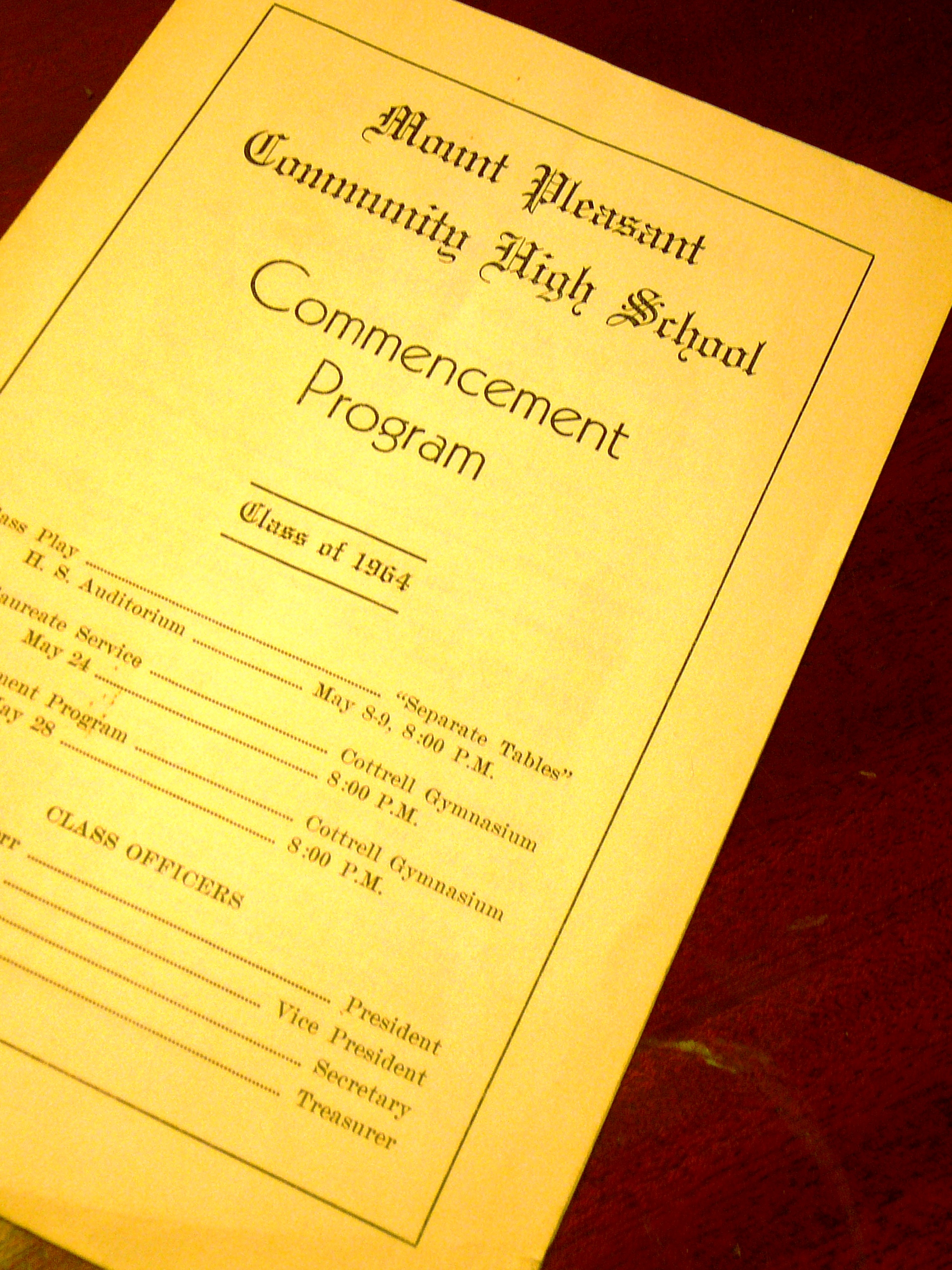
In one box mom saved programs from important events of family members. I found my high school commencement program. The top six scholars in my class spoke on the topic: 1960-1964 Years of Achievement and Turmoil, Events that Have and Will Affect Our Lives. Individual speeches covered Man’s Progress through Science; The American Image – Latin America; Tensions – Europe and Southeast Asia; The Passing of an Era – November 22, 1963 (the assassination of John F.Kennedy). One of the few African Americans in my class, Kathy Wells, spoke on Man’s Attempt to Overcome Bigotry. My title was Progress – Local and State.

No one can turn up his nose at the quality of the education at my alma mater.

I recently heard someone speak about “God’s plan” for us. The phrase sort of grated on me. “Plan” seems to me to be such a human notion with its linear quality, bound by time, space, and mortal reason. I do not think God has plans in the way we might think of them – a neat ending to a story, a way everything will make sense to us, or a satisfying tying up of all our loose ends.

Rather, I think of God as eternal unfurling with ever increasing nuance and connection until we see all lives as dancing flames rising and falling and rising again.

Meaning is something we tack on to Reality to comfort ourselves with a sense of having a handle on things. But Reality more likely slips through our fingers, whizzing past us, leaving trails of newspaper clippings, baby shoes, an old watch, and a tortoise shell comb worn by your great grandmother.

Today I think, rather than One who has plans, God is an endless returning, retracing,  weaving in and out, a grand do si do in waltz time, circling back and forward, all the while holding out his hand for us to join the dance, seeing the same place over and over, as if for the first time.

What we call the beginning is often the end.
And to make an end is to make a beginning.
The end is where we start from.
T.S. Eliot “Little Gidding”
I would love to know the wisdom you will be carrying with you in 2011. What is your verse, or piece of direction to see you through the coming year? Leave it here in the comments, or post it on our Facebook page.
A very blessed New Year to you!


The Sanctuary Foundation for Prayer
Read more about prayer www.fromholyground.org
Contact the author lross@fromholyground.org, www.fbook.me/sanctuary
Follow at http://twitter.com/lfross

Waiting: The Surrender

Part Four of Four Parts

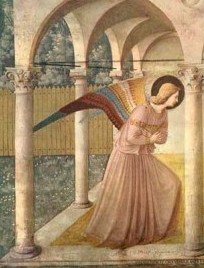
The earth, muffled with snow, goes about its hidden preparation for spring. Silence spreads over the land. Our pace slows with the burden we are blessed to bear. The angel with his face of fire and his wings is now a dim memory. God has become a long, low hum, a slow pulsing throb. We, like the inside of a struck gong vibrating peace, wait.

The fox in the woods stops in its tracks and sits up listening – still. The hawk on the wing wheels in a broad circle, glides down a current, and settles on the post -still. The chickadee at the feeder lifts and tilts its head listening – still.

Then it comes. Wrenching pain pierces us like a sword in the belly. We collapse to our knees and crouch in the darkness. Impaled by the circumstances of our lives and God’s call to us we embrace the cross of Christ. Extended far beyond our feeble powers, such bearing is more than we can do. With each new contraction we lose our nerve and cower like Peter saying,”I don’t know nothin’ bout no man named Savior.

Now we may recall Jesus’ question, “Are you able to drink the cup that I drink, or be baptized with the baptism that I am baptized with?” And we had boasted like idiots, “We are able!” We had no idea what would be asked. Between contractions we pray, “If it be your will, remove this cup from me. But not my will, but yours.”

To entrust ourselves to the will of God at the very moment when we feel most alone and in the most pain requires us to have come to the absolute end of our own will and resources. What makes such a thing possible? How could Mary persevere? How did Paul in prison and facing death continue to preach the gospel?

Perhaps it was their surrender, their sense that something larger than themselves had taken hold of them. An ax had been laid at their roots. A furious whirlwind had shaken and blasted them. Now all in them that was chaff was burning in an unquenchable fire. Finally, exhausted from resisting they say, “Yes, yes. You are in charge. You are God. I love you. I trust you. I don’t like or understand this, but I give myself to you however you want me. My will and desires die to yours.”

A birth is not something one does as much as submits to. Processes set in motion long ago now come to fuller expression. One’s being is given over to a life and purpose beyond itself. The best thing to do is simply hold still, breathe with the pain and wait between contractions.

The Greek word used in the Bible for wait is hypomenein. It means “to stay behind, to stand still, and to hold out.” Hypomenein includes in its nuances to cleave to God in simple, quiet confident waiting as well as to endure, stand fast, persevere; and it includes courageous active resistance to hostile attack.

Wait in the New Testament refers to the endurance that is given for the realization of the kingdom. It is the basic attitude of the Christian as we face the attacks of a hostile and unbelieving world and as we find ourselves in the midst of temptations. The power to persevere is drawn from faith and hope.

Our wills, knowledge, or technology have no power to bring about salvation, wrote Simone Weil:

The role of humanity is to wait . . . The attitude that brings about salvation is not like any form of activity. . . . It is the waiting or attentive and faithful immobility that lasts indefinitely and cannot be shaken. The slave, who waits near the door so as to open immediately the master knocks, is the best image of it. He must be ready to die of hunger and exhaustion rather than change his attitude…We just have to wait for the solution. . . . Seeking leads us astray. This is the case with every form of what is truly good. [We] should do nothing but wait for the good and keep evil away. (Waiting for God, 195-6)

Might you be entrusted with a task to match the largeness of your soul? Could you, like Mary, tell your cousin, “My soul magnifies the Lord, and my spirit rejoices in God my savior, for he has looked with favor on the lowliness of his servant”? Is such heroism only for martyrs in foreign lands, prophets defying oppressive governments, and saints whose lives trace truth in their own blood? Of course, not.

“What good is it to me if Mary is full of grace, if I am not also full of grace? What good is it to me for the Creator to give birth to the Son if I do not also give birth to him in my time and my culture?” asks German theologian, Meister Eckhart. (1260-1329)

If you are summoned by an angel, if you find your heart stretched big with some unnameable love with a mind of its own, eat your broccoli. Remember my friend at the beginning of this series, who hoped to live long enough to see her thirteen year old son parent  his own teenager?  (Waiting: Broccoli and Perserverance.) Take your vitamins. Stay focused on your goal. Wait. Trust. It will be worth it just to be around on the day of the Lord, however long it takes.

This post adapted from the author’s book, Letters from the Holy Ground – Seeing God Where You Are, Loretta (Ross-Gotta) F. Ross, Sheed & Ward, 2000.
The Sanctuary Foundation for Prayer
Read more about prayer www.fromholyground.org
Contact the author lross@fromholyground.org, www.fbook.me/sanctuary
Follow at http://twitter.com/lfross

Waiting: The Threats

Part Three of Four Parts

Maybe there will be a miscarriage. Maybe the child will be ill or damaged. Maybe nothing will happen, and I have made this all up. The demons slink in and taunt, harass, confuse, lie, and distort. Feeding on our fear, they float in our minds like bloated carcasses.

Impatience, fueled by fear and lack of faith, has resulted in many an aborted Christ child. Dreams, wrenched too soon from the womb of God’s providence, die torn and bleeding in the back rooms of our souls. Fearing that the Promised One cannot be trusted to save us from ourselves, we join the tribe of those who attempt to seize the kingdom by violence.

Yet the promise always comes in the context of threats, writes biblical scholar Walter Brueggemann.

The land of promise is never an eagerly waiting vacuum anticipating Israel. Nor is it an unambiguous arena for faith. It is always filled with Canaanites. That is how the promise comes… It is the very land of promise, the purpose of the whole journey of faith, which causes the failure of nerve. . . .

God’s people always want to settle for something short of promises, because promises fulfilled remind Israel how vulnerable it is, how exposed it is, and how precarious it all is. Promiseless existence is safer. The Bible knows from the beginning that promises are always kept in the midst of threats. Tables are always prepared  “in the presence of my enemies”and if one would eat at the table, one must eat in the presence of enemies. The land is precisely for those and only for those who sense their precariousness and act in their vulnerability. (The Land, Fortress Press, Philadelphia, 1977, p 67-69)

Threats, in whatever form they come, tend to scare the wits out of us. We feel like puny grasshoppers compared to these giants. Possibly the greatest threat, according to Jesus, is the failure to believe, or the lack of faith. There is that time before the pregnancy shows and no one can tell what is inside, and even after one has something visible to point to, like a vision, a possibility, the first faint glimmerings of a new idea, when the actual outcome is shrouded in mystery, and the course of the life of the new one to be born is unknown to us. So we must nourish the invisible, the inklings, the suggestions, and the voice of some ethereal visitor who whispered something wondrous and unbelievable.

Whom could you tell? What would they think? Maybe your lover will understand and give his support. Maybe God will intervene in a dream. Maybe a wise old friend, whose own promise leaps in recognition of your promise, maybe the old cousin will understand.

But there is a long time of hours, days, months, and even years –year upon year, when much is hidden and only you sing in your heart of what is to come, the gift you will offer. And what to do until then?

Fall back on praise and being. Notice the leaf in the redbud tree outside your window, curled and brown crisp in the sun. Stand at sundown as the earth grows still and silence creeps into your heart like a cat and curls up and purrs.

“Blessed is she who believed that the word of the Lord would be fulfilled,” announces the cousin. Blessed are those who believe in the glad and amazing truth that sings in their hearts, trusting with Mary and her Son that all will be well and that they are highly favored.

Watch for the last installment, Part Four, of this series on waiting, The Surrender, coming soon.

This post adapted from the author’s book, Letters from the Holy Ground – Seeing God Where You Are, Loretta (Ross-Gotta) F. Ross, Sheed & Ward, 2000.

The Sanctuary Foundation for Prayer
Read more about prayer www.fromholyground.org
Contact the author lross@fromholyground.org, www.fbook.me/sanctuary
Follow at http://twitter.com/lfross

Waiting: The Promise

Part Two of Four Parts

How long can you carry the secret,
the gift of saving love,
before giving birth to it?

How long can you ponder things in your heart
and sit on the stone path in the sun?
After a while it becomes obvious
that there is something up your sleeve,
or under your tunic.

Someone’s delight is in you
and is growing bigger every day.

Some of us are called to bear children. All of us, male and female, are called to give birth to Christ. We carry God’s seed, a divine promise in us and for us. Each is called to conceive some aspect of the great promise of salvation. We are given the choice to surrender to it, to carry and nourish it, and give it birth on its terms in its time.

With such a call, we are at the service of powers greater than we are. We find ourselves as servants and handmaids, those who stand alert and ready at the door for the one they serve, who may come at any time. We belong to the promise and are given over to the promise. The child of the promise is the unique offering you, and only you, can give out of your love in the Bethlehem of your life.


What is it? Who is it? How is this done? We are each alone here. There were no witnesses when Gabriel came. One or two may understand, who are strong when we are weak, who have hope when we have despair, who have faith when we have none. For the most part we must face the rejection, fears, doubts, and devils alone. And then, suddenly in the dark comes the sharp all-encompassing pain of labor – so much more painful than we had ever imagined it could be.

It may not look like all that much, your child and your offering of yourself as a mother of redemption. It may seem a small thing compared to Mary’s child. The child you bear may be nothing more (or less) than the courage to get through a bad day, or a shred of hope you cling to like a broken raft in the midst of a churning sea.

Two signs may help you tell if this is your Christ child: first, a vision of the joy or beauty or love set free in the gift you offer; and second, your sacrificial suffering in the labor and delivery of that gift. Such suffering is not a consequence of abuse or injustice. This is the suffering of love, which is assailed by evil as it seeks to remain firm in its faith in the efficacy and power of God’ s suffering love on the cross.

Waiting

waiting

how did she keep the promise alive,
the hope,
the word which was spoken to her,
through all the days and nights
while she walked the rocky paths?

What good could come out of Nazareth?
How can this be?
I have no husband.
I have no money.
I have no strength.
I have no hope.
I have no skill . . .

But he said, Nothing is impossible with God.

A secret between her and the angel,
a child growing in a hostile environment
and stillness at dusk
when the light slides under the horizon
leaving a golden smear of hushed anticipation.

She was like a tiny flame
in a sea of darkness

.

Watch for Part Three of this series on waiting, The Threats, coming soon.
Adapted from the author’s book, Letters from the Holy Ground – Seeing God Where You Are, Loretta (Ross-Gotta) F. Ross, Sheed & Ward, 2000.
Website  The Sanctuary Foundation for Prayer
Read more about prayer www.fromholyground.org,
Contact the author lross@fromholyground.orgwww.fbook.me/sanctuary
Follow at http://twitter.com/lfross

Waiting: Broccoli and Perseverance

Part One of Four Parts

A friend recently asked me for the key to success in surviving a child’s thirteenth year. She told me she ate some truly nasty broccoli at dinner one night in a desperate attempt to do something good for herself. She swallowed the stuff in the hope that it would help her live long enough to see her son become the parent of a thirteen-year-old.

Longevity and sheer perseverance have a lot to do with justice and salvation. If you can live long enough, you may see the triumph of good with your own eyes. Being able to hang on, to wait through periods when all seems turned against you, to survive and prevail is a central activity of a Christian.

Some pastors struggle to get congregations to sing the more somber and penitential advent hymns before the favorite Christmas carols. I am not surprised. Our culture’s mindless celebration of Christmas distorts the basic truth of the season, namely, our need for redemption and what might be required of us to receive it. We gloss over our appalling sin and ruin, skip past the eager groan of creation’s need for healing. We drug ourselves against the suffering of dark nights. We grow numb and fall asleep before the TV instead of keeping alert and obedient watch for God’s saving action in our lives. We succumb to the temptation to consume more and more as we race to gratify desires.

In contrast, Christ tells us that here is where we are to linger, to stay awake, to wait and be ready,

here in the bleak and barren heart of our need.

Timing is everything. Should one push, move ahead and make something happen or lay low, wait, and watch for the hand of the Lord to act? Tolerating ambiguity, not knowing and uncertainty can be excruciating. In our anxiety and fear we may take things into our own hands.

As a general rule of discernment, when in doubt, wait. The stance of faith waits, trusts, praises, and gives thanks. Faith joined with love bears all things, believes all things, hopes all things, and endures all things.

Why is that hard for us? Perhaps we fear that we won’t be vindicated, that our longing will not be fulfilled, that our cause will not redeemed, that things will not be made right and goodness will not prevail.

My friend with the thirteen-year-old told me her family motto: “Learn to bear what must be borne.” This stern admonition carries for me a puritanical severity, a life of gritted teeth, pursed lips, and making the best of one trial after another. But when I shared the proverb with another friend, “What a great theme for advent,” she exclaimed, seeing a possibility I had missed. My understanding shifted from regarding what must be borne as some heavy load and having to slog along through life like a drudge to the exhilarating task of the labor and delivery of a baby.

“Love in real life is a harsh and dreadful thing compared to love in dreams,” observed Dostoevsky. The advent season invites us to the harsh and dreadful task of giving birth to a love that will ask more of us than we thought we could bear. Learning to bear the one who must be born, the Christ, into our lives, families, communities, and world requires us to wait, persevere, and overcome fear with faith.

As the promises of God are delivered through our lives, we can rejoice with St. Simeon, whom Orthodox Christians call “The God Receiver.” Old Simeon was waiting to see the Christ before he died. Led by the Spirit, Simeon showed up at the temple when Mary and Joseph brought their son to present him to the Lord, according to the law of Moses. Taking the infant into his arms with a heart full of love and eyes full of tears, the old man uttered these words:

Lord, now let Your servant depart in peace,
according to Your word,
for my eyes have seen Your salvation,
a Light to lighten the Gentiles,
the Glory of Your people Israel.
Luke 2:25-32

Watch for Part Two of this series on waiting, The Promise, coming soon.

Adapted from the author’s book, Letters from the Holy Ground – Seeing God Where You Are, Loretta (Ross-Gotta) F. Ross, Sheed & Ward, 2000.
The Sanctuary Foundation for Prayer
Read more about prayer www.fromholyground.org,www.fromholyground.wordpress.org
Contact the author lross@fromholyground.orgwww.fbook.me/sanctuary
Follow at http://twitter.com/lfross
Christmas and the Recollected Soul

The ferocious intensity and strain that many of us bring to Christmas must suggest to some onlookers that, on the whole, Christians do not seem to have gotten the point of it.

“Without me you can do nothing,” said Jesus.  Yet we act, for the most part, as though without us, God can do nothing. We think we have to make Christmas come, which is to imply that we think we have to bring about the redemption of the universe on our own. However, all that God needs is a willing womb, a place of safety, nourishment and love. “Oh, but nothing will get done,” you say. “If I don’t do it, Christmas won’t happen.”

God asks us to give everything of ourselves away. The gift of greatest power that we can offer God and creation is not our skills, talents, or possessions. The wise men had their gold, frankincense and myrrh.  Paul and Peter had their preaching. Poor Mary had only interior space, love, belief – her being.

What is it that delivers Christ into the world? Is it preaching, art, writing, scholarship, social justice, mission? These are gifts well worth sharing, but preachers lose their charisma, scholarship grows pedantic, and justice alone cannot save us. When all other human gifts have met their inevitable limitation, it is the recollected one, the bold virgin with a heart in love with God who makes a sanctuary of her life, who delivers Christ, who then delivers us.

Recollection is an old-fashioned word, rarely heard anymore. In the spiritual sense recollection means quiet tranquility of mind and self-possession. Recollection is the gentle art of prayerful gathering in in preparation for deeper prayer. One calls back the scattered, fragmented self, strewn about one’s world like trash on a windy day. I pick up the pieces, sweep out the psychic debris, reorder the clutter and bring back to the center – wholeness. All about me that is frantic and frayed, dispersed helter skelter, leaving me anxious, confused and overwhelmed is drawn back.  I am no longer like a cracked and broken bowl which leaks and spills its contents, but I am mended and suitable once again for holding my life, for containing safely and serviceably who I am.

Try it. Leave behind your briefcase and notes and proof texts. Leave behind your honed skills and knowledge. Leave the Christmas decorations up in the attic. Go to someone in need and say, “Here, all I have is Christ.” And find out that is enough.

Imagine a Christmas service where the worshipers come in their holiday finery to find a sanctuary empty of all the glittering decorations, silent of holiday carols. What if this year you canceled the church decoration committee and the worship committee and called off the extra choir rehearsals and the church school pageant?

What if on Christmas Eve people came and sat in the dim pews and someone stood up and said, “Something happened here while we were all out at the malls, while we were baking cookies and fretting about whether we bought our brother- in- law the right gift. Christ was born. God is here.”?

We wouldn’t need the glorious choruses, the harp, the bell choir, and the organ. We wouldn’t need the tree strung with lights. We wouldn’t have to deny that painful dissonance between the promise and hope of Christmas and a world wracked with sin and evil. There wouldn’t be that embarrassing conflict over the historical truth of the birth stories and whether Mary was really a virgin. And no one would have to preach sermons to work up our belief.

All that would seem gaudy and shallow in comparison to the sanctity of that still sanctuary. And we, hushed and awed by something greater and wiser and kinder than we, would kneel of one accord in the stillness. A peace would settle over the planet like a velvet coverlet drawn over a sleeping child. The world would recollect itself and discover itself held in the womb of the Mother of God. We would be filled with all the fullness of God.

You might try a small experiment this year. Deliberately do not do something you usually do at Christmas. Choose something that feels like a burden, or is no longer a source of fun or delight. Instead of doing something, be something. Be womb. Be dwelling for God.

Be recollected.

Adapted from Letters from the Holy Ground – Seeing God Where You Are, Loretta (Ross-Gotta) F. Ross, Sheed & Ward, 2000.
The Sanctuary Foundation for Prayer
Read more about prayer www.fromholyground.org
Contact the author lross@fromholyground.orgwww.fbook.me/sanctuary
Follow at http://twitter.com/lfross

Not Enough?

Not enough time, not enough energy, not enough hope, not enough money, not enough jobs, not enough room, not enough love, not enough peace …

not enuf nuthin !

So goes the lie.

As the holiday season of plenty, hope, and generosity opens its arms to us, some individuals are pained by and suspicious of the season’s glittering wares. The family, who have lost their home to foreclosure, the unemployed factory worker, and other despairing and heartsick souls may feel plenty is beyond their reach and scarcity their new normal.

The media depictions of holiday cheer play on our insecurity and sense of lack. They insinuate that no matter how much we have, we do not have the latest and greatest. Advertisers lure us with promises of more. We may find ourselves stumbling after ghostly phantoms in the desperate hope that this year we might find that illusive wholeness we are seeking.

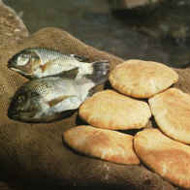
How does one feel whole and fulfilled, when one is more aware of scarcity in one’s life? Perhaps abundance in the midst of scarcity occurs for us as it did for Jesus, when he fed five thousand people with five barley loaves and two small fish.

We welcome what we have, however meager. We give thanks, and watch it multiply.

Here is a simple, yet demanding, exercise to practice such a miracle in your own life. It is called The Welcoming Prayer. It was developed by Mary Mrozowski, one of Thomas Keating‘s closest associates and a prime mover in the development of centering prayer. She based the Welcoming Prayer on the 17th-century French spiritual classic Abandonment to Divine Providence by Jean-Pierre de Caussade as well as Fr. Keating’s teachings and her own lived experience of transformation with its underlying attitude of surrender. There are a number of variations on this prayer. Here is one.

WELCOMING  PRAYER

Focus and Sink In:

Become aware of what is troubling you or occupying your mind. For example, your sadness, anger, or fear regarding scarcity of some kind in your life. Focus on your feelings, both cognitively and physically, noting how and where the feeling affects your body.

Instead of resisting, or feeling ashamed or denying, welcome the truth of what is troubling you. Welcome the feelings with curiosity and compassion.

Let Go:

(Here is the hard part)

Let go of your desire for power and control over the situation. Release your desire to be “right.”

Let go of your desire for affection and esteem from others.

Let go of your desire for survival and security.

Let go of your desire to change the way things are.

Rest :

Allow yourself to sink into the abundant flowing love of this moment. French priest, Jeanne Pierre de Caussade, describes this love:

The present is ever filled with infinite treasure; it contains more than you have capacity to hold. … The will of God is at each moment before us like an immense, inexhaustible ocean that no human heart can fathom; but none can receive from it more than he has capacity to contain, it is necessary to enlarge this capacity by faith, confidence, and love…

You may find the letting go section of the prayer difficult to do. One or two of the desires may be harder to release than others. Think of this as useful information about what things, other than God, are of primary importance in your life. Notice which desires might be getting in the way of your freedom in Christ. If you find you cannot release one of these, you might simply pray that God give you the desire to desire to let go.

The Welcoming Prayer invites us to trust in God’s presence and providence and to discover the infinite wealth of God available to us in each moment. “The divine will is a deep abyss of which the present moment is the entrance. If you plunge into this abyss you will find it infinitely more vast than your desires,” writes de Caussade.

I believe this is absolutely true. Over and over in the midst of distress, I have wrung my hands about there not being enough of one thing or another in my life. Yet as I have focused and welcomed the feelings and my present reality, let go of my ego’s desires, and rested in God, my need has been supplied with an abundant depth and power that swept away all my grasping and anxiety.

I heard the geese honking at dawn last week. My dog halted at the door and cocked his head and we listened together in wonder. I love the sound of them moving over head, giving themselves to the skies. Trusting in their ancient faith they make their way.

In spite of all appearances to the contrary, I believe there is enough.

The Wild Geese

Abandon, as in love or sleep,
Holds them to their way
clear in the ancient faith:
what we need is here.
And we pray not for new earth or heaven,
but to be quiet in heart
and in eye clear.
What we need is here.       Wendell Berry

I trust in you, O Lord. You are my God.
My times are in your hands. Psalm 30:1

What we need is here.

Become a fan of the The Sanctuary Foundation for Prayer
Read more about prayer www.fromholyground.org,www.fromholyground.wordpress.org
Contact the author lross@fromholyground.org, www.fbook.me/sanctuary
Follow at http://twitter.com/lfross

Sick of Words

I am word weary. I am tired of tedious characters marching stiffly like tiny soldiers in regiments of paragraphs across a page.

I am wary of shady words with their cruel thorns, sleek seductions, hidden agendas, and high fashion wardrobes. I am annoyed by shifty words with their little beady periods punctuating deceit. I am bored with dreary, weak words, always minding their p’s and q’s. I am fed up with grandiose words mincing truth into carefully parsed packets of freeze-dried candor.

Because I do not know words – tender, true, and worthy enough to tread upon the pristine sweep of your soul,

I give up on words

and offer you the integrity of silence,

the undefiled page,

and the wordless wonder of your own beloved self.

Linger here in this moment on an autumn day.

Oh, for once, do not rush down the labyrinthine corridors of dense vocabularies to the echoing mortuaries, where truth lies shriveled in drawers pulled in and out by experts.

Be stilled.

Soon truth will rise up and burst from the cramped
tomb of your preconceptions.

Then you will hear it sing its little freedom song  —

a soft whirr, a buzzing hum

like a cat purring to herself in the sun.


God Goes to Podcamp

Looking around the room, I saw a lot of smart phones, iPads, laptops, as well as salon haircuts, and expensive eye glasses with predominately black frames.  I picked out grungy geeks, staid state employees, hip local media moguls, and a few old dudes like me among the crowd. One stunning young woman arrived, wearing tight black leggings and a short black jacket. Her stiletto boots with open toes showed off her bright red pedicure. She carried an equally beautiful baby on one hip.

I sat down at a table with two young web design entrepreneurs from Iowa. College students and high school buddies, they had made the nine hour drive to spend the day at of all places, the Topeka and Shawnee County Public Library.

The event, sponsored by my local public library, is the brain child of librarian, David Lee King, who is definitely nothing like Miss Mabel Hrencher, who presided at the check out counter in the library of my childhood. PodCamp Topeka, billed as the “best unconference in the Midwest” is “Topeka’s annual low-cost unconference focused on social media, podcasting, audio and video production, and the web. Our goal? To learn about social media from social media experts, to network with fellow bloggers, podcasters & social media creators … and to have a blast!”  Which, as far as I am concerned, we did. Though I skipped the Tweet-Up event at a local bar at the end of the day in order to walk my dog, I left thinking, “Wow! Topeka, Kansas just keeps getting better and better.”

I purchased a new TV remote a month ago after my dog, Elijah, ate most of my old one. The new remote still sits in its box, because I can’t figure out how to get the darn thing to work. So how did I come to be sitting among tech cool, social media movers and shakers, learning tricks for emerging web technology? What was I, a hermit, solitary type, who needs large, sustained doses of silence, and thinks about God a lot, doing here? What could the keynote speaker, social media guru, Patrick O’Keefe, owner of I Froggy Network , have to say of interest to me? The last Froggy I had heard of “went a’courtin’” years ago.

Why did I go? Simple. The event was all about communication,  joining together, communion. This, you may recall, was a particular concern for Jesus. In the intimate moment in the gospel of John, where we listen in on Jesus’ prayer for his disciples, we overhear Jesus’ deep yearning that somehow, someway his followers might taste and enjoy the communion and oneness he shared with the Creator, whom he called Father. “Please let them be one, as we are one, not just kind of one, but completely, perfectly one. And Father,  I don’t want just these here, my disciples, to be part of this joining together, I want also those, who believe in me through my followers’ words about me, to be one with us. (John 17: 20-22, paraphrase)

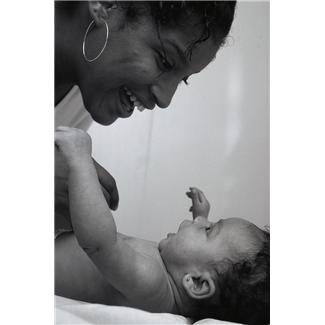
Part of the nature of the Holy One and those created in God’s image and likeness is the ability to communicate – to extend oneself out of oneself in order to interact in some meaningful way with another. An infant expresses his needs and learns trust, as his caregivers respond to his cries with comfort and nurture. Hopefully, the infant learns that when he expresses a need, someone beyond him will respond with kindness. The child experiences the deep satisfaction and relief of being heard, and understood. If for some reason its need is not met, if the infant is unable to successfully connect, to attach to another, and get his or her needs met, the baby may waste away and develop a host of difficulties in communing with others.

Communication forms the basis of human community and a reflection, for the believer, of the Trinitarian nature of God. Theologian Miraslov Volf in a recent article in Christian Century writes:

If the One God is utterly unique and beyond number, why do Christians speak of divine triunity? Christians believe the word [God’s communication] was made flesh in Jesus Christ. From this belief it follows that the one utterly unique God who is beyond all counting, is internally differentiated as the Speaker, the Word and the Breath.

We live in the midst of the praised and condemned transition from print and broadcast communication to digital communication. This is one more passage in the long journey that began at the campfire, where we gathered to hear the hunters tell us the story of how they stalked and killed our supper. We have now arrived at the blog, podcast, and webinar to tell our stories of conquest and to instruct others in monetizing, ROI (return of investment), and how to put supper on the table. According to M. Rex Miller, author of The Millennium Matrix, the movements from oral communication, to print media, broadcast, and digital media have each brought about sweeping changes in how we believe, how we know, how we live together, how we see beauty, and how we work and trade. Our institutional structures, our architecture, our religions, our art, our self understanding, even our brains have been conditioned by how we communicate.

What is an unconference? you may wonder. According to Wikipedia, “an unconference is a facilitated, participant-driven conference centered on a theme or purpose. The term ‘unconference’ has been applied, or self-applied, to a wide range of gatherings that try to avoid one or more aspects of a conventional conference, such as high fees and sponsored presentations.” An unconference moves away from a top down, gathering of authorities, experts, and hierarchical structures. Power in the form of information and know-how is no longer controlled by Miss Mabel Hrencher with her tight grip on your library card.

We, along with the Holy One yearn to know and be known, to receive another and to be received, to see and be seen. We find deep satisfaction in that moment of mutual apprehension: the yes! the nod, the I-get-you-baby. We seem to never tire of the joy of recognition, affirmation, acceptance, and to be heard and understood. “Hey, Mom, watch. See how I do this! Dad, look at me!”

The glance of another is a blessing beyond words, the bestowal of understanding is a gift of great price. During a break at the Podcamp, the hip young mom came toward me down the hall. I stopped and told her, “You are just beautiful.” She smiled and her baby looked at me and crowed.

At Podcamp most of us contained our look-at-me tendencies, but they were not far below the surface. The longing to enter into the sweet and deeply satisfying experience of communion runs like a subtext of desire through many human interactions. The man, who came for the fall check up of my furnace, the day after the midterm elections, visited with me a bit about politics and the state of the nation. At one point I said, “It sounds like you have thought deeply about these things.” The earnest, intelligent fellow perked up and talked for another half hour. Somebody cared.

It takes so little in the dance of communication – a comment, response, the slightest gesture of recognition, the click of the Like button. We possess great power to enlarge one another or to diminish and demean.

Prayer, as I understand it, is communication with the Holy One, an exchange in which we speak and listen ourselves into ever fuller being and carry with us our whole community into that fullness.  We reach beyond ourselves and our essential isolation to enter another’s reality, and in that moment of communion, however momentary, virtual or real, is the opportunity for expansion, mutual exchange, and transformation.

A warning: death is involved in such communion. Life changing communication requires a dying to self and an opening out in trust to the other. I die to my personal exclusivity as an authority or expert, as I reach out to the collective, communal wisdom of my brothers and sisters. I find I am dying all the time, as I bump up against my perceptions, opinions, and personal critiques of those around me, only to discover just how dead wrong I am and how much more is going on in the realm of the Spirit, than I am aware of, or which I discount in my arrogance.

There is no room for a cozy “me and Jesus” theology in such communion. Theologian Miroslav Volf explains,

Because the Christian God is not a lonely God, but rather a communion of three persons, faith leads human beings into the divine communion. One cannot, however, have a self-enclosed communion with the Triune God- a “foursome,” as it were– for the Christian God is not a private deity. Communion with this God is at once also communion with those others who have entrusted themselves in faith to the same God. Hence one and the same act of faith places a person into a new relationship both with God and with all others who stand in communion with God. After our Likeness: The Church as the Image of the Trinity

The words, love, forgiveness, God, and Jesus were not mentioned at the unconference. Those young men at my table might have moved if they knew I was an ordained minister, not a popular profession in many circles. There was some bowing before the God of Technology. However, there was also an awareness of boundaries, rules, and internet etiquette:  Act nice, or you will be deleted.

Some final words from M. Rex Miller:

The internet is fundamentally about connecting with people of common interest, facilitating person-to-person conversations, collaboration, assistance, and collective learning. The internet inverts the power curve away from centralized control and content to distributed power and member-generated content. The internet is about the exponential value of networks, the power of conversation, and liberation from past obstacles of time, location, gender, age, ethnicity, disability, and tradition.(The Millennium Matrix, p 205)

Though Christ, in whom St. Paul tells us there is neither Jew nor Gentile, male nor female, is not mentioned in this description, digital communication offers, for those with eyes to see, a mortal and incomplete reflection of the image of  self-giving communion we find in the Trinity. The heart of digital communication sounds a lot like like church to me. That’s why I went to PodCamp.

As for God, I figure the Almighty, having created the people who made it, must love digital communication, and is surely showing up in black leggings toting her son at every Podcamp she can.

Become a fan of the The Sanctuary Foundation for Prayer
Read more about prayer www.fromholyground.org,www.fromholyground.wordpress.org
Contact the author lross@fromholyground.orgwww.fbook.me/sanctuary
Follow at http://twitter.com/lfross
Embarrassing Prayers

An Embarrassment

“Do you want to ask
the blessing?”

“No. If you do,
go ahead.”

He went ahead:
his prayer dressed up

in Sunday clothes
rose a few feet

and dropped with a soft
thump.

If a lonely soul
did ever cry out

in company its true
outcry to God,

it would be as though
at a sedate party

a man suddenly
removed his clothes

and took his wife
passionately into his arms.

~Wendell Berry – Leavings

Wendell Berry –  I love this Kentucky farmer and writer, with his deep affection for the land and generosity of spirit. I actually worry sometimes about his dying. He is getting older and I need him to keep going into his timber, where he observes Sabbath down by the creek. I need his passion for justice and goodness, which he keeps just under his worn jacket. I love it every time he tears off that jacket and strips down to show us the naked truth.

I used to say with the foolish assurance of someone newly in love with God, “If people knew how sexy God is, our churches would be filled.” Now I wonder if perhaps it is our churches themselves who don’t know how sexy God is, and that is why some are empty.

In the sedate worship circles I frequent, there are few passionate outbursts and everyone keeps his clothes on. If a God lover ever did rise up in some self-abandoned embarrassing expression of love, we would probably be appalled and call the police.

We have all heard those obligatory, studied prayers that rise a few feet and drop with a soft thump. I have prayed quite a few myself. I also confess I have been a perpetrator of prayers with an ax to grind: some pet notion or issue that wasn’t fully treated in the sermon or meeting, which the one praying attempts to correct. Perhaps, you have been assaulted with the prayer of someone, who is more concerned about setting you straight about some matter than entering into communion with the Lord of the Universe on your behalf. Then there are the quick and dirty nooners over lunch in a public restaurant, where you feel everyone is watching.

To the Holy One, I figure all our prayers are mostly childish babble, endearing scribbles in the sky.  I trust God loves them all, just as I still keep a box of my daughters’ childhood drawings and writing. Tell me, what are we, caged in our mortality, to do with this divine love, if not to slop it around like infants in a high chair eating our first plate of spaghetti? We are bound to be messy. More of us ought to be caught red handed in flagrante delicto with spaghetti sauce all over our faces.

Some Sundays I have an impulse to throw myself in an unseemly prostration before the altar on behalf of the people and the God I love so much that I can’t stand it.  I do not have the words to express the anguish, doubt, and fear I know some of the people carry. “Do something!” I want to scream at God. “Here take me, take my life, such as it is, ragged and tattered, and heal your people!”

Once, in a weak moment, overcome with love, I knelt in a Presbyterian church during worship. Presbyterians, as you may know, do not have kneelers in their churches or kneel as part of their worship. They express their passion by singing, something at which Roman Catholics, with their lovely genuflections and neat fold-down kneelers are generally less accomplished.

My embarrassment followed Holy Communion. After I received our Lord’s presence and love, I brazenly knelt right down in the First Presbyterian Church in Holton, Kansas. It was a little crowded between my seat and the back of my brother’s pew, but I just had to do it. Afterwards one of the elders of the church brought up my indiscretion at the session meeting, asking the pastor if what I did was “Presbyterian.” They haven ‘t kicked me out so far.

Saints, prophets, artists, and poets understand the passion of the human heart for the divine. These are persons, possessed and overcome with our Beloved, who often do and say things unseemly. Most people think they are a little kooky. Yet these same people, who hold mystics at arm’s length, regularly sing hymns with lyrics like:

Jesus, lover of my soul, let me
to thy bosom fly …

Come down, O love divine, seek thou this soul of mine,
and visit it with thine own ardor glowing…

Who do they think they are fooling? I know there are hearts aflame with God in more than one gentleman in the back row, not to mention the middle aged couple, or bored looking teenager pecking at his cell phone. Most us, including clergy, are well trained to keep our passion contained. Nobody wants to be embarrassed for heaven’s sake.

As Wendell Berry writes, there is public prayer, which can easily slide down the slippery slope into performance prayer. Then there is the Jesus-recommended private, shut up in your closet prayer. (Matthew 6:6) I suppose the closet prayers are the best kind for taking off your clothes. The only problem with hiding our passion is that people may get the idea that God is boring and that being a person of faith is only a matter of learning some doctrine and following a moral code of behavior.

Not for the faint hearted, a life of prayer is a perilous enterprise. One can pray a prayer so lame it is an embarrassment, or one can simply embarrass oneself. I believe God receives all our prayers, both the self-conscious thumpers, and the self-forgotten soarers. God, being beyond shame, is not embarrassed by either. Would we could all toss away our fig leaves and go walking in the garden with our Lover without a stitch.


I hope there is a place, where you can strip down to your naked, vulnerable, cellulite- encased, pocked-marked self and open your arms to your Beloved in a rush of desire and groping hunger for holiness, truth, justice, and mercy.

We won’t peek. Just go for it. Lame or passionate, pray an embarrassing prayer today.

Join the Community of Contemplatives on Facebook Page
Read more about prayer www.fromholyground.org, http://www.fromholyground.wordpress.org
Contact the author lross@fromholyground.org,  www.fbook.me/sanctuary
Follow at http://twitter.com/lfross