Stop It!

I woke to a list of tasks and projects to complete – important, worthwhile, necessary duties.

But the Holy One said, “Rest.”

I argued. “Lord, I have to do this. I need to get that done. And the yard needs raking.”

“Stop!” the Lord said to me. Stop it.

So I turned on myself, flaying myself with guilt and shame. “What’s wrong with you? Why can’t you get more accomplished?”

“Shabbat.” God said. Shabbat.  

We drain ourselves with too much doing, striving, and succeeding. We push past our limits and strain our bodies and make ourselves sick. The neglected soul shrivels and turns dry and hard like the dusty, wrinkled slice of apple I swept up from under my table.

Shabbat or Sabbath means literally to stop. Interestingly, the Hebrew “Shabbat” sounds a little like “stop it.” 


Remember the Sabbath Day and keep it holy. Six days you shall labor and do all your work. But the seventh day is a Sabbath to the Lord your God; you shall not do any work – you, your son or your daughter, your male or female slave, your livestock, or the alien resident in your towns. For in six days the Lord made heaven and earth, the sea, and all that is in them, but rested the seventh day; therefore the Lord blessed the Sabbath day and consecrated it.                                                                     Exodus 20:8-11

What Israel learned from the fourth commandment is that Sabbath rest is an alternative to aggressive anxiety, writes Walter Brueggemann in Journey to the Common Good (pp 25-26) .

Most Christians think of Sabbath as a day of worship, which may actually turn into a day of production, activity, and achievement, as many clergy will tell you. Though church seemed long and boring to me as a child, endless Sunday afternoons at my Mennonite Grandmother’s home, sitting on a couch with prickly upholstery and listening to the clock tick was not an improvement. At least at church we had music. At grandma’s my brother and I itched and fidgeted to go outside and play.

However, at its origin, Sabbath was not about worship. Brueggemann continues, “It is about work stoppage. It is about withdrawal from the anxiety system of Pharaoh, the refusal to let one’s life be defined by production and consumption and the endless pursuit of private well-being.”

To cease working for a day is an act of defiance in a godless system of aggressive production and accumulation. To keep Sabbath is an act of rebellion against Pharaoh’s kingdom of scarcity where there is never enough. To keep Sabbath is a statement of faith in the abundance and provision of the Kingdom of God, where sharing by all will mean scarcity for none. Finally, “to stop it” is an act of obedient trust in God’s goodness, as one rests and enjoys the wonder of all that God has made.


Recently, people, who come to me for spiritual guidance, seek not so much counsel or suggestions for how to pray, but, rather, the permission and opportunity to be still and rest in God.

A woman tells me, “I think what I need today is to just be quiet and for you to lead me in meditation.” A little music, Psalm 27, and an extended silence followed.

We sat together facing our internal distractions and anxious mental sorties away from our intention of presence to God. We calmed our fretful souls, and held ourselves steady before the voluminous mystery of love. Over time this Sabbath being, this doing nothing, will change the quality and the character of all our active doing. By disengaging from Pharaoh’s system of scarcity and anxiety, we root more deeply into the realm of the endless mercy and providence of the Holy One. 

Here is a god, who had so much fun doing and creating that he took a day off in order to rest and delight in his own handiwork. Then God, tickled with himself, commanded all his creation, including livestock and resident aliens, to enter into the joy of such rest. “Go outside and play. Take a look at what a marvelous universe I have made. I can’t get over how wonderful it all is.”

As the woman, who needed rest, and I participated together in the wonder of the gift of our being, the silence thickened, ebbed and flowed, smooth as satin and softly throbbing. We drank deeply from that well. When the session came to an end, we drew back reluctantly from the living water.

“You were very thirsty?” I asked. Yes, she nodded.

“Me too.” I said.

Learn by little the desire for all things
which perhaps is not desire at all
but undying love which perhaps
is not love at all but gratitude
for the being of all things which
perhaps is not gratitude at all
but the maker’s joy in what is made,
the joy in which we come to rest.   
                                          Wendell Berry

May you discover the maker’s joy in your Sabbath rest.  

Shabbat Shalom!


“In returning and rest you shall be saved.

In quiet and trust shall be your strength.” Isaiah 30: 15

This is the second in a series of posts this year on
Isaiah 30:15. Read the first post on this verse here:  Returning

The Sanctuary Foundation for Prayer
Read more about prayer www.fromholyground.org
email
lross@fromholyground.org
Follow at 
http://twitter.com/lfross 


Homeless

Black grackles and speckled starlings,
with yellow beaks and rusty throated chatter
clatter up and down the branches
gleaning the leavings of winter’s suet cakes.

A pile of must-read books
litter my desk and the chair before the window
where I come to pray.

Wisdom and knowledge at my fingertips,
and the perfect YouTube video of a good life,
forwarded from friend to friend,
promises to change everything.
Click here now.

How long do you stand on the street corner,
listening to the preachers and barkers?

How long do you slurp up the news,
opinions, and seductions of others?

How long do you sit on the couch
of the world consuming secondhand notions,
lies, and rumors?

When will you sit down before mystery
and invite it to come rest in your lap,

your lap, I mean, your heart and singular, scintillating body?

When do you stop singing somebody else’s song
and chasing somebody else’s god
and coveting somebody else’s experience?

When, oh when,
dear, irreplaceable you,
will you lay
yourself down in your own true,
blue bonnet strewn field of a life?

And say to the starling –
Here come, with your little orange feet and strange black eye.
How precious you are in that freckled jacket.

And I ask you,
how many prayer breakfasts,
committee meetings, and strategy sessions,
how many well-intentioned,
and not so well-intentioned,
soldiers of truth
gathering to plot their version of a perfect world
must we salute?

Just how long will it take, do you think,
for us to be safe enough
and gentle enough
and humble enough

for the shy weary God to come and lay his head? 


Jesus replied, “Foxes have holes and birds of the air have nests,
but the Son of Man has no place to lay his head.” Matthew 8:  18-22 


A YouTube video on Matthew 8: 18-22

The Sanctuary Foundation for Prayer
Read more about prayer www.fromholyground.org, www.fromholyground.wordpress.org
Contact the author lross@fromholyground.org, www.fbook.me/sanctuary
Follow at http://twitter.com/lfross

Kyrie, Eleison

I have been pulling out thorns, stick tights and nursing cuts and scrapes. I spent the past couple of weeks in a briar patch. Tangled up in old resentments, anger, and feeling sorry for myself, I had worked myself  into a wadded mat of prickly brambles.

A briar patch with twisting vines, which cut or trip or cling at every turn, may be a good place to begin lent. In some respects, we, like Br’er Rabbit, are born and bred in the briar patch of human existence. I, however, did not find it as comfortable, as my cousin, Brother Rabbit. I felt trapped and wanted to break free of the barbed burden of myself.

My pride and arrogance coiled around one ankle. My entitlement and envy looped in a thorny noose around my throat. And soul smothering self pity sat on my chest like a heavy stone.

I could not seem to untangle myself. All my efforts only bound me more tightly. And, to tell the truth, I do not think I really wanted to get free. An insidious part of me seemed to enjoy how awful I was feeling. At the same time, another voice was asking, when I was willing to listen, “How happy do you want to be?” as if my happiness was somehow up to my simple consent and my willingness to receive what I desired.

Finally at my wits end and the end of my own strength, I prayed – not for God to fix the things that had me trapped, not for God to turn the briar patch into a luxury hotel, not for God to give me insights, knowledge, or explanations, but for mercy. I asked for God’s mercy – unmerited, undeserving, unearned mercy.

I, sick of myself, surrendered and stopped defending, justifying myself, and arguing with imagined foes. I came to my knees and asked for mercy.

And mercy was given

falling softly like a gentle rain.

Later that same day I discovered I had been set free from the briar patch. The heavy weight of myself was gone. I was no longer chaffing and pulling out splinters.

And the word, mercy,

sounded sweet in my ears,

like music,

like birdsong, unbidden and blest.


Perhaps there is no better prayer than to simply commend ourselves, others, and the whole world to the redeeming mercy of him who died and rose for us. According to Balthasar Fischer, this ancient prayer means more than “Help us!” It means:  “Take all of us with you on your journey through death to life.”


The quality of mercy is not strain’d,
It droppeth, as the gentle rain from heaven
Upon the place beneath: it is twice bless’d;
It blesseth him that gives, and him that takes:  . . .
Though justice be thy plea, consider this—
That in the course of justice, none of us
Should see salvation: we do pray for mercy;
And that same prayer, doth teach us all to render
The deeds of mercy.
Shakespeare’s Merchant of Venice
The Sanctuary Foundation for Prayer
Read more about prayer www.fromholyground.org, www.fromholyground.wordpress.org
Contact the author lross@fromholyground.org, www.fbook.me/sanctuary
Follow at http://twitter.com/lfross

Lent, Suffering, and Weary Pastors

“The reason why pastors are so tired around Easter is because they have to preach about something they don’t really believe and it just wears them out,” announced a colleague to the group of clergy.  Some clergy will tell you their fatigue is due to all the extra services, studies and observances that cluster around the season.  One wonders what it is that calls out the sudden burst of piety and round of religious soirees, if it is not the need to reinforce our sagging faith.


Evelyn Underhill describes spiritual growth as a “series of oscillations between states of pleasure and states of pain which fatigue the immature transcendental powers.” (E. Underhill, Mysticism, p. 381.)  Whatever the cause, the amazing truth of Good Friday and Easter is more than most of us can swallow, let alone integrate in such a way that we remain in possession of the power of the Risen Christ, while at the same time surrendered to that power.

Death is wearisome.  Suffering is wearisome.  Evil wears us down, grinds us down.  As the opposite of creativity, evil employs repetition as one of its weapons.  The slow steady accumulation of minor abuses and violations turn over time into an onslaught, which erodes our best intentions.  Sick and tired of it all, we finally succumb with a yawn and let death have its way with us.


Jesus says, “It is lent. Come on.  Take up your cross and follow me.” Jesus does not summon us to a quick easy death.  He says cross – that slow torment that keeps you hanging around, conscious, gasping, while the body strains and sags against the nails that pin us to our own circumstances and the slow agonizing drag of gravity does its job.


We sink slowly into the earth, the forces of the universe pulverizing us over eons into dust.  At such a prospect, heartily endorsed from pulpits far and wide, one’s transcendental powers, mature or immature, might well benefit from a swig of Geritol.


“Have a Happy Death,” my friend says.  And I go read about those eccentric saints who extol the joy of suffering and actually prayed to share in Christ’s pain.  What did they know I don’t know?


A while back I got a large envelope in the mail with the words SECRETS THAT CAN BANISH PAIN emblazoned across the front.  Inside a Mr. Mark Bricklin promised to send me secrets that would save my life and show me HUNDREDS OF WAYS TO GET FAST RELIEF.  I looked over his offer and decided to take a nap.


Our culture has little capacity to find anything redeeming in anyone who would deliberately seek to suffer. We have a difficult time distinguishing between the suffering of sacrificial love and suffering that is meaningless and self-defeating. It is hard for us to believe that suffering consciously chosen and accepted could be anything other than dysfunctional behavior.
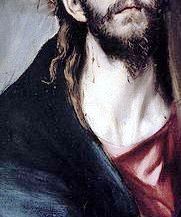


This may be part of the reason why the season wears us out.  This Jesus hanging on a cross for our sakes appears hardly functional.  He makes none of the promises of Mr. Mark Bricklin who exhorts me not to deprive myself and my loved ones of the chance to truly banish pain.  (Mail the enclosed card today!) The effort of leaning up against that cross in a culture that seeks to banish pain, and the real spiritual work of extending ourselves past our exposed doubt deeper into God is more than a little fatiguing.


Spiritual growth may be seen as slowly deepening belief, or the steady erosion of our hypocrisy.  Layers of pretense and self deceit  peel away to expose our fear.  What is revealed is the limit of our belief, its edges.  A good deal of our suffering is that raw exposure of our doubt, our unbelief, to the light of the Risen Christ.  It stings, smarts.  We think we are dying, losing everything.


Perhaps the difference between tragic suffering and the redemptive suffering in which Christ invites us to participate lies not in the amount, kind or quality of the pain, nor in its cause.  What makes one kind of suffering sacred and healing, and another simply one more case of horror and abuse inflicted upon an innocent victim may lie in the extent of our personal freedom to choose how we respond to the pain we experience when others trespass against us.



And here we might look to Jesus, the pioneer and perfecter, “who for the joy that awaited him, endured the cross, despising the shame…” (Hebrews 12: 1-2)  We do not have to love our suffering; we just have to bear it.  We take up our crosses.  We consciously receive the pain that comes our way, not for the pain we must endure, but for the joy that awaits.  In this way we become martyrs, not in self abasing, whining, self-righteous martyrdom, but in the original sense of the word.  Martyr in Greek means witness, one who has seen God and is willing to testify by one’s life that God lives – even in the midst of death and evil and defeat.


Perhaps what those long-suffering saints know that I and Mr. Mark Bricklin haven’t yet grasped, is that what makes suffering redemptive is enduring the cross despising the shame, making light of its disgrace. The self which dies is the ego, the grasping, controlling, faithless part of ourselves which believes everything is up to us.  Unlike Jesus, we do not despise the shamefulness of our suffering.  We despise ourselves instead.  We are humiliated and contemptuous of ourselves in situations of disgrace, defeat and loss which expose our limits.


We want an explanation for our pain.  The ego anxiously searches for meaning in the mistaken notion that in understanding we may find relief.  Jesus does not seek to justify himself.  His focus is not on the cause of his suffering, but on obedience to the One he loves and from whom he came and to whom he is headed in joyful reunion. Jesus does not despise himself, instead he despises that which seeks to humiliate and destroy his identity as the holy Child of God, in other words, his innate goodness and sanctity.  Jesus does not stop loving himself or God in his suffering.
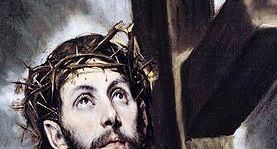

To be beaten, to be rejected, to be abandoned and despised without beating, rejecting, abandoning, and despising oneself is to know oneself as a child of the Holy One.  To suffer, despising the shame, is to remain grounded in one’s essential goodness, even when one has reached the limits of one’s ability to do good.


A blessed lent to you and to Mr. Bricklin too.  May we all enjoy a happy death, a good rest, and steadily maturing transcendental powers.


This post adapted from Letters from the Holy Ground, Sheed & Ward, 2000, written by Loretta F. Ross (Ross-Gotta).
The Sanctuary Foundation for Prayer

Read more about prayer www.fromholyground.org
Contact the author lross@fromholyground.org, www.fbook.me/sanctuary
Follow at http://twitter.com/lfross


The Prophet Amos Addresses the Legislature

Camden, New Jersey is one of the poorest citie...

Image via Wikipedia

Listen to this, you who grind the destitute and plunder the humble, you who say,
“When will the new moon be over so that we may sell corn? When will the Sabbath be past so that we may open our wheat again, giving short measure in the bushel and taking overweight in the silver, tilting the scales fraudulently, and selling the dust of the wheat; that we may buy the poor for silver and the destitute for a pair of shoes?”
The Lord has sworn by the pride of Jacob:
I will never forget any of their doings.       Amos 8: 4-7

A new day coming, change breathing fear and conflict down our necks, we bow before the gods of Scarcity and Me First. An old order, feverish, on its death bed, hollers, flails, clutches its bedclothes with restless fingers, and sees leering phantoms rise from its bedpan.

A cry rises up out of Egypt. Here in this land the child of Compassion once found safety from another ruler’s wrath.

“Let our people go!” rings out in Libya. Rulers tremble. Politicians abandon reason and rush to protect their interests. The homeless crowd the streets. The sick are told to leave their sheltered care and fend for themselves. And truth, which finds its voice, its shape, its story, its song in art,

is silenced

as the rich and powerful cling to their gold.

A huge share of the nation’s economic growth over the past 30 years has gone to the top one-hundredth of one percent, who now make an average of $27 million per household. The average income for the bottom 90 percent of us? $31,244.

Tell them this.

Put down this.

Be still.

Or be stilled.

And Know who I Am.

And know this –

there are rules:

Love, serve, and trust God rather than trusting systems which exploit and destroy life in its many forms.
Take care of neighbors. Welcome, respect, and protect the stranger, the alien, and the orphan. Look out for the weak, children, women, and the elderly.
Don’t kill each other, or steal or tell lies about each other. Don’t be unfaithful to your commitments to each other.
Don’t engage in practices which exploit or prey upon the vulnerable.
Once a week back away from the system of anxious scarcity, production, and consumption. Stop working and rest. Do not allow your life to be defined by endless producing and doing, and no being.

and there are consequences:

I will not forget any of your doings. 


Be still, and know that I am God;
I will be exalted among the nations,
I will be exalted in the earth. Psalm 46: 10 NIV

morningprayer


.

With gratitude to the prophets, Joel and Amos, and modern prophet and Biblical scholar,Walter Brueggemann and his book, Journey to the Common Good
The Sanctuary Foundation for Prayer
Read more about prayer www.fromholyground.org,
Contact the author lross@fromholyground.org, www.fbook.me/sanctuary
Follow at http://twitter.com/lfross

Not Knowing and the Crucifixion of the Intellect

He went out, not knowing where he was going.
Hebrew 11:8

Waiting in the check out line, I indulge in my guilty pleasure – scanning the headlines of the National Enquirer. BILLY RAY RAGE: DISNEY DESTROYED MILEY CYRUS! GAGA-MADONNA WAR ERUPTS! I resist pulling an issue of Celebrity News off the rack to catch up on Tom and Katie. I save that for the beauty salon, when I am less apt to run into someone I know.

Back home as I haul in the groceries, my dog gives me a good sniffing, reading me front and back like a newspaper full of local scandals. All of us critters seem to be created with curiosity, as we wave antennae, bounce sonar, phosphoresce, and sniff out the news of our world and of one another, often shamelessly poking our snouts in our neighbor’s crotch.

Such knowledge – lurid, informative, or life saving – may empower, entertain, set us free, or provide our supper. Knowledge opens doors to invention, opportunity, and innovation.

The Bible understands that the highest kind of knowledge is knowledge, not of my neighbor’s stupid acts and reckless behavior, but of God. Knowledge of God is not for sale in the supermarket check-out line, but is given free through growing intimacy with Holiness. Knowledge of God flows from creation, scripture, people, even, sometimes, the check out line at Savemore, but, most significantly, from companionship and personal communion with the Holy One. Such knowledge and understanding develops through the exchange of love in the experience of a life shared with Christ through prayer. Like my dog, Elijah, one begins to know God, because I have sniffed at God long and often enough to recognize his scent.

Understanding of God is arrived at by literally standing under, that is to say, by lowering and humbling oneself. We stand beneath God, looking up, aware that we see only a portion of what is there. In faith we surrender to hints and intimations, glimpses and sudden dazzling displays of grace.

But inquiring minds want to know! We yearn to know where our lives are headed and to grasp with our minds what is and what shall be. We hunger to secure ourselves. We hitch ourselves up to institutions, college degrees, causes, and ideas. We cinch ourselves into relationships of aggression or hate, boredom or lust, dependency or bullying. We set our agendas and bind them to our foreheads.

Yet, deepening knowledge of God always asks us to trust. As we know God more, faith becomes the consent to knowing less and less about most everything else. As Oswald Chambers wrote, “God does not tell you what he is going to do – he reveals to you who He is.” Such not knowing is almost certain to make us really anxious.


Have you ever been asked to crucify your intellect, to kill that inquiring mind that has to know everything, understand and control everything, and be right all the time? Your life experience may lead to the painful crucifixion of your intellect. On this Golgotha, pinned by the circumstances of your own experience, you find that nothing you can figure out or find out or do can move you out of this impasse. You, left hanging there, can only wait, trust, and abide in love not knowing.

In a time of such acute unknowing we are likely to be filled with an overpowering panic and rising anxiety to secure ourselves with certainties, assurances, undeniable truths, and absolutes. 


Now the Lord said to Abram: “Go from your country and your kindred and your father’s house to the land that I shall show you.” Genesis 12: 1

Seventy five year old Abram and his wife, Sarah, showed a great deal of courage heading off on a journey on the word of the Lord alone without a clear destination. They had no maps, realtor photos of their new home, or contracts to wave before the querulous neighbors. They headed out in obedience under the cold moon and starry skies into a great unknown.

Though I doubt if it happened this way, I like to think of the old couple heading down the road to nowhere, waving their hats, urging the camels forward, and hollering, “Let ‘er roll!”


You are closer to glory
leaping an abyss than upholstering a rut

James Broughton (Little Sermons of the Big Joy)

The Sanctuary Foundation for Prayer
Read more about prayer www.fromholyground.org,
Contact the author lross@fromholyground.org, www.fbook.me/sanctuary
Follow at http://twitter.com/lfross

The Fullness of Emptiness

This day

my cup is

empty,

my page

blank,

my mouth absent

of speech.

Here – receive the fullness of this emptiness:

the bottom of a pail

falling,

the obscurity of a veil

lifting.

Stillness,
carrying you rapidly

down an endless river to nowhere. 


This is the best I will ever have to offer. 


Take a drink.

Be filled.


This is what it means to seek God perfectly: to withdraw from illusion and pleasure, from worldly anxieties and desires, from the works that God does not want, from a glory that is only human display; to keep my mind free from confusion in order that my liberty may be always at the disposal of his will; to entertain silence in my heart and listen for the voice of God. 


And then to wait in peace and emptiness and oblivion of all things.

Thomas Merton


The Sanctuary Foundation for Prayer
Read more about prayer www.fromholyground.org,
Contact the author lross@fromholyground.org, www.fbook.me/sanctuary
Follow at http://twitter.com/lfross

Legends of Elijah, the Tishbite, Prophet Dog

The Early Years

Wake, O wake, and sleep no longer,
For he who calls you is no stranger.


Elijah was up bright and early, alert and expectant. He barked sharply before the door of his mistress. She, however, failed to rouse from her slumber. So the little prophet chewed away his frustration at the zipper on the cover of his bed until it fell open the whole length. Poking in his snout, he bit off a hunk of the white foam inside. He diced it up into nice small pieces and strewed the bits across the kitchen floor. Then he barked a while.  His mistress stretched, yawned, turned over, and went back to sleep. Elijah bit off another hunk. By the time the sleeper awoke, an inch of foamfall covered the entire kitchen floor.


Imagine Elijah’s astonishment, when shooed outside, to find the whole backyard and as far as he could see, covered in white stuff like the foam in his bed. Only this was better. He could wet his throat with it and roll in it and leave his tracks. By chewing up his bed he had not only made his mistress awake, but changed the world! His heart swelled with the power of the Spirit within him.


This would be the first of many miracles in the prophet dog’s career.


Later, on that great day, he would tell Seal, the cat, “What you do inside in the kitchen has the power to change the world!” The feline, however, having been around the block a time or two, told him to save his preaching for the ravens. In one of her nine lives the old cat was Queen Jezebel’s kitty. Seal made it a policy to never worship anything.


She did vaguely remember cuddling up to the Goddess Asherah, but she hadn’t seen her for a long time, and how the stinky dog could ruin a perfectly good napping spot was beyond her.


Inquiring minds may want to read I Kings: 16-17


The Sanctuary Foundation for Prayer
Read more about prayer www.fromholyground.org,www.fromholyground.wordpress.org
Contact the author lross@fromholyground.org, www.fbook.me/sanctuary
Follow at http://twitter.com/lfross

Love and the Wind

Farmer, poet, lover of the land – Wendell Berry:


I know that I have life
only insofar as I have love.

I have no love
except it come from Thee.

Help me, please, to carry
this candle against the wind.


One could not put truth more succinctly.
Isn’t this what most of us battle – the dying of the light?


The wind is a wily deceiver,
a furious demon,
a double minded,
shape shifting,
hair splitting,
breeder
of separation.


Don’t listen.


Pray for help to carry
the love we are blessed to bear.


We,
love,
and the light
are
One.


The wind is only the wind.


The Sanctuary Foundation for Prayer
Contact the author: lross@fromholyground.org www.fbook.me/sanctuary
Follow at http://twitter.com/lfross

The Amaryllis and the Evangelist


Painting by Dorothy Frager


To Look

 at

Any Thing

To look at any thing,
If you would know that thing,
You must look at it long:
To look at this green and say
‘I have seen spring in these
Woods,’ will not do – you must
Be the thing you see:
You must be the dark snakes of
Stems and ferny plumes of leaves,
You must enter in
To the small silences between
The leaves,
You must take your time
And touch the very peace
They issue from.   ~  John Moffit

I am looking at the blossom of a white amaryllis, rising on a thick green stalk before my window. Outside it is snowing hard.

A woodpecker drills at the suet cake, swinging from the feeder. A brown squirrel plows down the power line, shoving clumps of snow to the ground. I am looking long at the amaryllis and that green seam shading into pale yellow tracing along the underside of a blossom.

I look and look – at the milky, translucent petals, the flared green heart of the blossom, the seven curved stamens with their golden haired anthers, the fluted, serrated fringe at the tip of the petals, and that tiny pale shoot rising up between the two large petals – the pistil and three legged stigma. I look at the split sheath covering of the three large blooms. The two pieces now hang limp, shriveling, spent from such sundering.


And I am

breathless

with the wonder

and beauty.


Last evening my home was filled with teenagers. Thirteen kids crowded into my tiny den to watch a video about faith called Beyond Our Differences. Earlier we took a pared down version of a survey conducted by the Pew Research Forum on Religion and Public Life. The survey, conducted last year, measured Americans’ knowledge of their own religions and their neighbors’ religions. On average Americans got only sixteen questions out of the thirty two correct.

The teens and I are learning about different religions this year in our desire to build understanding with our neighbors on this planet, discover points of common ground, and to become clearer and more articulate about our own beliefs.


On January 6 many Christians celebrated Epiphany, the visit of the wise men from a far away land with their gifts to the infant Jesus. Now we enter the stretch of Sundays after Epiphany that carry us all the way to Ash Wednesday and the beginning of lent.

Epiphany means a showing, a revealing and was applied early on in the Church to this event in Jesus’ life. The previously obscured and hidden God of the Jews unveils his divinity for all people in the Christ child, and folks from a long way out of town show up to see it.

The themes of the scripture readings which carry us through the next eight Sundays focus on the mission of the church as making disciples and reaching out into the world as evangelists. Some churches also use this season as an opportunity to foster fellowship, to repent of our sins of bigotry, hatred and prejudice, and work toward healing the divisions in church and society.

Soon after his birth Christ is introduced to his first cross cultural, interfaith experience in the form of the visitors from afar.  Next, fleeing Herod’s wrath, he and his parents become aliens, refugees,  in a foreign culture in their escape to Egypt.

History is full of stories of the church’s awkward, failed, and sometimes brutal and horrendous attempts to share what they have seen at the manger. History also is full of astounding stories of love, forgiveness, freedom and justice as the gospel has been shared.


At the beginning of Advent the youth group read Isaiah’s prophecy of the coming messiah:

He grew up before him like a tender shoot,
and like a root out of dry ground.
He had no beauty or majesty to attract us to him,
nothing in his appearance that we should desire him.                                                             Isaiah 53: 2

I held up a dry, flaky amaryllis bulb with a wad of pale spindly roots. This is where advent begins, I told the kids. This is where God begins to come into our world –through something ugly and apparently useless that you may think ought to be thrown out in the trash. God arrives as things appear hopeless, beyond repair, and we are realizing that there is no way we can figure this out and make things right on our own. When we realize we need help, we are ready to meet Jesus.

A few days later I planted the bulb in a green ceramic pot my daughter made. She would be embarrassed to see it in this pot. Not up to her standards, the pot has some flaws. I love it.

A month later, gazing at the blooming beauty heals my soul. I wonder what it would be to become those long smooth fleshy spears of leaves. I have been busy the past week with numerous contacts, encounters, preparations, and meetings. I have gazed into the pure white petals of many souls. Each person was stunningly beautiful and deserving of longer attention than I had time to give.

 Today I gaze long upon the white amaryllis. A prayer wells up for those thirteen young people and for their parents and grandparents. I love them all like the mother rabbit I saw in a video once. The rabbit was chasing a snake away from her nest. She followed and pounced and picked it up, thrashing in her mouth, until the snake escaped and slithered up a tree. I want no harm to disturb the growth of these souls. I tremble too, at the responsibility entrusted to those engaged in the care of the souls of others.

I am not absolutely sure what it means to be an evangelist.  I do think it has to do with telling the stories of what we have seen. We need to share with one another those epiphanies which bring us to our knees, call us to make long journeys, and inspire us to give away our precious treasures.

I also believe that being an evangelist has to do with offering the gold of our time,

with inviting the poor and needy into our lives,

and looking long and hard at each other

until we touch the very peace we issue from.


 Thank you to Dorothy Frager, who looks long and hard,  for permission to use her painting!

 The Sanctuary Foundation for Prayer
Contact the author: lross@fromholyground.org  www.fbook.me/sanctuary
Follow at http://twitter.com/lfross