Category Archives: spirituality

Contemplation: Circling a Definition

Animal crackers


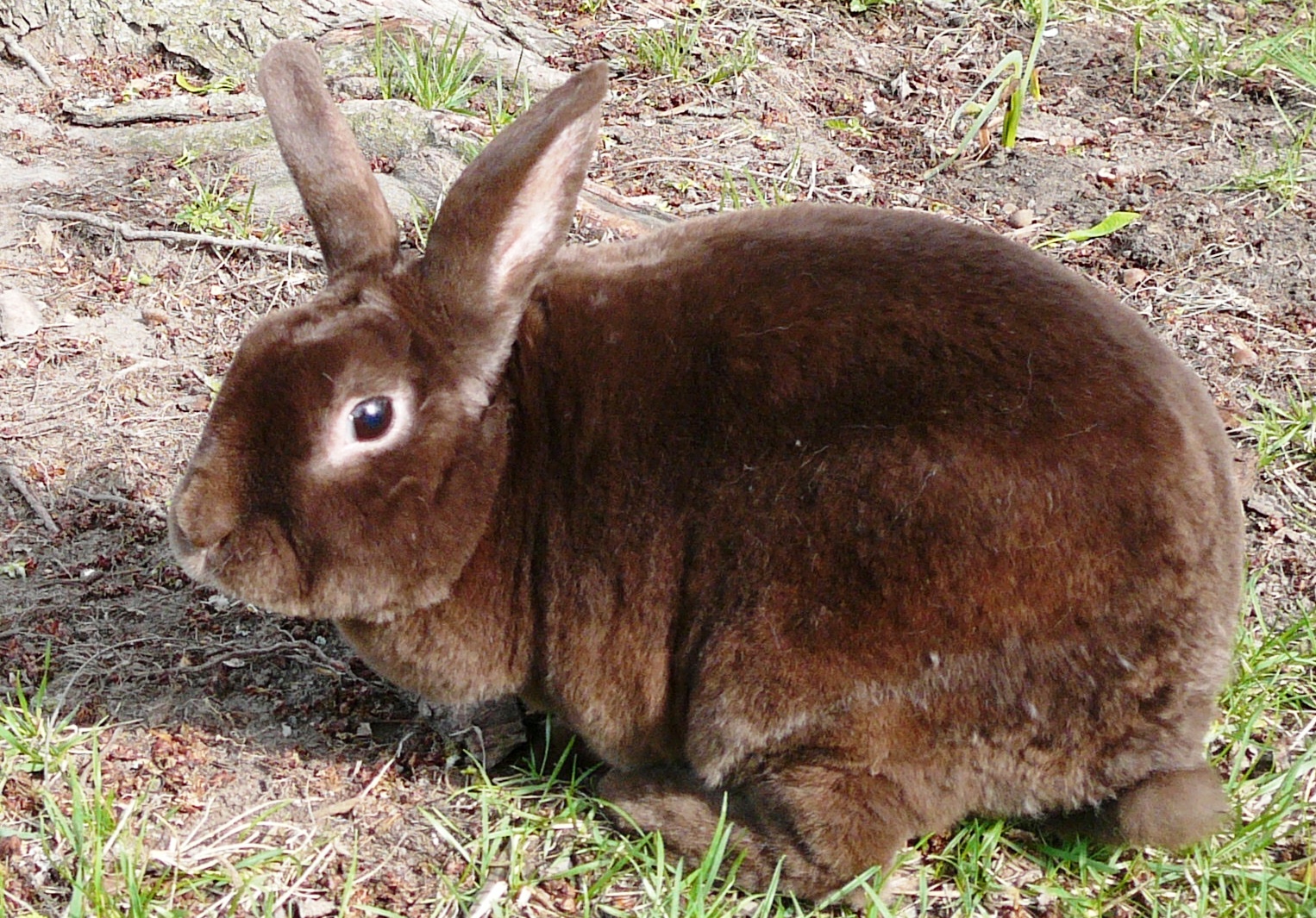
Captain Midnight ate a giraffe and an owl. I ate a camel and a lion. Crunch, crunch, crunch went Captain’s teeth on the owl. His dark nose worked back and forth and his whiskers twitched. We were eating animal crackers, a particularly satisfying meal for a rabbit. When you live your life running from fox and eagle, there is nothing quite so satisfying as sinking your teeth into a sweet crispy coyote.

There are turkeys in the trees.
Tell me if you please
why are there turkeys in the trees?

Captain was writing a poem, but he got stuck after this line. His problem was not rhyme. He had a whole list of possibilities: sneeze, sleeves, sweet peas. It was an ontological problem he was working on, as he chewed a rhinoceros. He was considering the nature of being. Why are there turkeys in the trees or fields or woods? Why are there turkeys anywhere? Why, for that matter, are there trees?

Captain finished off the rhino and sank into reverie. Turkeys, trees, he thought. Then something shifted. He, who was absorbed with his poem, began to be the subject of something else’s absorption. He felt lifted and held. He was no longer thinking, but was being thought by something larger than he.

 Captain Midnight was a rabbit with a contemplative nature. A lot of rabbits are like this. Maybe you have noticed. At dusk when rabbits feel safe and happy, you will see them on lawns and meadows at the edge of the woods, sitting in the grass still as stones. I like to think they are watching God rise from the cooling earth in a fine mist. Then while crickets throb and night descends, I think rabbits leave their bodies like empty locust husks on the lawns and become rapt by the God-mist gathering in soft folds in the valleys. The earth is blanketed with glad and tender rabbit spirit. And in kitchens, boardrooms, and on freeways, here and there, people lift their eyes, sigh and feel the hard bitterness of their hearts and the fear and worry ease a bit. Their shoulders soften. For a moment they are a little kinder and gentler. I believe rabbits do this to people.

The word contemplation comes from the Latin:  com (with) plus templum (temple, an open or consecrated space). It means to gaze attentively or think about intently. As a form of prayer, contemplation generally refers to an attitude of quiet open receptivity to God, a resting of mental activity and surrender into God’s gracious presence.

Originally contemplation meant to mark out an augural space, a place for divination. In ancient Rome the priest auger would mark off holy space by his staff and foretell events and interpret omens by considering the flights of birds, the location of lightening in the sky, and the arrangement of the entrails of animals. The priest’s interpretations guided affairs of state, including when the senate should meet, or a battle begin.

Russell StoverContemplation is the leisurely process of making sense of what is – the world as we know it – by circling around issues or ideas and considering them from varied vantage points. Contemplation implies spaciousness – a willingness not to succumb to anxious grasping after understanding. Contemplation requires some detachment, a divestment of the ownership of truth and letting go of one’s personal agendas and desires. A contemplative attitude suggests a poverty of spirit which is willing to say, “I do not know. Let us look at this together and see what we see.”       

When Captain Midnight is at his contemplative best, he spreads out with his stomach pressed into the earth, hind legs stretched out behind. And he vibrates. His body pulses in tiny rapid oscillations. He seems to tune into an extra high frequency energy source, receiving power, and converting it to rabbit voltage.

As a member of a prey species, Captain understands that contemplation and writing poems, or, for that matter, any creative endeavor, require courage in the face of death. Cramped narrow mindedness and fear close off contemplation. Contemplation flees in the face of anxiety which asserts that if I do not do something, say something, or control something – something really bad might happen to me or those I care about. You can’t get around it. Something I value has to die and it is often my notion of the way things ought to be. Many times a day smaller deaths to self are required in order to live with a contemplative spirit.

Feathers blowing in the breeze
Turkeys roosting in the trees.
A rabbit’s heart is free to seize
its Maker’s  joy on the wing
and behold the truth of any thing.

They began coming this summer. First one large turkey tentatively made its way out of the woods and across the clearing. It pecked at the corn under the bird feeder then lifted its head, swiveling on its long neck like a periscope.  Every few days he would be back. Then one day I lifted my head to count twenty turkeys ranging about the yard -four adults and sixteen chicks pecking, heads bobbing, clucking to each other softly. The cats, Captain Midnight, and I stared in astonishment.

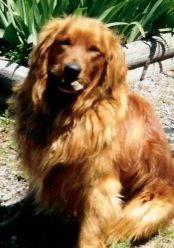
So Captain knew why there were turkeys in the trees. He saw them fly when Chance, the golden retriever, happened to come around the side of the house and began barking at the critters who had taken over his territory. Amid flapping wings and a giddy barking dog, the gobbling ganders rose to balance precariously on the branches as the chicks scrambled into the woodsChance 1. Chance had never seen anything quite so wonderful, and neither had Captain.

 May something as marvelous set you to contemplating and writing poems. 

What practices help you contemplate? Tell me what astonishes and delights you and inspires your creativity.

 http://www.fromholyground.org
http://www.fbook.me/sanctuary
 http://twitter.com/lfross


What’s Going on Here? Drunk on Cheap Wine?


LightHarold, awestruck and elated, told me that he had seen God. He said that God showed him hidden mysteries. No, he was not psychotic. He was simply full of Holiness bigger than his britches. Divinity burst through his immature psyche in sparks and streaks. He scared most people, impressed others, and annoyed his pastor.
He was angry and frustrated with church authorities who did not ordain him on the spot. He fussed and wore his experience like a badge of martyrdom.  He was impatient about getting on with his life as a spiritual teacher or guru, and frustrated that no one seemed to recognize his superiority in this field.

A word for this fellow’s condition might be illumination, sometimes mistaken for the apex of the spiritual journey, but, rather, a roller coaster period characterized by swings of ego inflation and deflation which may last a number of years.  I recognized this because I have been through such a painful period a time or two myself. I don’t know how people stood me.

According to some models for understanding the process of transformation in Christ, illumination is the middle period of spiritual development, occurring between purgation and union. In my experience these passages of spiritual growth do not proceed in an orderly linear fashion, but rather circle, repeating, and weaving in and out as the Spirit’s expression in the specific life of an individual. A person’s transformation is related to God’s purposes and the particular aspects of a personality and life situations that need cleansing, healing, reordering, and setting free.

The church and the Bible describe this passage of spiritual development in many ways – the vision of God, an opening of the heart, being born again, accepting Jesus as one’s Lord, a spiritual awakening. Though there are many ways of describing it, most would agree it is not the culmination of the journey. An individual receives a sudden infusion of the Holy Spirit – not once or twice, but over and over. Sometimes people receive more than they can “metabolize” and become intoxicated with God. When it happened to the gathered disciples on Pentecost, people thought they were drunk.

They are speaking our languages, describing God’s mighty works!” Their heads were spinning; they couldn’t make head or tail of any of it. They talked back and forth, confused: “What’s going on here?” Others joked, “They’re drunk on cheap wine.” Acts 2:12-13, The Message

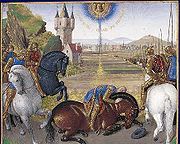
Such experiences, as Evelyn Underhill puts it, “fatigue the immature transcendental powers.” We get more of God than our personalities and bodies can handle. We lose our balance and appear a little wacky for a while. This happened to Paul on the road to Damascus when the voice of Christ knocked him off his horse and left him blind and blubbering. He had to lay low for a while as he integrated this experience. And even years afterwards, he was still a little hard to take.Conversion of Paul1 People have varying responses to large draughts of God. Not everyone becomes insufferable. In Harold’s case he felt that nobody really understood and knew God the way he did. To him all the other laborers in the vineyard, slogging away without a glimpse of the master, appeared as witless dullards. And I have to admit some of them probably were. Instead of focusing on what is wrong with those around them, some people respond to the Spirit infusion with a burst of creativity, an outpouring of  service, the expression of their gifts, or art of some kind. Then there are the hidden souls who only want to withdraw to sit in silence and solitude, where they feel alternately forgotten and useless, and enraptured and blissfully happy.  

However we respond to the bracing presence of the Holy Spirit blowing through our lives and being, there is likely more work to be done. This inglorious mundane work of dying to self and waiting irks us no end. We chaff and fuss as God slowly reshapes our motivations to conform to divine motivations. People do get drunk on the wine of God, but believe me the wine is not cheap.

Harold told me he had already died, done all that. I didn’t have the heart to disabuse him of his belief. First, because what did I know really? And second, what I would say would make no difference to him. I trusted God at work in him, more than anything I might prescribe.  Some kind of growth and transformation was afoot which I didn’t want to mess up.  I did have a sense there was some pruning ahead for him, and considerable surrender before sweet humility would blossom more fully in his being.  

Even though Harold began to get on my nerves, I felt compassion for him as one ought for anyone in this condition. He was pretty miserable. Over time the man calmed down and found his way to service. He became able to hold his degree of glory in one hand and the reality of his sin and brokenness in the other without tipping over and wallowing in one or the other. Instead of bursting with pride or sinking into a pit of despair, anger, and suffering he grew into the largeness of the gift of God’s revelation to him. He attained the strength of soul and groundedness in the soil of humility to grasp this paradox of the human condition: our frailty and our glory. That sort of balance and strength in Reality is something to behold.

Watching the purposes of God unfold in someone’s life as a spiritual director is a front row seat to seeing God and hidden mysteries. The winsome way of God with an individual soul keeps me, entertained and delighted, on the edge of my seat. Now I must be honest. I made Harold up. Any resemblance to any person, living or dead, is not intended and purely coincidental. If,  in an adaption of Carly Simon’s song, “you probably think this post is about you,” it is not.  I really have no idea what God is up to in your soul, except to say without a doubt it is something wondrous, breathtakingly beautiful, and beyond your wildest dreams. For the record, I am still working on finding my balance. 

sanctuary-tree-tiny1


Beauty and Making Cookies

42-15885238On the afternoon of the day my friend died in a hospital bed in Iowa City, my daughter and I made cookies. In the Kansas kitchen overlooking the finch feeder, while seventeen finch gobbled two pounds of thistle seed (95 cents a pound at Allen Farm and Feed), we measured flour and brown sugar, butter and ginger, and mixed them in the yellow bowl. Patting out the dough on the cookie sheet, we stopped to taste. “Umm, very good!” she said.
There, while she stood on the orange chair with a brown apron hanging to her ankles, I saw for the first time how the smooth curve of her cheek presses against space with such exquisite beauty. 

How is it that we linger for days and weeks over the latest atrocity and evidence that evil is afoot and keeping steady employment? As a nation, we dissect and examine sin and evil from every angle, as we are seduced into complicity through our own fascination with it. We ask the best minds of our day to analyze and respond to iniquity yet rarely consider intently the nature of beauty and how to create and sustain it in our lives and world.

Many seek beauty, but it is more often to possess it than to appreciate it.  As I impose my will on beauty, as I shape and prune it, cage it in my heart, and bow down and worship it with my reason and my money, it becomes a god, something I look to for my well being and satisfaction. Then beauty turns on me with its shrewish demands and shrivels into something harsh and burdensome which sends me off scurrying to polish it, insure it, buy more of it. No more is beauty a source of delight and joy. I have diminished it and myself by my lust, greed, and envy.

A young nurse stammered to tell me of the beauty she had seen last week. “I went for a walk with the dog down by the pond and I have never seen anything like it. After all the rain, the pond was brimming, spilling over the sides. I heard the water roaring through the drainage ditch. I saw God’s power, and everything was so green.” Tears glistened in her eyes.

True beauty is free. Our spendthrift God scatters it with lavish prodigality over the universe. The Trinity ceaselessly dusts us with beauty like pear blossoms sifting in white drifts on the lawn.

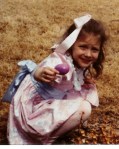
Would that we could approach our lives like kids on an Easter egg hunt at dawn – our world drenched with wonder and surprises nestled under every bush. When Moses was on the far side of the wilderness keeping his father-in-law’s flock, he turned aside to see the great sight of a burning bush. What amazes me about Moses is that he turned aside. He stopped doing what he was doing, turned his attention away from his work, and risked letting a sheep wander from his protective gaze, to see why the bush was not burned up. (Exodus 3)

Think of it. The liberation of the Hebrews and the rest of salvation history rested on this man’s freedom to wonder. The capacity for wonder and curiosity are essential to spiritual growth as well as to justice. A lot of prophets and saints knew how to dilly dally, how to daydream, how to poke along and stop and sniff the odd, the curious and find the hidden treasure under the lilac bush. The expectation and consent to be dazzled and amazed set the stage for God’s entrance into our lives.                 

                                    Diana and easter egg

May you discover the courage and grace this day to dilly dally,
to wonder, and to be astonished.


sanctuary-tree-tiny1

This post is excerpted from a book I wrote, Letters from the Holy Ground – Seeing God Where You Are, Sheed & Ward, 2000. pp 192-194. https://theprayinglife.wordpress.com/wp-admin/post-new.php You might like it.