Category Archives: spirituality

Choosing Joy

Gabriel:
Since Adam, being free to choose,
Chose to imagine he was free
To choose his own necessity,
Lost in his freedom, Man pursues
The shadow of his images:
Today the Unknown seeks the known;
What I am willed to ask, your own
Will has to answer; child, it lies
Within your power of choosing to
Conceive the Child who chooses you.

      W.H. Auden, For the Time Being – A Christmas Oratorio 


Here it is: a choice – a nod, a hushed “yes,” a hearty “you betcha!” a desperate “Ok what else is there?” Our assent to what seems impossible sets in motion a radically different way of perceiving reality and living our lives.

Many say, “No, absolutely not, no way!” Others – “Well maybe, later, we’ll see.” Or, “I tried it. Nothing there for me.” One cannot fault them too much. We have all demurred, delayed, hemmed, hawed, and held out for what our senses and minds can deliver. One ought to hesitate, for a sword will pierce through your heart too. For this yes is not to a social security card, a 401k, or health insurance. This assent will require the suffering and sorrow that deep down, mature Love asks of us.

The angel, Gabriel, in W.H. Auden’s poem, holds out the choice and the promise that await Mary and us on the brink of a new year. This notion of choice has been a recurring theme in my prayer and study over the past year.

Moment by moment we get to choose. Perhaps it is obvious to you, but it just slays me.

An angel stands perpetually at the doorway of our hearts posing the question. “Will you conceive, apprehend, take hold of Christ?” What God has willed the angel to ask, our own will has to answer. A dozen times a day we may turn away and polish up our “no.” We embellish it with our needs, our way, our life, our opinions, our truth.

No matter what issue, conflict, trauma, joy, or disaster is unfolding before me I get to choose how I will respond and what sort of “meaning” I will give it. Will I conceive the promise of new life, possibility, and the presence and power of God in the mix of my life experience? Or will I play out some dead-end soap opera with those same sullen resentments and fears?

If I say yes, I assent to live in mystery, to let go of control and surrender to a power and wisdom greater than mine. I choose not to be an American idol, but rather a bit player in a story far more sweeping and magnificent than my own drama.

Come on now. Don’t quibble. Don’t make that angel stand out in the cold, you standing there clutching your worry and anxiety. Take a chance on Love. Go ahead in 2010 and choose the Child who is choosing you.

Get pregnant with Joy!


Read more about prayer at
www.fromholyground.org

Contact Loretta at
lross@fromholyground.org, www.fbook.me/sanctuary

 Follow at http://twitter.com/lfross

 Become a fan of the The Sanctuary Foundation for Prayer

The Shepherd’s Story


Once in the fields in a storm
hunched down in a cave
I saw a red tongue of fire
leap from the heavens
lick down a cedar,
and split it in two.

The cloven tree shuddered
and screeched
as it crashed to the ground,
like an animal in the jaw
of some great beast.

________

It wasn’t what you’d think –
lovely heavenly hosts
in neat rows and pretty song.

It was mostly wings and terror.

Cold night
stars like ice
fire down to coals
flock settled in the fold.

Some scattered for cover, crying
the world is ending
which it was,
but not the way you think.

Fear –
tomorrow’s frets
yesterday’s regrets –
that ember of anxiety
that never goes out
no matter how much religion
you throw at it –

fear rose up and choked me.

The great heaping clouds
of wings
and the Word that wrote itself
in the marrow of my bones
split me
into before and after
and left me puddled
on the ground
soaking into mystery.

Most don’t reckon the sheer terror
of God crashing into their lives.
I learned fear was not my enemy,
but a sign of His presence.

Ignorant and blind as a wood tick
on a lamb’s flank,
I’d been crawling
through a patch of fleece
and a bit of warm skin
without a clue
as to what is really going on.

I froze, stupefied.

The sovereign almighty God was asking
something of me,
God wanted me,
my will,
the way I held my world together in my
wood tick brain
my perceptions and understanding
my sense of competence,
my adequacy
seized and consumed by wings.

A master’s painting?
A Messiah chorus?
A quiet pastoral scene?

It was gasping for air,
trying to stay upright
with not a thing to hang onto.

What’s the Almighty to do –
all hobbled up with majesty
finally having to slip in the back
door
of the world
through a virgin’s womb?

It was Truth
taking aim
condensing its enormity –
its hosts and universes,
its fire and power and goodness –
and homing into me
like a dove returning to her nest
like a lamb turning to the breast.

It wasn’t what you’d think.
It was mostly wings and terror.

Then, something so plain
and ordinary,
a baby,
and a Love small enough
for me to carry.


For who can endure the day of his coming, and who can stand when he appears? Malachi 3:2
One Christmas I got a good dose of the awesome power of God. I wrote this poem in an attempt to describe that experience.  I love the way Annie Dillard puts it: “On the whole, I do not find Christians, outside of the catacombs, sufficiently sensible of conditions.”
May the Almighty God knock your socks off this Christmas!

Prayer Boots – Part 1

I am off to do some teaching and visiting with family. This week and next, I offer here in two parts a chapter from my book, Letters from the Holy Ground. Get some boots and go pray.

bootsI went to Holton Farm and Home Store last week and bought some praying gear, boots, warm socks and gloves.  I selected a pair of sturdy waterproof boots from the row of five buckle galoshes next to the watering troughs.  I think I am ready now.  I purchased the boots with money friends at the church I served gave me when I left. I kept the money, which came attached to the leaves of a prayer plant, for a whole year not knowing just how to spend it.  I considered books, office supplies and liturgical accouterments.  Now I see that proper prayer vestments include boots for walking over this land we call holy.

The more we pray, the more we discover prayer’s richness and power, and the more we hunger for it.  In its essence prayer is simply paying attention to God.  And that turning of the will to God, that choice to attend to God, is how we participate in making holy ground.

There is a temptation in the spiritual life to talk about praying, to read about it, to write about it, to attend workshops on it, to preach sermons about it, to feel guilty about not doing it, to build edifices where it is supposed to happen- anything but the scandalously simple, yet arduous task of doing it.  In contrast to our institutions of theological and religious education, the one thing the disciples asked Jesus to teach them was how to pray; and Jesus taught them by simply praying. “Here, do it like this,” he said.

So I am praying, turning my attention to God more intentionally and for longer periods of time with no particular result in mind beyond a simple open presence to the Holy One.  A good deal of this praying is happening on the land.  And when you stalk holiness in autumn in Kansas, you need a good pair of boots.

Crouched under the cedar in the rain, sloshing along the winding creek, following the deer trail up the gully, I try tocedar branch forget myself in prayer that I might remember who I really am.  I imagine hiking toward a place of being so self-forgotten in God that one needs nothing external to validate oneself.  Is it possible to follow the path to holy ground where the communion of prayer alone feeds and sustains us and the earth?

Perhaps our task is not so much making holy space in our lives, as becoming holy space ourselves. One way of becoming holy ground is to remember who we are.  And we are often quite convinced that we most certainly have been forgotten. That may be because we just can’t bear the wonder and joy of love.  Is that why Love stood before us that night before we killed Love and told us: “This bread is my body…this wine, a new promise sealed in my blood.  Don’t forget!”?

“Don’t forget,” Love said.  “I beg you not to forget.  For when you forget, you hang me back on the cross with your lies and self deception and fear and heedless stampede over my tender presence in all creation.”

communionStill we do forget.  Psychiatrist Gerald May writes that we often do not remember experiences of communion with God, because they are so threatening to our egos. The loss of self-definition characteristic of unitive experiences arouses unconscious fear. Wiping off the chalkboard of our spiritual experience, our officious ego scolds, “Let’s just forget this ever happened and go back to worshiping me as almighty in your life.”

 What might you need to remember?

 More next week…

 Gerald May in Will and Spirit (San Francisco: Harper & Row, 1987) Chapter 5.

Read more about prayer at
www.fromholyground.org

Contact Loretta at
lross@fromholyground.org, www.fbook.me/sanctuary

 Follow at http://twitter.com/lfross

Letting Go

leavesThe gold canopy outside my window has disappeared. For two weeks light, filtered and gilded by maple leaves, shed luster on the yellow carpet beneath. The luminous scene drew me into in a warm cocoon of whispering leaves. I listened to their stories of summer, their losses and gains, and their sweet good-byes.

Now stark branches make black scribbles on the wan blue sky. The dove perching with her head under her wing seems so exposed. The leaves on the ground curl like an old person’s hand, mottled and transparent. Only a few leaves remain on the branches, twisting in the wind, straining against their stems.

The season of letting go, of loosening one’s fastenings and sailing out into the unknown, comes round again. Too soon. A November nostalgia settles over me, that curious longing for lost opportunities and for what was, which, in retrospect, reveals those things, which were more important than you ever realized at the time. November – a time to disrobe, to remove what is no longer serviceable and send energy into the depths, the root of things.

Someone did something that really hurt my feelings. I have carried the wound for a week or two. It still smarts and brings tears when I take it out and look at it. I believe God is telling me to let it go, to have compassion for this person and her suffering. I don’t want to though. I wonder if there is something I need to listen to and learn from in the intensity of the pain. It is one of those situations where there is really little I can do, but move on with generosity and amnesia, until forgiveness moves in.

So, let’s turn back to the leaves. The word used to describe the process of a tree shedding its foliage is senescence – getting old. The eleventh month impresses upon us the reality of aging, of time running out, as the year winds down. As the days shorten, the green chlorophyll is destroyed and oranges and reds in the leaves are revealed. The tree is preparing for winter dormancy and draws all the nutrients in the leaves through the stems and down into the roots. The sugars and amino acids that are produced, instead of the chlorophyll dependent upon the sunlight, serve as a kind of antifreeze for the tree. leaves sky

At the place where a leaf stem fastens to a branch, there are two kinds of cells. The part of the stem attached to the branch contains waxy impermeable cells. These are called the bundle scar and contain the bud of next year’s leaf. The cells connected to the leaf itself are softer and snap easily in the wind and rain.

I watch a lone leaf near the top of my neighbor’s tree. It flutters, twists, turns in the wind, then releases itself and drops floating down through the huge dark limbs, finally settling lightly on the earth below like a sigh.

Oh to be drawn so gracefully by the tug of gravity into the arms of God’s providence. How glorious to ride the wind, to be tossed and blown. I think I should like to die in autumn or early winter, dropping like a late hanging leaf from a very tall tree. I am grateful to the leaves this year and their lesson to let go, to surrender, to fall, and come to rest at the foot of the tree of life. I am grateful, too, for bundle scars, that place that heals the wound of separation with the promise of new growth.

“Let go,” the leaves say as the wind sends them scuttling up the street under the moon. “Let go.”

Brown leaves

Read more about prayer at
www.fromholyground.org, www.theprayinglife.wordpress.com

Contact Loretta at
lross@fromholyground.org, www.fbook.me/sanctuary

 Follow at http://twitter.com/lfross

Small Things, Great Love

messy officeMy desk is a rat’s nest of notes, files, cards, books, pens and unfinished projects. A pile of bank statements and bills waits on the credenza. I am writing a blog, an essay, and a book, as well as meeting with clients, preparing for classes at church, responding to pastoral care needs, and planning for youth group. I have several presentations coming up and other projects on hold. My pantry ought to be roped off as a hazardous area. Then there are the meetings to attend, my 96 year old mom, my daughters, friends, pets, and oh, yes, God.

If this does not sound like the life of a hermit pray-er as I describe myself on the About Page of this blog, bear with me. I am still praying. I suspect things might be a little more organized and tidy if I were not, but overall things would be a bigger mess.

This week I received two quotes from friends in my email. One was from Mother Teresa: “We can do no great things, only small things with great love.” The other was from Charles Spurgeon: “Learn to say no. It will be of more use to you than to be able to read Latin.” Here’s where I went wrong. I took four years of Latin in high school.

Charles H. Spurgeon was a 19th century English Baptist who preached to crowds of ten thousand in London. As many of us, he had his hand in a lot of other things as well. I figure you know who Mother Teresa was. Both of these busy servants of God came into my life this week to offer their two cents on how to handle something which afflicts not only pastors, but just about everyone else I know.  Overwhelmed with tasks, stressed, and anxious many of us need to learn how to say no. Moreover, we need to learn to say no not only to other people, but also to ourselves. For I have found most of us are usually the most demanding, unreasonable, and, frequently, atheistic boss we have.

Recently someone described how she is simplifying her life. She asked herself why she was doing what she did, and was she really called to this. When I find myself on the treadmill of over doing, I notice an odd thing that happens to me. The more I am trying to do, the more I think I need to do, until I totally lose perspective and am worrying about accomplishing things, which in more sane moments I realize I do not need to do. This loss of perspective and over functioning which feeds on itself is a characteristic of addiction.

Mother Teresa says, “Don’t sweat the great stuff – getting big projects, big plans accomplished. Instead do small thingsBook on shelf with great love.” I like that. I can do that. Stay in the present. Put the file away carefully with reverence. Respond to this email thoughtfully with love. Gratefully gather up all the scattered pens and pencils. Put the books back on the shelf with thanksgiving. See the wonder of God’s provision in the goodness of this moment, as I think of you, yes, you, with love and gratitude. Just tend to the next small thing with all the love and generosity you can bring. Leave the outcomes, the great ends to God.

“The smallest thing, touched by love, is immediately transformed and becomes sublime,” wrote Thomas Merton. I still need to learn to say no, but I also want to learn how to work in such a way that what I touch becomes holy. I think it is all in the focus. Is God the center of my concern, or my Latin assignment? It makes all the difference.

Assignment: Practice doing small things with great love this week. Let me know how it goes.

More about prayer –
www.fromholyground.org

Contact Loretta –
lross@fromholyground.org, www.fbook.me/sanctuary

Follow on Twitter

Holy Spirit Contracting

 Demolition, Alterations, Renovations, Disaster Reconstruction

His delight is not in the strength of the horse,
nor his pleasure in the speed of a runner;
but the Lord takes pleasure in those who fear him,
in those who hope in his steadfast love.   Psalm 147: 10-11

j0432555I have been freaking out. Jesus is in my interior space and he is rearranging the furniture. He pushes a couch across the room. What! Are you going to put that over there? He opens a closet door and starts sorting through things I had hidden away. He is making piles of stuff to haul to the landfill and take to Good Will. Wait, Jesus! I might need that!  The place is a mess.  I hope nobody stops by unannounced.

Jesus doesn’t seem to mind the chaos he is making and pretty much ignores me. He pulls out something and holds it up. “Here take a look at this,” he says. Then I cringe, or weep, or shudder, or feel a tiny bit hopeful.

I asked for this. I prayed one of those reckless prayers which come upon us occasionally. Then I went and asked others to pray for me too. Really reckless. The prayer was to remove those things in me that blocked my receptivity to the Grace of God. What prompted the prayer was my need. You know – the frustration, weariness, sadness, loneliness, fear – it comes in many forms – that eats away at your peace and joy.

You start thinking, well if I could just get this thing changed, or add this or subtract that from Big Sale sign in red over white backgroundmy life – ah then I would feel so much better. As you know, this is the basic doctrine of The  Church of  Unholy Consumption, in which most of us are credit card carrying members. We get our daily devotions from TV commercials and the advertising that permeates every nook and cranny of our lives. We are reassured over and over that our problems may be solved by satisfying our desires. Figure out what you want and then go get it. You deserve it. Don’t know what you want? Well may we make a suggestion? We just got this new ratchet in today!

Of course we have desires and need to respect them and get them met appropriately. But desires may quickly become disordered and increasingly demanding. Ian Matthews (The Impact of God-Soundings from St. John of the Cross) writes, “When desire is out of order, it increasingly causes fatigue, anxiety, confusion, a sense of guilt, and finally an inability to do anything about it. It is a picture of addiction where the person’s dependence is killing him. … Disorder here, while it may bring gratification, ultimately kills joy.” (Page 41)

Jesus, no snake oil salesman of salvation, offers something radically different and – let’s be honest here – painful. John of the Cross writes about the process of deeper communion with Christ, “To come to what you know not, you must go by way of where you know not.”

To simply to be present to a need without having to blame someone, rush out and fill it, or feel ashamed is something people recovering from addictions understand very well. Iain Matthews continues: “Not filling the gap can feel like starving, but it allows the genuinely new to be disclosed. It allows one to live not as a consumer among objects, but as a person among persons fit for communion, for the love which can hold the other, and be held with open palms. That is the level of spirit: availability as a person for communion: the space for the gift of the Other. This is more than just a rearrangement of the pieces.” (pages 44-45)

Albert Einstein said, “No problem was ever solved by the same mind that created it.” Yet we think our problems will be resolved by a rearrangement of the pieces, that is, changing the organization of our lives, our relationships, our jobs, our life partners, our churches, our institutions. We think we can bring wholeness for ourselves by restructuring, redistribution, reimagining, and redesigning. We think strong horses and fast runners will solve our problems. Such thinking keeps us at the surface level and relying on ourselves – our intellect, creativity, and flexibility – for the answers. We refuse to tolerate the painful “gap” through which the genuinely new may be disclosed and Grace may emerge.

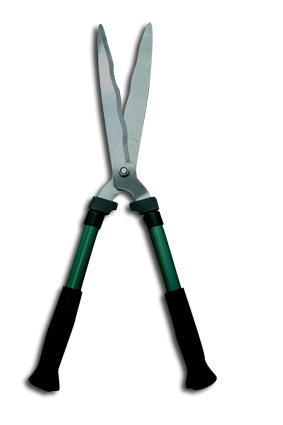
cyclone_hedgeshearwavyThere may come a time when you just get sick of it. You see the shallowness, the lack of freedom, the treadmill nature of operating our lives on the level of our senses. You are tired of watching the shadows of your ever shifting, ever insatiable surface desires. You may see a need for a deep down fundamental shift, a conversion of your heart. You may say, “Jesus, I want more than a rearrangement of the pieces. I want you.”

That’s Jesus’ cue. And he hops right to it. He sets to work, not on your external reality – the things you thought needed to be improved – but on reordering your desires themselves. He shifts your priorities, your values. He prunes runaway pride. He hacks out dead attitudes. He fires up a chainsaw and cuts away whole walls of rigid thinking. And friends, it is just as he told us. It feels terrible. It feels like you are dying, because you are.

Eugene Peterson paraphrases the verses from Psalm 147 above in this way: He’s not impressed with horsepower; the size of our muscles means little to him. Those who fear God, get God’s attention; they can depend on his strength. j0178928

Christ opens the gate on that pen of strong horses you had corralled and sets them free. He dismisses all the fast runners – the thinkers, the experts, the latest technologies. And you are left with your fear, your wonder, and your love for this God who cares enough about you to enter into you and create such a rumpus. There in the mess you untie your hope from your own efforts and strength and attach it to the strength of God. And little by little you begin to trust that something new and amazing is emerging, something which you could never think of or make happen in a thousand years.

Now tell me, who wouldn’t love a God like this?


More about prayer –
www.fromholyground.org

Contact Loretta –
lross@fromholyground.org, www.fbook.me/sanctuary

Follow on Twitter

What Is Truth?

 Butterscotch and Ahs Discuss Epistemology

In this time of crumbling institutions, conflict and rapid change, the question of what is truth emerges as we weigh in for and against various approaches to solving our problems. How do you express and live out truth as you know and experience it? How do you respond when your truth collides with someone else’s? What does Jesus mean when he says he is the truth?

Butterscotch, the golden rex rabbit, and Ahs, the collie, reclined in the shade under the pear tree. A gentle breeze lifted the hair on their necks. Butterscotch stretched her hind legs out behind her stubby tail. Ahs lay with his chin on the ground, nose close to her cage, eyes watchful. He heaved a long sigh.

Butterscotch 3“Stinky Dog, it is rude for you to drool like that when you look at me,” Butterscotch said. “Don’t think for a minute that I don’t notice how your jaw goes slack and you begin to salivate every time you see me. A prey species never has a moment’s rest. Which is why I say Jesus is getting a bad rap. Folks sniffing him up one side and down the other, running circles around him, chasing him into the brush, cornering him with their philosophies and theologies, poking him with their politics, trapping him in their minds – like he was some wild thing somebody wanted to make a hat or mittens out of.”

The dog sighed again. The rabbit pointedly rubbed her nose with her paw. Carnivores have terrible breath. “How do you know he doesn’t like it? Hasn’t even brought it all about?” asked the dog.

“Well, if you really knew him like I do, you’d see my point,” she sniffed.

The topic for the afternoon was epistemology – truth, and how you know what you know. Specifically, the two creatures were discussing the quest for the historical Jesus, the search by Biblical scholars to determine the historical reliability of the gospels. Their findings are seen by some as a frontal attack on Christianity.Ahs

Not that the rabbit put much store in two legged saviors. But she was able to recognize truth when she saw it. Ahs, on the other hand, slavishly worshiped two leggeds, followed them about, whined and begged to eat their food, and lie next to them. She knew for a fact that he let them pet him and never cleaned up afterward.

Since the pair could not read they hadn’t got as far as taking votes on whether Jesus really said and did the things that scripture claimed. Besides the sun was warm on their backs, the wind just right to waft the fragrance of honeysuckle their way, and neither believed the veracity of scriptural witness was the real issue.

068_le_christ_redempteur  14th CHow does one know what one knows? On what do we base our hope? On what authority does one make a claim? And just what does real mean anyway?  Butterscotch, like the blind man in John, rested her case on the indisputable facts of her experience. “Whether this man is a sinner or not, I do not know. One thing I know, that once I was blind, now I see!” Her reality was corroborated by the testimony of witnesses. Toad in the flower bed south of the house agreed that she was indeed a changed creature following some kind of encounter with this Jesus. Mourning Dove reported that the rabbit was more humble and compassionate.

Ahs, on the other hand, more faithful or more gullible, relied on the testimony of tradition and the dogma of the church. Yet each appreciated the limitations of his or her perspective. Neither the uncritical acceptance of systematic dogmatics, nor the subjective witness of the inner bunny could completely satisfy the inquiring mind. In the end the two were left with the disquieting notion that everything might be in the eye of the beholder, the universe a dream, and the two of them, snoozing under the pear tree, only the imagination of some mind greater than their own.

There is a bit of the scientist in every mystic, who sets out to test in his or her own life if Jesus Christ is really all he is cracked up to be. “Prove it,” he says to God. Here are all these promises: freedom, joy, abundance, peace, wholeness, justice, truth, and life eternal. “Show me,” says the mystic and sets out to experiment with divinity in the laboratory of her experience.

In the beginning God is the object of the search. At some point God may peremptorily rise out of the test tube and take over the experiment. I find myself being dissected. My soul is flayed open by truth.light and trees I am blinded by glaring light and toasted over a Bunsen burner, where my impurities are burned away and I am distilled into my essence. I am no longer in control of this process. The knower and the known have shifted places. And truth is not something I can find, but something that has me in its grasp.

Theologian Lesslie Newbigin observes, “Reason, even the most acutely critical reason cannot establish truth.” … [This is because] You cannot criticize a statement of what claims to be the truth except on the basis of some other truth-claim – which at the moment – you accept without criticism. But that truth-claim on which your critique is based must in turn be criticized. Any claim to know truth is, therefore, simply a concealed assertion of power.” 

The work of scientist Michael Polanyi reminds us that “all knowing involves the personal participation of the knower, that knowing always involves the risk of being wrong, and that the struggle to know calls for the fullest exercise of personal responsibility.”

Instead of seeking proofs of God from reason or experience, the contemplative finds fulfillment simply and humbly dwelling in love in God’s presence.  The contemplative gives God entry into the world, not through a claim of truth, but through a believing heart. Instead of an exercise of power through the assertion of my reality over yours via dazzling argument or feats of spiritual prowess, the contemplative takes the vulnerable route of allowing God to make God’s own appeal through the context of his or her surrendered life.

That’s how Jesus did it. He seems to me to be asking us to do the same.

Agony in the Garden

Excerpts from Letters from the Holy Ground – Seeing God Where You Are, Loretta Ross (-Gotta), Sheed & Ward, 2002, p 118-120.  Read more….

More about prayer –
www.fromholyground.org

Contact Loretta –
lross@fromholyground.org, www.fbook.me/sanctuary

Follow on Twitter

Day of Prayer

deer at dawn

I woke surrounded by warm pink light. Dawn filled the room like a rosy fog and drew me outside to look at the eastern sky. Banks of darker clouds, edged in gold, piled above the rose glow. Within minutes the sky darkened. Thunder rumbled. Rain fell gently throughout the morning and afternoon.

I spent the whole day chasing after that rosy suffusion which called me to awareness. But the light had flown to some other window, some other sleeper. I was left with a soft kiss, a sweet promise, and an ache in my heart that burned like a flame.  

This day my prayer was bare and to the point: I want you – not my way, my plans, my hopes, my dreams. Not peace on earth, healing for the suffering, hope for the broken hearted, or justice for the oppressed. I want YOU- giver of dawn and rain and this yearning in my heart for something unnamable, but ever compelling and true.

“The soul is not thought, nor is the will controlled by thought. It would be a great misfortune if it were. The soul’s profit then consists not in thinking much, but in loving much,” advised Teresa of Avila. I would rather think, connive, plan, strategize, manipulate, control – anything, but love this Author of our Being. But love is the way, says Teresa, as well as a whole company of others, including the Beatles.

Little renders us more vulnerable than love. A desire, a longing for someone, something beyond my grasp requires me to recognize my need and my limits. To love is to esteem the freedom of the Beloved and bear the pain of the essential separation of oneself from what is other than oneself. Love asks us to suffer the anguish of the reality that we may never fully possess what we love. Love asks us to be poor and naked in our need and our dependence upon the mercy of our Beloved.

No wonder we try to satisfy our longing for love by attachments to things which appear at first glance to deliver more and ask less of us than the uncompromising call of Christ. No wonder we attempt to extract from people, possessions, and work what only the Source of Love can give us. However, we soon find ourselves enslaved to and sucked dry by the insatiable demands of such false lovers.

Today I am sick, sin-sick, of my attachment to the world and my ego with its endless unappeasable needs.  I am weary and sore from the brutality and violence of a drive to succeed, ignoring my limits, and trying to do too much and be too much. Who can save me from myself, this body of death?

Only Love, Vulnerable Love entering into our misery as Christ Jesus, summoning us from our sleep, whispering, “Let go. Let go of it all. Follow me. I am all you will ever need.”  

So this day my prayer is a famished stumbling after Love. It is holding out my heart saying, “Here take it. I am yours.” It is Peter telling Jesus, with that desperate hope, “Lord, there is no one else that we can go to! Your words give eternal life. (John 6:68 CEV)  

Today my prayer is bearing the pain of this mystery, this rosy dawn which woos and embraces us all.  Amen.

 deer at dawn small

More about prayer –
www.fromholyground.org, www.theprayinglife.wordpress.com

Contact Loretta –
lross@fromholyground.org, www.fbook.me/sanctuary

Follow on Twitter

A Calm and Quiet Soul

It is a simple psalm – the shortest in the Hebrew Scriptures, only three verses, easy to miss. It is a little announcement, a tweet, a facebook status post:

 O Lord, my heart is not lifted up,C, Co 1987 002
   my eyes are not raised too high;
I do not occupy myself with things
   too great and too marvelous for me.                             
But I have calmed and quieted my soul,
   like a weaned child with its mother;
   my soul is like the weaned child that is with me.
O Israel, hope in the Lord
   from this time on and for evermore. Psalm 131

The psalmist does not offer his knowledge, answers, opinions, strategies, outrage, or some new technological advance. He does not blast his enemies and ask for God’s vengeance. He does not recite a litany of his sorrows, nor does he plead for mercy. He does not even offer God praise or thanksgiving. He simply posts a calm and quiet soul and out of his serenity emerges a message to his friends, Israel: hope in God.

Here is no flashy super hero, no glamorous celebrity, no clever talking head striding up to the microphone to silence opponents with verbal repartee and inflammatory speech. Instead we find a balm for all wounds and a cool hand to smooth out the furrows in the forehead of a distracted, feverish world.

Peace is polite and unassuming. It does not force its way on others or announce itself with strobe lights and blaring headlines. With the irony, sarcasm, and impatience so endemic in our world, we may think, “Big deal. So the guy’s calmed himself down. Whatever.”

It is easy to miss the importance of this. I think some of you know how much work it takes to create and maintain inner peace. You have an idea of the courage and selflessness a calm and quiet heart requires. Such peace is won by the bloody confrontation with inner truth and the battle with all in oneself that resists or thwarts reconciliation.

D, Co 1987A calm heart is the heart of a weaned child, no longing gasping and grasping for nourishment from its mother. The psalmist has mastered his appetites and addictions. He has grown up and can return to the source of life free of the demanding temptations of ambition, restlessness, and narcissism.

The psalmist does a startling thing here. Notice that he is not blaming, or damning, or threatening to sue whatever has upset him or caused him to despair. We do not know what has set him about calming his heart. What we do know is that he has assumed responsibility for his inner peace and his outward response to the world. He does not hold others accountable for his difficulty. He is reconciled with his own experience. His soul is at rest and his desire for his friends is the hope he has found in God.

A calm and quiet soul is a great lake of strength and serenity, a pool of stillness reflecting reality where many come to drink. Yet the cacophony of the postmodern world has little appreciation for such souls. These are hidden folk with no desire for their five minutes of fame. They remain rooted and grounded in the soil of love, flexible, bending with the winds of change, and standing tall in tough times. I have known a few. I want to be someone like that more than anything. Don’t you?

For the past couple of weeks I’ve had the “eye twitch.” You know, that annoying  hysterical jerk of the eyelid? I’ve been so tired. I have not been respecting my limits. My sites have been set too high. I have been occupying myself with things too great for me.

It is a simple psalm. It is really a lullaby. Sing it to yourself this week.

 DC, Co 1987 1

If you alone find inner peace, thousands around you will be saved.
– St. Seraphim of Sarov

New issue of Holy Ground, a quarterly reflection on contemplative life, published by The Sanctuary Foundation for Prayer is out! This issue is about what happens when discernment appears to go wrong, resistance to love, and a puppy named Elijah. To request a free copy:  email info@fromholyground.org. Include your name and mailing address. We will send your copy right away.

Contact Loretta:
lross@fromholyground.org, www.fbook.me/sanctuary
Follow:  http://twitter.com/lfross

Wondrous Stories about God

blue_eared_kingfisherThe world is not a courtroom,
There is no judge, no jury, no plaintiff.
This is a caravan, filled with eccentric beings 
telling wondrous stories about God.                    ~Saadi

Could it be that the cacophony of our communication pouring into the air space, cyperspace, and onto pages and pages of paper is nothing more, or less, than eccentric beings telling stories about God?  One and all, we scrawl out as best we can our truth, our passion, our experience as creatures on this planet. We tell our stories through the choices we make, the friends we keep, and our mistakes and failures. We weave wondrous tales as we frame and express the meaning we give to our unique and precious lives.

We tweet and friend and facebook and link up and plaxo as we stake out our truth and territory like the birds in the woods calling back and forth.
“Are you there?”
“Yes, I am over here.”
“Well I am here. This is my territory. This is what I see. What do you see?”
“I don’t see what you see. I see this.”

 And yes, we are indeed, eccentric – wildly, delightfully, and horrifyingly so at times.

I listen a lot to people’s stories about God or the apparent absence of God in their lives. Together we lift their experiences to the light, turn them to and fro, and notice something spiritual directors like to call “movements of the Spirit” (a piece of spiritual formation jargon that makes me want to giggle). This spiritual practice involves learning to pay attention to and recognize God’s way with you and what God might be saying to you in the context of your being and daily life experience. Sometimes we work like a GSI (God Scene Investigation) team. We pick up bits of evidence. We look carefully and reverently at what we find. We piece together scraps of your life story in God. We hold it all up to the wisdom and guidance of the Spirit. We weigh it against the texts of scripture, the tradition of faith communities, and your own common sense, reason, and intuition. Then we wait for confirmation and/or redirection from the Spirit, as it speaks through your community, relationships, scriptures, and own heart.

Of course, it is rarely this tidy. Like babies babbling and toddlers scribbling, our stories are stumbling incomplete attempts to capture the unnamable ineffable Reality in which we live andchurch-bells move and find our being.  “The heavens are telling of the glory of God; and their expanse is declaring the work of His hands. Day to day pours forth speech, and night to night reveals knowledge,” sings the psalmist uttering his own story. (Psalm 19)  In ways both, crude and blasphemous, and sublime and exalted, we join our voices with all the people on earth and all the company of heaven in every time and place who forever to sing to the glory of God.

One of the eccentrics on this caravan is poet, Gerald Manley Hopkins. With a grace and beauty that stun me, he captures the notion of all the creatures in creation telling at once their stories of holiness.               

dragonfly 1As kingfishers catch fire,
Dragonflies draw flame;
As tumbled over rim in roundy wells
Stones ring; like each tucked string tells, each hung bell’s
Bow swung finds tongue to fling out broad its name;
Each mortal thing does one thing and the same:
Deals out that being indoors each one dwells;
Selves – goes its self; myself  it speaks and spells,
Crying What I do is me; for that I came.
I say more: the just man justices;
Keeps grace: that keeps all his goings graces;
Acts in God’s eye what in God’s eye he is –
Christ. For Christ plays in ten thousand places,
Lovely in limbs, and lovely in eyes not his
To the Father through the features of men’s faces.
                                                          Gerald Manley Hopkins

So I say Tweet your hearts out: Scenes by the wayside, tales of the sea, stories of Jesus, tell them  to me!

sanctuary-tree-tiny1

Read more about spiritual direction and stories about God at
www.fromholyground.org, www.sdiworld.org, www.theprayinglife.wordpress.com

Contact Loretta at
lross@fromholyground.org, www.fbook.me/sanctuary

 Follow at http://twitter.com/lfross