The way I see it, a mystic takes a peek at God and then does her best to show the rest of us what she saw. She’ll use image-language, not discourse. Giving an image is the giving of gold, the biggest thing she’s got… Hurling and wielding the best stuff she can imagine, insisting on an unmediated Way of Wakefulness,…she agrees to the quiet morning hour in front of God in exchange for a bit of revelation. She doesn’t ditch tradition as much as take it for its word and peer inside its cavernous shell. There must still be something worth saying. There must still be something worth pointing to.
-Jessie Harriman in God Laughs and Plays by David James Duncan

I greet you with my pockets turned inside out, holding out a few crumbs I picked from the seam.
Most every time I write this blog, I write from such a place of intellectual and spiritual poverty, that I feel like I am scraping gum off the sidewalk to offer you.
Oh, I have plenty of previously written material. Some of it you might like or find useful. I also seem to have an endless supply of ideas, opinions, and questions we could take up together here. However the longer I sit in that quiet morning hour waiting for a bit of revelation, the more stale and the less true all my previous thinking and posturing appear to be.
Something in me insists on peering into the Mystery anew each time I write. This is both an irresistible delight and a harrowing encounter with my own empty pockets.
I haul myself and the collected wear and tear of personal and world events before the throne of Great Stillness. There I reach out beyond my limits and press my palm in the face of Mystery and say, “Here. Here. Put it here.”
Then I wait.
In that waiting there is only the ache of love – nameless, infinite, ever beyond my control.
“Trust” was the word I found in my palm this week. Trust? That old thing? How many times does this word turn up in scripture and in the words we say to each other? How about something new, fresh, maybe a little edgier?
Thousands of children with stick legs and arms are dying in the horn of Africa. A young man just nineteen years old came home to the little town up the road, where he was buried with military honors. Global markets, drunk on anxiety, dip and sway, fall and crawl up again. Politicians argue. A self-styled prophet of God goes to prison for doing unspeakable things to little girls.
Holy One, the world is going to hell in a hand basket and all you can offer is trust?
Trust in the Lord with all your heart,
And lean not on your own understanding;
In all your ways acknowledge Him,
And He shall direct your paths.
Do not be wise in your own eyes;
Fear the Lord and depart from evil.
It will be health to your flesh,
And strength to your bones.
Proverbs 3:5-8, New King James Version
So – help yourself these crumbs:

Trust in what you cannot fully know or name or understand, or write about.
Trust in the enduring love in your heart that weeps with compassion and yearns for justice and struggles
to know what to do in these challenging times.
Trust in your conviction that God will not be defeated by the evil and sin of humans.
Trust that Someone is afoot, knitting together the broken bones of Christ’s body.
And most amazing of all:
Trust that our trust and faith are the salve,
which heals all wounds.
And he could do no miracle there except he laid hands on a few sick people and healed them.
And he wondered at their unbelief. Mark 6:5-6
Posted in Contemplation, prayer, Prayer, spirituality
Tagged christ, Christianity, David James Duncan, emptiness, God, Jesus, Mystery, Prayer, Religion & Spirituality, trust, writing

We meet at dawn when the air is cool and resonates with chirps and whistles, caws and clucks. A woodpecker drills down the block. The scalloped edges of clouds glow in the eastern sky.
Wendell speaks. I listen. Today he talks of man’s overriding desire.
The fullness of a cup equals
that of the sea – unless the mind
conceive of more, longing for women
in disregard of the limit
of singularity, gluttonous beyond
hunger, greedy for money in excess
of goods, lusting for Heaven
in excess, …
I put down my cup, avoiding his eyes, while he continues.
And so the mind
grows a big belly, a sack full
of the thought of more, and the whole
structure of enough, of life itself,
which is never more nor less
than enough, falls in pieces.
I stare into the mirror at the full belly of my mind, folded upon itself, captive by its hungers, stuffed, yet ceaselessly reaching out its restless tentacles to enlarge its holdings – a mind so full and yet so vacant, so satiated and yet so fretfully incomplete.
I see the whole structure of enough demolished, blown and blasted, and I in dull stupor, ignorant of the gracious sufficiency sweeping over me with each drawn breath.
Wendell sips and watches me a moment, as if to gauge my strength, and then goes on:
In the name of more we destroy
for coal the mountain and its forest
and so choose the insatiable flame
over the green leaf that within our care
would return to us unendingly
until the end of time.
Wendell, I say to the poet farmer from Kentucky.
Wendell. I reach across the table and take hold of his hand as though I were drowning.
Wendell,
teach me to tend the green leaf
before it is too late.

Let the same mind be in you that was in Christ Jesus, who, though he was in the form of God, did not regard equality with God as something to be exploited, but emptied himself… Philippians 2: 5-6
This post includes excerpts from a poem by Wendell Berry, 2008, II, Leavings, p. 106.
Stay in Touch: lross@fromholyground.org
- Stop It! (theprayinglife.wordpress.com)

In the spring of the year in small towns in Kansas ladies often gather in church basements for their annual salad luncheon. This event summons forth the culinary creativity of the local community. Here you may find things done to beets and broccoli, which no respectable vegetable or fruit would ever dream of. Featured ingredients of these marvels include Jell-O, cool whip, Eagle brand condensed milk, and cherry pie filling.
The salads, spread out over several tables, accented with canning jars of lilacs, are something to behold, maybe, for some, even to kneel before. Chicken salad, cucumber salad, pasta salad, bean salad, and seven layered pea salad are served in big bowls and platters. Rainbow colored Jell-O salads hold bits of carrots, celery, fruit and nuts under layers of cream cheese and shredded cabbage.
After the meal, the women clear the tables, refill the glasses of ice tea, and settle back to listen to the guest speaker from out of town.
On one of these occasions over twenty five years ago I was that out of town guest speaker. This fact alone made me an expert on something which these women already knew plenty about: prayer.

So this is how I came to be finishing up my cranberry fluff salad, as my hostess was introducing me. I began to pray, as was my custom, “Lord, what do you want me to tell the people?” This was the prayer I often prayed as I prepared sermons and presentations. Though this prayer was part of my preparation long before my actual presentation, I would check in with God just before I began speaking in case there were any updates.
After I prayed, what I had always heard in the silence of my heart was, “Tell the people that I love them.” Okay, I would think. I can roll with this. Over the years, God was very consistent in the direction: “Here’s the word, sweetie, tell the little boogers I love em. They still need to hear it.”
So it was, that as my hostess was reading off my credentials to the ladies and I was wiping the crumbs from my mouth, I asked my question, what do you want me to tell the people?
And God said:
Tell the people that I miss them.
This post marks the one hundredth post of the Praying Life Blog. Over the past two years, I have been attempting to tell you this in various ways. This post gives it to you straight:
God misses you. God longs for you, pines for you, walks the floor at night for you. God throws himself down on the ground weeping for you. God slumps on the couch, drowning his sorrow, eating three cartons of Haagen-Dazs rocky road ice cream for you.
God misses you.
A whole lot.
This is what you must write to the angel of the church in Ephesus:
I am the one who holds the seven stars in my right hand, and I walk among the seven gold lamp stands. Listen to what I say.
I know everything you have done, including your hard work and how you have endured. I know you won’t put up with anyone who is evil. When some people pretended to be apostles, you tested them and found out that they were liars. You have endured and gone through hard times because of me, and you have not given up.
But I do have something against you!
And it is this:
You don’t have as much love as you used to. Revelation 2: 1-4

I woke to a list of tasks and projects to complete – important, worthwhile, necessary duties.
But the Holy One said, “Rest.”
I argued. “Lord, I have to do this. I need to get that done. And the yard needs raking.”
“Stop!” the Lord said to me. Stop it.
So I turned on myself, flaying myself with guilt and shame. “What’s wrong with you? Why can’t you get more accomplished?”
“Shabbat.” God said. Shabbat.
We drain ourselves with too much doing, striving, and succeeding. We push past our limits and strain our bodies and make ourselves sick. The neglected soul shrivels and turns dry and hard like the dusty, wrinkled slice of apple I swept up from under my table.
Shabbat or Sabbath means literally to stop. Interestingly, the Hebrew “Shabbat” sounds a little like “stop it.”

Remember the Sabbath Day and keep it holy. Six days you shall labor and do all your work. But the seventh day is a Sabbath to the Lord your God; you shall not do any work – you, your son or your daughter, your male or female slave, your livestock, or the alien resident in your towns. For in six days the Lord made heaven and earth, the sea, and all that is in them, but rested the seventh day; therefore the Lord blessed the Sabbath day and consecrated it. Exodus 20:8-11
What Israel learned from the fourth commandment is that Sabbath rest is an alternative to aggressive anxiety, writes Walter Brueggemann in Journey to the Common Good (pp 25-26) .
Most Christians think of Sabbath as a day of worship, which may actually turn into a day of production, activity, and achievement, as many clergy will tell you. Though church seemed long and boring to me as a child, endless Sunday afternoons at my Mennonite Grandmother’s home, sitting on a couch with prickly upholstery and listening to the clock tick was not an improvement. At least at church we had music. At grandma’s my brother and I itched and fidgeted to go outside and play.
However, at its origin, Sabbath was not about worship. Brueggemann continues, “It is about work stoppage. It is about withdrawal from the anxiety system of Pharaoh, the refusal to let one’s life be defined by production and consumption and the endless pursuit of private well-being.”
To cease working for a day is an act of defiance in a godless system of aggressive production and accumulation. To keep Sabbath is an act of rebellion against Pharaoh’s kingdom of scarcity where there is never enough. To keep Sabbath is a statement of faith in the abundance and provision of the Kingdom of God, where sharing by all will mean scarcity for none. Finally, “to stop it” is an act of obedient trust in God’s goodness, as one rests and enjoys the wonder of all that God has made.

Recently, people, who come to me for spiritual guidance, seek not so much counsel or suggestions for how to pray, but, rather, the permission and opportunity to be still and rest in God.
A woman tells me, “I think what I need today is to just be quiet and for you to lead me in meditation.” A little music, Psalm 27, and an extended silence followed.
We sat together facing our internal distractions and anxious mental sorties away from our intention of presence to God. We calmed our fretful souls, and held ourselves steady before the voluminous mystery of love. Over time this Sabbath being, this doing nothing, will change the quality and the character of all our active doing. By disengaging from Pharaoh’s system of scarcity and anxiety, we root more deeply into the realm of the endless mercy and providence of the Holy One.
Here is a god, who had so much fun doing and creating that he took a day off in order to rest and delight in his own handiwork. Then God, tickled with himself, commanded all his creation, including livestock and resident aliens, to enter into the joy of such rest. “Go outside and play. Take a look at what a marvelous universe I have made. I can’t get over how wonderful it all is.”
As the woman, who needed rest, and I participated together in the wonder of the gift of our being, the silence thickened, ebbed and flowed, smooth as satin and softly throbbing. We drank deeply from that well. When the session came to an end, we drew back reluctantly from the living water.
“You were very thirsty?” I asked. Yes, she nodded.
“Me too.” I said.

Learn by little the desire for all things
which perhaps is not desire at all
but undying love which perhaps
is not love at all but gratitude
for the being of all things which
perhaps is not gratitude at all
but the maker’s joy in what is made,
the joy in which we come to rest.
Wendell Berry
May you discover the maker’s joy in your Sabbath rest.
Shabbat Shalom!
“In returning and rest you shall be saved.
In quiet and trust shall be your strength.” Isaiah 30: 15
This is the second in a series of posts this year on
Isaiah 30:15. Read the first post on this verse here: Returning
The Sanctuary Foundation for Prayer
Read more about prayer www.fromholyground.org:
emaillross@fromholyground.org,
Follow at http://twitter.com/lfross
Posted in Contemplation, prayer, Lent, Sabbath, Spiritual Practices, spirituality, The praying life
Tagged Biblical Sabbath, Isaiah 30:15, Prayer, rest, Wendell Berry, workaholic

I have been pulling out thorns, stick tights and nursing cuts and scrapes. I spent the past couple of weeks in a briar patch. Tangled up in old resentments, anger, and feeling sorry for myself, I had worked myself into a wadded mat of prickly brambles.
A briar patch with twisting vines, which cut or trip or cling at every turn, may be a good place to begin lent. In some respects, we, like Br’er Rabbit, are born and bred in the briar patch of human existence. I, however, did not find it as comfortable, as my cousin, Brother Rabbit. I felt trapped and wanted to break free of the barbed burden of myself.

My pride and arrogance coiled around one ankle. My entitlement and envy looped in a thorny noose around my throat. And soul smothering self pity sat on my chest like a heavy stone.
I could not seem to untangle myself. All my efforts only bound me more tightly. And, to tell the truth, I do not think I really wanted to get free. An insidious part of me seemed to enjoy how awful I was feeling. At the same time, another voice was asking, when I was willing to listen, “How happy do you want to be?” as if my happiness was somehow up to my simple consent and my willingness to receive what I desired.
Finally at my wits end and the end of my own strength, I prayed – not for God to fix the things that had me trapped, not for God to turn the briar patch into a luxury hotel, not for God to give me insights, knowledge, or explanations, but for mercy. I asked for God’s mercy – unmerited, undeserving, unearned mercy.
I, sick of myself, surrendered and stopped defending, justifying myself, and arguing with imagined foes. I came to my knees and asked for mercy.
And mercy was given
falling softly like a gentle rain.
Later that same day I discovered I had been set free from the briar patch. The heavy weight of myself was gone. I was no longer chaffing and pulling out splinters.
And the word, mercy,
sounded sweet in my ears,
like music,
like birdsong, unbidden and blest.

Perhaps there is no better prayer than to simply commend ourselves, others, and the whole world to the redeeming mercy of him who died and rose for us. According to Balthasar Fischer, this ancient prayer means more than “Help us!” It means: “Take all of us with you on your journey through death to life.”
The quality of mercy is not strain’d,
It droppeth, as the gentle rain from heaven
Upon the place beneath: it is twice bless’d;
It blesseth him that gives, and him that takes: . . .
Though justice be thy plea, consider this—
That in the course of justice, none of us
Should see salvation: we do pray for mercy;
And that same prayer, doth teach us all to render
The deeds of mercy.
Shakespeare’s Merchant of Venice
Posted in Contemplation, prayer, Lent, Spiritual Formation, spirituality
Tagged God, Jesus, Kyrie, Merchant of Venice, Prayer, Religion & Spirituality, repentance

This day
my cup is
empty,
my page
blank,
my mouth absent
of speech.
Here – receive the fullness of this emptiness:
the bottom of a pail
falling,
the obscurity of a veil
lifting.
Stillness,
carrying you rapidly
down an endless river to nowhere.
This is the best I will ever have to offer.
Take a drink.
Be filled.
This is what it means to seek God perfectly: to withdraw from illusion and pleasure, from worldly anxieties and desires, from the works that God does not want, from a glory that is only human display; to keep my mind free from confusion in order that my liberty may be always at the disposal of his will; to entertain silence in my heart and listen for the voice of God.
And then to wait in peace and emptiness and oblivion of all things.

- Love and the Wind (theprayinglife.wordpress.com)
- Christmas and the Recollected Soul (theprayinglife.wordpress.com)
- The Amaryllis and the Evangelist (theprayinglife.wordpress.com)
- Embarrassing Prayers (theprayinglife.wordpress.com)
Posted in apophatic spirituality, Christianity, contemplation, Prayer, Spiritual Formation, spirituality
Tagged emptiness, fullness, kenosis, letting go, seeking God perfectly, Thomas Merton
Farmer, poet, lover of the land – Wendell Berry:
I know that I have life
only insofar as I have love.
I have no love
except it come from Thee.
Help me, please, to carry
this candle against the wind.
One could not put truth more succinctly.
Isn’t this what most of us battle – the dying of the light?
The wind is a wily deceiver,
a furious demon,
a double minded,
shape shifting,
hair splitting,
breeder
of separation.
Don’t listen.
Pray for help to carry
the love we are blessed to bear.
We,
love,
and the light
are
One.
The wind is only the wind.
 Looking around the room, I saw a lot of smart phones, iPads, laptops, as well as salon haircuts, and expensive eye glasses with predominately black frames. I picked out grungy geeks, staid state employees, hip local media moguls, and a few old dudes like me among the crowd. One stunning young woman arrived, wearing tight black leggings and a short black jacket. Her stiletto boots with open toes showed off her bright red pedicure. She carried an equally beautiful baby on one hip.
I sat down at a table with two young web design entrepreneurs from Iowa. College students and high school buddies, they had made the nine hour drive to spend the day at of all places, the Topeka and Shawnee County Public Library.
The event, sponsored by my local public library, is the brain child of librarian, David Lee King, who is definitely nothing like Miss Mabel Hrencher, who presided at the check out counter in the library of my childhood. PodCamp Topeka, billed as the “best unconference in the Midwest” is “Topeka’s annual low-cost unconference focused on social media, podcasting, audio and video production, and the web. Our goal? To learn about social media from social media experts, to network with fellow bloggers, podcasters & social media creators … and to have a blast!” Which, as far as I am concerned, we did. Though I skipped the Tweet-Up event at a local bar at the end of the day in order to walk my dog, I left thinking, “Wow! Topeka, Kansas just keeps getting better and better.”
I purchased a new TV remote a month ago after my dog, Elijah, ate most of my old one. The new remote still sits in its box, because I can’t figure out how to get the darn thing to work. So how did I come to be sitting among tech cool, social media movers and shakers, learning tricks for emerging web technology? What was I, a hermit, solitary type, who needs large, sustained doses of silence, and thinks about God a lot, doing here? What could the keynote speaker, social media guru, Patrick O’Keefe, owner of I Froggy Network , have to say of interest to me? The last Froggy I had heard of “went a’courtin’” years ago.
Why did I go? Simple. The event was all about communication, joining together, communion. This, you may recall, was a particular concern for Jesus. In the intimate moment in the gospel of John, where we listen in on Jesus’ prayer for his disciples, we overhear Jesus’ deep yearning that somehow, someway his followers might taste and enjoy the communion and oneness he shared with the Creator, whom he called Father. “Please let them be one, as we are one, not just kind of one, but completely, perfectly one. And Father, I don’t want just these here, my disciples, to be part of this joining together, I want also those, who believe in me through my followers’ words about me, to be one with us. (John 17: 20-22, paraphrase)

Part of the nature of the Holy One and those created in God’s image and likeness is the ability to communicate – to extend oneself out of oneself in order to interact in some meaningful way with another. An infant expresses his needs and learns trust, as his caregivers respond to his cries with comfort and nurture. Hopefully, the infant learns that when he expresses a need, someone beyond him will respond with kindness. The child experiences the deep satisfaction and relief of being heard, and understood. If for some reason its need is not met, if the infant is unable to successfully connect, to attach to another, and get his or her needs met, the baby may waste away and develop a host of difficulties in communing with others.
Communication forms the basis of human community and a reflection, for the believer, of the Trinitarian nature of God. Theologian Miraslov Volf in a recent article in Christian Century writes:
If the One God is utterly unique and beyond number, why do Christians speak of divine triunity? Christians believe the word [God’s communication] was made flesh in Jesus Christ. From this belief it follows that the one utterly unique God who is beyond all counting, is internally differentiated as the Speaker, the Word and the Breath.

We live in the midst of the praised and condemned transition from print and broadcast communication to digital communication. This is one more passage in the long journey that began at the campfire, where we gathered to hear the hunters tell us the story of how they stalked and killed our supper. We have now arrived at the blog, podcast, and webinar to tell our stories of conquest and to instruct others in monetizing, ROI (return of investment), and how to put supper on the table. According to M. Rex Miller, author of The Millennium Matrix, the movements from oral communication, to print media, broadcast, and digital media have each brought about sweeping changes in how we believe, how we know, how we live together, how we see beauty, and how we work and trade. Our institutional structures, our architecture, our religions, our art, our self understanding, even our brains have been conditioned by how we communicate.
What is an unconference? you may wonder. According to Wikipedia, “an unconference is a facilitated, participant-driven conference centered on a theme or purpose. The term ‘unconference’ has been applied, or self-applied, to a wide range of gatherings that try to avoid one or more aspects of a conventional conference, such as high fees and sponsored presentations.” An unconference moves away from a top down, gathering of authorities, experts, and hierarchical structures. Power in the form of information and know-how is no longer controlled by Miss Mabel Hrencher with her tight grip on your library card.

We, along with the Holy One yearn to know and be known, to receive another and to be received, to see and be seen. We find deep satisfaction in that moment of mutual apprehension: the yes! the nod, the I-get-you-baby. We seem to never tire of the joy of recognition, affirmation, acceptance, and to be heard and understood. “Hey, Mom, watch. See how I do this! Dad, look at me!”
The glance of another is a blessing beyond words, the bestowal of understanding is a gift of great price. During a break at the Podcamp, the hip young mom came toward me down the hall. I stopped and told her, “You are just beautiful.” She smiled and her baby looked at me and crowed.
At Podcamp most of us contained our look-at-me tendencies, but they were not far below the surface. The longing to enter into the sweet and deeply satisfying experience of communion runs like a subtext of desire through many human interactions. The man, who came for the fall check up of my furnace, the day after the midterm elections, visited with me a bit about politics and the state of the nation. At one point I said, “It sounds like you have thought deeply about these things.” The earnest, intelligent fellow perked up and talked for another half hour. Somebody cared.
It takes so little in the dance of communication – a comment, response, the slightest gesture of recognition, the click of the Like button. We possess great power to enlarge one another or to diminish and demean.

Prayer, as I understand it, is communication with the Holy One, an exchange in which we speak and listen ourselves into ever fuller being and carry with us our whole community into that fullness. We reach beyond ourselves and our essential isolation to enter another’s reality, and in that moment of communion, however momentary, virtual or real, is the opportunity for expansion, mutual exchange, and transformation.
A warning: death is involved in such communion. Life changing communication requires a dying to self and an opening out in trust to the other. I die to my personal exclusivity as an authority or expert, as I reach out to the collective, communal wisdom of my brothers and sisters. I find I am dying all the time, as I bump up against my perceptions, opinions, and personal critiques of those around me, only to discover just how dead wrong I am and how much more is going on in the realm of the Spirit, than I am aware of, or which I discount in my arrogance.
There is no room for a cozy “me and Jesus” theology in such communion. Theologian Miroslav Volf explains,
Because the Christian God is not a lonely God, but rather a communion of three persons, faith leads human beings into the divine communion. One cannot, however, have a self-enclosed communion with the Triune God- a “foursome,” as it were– for the Christian God is not a private deity. Communion with this God is at once also communion with those others who have entrusted themselves in faith to the same God. Hence one and the same act of faith places a person into a new relationship both with God and with all others who stand in communion with God. After our Likeness: The Church as the Image of the Trinity
The words, love, forgiveness, God, and Jesus were not mentioned at the unconference. Those young men at my table might have moved if they knew I was an ordained minister, not a popular profession in many circles. There was some bowing before the God of Technology. However, there was also an awareness of boundaries, rules, and internet etiquette: Act nice, or you will be deleted.
Some final words from M. Rex Miller:
The internet is fundamentally about connecting with people of common interest, facilitating person-to-person conversations, collaboration, assistance, and collective learning. The internet inverts the power curve away from centralized control and content to distributed power and member-generated content. The internet is about the exponential value of networks, the power of conversation, and liberation from past obstacles of time, location, gender, age, ethnicity, disability, and tradition.(The Millennium Matrix, p 205)
Though Christ, in whom St. Paul tells us there is neither Jew nor Gentile, male nor female, is not mentioned in this description, digital communication offers, for those with eyes to see, a mortal and incomplete reflection of the image of self-giving communion we find in the Trinity. The heart of digital communication sounds a lot like like church to me. That’s why I went to PodCamp.
As for God, I figure the Almighty, having created the people who made it, must love digital communication, and is surely showing up in black leggings toting her son at every Podcamp she can.
Posted in Contemplation, prayer, spirituality
Tagged communication, communion, community, David Lee King, digital media and Christianity, M. Rex Miller, Miroslav Volf, Patrick O'Keefe, Podcamp, Social media
An Embarrassment
“Do you want to ask
the blessing?”
“No. If you do,
go ahead.”
He went ahead:
his prayer dressed up
in Sunday clothes
rose a few feet
and dropped with a soft
thump.
If a lonely soul
did ever cry out
in company its true
outcry to God,
it would be as though
at a sedate party
a man suddenly
removed his clothes
and took his wife
passionately into his arms.

Wendell Berry – I love this Kentucky farmer and writer, with his deep affection for the land and generosity of spirit. I actually worry sometimes about his dying. He is getting older and I need him to keep going into his timber, where he observes Sabbath down by the creek. I need his passion for justice and goodness, which he keeps just under his worn jacket. I love it every time he tears off that jacket and strips down to show us the naked truth.
I used to say with the foolish assurance of someone newly in love with God, “If people knew how sexy God is, our churches would be filled.” Now I wonder if perhaps it is our churches themselves who don’t know how sexy God is, and that is why some are empty.

In the sedate worship circles I frequent, there are few passionate outbursts and everyone keeps his clothes on. If a God lover ever did rise up in some self-abandoned embarrassing expression of love, we would probably be appalled and call the police.
We have all heard those obligatory, studied prayers that rise a few feet and drop with a soft thump. I have prayed quite a few myself. I also confess I have been a perpetrator of prayers with an ax to grind: some pet notion or issue that wasn’t fully treated in the sermon or meeting, which the one praying attempts to correct. Perhaps, you have been assaulted with the prayer of someone, who is more concerned about setting you straight about some matter than entering into communion with the Lord of the Universe on your behalf. Then there are the quick and dirty nooners over lunch in a public restaurant, where you feel everyone is watching.
To the Holy One, I figure all our prayers are mostly childish babble, endearing scribbles in the sky. I trust God loves them all, just as I still keep a box of my daughters’ childhood drawings and writing. Tell me, what are we, caged in our mortality, to do with this divine love, if not to slop it around like infants in a high chair eating our first plate of spaghetti? We are bound to be messy. More of us ought to be caught red handed in flagrante delicto with spaghetti sauce all over our faces.
Some Sundays I have an impulse to throw myself in an unseemly prostration before the altar on behalf of the people and the God I love so much that I can’t stand it. I do not have the words to express the anguish, doubt, and fear I know some of the people carry. “Do something!” I want to scream at God. “Here take me, take my life, such as it is, ragged and tattered, and heal your people!”
Once, in a weak moment, overcome with love, I knelt in a Presbyterian church during worship. Presbyterians, as you may know, do not have kneelers in their churches or kneel as part of their worship. They express their passion by singing, something at which Roman Catholics, with their lovely genuflections and neat fold-down kneelers are generally less accomplished.
My embarrassment followed Holy Communion. After I received our Lord’s presence and love, I brazenly knelt right down in the First Presbyterian Church in Holton, Kansas. It was a little crowded between my seat and the back of my brother’s pew, but I just had to do it. Afterwards one of the elders of the church brought up my indiscretion at the session meeting, asking the pastor if what I did was “Presbyterian.” They haven ‘t kicked me out so far.

Saints, prophets, artists, and poets understand the passion of the human heart for the divine. These are persons, possessed and overcome with our Beloved, who often do and say things unseemly. Most people think they are a little kooky. Yet these same people, who hold mystics at arm’s length, regularly sing hymns with lyrics like:
Jesus, lover of my soul, let me
to thy bosom fly …
Come down, O love divine, seek thou this soul of mine,
and visit it with thine own ardor glowing…

Who do they think they are fooling? I know there are hearts aflame with God in more than one gentleman in the back row, not to mention the middle aged couple, or bored looking teenager pecking at his cell phone. Most us, including clergy, are well trained to keep our passion contained. Nobody wants to be embarrassed for heaven’s sake.
As Wendell Berry writes, there is public prayer, which can easily slide down the slippery slope into performance prayer. Then there is the Jesus-recommended private, shut up in your closet prayer. (Matthew 6:6) I suppose the closet prayers are the best kind for taking off your clothes. The only problem with hiding our passion is that people may get the idea that God is boring and that being a person of faith is only a matter of learning some doctrine and following a moral code of behavior.
Not for the faint hearted, a life of prayer is a perilous enterprise. One can pray a prayer so lame it is an embarrassment, or one can simply embarrass oneself. I believe God receives all our prayers, both the self-conscious thumpers, and the self-forgotten soarers. God, being beyond shame, is not embarrassed by either. Would we could all toss away our fig leaves and go walking in the garden with our Lover without a stitch.
I hope there is a place, where you can strip down to your naked, vulnerable, cellulite- encased, pocked-marked self and open your arms to your Beloved in a rush of desire and groping hunger for holiness, truth, justice, and mercy.
We won’t peek. Just go for it. Lame or passionate, pray an embarrassing prayer today.

Join the Community of Contemplatives on Facebook Page
Read more about prayer www.fromholyground.org, http://www.fromholyground.wordpress.org
Contact the author lross@fromholyground.org, www.fbook.me/sanctuary
Follow at http://twitter.com/lfross
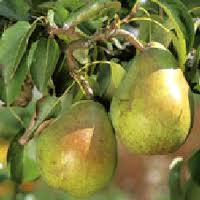
The leaves of the pear tree are glossy and thick on the branches. The pears, a bit larger than walnuts, blush rose near their stems. On my window frame hangs the icon of a skinny naked Jesus. It is the crucifix of San Damiano from which St. Francis heard Jesus tell him to repair His church. This Jesus will not meet my gaze, but looks down some hellish tunnel of sorrow that hallows the space between us. His face is grey, mouth turned down. He is wearing a sheer loin cloth that looks like it came from Frederick’s of Hollywood. I am embarrassed for him in his poverty, his utter abasement. Cheer up Jesus! You look terrible. The pear tree is laden with fruit this year!
He doesn’t seem to notice the fruit, though he must see it – his eyes are wide open. Pinned like a specimen to the cross where under his arms are gathered stately mourners, he bleeds in tiny spurts from hands and feet. Angels hover over his head in neat rows. One appears to be performing a liturgical dance. No – that’s no angel. It must be Christ on his way to heaven, ascending in a crimson mandala.
The crucified Jesus just hangs there. Has he no shame? It is I who squirm, not he. For his eyes pin me at the intersection of poverty and abundance where I hang ripening in the Kansas sun in mid September. O Jesus, how long must you hang there suspended in misery, wearing us out with that sorrowful stare?
 With an introit of barking dogs, the squirrels soon will come to pluck the half-ripe pears with their agile paws, taking one bite from each, and then carelessly tossing them to the ground to rot. Pray God to preserve us from squirrels that raid at dawn, chattering and chasing up and down the branches, tempting us into thinking that we have been made to be consumed by squirrels. Pray God that we may be left hanging, suspended by the heart’s stem, hidden in the leaves until we’ve ripened properly. And then, at the sharp insistent teeth of need open our flesh sweet and tender to one another.
Then maybe that sad Jesus will get off that rugged cross and come eat the fruit of summer with us.
____________________
We went to Koger’s Variety Store for back to school specials the other day and painstakingly put names on new back packs, glue bottles, scissors, and Big Chief Tablets. We watched Dad’s jaw drop as he wrote the check for new clothes at the mall. Then last evening we noted it was getting dark so early.
The air is uneasy, a mix of the eager hope of a brand new lunch box and the painful regret that summer is over and we never got around to making those doll clothes or camping out in the back yard to watch the stars all night.
 Jeremiah laments with us, “The harvest is past, the summer is ended and we are not saved.”(8:20) And we find ourselves at the intersection of poverty and abundance where the kingdom of God is conceived. Christians seem to perpetually stand on the threshold of a new school year clutching our shiny lunch boxes in one hand and the forsaken dreams of summer in the other. Holy ground is the paradoxical place where we simultaneously live in the Pentecost fullness of the gifts of the Spirit and the power of the Risen One; and in the crucifixion emptiness and cry for redemption of the Suffering One.
Jesus tells us that of God’s own will we have been brought forth to be a kind of first fruits of God’s creatures. Like the firstborn child or the firstborn of livestock, the first fruits to come ripe in a season were sacred to God. “When the grain is ripe, ready to be given up, at once the farmer puts in the sickle because the harvest has come,”(Mark 4:29) says Jesus. When one is ready to die, then harvest is come. How odd to be ripening for death, to be growing in Christ only to be handed over.

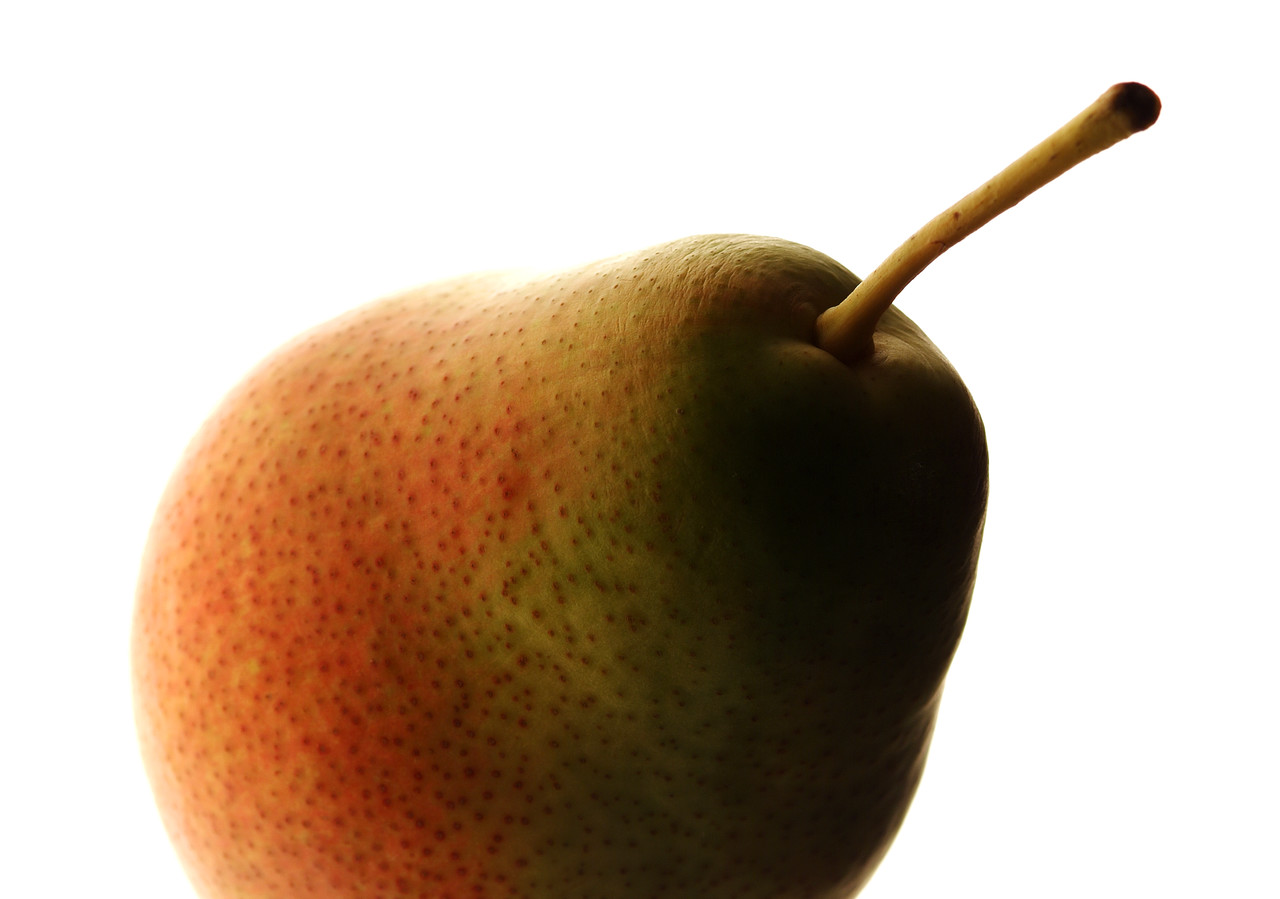
Just as the cross is the joining of two opposite directions, we live in the creative tension of the union of poverty and abundance. The tension is great, and it is hard for us to stay in the center of the cross for very long. We want resolution. We are tempted to heave ourselves down one polarity or the other. But if we can hold both the pear tree laden with fruit and our ongoing need to be nourished, if we can accommodate both the Risen Christ and the Crucified Savior, then we may discover, out of the union of these opposites, new fruit conceived in us which will heal and sustain the earth.
The barrage of demands and the voracious appetite of a culture that seeks to devour, rather than savor its sustenance undermine a quiet patient trust in God’s seasons of growth and harvest. What is it that finally brings us to fruition? Is it not the sharp insistent teeth of need, our own poverty and the poverty of one another, that finally allows us to fall sweet and tender into each other’s embrace?

At Toys R Us — Oh my, toys are us! In Proverbs Wisdom tells us, “At the beginning I was playing beside him like a little child and I was daily his delight.”(8:29), I listened to a tinkling recording of “It’s a Small World, Isn’t It?” while watching a lion and a lamb, a giraffe, a hopping kangaroo, and a waving bear shimmer across a plastic screen. Nearby Cicelia plinked a xylophone in plunking delight.
Then in the department store she asked, “Are shoes alive?”
Her elder sister exclaimed, “No!”
But she persisted, “I saw one talking on TV.”
“Let’s see,” I said, and leaning over a cordovan Bass loafer inquired, “Are you alive?”
“Oh mom,” Diana sighed.
We tried on grown-up perfume. When the saleslady offered to help, we told her we were searching for a fragrance that was really “us.” A spray, and Cicelia, pressing her hands to her cheeks, giggled, “Oh mom, I know this one is me!”
Before boarding the escalator we tried on hats. Cicelia, in a large brimmed red felt with ribbons, and Diana, in a small black veiled cloche, gazed at their images in the narrow mirror on the best day of my life.
We took six dresses from a rack for Diana to choose. Cicelia was her handmaiden, letting it be according to sister’s word, carrying, doing buttons and zippers, and holding up the blue satin fabric like a swatch of heaven against each dress.
 Jesus, I thought you were suffering, but I saw streams of light pouring from your head like a fountain, spraying colors – blue, azure, hues of red, green, yellow – shimmering rainbows irradiating in spurts and gushes and rivers from a still small body sagging on a tree. All day I played plinking magic while you spun streams of green leaves, jungles, hay fields in spring, purple hyacinths, beets, cerulean seas, dolphins, berries, mountain mist, and a single red rose flame out of the chaste and tender aureole of your pain.
There in the dance of creation and dissolution, there where our need is met with the abundance of another and our abundance fills another’s lack,
there where it is a small world after all,
there is our joy made complete.




















 The Praying Life