Category Archives: God

The Shepherd’s Story


Once in the fields in a storm
hunched down in a cave
I saw a red tongue of fire
leap from the heavens
lick down a cedar,
and split it in two.

The cloven tree shuddered
and screeched
as it crashed to the ground,
like an animal in the jaw
of some great beast.

________

It wasn’t what you’d think –
lovely heavenly hosts
in neat rows and pretty song.

It was mostly wings and terror.

Cold night
stars like ice
fire down to coals
flock settled in the fold.

Some scattered for cover, crying
the world is ending
which it was,
but not the way you think.

Fear –
tomorrow’s frets
yesterday’s regrets –
that ember of anxiety
that never goes out
no matter how much religion
you throw at it –

fear rose up and choked me.

The great heaping clouds
of wings
and the Word that wrote itself
in the marrow of my bones
split me
into before and after
and left me puddled
on the ground
soaking into mystery.

Most don’t reckon the sheer terror
of God crashing into their lives.
I learned fear was not my enemy,
but a sign of His presence.

Ignorant and blind as a wood tick
on a lamb’s flank,
I’d been crawling
through a patch of fleece
and a bit of warm skin
without a clue
as to what is really going on.

I froze, stupefied.

The sovereign almighty God was asking
something of me,
God wanted me,
my will,
the way I held my world together in my
wood tick brain
my perceptions and understanding
my sense of competence,
my adequacy
seized and consumed by wings.

A master’s painting?
A Messiah chorus?
A quiet pastoral scene?

It was gasping for air,
trying to stay upright
with not a thing to hang onto.

What’s the Almighty to do –
all hobbled up with majesty
finally having to slip in the back
door
of the world
through a virgin’s womb?

It was Truth
taking aim
condensing its enormity –
its hosts and universes,
its fire and power and goodness –
and homing into me
like a dove returning to her nest
like a lamb turning to the breast.

It wasn’t what you’d think.
It was mostly wings and terror.

Then, something so plain
and ordinary,
a baby,
and a Love small enough
for me to carry.


For who can endure the day of his coming, and who can stand when he appears? Malachi 3:2
One Christmas I got a good dose of the awesome power of God. I wrote this poem in an attempt to describe that experience.  I love the way Annie Dillard puts it: “On the whole, I do not find Christians, outside of the catacombs, sufficiently sensible of conditions.”
May the Almighty God knock your socks off this Christmas!

An Advent Story

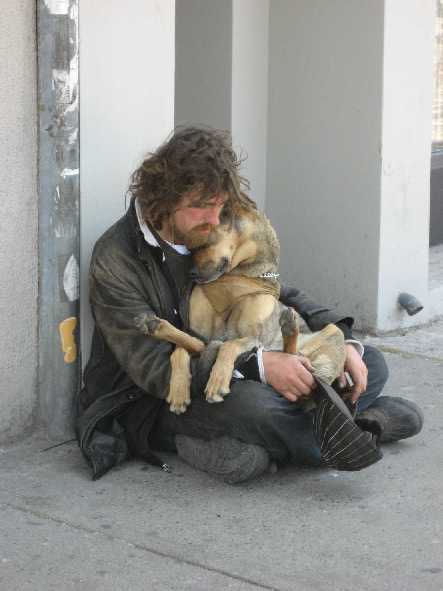
The people gathered in small clumps, on this Sunday early in Advent, chatting and laughing before entering the sanctuary.  Some sipped coffee while they caught up on the week’s events.  Outside in the bright sun the children were playing.  A man with a yellow dog who was walking by the church stopped and asked the children for directions to the rail yards.

The children invited the man into the church.  They tied his dog outside and brought it a bowl of water and someone gave it a cupcake.  They led the man to the preacher, telling him that the stranger needed directions and a little money for food.

The preacher, tall, well-groomed in his black robe and satin stole looked at the man and caught the smell of whiskey.  He invited the man to worship and said that afterwards we’d see about some food.

That Sunday amid the handsome suits and stylish dresses, the colorful wool sweaters, and the neatly styled hair and deodorized bodies, sat a man in a torn jacket, baggy pants and wearing shoes with cracked soles. 

They had gathered on this morning to keep their observance of Advent.  They spoke and sang of things to come, of waiting, of expectation, and of hope.  The minister admonished the people to be alert, on the look-out, for Christ might come at any moment.  Afterwards the people went downstairs for a pot-luck lunch and an afternoon of games and songs and making gifts for shut-ins.

The man in the torn coat did not join them, though he was invited.  He sat on a gray folding chair upstairs and talked about Jesus and wept.  He said he knew he had done bad, that he was just a bum.  He rode in empty boxcars across the country with his dog.  Then he said his father sold him when he was six for a case of beer.

The pastor was uneasy.  He needed to be downstairs to say the grace.  Was the man’s story true?  How many other churches had he been to that morning?  He handed him a sack of food and drove the man and his yellow dog to the rail yards.

The children who had found the man asked their teacher why he had no money and why he wouldn’t stay with them and how could your parents sell you and wasn’t his dog wonderful and would he come again?  “I don’t think so,” said the teacher.

Christ entered our midst, right on schedule with our liturgical calendar, wearing a torn jacket.  His only follower was a yellow dog.  There was whiskey on his breath.  He saw quickly how the inn was full. 

We told him politely as possible that we just didn’t have much room for folks who ride boxcars and have a problem with alcohol.

Once a young student asked a rabbi how it was that no one ever saw God any more.  The rabbi responded:  “Because nowadays no one is willing to stoop so low.”

Think of the person you have most despised, whom you have found utterly repulsive, revolting.  See that person in your mind.  Recall your disgust.  Now answer this question:  Who did you think it was that needed to be loved, anyway?

For God so loved the world . . .

http://www.flickr.com/photos/crowstoburnaby/170684833/
                                                 

This post is an excerpt from a Reader’s Drama I wrote many years ago, titled Adventually – Waiting for the Messiah. It is also a true story.


More about prayer:   www.fromholyground.org

Contact Loretta at
lross@fromholyground.org, www.fbook.me/sanctuary

 Follow at http://twitter.com/lfross

Prayer Boots – Part 2

This post is a continuation of last week’s, Prayer Boots – Part 1, a chapter from my book, Letters from the Holy Ground.

This summer a friend and I had a yard sale.  For a week I hauled boxes from attic and basement.  The children and I lugged baby clothes and infant swings to the dining room, where the kids promptly set up house.  “Remember this?  O Mom, look!  I remember this cute little dress.  I really looked so sweet in it, didn’t I?” they chirped sounding like they were eighty years old.  Cicelia spent two hours playing with the Johnson and Johnson baby blocks.  They had a tea party with the chipped china sitting at the little red table with their knees up to their chins.  Each box held wonder.  “Look mom, these beautiful curtains.  Can I have them in my room?”  Diana crowed, pulling out the tattered remains of the drapes that hung in our first apartment.

 Later that evening she came to me.  Holding a tiny blue sock to her lip and tucking her head under my arm, she said softly, eyes glowing with the rapt smile of one who has seen a vision of angels, “Oh Mommie, I remember me.”

Something forgotten, something precious, tender and pure that Diana called me had been recovered for her in that tiny sock.  When I asked what she meant, she said, “Well I just remember myself when I was a baby.”  That tiny sock I could never keep on her foot took her back to a pre-verbal time where she was held, rocked, nursed, sung to. It was a place where me dwelled, the essence of her being in the holy ground of the womb.  And she stilled her non-stop seven year old inquisitive mind to forget herself, to pay attention, and remember who she is: a child cradled in the loving bliss of One who is larger, kinder and more beautiful than she, and in whom she lives and moves and has her being.

She still crawls in bed with me in the mornings, her coltish long legs and arms poking, thrashing around, giggling, telling me jokes and that she loves me so much. She seeks herself in that safe place, before she bolts into her day of dolls and math and spelling and exuberant surprises. I wish we could all come to our prayer with her trust, playfulness and devotion.
I stared in shock whenever I passed the dining room with all those cartons brimming over with my past.  This is the room where we gather to pray, to recount our salvation history, to remember and receive the Eucharist.  Boxes lined the walls.  Infant seats and infant carriers and infant bottles and infant sleepers, undershirts and socks spilled all over the space where we sing songs of love to Mary’s baby.

My daughters poked about in their past, where we come to poke in our past, holding it to the light, turning it over in our palms, wondering what sort of price it would bring, praying God to be merciful.

The sale was one day only.  My friend and I sweated it out, swilling ice tea, tallying our profits and losses. During lulls in business, stricken with visions of having to haul all the stuff to the dump, we rushed about with markers slashing our prices.  “Everything must go,” we resolved, as we paused to fold one last time the sleeper we had laundered and folded so many occasions we had lost count.  We smoothed tiny collars and wrote $.10 on the stickers.

The Age of Aquarius macrame went, along with the tires, decrepit lounger, ice crusher, and malt maker.  We carted off my friend’s wedding gown, the fondue pot and five or six boxes of baby clothes to the thrift shop.

It was afterwards as I was picking up hangers and empty boxes from the floor of the room where we, breaking the bread and lifting the cup, do as he asked. Gathering up scraps of newspaper and tags, I saw the little nightie on the table.  It was then, forgetting myself in the mystery that rocks us all, and holding the soft worn flannel, sweet with baby scent to my cheek, that I remembered me.

One of the deepest mysteries of holy ground is the mystery of identity.  When God meets Moses at the burning bush, the two exchange their identities.  God calls, “Moses, Moses.”  The call is unique, distinct.  There can be no mistaking who is being summoned.

Moses’ response is the classic prophetic response to a call from God:  Henanni, or Here I Am.  After Moses receives his mission, he presses this burning Reality for its identity.  “Who shall I say sent me?” he asks.  And God responds, “Tell them that I Am.”

Holy ground is the place of exchange where I Am meets Here I Am, where What I Have Been will be transformed by Who I Am Becoming, where I forget what I thought I was and remember I am.
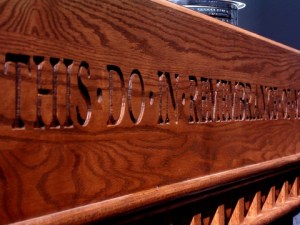
On just about every communion table I have ever seen are carved the words:  “Do this in remembrance.”  The little sacraments of our lives are those graced moments of holy communion when we do something prayerfully and in remembrance.  We release our grasping and coping. Then bread is transformed into the body of Christ, a blue sock into an angel’s wing, and a mortal being into a being in God.

God instructed Moses on Mt. Sinai to make holy garments for Aaron and his sons, including a plate of gold engraved with the words “Holy to the Lord,” which Aaron was to wear on his forehead, apparently to help everyone keep their parts straight.  My boots came with a tag that read: “Genuine Leather, Ozark Trail.”  They didn’t have any with gold plates.  I’ll try to remember my part anyway.

These days you can buy all kinds of prayer paraphernalia:  crystals, incense, podcasts of famous pray-ers, cds of words of power, icons, statues, pictures of Jesus in a startling array of poses, holy bells and whistles, oils and unguents.  My hunch is that it’s best to travel light, and you could do a lot worse than to get a good pair of boots.

Why not do it in remembrance?  Maybe we’ll meet on the trail.

Read more about prayer at
www.fromholyground.org

Contact Loretta at
lross@fromholyground.org, www.fbook.me/sanctuary

 Follow at http://twitter.com/lfross

Holy Spirit Contracting

 Demolition, Alterations, Renovations, Disaster Reconstruction

His delight is not in the strength of the horse,
nor his pleasure in the speed of a runner;
but the Lord takes pleasure in those who fear him,
in those who hope in his steadfast love.   Psalm 147: 10-11

j0432555I have been freaking out. Jesus is in my interior space and he is rearranging the furniture. He pushes a couch across the room. What! Are you going to put that over there? He opens a closet door and starts sorting through things I had hidden away. He is making piles of stuff to haul to the landfill and take to Good Will. Wait, Jesus! I might need that!  The place is a mess.  I hope nobody stops by unannounced.

Jesus doesn’t seem to mind the chaos he is making and pretty much ignores me. He pulls out something and holds it up. “Here take a look at this,” he says. Then I cringe, or weep, or shudder, or feel a tiny bit hopeful.

I asked for this. I prayed one of those reckless prayers which come upon us occasionally. Then I went and asked others to pray for me too. Really reckless. The prayer was to remove those things in me that blocked my receptivity to the Grace of God. What prompted the prayer was my need. You know – the frustration, weariness, sadness, loneliness, fear – it comes in many forms – that eats away at your peace and joy.

You start thinking, well if I could just get this thing changed, or add this or subtract that from Big Sale sign in red over white backgroundmy life – ah then I would feel so much better. As you know, this is the basic doctrine of The  Church of  Unholy Consumption, in which most of us are credit card carrying members. We get our daily devotions from TV commercials and the advertising that permeates every nook and cranny of our lives. We are reassured over and over that our problems may be solved by satisfying our desires. Figure out what you want and then go get it. You deserve it. Don’t know what you want? Well may we make a suggestion? We just got this new ratchet in today!

Of course we have desires and need to respect them and get them met appropriately. But desires may quickly become disordered and increasingly demanding. Ian Matthews (The Impact of God-Soundings from St. John of the Cross) writes, “When desire is out of order, it increasingly causes fatigue, anxiety, confusion, a sense of guilt, and finally an inability to do anything about it. It is a picture of addiction where the person’s dependence is killing him. … Disorder here, while it may bring gratification, ultimately kills joy.” (Page 41)

Jesus, no snake oil salesman of salvation, offers something radically different and – let’s be honest here – painful. John of the Cross writes about the process of deeper communion with Christ, “To come to what you know not, you must go by way of where you know not.”

To simply to be present to a need without having to blame someone, rush out and fill it, or feel ashamed is something people recovering from addictions understand very well. Iain Matthews continues: “Not filling the gap can feel like starving, but it allows the genuinely new to be disclosed. It allows one to live not as a consumer among objects, but as a person among persons fit for communion, for the love which can hold the other, and be held with open palms. That is the level of spirit: availability as a person for communion: the space for the gift of the Other. This is more than just a rearrangement of the pieces.” (pages 44-45)

Albert Einstein said, “No problem was ever solved by the same mind that created it.” Yet we think our problems will be resolved by a rearrangement of the pieces, that is, changing the organization of our lives, our relationships, our jobs, our life partners, our churches, our institutions. We think we can bring wholeness for ourselves by restructuring, redistribution, reimagining, and redesigning. We think strong horses and fast runners will solve our problems. Such thinking keeps us at the surface level and relying on ourselves – our intellect, creativity, and flexibility – for the answers. We refuse to tolerate the painful “gap” through which the genuinely new may be disclosed and Grace may emerge.

cyclone_hedgeshearwavyThere may come a time when you just get sick of it. You see the shallowness, the lack of freedom, the treadmill nature of operating our lives on the level of our senses. You are tired of watching the shadows of your ever shifting, ever insatiable surface desires. You may see a need for a deep down fundamental shift, a conversion of your heart. You may say, “Jesus, I want more than a rearrangement of the pieces. I want you.”

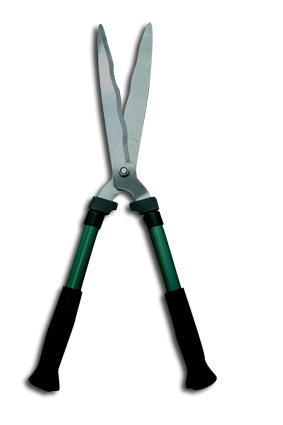
That’s Jesus’ cue. And he hops right to it. He sets to work, not on your external reality – the things you thought needed to be improved – but on reordering your desires themselves. He shifts your priorities, your values. He prunes runaway pride. He hacks out dead attitudes. He fires up a chainsaw and cuts away whole walls of rigid thinking. And friends, it is just as he told us. It feels terrible. It feels like you are dying, because you are.

Eugene Peterson paraphrases the verses from Psalm 147 above in this way: He’s not impressed with horsepower; the size of our muscles means little to him. Those who fear God, get God’s attention; they can depend on his strength. j0178928

Christ opens the gate on that pen of strong horses you had corralled and sets them free. He dismisses all the fast runners – the thinkers, the experts, the latest technologies. And you are left with your fear, your wonder, and your love for this God who cares enough about you to enter into you and create such a rumpus. There in the mess you untie your hope from your own efforts and strength and attach it to the strength of God. And little by little you begin to trust that something new and amazing is emerging, something which you could never think of or make happen in a thousand years.

Now tell me, who wouldn’t love a God like this?


More about prayer –
www.fromholyground.org

Contact Loretta –
lross@fromholyground.org, www.fbook.me/sanctuary

Follow on Twitter

“Getting to Know You, Know All about You…”

42-16474021After their dinner date, Sandy was mildly disturbed. What was it? Something was eating at her. She really liked Greg. Everything seemed to go well – good conversation, a few laughs, great food, even some electricity in the air.

Oh, it came to her: that remark he made about her sister always being late. It stung. Why? Just what did he mean? Maybe she was over reacting…but his remark sounded catty…

Greg sat with his morning coffee and smiled to himself about the date. It went really well. Sandy actually listened to him. She was funny and pretty and he felt relaxed. He wondered if he should call and tell her how much he enjoyed the evening.

Sandy and Greg have unfinished business – the business of relationship building, the business of deepening intimacy and trust. A business which is the foundation of love.

We naturally review and reflect on conversations and our encounters with others. We sort out the positive and negatives. We go over what we wish we had said differently or left out. We discover questions we want to ask, more information we need.

We may even make a follow up call. “Hey Greg. It’s Sandy. I just want to tell you what a good time I had last night and thank you.” She took a breath, “Greg, I need to let you know something too. I am real loyal about my family and sensitive when people put down my sister. She’s gone through a lot dealing with her disabilities. I felt hurt when you made the joke about her always being late.”

OK. The ball is in Greg’s court now. His response will reveal more about himself, his needs, and experience. Greg and Sandy may build and deepen their relationship with greater trust and honesty in this process, or determine not to do that.

CB035813Let’s apply this idea to our practice of prayer. Sometimes we treat God as a combination landfill and filling station, rather than as a growing relationship of intimacy and trust.  Prayer becomes a place to dump our trash and get refilled with peace of mind. We drive up, open the trunk and haul out our anxieties, worries, sin, pain, sorrow, and confusion and toss them in the containers. We slurp up some high octane Living Water and drive off. “Well, that’s done,” we say. “Now, let’s get on to the important stuff I need to do today.”  In such a scenario of prayer God exists solely to meet my needs.

I suspect that the landfill/gas station approach characterizes quite a bit of our prayer. Yet God is mercifully patient with us about this. God knows that most us we will not come to God unless our trash is overflowing, filling our homes, spilling out the doors and down the street and we feel totally overwhelmed with the demands of our lives. We will wait until our tank is on empty, or we have run out of gas and are stranded on some lonely road late at night.

However, at some point we may notice a shift in us during our visits to the landfill. We may find a desire toj0314126 stay a little longer and linger at the filling station. We may feel a curiosity about the Landfill Owner and his generosity in taking in everyone’s trash and rotting garbage. Appreciation and questions may emerge. A conversation may begin with the Filling Station Fellow, an ebb and flow of mutual disclosure in coming to know each another. We may begin to notice changes in ourselves – an eagerness to get back to the Landfill, a greater sense of peace, a growing intimacy, and – Dare you say it? What will your friends think? – love for the Filling Station Guy.                                                                                                                                                                                              

Intimacy and love with one another and with God are built on a foundation of trust and honesty over time. As we are open with our individual truth, we are drawn into the larger more spacious truth of God. As we return to share more of ourselves, we learn more of God. We get to know and like and hope the other likes us too. The Filling Station Guy is, of course, already won over and hopelessly in love with you. I suspect Greg may be too.

 sanctuary-tree-tiny1

The Landfill will be open this Friday for Midday Prayer, 12:15 – 1:00 at The Sanctuary office at 1600 SW Campbell. Stop by, if you can, for a splash of  Living Water and get to know the Filling Station Guy. I think you will find he is a keeper.

More about prayer –
www.fromholyground.org

Contact lross@fromholyground.org, www.fbook.me/sanctuary

Follow on Twitter

God’s Been Missing You


j0438446

The wilted remains of pea salad, oriental chicken salad, jello, macaroni salad, and drooping concoctions of cool whip, cherries and graham crackers weigh down the table in the church basement. We finished our salad luncheon and were listening, as I was being introduced as the guest speaker. Invited to address church women of Sabetha, Kansas at their annual spring gathering, I prayed silently, “Jesus, what do you want me to tell the people?” I had planned my remarks, but I often prayed this question before a presentation. Usually I heard, “Tell the people that I love them.” On this spring afternoon in 1991 what came was, “Tell the people that I miss them.”

Over the past eighteen years the message has remained the same: God misses you. Your presence and attention to the Divine matters, makes a difference, counts. God grieves when you are absent from communion with the Holiness filling this world.

 “We live in an age of unbelief,” writes Ronald Rolheiser. “What sets this apart from past generations is that, today, this is often as true within religious circles as outside them. The problem of faith today is especially that of unbelief among believers.” In his book, The Shattered Lantern – Rediscovering a Felt Presence of God, Rolheiser writes about our struggle with faith and agnosticism. “We still have some experience of God, though rarely is this a vital one wherein we actually drink, first-hand, from living waters.” (pages 17-18)

What does it mean for you to drink, first-hand, from living waters of God? What shift needs to occur in us in order to turn aside and reach for a felt presence of God? For me it begins with the recognition that fundamental peace and clarity do not come from my achievements, intellect, or effort, but rather from conscious contact with the Living Reality which sustains all life. To turn toward a God who misses me begins with a conviction that God is more active,  effective, and powerful in my life and world than I am.

In 1926 Evelyn Underhill addressed a class of young seminarians preparing to go into the ministry in the Anglican Church with these words:

We, the laity, know instantly the difference between the churches which are served with love and devotion and those which are not. And we know from this, what their ministers are like. And what you are like is going to depend on your secret life of prayer; on the steady orientation of your souls to the reality of God.                   

I love Underhill’s phrase, the steady orientation of your souls to the reality of God.compass   Such orientation is radically different from the business as usual orientation of the world.

 Remember those compasses people used to put on the dashboards of their vehicles before we had GPS? As a child I loved to watch the dial bounce around in the fluid as the driver turned the wheel and we changed directions.

How do you determine when your direction is steadily aligned with magnetic pull of God? For many of us there is no felt pull toward the holy, toward the compelling mystery of life and love. At the same time many people have a sense that something is missing – a dryness, loneliness, a searching for something of more substance and depth than celebrity worship, political posturing, or being defined as a consumer of commodities.

What is magnetic north in your life? What has the strongest pull on your attention and direction? Where is that direction leading you? Toward greater satisfaction, peace, and generosity?  Or toward something else? 

When we acknowledge that there is a God who misses us and that we are missing God, we set aside our agendas, the chaos, and allure of the world and enter into a larger, more generous, and wiser Reality. We are cleansed, rinsed by the refreshing, renewing Living Water, which soothes and realigns us with our deepest truth and purposes. Here is our heart’s true home, the soul’s magnetic north.auto compass

This Friday The Sanctuary Foundation for Prayer will resume Midday Prayer gatherings from 12:15 – 1:00.  Held weekly at The Sanctuary office at 1600 SW Campbell and open to the community, these periods of contemplative prayer focus on communal silence. Join us in body or spirit and orient yourself to Ultimate Reality. God may be missing you way more than you know.

  sanctuary-tree-tiny

More about prayer –
www.fromholyground.org, www.theprayinglife.wordpress.com

Contact Loretta –
lross@fromholyground.org, www.fbook.me/sanctuary

Follow on Twitter

Elijah and the Gentle Leader

I led them with cords of human kindness, with ties of love… Hosea 11:4 (NIV)

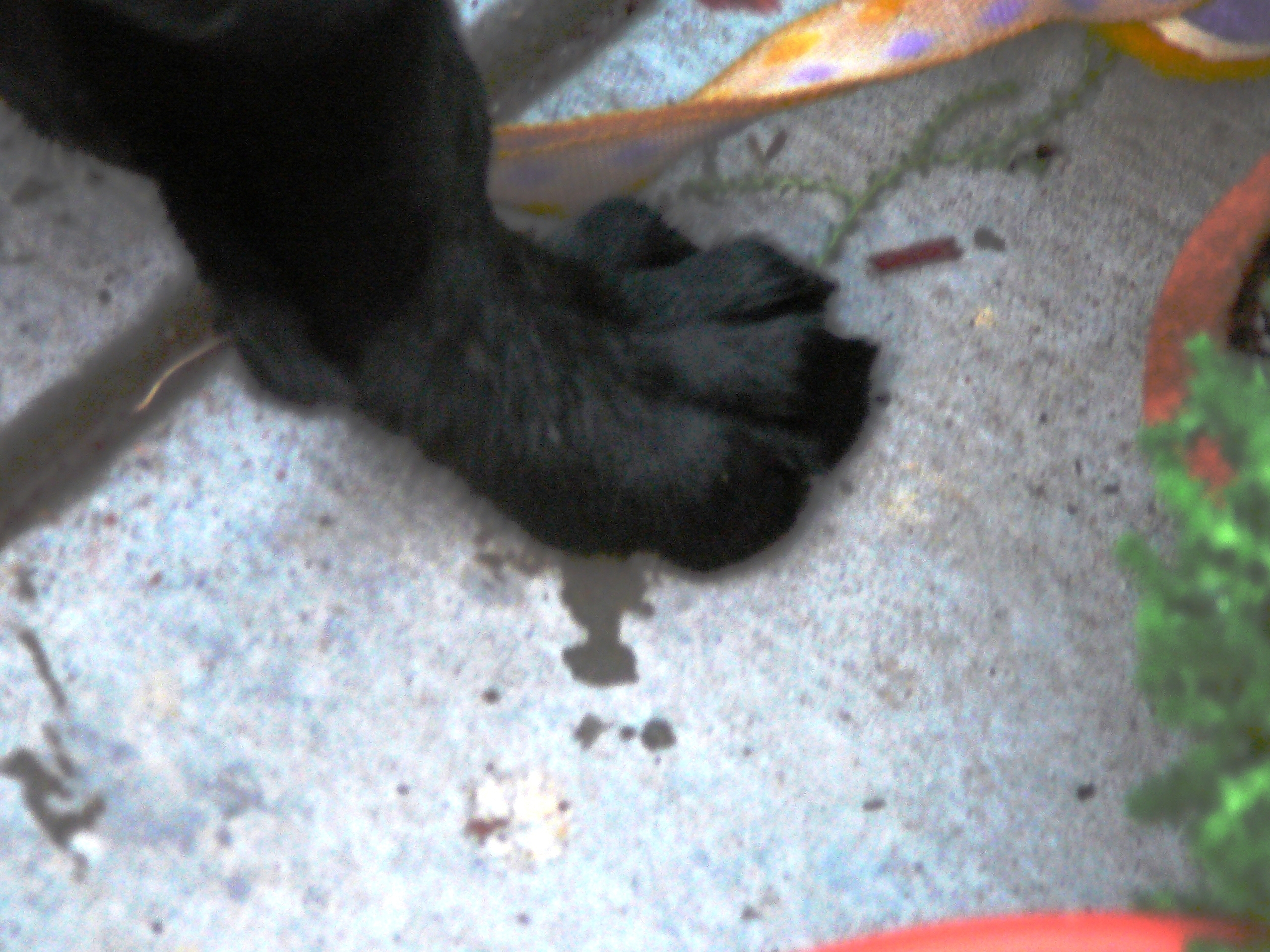
Elijah - foot at 11 weeksI got a new pup, a black lab with some golden retriever mixed in. His name is Elijah. We are in love. Thank God. Learning each other’s rhythms and limits in fits and starts, shouts and barks, foot stamping and puppy pouts, we are pulling at the restraints of the discipline, which all relationships require.  Without the love, we would never make it.

When people see Elijah they say, “Oh, how cute!” Then on taking a closer look, they shake their heads and add with pity, “He’s going to be a big dog.” I try not to shudder. The little prophet dog is mostly feet, knobbly knees, long legs, and a single minded purpose to chew. My last dog died at sixteen years. He had long given up gnawing at things and people.

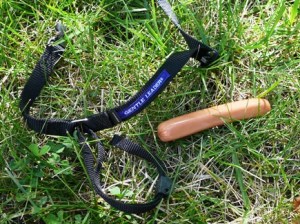
Elijah has all the approved chewing materials. We go to puppy training. At the advice of friends,  I got a training halter device which requires a degree in dog mechanics and six arms to put on your puppy. In spite of liberal use of hotdog bits, it didn’t go at all like the video showed. Obviously the demonstration dog had been drugged.

The device comes in a box resplendent with marketing genius, Immediate gentle control. “My pup was changed in a mere ten minutes.” The nose loop encircles your dog’s muzzle in the same way as a pack leader gently, but firmly grasps a subordinate’s muzzle in his mouth. This is a clear signal that You are his leader!  My dog is still working to pick up that clear signal.

Elijah detests this device with a passion. However, I confound him by offering the tastiest treats I can find, when I put it on and when I remove it. I rubbed hotdog juice all over the part that goes around his nose. When we walk, he turns summersaults over the grass trying to shake it off, or writhes on the ground like a snake. Then he will flop prone in the street with a huge sigh and pout. Despite the period of adjustment for us both, things are improving. Once he gets over his hissy fit, he trots along in fine fashion being the dog of my dreams. 

 Gentle Leader

Do not be like the horse or the mule, which have no understanding but must be controlled by bit and bridle or they will not come to you. (Psalm 32: 8-10 NIV)

The amusing name for this device is Gentle Leader Head Collar. This cracks me up. I got the giggles thinking about it in church this week. I had this picture of God struggling to put such a halter on us, while we flop about in our lives, straining to get loose from the constraints of our own realities. Our genetics, life experiences, choices, and environments wrap around our snouts and bind our movement. Such discipline may gentle us into surrender to the truth of who we are. We may come to accept the conditions placed upon us by our journey and the reality that we are not the leader of the pack, or we may toss ourselves in summersaults, whining, and wriggling against our limits.

“Now be ye not stiffnecked, as your fathers were, but yield yourself unto the Lord, and enter into his sanctuary (2 Chronicles 30:8),” I say to Elijah, who is trying to chew the darn thing off his head. The Hebrew scriptures frequently compare the people of Israel to oxen with stiff necks who will not submit to the yoke, or a horse who will not follow without bit and bridle. The notion of discipline and surrender to the Leader of the Pack appears also in Paul’s writings. In fact it is often the prophets, including Elijah’s namesake, who serve as God’s harnesses to restrain an unruly rebellious nation.Elijah 3 months 2

If Elijah could see the positive benefits of his Gentle Leader, he might not put us through such a struggle. His resistance only increases his discomfort. Being conformed to the harness requires repetition, discipline, love, and a good deal of faith in the Leader on both our parts. The way to Elijah’s abundance is a counter intuitive surrender to what feels at first as terribly confining. Not a bad prescription for the spiritual life.


More about prayer –
www.fromholyground.org

Contact Loretta –
lross@fromholyground.org, www.fbook.me/sanctuary

Follow on Twitter

Hidden Things of God

Dock, fog “I have come to get some answers. I’ve talked to a bunch of ministers and none of them was any help.” The man sitting before me was a young professional, bright, and angry.

I draw in my breath and exhale, praying  to be released from any illusions that I could improve upon my colleagues’ work. “Make me humble, Lord. Make me true.” Glib answers, formulaic responses, any hint of arrogance would quickly be detected by his cynicism and broken heart.

“I am about ready to give up on church,” he told me with a hint of defiance, as though he were daring me to be helpful to him. His story was painful and his betrayal, despair, and hurt were palpable. As he wept, shoulders shaking, I sat Shiva. I kept the ancient Jewish vigil of simple presence to another’s suffering. As those who comforted the bereaved in Jesus’ tradition, I waited for my guest to initiate conversation.

“Those who believe they believe in God, but without passion in the heart, without anguish of mind, without uncertainty, without doubt and even at times without despair, believe only in the idea of God, not in God himself,” wrote the Spanish writer, Unamuno.

We live in a world with little patience for doubt or questioning. We do not value subtlety, complexity, or mystery. We possess minimal tolerance for simply sitting with ambiguity and suffering. We do not trust there is any effectual power at work in our lives beyond what we can manipulate or contrive with our own wills and abilities.

The pragmatism, that is the religion many of us bow before, insists on quick, easy solutions. If something “works,” then it deserves our support. An end product that satisfies our needs justifies almost any means.

Our market place economy heavily determines how we think of ourselves and the world. The language of faith with its nuance, poetry, metaphor, and reverence for mystery has been exchanged for the practical idiom of the market place, which measures worth by utility and productivity.

This is not a new sin. The people of Isaiah’s day were also co-opted by a culture of consumption and utilitarianism. The prophet reminds Israel that they and their carved idols and cast metal images do not know everything. “Now I am revealing new things to you, things hidden and unknown to you, created just now, this very moment, of these things you have heard nothing until now, so that you cannot say, “Oh yes, I knew all this.” (Isaiah 48: 6)

I do not know the end of the young man’s story, as is often the case with those who pass through my life. I gave him what I could, which was my love and respect for his losses. As I sat with him, I saw that God loved him very much and also saw how deeply this young man loved God and didn’t know it.

I found myself face to face with my poverty – my lack of any satisfying answer to tie up everything and take away his pain.  I had no bright ideas, plans for recovery, or quick fix resources to suggest. In the words of Isaiah, I could only stay open for the hidden thing, the unknown thing which was coming into being in that young man’s soul, just at that moment out of the infinite, divine unknowable Mind of God.

I had only love to give, 
which, in times like this, never seems to be enough,

                                                             but always is.     FOG      


Contact the author:
lross@fromholyground.org, www.fbook.me/sanctuary

 Follow:
 http://twitter.com/lfross

What Is A Prayer?

CBR002349I don’t know exactly what a prayer is.
I do know how to pay attention, how to fall down
into the grass, how to kneel down in the grass,
how to be idle and blessed, how to stroll through the fields…
Mary Oliver (A Summer Day)

I have been at it for a lot of years now, and I still do not know exactly what a prayer is. It seems to have always been part of my life like the color of my eyes. As a preschooler I learned to fold my hands and bow my head. I prayed for my family, our dog, and my neighbor, Mrs.Wendel, who made good cookies. I had a set list I covered: Santa Claus, the Snowman, and Betty Crocker, whose picture was on the box which my mom’s iron came in.

CBR001191We always prayed before meals, usually led by my father. Every night he kneeled beside his bed to pray. I came upon him at prayer like that many times. He died in 2000. When I go back to Iowa to visit my mother, I like to sit in a corner by a bookcase, where dad read the Bible every day. His magnifying glass, pens, and letter opener are still there.

My father’s prayer was quiet and hidden, yet woven into the fabric of his life like his breath. I saw the fruit in his kindness and caring acts for others, in the vitality of his mind and interest in the world around him, and in his outrage at injustice. As he grew older, he would often say, “I am just so thankful.”

What exactly is a prayer? I fumble for the words. Traditional words about prayer feel like pebbles in my mouth, tasteless, hard and difficult to swallow. As much as I gnaw at them I find no nourishment.

“What language may we borrow to thank thee, dearest friend, for this thy dying sorrow, thy pity without end?” wrote the anonymous author of the lyrics to the hymn, O Sacred Head Now Wounded. Whatever language we use, it will always be “borrowed.” It will be loaned from some, other, lesser reality in an awkward, ill-fitting attempt to clothe The Reality beyond all language and human thought. Mere words fail to express the experience of our hearts in response to God’s love, gifts, and challenges in our lives.thinking businessman

Now I will foolishly do something I have just told you is impossible: tell you what I think a prayer is. For me prayer is fundamentally an attempt to communicate.  This desire to communicate is initiated in us by God and it is a way in which we participate in the likeness of God.

Take a look at that word, communicate. Its root carries the meaning of coming together, communing, communion. What is implied is that at least two separate parties are desirous of joining in some way, of reaching an understanding, of connecting with a commonly held perspective, need, desire, or purpose.

We could say prayer is the eternal conversation and exchange of love as experienced in the context of our lives in which all parties are affected and changed in some way. For me the life, what engages me, is not the abstract concepts of prayer, but in the lived experience of communication. By the way, this is why I believe God is on Facebook and is an old hand at Twitter.

Prayer rides on the wings of our hearts’ desires, anguish, hunger and joy – that bolt of white fire that connects heaven to earth and unites mortal with divine. I can’t say exactly what a prayer is. But I can sure tell when people have been doing it.

RFA073Who taught you to pray? Who are you teaching? What exactly is a prayer to you?

Learn more about prayer at
www.fromholyground.org, www.explorefaith.org

Contact Loretta at
lross@fromholyground.org, www.fbook.me/sanctuary

Follow at http://twitter.com/lfross
Gone Fishing

gcarpI couldn’t take my eyes off them. Thirteen years before I watched the eight grass carp slip out from the plastic bags from the fish farm and slide into the lake. Since than I had not seen them. I had heard their splashes growing louder over the years, and glimpsed an occasional fin. Some visitors spoke of the Lake Holy Ground Monster. A few saw one feeding close to shore.

 Now I stood on the shore enthralled. With no rain for weeks the lake was as clear as glass. From the shore west of the hermitage I could see through greenish yellow water to the bottom. An old lawn chair sat half submerged in the shallows. A few mossy sticks lay in the soft mud.

Then a movement caught my eye, something slowly waving. First one, then another and another – six huge grass carp swam lazily into my view. Some were over four feet in length. Moving slowly in a wide circle, their bodies shimmered with iridescent diamond scales, silver dappled in the sun.

Lifting the curve of their open pink mouths like soup ladles, they gulped the willow seeds and cottonwood fluff floatingcottonwood fluff 2 on the surface. Skimming off the white fuzz, the giants wove in and out in a dance of mesmerizing beauty. A large open mouth would break the surface and scoop the fluff. Then the mouth, water running from its corners like an overflowing pitcher, would close and sink into the lake. The fish scooped and sank, swimming silently, smooth and easy like the hawks riding the wind currents above us.

Later when I got home I cherished the memory of those fish swimming so self contained, whole in themselves, flowing through the water like cream in coffee before it is stirred. For days after I would close my eyes and see them swimming, a secret vision of grace. Here was beauty free for the seeing. And somehow the best gift was their creatureliness – that they knew nothing of me, or a world beyond the lake, that what I did or did not do mattered not to them.

I practiced floating that summer. I learned how my breath increases my buoyancy in the water and to relax the muscles in my neck and shoulders. I learned that water will hold my weight when I resist the least.

grass carpMarshall McLuhan said, “We do not know who discovered water, but we know it wasn’t the fish.” Could we overcome our ignorance of the very substance in which we live and move and find our being? Could we float in grace and swim in love, dipping our jaws and opening our throats to taste salvation?  I hope so.

A priest observed a peasant man coming daily to the church where he knelt and remained in prayer for some time. One day the priest approached the man and asked, “What do you say to our Lord on your daily visits?”

 “Oh, I don’t say anything,” the man replied. “I look at him and he looks at me.”

Such love does
the sky now pour,
that whenever I stand in a field,
I have to wring out the light
when I get home.   ~St. Francis

A lot about the spiritual life has to do with where you look, what it is you pay attention to and see. The prayer of the peasant man is sometimes called the prayer of the simple gaze or simple regard. In our time of incessant naming, describing, evaluating, where a daily deluge of words pours over us from radio, television, internet, mail and highway billboards, a prayer without words can be sweet refreshment to a word numbed soul. The wordless communion of the gaze is a potent and underrated form of prayer.

Go find something that fills you with wonder and look upon it with love for a while. Go swimming in beauty. It is your natural home, you know. Then wring out the light and pour it over the world.

sanctuary-tree-tiny1 

Poem by St. Francis from Love Poems from God by Daniel Ladinsky

Contact The Praying Life:
lross@fromholyground.org, www.fbook.me/sanctuary
Follow at:
http://twitter.com/lfross