Category Archives: faith

Letting Go

leavesThe gold canopy outside my window has disappeared. For two weeks light, filtered and gilded by maple leaves, shed luster on the yellow carpet beneath. The luminous scene drew me into in a warm cocoon of whispering leaves. I listened to their stories of summer, their losses and gains, and their sweet good-byes.

Now stark branches make black scribbles on the wan blue sky. The dove perching with her head under her wing seems so exposed. The leaves on the ground curl like an old person’s hand, mottled and transparent. Only a few leaves remain on the branches, twisting in the wind, straining against their stems.

The season of letting go, of loosening one’s fastenings and sailing out into the unknown, comes round again. Too soon. A November nostalgia settles over me, that curious longing for lost opportunities and for what was, which, in retrospect, reveals those things, which were more important than you ever realized at the time. November – a time to disrobe, to remove what is no longer serviceable and send energy into the depths, the root of things.

Someone did something that really hurt my feelings. I have carried the wound for a week or two. It still smarts and brings tears when I take it out and look at it. I believe God is telling me to let it go, to have compassion for this person and her suffering. I don’t want to though. I wonder if there is something I need to listen to and learn from in the intensity of the pain. It is one of those situations where there is really little I can do, but move on with generosity and amnesia, until forgiveness moves in.

So, let’s turn back to the leaves. The word used to describe the process of a tree shedding its foliage is senescence – getting old. The eleventh month impresses upon us the reality of aging, of time running out, as the year winds down. As the days shorten, the green chlorophyll is destroyed and oranges and reds in the leaves are revealed. The tree is preparing for winter dormancy and draws all the nutrients in the leaves through the stems and down into the roots. The sugars and amino acids that are produced, instead of the chlorophyll dependent upon the sunlight, serve as a kind of antifreeze for the tree. leaves sky

At the place where a leaf stem fastens to a branch, there are two kinds of cells. The part of the stem attached to the branch contains waxy impermeable cells. These are called the bundle scar and contain the bud of next year’s leaf. The cells connected to the leaf itself are softer and snap easily in the wind and rain.

I watch a lone leaf near the top of my neighbor’s tree. It flutters, twists, turns in the wind, then releases itself and drops floating down through the huge dark limbs, finally settling lightly on the earth below like a sigh.

Oh to be drawn so gracefully by the tug of gravity into the arms of God’s providence. How glorious to ride the wind, to be tossed and blown. I think I should like to die in autumn or early winter, dropping like a late hanging leaf from a very tall tree. I am grateful to the leaves this year and their lesson to let go, to surrender, to fall, and come to rest at the foot of the tree of life. I am grateful, too, for bundle scars, that place that heals the wound of separation with the promise of new growth.

“Let go,” the leaves say as the wind sends them scuttling up the street under the moon. “Let go.”

Brown leaves

Read more about prayer at
www.fromholyground.org, www.theprayinglife.wordpress.com

Contact Loretta at
lross@fromholyground.org, www.fbook.me/sanctuary

 Follow at http://twitter.com/lfross

Small Things, Great Love

messy officeMy desk is a rat’s nest of notes, files, cards, books, pens and unfinished projects. A pile of bank statements and bills waits on the credenza. I am writing a blog, an essay, and a book, as well as meeting with clients, preparing for classes at church, responding to pastoral care needs, and planning for youth group. I have several presentations coming up and other projects on hold. My pantry ought to be roped off as a hazardous area. Then there are the meetings to attend, my 96 year old mom, my daughters, friends, pets, and oh, yes, God.

If this does not sound like the life of a hermit pray-er as I describe myself on the About Page of this blog, bear with me. I am still praying. I suspect things might be a little more organized and tidy if I were not, but overall things would be a bigger mess.

This week I received two quotes from friends in my email. One was from Mother Teresa: “We can do no great things, only small things with great love.” The other was from Charles Spurgeon: “Learn to say no. It will be of more use to you than to be able to read Latin.” Here’s where I went wrong. I took four years of Latin in high school.

Charles H. Spurgeon was a 19th century English Baptist who preached to crowds of ten thousand in London. As many of us, he had his hand in a lot of other things as well. I figure you know who Mother Teresa was. Both of these busy servants of God came into my life this week to offer their two cents on how to handle something which afflicts not only pastors, but just about everyone else I know.  Overwhelmed with tasks, stressed, and anxious many of us need to learn how to say no. Moreover, we need to learn to say no not only to other people, but also to ourselves. For I have found most of us are usually the most demanding, unreasonable, and, frequently, atheistic boss we have.

Recently someone described how she is simplifying her life. She asked herself why she was doing what she did, and was she really called to this. When I find myself on the treadmill of over doing, I notice an odd thing that happens to me. The more I am trying to do, the more I think I need to do, until I totally lose perspective and am worrying about accomplishing things, which in more sane moments I realize I do not need to do. This loss of perspective and over functioning which feeds on itself is a characteristic of addiction.

Mother Teresa says, “Don’t sweat the great stuff – getting big projects, big plans accomplished. Instead do small thingsBook on shelf with great love.” I like that. I can do that. Stay in the present. Put the file away carefully with reverence. Respond to this email thoughtfully with love. Gratefully gather up all the scattered pens and pencils. Put the books back on the shelf with thanksgiving. See the wonder of God’s provision in the goodness of this moment, as I think of you, yes, you, with love and gratitude. Just tend to the next small thing with all the love and generosity you can bring. Leave the outcomes, the great ends to God.

“The smallest thing, touched by love, is immediately transformed and becomes sublime,” wrote Thomas Merton. I still need to learn to say no, but I also want to learn how to work in such a way that what I touch becomes holy. I think it is all in the focus. Is God the center of my concern, or my Latin assignment? It makes all the difference.

Assignment: Practice doing small things with great love this week. Let me know how it goes.

More about prayer –
www.fromholyground.org

Contact Loretta –
lross@fromholyground.org, www.fbook.me/sanctuary

Follow on Twitter

Holy Spirit Contracting

 Demolition, Alterations, Renovations, Disaster Reconstruction

His delight is not in the strength of the horse,
nor his pleasure in the speed of a runner;
but the Lord takes pleasure in those who fear him,
in those who hope in his steadfast love.   Psalm 147: 10-11

j0432555I have been freaking out. Jesus is in my interior space and he is rearranging the furniture. He pushes a couch across the room. What! Are you going to put that over there? He opens a closet door and starts sorting through things I had hidden away. He is making piles of stuff to haul to the landfill and take to Good Will. Wait, Jesus! I might need that!  The place is a mess.  I hope nobody stops by unannounced.

Jesus doesn’t seem to mind the chaos he is making and pretty much ignores me. He pulls out something and holds it up. “Here take a look at this,” he says. Then I cringe, or weep, or shudder, or feel a tiny bit hopeful.

I asked for this. I prayed one of those reckless prayers which come upon us occasionally. Then I went and asked others to pray for me too. Really reckless. The prayer was to remove those things in me that blocked my receptivity to the Grace of God. What prompted the prayer was my need. You know – the frustration, weariness, sadness, loneliness, fear – it comes in many forms – that eats away at your peace and joy.

You start thinking, well if I could just get this thing changed, or add this or subtract that from Big Sale sign in red over white backgroundmy life – ah then I would feel so much better. As you know, this is the basic doctrine of The  Church of  Unholy Consumption, in which most of us are credit card carrying members. We get our daily devotions from TV commercials and the advertising that permeates every nook and cranny of our lives. We are reassured over and over that our problems may be solved by satisfying our desires. Figure out what you want and then go get it. You deserve it. Don’t know what you want? Well may we make a suggestion? We just got this new ratchet in today!

Of course we have desires and need to respect them and get them met appropriately. But desires may quickly become disordered and increasingly demanding. Ian Matthews (The Impact of God-Soundings from St. John of the Cross) writes, “When desire is out of order, it increasingly causes fatigue, anxiety, confusion, a sense of guilt, and finally an inability to do anything about it. It is a picture of addiction where the person’s dependence is killing him. … Disorder here, while it may bring gratification, ultimately kills joy.” (Page 41)

Jesus, no snake oil salesman of salvation, offers something radically different and – let’s be honest here – painful. John of the Cross writes about the process of deeper communion with Christ, “To come to what you know not, you must go by way of where you know not.”

To simply to be present to a need without having to blame someone, rush out and fill it, or feel ashamed is something people recovering from addictions understand very well. Iain Matthews continues: “Not filling the gap can feel like starving, but it allows the genuinely new to be disclosed. It allows one to live not as a consumer among objects, but as a person among persons fit for communion, for the love which can hold the other, and be held with open palms. That is the level of spirit: availability as a person for communion: the space for the gift of the Other. This is more than just a rearrangement of the pieces.” (pages 44-45)

Albert Einstein said, “No problem was ever solved by the same mind that created it.” Yet we think our problems will be resolved by a rearrangement of the pieces, that is, changing the organization of our lives, our relationships, our jobs, our life partners, our churches, our institutions. We think we can bring wholeness for ourselves by restructuring, redistribution, reimagining, and redesigning. We think strong horses and fast runners will solve our problems. Such thinking keeps us at the surface level and relying on ourselves – our intellect, creativity, and flexibility – for the answers. We refuse to tolerate the painful “gap” through which the genuinely new may be disclosed and Grace may emerge.

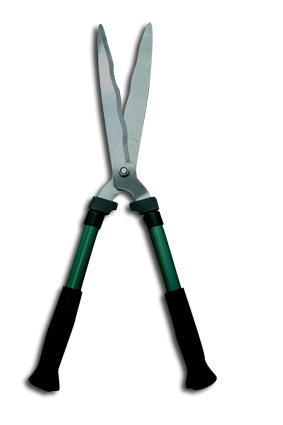
cyclone_hedgeshearwavyThere may come a time when you just get sick of it. You see the shallowness, the lack of freedom, the treadmill nature of operating our lives on the level of our senses. You are tired of watching the shadows of your ever shifting, ever insatiable surface desires. You may see a need for a deep down fundamental shift, a conversion of your heart. You may say, “Jesus, I want more than a rearrangement of the pieces. I want you.”

That’s Jesus’ cue. And he hops right to it. He sets to work, not on your external reality – the things you thought needed to be improved – but on reordering your desires themselves. He shifts your priorities, your values. He prunes runaway pride. He hacks out dead attitudes. He fires up a chainsaw and cuts away whole walls of rigid thinking. And friends, it is just as he told us. It feels terrible. It feels like you are dying, because you are.

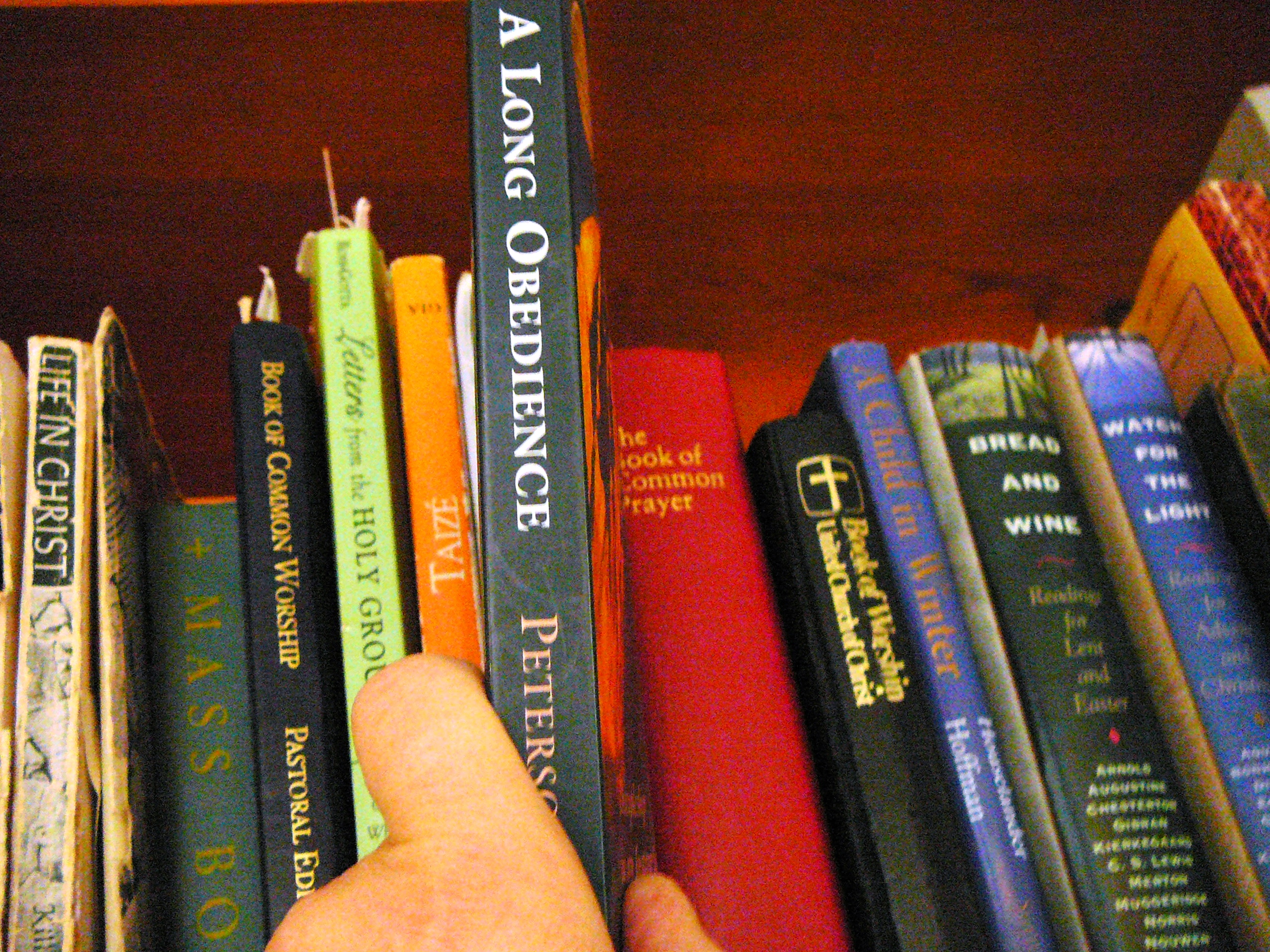
Eugene Peterson paraphrases the verses from Psalm 147 above in this way: He’s not impressed with horsepower; the size of our muscles means little to him. Those who fear God, get God’s attention; they can depend on his strength. j0178928

Christ opens the gate on that pen of strong horses you had corralled and sets them free. He dismisses all the fast runners – the thinkers, the experts, the latest technologies. And you are left with your fear, your wonder, and your love for this God who cares enough about you to enter into you and create such a rumpus. There in the mess you untie your hope from your own efforts and strength and attach it to the strength of God. And little by little you begin to trust that something new and amazing is emerging, something which you could never think of or make happen in a thousand years.

Now tell me, who wouldn’t love a God like this?


More about prayer –
www.fromholyground.org

Contact Loretta –
lross@fromholyground.org, www.fbook.me/sanctuary

Follow on Twitter

Kids with Knives

Jesus pumpkin 3

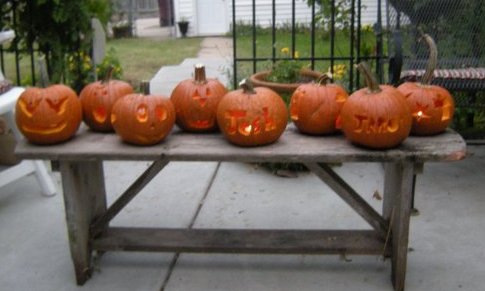
Nine kids: nine pumpkins. Grandpa and Grandma, with a pot of taco meat and fixings. After the dumb game where I make them interview each other and then introduce each other to the group, we get to work.

Knives: Five boys around a table covered with newspaper. Two girls in the kitchen. Two more on the patio. Seeds. Lots of seeds and stringy pumpkin innards. Laughter.  scooping

“I am making a bat.”
“I’m gonna have two faces on mine.”  
“Hey, where’s the knife?”

Then – that studied silence of creativity and focused concentration. Grandpa helping with the finer points of carving. Grandma taking photos, hunting up a toothpick to save a broken piece, helping set up the food.

Through it all – a barking puppy named Elijah, confined to his kennel in the kitchen, itching for a wild rumpus. We let him out and some of the kids take him for a walk.

Supper: tacos, chips, salsa, apple slices in caramel dip. Mrs. Miller’s yummy bundt cake with black and orange sprinkles. No leftovers.

Lesson:  We take off our shoes and gather in the prayer room. The sophisticated high school juniors sit down with the middle schoolers. One or two stretch out on the floor. Others wrap up in a prayer shawl. We turn out the lights. We settle down. Elijah does not. He is back in the kennel and very much wants to be in on this lesson. The little prophet, still early in his ministry, has not yet heard “the still small voice.” aleah

What does Jesus mean when he tells us to deny ourselves and to die? We watch a Nooma video about how death is the engine for life. We think about how parts of ourselves can get in the way of our ability to love or to be compassionate. Like the part of ourselves that always has to be right, to look good, or to impress others. The video is pretty sophisticated for this age group. I wonder if it is making any sense. The kids are quiet and listening intently.  

Elijah keeps barking. I bring him in and try to calm him. He only gets worse. I take him back. Grandma, who is not all that keen on dogs, goes out to the kitchen, kneels down before his kennel, and entertains Elijah with a paper towel.

I ask the kids what desire in them might need to die, what desire is getting in the way of God’s work for them and through them. One by one we bring an unlit candle forward to where there is a small statue of Jesus carrying a cross. We light the candle and place it near Jesus as a symbol of what we want to let go of. While we are praying, we listen to Dona Nobis Pacem sung by Beth Nielsen Chapman. Some of us sing along. We are silent for a little longer, gazing at all the candles around Jesus. We say amen. One sixth grader, wrapped in a shawl stretched out close to the candles, announces loudly, “I just love that chant!”

We go outside, light our pumpkins, and carry them home into the dark.Bill smith helping

I say I am too old for this. My youth group days are long over. I say I cannot devote the time and energy these kids deserve. I say we should be having lock-ins, going on mission trips, meeting more frequently. What I do seems so small. I teach them how to be still, silent, and prayerful. And I love them, wholly, and with a kind of wild desire for their highest good in God now and always.

I go to bed deeply grateful for grace in the midst of chaos. I think about the kids in Chicago where knives are wielded for a completely different purpose. At church this Sunday we had celebrated Children’s Sabbath. Some of these youth shared information with the congregation about the horrible neglect and suffering of many children in our country. The kids I work with are deeply loved and cared for by large extended families and a whole church pretty much totally gaga about their every move. My heart aches, thinking of kids for whom a knife is only a weapon, for whom school is a crime scene, and a walk down the street an invitation for murder. What needs to die in us for our children to stop dying?

As we were cleaning up Grandpa told me, “It is a miracle no one got cut!” Hmm, I think, no. Grandpa and Grandma, the miracle is that you are here. 

Jesus pumpkin 4

Special thanks to Bill and Sharon Smith, Eleanor Miller, Jean Schultz, Dave Strobel, “the pumpkin man,” everyone at Crestview UMC, and all of you who try to be present to children wherever they are.

More about prayer –
www.fromholyground.org 

Contact Loretta –
lross@fromholyground.org, www.fbook.me/sanctuary

Follow on Twitter

Day of Prayer

deer at dawn

I woke surrounded by warm pink light. Dawn filled the room like a rosy fog and drew me outside to look at the eastern sky. Banks of darker clouds, edged in gold, piled above the rose glow. Within minutes the sky darkened. Thunder rumbled. Rain fell gently throughout the morning and afternoon.

I spent the whole day chasing after that rosy suffusion which called me to awareness. But the light had flown to some other window, some other sleeper. I was left with a soft kiss, a sweet promise, and an ache in my heart that burned like a flame.  

This day my prayer was bare and to the point: I want you – not my way, my plans, my hopes, my dreams. Not peace on earth, healing for the suffering, hope for the broken hearted, or justice for the oppressed. I want YOU- giver of dawn and rain and this yearning in my heart for something unnamable, but ever compelling and true.

“The soul is not thought, nor is the will controlled by thought. It would be a great misfortune if it were. The soul’s profit then consists not in thinking much, but in loving much,” advised Teresa of Avila. I would rather think, connive, plan, strategize, manipulate, control – anything, but love this Author of our Being. But love is the way, says Teresa, as well as a whole company of others, including the Beatles.

Little renders us more vulnerable than love. A desire, a longing for someone, something beyond my grasp requires me to recognize my need and my limits. To love is to esteem the freedom of the Beloved and bear the pain of the essential separation of oneself from what is other than oneself. Love asks us to suffer the anguish of the reality that we may never fully possess what we love. Love asks us to be poor and naked in our need and our dependence upon the mercy of our Beloved.

No wonder we try to satisfy our longing for love by attachments to things which appear at first glance to deliver more and ask less of us than the uncompromising call of Christ. No wonder we attempt to extract from people, possessions, and work what only the Source of Love can give us. However, we soon find ourselves enslaved to and sucked dry by the insatiable demands of such false lovers.

Today I am sick, sin-sick, of my attachment to the world and my ego with its endless unappeasable needs.  I am weary and sore from the brutality and violence of a drive to succeed, ignoring my limits, and trying to do too much and be too much. Who can save me from myself, this body of death?

Only Love, Vulnerable Love entering into our misery as Christ Jesus, summoning us from our sleep, whispering, “Let go. Let go of it all. Follow me. I am all you will ever need.”  

So this day my prayer is a famished stumbling after Love. It is holding out my heart saying, “Here take it. I am yours.” It is Peter telling Jesus, with that desperate hope, “Lord, there is no one else that we can go to! Your words give eternal life. (John 6:68 CEV)  

Today my prayer is bearing the pain of this mystery, this rosy dawn which woos and embraces us all.  Amen.

 deer at dawn small

More about prayer –
www.fromholyground.org, www.theprayinglife.wordpress.com

Contact Loretta –
lross@fromholyground.org, www.fbook.me/sanctuary

Follow on Twitter

Done with Great Things and Big Things

leafSeptember is stepping over the doorsill. A change is in the air. Futurist M. Rex Miller (The Millennium Matrix – Reclaiming the Past, Reframing the Future of the Church) writes about the revolution in communication brought by digital media. Digital media, both expresses a desire for, and makes possible authenticity, community, connection and something simpler and more intimate. “New sensibilities are rising. The connected nature of digital communications has already created a shift back to community:  to more open and connected neighborhoods, town centers, and urban revitalization, as well as smaller, more human-sized services that go along with them.” (p. 120)

Miller makes some startling claims about the successful growth model used in our society and mega churches. “We are beginning to realize that much of our churches’ emphasis on growth has produced the spiritual cousin of suburban tract homes, strip mining, and fast-food franchising. Unfortunately, many hungry churches are still buying into the fast-growth premise and promise without fully understanding the side effects.” Miller cites two of these side effects: “Rapid member turnover and staff burnout within many such churches keeps them forever having to replenish their congregations and leadership core.” This successful growth model has come with a price: a lack of relational cohesion. (p. 121)

In my work as a spiritual director with clergy and church leaders, I see many people trying to cope with the negative side effects of the growth model with its exhausting emphasis on numbers, productivity, and efficiency.

Near the end of the nineteenth century American psychologist and philosopher, William James, wacorn_sproutas also sniffing a change in the air, when he declared, “I am done with great things and big things, great institutions and big success, and I am for those tiny invisible molecular moral forces that work from individual to individual, creeping through the crannies of the world like so many rootlets, or like the capillary oozing of water, yet which, if you give them time, will rend the hardest monuments of man’s pride.”

I find in James’ words a prescient and powerful description of the yet to be invented world wide web.

In the spring of 1978, I stepped over the door sill to a new way of living and made a choice for the tiny molecular forces over the great institutions and big success. With only a vague sense of what the consequences might be, I took the less traveled road of a life of prayer and attention to the things of God. As I walked to the parking lot of Glen Oaks Community College, where I worked as an administrator, I was absorbed by an acute sense of my own seeming insatiable need for importance, for making a name for myself. I was weighed down by a restless dissatisfaction, the urgency to figure it all out, and get my life right. Mostly I was just so sick of myself and my whining. Out of that moment of personal honesty and weariness, I heard a call to ministry. I know. It sounds weird. A voice, which sure didn’t seem to be my mine, said, “Be a minister.” I was a church drop-out. I had never considered such a vocation before.

road-to-Ra-bbit-Ridge-web-vYet I turned my back on great plans and big success and set off on a path of downward mobility. I confess that I am still not entirely converted. I am easily diverted by hype, glamour, and the allure of various definitions of success. Like my puppy on a walk, I get distracted by some new smell and go off the path to investigate. Before long I have forgotten my original intent and have become lost in the tantalizing tastes and odors of the swirl of big things, big tasks, and big impressions.

Ministry of course I soon discovered is not immune to big success. In fact we frequently get off the path and fall down before various idols – our organs, our windows, our buildings, our music department, our youth program, our pastor, our mission, our doctrines….

Here is William James again, writing to his friend H.G. Wells: “The moral flabbiness born of the exclusive worship of the bitch-goddess Success – that – with the squalid cash interpretation put on the word ‘success’ – is our national disease.” 

Early in September on the threshold of a new season in the digital age convergence of William James, M. Rex Miller, and my own story I find a synergy of hope and resonance. May some pieces come together for you this season too.

 Here is a prayer, an inoculation, if you will, against our national disease:

Oh, my God in heaven, save me from significance. Yank me by my collar from snuffling and slobbering before the bitch goddess, success. Help me to have more faith in things I cannot see, than things I can measure and bank and drive around town in. Teach me to trust those tiny bursts of energy jumping from person to person as slivers of grace, kindness, wisdom, and cheerfulness. Deliver me from my own insufferable self importance. Oh Indestructible Goodness, lie me down in the soft green pastures of humility, where I can spy your kingdom come, grinning and creeping through the crannies of the world.  Amen

sanctuary-tree-tiny1

 What do you think? Share your comments here or on The Sanctuary Facebook Page

More about prayer –
www.fromholyground.org

Contact Loretta –
lross@fromholyground.org, www.fbook.me/sanctuary

Follow on Twitter

Elijah and the Gentle Leader

I led them with cords of human kindness, with ties of love… Hosea 11:4 (NIV)

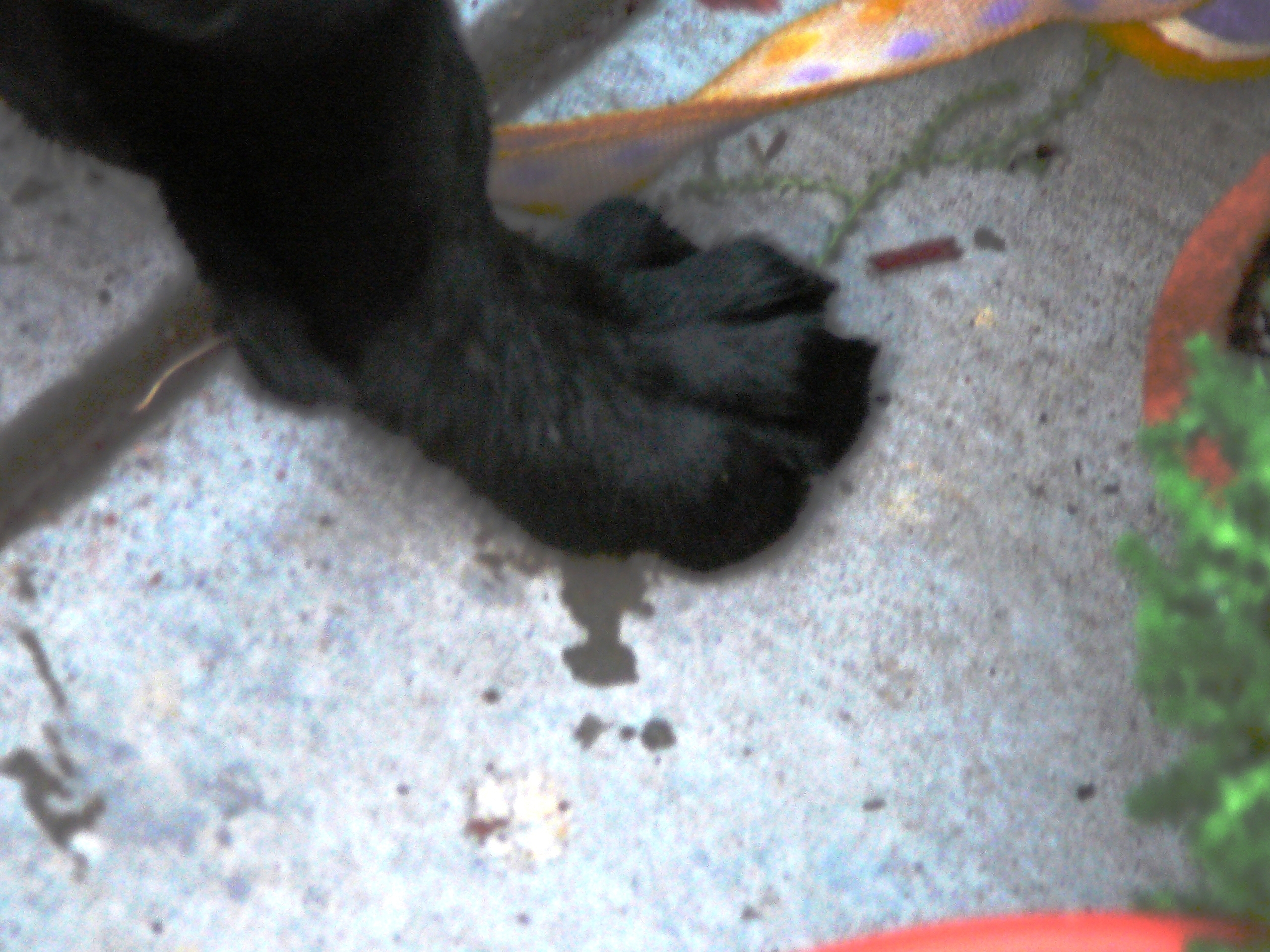
Elijah - foot at 11 weeksI got a new pup, a black lab with some golden retriever mixed in. His name is Elijah. We are in love. Thank God. Learning each other’s rhythms and limits in fits and starts, shouts and barks, foot stamping and puppy pouts, we are pulling at the restraints of the discipline, which all relationships require.  Without the love, we would never make it.

When people see Elijah they say, “Oh, how cute!” Then on taking a closer look, they shake their heads and add with pity, “He’s going to be a big dog.” I try not to shudder. The little prophet dog is mostly feet, knobbly knees, long legs, and a single minded purpose to chew. My last dog died at sixteen years. He had long given up gnawing at things and people.

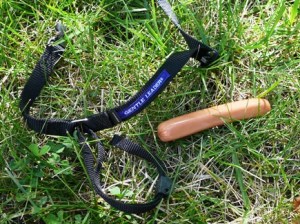
Elijah has all the approved chewing materials. We go to puppy training. At the advice of friends,  I got a training halter device which requires a degree in dog mechanics and six arms to put on your puppy. In spite of liberal use of hotdog bits, it didn’t go at all like the video showed. Obviously the demonstration dog had been drugged.

The device comes in a box resplendent with marketing genius, Immediate gentle control. “My pup was changed in a mere ten minutes.” The nose loop encircles your dog’s muzzle in the same way as a pack leader gently, but firmly grasps a subordinate’s muzzle in his mouth. This is a clear signal that You are his leader!  My dog is still working to pick up that clear signal.

Elijah detests this device with a passion. However, I confound him by offering the tastiest treats I can find, when I put it on and when I remove it. I rubbed hotdog juice all over the part that goes around his nose. When we walk, he turns summersaults over the grass trying to shake it off, or writhes on the ground like a snake. Then he will flop prone in the street with a huge sigh and pout. Despite the period of adjustment for us both, things are improving. Once he gets over his hissy fit, he trots along in fine fashion being the dog of my dreams. 

 Gentle Leader

Do not be like the horse or the mule, which have no understanding but must be controlled by bit and bridle or they will not come to you. (Psalm 32: 8-10 NIV)

The amusing name for this device is Gentle Leader Head Collar. This cracks me up. I got the giggles thinking about it in church this week. I had this picture of God struggling to put such a halter on us, while we flop about in our lives, straining to get loose from the constraints of our own realities. Our genetics, life experiences, choices, and environments wrap around our snouts and bind our movement. Such discipline may gentle us into surrender to the truth of who we are. We may come to accept the conditions placed upon us by our journey and the reality that we are not the leader of the pack, or we may toss ourselves in summersaults, whining, and wriggling against our limits.

“Now be ye not stiffnecked, as your fathers were, but yield yourself unto the Lord, and enter into his sanctuary (2 Chronicles 30:8),” I say to Elijah, who is trying to chew the darn thing off his head. The Hebrew scriptures frequently compare the people of Israel to oxen with stiff necks who will not submit to the yoke, or a horse who will not follow without bit and bridle. The notion of discipline and surrender to the Leader of the Pack appears also in Paul’s writings. In fact it is often the prophets, including Elijah’s namesake, who serve as God’s harnesses to restrain an unruly rebellious nation.Elijah 3 months 2

If Elijah could see the positive benefits of his Gentle Leader, he might not put us through such a struggle. His resistance only increases his discomfort. Being conformed to the harness requires repetition, discipline, love, and a good deal of faith in the Leader on both our parts. The way to Elijah’s abundance is a counter intuitive surrender to what feels at first as terribly confining. Not a bad prescription for the spiritual life.


More about prayer –
www.fromholyground.org

Contact Loretta –
lross@fromholyground.org, www.fbook.me/sanctuary

Follow on Twitter

I Want It and I Want It Now!

Speeding trafficFeeling overwhelmed by the speed of life? M. Rex Miller, (The Millennium Matrix – Reclaiming the Past, Reframing the Future of the Church) identifies seven qualities to describe the dynamics of our present world. He lists the qualities, which are inherent in digital age media, as interconnection, complexity, acceleration, intangibility, convergence, immediacy, and unpredictability. These seven qualities, largely absent from the Biblical world, are directly affecting the life of our churches and the life of our souls.

I want it. I want it now. And by gum, I’m gonna get it!
Let’s look at one of Miller’s qualities, immediacy.  “The time it takes us to absorb and adjust to digitally paced activities grows ever shorter. As the interval between question and answer, request and fulfillment, grows narrower, we are asked to respond to the world with an immediacy similar to that required by fighter pilots in combat… where high speeds require the F16 fighter to master a different set of rules for decision making.” Miller quotes Colonel John Boyd as he asks the question, “How do we function in an environment where reality leaves us little or no time for reflection but ‘changes ceaselessly, unfolding in an irregular, disorderly, unpredictable manner,’ despite our vain attempts to ensure the contrary?”

The disembodied voice at the drive-through chirps, “Which of our twenty four different topping combinations for your pizza would you like today? If you order in the next five seconds you may get your choice of a quart sized cooler, air freshener, or five dollars off your drink order. What would you like for dessert today? We have eight new shake flavors and are offering a special on our smoothies. If you buy two you get one free. Would you like to try our hot apple pie? Oh, sorry we know longer carry hamburgers.”

The quality of immediacy precludes a contemplative, thoughtful approach to our experience and our desires. The lapse between awareness of a desire and its fulfillment is potentially much briefer. Does twenty four hour access to the global market begin to render delayed gratification and patience obsolete? If I want or need something- a conversation, some information, a consumer good or service, a  relationship, something to eat – I want it fast. I want it now. And very often I can get it.

Digital immediacy leaves little or no breathing space between desire and fulfillment, event and response. We do not have time to absorb, savor and reflect upon our experience. To consider broader implications and what God might be saying to us will only hold up the line and irritate the person waiting behind us. We  find ourselves continually reacting to, being manipulated by, or attempting to protect and shelter ourselves from the immediacy of our environment.

Are we to mindlessly adjust to this reality, as a lobster in a slowly warming pot of water, and hence be transformed by it into somebody’s supper? Do we need to learn like the fighter pilot how to respond with greater precision and accuracy to ceaseless rapid change? Or do we have something to bring to the immediate digital age from the tradition of reflection, thoughtful consideration, and listening? Might people of faith draw on a different resource than a fighter pilot’s highly tuned nervous system and hyper responsive physical abilities?

An Antidote for Immediacy
An ancient spiritual practice can restore your balance and perspective. Wisdom from a deeper, truer source than the twenty four news cycle can shape our lives. The examen was developed and taught by St. Ignatius, the founder of the Jesuit order. In recent years the examen has found popularity among people of many faiths. In its simplest form it consists of a daily examination of your experience, asking the Holy Spirit to reveal God’s presence and activity in your day.  The examen is based on the assumption that God speaks to us through our deepest feelings and yearnings, or consolations and desolations. Consolations are things that satisfy and unite us with others, God, and creation in love, hope, and peace. Desolations are negative feelings – anxiety, fear, despair, anger, which tend to isolate us from ourselves, others, and God.

Here are some questions for your examen as presented in my favorite book on the subject, Sleeping with Bread – Holding What Gives You Life, by Dennis Linn, Sheila Fabricant Linn, Michael Linn.

For what moment today am I most grateful?CB022113
For what moment today am I least grateful?

There are many other ways to ask the same questions:
When did I give and receive the most love today?
When did I give and receive the least love today?

When did I feel most alive today?
When did I most feel life draining out of me?

When was I happiest today?
When was I saddest?

What was today’s high point?
What was today’s low point?

This exercise pulls us out of the sucking vortex of immediacy to notice and name our internal reality. What is giving me life and joy? What is diminishing my peace and serenity?  Instead of knee jerk reactions to the demands of immediacy, we stop to consider what is moving us closer to  the way of God, and what seems to be drawing us away from the qualities of holiness. We begin to see a thread, a direction for our lives, and a sense of God’s activity and call to us.

The Immediacy of God
The digital age did not invent immediacy. That rapid connection between thought and fulfillment, need and satisfaction is a quality of the divine. Scripture describes God as accessible, present, alive, and more immediate than the air we breathe. Wisdom 7:24 captures this immediacy of God with the words: Wisdom is quicker to move than any motion; she is so pure, she pervades and permeates all things.
Mulberry Tree
The examen, practiced over time, connects us with a Divine Immediacy more compelling, and satisfying than the life sucking immediacy of our digital age. It gives us direction for our life choices and gentles us into conforming with the will of God. In Divine Immediacy we discover the spacious and timeless grace of the present moment, in which we receive all we need. Right here. Right now.  


The Ignatian Daily Examen

More about prayer –
www.fromholyground.org

Contact Loretta –
lross@fromholyground.org, www.fbook.me/sanctuary

Follow on Twitter

Hidden Things of God

Dock, fog “I have come to get some answers. I’ve talked to a bunch of ministers and none of them was any help.” The man sitting before me was a young professional, bright, and angry.

I draw in my breath and exhale, praying  to be released from any illusions that I could improve upon my colleagues’ work. “Make me humble, Lord. Make me true.” Glib answers, formulaic responses, any hint of arrogance would quickly be detected by his cynicism and broken heart.

“I am about ready to give up on church,” he told me with a hint of defiance, as though he were daring me to be helpful to him. His story was painful and his betrayal, despair, and hurt were palpable. As he wept, shoulders shaking, I sat Shiva. I kept the ancient Jewish vigil of simple presence to another’s suffering. As those who comforted the bereaved in Jesus’ tradition, I waited for my guest to initiate conversation.

“Those who believe they believe in God, but without passion in the heart, without anguish of mind, without uncertainty, without doubt and even at times without despair, believe only in the idea of God, not in God himself,” wrote the Spanish writer, Unamuno.

We live in a world with little patience for doubt or questioning. We do not value subtlety, complexity, or mystery. We possess minimal tolerance for simply sitting with ambiguity and suffering. We do not trust there is any effectual power at work in our lives beyond what we can manipulate or contrive with our own wills and abilities.

The pragmatism, that is the religion many of us bow before, insists on quick, easy solutions. If something “works,” then it deserves our support. An end product that satisfies our needs justifies almost any means.

Our market place economy heavily determines how we think of ourselves and the world. The language of faith with its nuance, poetry, metaphor, and reverence for mystery has been exchanged for the practical idiom of the market place, which measures worth by utility and productivity.

This is not a new sin. The people of Isaiah’s day were also co-opted by a culture of consumption and utilitarianism. The prophet reminds Israel that they and their carved idols and cast metal images do not know everything. “Now I am revealing new things to you, things hidden and unknown to you, created just now, this very moment, of these things you have heard nothing until now, so that you cannot say, “Oh yes, I knew all this.” (Isaiah 48: 6)

I do not know the end of the young man’s story, as is often the case with those who pass through my life. I gave him what I could, which was my love and respect for his losses. As I sat with him, I saw that God loved him very much and also saw how deeply this young man loved God and didn’t know it.

I found myself face to face with my poverty – my lack of any satisfying answer to tie up everything and take away his pain.  I had no bright ideas, plans for recovery, or quick fix resources to suggest. In the words of Isaiah, I could only stay open for the hidden thing, the unknown thing which was coming into being in that young man’s soul, just at that moment out of the infinite, divine unknowable Mind of God.

I had only love to give, 
which, in times like this, never seems to be enough,

                                                             but always is.     FOG      


Contact the author:
lross@fromholyground.org, www.fbook.me/sanctuary

 Follow:
 http://twitter.com/lfross
The Conversion of Paul


BECAUSE  OF  THE  BRIGHTNESS  OF  THAT  LIGHT

 I fell to the ground and heard a voice saying to me,
“Saul, Saul, why are you persecuting me?”
. . .  Since I could not see because of the brightness of that light,
those who were with me took my hand and led me to Damascus. Acts 22: 7,11

Point of Light

Struck by a sickening blow to the gut,
slamming against the pitiless rock
I went down to the ground.
My body lay in the dust
My body folded upon itself in the dust.
My heart smeared with the dust.
And I lay still in the dust,
closed upon the dust,
like the wing of some great, dead bird.

I fell down
rolled down
splayed down
split, spread down
across the ground
like butter.

Like a serpent
I went down
crawling over the ground
on my belly.

I went down to the ground
where the salamanders and skinks
scurry over the cold stone walk.

I went down to the ground
where the sow bugs curl and the beetles hide.
I went down to the ground
and swam with turtle
out of the depths
up into the light
stretched my neck long
and turned my face
to the sun.

When I was lifted up from the ground,
day became night.
I staggered
my sin was always before me.

You wonder if it happened,
if I really saw what I say I saw,
heard what I tell I heard.
You wonder if I am mad
or fabricating.

See here,
see
the proof is in my groping blindness
my stunned, numbed, nauseous soul
stumbling in a foreign land.

There are ones who can testify
that I saw well enough before
that I did not wear this unveiled shocked look of the newly blind.
There are ones who can remember the zeal and pulse of desire in me.

My mind,
shattered into brittle splinters,
discrete thoughts
wholly
separate
with
no
known
connection
to
one
an
other
save my existence.

In darkness I paced that long night.

Near dawn some
thing like scales, like slivers,
husks,
a tough membrane-like scum
shucked from my eyes.
And I saw for the first time
the world
like a worn pouch turned inside out.

When sight returned
there remained as a translucent cataract

 Christ.

Betwixt me and creation exists that dear face
and upon it I gaze unceasingly
and therein find All.

“It hurts you to kick against the goads,” he said.

sanctuary-tree-tiny1