Category Archives: faith

Pear Blossom Blessings

It snowed pear blossoms here in Kansas this week. Tiny white petals floated down like confetti and drifted into the corners of my patio. They festooned the back of my black lab, Elijah, and rode into my kitchen stuck to the soles of my shoes.

The pear flurries crept up on us quickly and then were over. All week I planned to stand under the tree and gaze up through that lacy veil to the branched blue sky above. When I finally went out to behold this beauty, the green shoots of leaves were already pushing off the petals and the moment was over.

Dripping with blossoms, the tree was stunning in the sun, lifting her arms like a bride to her beloved. Then, impetuously, she dropped her gown, sending her skirts floating past my windows.

Watching the petals fall on the lawn, I remembered the poem my mother read to me one spring, years ago.

The Pear Tree
In this squalid, dirty dooryard,
Where the chickens scratch and run,
White, incredible, the pear tree
Stands apart and takes the sun,
Mindful of the eyes upon it,
Vain of its new holiness,
Like the waste-man’s little daughter
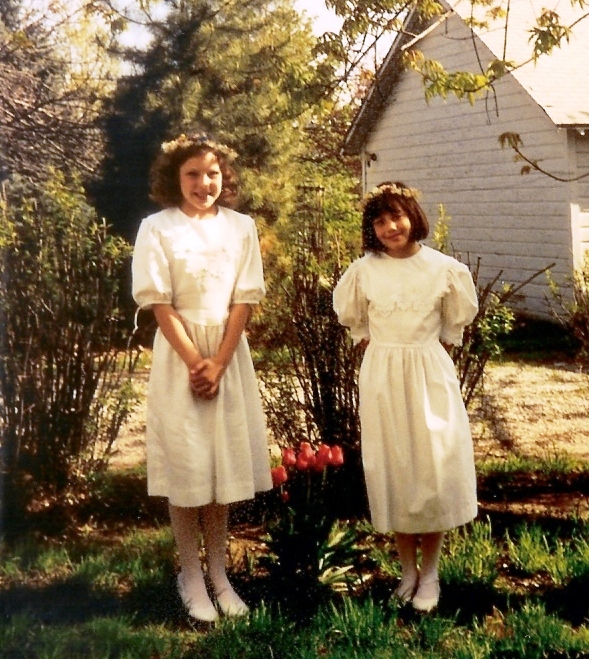
In her first communion dress.
        Edna St. Vincent Millay, 1919

Spring comes like a sudden lump in the throat, a sharp stab to the heart, a pear blossom falling too soon. Beauty does that to us. Beauty, a thing we cannot possess, or control, belongs, finally, to the Creator. The waste-man’s little daughter will outgrow her communion dress. She will move past her vanity and grow into holiness, as her girlish charm gives way to the inner radiance of the Bread of Life she takes between her lips.

Like the woman of Bethany, hastening through the streets with her perfume for the beautiful Savior, soon to die, spring spills her treasures over us, and then is gone.  The pear tree blooms for a week. Too soon her splendor falls softly, grows transparent, yellows, and dries in the cracks of the sidewalk.

Last week I saw a man with a pear blossom petal caught in his eyebrow. He wore it, perched like a tiny cap, over the arch above his spectacles.

I would like to be so baptized with pear blossoms. May you each have your transcendent moment in the sun, and see yourself as the stunning beauty you are.

Ought we not always be pouring the priceless gift of our attentive love on every particle of this world? Ought we not be running recklessly through the streets and fields, smitten and ravished?  We, here so briefly, so soon to be released and blown to rest in the softly greening grass, are surely born to be pierced through by such beauty and spendthrift love.

Are not we here for this above all reasons:

to lift our arms like brides,
and to wear the kiss of God upon our brows?

Aware of this, Jesus said to them, “Why are you bothering this woman? She has done a beautiful thing to me. The poor you will always have with you, but you will not always have me. When she poured this perfume on my body, she did it to prepare me for burial. Truly I tell you, wherever this gospel is preached throughout the world, what she has done will also be told, in memory of her.”        Matthew 26: 6-13 (NIV)


The Sanctuary Foundation for Prayer
Read more about prayer www.fromholyground.org,
Contact the author lross@fromholyground.orgwww.fbook.me/sanctuary
Follow at http://twitter.com/lfross

Lent, Suffering, and Weary Pastors

“The reason why pastors are so tired around Easter is because they have to preach about something they don’t really believe and it just wears them out,” announced a colleague to the group of clergy.  Some clergy will tell you their fatigue is due to all the extra services, studies and observances that cluster around the season.  One wonders what it is that calls out the sudden burst of piety and round of religious soirees, if it is not the need to reinforce our sagging faith.


Evelyn Underhill describes spiritual growth as a “series of oscillations between states of pleasure and states of pain which fatigue the immature transcendental powers.” (E. Underhill, Mysticism, p. 381.)  Whatever the cause, the amazing truth of Good Friday and Easter is more than most of us can swallow, let alone integrate in such a way that we remain in possession of the power of the Risen Christ, while at the same time surrendered to that power.
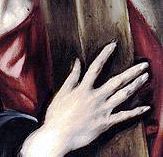

Death is wearisome.  Suffering is wearisome.  Evil wears us down, grinds us down.  As the opposite of creativity, evil employs repetition as one of its weapons.  The slow steady accumulation of minor abuses and violations turn over time into an onslaught, which erodes our best intentions.  Sick and tired of it all, we finally succumb with a yawn and let death have its way with us.


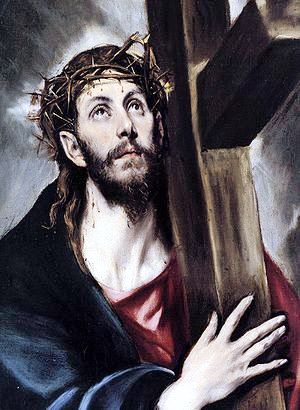
Jesus says, “It is lent. Come on.  Take up your cross and follow me.” Jesus does not summon us to a quick easy death.  He says cross – that slow torment that keeps you hanging around, conscious, gasping, while the body strains and sags against the nails that pin us to our own circumstances and the slow agonizing drag of gravity does its job.


We sink slowly into the earth, the forces of the universe pulverizing us over eons into dust.  At such a prospect, heartily endorsed from pulpits far and wide, one’s transcendental powers, mature or immature, might well benefit from a swig of Geritol.


“Have a Happy Death,” my friend says.  And I go read about those eccentric saints who extol the joy of suffering and actually prayed to share in Christ’s pain.  What did they know I don’t know?


A while back I got a large envelope in the mail with the words SECRETS THAT CAN BANISH PAIN emblazoned across the front.  Inside a Mr. Mark Bricklin promised to send me secrets that would save my life and show me HUNDREDS OF WAYS TO GET FAST RELIEF.  I looked over his offer and decided to take a nap.


Our culture has little capacity to find anything redeeming in anyone who would deliberately seek to suffer. We have a difficult time distinguishing between the suffering of sacrificial love and suffering that is meaningless and self-defeating. It is hard for us to believe that suffering consciously chosen and accepted could be anything other than dysfunctional behavior.
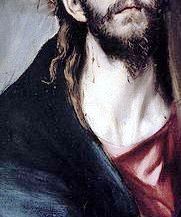


This may be part of the reason why the season wears us out.  This Jesus hanging on a cross for our sakes appears hardly functional.  He makes none of the promises of Mr. Mark Bricklin who exhorts me not to deprive myself and my loved ones of the chance to truly banish pain.  (Mail the enclosed card today!) The effort of leaning up against that cross in a culture that seeks to banish pain, and the real spiritual work of extending ourselves past our exposed doubt deeper into God is more than a little fatiguing.


Spiritual growth may be seen as slowly deepening belief, or the steady erosion of our hypocrisy.  Layers of pretense and self deceit  peel away to expose our fear.  What is revealed is the limit of our belief, its edges.  A good deal of our suffering is that raw exposure of our doubt, our unbelief, to the light of the Risen Christ.  It stings, smarts.  We think we are dying, losing everything.


Perhaps the difference between tragic suffering and the redemptive suffering in which Christ invites us to participate lies not in the amount, kind or quality of the pain, nor in its cause.  What makes one kind of suffering sacred and healing, and another simply one more case of horror and abuse inflicted upon an innocent victim may lie in the extent of our personal freedom to choose how we respond to the pain we experience when others trespass against us.


And here we might look to Jesus, the pioneer and perfecter, “who for the joy that awaited him, endured the cross, despising the shame…” (Hebrews 12: 1-2)  We do not have to love our suffering; we just have to bear it.  We take up our crosses.  We consciously receive the pain that comes our way, not for the pain we must endure, but for the joy that awaits.  In this way we become martyrs, not in self abasing, whining, self-righteous martyrdom, but in the original sense of the word.  Martyr in Greek means witness, one who has seen God and is willing to testify by one’s life that God lives – even in the midst of death and evil and defeat.


Perhaps what those long-suffering saints know that I and Mr. Mark Bricklin haven’t yet grasped, is that what makes suffering redemptive is enduring the cross despising the shame, making light of its disgrace. The self which dies is the ego, the grasping, controlling, faithless part of ourselves which believes everything is up to us.  Unlike Jesus, we do not despise the shamefulness of our suffering.  We despise ourselves instead.  We are humiliated and contemptuous of ourselves in situations of disgrace, defeat and loss which expose our limits.


We want an explanation for our pain.  The ego anxiously searches for meaning in the mistaken notion that in understanding we may find relief.  Jesus does not seek to justify himself.  His focus is not on the cause of his suffering, but on obedience to the One he loves and from whom he came and to whom he is headed in joyful reunion. Jesus does not despise himself, instead he despises that which seeks to humiliate and destroy his identity as the holy Child of God, in other words, his innate goodness and sanctity.  Jesus does not stop loving himself or God in his suffering.
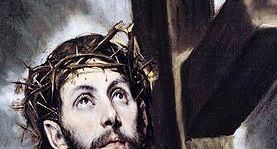

To be beaten, to be rejected, to be abandoned and despised without beating, rejecting, abandoning, and despising oneself is to know oneself as a child of the Holy One.  To suffer, despising the shame, is to remain grounded in one’s essential goodness, even when one has reached the limits of one’s ability to do good.


A blessed lent to you and to Mr. Bricklin too.  May we all enjoy a happy death, a good rest, and steadily maturing transcendental powers.


This post adapted from Letters from the Holy Ground, Sheed & Ward, 2000, written by Loretta F. Ross (Ross-Gotta).
The Sanctuary Foundation for Prayer

Read more about prayer www.fromholyground.org
Contact the author lross@fromholyground.org, www.fbook.me/sanctuary
Follow at http://twitter.com/lfross


The Prophet Amos Addresses the Legislature

Camden, New Jersey is one of the poorest citie...

Image via Wikipedia

Listen to this, you who grind the destitute and plunder the humble, you who say,
“When will the new moon be over so that we may sell corn? When will the Sabbath be past so that we may open our wheat again, giving short measure in the bushel and taking overweight in the silver, tilting the scales fraudulently, and selling the dust of the wheat; that we may buy the poor for silver and the destitute for a pair of shoes?”
The Lord has sworn by the pride of Jacob:
I will never forget any of their doings.       Amos 8: 4-7

A new day coming, change breathing fear and conflict down our necks, we bow before the gods of Scarcity and Me First. An old order, feverish, on its death bed, hollers, flails, clutches its bedclothes with restless fingers, and sees leering phantoms rise from its bedpan.

A cry rises up out of Egypt. Here in this land the child of Compassion once found safety from another ruler’s wrath.

“Let our people go!” rings out in Libya. Rulers tremble. Politicians abandon reason and rush to protect their interests. The homeless crowd the streets. The sick are told to leave their sheltered care and fend for themselves. And truth, which finds its voice, its shape, its story, its song in art,

is silenced

as the rich and powerful cling to their gold.

A huge share of the nation’s economic growth over the past 30 years has gone to the top one-hundredth of one percent, who now make an average of $27 million per household. The average income for the bottom 90 percent of us? $31,244.

Tell them this.

Put down this.

Be still.

Or be stilled.

And Know who I Am.

And know this –

there are rules:

Love, serve, and trust God rather than trusting systems which exploit and destroy life in its many forms.
Take care of neighbors. Welcome, respect, and protect the stranger, the alien, and the orphan. Look out for the weak, children, women, and the elderly.
Don’t kill each other, or steal or tell lies about each other. Don’t be unfaithful to your commitments to each other.
Don’t engage in practices which exploit or prey upon the vulnerable.
Once a week back away from the system of anxious scarcity, production, and consumption. Stop working and rest. Do not allow your life to be defined by endless producing and doing, and no being.

and there are consequences:

I will not forget any of your doings. 


Be still, and know that I am God;
I will be exalted among the nations,
I will be exalted in the earth. Psalm 46: 10 NIV

morningprayer


.

With gratitude to the prophets, Joel and Amos, and modern prophet and Biblical scholar,Walter Brueggemann and his book, Journey to the Common Good
The Sanctuary Foundation for Prayer
Read more about prayer www.fromholyground.org,
Contact the author lross@fromholyground.org, www.fbook.me/sanctuary
Follow at http://twitter.com/lfross

Not Knowing and the Crucifixion of the Intellect

He went out, not knowing where he was going.
Hebrew 11:8

Waiting in the check out line, I indulge in my guilty pleasure – scanning the headlines of the National Enquirer. BILLY RAY RAGE: DISNEY DESTROYED MILEY CYRUS! GAGA-MADONNA WAR ERUPTS! I resist pulling an issue of Celebrity News off the rack to catch up on Tom and Katie. I save that for the beauty salon, when I am less apt to run into someone I know.

Back home as I haul in the groceries, my dog gives me a good sniffing, reading me front and back like a newspaper full of local scandals. All of us critters seem to be created with curiosity, as we wave antennae, bounce sonar, phosphoresce, and sniff out the news of our world and of one another, often shamelessly poking our snouts in our neighbor’s crotch.

Such knowledge – lurid, informative, or life saving – may empower, entertain, set us free, or provide our supper. Knowledge opens doors to invention, opportunity, and innovation.

The Bible understands that the highest kind of knowledge is knowledge, not of my neighbor’s stupid acts and reckless behavior, but of God. Knowledge of God is not for sale in the supermarket check-out line, but is given free through growing intimacy with Holiness. Knowledge of God flows from creation, scripture, people, even, sometimes, the check out line at Savemore, but, most significantly, from companionship and personal communion with the Holy One. Such knowledge and understanding develops through the exchange of love in the experience of a life shared with Christ through prayer. Like my dog, Elijah, one begins to know God, because I have sniffed at God long and often enough to recognize his scent.

Understanding of God is arrived at by literally standing under, that is to say, by lowering and humbling oneself. We stand beneath God, looking up, aware that we see only a portion of what is there. In faith we surrender to hints and intimations, glimpses and sudden dazzling displays of grace.

But inquiring minds want to know! We yearn to know where our lives are headed and to grasp with our minds what is and what shall be. We hunger to secure ourselves. We hitch ourselves up to institutions, college degrees, causes, and ideas. We cinch ourselves into relationships of aggression or hate, boredom or lust, dependency or bullying. We set our agendas and bind them to our foreheads.

Yet, deepening knowledge of God always asks us to trust. As we know God more, faith becomes the consent to knowing less and less about most everything else. As Oswald Chambers wrote, “God does not tell you what he is going to do – he reveals to you who He is.” Such not knowing is almost certain to make us really anxious.


Have you ever been asked to crucify your intellect, to kill that inquiring mind that has to know everything, understand and control everything, and be right all the time? Your life experience may lead to the painful crucifixion of your intellect. On this Golgotha, pinned by the circumstances of your own experience, you find that nothing you can figure out or find out or do can move you out of this impasse. You, left hanging there, can only wait, trust, and abide in love not knowing.

In a time of such acute unknowing we are likely to be filled with an overpowering panic and rising anxiety to secure ourselves with certainties, assurances, undeniable truths, and absolutes. 


Now the Lord said to Abram: “Go from your country and your kindred and your father’s house to the land that I shall show you.” Genesis 12: 1

Seventy five year old Abram and his wife, Sarah, showed a great deal of courage heading off on a journey on the word of the Lord alone without a clear destination. They had no maps, realtor photos of their new home, or contracts to wave before the querulous neighbors. They headed out in obedience under the cold moon and starry skies into a great unknown.

Though I doubt if it happened this way, I like to think of the old couple heading down the road to nowhere, waving their hats, urging the camels forward, and hollering, “Let ‘er roll!”


You are closer to glory
leaping an abyss than upholstering a rut

James Broughton (Little Sermons of the Big Joy)

The Sanctuary Foundation for Prayer
Read more about prayer www.fromholyground.org,
Contact the author lross@fromholyground.org, www.fbook.me/sanctuary
Follow at http://twitter.com/lfross

Love and the Wind

Farmer, poet, lover of the land – Wendell Berry:


I know that I have life
only insofar as I have love.

I have no love
except it come from Thee.

Help me, please, to carry
this candle against the wind.


One could not put truth more succinctly.
Isn’t this what most of us battle – the dying of the light?


The wind is a wily deceiver,
a furious demon,
a double minded,
shape shifting,
hair splitting,
breeder
of separation.


Don’t listen.


Pray for help to carry
the love we are blessed to bear.


We,
love,
and the light
are
One.


The wind is only the wind.


The Sanctuary Foundation for Prayer
Contact the author: lross@fromholyground.org www.fbook.me/sanctuary
Follow at http://twitter.com/lfross

The Stranger

At first glance he wasn’t all that attractive, a little too rough and edgy for me. He wore a nice pair of pants, but his shoes were beat up and had a hole in one toe. He had a scruffy beard, neatly trimmed nails, and a smart fedora tilted over one eye. He staggered slightly and stumbled once, as he approached. Tall, lean, all angles and contradiction, he gave off a raw, muscular energy that seemed both sinister and alluring.

He looked in some ways like the type of kid, who back in the 50’s would wear his hair slicked back in a ducktail and carry his cigarettes rolled up in his tee shirt sleeve. The fact that he had been eyeing me for some time made me nervous in a kind of silly, excited, middle school way.

He was definitely not my type. Besides I have long passed the era of swaggering boys and dangerous glances. Yet he was coming straight toward me, with a lazy, loping walk, totally at ease with himself and his own incongruity.

His eyes seemed older than his body. Compassionate and understanding, his gaze invited me in like some grandma holding out a cup of tea and plate of cookies. I better get out of here, I thought.

But before I could slip away he was suddenly before me, leaning over, and asking, “Would you like to dance?”

I glanced around, “Me? You want to dance with me?”

“Of course,” he said, smiling now.

“Why?”

“Isn’t it time we became friends?”

_____________

At a recent gathering in Kansas City, I was struck by a quotation from German philosopher Rudolf Bahro shared by Margaret Wheatley, well known management consultant, who studies organizational behavior, change, and chaos theory:

When an old culture is dying,
the new culture is born from a few people
who are not afraid to be insecure.

O yikes, I thought. I spend a lot of time and energy figuring out how not to be insecure. Now I am supposed to get comfortable with it?


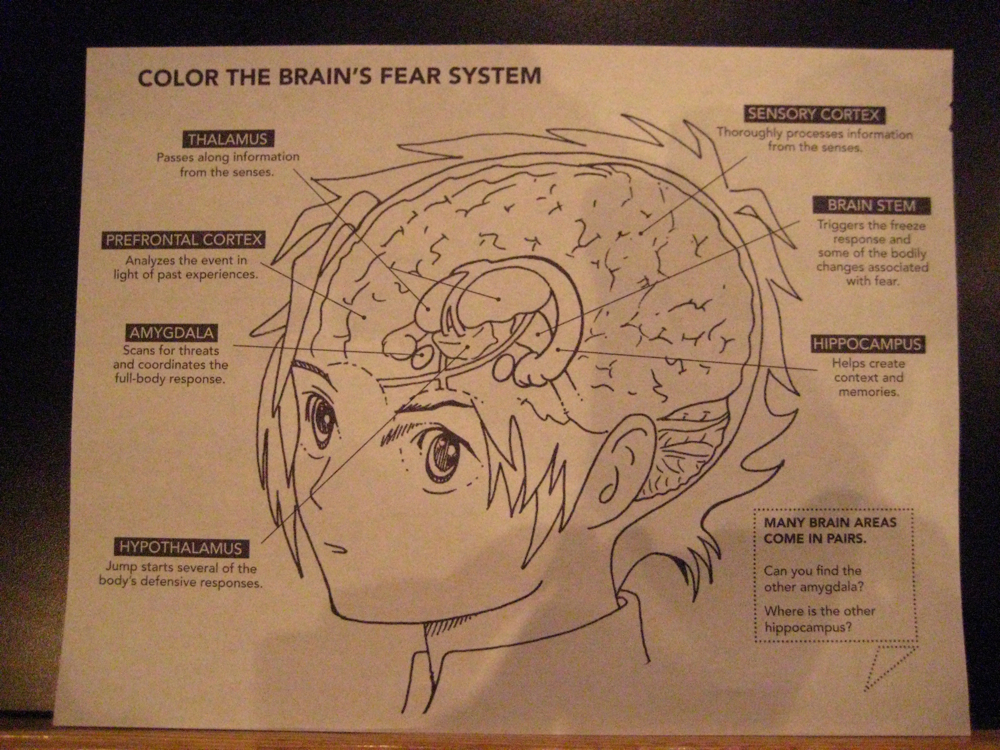
Who has not had a terrifying encounter with fear, which kicks all reason out of your mind and fills you with the powerful instinct to run, to hide, to attack, or to kill?  

Fear is an emotional response to a perceived or suspected threat to our security and safety. It both helps to insure our survival, and may also hold us back from moving forward. Because of its primal power expressed through our biochemistry, we may be manipulated by fear into silence, passivity, numbness, or reckless action.


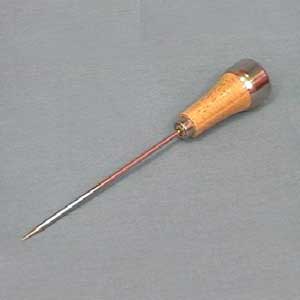
The reality of fear runs through the Biblical narrative, like a long steel ice pick between the shoulders of the people of God. The gift of fear as warning, and as impetus to take some saving action, is often distorted and misapplied. Fear becomes the excuse for lack of faith, and for failure of nerve. We find ourselves unwilling to trust in a power and reality greater than the lying, sniveling fear, which makes us feel we are nothing, but grasshoppers in a world full of overpowering giants with very large feet.

(But the others said, “We can’t attack those people; they’re way stronger than we are.” They spread scary rumors among the People of Israel. They said, “We scouted out the land from one end to the other—it’s a land that swallows people whole. Everybody we saw was huge. Why, we even saw the Nephilim giants (the Anak giants come from the Nephilim). Alongside them we felt like grasshoppers. And they looked down on us as if we were grasshoppers.” Numbers 13: 31-32  Message)

Not counting the frequent admonitions to fear God, that is, to offer God respect and reverence (which is not the kind of fear I am speaking of here), the Biblical admonitions to not fear pile up, filling up several columns in my concordance. God tells us not to fear. Jesus tells us not to fear. Psalmists, prophets, and angels tell us not to fear. Peter and Paul tell us not to fear.

Like most good advice. This is easier said than done.

Though love is not the opposite of fear, it does seem to be the antidote. In I John we find the familiar verses, “Perfect love casts out fear. There is no fear in love. But perfect love drives out fear, because fear has to do with punishment. The one who fears is not made perfect in love.” (I John 4: 18)

At our core, perhaps, what we fear is the separation from the love which promises us protection, care, and life itself. When the gifts of love in our lives are threatened in some way, we fear the loss of the source of these gifts, as well. Love, itself, shall surely be extinguished. We often confuse the gift with the Source. The gifts are  fragmentary, finite, always shifting, changing, and inevitably imperfect. The Source, however, is unchanging, eternal, and utterly worthy of our trust. Losing that which is the core and center of all our desire is, of course, a lie, an illusion. For nothing can separate us from the Love of God as Paul assures us:

For I am convinced that neither death nor life, neither angels nor demons, neither the present nor the future, nor any powers, neither height nor depth, nor anything else in all creation, will be able to separate us from the love of God that is in Christ Jesus our Lord. (Romans 8:38-39  New International Version)

Margaret Wheatley suggests that during this time of tumultuous change and insecurity that what is needed in every organization are patience, forgiveness, compassion, generosity, and an acknowledgement that we will fail sometimes and that is okay. These virtues sound like love to me, perfect love, which casts out the fear that stifles creativity, freedom, and innovation. Perfect love breaks the chains, which bind us to a past we cannot change. Perfect love exposes the dark fiction we write about a future we cannot control. Perfect love empowers us to respond to the present, ripe with possibility and brimming over with life.

_____________

We make an odd couple, this older woman and her shape shifter of a partner. “I don’t know the steps,” I protest.

“Trust me,” he whispers, as he guides me onto the dance floor. “We will make the steps up as we go along.”

“Your name?” I ask gazing into those eyes.

He hesitates for a moment. “People call me Uncertainty,” he says, pulling me closer.

Become a fan of the The Sanctuary Foundation for Prayer
Read more about prayer www.fromholyground.org, www.fromholyground.wordpress.org
Contact the author lross@fromholyground.orgwww.fbook.me/sanctuary
Follow at http://twitter.com/lfross


Still Not Saved?

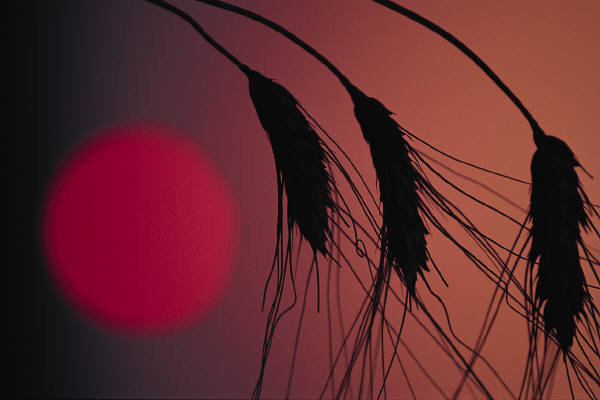
The summer is over, the harvest is in and we are not saved.  Jeremiah

You might chalk it up to the waning of the light, or to the overcast skies. Regardless of the cause, the change from summer to fall often stirs up a case melancholy in our souls. The shrubs I purchased last July and watered in their containers through the hot summer are still waiting for me to plant them. A year is winding down and I am looking at what remains undone, unsatisfied, and unfulfilled in my life.

A little mouse has found the bird feeder outside my window. He shimmies up the pole each day and gobbles the sunflower seeds and cracked corn. I suppose I should sic my cat after him, but I haven’t the heart to intrude on his salvation with her teeth in his throat.

Autumn’s teeth are biting into my heart. I don’t notice the pain as long as I am working. Then there it is, asking for my attention. A young woman described to me the pain she was feeling as like a splinter working itself out. “I think I need to just feel the pain I have stuffed for so long.” Another woman avoids sitting still to pray and listen to God. When I asked if it was because that was so painful, she began to weep in recognition.

What is it that will save us? What will rescue us from our incurable wound, as Jeremiah calls the distress of his people? Will the politicians scrambling for public offices? Will the latest technology? Will scientific advances? Will new leadership? Will my working night and day save us?

In the growing dark of autumn, reality appears more nuanced, layered, and resonant to me, than life as we tend to live it — skimming over the surface, subsisting on sound bites, condensation, slogans, and bumper stickers. In my fall funk I am suspicious of easy answers, human arrogance, and frenzied activity.

I am not alone in this assessment. People come for spiritual guidance. They sit down and reflect prayerfully upon their lives. They unpack their days and their opinions, lift and hold them to the light. They savor, grieve, rage, and weep. Sometimes they talk about how they do not fit in at their churches. Some are looking for more depth. Sometimes they ramble and are hard to follow. One person sits and simply says, “I do not know. I don’t know,” over and over.  Sometimes they thank me for the safety and freedom they feel here.

I listen and pray and observe the Spirit’s dance in their stories. I witness the subtle shifts and changes in their hearts. These individuals possess that rare gift, an inner life, an examined inner life. They have taken responsibility for what is going on in that inner life. They understand how the truth of their interior reality shapes their outer experience. They are engaged in the serious and critically important work of personal transformation, self understanding, and deepening faith.

What I do is to stay with them in their pain, even when they can’t stand to stay with themselves. I believe, when they cannot believe. I hold up a light, as they discover the healing and freedom that wait beyond their darkness.

Many of us want to foster change in our world and institutions without doing the deep and painful inner work of our own transformation. How can I ask a whole community to change without being intimate with my own pain and my resistance to the cross of suffering in my life?

Thomas Keating invites us to understand our personal pain in a larger context, “Whatever you are going through is your invitation to participate in the redemption of the world.” The implication here is that healing for us all is made available through how we as individuals respond to the pain in our lives. This redemptive, life giving power of suffering love is modeled for us by Jesus.

The French activist and mystic, Simone Weil, writing in the late 1930s, observed that “The moral revival that certain people wish to pose will be much worse than the condition it is meant to cure.  If our present suffering ever leads to revival, this will not be brought about through slogans, but in silence and moral loneliness, through pain, misery and terror, in the profoundest depths of each man’s spirit.”

We are all trying to get by the best we can, taking our harvest where we find it. We are still not saved. The cat lurks. The market falls. You can’t find a job.

Perhaps what is called for in this waning of the light is the ability to be compassionately present to our collective suffering with love and faith. Could we not trust that out of the profoundest depths of our spirits, as we die to ourselves and the way we want things to be, unimaginable new life is already putting out tiny rootlets, waiting to emerge in some distant spring?

If you can’t believe that, I do not fault you.
We all have days like that. Besides, it’s autumn.

In the mean time, lean on me.


Become a fan of the The Sanctuary Foundation for Prayer
Read more about prayer www.fromholyground.org, Tracking Holiness – Newsletter
Contact the author lross@fromholyground.orgwww.fbook.me/sanctuary
Follow at http://twitter.com/lfross

Christian Atheists

“If yas gonna pray – then yas don haft ta worry.
If yas gonna worry, then why bother to pray?”
Anne Lamott, Traveling Mercies


Though a majority of Americans claim they believe in God, most of us function in our lives as atheists. Little seems to cause us more trouble than the godless belief that the ultimate responsibility for everything rests with us. Parker Palmer calls this “functional atheism.”

This is the unconscious, unexamined conviction that if anything decent is going to happen here, we are the ones who make it happen – a conviction held even by people who talk a good game about God.

This shadow causes pathology on every level of our lives. It leads us to impose our will on others… stressing our relationships, sometimes to the point of breaking. It often eventuates in burnout, depression, and despair, as we learn the world will not bend to our will and we become embittered about that fact. Functional atheism is the shadow that drives collective frenzy as well. It explains why the average group can tolerate no more than fifteen seconds of silence: if we are not making noise, we believe, nothing good is happening and something must be dying.

~Parker J. Palmer, Let Your Life Speak

Functional atheism is not a new affliction for the believer’s soul. Remember the story of the father of the epileptic child who asked for Jesus’ help? Jesus said to the man, “If you are able! – All things can be done for the one who believes.” Immediately the father of the child cried out, “I believe, help my unbelief!” (Mark 9: 23-24)

The rough and tumble scramble of our daily lives reveals our hidden atheist. Our unbelief makes itself known in our worry and irritability. We see our betrayal of God in the way we clamp down on having things our way and in insisting that we are right. Such unbelief gives us heartburn, high blood pressure, sleepless nights, and anxious days. Try as we might, we will always fall short of being able to be God in our own lives. Such an enterprise only leads to misery.

So, let’s practice belief. Slowly, step by step, stumble by stumble, we can move more deeply into the conversion of our unbelief.

Here is a prayer exercise to try.

Find a quiet spot. Let yourself relax. Take five or six deep breaths in through your nose, and release each one slowly through your mouth.

Now, imagine yourself in a vast open spacious field: a mountain top, a plain, a meadow, and a lake or ocean shore. See the space on all sides stretching into the distance.

Next, put the things you are worrying about: finances, work, family, various tasks, or responsibilities — whatever has you tied in knots, into that spaciousness. Once you have spread out your concerns at some distance from yourself, simply be there, breathing.

Imagine the Holy Spirit is moving among and penetrating the many tasks, people, and issues with a vibrant, pulsating energy you cannot see, but may sense. As you remain in peace, centered in Christ, the work of God goes forth into all your concerns through your faith, your consent, and your belief that God is more powerful and effective in your life and the world, than you could ever be.

Watch. Wait. Trust. If you become anxious, ask God to help your unbelief.

After taking time to be present to God’s activity in your life concerns, ask if there are any specific responses or actions you are to take. Allow God’s response to rise up from your center of peace, rather than your anxiety or fear.

Here in the field of your life the One who knows you better than you know yourself is always healing, creating, mending, and summoning.

Relax. It is not all up to you. You are not alone. You are not even in charge.

You are just part of the field, a member of the family.

Amen.

Become a fan of the The Sanctuary Foundation for Prayer
Read more about prayer www.fromholyground.org,  Tracking Holiness – Newsletter
Contact the author lross@fromholyground.org, www.fbook.me/sanctuary
Follow at http://twitter.com/lfross

Prairie Lamentation

Driving west on Interstate 70 from Topeka, Kansas around ten in the morning, I plunged into that green swath of oceanic beauty called the Flint Hills. Named by explorer Zebulon Pike in 1806, the majestic sweep of bluestem prairie extends north to Nebraska and south all the way to Oklahoma.

Formed 250 million years ago when Kansas and Oklahoma were covered with shallow seas, the land is compared to the undulating roll of a great body of water. The shallow soil rests on seabed layers of flint, shale, and the fossilized remains of sea animals.

Reveling in the beauty, I was sailing down the road, when I came abruptly upon a sight that brought my heart to my throat and sent a chill down my spine. A huge shimmering whiteness moved off to the north along the road. Bigger than the side of a barn, it lifted and fell back to the ground. It seemed alive somehow, but no animal could be that large.

I slowed, curious and wary. The highway was deserted. Was this a UFO? Maybe I should look for an exit and turn back. I drove a bit further, then coasted onto the shoulder, and stopped about 100 yards away, watching that white thing waving.

It looked like huge wings. One wing spread up the side of a hill, the other lay nearer to the road in the valley. A few iridescent feathers lifted in the wind and reflected the blue sky like mirrors. The wings were rising and falling slightly in a convulsive shudder.

It’s hurt. It needs help. But it’s huge. Would I scare it? Would it attack me? And what is it?

I looked up and down the road. Still no traffic. I opened the car door and slid out. A sudden rush of wind whipped past and slammed the door shut. The air was cool and smelled of grass. The only sound was the soft swish of shuddering feathers. Standing by the side of the road between earth and heaven, I pressed my hands over my mouth and stepped forward. I had taken a few more steps when, suddenly, the thing, the bird hiccupped. It convulsed and heaved in a ragged sob.

I nearly jumped out of my skin, but I saw that it was crying. The beautiful bird had spread herself over the sea of grass to weep. Don’t ask me how, I just seemed to know the bird was a she.

I moved a little closer, wondering if I could be of comfort. May I help you? But before I could finish the thought, a river of grief and anguish engulfed me and I tumbled over and over, gasping for air, drowning in sorrow. A deafening roar of cries and sorrow filled my senses. Then a battering wind and hellish screams pulverized me into tiny pieces, flinging me into darkness. After that, nothing.

When I came back together as myself, I was there in the quiet August morning with the hills, the sky, the empty highway, and the still bird. She seemed calmer now. The shuddering had stopped.

Are you all right? I asked. Are you able to fly? And again, instantly, I was drawn out of myself in a sickening swoop over mountains. We dove into the depths of the sea, peered into the eye of a whale, and crawled with a crab on a shore. I saw the molecules of a heart valve, and plummeted into the shrunken belly of a child in Sudan. We whooshed through glittering palaces of power and stood on the floor of the New York Stock Exchange. She laid those wings over a pile of bodies in Pakistan and sat on the shoulder of a man holding an AK47 rifle. We splashed in a child’s swimming pool with a little girl in a pink and green striped bathing suit. She whispered to an artist bent over a painting, and coursed up the stem of a tomato vine in Fremont, Nebraska.

This time, reeling and breathless, I didn’t want to ask any more questions, or bear the answers. I gazed upon her wings spread over the prairie grass and the reflection of the blue sky, the puffy white clouds, and the tall grass waving. In the play of light and color I caught of glimpse of a woman peering back at me and realized with a start that the woman was myself.

Then she lifted one wing. She drew her head out from under it and turned her eyes on me. A bolt of love and compassion seared through me with the crackle and snap of flames rising from dry wood.

I sank down beside the bird. What do you want of me?

Tell them.
To stop.
Hurting me.

I cringed, shaking my head. I can’t. I am complicit. I have blood on my hands, too.

She waited for me. The wind ruffled her feathers. The puffy clouds moved across the sky. Somewhere a meadowlark called.

Okay. How?

Be brave.
Be brave, she told me.
Be brave.

_____________________________

Let no unwholesome word proceed from your mouth, but only such a word as is good for edification according to the need of the moment, so that it will give grace to those who hear.  Do not grieve the Holy Spirit of God, by whom you were sealed for the day of redemption. Let all bitterness and wrath and anger and clamor and slander be put away from you, along with all malice. Be kind to one another, tender-hearted, forgiving each other, just as God in Christ also has forgiven you. Ephesians 4: 29-32 (NASV)

Don’t grieve God. Don’t break his heart. His Holy Spirit, moving and breathing in you, is the most intimate part of your life, making you fit for himself. Don’t take such a gift for granted. Ephesians 4: 29 (The Message)

We invite you to become a fan of the The Sanctuary Foundation for Prayer

Read more about prayer at www.fromholyground.org,
Tracking Holiness – Newsletter
Contact the author at lross@fromholyground.org, www.fbook.me/sanctuary
Follow at http://twitter.com/lfross

Prayer: Taking the Long View

The contemplative who can stand back from a situation and see it for what it is, is more threatening to an unjust social system than the frenzied activist who is so involved in the situation that he cannot see clearly at all.  ~Protestant theologian, Karl Barth

Look always at the whole. ~ Marcus Aurelius

In the photo my hair is in braids and I am about six years old. I am wearing sunglasses and standing next to my father, who smiles proudly. My three year old brother is perched on our old Chevy next to a dark cloth spread over the hood. He wears a sun suit and is squinting into the sun. On the cloth are the day’s find, a cache of Indian relics. Dad had spent the day walking the plowed fields in the special places known to him, where Indians and, before them, prehistoric dwellers had camped.

He often handed me an ancient tool to hold, showing me how the flint had been worked and chipped to form something useful. “Just think, a little boy or girl long ago held this rock and played with it. This one was used to shoot birds,” he’d say, putting a tiny arrow point in my palm.  He would gesture to the creek saying, “You have to learn to read the signs. They camped here, because there was water and wild life for food. The ground is up high, so they could see a long ways.”  He spoke of the people who made the tools with reverence and a kind of wonder.

When he showed me where a glacier had moved through Iowa and left a particular kind of rock that had come from a place in Canada, and told me how that happened way before the Indians lived here, I realized that I was a tiny being in the sweep of the universe. So many things had happened before I was born and would continue after I died. The notion filled me with awe.

I grew up with rocks and so many arrowheads that Dad once cemented the chipped and broken ones to the edge of the steps leading to our front door. He carefully numbered and cataloged every piece he found with precise location, date, and field notes. He did not confine himself to stone relics, but also found the vertebra of a mammoth and  teeth of a mastodon and a saber tooth tiger. Now that seemed amazing to me… these animals actually once lived where I lived. Dad could point out the creek bank where he found the relics. I loved to gaze at the reproductions of these creatures in the fold out color plates in Life Magazine. I would look at the huge, shaggy, mammoth beast surrounded by the spear wielding, ancient men in the magazine and then up at that tooth, bigger than my fist on the shelf in our dining room.

My father’s interest in history, geology, and archeology expanded my awareness of the world to encompass more than what I could immediately see. His respect for what had come before him and curiosity to keep looking, digging, and learning his entire life taught me that there was always more to see, to understand, and know.

I was not very good at finding artifacts myself. A rock was a rock to me. I would fix my eyes on the ground determined to find one, but rarely did. I think my father’s success was a convergence of understanding the effect, the heave and thrust of rain, ice, and plow on the land, a willingness to put himself in the skin of those early people, and an ability to use his peripheral vision. While focused on the goal, he, at the same time, took in the whole, aware of the plowed rows he had covered, the rows ahead, and those on each side of him.

Lately I have thought often of my father’s way of seeing and how he lived from a big, broad view of the world and his place in it. We as a culture seem in some places to have lost that sense. It is as though we have forgotten how to use our peripheral vision. We spend our time focused on televisions computer screens, cell phones, calendars, and our to do lists. We travel, shut up in vehicles, with the air conditioner on, and radio and ipod babble filling our ears. Many of us, living in cities, have fewer opportunities to rest our eyes on the soothing, panoramic sweep of mountains, plains, forests, and oceans.

We make decisions, express opinions, and live our lives from a constricted field of vision. We obsess and worry. We blow things out of proportion. We lose perspective and a sense of humor. We become rigid, self-righteous, defensive, and dull. (Please forgive me, if you do not do this. I know not all of you are like me).

Specific focus is incredibly useful. To hone in on a project, a piece of art, an idea, or another person brings precision and clarity to our thinking and our actions. However, we can get stuck in that narrow focus and fail to dial back to the bigger picture.

Try it. Focus on a point across the room. Narrow down your vision to look very intently at that single point. Then allow your peripheral vision to come into play. Slowly become aware of what you can see on either side of that point, then on either side of yourself, then behind yourself, and above and below yourself. Of course, you cannot actually see completely behind yourself (unless you have eyes in the back of your head like my mother). Imagine your vision and awareness radiating out from you in 360 degrees for miles and miles. At this point you may want to close your eyes. Go ahead. I will wait for you, while you enjoy the spaciousness.

Now notice what is happening to you. If you keep at this for a while, you will find yourself relaxing, The tension will go out of your neck, your jaw. Your shoulders will release. Your breathing will slow.  A physiological shift occurs in your body and perception as you expand your awareness, taking in more and more. You may feel more peaceful. Some people experience an expansion and freedom in their attitude and approach to problem solving.

Jesus viewed others and himself from the broad perspective of eternity. In his self understanding as the Son of God was the awareness of all that was, all that is, and all that will be. I am the first and the last, the beginning and the end. He saw the specific need of the individual before him in the context of a much bigger picture and this sweeping view impacted what he said and did. While on this earth, Jesus never shook off that telltale scent of heaven, and the vision of the Kingdom of God in his union with the Father and the Holy Spirit.

As we offer ourselves, our world, our troubles, and our conflicts to God in prayer, we step into the sweeping majesty of eternity. We become part of something greater than ourselves. Our vision expands to include the whole. We find gifts we didn’t see before. We discover evidence of life we had no idea was right before us. We are connected to a woolly mammoth, whose 16,000 year old molar we hold in the palm of our hand. We are joined to all that teems and dances in the mind of Christ. I am no longer a “single interest group” rigidly focused on my particular agenda, but have entered the stream of creativity, grace, and vitality that is the Realm of God.

No telling what you might find then!


We invite to you become a fan
of  the The Sanctuary Foundation for Prayer

Read more about prayer at www.fromholyground.org,
Tracking Holiness – Newsletter
Contact the author at lross@fromholyground.org, www.fbook.me/sanctuary
Follow at http://twitter.com/lfross