 Maybe you have taken on a very difficult and demanding task. Maybe you have been engaged in a burst of creative activity. Or perhaps, you have been involved in the long, slow, steady, outpouring of yourself for family, friends, or your job.
You may have noticed the signs: an anxious, sleepless night here or there; drinking too much caffeine or alcohol; not enough time to get to the grocery store; a sudden attraction to playing solitaire, and a rush of those Please-Lord-give-me-the-strength-to-do-this prayers.
In my case I was following my own devices again, rushing ahead of the Spirit, plowing my own path. Finally I was stopped by a sharp, shard of sorrow in my heart, a sense of restless unease, and the accompanying guilt and self-recrimination about my lack of motivation. I did not miss God’s irony that this should assail me over the Labor Day holiday.
After thirty years of devoting myself to prayer, I am amazed at how hard it still is to expose myself to the direct presence of Christ. I really think I would be the one in the back of the crowd, wanting desperately to push through to touch his robe, but fearful and cautious, and resigned to making the best of things on my own.
Many of us find it easy to read about faith and prayer. Books on these topics are best sellers. Countless people read the Bible. Most of us do not have much trouble telling God what we need. We may even write out a list of our needs and longings and hand it to the person in front of us, asking, “Would you pass this on up to Jesus, for me?”
What I hadn’t done was the simple, radical exposure of myself and my need to God. What I hadn’t done for several weeks was a sustained, still, silent offering of my being to the being of God. This is what I believe truly heals and redeems: contact with Holiness, that mysterious communion and co-mingling of my spirit with the Spirit, a dance of love beyond my understanding or control.
I know why I avoid it and why I, suppose, that I have to write about it. The reason is that this communion may hurt at first. The exposure of a raw, chaffed heart to the burning brightness of Grace can be excruciating. (Yes, that is the word for it: ex- crucifix, from the cross.) It may be the last thing we want to do. So we often just tell God about it, then get up and go on fretting, and look about for something to do, anything other than just sitting there in that fear and pain.
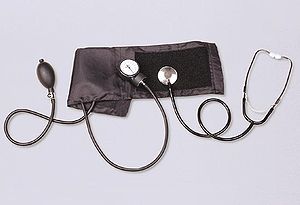
Now think for a moment. If you were sick, would you not pay attention to your symptoms, maybe check them out on the internet, and go to a physician and describe what you are feeling? And then, would you get up from your chair and go home, before the doctor had a chance to ask questions, to examine you, run tests, and prescribe your treatment?
Surely you would you wait for the examination. You would answer questions. You would you lie down on the table, bare your chest to the stethoscope, your arm to the blood pressure cuff, and take whatever tests the doctor advised. You would take your medicine and follow a treatment plan.
I had been making drive-by visits to God, where I would drop off my laundry or tell God what I need for today. I was sipping those devotions for busy people, spouting sound bite prayers on the run. I was not coming before God and disrobing. I was not holding still for God to search my heart and probe my mind. I would not wait for his grace to move into me, to absorb the pain, to refresh and heal me. Further, it was all about me. I was all about me. I had nary a thought of what God might desire or need from me.
We fool ourselves if we think a quick shot of God, a pithy quote, or Bible verse alone will do it. God desires a relationship with us, not a power lunch, and depth relationships require leisure, attention, vulnerability, and mutuality.
Part of us really does desire this. However, another part of us is just not that interested. I hear about this internal conflict over and over in my practice of spiritual direction. People are sincere and have good intentions. Yet nearly everyone I know finds him or herself facing obstacles to a sustained presence to God.
Try it. Find a quiet place where you will not be interrupted. Set a timer. Twenty minutes is good. Ten minutes will do. Even five minutes can hold a miracle. Breathe a while. Just be there and allow yourself to be open to Christ, the patient physician, who has been waiting for you for an eternity. Now right off, you may notice all sorts of responses in yourself: a sudden urge to get up and tend to some task; some buried pain rising up, burning and stinging like really bad heart burn. You will take little sorties into the past and into future. You will write fiction, little novellas, about your life. You will discover some hurt or slight or worry to gnaw on.
Just stay there. Hold still. You are getting a CT scan. Don’t move. This time is for God’s examination of you. What you think and how you feel about this isn’t all that important. The physician is at work. Trust that. You may feel panic or anger or despair. You may feel deep peace and joy. Whatever you feel, just stay there opening yourself to the one who loves and cares for you beyond your wildest dreams.
When the timer rings, give thanks as honestly as you can. Then do the same thing the next day and the day after and the day after. Don’t look for “results,” just be obedient in allowing the doctor to heal you. Thomas Keating calls this form of centering prayer “divine therapy.” You, of course, may also read the Bible, pray in other ways that you are drawn to, do acts of love and service, and whatever else that seems right for you.
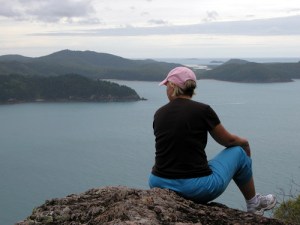
Sometimes this prayer is like detox, a weaning from some addiction, and we go through the painful withdrawal of whatever we may have been substituting for God in our lives. Other times this prayer is like the surrendered offering of Mary to the angel, Let it be to me according to thy word.
Always such yielded prayer is an act of faith in the mystery of God’s love and purposeful activity in the human heart and soul.
Hold your eyes on God and leave the doing to him.
That is all the doing you need to worry about. St. Jeanne de Chantal
Posted in contemplation, Prayer, Spiritual Practices, spirituality
Tagged Bible, centering prayer, Christianity, God, Jesus, Religion and Spirituality, surrender, Thomas Keating

Driving west on Interstate 70 from Topeka, Kansas around ten in the morning, I plunged into that green swath of oceanic beauty called the Flint Hills. Named by explorer Zebulon Pike in 1806, the majestic sweep of bluestem prairie extends north to Nebraska and south all the way to Oklahoma.
Formed 250 million years ago when Kansas and Oklahoma were covered with shallow seas, the land is compared to the undulating roll of a great body of water. The shallow soil rests on seabed layers of flint, shale, and the fossilized remains of sea animals.
Reveling in the beauty, I was sailing down the road, when I came abruptly upon a sight that brought my heart to my throat and sent a chill down my spine. A huge shimmering whiteness moved off to the north along the road. Bigger than the side of a barn, it lifted and fell back to the ground. It seemed alive somehow, but no animal could be that large.
I slowed, curious and wary. The highway was deserted. Was this a UFO? Maybe I should look for an exit and turn back. I drove a bit further, then coasted onto the shoulder, and stopped about 100 yards away, watching that white thing waving.
It looked like huge wings. One wing spread up the side of a hill, the other lay nearer to the road in the valley. A few iridescent feathers lifted in the wind and reflected the blue sky like mirrors. The wings were rising and falling slightly in a convulsive shudder.
It’s hurt. It needs help. But it’s huge. Would I scare it? Would it attack me? And what is it?

I looked up and down the road. Still no traffic. I opened the car door and slid out. A sudden rush of wind whipped past and slammed the door shut. The air was cool and smelled of grass. The only sound was the soft swish of shuddering feathers. Standing by the side of the road between earth and heaven, I pressed my hands over my mouth and stepped forward. I had taken a few more steps when, suddenly, the thing, the bird hiccupped. It convulsed and heaved in a ragged sob.
I nearly jumped out of my skin, but I saw that it was crying. The beautiful bird had spread herself over the sea of grass to weep. Don’t ask me how, I just seemed to know the bird was a she.
I moved a little closer, wondering if I could be of comfort. May I help you? But before I could finish the thought, a river of grief and anguish engulfed me and I tumbled over and over, gasping for air, drowning in sorrow. A deafening roar of cries and sorrow filled my senses. Then a battering wind and hellish screams pulverized me into tiny pieces, flinging me into darkness. After that, nothing.
When I came back together as myself, I was there in the quiet August morning with the hills, the sky, the empty highway, and the still bird. She seemed calmer now. The shuddering had stopped.
Are you all right? I asked. Are you able to fly? And again, instantly, I was drawn out of myself in a sickening swoop over mountains. We dove into the depths of the sea, peered into the eye of a whale, and crawled with a crab on a shore. I saw the molecules of a heart valve, and plummeted into the shrunken belly of a child in Sudan. We whooshed through glittering palaces of power and stood on the floor of the New York Stock Exchange. She laid those wings over a pile of bodies in Pakistan and sat on the shoulder of a man holding an AK47 rifle. We splashed in a child’s swimming pool with a little girl in a pink and green striped bathing suit. She whispered to an artist bent over a painting, and coursed up the stem of a tomato vine in Fremont, Nebraska.
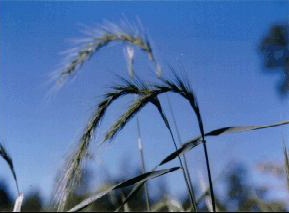
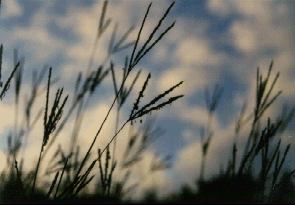
This time, reeling and breathless, I didn’t want to ask any more questions, or bear the answers. I gazed upon her wings spread over the prairie grass and the reflection of the blue sky, the puffy white clouds, and the tall grass waving. In the play of light and color I caught of glimpse of a woman peering back at me and realized with a start that the woman was myself.
Then she lifted one wing. She drew her head out from under it and turned her eyes on me. A bolt of love and compassion seared through me with the crackle and snap of flames rising from dry wood.
I sank down beside the bird. What do you want of me?
Tell them.
To stop.
Hurting me.
I cringed, shaking my head. I can’t. I am complicit. I have blood on my hands, too.
She waited for me. The wind ruffled her feathers. The puffy clouds moved across the sky. Somewhere a meadowlark called.
Okay. How?
Be brave.
Be brave, she told me.
Be brave.
_____________________________
Let no unwholesome word proceed from your mouth, but only such a word as is good for edification according to the need of the moment, so that it will give grace to those who hear. Do not grieve the Holy Spirit of God, by whom you were sealed for the day of redemption. Let all bitterness and wrath and anger and clamor and slander be put away from you, along with all malice. Be kind to one another, tender-hearted, forgiving each other, just as God in Christ also has forgiven you. Ephesians 4: 29-32 (NASV)
Don’t grieve God. Don’t break his heart. His Holy Spirit, moving and breathing in you, is the most intimate part of your life, making you fit for himself. Don’t take such a gift for granted. Ephesians 4: 29 (The Message)
We invite you to become a fan of the The Sanctuary Foundation for Prayer
Posted in Christianity, contemplation, faith, Holy Spirit, Spiritual Practices, spirituality
Tagged Bravery, Compassion, Ephesians 4: 29-32, Flint Hills, Grieving, Holy Spirit, Kansas, suffering, Topeka
The contemplative who can stand back from a situation and see it for what it is, is more threatening to an unjust social system than the frenzied activist who is so involved in the situation that he cannot see clearly at all. ~Protestant theologian, Karl Barth
Look always at the whole. ~ Marcus Aurelius
In the photo my hair is in braids and I am about six years old. I am wearing sunglasses and standing next to my father, who smiles proudly. My three year old brother is perched on our old Chevy next to a dark cloth spread over the hood. He wears a sun suit and is squinting into the sun. On the cloth are the day’s find, a cache of Indian relics. Dad had spent the day walking the plowed fields in the special places known to him, where Indians and, before them, prehistoric dwellers had camped.
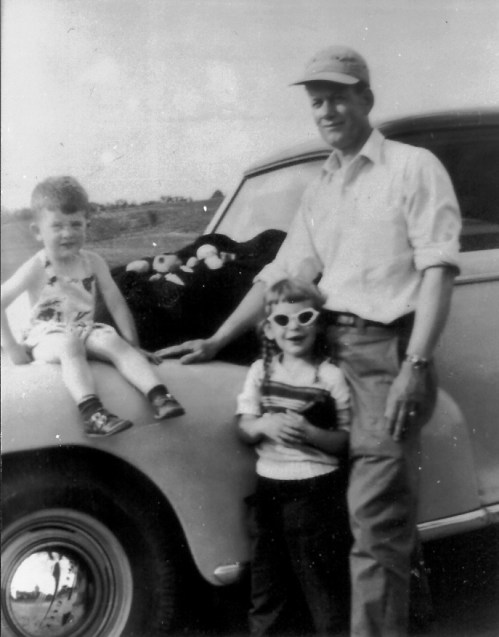
He often handed me an ancient tool to hold, showing me how the flint had been worked and chipped to form something useful. “Just think, a little boy or girl long ago held this rock and played with it. This one was used to shoot birds,” he’d say, putting a tiny arrow point in my palm. He would gesture to the creek saying, “You have to learn to read the signs. They camped here, because there was water and wild life for food. The ground is up high, so they could see a long ways.” He spoke of the people who made the tools with reverence and a kind of wonder.
When he showed me where a glacier had moved through Iowa and left a particular kind of rock that had come from a place in Canada, and told me how that happened way before the Indians lived here, I realized that I was a tiny being in the sweep of the universe. So many things had happened before I was born and would continue after I died. The notion filled me with awe.
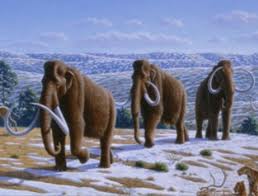
I grew up with rocks and so many arrowheads that Dad once cemented the chipped and broken ones to the edge of the steps leading to our front door. He carefully numbered and cataloged every piece he found with precise location, date, and field notes. He did not confine himself to stone relics, but also found the vertebra of a mammoth and teeth of a mastodon and a saber tooth tiger. Now that seemed amazing to me… these  animals actually once lived where I lived. Dad could point out the creek bank where he found the relics. I loved to gaze at the reproductions of these creatures in the fold out color plates in Life Magazine. I would look at the huge, shaggy, mammoth beast surrounded by the spear wielding, ancient men in the magazine and then up at that tooth, bigger than my fist on the shelf in our dining room.
My father’s interest in history, geology, and archeology expanded my awareness of the world to encompass more than what I could immediately see. His respect for what had come before him and curiosity to keep looking, digging, and learning his entire life taught me that there was always more to see, to understand, and know.
I was not very good at finding artifacts myself. A rock was a rock to me. I would fix my eyes on the ground determined to find one, but rarely did. I think my father’s success was a convergence of understanding the effect, the heave and thrust of rain, ice, and plow on the land, a willingness to put himself in the skin of those early people, and an ability to use his peripheral vision. While focused on the goal, he, at the same time, took in the whole, aware of the plowed rows he had covered, the rows ahead, and those on each side of him.

Lately I have thought often of my father’s way of seeing and how he lived from a big, broad view of the world and his place in it. We as a culture seem in some places to have lost that sense. It is as though we have forgotten how to use our peripheral vision. We spend our time focused on televisions computer screens, cell phones, calendars, and our to do lists. We travel, shut up in vehicles, with the air conditioner on, and radio and ipod babble filling our ears. Many of us, living in cities, have fewer opportunities to rest our eyes on the soothing, panoramic sweep of mountains, plains, forests, and oceans.
We make decisions, express opinions, and live our lives from a constricted field of vision. We obsess and worry. We blow things out of proportion. We lose perspective and a sense of humor. We become rigid, self-righteous, defensive, and dull. (Please forgive me, if you do not do this. I know not all of you are like me).
Specific focus is incredibly useful. To hone in on a project, a piece of art, an idea, or another person brings precision and clarity to our thinking and our actions. However, we can get stuck in that narrow focus and fail to dial back to the bigger picture.
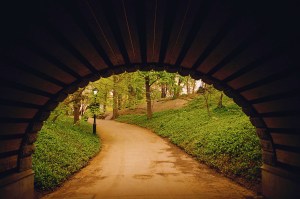
Try it. Focus on a point across the room. Narrow down your vision to look very intently at that single point. Then allow your peripheral vision to come into play. Slowly become aware of what you can see on either side of that point, then on either side of yourself, then behind yourself, and above and below yourself. Of course, you cannot actually see completely behind yourself (unless you have eyes in the back of your head like my mother). Imagine your vision and awareness radiating out from you in 360 degrees for miles and miles. At this point you may want to close your eyes. Go ahead. I will wait for you, while you enjoy the spaciousness.
Now notice what is happening to you. If you keep at this for a while, you will find yourself relaxing, The tension will go out of your neck, your jaw. Your shoulders will release. Your breathing will slow. A physiological shift occurs in your body and perception as you expand your awareness, taking in more and more. You may feel more peaceful. Some people experience an expansion and freedom in their attitude and approach to problem solving.
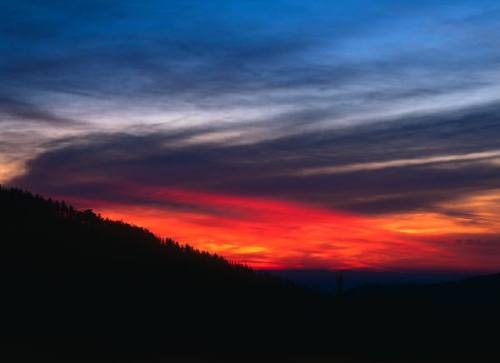
Jesus viewed others and himself from the broad perspective of eternity. In his self understanding as the Son of God was the awareness of all that was, all that is, and all that will be. I am the first and the last, the beginning and the end. He saw the specific need of the individual before him in the context of a much bigger picture and this sweeping view impacted what he said and did. While on this earth, Jesus never shook off that telltale scent of heaven, and the vision of the Kingdom of God in his union with the Father and the Holy Spirit.
As we offer ourselves, our world, our troubles, and our conflicts to God in prayer, we step into the sweeping majesty of eternity. We become part of something greater than ourselves. Our vision expands to include the whole. We find gifts we didn’t see before. We discover evidence of life we had no idea was right before us. We are connected to a woolly mammoth, whose 16,000 year old molar we hold in the palm of our hand. We are joined to all that teems and dances in the mind of Christ. I am no longer a “single interest group” rigidly focused on my particular agenda, but have entered the stream of creativity, grace, and vitality that is the Realm of God.
No telling what you might find then!

Read more about prayer at www.fromholyground.org,
Tracking Holiness – Newsletter
Contact the author at lross@fromholyground.org, www.fbook.me/sanctuary
Follow at http://twitter.com/lfross






 The Praying Life