I woke to a list of tasks and projects to complete – important, worthwhile, necessary duties.
But the Holy One said, “Rest.”
I argued. “Lord, I have to do this. I need to get that done. And the yard needs raking.”
“Stop!” the Lord said to me. Stop it.
So I turned on myself, flaying myself with guilt and shame. “What’s wrong with you? Why can’t you get more accomplished?”
“Shabbat.” God said. Shabbat.
We drain ourselves with too much doing, striving, and succeeding. We push past our limits and strain our bodies and make ourselves sick. The neglected soul shrivels and turns dry and hard like the dusty, wrinkled slice of apple I swept up from under my table.
Shabbat or Sabbath means literally to stop. Interestingly, the Hebrew “Shabbat” sounds a little like “stop it.”

Remember the Sabbath Day and keep it holy. Six days you shall labor and do all your work. But the seventh day is a Sabbath to the Lord your God; you shall not do any work – you, your son or your daughter, your male or female slave, your livestock, or the alien resident in your towns. For in six days the Lord made heaven and earth, the sea, and all that is in them, but rested the seventh day; therefore the Lord blessed the Sabbath day and consecrated it. Exodus 20:8-11
What Israel learned from the fourth commandment is that Sabbath rest is an alternative to aggressive anxiety, writes Walter Brueggemann in Journey to the Common Good (pp 25-26) .
Most Christians think of Sabbath as a day of worship, which may actually turn into a day of production, activity, and achievement, as many clergy will tell you. Though church seemed long and boring to me as a child, endless Sunday afternoons at my Mennonite Grandmother’s home, sitting on a couch with prickly upholstery and listening to the clock tick was not an improvement. At least at church we had music. At grandma’s my brother and I itched and fidgeted to go outside and play.
However, at its origin, Sabbath was not about worship. Brueggemann continues, “It is about work stoppage. It is about withdrawal from the anxiety system of Pharaoh, the refusal to let one’s life be defined by production and consumption and the endless pursuit of private well-being.”
To cease working for a day is an act of defiance in a godless system of aggressive production and accumulation. To keep Sabbath is an act of rebellion against Pharaoh’s kingdom of scarcity where there is never enough. To keep Sabbath is a statement of faith in the abundance and provision of the Kingdom of God, where sharing by all will mean scarcity for none. Finally, “to stop it” is an act of obedient trust in God’s goodness, as one rests and enjoys the wonder of all that God has made.

Recently, people, who come to me for spiritual guidance, seek not so much counsel or suggestions for how to pray, but, rather, the permission and opportunity to be still and rest in God.
A woman tells me, “I think what I need today is to just be quiet and for you to lead me in meditation.” A little music, Psalm 27, and an extended silence followed.
We sat together facing our internal distractions and anxious mental sorties away from our intention of presence to God. We calmed our fretful souls, and held ourselves steady before the voluminous mystery of love. Over time this Sabbath being, this doing nothing, will change the quality and the character of all our active doing. By disengaging from Pharaoh’s system of scarcity and anxiety, we root more deeply into the realm of the endless mercy and providence of the Holy One.
Here is a god, who had so much fun doing and creating that he took a day off in order to rest and delight in his own handiwork. Then God, tickled with himself, commanded all his creation, including livestock and resident aliens, to enter into the joy of such rest. “Go outside and play. Take a look at what a marvelous universe I have made. I can’t get over how wonderful it all is.”
As the woman, who needed rest, and I participated together in the wonder of the gift of our being, the silence thickened, ebbed and flowed, smooth as satin and softly throbbing. We drank deeply from that well. When the session came to an end, we drew back reluctantly from the living water.
“You were very thirsty?” I asked. Yes, she nodded.
“Me too.” I said.

Learn by little the desire for all things
which perhaps is not desire at all
but undying love which perhaps
is not love at all but gratitude
for the being of all things which
perhaps is not gratitude at all
but the maker’s joy in what is made,
the joy in which we come to rest.
Wendell Berry
May you discover the maker’s joy in your Sabbath rest.
Shabbat Shalom!
“In returning and rest you shall be saved.
In quiet and trust shall be your strength.” Isaiah 30: 15
This is the second in a series of posts this year on
Isaiah 30:15. Read the first post on this verse here: Returning
The Sanctuary Foundation for Prayer
Read more about prayer www.fromholyground.org:
emaillross@fromholyground.org,
Follow at http://twitter.com/lfross
Posted in Contemplation, prayer, Lent, Sabbath, Spiritual Practices, spirituality, The praying life
Tagged Biblical Sabbath, Isaiah 30:15, Prayer, rest, Wendell Berry, workaholic
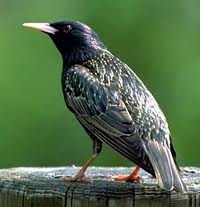
Black grackles and speckled starlings,
with yellow beaks and rusty throated chatter
clatter up and down the branches
gleaning the leavings of winter’s suet cakes.
A pile of must-read books
litter my desk and the chair before the window
where I come to pray.
Wisdom and knowledge at my fingertips,
and the perfect YouTube video of a good life,
forwarded from friend to friend,
promises to change everything.
Click here now.
How long do you stand on the street corner,
listening to the preachers and barkers?
How long do you slurp up the news,
opinions, and seductions of others?
How long do you sit on the couch
of the world consuming secondhand notions,
lies, and rumors?
When will you sit down before mystery
and invite it to come rest in your lap,
your lap, I mean, your heart and singular, scintillating body?
When do you stop singing somebody else’s song
and chasing somebody else’s god
and coveting somebody else’s experience?

When, oh when,
dear, irreplaceable you,
will you lay
yourself down in your own true,
blue bonnet strewn field of a life?
And say to the starling –
Here come, with your little orange feet and strange black eye.
How precious you are in that freckled jacket.
And I ask you,
how many prayer breakfasts,
committee meetings, and strategy sessions,
how many well-intentioned,
and not so well-intentioned,
soldiers of truth
gathering to plot their version of a perfect world
must we salute?
Just how long will it take, do you think,
for us to be safe enough
and gentle enough
and humble enough
for the shy weary God to come and lay his head?

Jesus replied, “Foxes have holes and birds of the air have nests,
but the Son of Man has no place to lay his head.” Matthew 8: 18-22
A YouTube video on Matthew 8: 18-22

I have been pulling out thorns, stick tights and nursing cuts and scrapes. I spent the past couple of weeks in a briar patch. Tangled up in old resentments, anger, and feeling sorry for myself, I had worked myself into a wadded mat of prickly brambles.
A briar patch with twisting vines, which cut or trip or cling at every turn, may be a good place to begin lent. In some respects, we, like Br’er Rabbit, are born and bred in the briar patch of human existence. I, however, did not find it as comfortable, as my cousin, Brother Rabbit. I felt trapped and wanted to break free of the barbed burden of myself.

My pride and arrogance coiled around one ankle. My entitlement and envy looped in a thorny noose around my throat. And soul smothering self pity sat on my chest like a heavy stone.
I could not seem to untangle myself. All my efforts only bound me more tightly. And, to tell the truth, I do not think I really wanted to get free. An insidious part of me seemed to enjoy how awful I was feeling. At the same time, another voice was asking, when I was willing to listen, “How happy do you want to be?” as if my happiness was somehow up to my simple consent and my willingness to receive what I desired.
Finally at my wits end and the end of my own strength, I prayed – not for God to fix the things that had me trapped, not for God to turn the briar patch into a luxury hotel, not for God to give me insights, knowledge, or explanations, but for mercy. I asked for God’s mercy – unmerited, undeserving, unearned mercy.
I, sick of myself, surrendered and stopped defending, justifying myself, and arguing with imagined foes. I came to my knees and asked for mercy.
And mercy was given
falling softly like a gentle rain.
Later that same day I discovered I had been set free from the briar patch. The heavy weight of myself was gone. I was no longer chaffing and pulling out splinters.
And the word, mercy,
sounded sweet in my ears,
like music,
like birdsong, unbidden and blest.

Perhaps there is no better prayer than to simply commend ourselves, others, and the whole world to the redeeming mercy of him who died and rose for us. According to Balthasar Fischer, this ancient prayer means more than “Help us!” It means: “Take all of us with you on your journey through death to life.”
The quality of mercy is not strain’d,
It droppeth, as the gentle rain from heaven
Upon the place beneath: it is twice bless’d;
It blesseth him that gives, and him that takes: . . .
Though justice be thy plea, consider this—
That in the course of justice, none of us
Should see salvation: we do pray for mercy;
And that same prayer, doth teach us all to render
The deeds of mercy.
Shakespeare’s Merchant of Venice
Posted in Contemplation, prayer, Lent, Spiritual Formation, spirituality
Tagged God, Jesus, Kyrie, Merchant of Venice, Prayer, Religion & Spirituality, repentance

Image via Wikipedia
Listen to this, you who grind the destitute and plunder the humble, you who say,
“When will the new moon be over so that we may sell corn? When will the Sabbath be past so that we may open our wheat again, giving short measure in the bushel and taking overweight in the silver, tilting the scales fraudulently, and selling the dust of the wheat; that we may buy the poor for silver and the destitute for a pair of shoes?”
The Lord has sworn by the pride of Jacob:
I will never forget any of their doings. Amos 8: 4-7

A new day coming, change breathing fear and conflict down our necks, we bow before the gods of Scarcity and Me First. An old order, feverish, on its death bed, hollers, flails, clutches its bedclothes with restless fingers, and sees leering phantoms rise from its bedpan.
A cry rises up out of Egypt. Here in this land the child of Compassion once found safety from another ruler’s wrath.
“Let our people go!” rings out in Libya. Rulers tremble. Politicians abandon reason and rush to protect their interests. The homeless crowd the streets. The sick are told to leave their sheltered care and fend for themselves. And truth, which finds its voice, its shape, its story, its song in art,
is silenced
as the rich and powerful cling to their gold.
A huge share of the nation’s economic growth over the past 30 years has gone to the top one-hundredth of one percent, who now make an average of $27 million per household. The average income for the bottom 90 percent of us? $31,244.
Tell them this.
Put down this.
Be still.
Or be stilled.
And Know who I Am.
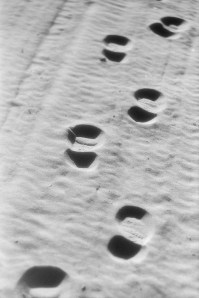
And know this –
there are rules:
Love, serve, and trust God rather than trusting systems which exploit and destroy life in its many forms.
Take care of neighbors. Welcome, respect, and protect the stranger, the alien, and the orphan. Look out for the weak, children, women, and the elderly.
Don’t kill each other, or steal or tell lies about each other. Don’t be unfaithful to your commitments to each other.
Don’t engage in practices which exploit or prey upon the vulnerable.
Once a week back away from the system of anxious scarcity, production, and consumption. Stop working and rest. Do not allow your life to be defined by endless producing and doing, and no being.
and there are consequences:
I will not forget any of your doings.
Be still, and know that I am God;
I will be exalted among the nations,
I will be exalted in the earth. Psalm 46: 10 NIV

.
With gratitude to the prophets, Joel and Amos, and modern prophet and Biblical scholar,Walter Brueggemann and his book, Journey to the Common Good
- Love and the Wind (theprayinglife.wordpress.com)
- Waiting: The Threats (theprayinglife.wordpress.com)
- The Stranger (theprayinglife.wordpress.com)
Posted in Christianity, Contemplation, prayer, faith, Justice, sin, Spiritual Practices
Tagged Amos, Prophet, Psalm 46, Ten commandments, Walter Brueggemann
He went out, not knowing where he was going.
Hebrew 11:8
Waiting in the check out line, I indulge in my guilty pleasure – scanning the headlines of the National Enquirer. BILLY RAY RAGE: DISNEY DESTROYED MILEY CYRUS! GAGA-MADONNA WAR ERUPTS! I resist pulling an issue of Celebrity News off the rack to catch up on Tom and Katie. I save that for the beauty salon, when I am less apt to run into someone I know.
Back home as I haul in the groceries, my dog gives me a good sniffing, reading me front and back like a newspaper full of local scandals. All of us critters seem to be created with curiosity, as we wave antennae, bounce sonar, phosphoresce, and sniff out the news of our world and of one another, often shamelessly poking our snouts in our neighbor’s crotch.

Such knowledge – lurid, informative, or life saving – may empower, entertain, set us free, or provide our supper. Knowledge opens doors to invention, opportunity, and innovation.
The Bible understands that the highest kind of knowledge is knowledge, not of my neighbor’s stupid acts and reckless behavior, but of God. Knowledge of God is not for sale in the supermarket check-out line, but is given free through growing intimacy with Holiness. Knowledge of God flows from creation, scripture, people, even, sometimes, the check out line at Savemore, but, most significantly, from companionship and personal communion with the Holy One. Such knowledge and understanding develops through the exchange of love in the experience of a life shared with Christ through prayer. Like my dog, Elijah, one begins to know God, because I have sniffed at God long and often enough to recognize his scent.
Understanding of God is arrived at by literally standing under, that is to say, by lowering and humbling oneself. We stand beneath God, looking up, aware that we see only a portion of what is there. In faith we surrender to hints and intimations, glimpses and sudden dazzling displays of grace.
But inquiring minds want to know! We yearn to know where our lives are headed and to grasp with our minds what is and what shall be. We hunger to secure ourselves. We hitch ourselves up to institutions, college degrees, causes, and ideas. We cinch ourselves into relationships of aggression or hate, boredom or lust, dependency or bullying. We set our agendas and bind them to our foreheads.
Yet, deepening knowledge of God always asks us to trust. As we know God more, faith becomes the consent to knowing less and less about most everything else. As Oswald Chambers wrote, “God does not tell you what he is going to do – he reveals to you who He is.” Such not knowing is almost certain to make us really anxious.

Have you ever been asked to crucify your intellect, to kill that inquiring mind that has to know everything, understand and control everything, and be right all the time? Your life experience may lead to the painful crucifixion of your intellect. On this Golgotha, pinned by the circumstances of your own experience, you find that nothing you can figure out or find out or do can move you out of this impasse. You, left hanging there, can only wait, trust, and abide in love not knowing.
In a time of such acute unknowing we are likely to be filled with an overpowering panic and rising anxiety to secure ourselves with certainties, assurances, undeniable truths, and absolutes.

Now the Lord said to Abram: “Go from your country and your kindred and your father’s house to the land that I shall show you.” Genesis 12: 1
Seventy five year old Abram and his wife, Sarah, showed a great deal of courage heading off on a journey on the word of the Lord alone without a clear destination. They had no maps, realtor photos of their new home, or contracts to wave before the querulous neighbors. They headed out in obedience under the cold moon and starry skies into a great unknown.
Though I doubt if it happened this way, I like to think of the old couple heading down the road to nowhere, waving their hats, urging the camels forward, and hollering, “Let ‘er roll!”
You are closer to glory
leaping an abyss than upholstering a rut
James Broughton (Little Sermons of the Big Joy)
- The Fullness of Emptiness (theprayinglife.wordpress.com)
- Love and the Wind (theprayinglife.wordpress.com)
- The Amaryllis and the Evangelist (theprayinglife.wordpress.com)
Posted in apophatic spirituality, Christianity, Contemplation, prayer, faith
Tagged christ, God, Hebrews11:8, James Broughton, National Enquirer, not knowing, Oswald Chambers, Religion and Spirituality
The Early Years
Wake, O wake, and sleep no longer,
For he who calls you is no stranger.

Elijah was up bright and early, alert and expectant. He barked sharply before the door of his mistress. She, however, failed to rouse from her slumber. So the little prophet chewed away his frustration at the zipper on the cover of his bed until it fell open the whole length. Poking in his snout, he bit off a hunk of the white foam inside. He diced it up into nice small pieces and strewed the bits across the kitchen floor. Then he barked a while. His mistress stretched, yawned, turned over, and went back to sleep. Elijah bit off another hunk. By the time the sleeper awoke, an inch of foamfall covered the entire kitchen floor.
Imagine Elijah’s astonishment, when shooed outside, to find the whole backyard and as far as he could see, covered in white stuff like the foam in his bed. Only this was better. He could wet his throat with it and roll in it and leave his tracks. By chewing up his bed he had not only made his mistress awake, but changed the world! His heart swelled with the power of the Spirit within him.
This would be the first of many miracles in the prophet dog’s career.

Later, on that great day, he would tell Seal, the cat, “What you do inside in the kitchen has the power to change the world!” The feline, however, having been around the block a time or two, told him to save his preaching for the ravens. In one of her nine lives the old cat was Queen Jezebel’s kitty. Seal made it a policy to never worship anything.
She did vaguely remember cuddling up to the Goddess Asherah, but she hadn’t seen her for a long time, and how the stinky dog could ruin a perfectly good napping spot was beyond her.

Inquiring minds may want to read I Kings: 16-17
Farmer, poet, lover of the land – Wendell Berry:
I know that I have life
only insofar as I have love.
I have no love
except it come from Thee.
Help me, please, to carry
this candle against the wind.
One could not put truth more succinctly.
Isn’t this what most of us battle – the dying of the light?
The wind is a wily deceiver,
a furious demon,
a double minded,
shape shifting,
hair splitting,
breeder
of separation.
Don’t listen.
Pray for help to carry
the love we are blessed to bear.
We,
love,
and the light
are
One.
The wind is only the wind.

Painting by Dorothy Frager
To Look
at
Any Thing
To look at any thing,
If you would know that thing,
You must look at it long:
To look at this green and say
‘I have seen spring in these
Woods,’ will not do – you must
Be the thing you see:
You must be the dark snakes of
Stems and ferny plumes of leaves,
You must enter in
To the small silences between
The leaves,
You must take your time
And touch the very peace
They issue from. ~ John Moffit
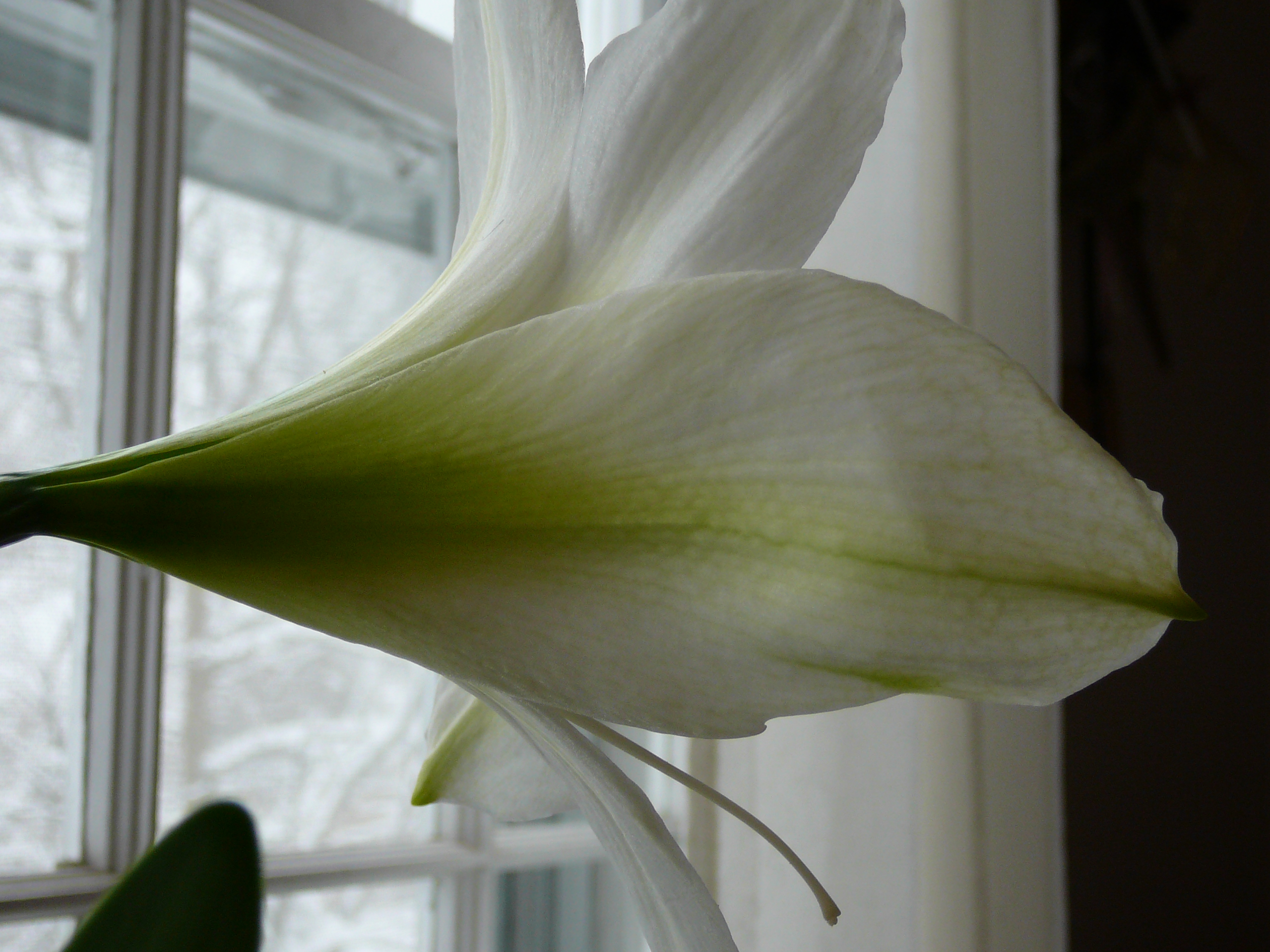
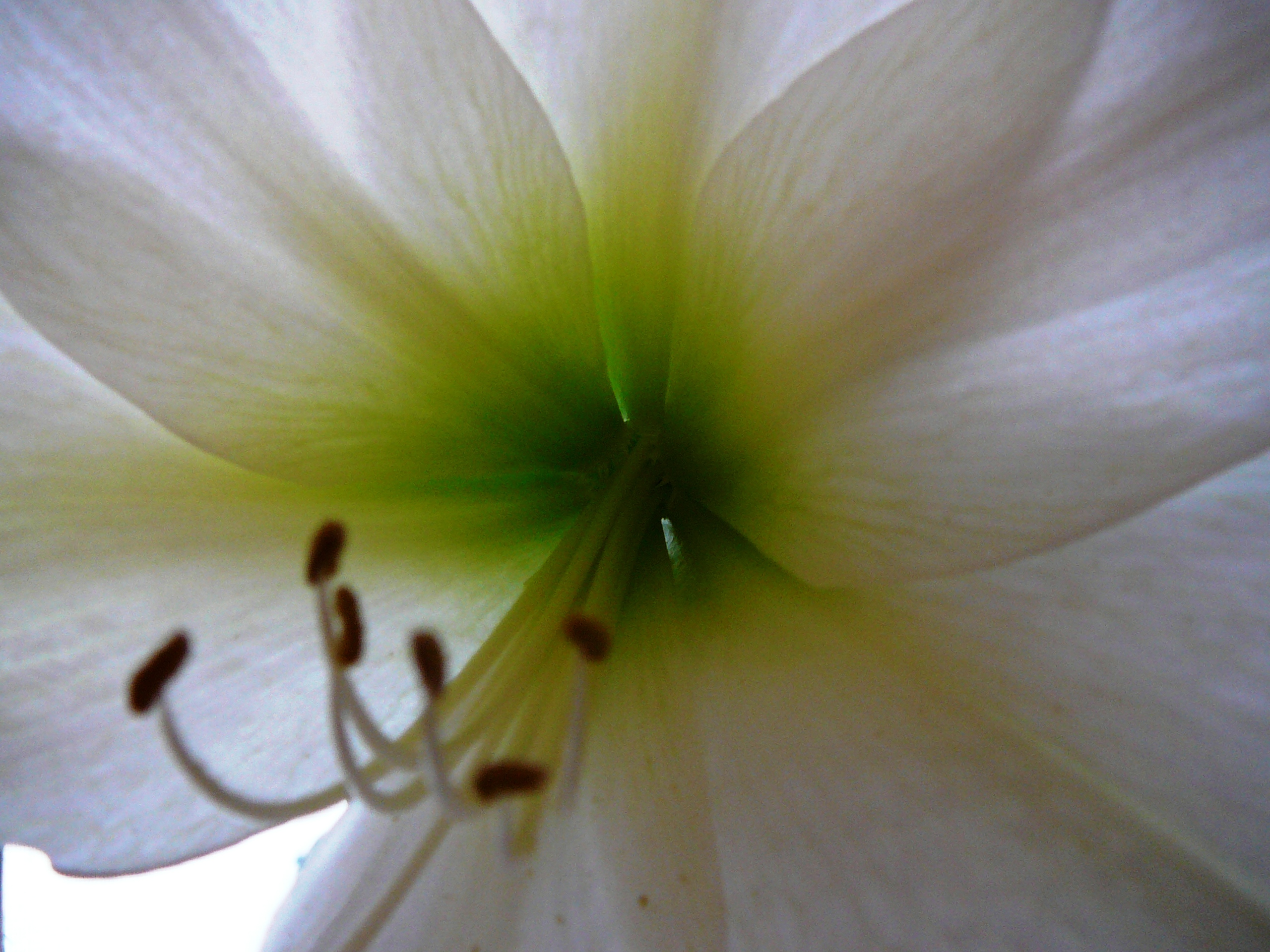
I am looking at the blossom of a white amaryllis, rising on a thick green stalk before my window. Outside it is snowing hard.
A woodpecker drills at the suet cake, swinging from the feeder. A brown squirrel plows down the power line, shoving clumps of snow to the ground. I am looking long at the amaryllis and that green seam shading into pale yellow tracing along the underside of a blossom.

I look and look – at the milky, translucent petals, the flared green heart of the blossom, the seven curved stamens with their golden haired anthers, the fluted, serrated fringe at the tip of the petals, and that tiny pale shoot rising up between the two large petals – the pistil and three legged stigma. I look at the split sheath covering of the three large blooms. The two pieces now hang limp, shriveling, spent from such sundering.

And I am
breathless
with the wonder
and beauty.
Last evening my home was filled with teenagers. Thirteen kids crowded into my tiny den to watch a video about faith called Beyond Our Differences. Earlier we took a pared down version of a survey conducted by the Pew Research Forum on Religion and Public Life. The survey, conducted last year, measured Americans’ knowledge of their own religions and their neighbors’ religions. On average Americans got only sixteen questions out of the thirty two correct.
The teens and I are learning about different religions this year in our desire to build understanding with our neighbors on this planet, discover points of common ground, and to become clearer and more articulate about our own beliefs.

On January 6 many Christians celebrated Epiphany, the visit of the wise men from a far away land with their gifts to the infant Jesus. Now we enter the stretch of Sundays after Epiphany that carry us all the way to Ash Wednesday and the beginning of lent.
Epiphany means a showing, a revealing and was applied early on in the Church to this event in Jesus’ life. The previously obscured and hidden God of the Jews unveils his divinity for all people in the Christ child, and folks from a long way out of town show up to see it.
The themes of the scripture readings which carry us through the next eight Sundays focus on the mission of the church as making disciples and reaching out into the world as evangelists. Some churches also use this season as an opportunity to foster fellowship, to repent of our sins of bigotry, hatred and prejudice, and work toward healing the divisions in church and society.

Soon after his birth Christ is introduced to his first cross cultural, interfaith experience in the form of the visitors from afar. Next, fleeing Herod’s wrath, he and his parents become aliens, refugees, in a foreign culture in their escape to Egypt.
History is full of stories of the church’s awkward, failed, and sometimes brutal and horrendous attempts to share what they have seen at the manger. History also is full of astounding stories of love, forgiveness, freedom and justice as the gospel has been shared.

At the beginning of Advent the youth group read Isaiah’s prophecy of the coming messiah:
He grew up before him like a tender shoot,
and like a root out of dry ground.
He had no beauty or majesty to attract us to him,
nothing in his appearance that we should desire him. Isaiah 53: 2
I held up a dry, flaky amaryllis bulb with a wad of pale spindly roots. This is where advent begins, I told the kids. This is where God begins to come into our world –through something ugly and apparently useless that you may think ought to be thrown out in the trash. God arrives as things appear hopeless, beyond repair, and we are realizing that there is no way we can figure this out and make things right on our own. When we realize we need help, we are ready to meet Jesus.
A few days later I planted the bulb in a green ceramic pot my daughter made. She would be embarrassed to see it in this pot. Not up to her standards, the pot has some flaws. I love it.
A month later, gazing at the blooming beauty heals my soul. I wonder what it would be to become those long smooth fleshy spears of leaves. I have been busy the past week with numerous contacts, encounters, preparations, and meetings. I have gazed into the pure white petals of many souls. Each person was stunningly beautiful and deserving of longer attention than I had time to give.
 Today I gaze long upon the white amaryllis. A prayer wells up for those thirteen young people and for their parents and grandparents. I love them all like the mother rabbit I saw in a video once. The rabbit was chasing a snake away from her nest. She followed and pounced and picked it up, thrashing in her mouth, until the snake escaped and slithered up a tree. I want no harm to disturb the growth of these souls. I tremble too, at the responsibility entrusted to those engaged in the care of the souls of others.
I am not absolutely sure what it means to be an evangelist. I do think it has to do with telling the stories of what we have seen. We need to share with one another those epiphanies which bring us to our knees, call us to make long journeys, and inspire us to give away our precious treasures.
I also believe that being an evangelist has to do with offering the gold of our time,
with inviting the poor and needy into our lives,
and looking long and hard at each other
until we touch the very peace we issue from.

Thank you to Dorothy Frager, who looks long and hard, for permission to use her painting!
The Sanctuary Foundation for Prayer
Contact the author: lross@fromholyground.org www.fbook.me/sanctuary
Follow at http://twitter.com/lfross
Posted in Advent, Christianity, Contemplation, prayer, Epiphany, Evangelism, Spiritual Practices
Tagged amaryllis, evangelism, Isaiah 53:2, mission, Religion and Spirituality, Themes of epiphany, wonder
Part Four of Four Parts

The earth, muffled with snow, goes about its hidden preparation for spring. Silence spreads over the land. Our pace slows with the burden we are blessed to bear. The angel with his face of fire and his wings is now a dim memory. God has become a long, low hum, a slow pulsing throb. We, like the inside of a struck gong vibrating peace, wait.

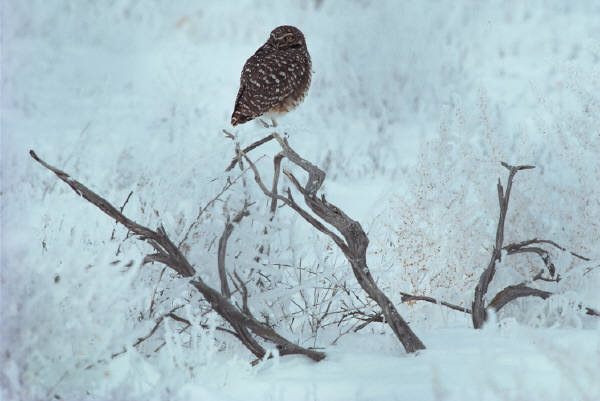
The fox in the woods stops in its tracks and sits up listening – still. The hawk on the wing wheels in a broad circle, glides down a current, and settles on the post -still. The chickadee at the feeder lifts and tilts its head listening – still.

Then it comes. Wrenching pain pierces us like a sword in the belly. We collapse to our knees and crouch in the darkness. Impaled by the circumstances of our lives and God’s call to us we embrace the cross of Christ. Extended far beyond our feeble powers, such bearing is more than we can do. With each new contraction we lose our nerve and cower like Peter saying,”I don’t know nothin’ bout no man named Savior.
Now we may recall Jesus’ question, “Are you able to drink the cup that I drink, or be baptized with the baptism that I am baptized with?” And we had boasted like idiots, “We are able!” We had no idea what would be asked. Between contractions we pray, “If it be your will, remove this cup from me. But not my will, but yours.”

To entrust ourselves to the will of God at the very moment when we feel most alone and in the most pain requires us to have come to the absolute end of our own will and resources. What makes such a thing possible? How could Mary persevere? How did Paul in prison and facing death continue to preach the gospel?
Perhaps it was their surrender, their sense that something larger than themselves had taken hold of them. An ax had been laid at their roots. A furious whirlwind had shaken and blasted them. Now all in them that was chaff was burning in an unquenchable fire. Finally, exhausted from resisting they say, “Yes, yes. You are in charge. You are God. I love you. I trust you. I don’t like or understand this, but I give myself to you however you want me. My will and desires die to yours.”
A birth is not something one does as much as submits to. Processes set in motion long ago now come to fuller expression. One’s being is given over to a life and purpose beyond itself. The best thing to do is simply hold still, breathe with the pain and wait between contractions.

The Greek word used in the Bible for wait is hypomenein. It means “to stay behind, to stand still, and to hold out.” Hypomenein includes in its nuances to cleave to God in simple, quiet confident waiting as well as to endure, stand fast, persevere; and it includes courageous active resistance to hostile attack.
Wait in the New Testament refers to the endurance that is given for the realization of the kingdom. It is the basic attitude of the Christian as we face the attacks of a hostile and unbelieving world and as we find ourselves in the midst of temptations. The power to persevere is drawn from faith and hope.
Our wills, knowledge, or technology have no power to bring about salvation, wrote Simone Weil:
The role of humanity is to wait . . . The attitude that brings about salvation is not like any form of activity. . . . It is the waiting or attentive and faithful immobility that lasts indefinitely and cannot be shaken. The slave, who waits near the door so as to open immediately the master knocks, is the best image of it. He must be ready to die of hunger and exhaustion rather than change his attitude…We just have to wait for the solution. . . . Seeking leads us astray. This is the case with every form of what is truly good. [We] should do nothing but wait for the good and keep evil away. (Waiting for God, 195-6)

Might you be entrusted with a task to match the largeness of your soul? Could you, like Mary, tell your cousin, “My soul magnifies the Lord, and my spirit rejoices in God my savior, for he has looked with favor on the lowliness of his servant”? Is such heroism only for martyrs in foreign lands, prophets defying oppressive governments, and saints whose lives trace truth in their own blood? Of course, not.
“What good is it to me if Mary is full of grace, if I am not also full of grace? What good is it to me for the Creator to give birth to the Son if I do not also give birth to him in my time and my culture?” asks German theologian, Meister Eckhart. (1260-1329)
If you are summoned by an angel, if you find your heart stretched big with some unnameable love with a mind of its own, eat your broccoli. Remember my friend at the beginning of this series, who hoped to live long enough to see her thirteen year old son parent his own teenager? (Waiting: Broccoli and Perserverance.) Take your vitamins. Stay focused on your goal. Wait. Trust. It will be worth it just to be around on the day of the Lord, however long it takes.

The Sanctuary Foundation for Prayer
Read more about prayer www.fromholyground.org
Contact the author lross@fromholyground.org, www.fbook.me/sanctuary
Follow at http://twitter.com/lfross
Part Two of Four Parts
How long can you carry the secret,
the gift of saving love,
before giving birth to it?
How long can you ponder things in your heart
and sit on the stone path in the sun?
After a while it becomes obvious
that there is something up your sleeve,
or under your tunic.
Someone’s delight is in you
and is growing bigger every day.

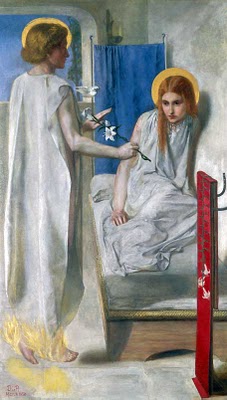
Some of us are called to bear children. All of us, male and female, are called to give birth to Christ. We carry God’s seed, a divine promise in us and for us. Each is called to conceive some aspect of the great promise of salvation. We are given the choice to surrender to it, to carry and nourish it, and give it birth on its terms in its time.
With such a call, we are at the service of powers greater than we are. We find ourselves as servants and handmaids, those who stand alert and ready at the door for the one they serve, who may come at any time. We belong to the promise and are given over to the promise. The child of the promise is the unique offering you, and only you, can give out of your love in the Bethlehem of your life.
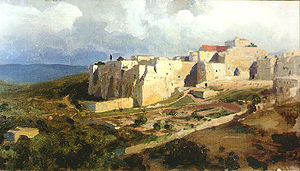
What is it? Who is it? How is this done? We are each alone here. There were no witnesses when Gabriel came. One or two may understand, who are strong when we are weak, who have hope when we have despair, who have faith when we have none. For the most part we must face the rejection, fears, doubts, and devils alone. And then, suddenly in the dark comes the sharp all-encompassing pain of labor – so much more painful than we had ever imagined it could be.
It may not look like all that much, your child and your offering of yourself as a mother of redemption. It may seem a small thing compared to Mary’s child. The child you bear may be nothing more (or less) than the courage to get through a bad day, or a shred of hope you cling to like a broken raft in the midst of a churning sea.
Two signs may help you tell if this is your Christ child: first, a vision of the joy or beauty or love set free in the gift you offer; and second, your sacrificial suffering in the labor and delivery of that gift. Such suffering is not a consequence of abuse or injustice. This is the suffering of love, which is assailed by evil as it seeks to remain firm in its faith in the efficacy and power of God’ s suffering love on the cross.

Waiting
waiting
how did she keep the promise alive,
the hope,
the word which was spoken to her,
through all the days and nights
while she walked the rocky paths?
What good could come out of Nazareth?
How can this be?
I have no husband.
I have no money.
I have no strength.
I have no hope.
I have no skill . . .
But he said, Nothing is impossible with God.
A secret between her and the angel,
a child growing in a hostile environment
and stillness at dusk
when the light slides under the horizon
leaving a golden smear of hushed anticipation.
She was like a tiny flame
in a sea of darkness
.
Watch for Part Three of this series on waiting, The Threats, coming soon.


























 The Praying Life