Category Archives: Contemplation, prayer

The Miracle of Gratitude

woman praying 002Feeling discouraged? Despair breathing down your neck? Are you trapped in a painful situation with no way out?

Count your blessings. I know. It sounds lame. You need a whole life makeover. You need to win the lottery, find a new job, or discover the cure for cancer. Humor me. Do it anyway. Hold up your ten fingers, or however many you have. Count out loud one blessing for each finger.

Now that you are warmed up, take out a piece of paper and get to work filling it up with things you are grateful for. Just put down whatever pops in your head. Keep at it. Include the most specific details – water actually flowed from my faucet at the flick of my wrist when I was thirsty this morning; I can see the mourning dove pecking corn outside my window; my cup of coffee tastes delicious – dark, aromatic, and hot.

A sure way to find hope in a dark time is to count one’s blessings. This simple spiritual practice focuses our attention not on what has happened or what might happen, but on what we can discover to be thankful for in this moment. Gratitude awakens mindfulness, which calms and focuses us on simple pleasures and the miracle of life itself.

Gratitude unlocks the fullness of life. It turns what we have into enough, and more. It turns denial into acceptance, chaos into order, confusion into clarity…. It turns problems into gifts, failures into success, the unexpected into perfect timing, and mistakes into important events. Gratitude makes sense of our past, brings peace for today and creates a vision for tomorrow.  Melodie Beattie

I can recall some pretty anguished nights in my life. I flailed about rehearsing imagined scenarios, practicing speeches to give to various people, and writing scary science fiction. To what end? Nothing productive. I only became more and more entangled in my own hysterical drama. Some of us come to a point where we are being eaten up by worry and fear. This can be the key to a wonderful discovery. Right about when we say, I can’t live like this anymore, we discover we do not have to. Peace is a choice. We have the freedom through an act of our wills to choose peace of mind.

So much about the spiritual life and happiness in general depends upon where we put our focus. We get to choose what thoughts we entertain and which ones we sweep out the door. At the same time there is tremendous competition among multiple influences to occupy the center stage of our minds. Consider for a moment who or what influences are in charge of your mind? The mantras of our consumer culture? Some nasty critical, negative inner voice? A whiny, fearful, abandoned child? A tangled root of bitterness?

The psalmist puts it succinctly, “Do not fret – it only leads to evil.” Psalm 37: 8. Spiritual teachers of many traditions teach the practice of gratitude. Jesuit priest Jeanne Pierre de Caussade, who died in 1751, advises: The great principle of the interior life lies in peace of the heart: it must be preserved with such care that the moment it is in danger everything else should be abandoned for its re-establishment, just as when a house is on fire, one leaves everything to extinguish it.. . .  And the reason of this is that great peace and tranquility of spirit alone give the soul great strength to achieve all that God wills while trouble and disquiet turn the soul into a languishing invalid. 

De Caussade’s image of the languishing invalid cracks me up. That is exactly what I become as I succumb to fear and anxiety:  infected with negativity, unable to make clear decisions, confined to a bed of worry.

If the only prayer you ever pray is thank you, that would suffice, wrote Meister Eckhart. It seemed to work for Jesus. Remember that embarrassing moment when there were only two fish and five loaves and a huge hungry crowd to feed? The disciples quickly turned into languishing invalids. Jesus takes what he has, lifts his eyes to heaven, and gives thanks. After everyone had enough, they filled twelve baskets with leftovers.

That was Jesus’ miracle. Why don’t you go work a few of your own today?

 Praying hands


Learn more about prayer at
www.fromholyground.org

Contact Loretta at
lross@fromholyground.org, www.fbook.me/sanctuary

 Follow at http://twitter.com/lfross

Hidden Things of God

Dock, fog “I have come to get some answers. I’ve talked to a bunch of ministers and none of them was any help.” The man sitting before me was a young professional, bright, and angry.

I draw in my breath and exhale, praying  to be released from any illusions that I could improve upon my colleagues’ work. “Make me humble, Lord. Make me true.” Glib answers, formulaic responses, any hint of arrogance would quickly be detected by his cynicism and broken heart.

“I am about ready to give up on church,” he told me with a hint of defiance, as though he were daring me to be helpful to him. His story was painful and his betrayal, despair, and hurt were palpable. As he wept, shoulders shaking, I sat Shiva. I kept the ancient Jewish vigil of simple presence to another’s suffering. As those who comforted the bereaved in Jesus’ tradition, I waited for my guest to initiate conversation.

“Those who believe they believe in God, but without passion in the heart, without anguish of mind, without uncertainty, without doubt and even at times without despair, believe only in the idea of God, not in God himself,” wrote the Spanish writer, Unamuno.

We live in a world with little patience for doubt or questioning. We do not value subtlety, complexity, or mystery. We possess minimal tolerance for simply sitting with ambiguity and suffering. We do not trust there is any effectual power at work in our lives beyond what we can manipulate or contrive with our own wills and abilities.

The pragmatism, that is the religion many of us bow before, insists on quick, easy solutions. If something “works,” then it deserves our support. An end product that satisfies our needs justifies almost any means.

Our market place economy heavily determines how we think of ourselves and the world. The language of faith with its nuance, poetry, metaphor, and reverence for mystery has been exchanged for the practical idiom of the market place, which measures worth by utility and productivity.

This is not a new sin. The people of Isaiah’s day were also co-opted by a culture of consumption and utilitarianism. The prophet reminds Israel that they and their carved idols and cast metal images do not know everything. “Now I am revealing new things to you, things hidden and unknown to you, created just now, this very moment, of these things you have heard nothing until now, so that you cannot say, “Oh yes, I knew all this.” (Isaiah 48: 6)

I do not know the end of the young man’s story, as is often the case with those who pass through my life. I gave him what I could, which was my love and respect for his losses. As I sat with him, I saw that God loved him very much and also saw how deeply this young man loved God and didn’t know it.

I found myself face to face with my poverty – my lack of any satisfying answer to tie up everything and take away his pain.  I had no bright ideas, plans for recovery, or quick fix resources to suggest. In the words of Isaiah, I could only stay open for the hidden thing, the unknown thing which was coming into being in that young man’s soul, just at that moment out of the infinite, divine unknowable Mind of God.

I had only love to give, 
which, in times like this, never seems to be enough,

                                                             but always is.     FOG      


Contact the author:
lross@fromholyground.org, www.fbook.me/sanctuary

 Follow:
 http://twitter.com/lfross

What Is A Prayer?

CBR002349I don’t know exactly what a prayer is.
I do know how to pay attention, how to fall down
into the grass, how to kneel down in the grass,
how to be idle and blessed, how to stroll through the fields…
Mary Oliver (A Summer Day)

I have been at it for a lot of years now, and I still do not know exactly what a prayer is. It seems to have always been part of my life like the color of my eyes. As a preschooler I learned to fold my hands and bow my head. I prayed for my family, our dog, and my neighbor, Mrs.Wendel, who made good cookies. I had a set list I covered: Santa Claus, the Snowman, and Betty Crocker, whose picture was on the box which my mom’s iron came in.

CBR001191We always prayed before meals, usually led by my father. Every night he kneeled beside his bed to pray. I came upon him at prayer like that many times. He died in 2000. When I go back to Iowa to visit my mother, I like to sit in a corner by a bookcase, where dad read the Bible every day. His magnifying glass, pens, and letter opener are still there.

My father’s prayer was quiet and hidden, yet woven into the fabric of his life like his breath. I saw the fruit in his kindness and caring acts for others, in the vitality of his mind and interest in the world around him, and in his outrage at injustice. As he grew older, he would often say, “I am just so thankful.”

What exactly is a prayer? I fumble for the words. Traditional words about prayer feel like pebbles in my mouth, tasteless, hard and difficult to swallow. As much as I gnaw at them I find no nourishment.

“What language may we borrow to thank thee, dearest friend, for this thy dying sorrow, thy pity without end?” wrote the anonymous author of the lyrics to the hymn, O Sacred Head Now Wounded. Whatever language we use, it will always be “borrowed.” It will be loaned from some, other, lesser reality in an awkward, ill-fitting attempt to clothe The Reality beyond all language and human thought. Mere words fail to express the experience of our hearts in response to God’s love, gifts, and challenges in our lives.thinking businessman

Now I will foolishly do something I have just told you is impossible: tell you what I think a prayer is. For me prayer is fundamentally an attempt to communicate.  This desire to communicate is initiated in us by God and it is a way in which we participate in the likeness of God.

Take a look at that word, communicate. Its root carries the meaning of coming together, communing, communion. What is implied is that at least two separate parties are desirous of joining in some way, of reaching an understanding, of connecting with a commonly held perspective, need, desire, or purpose.

We could say prayer is the eternal conversation and exchange of love as experienced in the context of our lives in which all parties are affected and changed in some way. For me the life, what engages me, is not the abstract concepts of prayer, but in the lived experience of communication. By the way, this is why I believe God is on Facebook and is an old hand at Twitter.

Prayer rides on the wings of our hearts’ desires, anguish, hunger and joy – that bolt of white fire that connects heaven to earth and unites mortal with divine. I can’t say exactly what a prayer is. But I can sure tell when people have been doing it.

RFA073Who taught you to pray? Who are you teaching? What exactly is a prayer to you?

Learn more about prayer at
www.fromholyground.org, www.explorefaith.org

Contact Loretta at
lross@fromholyground.org, www.fbook.me/sanctuary

Follow at http://twitter.com/lfross

Wondrous Stories about God

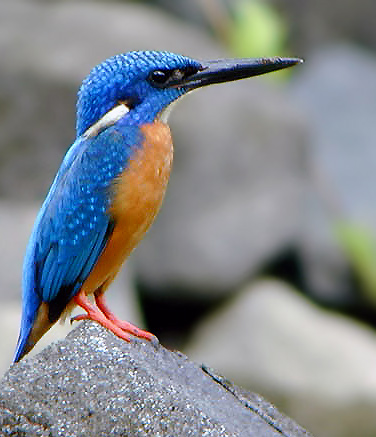
blue_eared_kingfisherThe world is not a courtroom,
There is no judge, no jury, no plaintiff.
This is a caravan, filled with eccentric beings 
telling wondrous stories about God.                    ~Saadi

Could it be that the cacophony of our communication pouring into the air space, cyperspace, and onto pages and pages of paper is nothing more, or less, than eccentric beings telling stories about God?  One and all, we scrawl out as best we can our truth, our passion, our experience as creatures on this planet. We tell our stories through the choices we make, the friends we keep, and our mistakes and failures. We weave wondrous tales as we frame and express the meaning we give to our unique and precious lives.

We tweet and friend and facebook and link up and plaxo as we stake out our truth and territory like the birds in the woods calling back and forth.
“Are you there?”
“Yes, I am over here.”
“Well I am here. This is my territory. This is what I see. What do you see?”
“I don’t see what you see. I see this.”

 And yes, we are indeed, eccentric – wildly, delightfully, and horrifyingly so at times.

I listen a lot to people’s stories about God or the apparent absence of God in their lives. Together we lift their experiences to the light, turn them to and fro, and notice something spiritual directors like to call “movements of the Spirit” (a piece of spiritual formation jargon that makes me want to giggle). This spiritual practice involves learning to pay attention to and recognize God’s way with you and what God might be saying to you in the context of your being and daily life experience. Sometimes we work like a GSI (God Scene Investigation) team. We pick up bits of evidence. We look carefully and reverently at what we find. We piece together scraps of your life story in God. We hold it all up to the wisdom and guidance of the Spirit. We weigh it against the texts of scripture, the tradition of faith communities, and your own common sense, reason, and intuition. Then we wait for confirmation and/or redirection from the Spirit, as it speaks through your community, relationships, scriptures, and own heart.

Of course, it is rarely this tidy. Like babies babbling and toddlers scribbling, our stories are stumbling incomplete attempts to capture the unnamable ineffable Reality in which we live andchurch-bells move and find our being.  “The heavens are telling of the glory of God; and their expanse is declaring the work of His hands. Day to day pours forth speech, and night to night reveals knowledge,” sings the psalmist uttering his own story. (Psalm 19)  In ways both, crude and blasphemous, and sublime and exalted, we join our voices with all the people on earth and all the company of heaven in every time and place who forever to sing to the glory of God.

One of the eccentrics on this caravan is poet, Gerald Manley Hopkins. With a grace and beauty that stun me, he captures the notion of all the creatures in creation telling at once their stories of holiness.               

dragonfly 1As kingfishers catch fire,
Dragonflies draw flame;
As tumbled over rim in roundy wells
Stones ring; like each tucked string tells, each hung bell’s
Bow swung finds tongue to fling out broad its name;
Each mortal thing does one thing and the same:
Deals out that being indoors each one dwells;
Selves – goes its self; myself  it speaks and spells,
Crying What I do is me; for that I came.
I say more: the just man justices;
Keeps grace: that keeps all his goings graces;
Acts in God’s eye what in God’s eye he is –
Christ. For Christ plays in ten thousand places,
Lovely in limbs, and lovely in eyes not his
To the Father through the features of men’s faces.
                                                          Gerald Manley Hopkins

So I say Tweet your hearts out: Scenes by the wayside, tales of the sea, stories of Jesus, tell them  to me!

sanctuary-tree-tiny1

Read more about spiritual direction and stories about God at
www.fromholyground.org, www.sdiworld.org, www.theprayinglife.wordpress.com

Contact Loretta at
lross@fromholyground.org, www.fbook.me/sanctuary

 Follow at http://twitter.com/lfross

Invitation to Silence

Lake and leaves 

 Prayer of Thomas Merton

I beg you to keep me in this silence so that I may learn from it
the word of your peace
and the word of your mercy
and the word of your gentleness to the world:
and that through me perhaps your word of peace
may make itself heard
where it has not been possible for anyone to hear it for a long time.


 Tomorrow is Hermit Day, Sabbath – a day of solitude and silence. No phone, email, social networking, television, radio, or gadding about doing and consuming.

 A day of fasting and withdrawal from the addictive worship of the gods of productivity and commerce, the altars of words, the energy of anxiety, and the illusions of personal power.

Somebody has to do it.
You come too.

Perhaps you and the rest of us will hear something we have not been able to hear for a long time.

Contemplation: Circling a Definition

Animal crackers


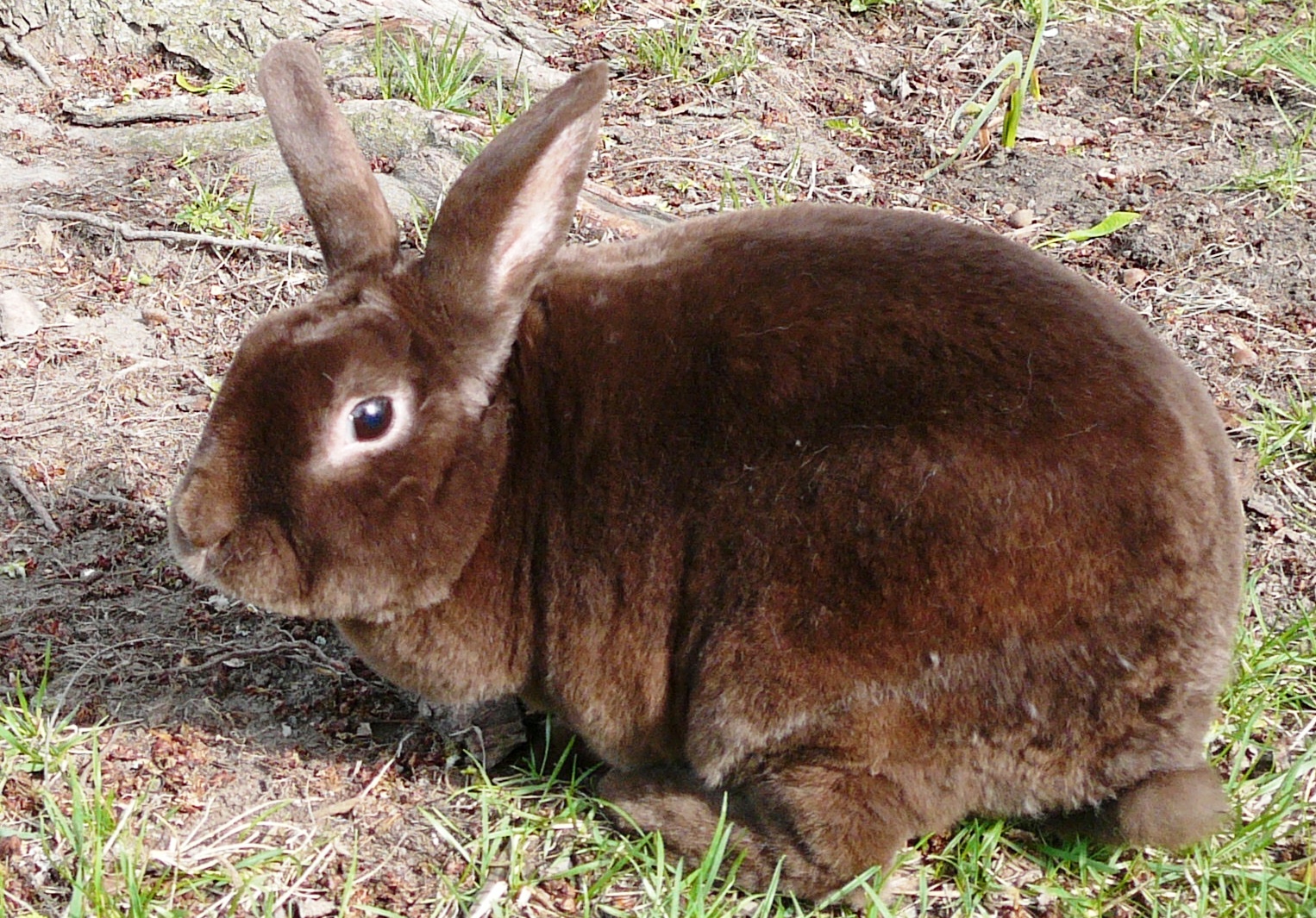
Captain Midnight ate a giraffe and an owl. I ate a camel and a lion. Crunch, crunch, crunch went Captain’s teeth on the owl. His dark nose worked back and forth and his whiskers twitched. We were eating animal crackers, a particularly satisfying meal for a rabbit. When you live your life running from fox and eagle, there is nothing quite so satisfying as sinking your teeth into a sweet crispy coyote.

There are turkeys in the trees.
Tell me if you please
why are there turkeys in the trees?

Captain was writing a poem, but he got stuck after this line. His problem was not rhyme. He had a whole list of possibilities: sneeze, sleeves, sweet peas. It was an ontological problem he was working on, as he chewed a rhinoceros. He was considering the nature of being. Why are there turkeys in the trees or fields or woods? Why are there turkeys anywhere? Why, for that matter, are there trees?

Captain finished off the rhino and sank into reverie. Turkeys, trees, he thought. Then something shifted. He, who was absorbed with his poem, began to be the subject of something else’s absorption. He felt lifted and held. He was no longer thinking, but was being thought by something larger than he.

 Captain Midnight was a rabbit with a contemplative nature. A lot of rabbits are like this. Maybe you have noticed. At dusk when rabbits feel safe and happy, you will see them on lawns and meadows at the edge of the woods, sitting in the grass still as stones. I like to think they are watching God rise from the cooling earth in a fine mist. Then while crickets throb and night descends, I think rabbits leave their bodies like empty locust husks on the lawns and become rapt by the God-mist gathering in soft folds in the valleys. The earth is blanketed with glad and tender rabbit spirit. And in kitchens, boardrooms, and on freeways, here and there, people lift their eyes, sigh and feel the hard bitterness of their hearts and the fear and worry ease a bit. Their shoulders soften. For a moment they are a little kinder and gentler. I believe rabbits do this to people.

The word contemplation comes from the Latin:  com (with) plus templum (temple, an open or consecrated space). It means to gaze attentively or think about intently. As a form of prayer, contemplation generally refers to an attitude of quiet open receptivity to God, a resting of mental activity and surrender into God’s gracious presence.

Originally contemplation meant to mark out an augural space, a place for divination. In ancient Rome the priest auger would mark off holy space by his staff and foretell events and interpret omens by considering the flights of birds, the location of lightening in the sky, and the arrangement of the entrails of animals. The priest’s interpretations guided affairs of state, including when the senate should meet, or a battle begin.

Russell StoverContemplation is the leisurely process of making sense of what is – the world as we know it – by circling around issues or ideas and considering them from varied vantage points. Contemplation implies spaciousness – a willingness not to succumb to anxious grasping after understanding. Contemplation requires some detachment, a divestment of the ownership of truth and letting go of one’s personal agendas and desires. A contemplative attitude suggests a poverty of spirit which is willing to say, “I do not know. Let us look at this together and see what we see.”       

When Captain Midnight is at his contemplative best, he spreads out with his stomach pressed into the earth, hind legs stretched out behind. And he vibrates. His body pulses in tiny rapid oscillations. He seems to tune into an extra high frequency energy source, receiving power, and converting it to rabbit voltage.

As a member of a prey species, Captain understands that contemplation and writing poems, or, for that matter, any creative endeavor, require courage in the face of death. Cramped narrow mindedness and fear close off contemplation. Contemplation flees in the face of anxiety which asserts that if I do not do something, say something, or control something – something really bad might happen to me or those I care about. You can’t get around it. Something I value has to die and it is often my notion of the way things ought to be. Many times a day smaller deaths to self are required in order to live with a contemplative spirit.

Feathers blowing in the breeze
Turkeys roosting in the trees.
A rabbit’s heart is free to seize
its Maker’s  joy on the wing
and behold the truth of any thing.

They began coming this summer. First one large turkey tentatively made its way out of the woods and across the clearing. It pecked at the corn under the bird feeder then lifted its head, swiveling on its long neck like a periscope.  Every few days he would be back. Then one day I lifted my head to count twenty turkeys ranging about the yard -four adults and sixteen chicks pecking, heads bobbing, clucking to each other softly. The cats, Captain Midnight, and I stared in astonishment.

So Captain knew why there were turkeys in the trees. He saw them fly when Chance, the golden retriever, happened to come around the side of the house and began barking at the critters who had taken over his territory. Amid flapping wings and a giddy barking dog, the gobbling ganders rose to balance precariously on the branches as the chicks scrambled into the woodsChance 1. Chance had never seen anything quite so wonderful, and neither had Captain.

 May something as marvelous set you to contemplating and writing poems. 

What practices help you contemplate? Tell me what astonishes and delights you and inspires your creativity.

 http://www.fromholyground.org
http://www.fbook.me/sanctuary
 http://twitter.com/lfross

 

What’s Going on Here? Drunk on Cheap Wine?


LightHarold, awestruck and elated, told me that he had seen God. He said that God showed him hidden mysteries. No, he was not psychotic. He was simply full of Holiness bigger than his britches. Divinity burst through his immature psyche in sparks and streaks. He scared most people, impressed others, and annoyed his pastor.
He was angry and frustrated with church authorities who did not ordain him on the spot. He fussed and wore his experience like a badge of martyrdom.  He was impatient about getting on with his life as a spiritual teacher or guru, and frustrated that no one seemed to recognize his superiority in this field.

A word for this fellow’s condition might be illumination, sometimes mistaken for the apex of the spiritual journey, but, rather, a roller coaster period characterized by swings of ego inflation and deflation which may last a number of years.  I recognized this because I have been through such a painful period a time or two myself. I don’t know how people stood me.

According to some models for understanding the process of transformation in Christ, illumination is the middle period of spiritual development, occurring between purgation and union. In my experience these passages of spiritual growth do not proceed in an orderly linear fashion, but rather circle, repeating, and weaving in and out as the Spirit’s expression in the specific life of an individual. A person’s transformation is related to God’s purposes and the particular aspects of a personality and life situations that need cleansing, healing, reordering, and setting free.

The church and the Bible describe this passage of spiritual development in many ways – the vision of God, an opening of the heart, being born again, accepting Jesus as one’s Lord, a spiritual awakening. Though there are many ways of describing it, most would agree it is not the culmination of the journey. An individual receives a sudden infusion of the Holy Spirit – not once or twice, but over and over. Sometimes people receive more than they can “metabolize” and become intoxicated with God. When it happened to the gathered disciples on Pentecost, people thought they were drunk.

They are speaking our languages, describing God’s mighty works!” Their heads were spinning; they couldn’t make head or tail of any of it. They talked back and forth, confused: “What’s going on here?” Others joked, “They’re drunk on cheap wine.” Acts 2:12-13, The Message

Such experiences, as Evelyn Underhill puts it, “fatigue the immature transcendental powers.” We get more of God than our personalities and bodies can handle. We lose our balance and appear a little wacky for a while. This happened to Paul on the road to Damascus when the voice of Christ knocked him off his horse and left him blind and blubbering. He had to lay low for a while as he integrated this experience. And even years afterwards, he was still a little hard to take.Conversion of Paul1 People have varying responses to large draughts of God. Not everyone becomes insufferable. In Harold’s case he felt that nobody really understood and knew God the way he did. To him all the other laborers in the vineyard, slogging away without a glimpse of the master, appeared as witless dullards. And I have to admit some of them probably were. Instead of focusing on what is wrong with those around them, some people respond to the Spirit infusion with a burst of creativity, an outpouring of  service, the expression of their gifts, or art of some kind. Then there are the hidden souls who only want to withdraw to sit in silence and solitude, where they feel alternately forgotten and useless, and enraptured and blissfully happy.  

However we respond to the bracing presence of the Holy Spirit blowing through our lives and being, there is likely more work to be done. This inglorious mundane work of dying to self and waiting irks us no end. We chaff and fuss as God slowly reshapes our motivations to conform to divine motivations. People do get drunk on the wine of God, but believe me the wine is not cheap.

Harold told me he had already died, done all that. I didn’t have the heart to disabuse him of his belief. First, because what did I know really? And second, what I would say would make no difference to him. I trusted God at work in him, more than anything I might prescribe.  Some kind of growth and transformation was afoot which I didn’t want to mess up.  I did have a sense there was some pruning ahead for him, and considerable surrender before sweet humility would blossom more fully in his being.  

Even though Harold began to get on my nerves, I felt compassion for him as one ought for anyone in this condition. He was pretty miserable. Over time the man calmed down and found his way to service. He became able to hold his degree of glory in one hand and the reality of his sin and brokenness in the other without tipping over and wallowing in one or the other. Instead of bursting with pride or sinking into a pit of despair, anger, and suffering he grew into the largeness of the gift of God’s revelation to him. He attained the strength of soul and groundedness in the soil of humility to grasp this paradox of the human condition: our frailty and our glory. That sort of balance and strength in Reality is something to behold.

Watching the purposes of God unfold in someone’s life as a spiritual director is a front row seat to seeing God and hidden mysteries. The winsome way of God with an individual soul keeps me, entertained and delighted, on the edge of my seat. Now I must be honest. I made Harold up. Any resemblance to any person, living or dead, is not intended and purely coincidental. If,  in an adaption of Carly Simon’s song, “you probably think this post is about you,” it is not.  I really have no idea what God is up to in your soul, except to say without a doubt it is something wondrous, breathtakingly beautiful, and beyond your wildest dreams. For the record, I am still working on finding my balance. 

sanctuary-tree-tiny1


Beauty and Making Cookies

42-15885238On the afternoon of the day my friend died in a hospital bed in Iowa City, my daughter and I made cookies. In the Kansas kitchen overlooking the finch feeder, while seventeen finch gobbled two pounds of thistle seed (95 cents a pound at Allen Farm and Feed), we measured flour and brown sugar, butter and ginger, and mixed them in the yellow bowl. Patting out the dough on the cookie sheet, we stopped to taste. “Umm, very good!” she said.
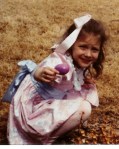
There, while she stood on the orange chair with a brown apron hanging to her ankles, I saw for the first time how the smooth curve of her cheek presses against space with such exquisite beauty. 

How is it that we linger for days and weeks over the latest atrocity and evidence that evil is afoot and keeping steady employment? As a nation, we dissect and examine sin and evil from every angle, as we are seduced into complicity through our own fascination with it. We ask the best minds of our day to analyze and respond to iniquity yet rarely consider intently the nature of beauty and how to create and sustain it in our lives and world.

Many seek beauty, but it is more often to possess it than to appreciate it.  As I impose my will on beauty, as I shape and prune it, cage it in my heart, and bow down and worship it with my reason and my money, it becomes a god, something I look to for my well being and satisfaction. Then beauty turns on me with its shrewish demands and shrivels into something harsh and burdensome which sends me off scurrying to polish it, insure it, buy more of it. No more is beauty a source of delight and joy. I have diminished it and myself by my lust, greed, and envy.

A young nurse stammered to tell me of the beauty she had seen last week. “I went for a walk with the dog down by the pond and I have never seen anything like it. After all the rain, the pond was brimming, spilling over the sides. I heard the water roaring through the drainage ditch. I saw God’s power, and everything was so green.” Tears glistened in her eyes.

True beauty is free. Our spendthrift God scatters it with lavish prodigality over the universe. The Trinity ceaselessly dusts us with beauty like pear blossoms sifting in white drifts on the lawn.

Would that we could approach our lives like kids on an Easter egg hunt at dawn – our world drenched with wonder and surprises nestled under every bush. When Moses was on the far side of the wilderness keeping his father-in-law’s flock, he turned aside to see the great sight of a burning bush. What amazes me about Moses is that he turned aside. He stopped doing what he was doing, turned his attention away from his work, and risked letting a sheep wander from his protective gaze, to see why the bush was not burned up. (Exodus 3)

Think of it. The liberation of the Hebrews and the rest of salvation history rested on this man’s freedom to wonder. The capacity for wonder and curiosity are essential to spiritual growth as well as to justice. A lot of prophets and saints knew how to dilly dally, how to daydream, how to poke along and stop and sniff the odd, the curious and find the hidden treasure under the lilac bush. The expectation and consent to be dazzled and amazed set the stage for God’s entrance into our lives.                 

                                    Diana and easter egg

May you discover the courage and grace this day to dilly dally,
to wonder, and to be astonished.


sanctuary-tree-tiny1

This post is excerpted from a book I wrote, Letters from the Holy Ground – Seeing God Where You Are, Sheed & Ward, 2000. pp 192-194. https://theprayinglife.wordpress.com/wp-admin/post-new.php You might like it.

Paying Attention and Taking Your Time

leaves in sunA thousand shades of green hold me enthralled.  The south wind teases up the glossy leaves, revealing their pale undersides. I find enough of God in a maple leaf to keep me occupied with wonder for a couple of centuries.
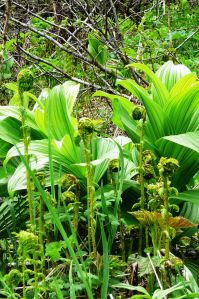
 Today the praying life consists of a continuous loving look at the universe. Prayer is a long wonder-filled gaze upon things as they unfold. The praying life is a front row ticket to the greatest show on earth. Okay. Sometimes I nap, complain, go out for popcorn, or dally in the restroom combing my hair. Sometimes I get self absorbed and miss whole acts, and then have to nudge my neighbor and whisper, “What did he say? When did she die? I didn’t know there was a war!”

In its simplest sense prayer is as an act of paying attention. The word the writers of the Greek scriptures used for prayer is proseuche, which means to turn toward God with a request. In order to get my need met, I shift my attention to God. Our word attention comes from the Latin ad tenderer (from which we also get tendon and tension) which adds the notion of stretching toward something beyond us.

Simone Weil wrote that prayer “is the orientation of all the attention of which the soul is capable toward God.” In prayer I bestow upon God the gift of my eyes, my mind, my awareness, my being at this moment. So Holiness gets our attention by creating in us desire and need? Interesting, huh?

To understand prayer as looking at or paying attention to God, means one must deal with the fact that we are all blind as bats and struggle to see what is really going on. We have cataracts, myopia, far sightedness. We squint through the dim filters of our prejudices, opinions, fears, and fantasies.

Jesus seemed to recognize this and a good deal of his message was about opening the eyes of the blind and teaching his followers to see with the eyes of faith. Such prayerful seeing is not easy. The poet John Moffit offers some instructions:

To look at any thing, Forest floor Montana
If you would know that thing,
You must look at it long:
To look at this green and say,
“I have seen spring in these Woods,”
will not do – you must
Be the thing you see:
You must be the dark snakes of
Stems and ferny plumes of leaves,
You must enter in
To the small silences between
The leaves,
You must take your time
And touch the very peace
They issue from.

 Must I become what I want to know, or see, or heal, or change? We protest. Oh please, no. That is too hard. I have my needs, you know. I have my point of view. I have these closely held beliefs.  Let’s make an argument for why this situation or person needs to change. Can’t we use persuasion, branding, marketing, scientific research, polls, and the press of public opinion? Can’t we ask God to just fix these things, these people? Now!

Nope. The poet says you must take your time. You must look at the poor long, the imprisoned long, our enemies long, our failures long. We must be the thing we see, enter into the dark realities of life in a refugee camp, and the chaotic tension and anxiety of our nation. We must be willing to love and  to become the thing we long to liberate –

             as God was willing to do for us.

 In my experience it takes strength and faith to enter into another’s reality and not be overcome by it, or to lose myself in it. We may become bitter, cynical, even abused by such experiences. We may become infected with the disease we are trying to relieve. We end up offering the other only a mirror version of his or her own dilemma. We become part of the problem we are trying to soothe.

Forest floor MontanaSimone Weil continues, “Not only does the love of God have attention for its substance; the love of neighbor, which we know to be the same love, is made of this same substance. Those who are unhappy have no need for anything in this world but people capable of giving them their attention. The capacity to give one’s attention to a sufferer is a very rare and difficult thing; it is almost a miracle; it is a miracle. . . .  The soul empties itself of all its own contents in order to receive into itself the being it is looking at, just as he is, in all his truth. Only he who is capable of attention can do this.”

When our attentiveness invites us “to enter into the small silences” and to “take our time and touch the Peace” from which all life issues, we find ourselves in union with that Peace. Our sacrificial gift of attention to another awakens the life of God in the other. That life may be dormant, deeply hidden, frightened, or wounded. Our prayerful attention extends a hand and bids the slumbering Peace in the other to rise up and walk.

God is paying attention to us in Jesus Christ. How could Jesus enter so deeply into our reality and suffering without being overcome by it? As I watch Jesus move through the Gospels it seems to me that he never loses his attentiveness to the Peace from which he issues, his Father in Heaven, and his identity as the beloved child. Perhaps for us to be agents of transformation in our prayer and relationships, we must possess a deep attentiveness to where we come from, and a sense of ourselves as deeply loved by God. This ongoing communion with our Source -our Father, our Mother in Heaven- gives us the freedom, the strength, and the safety to be channels of divine love and healing without harming ourselves or others. For to me little is more fierce or tender than the unfolding of the ferny plume of a mortal soul.

So I pray as I watch the maple leaves dance in the wind.
I take my time.
I aim for the Peace we issue from.
I meet you there.

 sanctuary-tree-tiny1

Simone Weil, Waiting for God, Harper Colophon, 1951,p 105, 114-115
John Moffitt,  Teaching With Fire, edited by S. M. Intrator and M. Scribner


Gracious Uncertainty and Jumping on the Bed

communion trayI held out the tray of tiny plastic cups filled with juice, freshly poured, bubbles still floating on top. He delicately placed finger and thumb around his choice, and went to draw it out, but it was stuck and would not budge. He tightened his grip, pulled, and the thin plastic cup shattered in his fingers. Juice flew onto the suit jacket of the fellow next to him, the carpet before the altar, and my white robe and scapular with the appliquéd wheat and golden sun. How can such a tiny cup hold so much? we wondered.

Sprinkled liberally with the blood of the Lamb, I finished the service and told the mortified fellow all was well.

 I like it that things like this happen when people pray.

I am at the hermitage (where I prayed for close to twenty years). The cabin is tucked in a hillside on a small lake. Out on the screened porch I am listening to someone in need of God. I am praying she discover the presence of God whermitageith her here, and, in her contact with God, find healing for her soul. Inside the hermitage my two daughters, ages four and six, are playing quietly. My guest and I sit still, leaning into the grace of the moment-listening to meadowlarks and watching willows bend in the breeze. After a while my children’s play grows noisier. Thumping, giggles, and something crashing to the floor intrude on the serenity. They are jumping on the bed. The more I try to focus on the silence and my guest, the louder the girls get. Finally I rise from my prayer stool and go inside. “Please be quiet,” I whisper. As I take Diana’s arm to lead her over to some books, she shouts in a screechy, ear-splitting whine, “Mom, stop! You are hurting my arm.”

Well so much for serenity, and all our holy poses and postures.

If nothing else, God is Real and is asking us to get real. For me the freedom to be real is the fruit of prayer and a central message of the Christian faith.

Why do we reduce the Feast of God to a thimbleful of juice in a flimsy plastic cup anyway? Why do we embarrass grown men by asking them to wedge their fingers, fumbling for cups fit for elves?  We mortals do the strangest things in the name of worship.

I have few answers, but I love it that the Living God breaks out of our little cups and categories and paints my expensive liturgical vestments with purple speckles. It makes me want to go jump on the bed.  Here is a God who keeps me on the edge of my seat, breathless and shouting.

Certainty is the mark of the common sense life – gracious uncertainty is the mark of the spiritual life. O. Chambers

d-c-playing-dominos

FYI, I got the stains out using a cleaning product called, Shout! It works great. Try it. And go jump on the bed.

 sanctuary-tree-tiny1