Category Archives: Christianity

Day of Prayer

deer at dawn

I woke surrounded by warm pink light. Dawn filled the room like a rosy fog and drew me outside to look at the eastern sky. Banks of darker clouds, edged in gold, piled above the rose glow. Within minutes the sky darkened. Thunder rumbled. Rain fell gently throughout the morning and afternoon.

I spent the whole day chasing after that rosy suffusion which called me to awareness. But the light had flown to some other window, some other sleeper. I was left with a soft kiss, a sweet promise, and an ache in my heart that burned like a flame.  

This day my prayer was bare and to the point: I want you – not my way, my plans, my hopes, my dreams. Not peace on earth, healing for the suffering, hope for the broken hearted, or justice for the oppressed. I want YOU- giver of dawn and rain and this yearning in my heart for something unnamable, but ever compelling and true.

“The soul is not thought, nor is the will controlled by thought. It would be a great misfortune if it were. The soul’s profit then consists not in thinking much, but in loving much,” advised Teresa of Avila. I would rather think, connive, plan, strategize, manipulate, control – anything, but love this Author of our Being. But love is the way, says Teresa, as well as a whole company of others, including the Beatles.

Little renders us more vulnerable than love. A desire, a longing for someone, something beyond my grasp requires me to recognize my need and my limits. To love is to esteem the freedom of the Beloved and bear the pain of the essential separation of oneself from what is other than oneself. Love asks us to suffer the anguish of the reality that we may never fully possess what we love. Love asks us to be poor and naked in our need and our dependence upon the mercy of our Beloved.

No wonder we try to satisfy our longing for love by attachments to things which appear at first glance to deliver more and ask less of us than the uncompromising call of Christ. No wonder we attempt to extract from people, possessions, and work what only the Source of Love can give us. However, we soon find ourselves enslaved to and sucked dry by the insatiable demands of such false lovers.

Today I am sick, sin-sick, of my attachment to the world and my ego with its endless unappeasable needs.  I am weary and sore from the brutality and violence of a drive to succeed, ignoring my limits, and trying to do too much and be too much. Who can save me from myself, this body of death?

Only Love, Vulnerable Love entering into our misery as Christ Jesus, summoning us from our sleep, whispering, “Let go. Let go of it all. Follow me. I am all you will ever need.”  

So this day my prayer is a famished stumbling after Love. It is holding out my heart saying, “Here take it. I am yours.” It is Peter telling Jesus, with that desperate hope, “Lord, there is no one else that we can go to! Your words give eternal life. (John 6:68 CEV)  

Today my prayer is bearing the pain of this mystery, this rosy dawn which woos and embraces us all.  Amen.

 deer at dawn small

More about prayer –
www.fromholyground.org, www.theprayinglife.wordpress.com

Contact Loretta –
lross@fromholyground.org, www.fbook.me/sanctuary

Follow on Twitter

“Getting to Know You, Know All about You…”

42-16474021After their dinner date, Sandy was mildly disturbed. What was it? Something was eating at her. She really liked Greg. Everything seemed to go well – good conversation, a few laughs, great food, even some electricity in the air.

Oh, it came to her: that remark he made about her sister always being late. It stung. Why? Just what did he mean? Maybe she was over reacting…but his remark sounded catty…

Greg sat with his morning coffee and smiled to himself about the date. It went really well. Sandy actually listened to him. She was funny and pretty and he felt relaxed. He wondered if he should call and tell her how much he enjoyed the evening.

Sandy and Greg have unfinished business – the business of relationship building, the business of deepening intimacy and trust. A business which is the foundation of love.

We naturally review and reflect on conversations and our encounters with others. We sort out the positive and negatives. We go over what we wish we had said differently or left out. We discover questions we want to ask, more information we need.

We may even make a follow up call. “Hey Greg. It’s Sandy. I just want to tell you what a good time I had last night and thank you.” She took a breath, “Greg, I need to let you know something too. I am real loyal about my family and sensitive when people put down my sister. She’s gone through a lot dealing with her disabilities. I felt hurt when you made the joke about her always being late.”

OK. The ball is in Greg’s court now. His response will reveal more about himself, his needs, and experience. Greg and Sandy may build and deepen their relationship with greater trust and honesty in this process, or determine not to do that.

CB035813Let’s apply this idea to our practice of prayer. Sometimes we treat God as a combination landfill and filling station, rather than as a growing relationship of intimacy and trust.  Prayer becomes a place to dump our trash and get refilled with peace of mind. We drive up, open the trunk and haul out our anxieties, worries, sin, pain, sorrow, and confusion and toss them in the containers. We slurp up some high octane Living Water and drive off. “Well, that’s done,” we say. “Now, let’s get on to the important stuff I need to do today.”  In such a scenario of prayer God exists solely to meet my needs.

I suspect that the landfill/gas station approach characterizes quite a bit of our prayer. Yet God is mercifully patient with us about this. God knows that most us we will not come to God unless our trash is overflowing, filling our homes, spilling out the doors and down the street and we feel totally overwhelmed with the demands of our lives. We will wait until our tank is on empty, or we have run out of gas and are stranded on some lonely road late at night.

However, at some point we may notice a shift in us during our visits to the landfill. We may find a desire toj0314126 stay a little longer and linger at the filling station. We may feel a curiosity about the Landfill Owner and his generosity in taking in everyone’s trash and rotting garbage. Appreciation and questions may emerge. A conversation may begin with the Filling Station Fellow, an ebb and flow of mutual disclosure in coming to know each another. We may begin to notice changes in ourselves – an eagerness to get back to the Landfill, a greater sense of peace, a growing intimacy, and – Dare you say it? What will your friends think? – love for the Filling Station Guy.                                                                                                                                                                                              

Intimacy and love with one another and with God are built on a foundation of trust and honesty over time. As we are open with our individual truth, we are drawn into the larger more spacious truth of God. As we return to share more of ourselves, we learn more of God. We get to know and like and hope the other likes us too. The Filling Station Guy is, of course, already won over and hopelessly in love with you. I suspect Greg may be too.

 sanctuary-tree-tiny1

The Landfill will be open this Friday for Midday Prayer, 12:15 – 1:00 at The Sanctuary office at 1600 SW Campbell. Stop by, if you can, for a splash of  Living Water and get to know the Filling Station Guy. I think you will find he is a keeper.

More about prayer –
www.fromholyground.org

Contact lross@fromholyground.org, www.fbook.me/sanctuary

Follow on Twitter

Done with Great Things and Big Things

leafSeptember is stepping over the doorsill. A change is in the air. Futurist M. Rex Miller (The Millennium Matrix – Reclaiming the Past, Reframing the Future of the Church) writes about the revolution in communication brought by digital media. Digital media, both expresses a desire for, and makes possible authenticity, community, connection and something simpler and more intimate. “New sensibilities are rising. The connected nature of digital communications has already created a shift back to community:  to more open and connected neighborhoods, town centers, and urban revitalization, as well as smaller, more human-sized services that go along with them.” (p. 120)

Miller makes some startling claims about the successful growth model used in our society and mega churches. “We are beginning to realize that much of our churches’ emphasis on growth has produced the spiritual cousin of suburban tract homes, strip mining, and fast-food franchising. Unfortunately, many hungry churches are still buying into the fast-growth premise and promise without fully understanding the side effects.” Miller cites two of these side effects: “Rapid member turnover and staff burnout within many such churches keeps them forever having to replenish their congregations and leadership core.” This successful growth model has come with a price: a lack of relational cohesion. (p. 121)

In my work as a spiritual director with clergy and church leaders, I see many people trying to cope with the negative side effects of the growth model with its exhausting emphasis on numbers, productivity, and efficiency.

Near the end of the nineteenth century American psychologist and philosopher, William James, wacorn_sproutas also sniffing a change in the air, when he declared, “I am done with great things and big things, great institutions and big success, and I am for those tiny invisible molecular moral forces that work from individual to individual, creeping through the crannies of the world like so many rootlets, or like the capillary oozing of water, yet which, if you give them time, will rend the hardest monuments of man’s pride.”

I find in James’ words a prescient and powerful description of the yet to be invented world wide web.

In the spring of 1978, I stepped over the door sill to a new way of living and made a choice for the tiny molecular forces over the great institutions and big success. With only a vague sense of what the consequences might be, I took the less traveled road of a life of prayer and attention to the things of God. As I walked to the parking lot of Glen Oaks Community College, where I worked as an administrator, I was absorbed by an acute sense of my own seeming insatiable need for importance, for making a name for myself. I was weighed down by a restless dissatisfaction, the urgency to figure it all out, and get my life right. Mostly I was just so sick of myself and my whining. Out of that moment of personal honesty and weariness, I heard a call to ministry. I know. It sounds weird. A voice, which sure didn’t seem to be my mine, said, “Be a minister.” I was a church drop-out. I had never considered such a vocation before.

road-to-Ra-bbit-Ridge-web-vYet I turned my back on great plans and big success and set off on a path of downward mobility. I confess that I am still not entirely converted. I am easily diverted by hype, glamour, and the allure of various definitions of success. Like my puppy on a walk, I get distracted by some new smell and go off the path to investigate. Before long I have forgotten my original intent and have become lost in the tantalizing tastes and odors of the swirl of big things, big tasks, and big impressions.

Ministry of course I soon discovered is not immune to big success. In fact we frequently get off the path and fall down before various idols – our organs, our windows, our buildings, our music department, our youth program, our pastor, our mission, our doctrines….

Here is William James again, writing to his friend H.G. Wells: “The moral flabbiness born of the exclusive worship of the bitch-goddess Success – that – with the squalid cash interpretation put on the word ‘success’ – is our national disease.” 

Early in September on the threshold of a new season in the digital age convergence of William James, M. Rex Miller, and my own story I find a synergy of hope and resonance. May some pieces come together for you this season too.

 Here is a prayer, an inoculation, if you will, against our national disease:

Oh, my God in heaven, save me from significance. Yank me by my collar from snuffling and slobbering before the bitch goddess, success. Help me to have more faith in things I cannot see, than things I can measure and bank and drive around town in. Teach me to trust those tiny bursts of energy jumping from person to person as slivers of grace, kindness, wisdom, and cheerfulness. Deliver me from my own insufferable self importance. Oh Indestructible Goodness, lie me down in the soft green pastures of humility, where I can spy your kingdom come, grinning and creeping through the crannies of the world.  Amen

sanctuary-tree-tiny1

 What do you think? Share your comments here or on The Sanctuary Facebook Page

More about prayer –
www.fromholyground.org

Contact Loretta –
lross@fromholyground.org, www.fbook.me/sanctuary

Follow on Twitter

Elijah and the Gentle Leader

I led them with cords of human kindness, with ties of love… Hosea 11:4 (NIV)

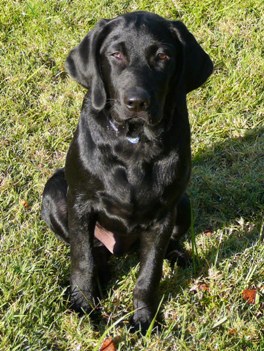
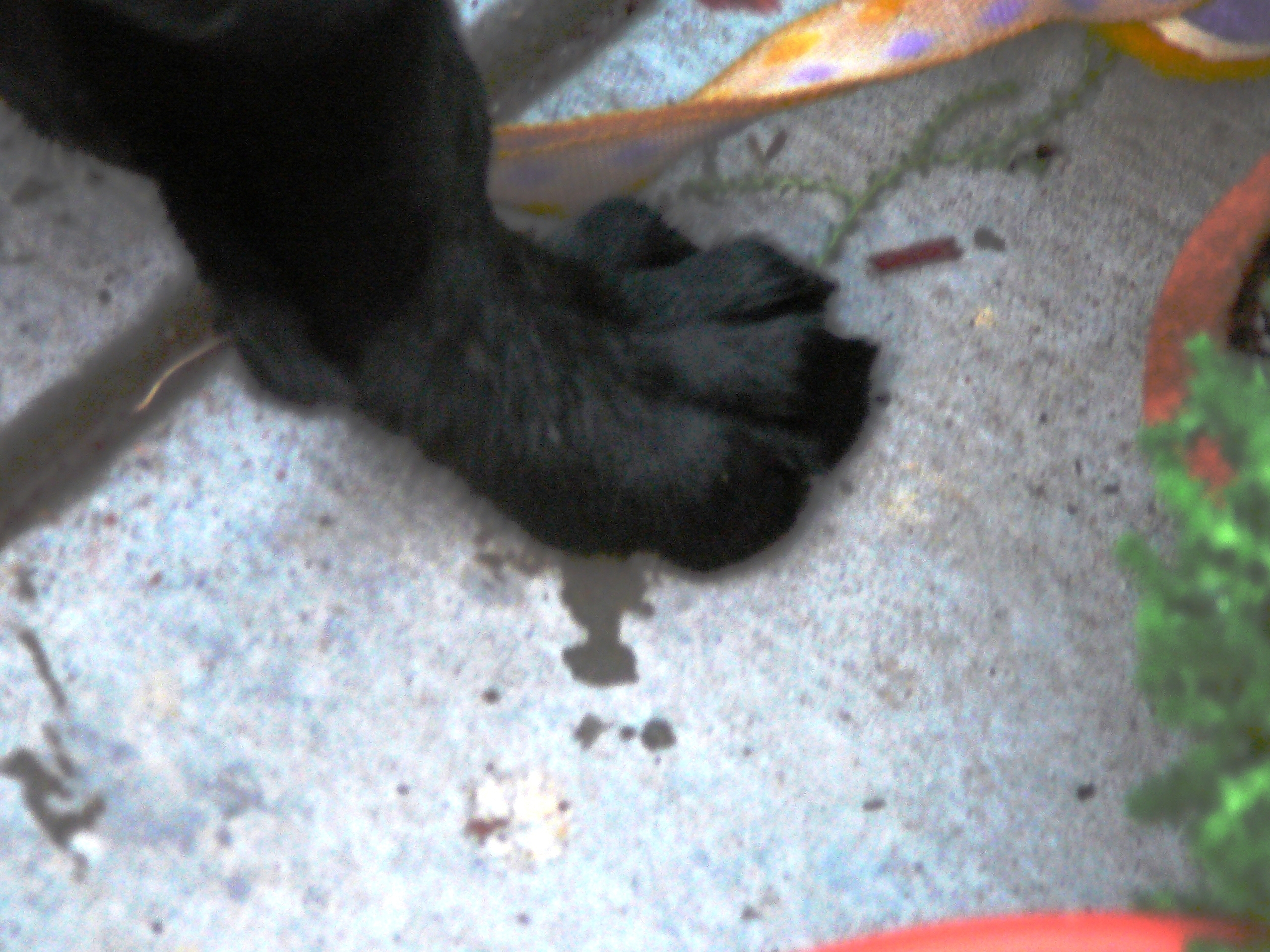
Elijah - foot at 11 weeksI got a new pup, a black lab with some golden retriever mixed in. His name is Elijah. We are in love. Thank God. Learning each other’s rhythms and limits in fits and starts, shouts and barks, foot stamping and puppy pouts, we are pulling at the restraints of the discipline, which all relationships require.  Without the love, we would never make it.

When people see Elijah they say, “Oh, how cute!” Then on taking a closer look, they shake their heads and add with pity, “He’s going to be a big dog.” I try not to shudder. The little prophet dog is mostly feet, knobbly knees, long legs, and a single minded purpose to chew. My last dog died at sixteen years. He had long given up gnawing at things and people.

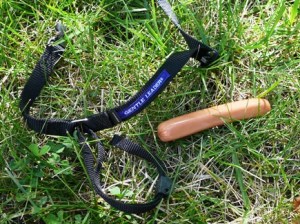
Elijah has all the approved chewing materials. We go to puppy training. At the advice of friends,  I got a training halter device which requires a degree in dog mechanics and six arms to put on your puppy. In spite of liberal use of hotdog bits, it didn’t go at all like the video showed. Obviously the demonstration dog had been drugged.

The device comes in a box resplendent with marketing genius, Immediate gentle control. “My pup was changed in a mere ten minutes.” The nose loop encircles your dog’s muzzle in the same way as a pack leader gently, but firmly grasps a subordinate’s muzzle in his mouth. This is a clear signal that You are his leader!  My dog is still working to pick up that clear signal.

Elijah detests this device with a passion. However, I confound him by offering the tastiest treats I can find, when I put it on and when I remove it. I rubbed hotdog juice all over the part that goes around his nose. When we walk, he turns summersaults over the grass trying to shake it off, or writhes on the ground like a snake. Then he will flop prone in the street with a huge sigh and pout. Despite the period of adjustment for us both, things are improving. Once he gets over his hissy fit, he trots along in fine fashion being the dog of my dreams. 

 Gentle Leader

Do not be like the horse or the mule, which have no understanding but must be controlled by bit and bridle or they will not come to you. (Psalm 32: 8-10 NIV)

The amusing name for this device is Gentle Leader Head Collar. This cracks me up. I got the giggles thinking about it in church this week. I had this picture of God struggling to put such a halter on us, while we flop about in our lives, straining to get loose from the constraints of our own realities. Our genetics, life experiences, choices, and environments wrap around our snouts and bind our movement. Such discipline may gentle us into surrender to the truth of who we are. We may come to accept the conditions placed upon us by our journey and the reality that we are not the leader of the pack, or we may toss ourselves in summersaults, whining, and wriggling against our limits.

“Now be ye not stiffnecked, as your fathers were, but yield yourself unto the Lord, and enter into his sanctuary (2 Chronicles 30:8),” I say to Elijah, who is trying to chew the darn thing off his head. The Hebrew scriptures frequently compare the people of Israel to oxen with stiff necks who will not submit to the yoke, or a horse who will not follow without bit and bridle. The notion of discipline and surrender to the Leader of the Pack appears also in Paul’s writings. In fact it is often the prophets, including Elijah’s namesake, who serve as God’s harnesses to restrain an unruly rebellious nation.Elijah 3 months 2

If Elijah could see the positive benefits of his Gentle Leader, he might not put us through such a struggle. His resistance only increases his discomfort. Being conformed to the harness requires repetition, discipline, love, and a good deal of faith in the Leader on both our parts. The way to Elijah’s abundance is a counter intuitive surrender to what feels at first as terribly confining. Not a bad prescription for the spiritual life.


More about prayer –
www.fromholyground.org

Contact Loretta –
lross@fromholyground.org, www.fbook.me/sanctuary

Follow on Twitter

The Miracle of Gratitude

woman praying 002Feeling discouraged? Despair breathing down your neck? Are you trapped in a painful situation with no way out?

Count your blessings. I know. It sounds lame. You need a whole life makeover. You need to win the lottery, find a new job, or discover the cure for cancer. Humor me. Do it anyway. Hold up your ten fingers, or however many you have. Count out loud one blessing for each finger.

Now that you are warmed up, take out a piece of paper and get to work filling it up with things you are grateful for. Just put down whatever pops in your head. Keep at it. Include the most specific details – water actually flowed from my faucet at the flick of my wrist when I was thirsty this morning; I can see the mourning dove pecking corn outside my window; my cup of coffee tastes delicious – dark, aromatic, and hot.

A sure way to find hope in a dark time is to count one’s blessings. This simple spiritual practice focuses our attention not on what has happened or what might happen, but on what we can discover to be thankful for in this moment. Gratitude awakens mindfulness, which calms and focuses us on simple pleasures and the miracle of life itself.

Gratitude unlocks the fullness of life. It turns what we have into enough, and more. It turns denial into acceptance, chaos into order, confusion into clarity…. It turns problems into gifts, failures into success, the unexpected into perfect timing, and mistakes into important events. Gratitude makes sense of our past, brings peace for today and creates a vision for tomorrow.  Melodie Beattie

I can recall some pretty anguished nights in my life. I flailed about rehearsing imagined scenarios, practicing speeches to give to various people, and writing scary science fiction. To what end? Nothing productive. I only became more and more entangled in my own hysterical drama. Some of us come to a point where we are being eaten up by worry and fear. This can be the key to a wonderful discovery. Right about when we say, I can’t live like this anymore, we discover we do not have to. Peace is a choice. We have the freedom through an act of our wills to choose peace of mind.

So much about the spiritual life and happiness in general depends upon where we put our focus. We get to choose what thoughts we entertain and which ones we sweep out the door. At the same time there is tremendous competition among multiple influences to occupy the center stage of our minds. Consider for a moment who or what influences are in charge of your mind? The mantras of our consumer culture? Some nasty critical, negative inner voice? A whiny, fearful, abandoned child? A tangled root of bitterness?

The psalmist puts it succinctly, “Do not fret – it only leads to evil.” Psalm 37: 8. Spiritual teachers of many traditions teach the practice of gratitude. Jesuit priest Jeanne Pierre de Caussade, who died in 1751, advises: The great principle of the interior life lies in peace of the heart: it must be preserved with such care that the moment it is in danger everything else should be abandoned for its re-establishment, just as when a house is on fire, one leaves everything to extinguish it.. . .  And the reason of this is that great peace and tranquility of spirit alone give the soul great strength to achieve all that God wills while trouble and disquiet turn the soul into a languishing invalid. 

De Caussade’s image of the languishing invalid cracks me up. That is exactly what I become as I succumb to fear and anxiety:  infected with negativity, unable to make clear decisions, confined to a bed of worry.

If the only prayer you ever pray is thank you, that would suffice, wrote Meister Eckhart. It seemed to work for Jesus. Remember that embarrassing moment when there were only two fish and five loaves and a huge hungry crowd to feed? The disciples quickly turned into languishing invalids. Jesus takes what he has, lifts his eyes to heaven, and gives thanks. After everyone had enough, they filled twelve baskets with leftovers.

That was Jesus’ miracle. Why don’t you go work a few of your own today?

 Praying hands


Learn more about prayer at
www.fromholyground.org

Contact Loretta at
lross@fromholyground.org, www.fbook.me/sanctuary

 Follow at http://twitter.com/lfross

Hidden Things of God

Dock, fog “I have come to get some answers. I’ve talked to a bunch of ministers and none of them was any help.” The man sitting before me was a young professional, bright, and angry.

I draw in my breath and exhale, praying  to be released from any illusions that I could improve upon my colleagues’ work. “Make me humble, Lord. Make me true.” Glib answers, formulaic responses, any hint of arrogance would quickly be detected by his cynicism and broken heart.

“I am about ready to give up on church,” he told me with a hint of defiance, as though he were daring me to be helpful to him. His story was painful and his betrayal, despair, and hurt were palpable. As he wept, shoulders shaking, I sat Shiva. I kept the ancient Jewish vigil of simple presence to another’s suffering. As those who comforted the bereaved in Jesus’ tradition, I waited for my guest to initiate conversation.

“Those who believe they believe in God, but without passion in the heart, without anguish of mind, without uncertainty, without doubt and even at times without despair, believe only in the idea of God, not in God himself,” wrote the Spanish writer, Unamuno.

We live in a world with little patience for doubt or questioning. We do not value subtlety, complexity, or mystery. We possess minimal tolerance for simply sitting with ambiguity and suffering. We do not trust there is any effectual power at work in our lives beyond what we can manipulate or contrive with our own wills and abilities.

The pragmatism, that is the religion many of us bow before, insists on quick, easy solutions. If something “works,” then it deserves our support. An end product that satisfies our needs justifies almost any means.

Our market place economy heavily determines how we think of ourselves and the world. The language of faith with its nuance, poetry, metaphor, and reverence for mystery has been exchanged for the practical idiom of the market place, which measures worth by utility and productivity.

This is not a new sin. The people of Isaiah’s day were also co-opted by a culture of consumption and utilitarianism. The prophet reminds Israel that they and their carved idols and cast metal images do not know everything. “Now I am revealing new things to you, things hidden and unknown to you, created just now, this very moment, of these things you have heard nothing until now, so that you cannot say, “Oh yes, I knew all this.” (Isaiah 48: 6)

I do not know the end of the young man’s story, as is often the case with those who pass through my life. I gave him what I could, which was my love and respect for his losses. As I sat with him, I saw that God loved him very much and also saw how deeply this young man loved God and didn’t know it.

I found myself face to face with my poverty – my lack of any satisfying answer to tie up everything and take away his pain.  I had no bright ideas, plans for recovery, or quick fix resources to suggest. In the words of Isaiah, I could only stay open for the hidden thing, the unknown thing which was coming into being in that young man’s soul, just at that moment out of the infinite, divine unknowable Mind of God.

I had only love to give, 
which, in times like this, never seems to be enough,

                                                             but always is.     FOG      


Contact the author:
lross@fromholyground.org, www.fbook.me/sanctuary

 Follow:
 http://twitter.com/lfross

What Is A Prayer?

CBR002349I don’t know exactly what a prayer is.
I do know how to pay attention, how to fall down
into the grass, how to kneel down in the grass,
how to be idle and blessed, how to stroll through the fields…
Mary Oliver (A Summer Day)

I have been at it for a lot of years now, and I still do not know exactly what a prayer is. It seems to have always been part of my life like the color of my eyes. As a preschooler I learned to fold my hands and bow my head. I prayed for my family, our dog, and my neighbor, Mrs.Wendel, who made good cookies. I had a set list I covered: Santa Claus, the Snowman, and Betty Crocker, whose picture was on the box which my mom’s iron came in.

CBR001191We always prayed before meals, usually led by my father. Every night he kneeled beside his bed to pray. I came upon him at prayer like that many times. He died in 2000. When I go back to Iowa to visit my mother, I like to sit in a corner by a bookcase, where dad read the Bible every day. His magnifying glass, pens, and letter opener are still there.

My father’s prayer was quiet and hidden, yet woven into the fabric of his life like his breath. I saw the fruit in his kindness and caring acts for others, in the vitality of his mind and interest in the world around him, and in his outrage at injustice. As he grew older, he would often say, “I am just so thankful.”

What exactly is a prayer? I fumble for the words. Traditional words about prayer feel like pebbles in my mouth, tasteless, hard and difficult to swallow. As much as I gnaw at them I find no nourishment.

“What language may we borrow to thank thee, dearest friend, for this thy dying sorrow, thy pity without end?” wrote the anonymous author of the lyrics to the hymn, O Sacred Head Now Wounded. Whatever language we use, it will always be “borrowed.” It will be loaned from some, other, lesser reality in an awkward, ill-fitting attempt to clothe The Reality beyond all language and human thought. Mere words fail to express the experience of our hearts in response to God’s love, gifts, and challenges in our lives.thinking businessman

Now I will foolishly do something I have just told you is impossible: tell you what I think a prayer is. For me prayer is fundamentally an attempt to communicate.  This desire to communicate is initiated in us by God and it is a way in which we participate in the likeness of God.

Take a look at that word, communicate. Its root carries the meaning of coming together, communing, communion. What is implied is that at least two separate parties are desirous of joining in some way, of reaching an understanding, of connecting with a commonly held perspective, need, desire, or purpose.

We could say prayer is the eternal conversation and exchange of love as experienced in the context of our lives in which all parties are affected and changed in some way. For me the life, what engages me, is not the abstract concepts of prayer, but in the lived experience of communication. By the way, this is why I believe God is on Facebook and is an old hand at Twitter.

Prayer rides on the wings of our hearts’ desires, anguish, hunger and joy – that bolt of white fire that connects heaven to earth and unites mortal with divine. I can’t say exactly what a prayer is. But I can sure tell when people have been doing it.

RFA073Who taught you to pray? Who are you teaching? What exactly is a prayer to you?

Learn more about prayer at
www.fromholyground.org, www.explorefaith.org

Contact Loretta at
lross@fromholyground.org, www.fbook.me/sanctuary

Follow at http://twitter.com/lfross

Gone Fishing

gcarpI couldn’t take my eyes off them. Thirteen years before I watched the eight grass carp slip out from the plastic bags from the fish farm and slide into the lake. Since than I had not seen them. I had heard their splashes growing louder over the years, and glimpsed an occasional fin. Some visitors spoke of the Lake Holy Ground Monster. A few saw one feeding close to shore.

 Now I stood on the shore enthralled. With no rain for weeks the lake was as clear as glass. From the shore west of the hermitage I could see through greenish yellow water to the bottom. An old lawn chair sat half submerged in the shallows. A few mossy sticks lay in the soft mud.

Then a movement caught my eye, something slowly waving. First one, then another and another – six huge grass carp swam lazily into my view. Some were over four feet in length. Moving slowly in a wide circle, their bodies shimmered with iridescent diamond scales, silver dappled in the sun.

Lifting the curve of their open pink mouths like soup ladles, they gulped the willow seeds and cottonwood fluff floatingcottonwood fluff 2 on the surface. Skimming off the white fuzz, the giants wove in and out in a dance of mesmerizing beauty. A large open mouth would break the surface and scoop the fluff. Then the mouth, water running from its corners like an overflowing pitcher, would close and sink into the lake. The fish scooped and sank, swimming silently, smooth and easy like the hawks riding the wind currents above us.

Later when I got home I cherished the memory of those fish swimming so self contained, whole in themselves, flowing through the water like cream in coffee before it is stirred. For days after I would close my eyes and see them swimming, a secret vision of grace. Here was beauty free for the seeing. And somehow the best gift was their creatureliness – that they knew nothing of me, or a world beyond the lake, that what I did or did not do mattered not to them.

I practiced floating that summer. I learned how my breath increases my buoyancy in the water and to relax the muscles in my neck and shoulders. I learned that water will hold my weight when I resist the least.

grass carpMarshall McLuhan said, “We do not know who discovered water, but we know it wasn’t the fish.” Could we overcome our ignorance of the very substance in which we live and move and find our being? Could we float in grace and swim in love, dipping our jaws and opening our throats to taste salvation?  I hope so.

A priest observed a peasant man coming daily to the church where he knelt and remained in prayer for some time. One day the priest approached the man and asked, “What do you say to our Lord on your daily visits?”

 “Oh, I don’t say anything,” the man replied. “I look at him and he looks at me.”

Such love does
the sky now pour,
that whenever I stand in a field,
I have to wring out the light
when I get home.   ~St. Francis

A lot about the spiritual life has to do with where you look, what it is you pay attention to and see. The prayer of the peasant man is sometimes called the prayer of the simple gaze or simple regard. In our time of incessant naming, describing, evaluating, where a daily deluge of words pours over us from radio, television, internet, mail and highway billboards, a prayer without words can be sweet refreshment to a word numbed soul. The wordless communion of the gaze is a potent and underrated form of prayer.

Go find something that fills you with wonder and look upon it with love for a while. Go swimming in beauty. It is your natural home, you know. Then wring out the light and pour it over the world.

sanctuary-tree-tiny1 

Poem by St. Francis from Love Poems from God by Daniel Ladinsky

Contact The Praying Life:
lross@fromholyground.org, www.fbook.me/sanctuary
Follow at:
http://twitter.com/lfross

Wondrous Stories about God

blue_eared_kingfisherThe world is not a courtroom,
There is no judge, no jury, no plaintiff.
This is a caravan, filled with eccentric beings 
telling wondrous stories about God.                    ~Saadi

Could it be that the cacophony of our communication pouring into the air space, cyperspace, and onto pages and pages of paper is nothing more, or less, than eccentric beings telling stories about God?  One and all, we scrawl out as best we can our truth, our passion, our experience as creatures on this planet. We tell our stories through the choices we make, the friends we keep, and our mistakes and failures. We weave wondrous tales as we frame and express the meaning we give to our unique and precious lives.

We tweet and friend and facebook and link up and plaxo as we stake out our truth and territory like the birds in the woods calling back and forth.
“Are you there?”
“Yes, I am over here.”
“Well I am here. This is my territory. This is what I see. What do you see?”
“I don’t see what you see. I see this.”

 And yes, we are indeed, eccentric – wildly, delightfully, and horrifyingly so at times.

I listen a lot to people’s stories about God or the apparent absence of God in their lives. Together we lift their experiences to the light, turn them to and fro, and notice something spiritual directors like to call “movements of the Spirit” (a piece of spiritual formation jargon that makes me want to giggle). This spiritual practice involves learning to pay attention to and recognize God’s way with you and what God might be saying to you in the context of your being and daily life experience. Sometimes we work like a GSI (God Scene Investigation) team. We pick up bits of evidence. We look carefully and reverently at what we find. We piece together scraps of your life story in God. We hold it all up to the wisdom and guidance of the Spirit. We weigh it against the texts of scripture, the tradition of faith communities, and your own common sense, reason, and intuition. Then we wait for confirmation and/or redirection from the Spirit, as it speaks through your community, relationships, scriptures, and own heart.

Of course, it is rarely this tidy. Like babies babbling and toddlers scribbling, our stories are stumbling incomplete attempts to capture the unnamable ineffable Reality in which we live andchurch-bells move and find our being.  “The heavens are telling of the glory of God; and their expanse is declaring the work of His hands. Day to day pours forth speech, and night to night reveals knowledge,” sings the psalmist uttering his own story. (Psalm 19)  In ways both, crude and blasphemous, and sublime and exalted, we join our voices with all the people on earth and all the company of heaven in every time and place who forever to sing to the glory of God.

One of the eccentrics on this caravan is poet, Gerald Manley Hopkins. With a grace and beauty that stun me, he captures the notion of all the creatures in creation telling at once their stories of holiness.               

dragonfly 1As kingfishers catch fire,
Dragonflies draw flame;
As tumbled over rim in roundy wells
Stones ring; like each tucked string tells, each hung bell’s
Bow swung finds tongue to fling out broad its name;
Each mortal thing does one thing and the same:
Deals out that being indoors each one dwells;
Selves – goes its self; myself  it speaks and spells,
Crying What I do is me; for that I came.
I say more: the just man justices;
Keeps grace: that keeps all his goings graces;
Acts in God’s eye what in God’s eye he is –
Christ. For Christ plays in ten thousand places,
Lovely in limbs, and lovely in eyes not his
To the Father through the features of men’s faces.
                                                          Gerald Manley Hopkins

So I say Tweet your hearts out: Scenes by the wayside, tales of the sea, stories of Jesus, tell them  to me!

sanctuary-tree-tiny1

Read more about spiritual direction and stories about God at
www.fromholyground.org, www.sdiworld.org, www.theprayinglife.wordpress.com

Contact Loretta at
lross@fromholyground.org, www.fbook.me/sanctuary

 Follow at http://twitter.com/lfross

Invitation to Silence

Lake and leaves 

 Prayer of Thomas Merton

I beg you to keep me in this silence so that I may learn from it
the word of your peace
and the word of your mercy
and the word of your gentleness to the world:
and that through me perhaps your word of peace
may make itself heard
where it has not been possible for anyone to hear it for a long time.


 Tomorrow is Hermit Day, Sabbath – a day of solitude and silence. No phone, email, social networking, television, radio, or gadding about doing and consuming.

 A day of fasting and withdrawal from the addictive worship of the gods of productivity and commerce, the altars of words, the energy of anxiety, and the illusions of personal power.

Somebody has to do it.
You come too.

Perhaps you and the rest of us will hear something we have not been able to hear for a long time.