Monthly Archives: June 2012

Boring Church and the Vulnerable God

There is a bit of the scientist in anyone who sets out to test in his or her own life if Jesus Christ is really all he is cracked up to be. “Prove it,” the contemplative says to God. Here are all these promises: freedom, joy, abundance, peace, wholeness, justice, truth, and life eternal. “Show me,” says the contemplative, setting out to experiment with divinity in the laboratory of experience.

In the beginning God is the object of the search. At some point God may peremptorily rise out of the test tube and take over the experiment. I find myself being dissected. My soul is flayed open by truth. I am blinded by glaring light and toasted over a Bunsen burner, where my impurities are burned away and I am distilled into my essence. I am no longer in control of this process. The knower and the known have shifted places. And truth is not something I can find, but something that has me in its grasp.

Theologian Lesslie Newbigin observes, “Reason, even the most acutely critical reason cannot establish truth.” … [This is because] You cannot criticize a statement of what claims to be the truth except on the basis of some other truth-claim – which at the moment – you accept without criticism. But that truth-claim on which your critique is based must in turn be criticized. Any claim to know truth is, therefore, simply a concealed assertion of power.” (Truth to Tell, The Gospel as Public Truth, Eerdmans, 1991, pp 29-30.)

The work of scientist Michael Polanyi reminds us that “all knowing involves the personal participation of the knower, that knowing always involves the risk of being wrong, and that the struggle to know calls for the fullest exercise of personal responsibility.” Truth to Tell,  p.51)

Instead of seeking proofs of God from reason or experience, the contemplative finds fulfillment simply and humbly dwelling in love in God’s presence.  The contemplative gives God entry into the world, not through a claim of truth, but through a believing heart. Instead of an exercise of power through the assertion of my reality over yours via dazzling argument or feats of spiritual prowess, the contemplative takes the vulnerable route of allowing God to make God’s own appeal through the context of his or her surrendered life.

I acknowledge my vulnerability when I say, “I cannot know it all. I may be wrong. This is what I see. This is what I am responsible for articulating as clearly as I can.” We might characterize the spiritual journey as the process of discovering right relationship to this vulnerability, which we meet in ourselves, others and in God.

By vulnerability I mean capable of being wounded and wrong, open to attack or damage. Our vulnerability may include our sin and temptation to evil, our failure and weakness – wherever we are not whole, wherever we fall short of the glory which is our promised inheritance as God’s children.

We can relate to our woundedness in many ways: with anger, resentment, impatience, contempt, deceit, shame, and blame. We can so identify ourselves with our vulnerability that we know ourselves only as victim. Then, committed to our suffering and stubbornly resistant to healing, we may defend our wounds with fierce loyalty.

God sends into our consciousness, into the heart of matter, Holy Vulnerability in the form of Jesus. It teaches, heals, suffers, dies, and rises saying, “Look, watch me. This is what it means to be human. It is all right. Everyone is wounded. Follow me and be healed.”

Over and over Jesus’ ministry reached out to the vulnerable ones. He brought home the lost and the misfits saying, “You belong too.” He didn’t bring them back to turn them into Jews or folks like him. He just brought them back saying, “You, just as you are, are important. You have a contribution to make. We need you. You belong.”

Loving Jesus takes away our shame for being human like nothing else can. For he shows us how to be poor, how to value and appreciate our vulnerability. He tells us the vulnerable ones will see God and inherit the kingdom of heaven. He helps us get off our high horse and come down where we ought to be on our knees.

In the painful encounter with our vulnerability and diminishment, we meet the diminished suffering God and our own holiness. For in my poverty I discover my true worth. Stripped of what I can do, what I possess, how I am known by others – all the external ways I have attempted to create worth for myself, I find my true self in the center of my humility, which is also the dwelling place of the Trinity.
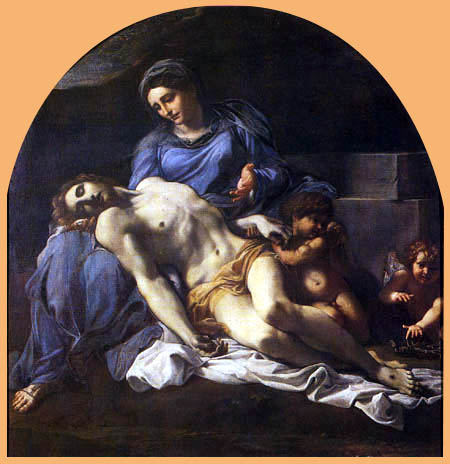
I used to read my children a story about a little girl who was born with a long tail like a dragon. Various characters seek to help the child with what is perceived by some as her disability. I liked Mike the cat’s approach best. “Teach her to love her tail,” he sagely advised. He shows her how to switch her tail back and forth, wind it around the fire escape railing and hang upside down. Teach her to love her tail.

Part of the task of the church is to teach us to love our tails and God’s tail, Jesus. Spirituality without Jesus Christ is spirituality that may be resisting the fundamental truth of our vulnerability. It may be a spirituality that, well or ill disguised, is exercising power, trying to be God.

The world holds vulnerability with fear and contempt. The church ought to teach us to hold it in our arms and love it. But the church is, of course, vulnerable too.

I was trying on a new hat when eleven year old Cicelia observed that you should always wear a hat to church. “It protects you from boredom, mom. The boredom rays, like the ultra violet rays from the sun are in church and sometimes at school. If you have a hat, you will be protected from the boredom.”

I hope the place where you worship is not boring. Maybe if churches had more to do with being with God and less to do with talking about God, things wouldn’t be so boring for Cicelia and others. As EvelynUnderhillobserved, “God is the interesting thing.”

A good deal of church seems to have little to do with God and is conducted as though God were, if not absent, at least very far away. Little time is given for God to get a word in edgewise. Our frantic activity and anxious busyness comprise our faithless creed that not much of anything can happen without our doing it ourselves.

Perhaps it is just too risky, too frightening. What if nothing happens? Nothing is changed or accomplished? Once Cicelia put a sign on her door painted in large red letters: KNOK or ELSE! Red paint ominously dripped from the letters like blood.

Jesus, we know you stand at the door and knock, but beware! We are resistant to transformation, devoted to our losses and the sins of others against us, and do not really trust your power in our lives.

The church will always be imperfect. It will be unimaginative and boring and rigid sometimes, because we are unimaginative and boring and rigid sometimes. Thank goodness God’s presence doesn’t depend on our winning academy awards in best Pentecost service of the year.

I have been in so many churches where you wonder why anybody comes at all. What with the dozen dusty arrangements of silk flowers and the sappy pictures of Jesus and the bad roller rink organ music you wonder what the appeal could be.

The appeal is, of course, Jesus. Jesus is there and active, because the people believe in him. Their vulnerable belief holds the door open for the vulnerable God to enter.

Knok or Else.  He is likely to walk right on in.

This post is an excerpt from my book written about learning to pray as I raised children in small town, Holton, Kansas. Loretta Ross (Ross-Gotta),  Letters from the Holy Ground – Seeing God Where You Are, Sheed and Ward, 2000,  pp 119-122.

Ravished by Love

I attended a protest march and prayer vigil last week here in Topeka, Kansas. In response to recent criticism and censure from the Vatican,  a group of protestants, Catholics, and some Zen Buddhists gathered in support of Roman Catholic sisters.

Thus the day came when, Elijah the Tishbite, my Labrador retriever named for the Biblical prophet, who spent much of his ministry in protests of various kinds, began to live up to his namesake. Elijah, the prophet-dog, rose near dawn the day of the march, and spoke in his canine way, “Don’t mess with the sisters! Thus saith the Lord.” We put his prophetic utterance on a placard. I donned my clergy collar, and off we went.

Ever since the woman of Bethany ran across the city to pour out the oil of her love on Jesus, women of God have endured criticism, ostracism, and hostility to the ways they express their faith and serve Christ. It only takes the breeding of a sheep dog to attempt to corral religious orders into neat doctrinal boundaries, and lines and rows pleasant to those who seek to control what they cannot understand. It is quite another thing to fathom the love and devotion of a soul, who is willing to give up possessions, power, prestige, and marriage for love of God.

I wrote a poem some years ago, about women and men, who take prayer seriously, who are ravished by love, and willing to give themselves to it with total devotion. Such people are often misunderstood by the prevailing culture.  I titled the poem, Ekklesia, which is the Greek word we translate as church. It means a gathering or assembly. Just what ought to happen in such a gathering has been under dispute for centuries, though most agree ekklesia should have something to do with prayer, worship, and love for God and others.

The poem draws images and some of its style from The Song of Songs (also known as The Song of Solomon). This book of the Hebrew Bible extols the wonders of human love and it has often been interpreted as a metaphor of the love between Christ and the church, or between an individual soul and God.

I offer the poem today in praise of all those women and men who have given radically of themselves to God, even in the face of criticism, ridicule, and suffering.


EKKLESIA

Sustain me with raisins,
refresh me with apples,
for I am sick with love. – Song of Solomon 2: 5

Who is that coming up from the forest
leaning on her beloved
coming up
dripping apple blossoms
crazed and drooling?

I adjure you, O daughters of Jerusalem,
by the gazelles or the hinds of the field,
that you stir not up nor awaken Love until it please.
                                                       Song of Solomon 2: 7

They are coming
coming up
from the forest
smelling of earth
and musk
naked
staggering
trailing shreds of God stuff
God dander
God sweat
God hairs
coral streaks upon their cheeks
stumbling into the light
falling to their knees
rolling in balls
splayed upon their faces
dizzy
begging for raisins and apples
sick with Love.

Called forth from nuptial beds
summoned, half-ravished
to tie a shoe
to feed
to lead
to plant
to mend
to make all new
with rapture round their eyes
and power in their step
and mouthwash on their breath,
swilled to hide the scent
the sweet taste of God,
thick and smooth on the tongue
as honeysuckle in the throat of night.

When they spoke
it was like being in the forest.
Birds chirped.
Rabbits hopped.
The air was alive
and twigs cracked under foot.

Hillsides
held them in the night
tucked under arms of trees
prostrate and panting
luminous
beneath pale light
of lunar ooze
smeared cross a starry sheet.

They lay trembling, hushed
listening for the rush
the fleet beat of wings
so soft, so hard
and ah!
so sweet.

At dawn
sun’s blaze
and dusk
they came up
in the sleet
the cold
the mud
the snow
the heat
coming up
out of the forest
at dawn
sun’s blaze
and dusk
to hover round the manger –
pale flickering fires,
pleasing incense,
consuming themselves in ever rising prayer.

There they sat
silent
crystal prisms
receiving light
in stillness
and shattering it
in myriad dancing rainbows of delight.

Meanwhile
Janet
with the yellow sweats
under her blue dress
cleaning up on a Saturday morn
in the rest room of the public library
paused
in her ablutions
to talk to the children
who were entranced by the pedal flush toilets
and to their mother
who smelled the over familiarity
and felt the ache and loneliness of Janet
who announced she was a realist and a humanist.
I don’t take everything in the Bible.
Like spare the rod and spoil the child.
That’s bad. A kind word turns away wrath.
My mother always used to say that. That’s hard to do,
said Janet.

She followed them out to the car
asking if they were going to have lunch now
and could she ride along.

kyrie
eleison

Lotuses,
awash with Love
spinning slender crystal threads
from tangled, matted mind,
are they surprised
they, who hoist holiness from murky depths,

waiting
birthing
dying
rising
gifting

waiting
birthing
dying
rising
gifting

saying the seasons’ cycles
strung like beads on the Spirit’s breath,

are they surprised
that on a Saturday morning
a humanist and a realist
washing up at the library miles away
slams into their prayer,
Our Bag Lady full of grace,
preying on us sinners until we die?

kyrie
eleison

Are they surprised
the woeful world beyond the woods
wakes from its sorrow
and sniffs the nectar of their blooming silence?

Ah they think they are alone.
Their solitude is filled with throngs.
Their restless nights passed
in company with crowds.
They thought their anguish hidden
in the vines.
It is a rushing current
cutting channels for compassion’s surge
down hillsides and across the plains.

The terms!
The terms
do not forget the terms
in small print at the bottom
on the private underside of bird wings
where soft down separates
air into feathery streams,
on the pale intimate flesh of the underside of leaves
under rocks and fingernails,
whatever clutters, clamors underfoot
and in the book they keep.
There are the terms
conditions
limitations,
extremities.

To read the terms stand under
but do not seek to understand.

The terms consist most of obedience.
Love
Serve
Die

Follow orders and do not ask too many questions.
Those who do, don’t stay
or lose their hearts
and can no longer pray,
deranged and dribbling,
bewitched by reason.

They ate God
slowly there
chewing carefully
in spite of their hunger
and flooded their thirst
with tiny sips.

This food for you, they said to one another.
I am not worthy
that Thou shouldst come under
come under
my roof
under me.

I will stand under Thee
and looking up,
say but the word, I healed,
shall see,
the underparts of Three in One:

the soft belly
the wing
and the hum
that dwells beneath Silence.

You can go there if you dare.
They will invite you in
into infinite unappeasable longing
into insatiable hunger
into the belly of God.

There you can watch Desire smack its lips
Sisyphus roll his stone
while you, shivering, groan
to be swallowed up by life
and find your home at last
next to a hayfield
in some celestial timber.

They will invite you in.
Watch out,
hospitable spiders all!
It is a trap.
Their tactic:
evangelism by voyeurism.
For the main attraction
their ravishing belly dancer
will seduce you through diaphanous veils
of flesh and matter.
This epiphany burlesque
is rated X.
Admission free.
The only catch -
the show lasts till eternity
and death the only exit be.

And you
dear foolish you
only looking for a rest
now must spend your life in making love,
this ardent Lover’s guest.

You want to go?
You cannot miss them.
They are a haggard bunch
ragged, wrecked souls in a crunch
having totaled their hearts in prayer.

Their name is Servant.
It isn’t far. Around the block
beyond the lake -
you needn’t search.

And the name of the place?

is church.

Many waters cannot quench love,
Neither can floods drown it.    Song of Solomon 8: 7

Elijah, the Prophet-Dog, Protests Rome


The Dancing God


Do you want to know what goes on in the core of the Trinity?
I will tell you.

In the core of the Trinity
the Father laughs
and gives birth to the Son.
The Son laughs back at the Father
and gives birth to the Spirit.
The whole Trinity laughs
and gives birth to us.       Meister Eckhart

Western Christianity used the Latin word circuminsessio to describe the activity of the Trinity. In contrast Eastern Christianity used the Greek word, perichoresis. Circuminsessio means broadly to sit around in a circle. Perichoresis means to dance in a circle.

 Needless to say, I prefer dancing.

BLEST COMMUNITY

 O Most Holy Trinity
Undivided Unity,
teach us the gentle deference
of your dance of surrendered love
how with infinite tenderness
and utmost esteem
you so gently
adoringly
are present
to one another.

Teach us your perichoresis,
your grand circle dance,
where you eternally birth joy
from the womb of reverence.

Teach us your unending,
enfolding regard
for the pure holiness
you hold and behold.

You,
sweet breath and the lungs of creation,
eternally giving,
empty
and eternally receiving
are filled.

You release and bind,
but never push nor pull.
You hold accountable,
but never blame.

You incline yourselves to one another
as a grove of green willows
bending in the breeze
bowing to each other’s grace
known and cherished
on the broad plain of mutuality.

Deepen our trust, O Blest Community,
that we may enter such intimacy.

                                                                Loretta F. Ross

Once a group of Western theologians traveled to the East to speak with a group of Buddhist monks, and asked, Will you tell us how you do theology?

 The monks thought for a while and then responded, I do not think we do theology.

 We dance.

Here is another post from The Praying Life on the Trinity: http://theprayinglife.com/2010/05/30/a-god-who-dances/