Monthly Archives: October 2010

The Stranger

At first glance he wasn’t all that attractive, a little too rough and edgy for me. He wore a nice pair of pants, but his shoes were beat up and had a hole in one toe. He had a scruffy beard, neatly trimmed nails, and a smart fedora tilted over one eye. He staggered slightly and stumbled once, as he approached. Tall, lean, all angles and contradiction, he gave off a raw, muscular energy that seemed both sinister and alluring.

He looked in some ways like the type of kid, who back in the 50’s would wear his hair slicked back in a ducktail and carry his cigarettes rolled up in his tee shirt sleeve. The fact that he had been eyeing me for some time made me nervous in a kind of silly, excited, middle school way.

He was definitely not my type. Besides I have long passed the era of swaggering boys and dangerous glances. Yet he was coming straight toward me, with a lazy, loping walk, totally at ease with himself and his own incongruity.

His eyes seemed older than his body. Compassionate and understanding, his gaze invited me in like some grandma holding out a cup of tea and plate of cookies. I better get out of here, I thought.

But before I could slip away he was suddenly before me, leaning over, and asking, “Would you like to dance?”

I glanced around, “Me? You want to dance with me?”

“Of course,” he said, smiling now.

“Why?”

“Isn’t it time we became friends?”

_____________

At a recent gathering in Kansas City, I was struck by a quotation from German philosopher Rudolf Bahro shared by Margaret Wheatley, well known management consultant, who studies organizational behavior, change, and chaos theory:

When an old culture is dying,
the new culture is born from a few people
who are not afraid to be insecure.

O yikes, I thought. I spend a lot of time and energy figuring out how not to be insecure. Now I am supposed to get comfortable with it?
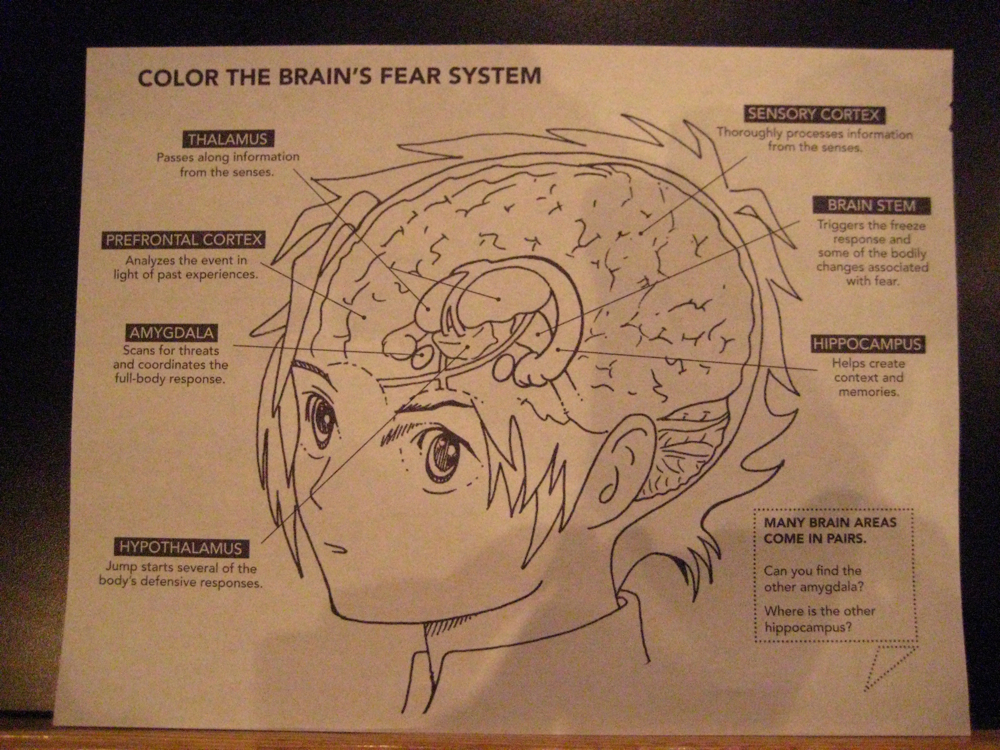

Who has not had a terrifying encounter with fear, which kicks all reason out of your mind and fills you with the powerful instinct to run, to hide, to attack, or to kill?  

Fear is an emotional response to a perceived or suspected threat to our security and safety. It both helps to insure our survival, and may also hold us back from moving forward. Because of its primal power expressed through our biochemistry, we may be manipulated by fear into silence, passivity, numbness, or reckless action.
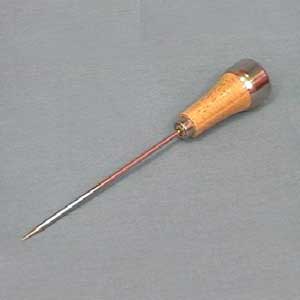
 

The reality of fear runs through the Biblical narrative, like a long steel ice pick between the shoulders of the people of God. The gift of fear as warning, and as impetus to take some saving action, is often distorted and misapplied. Fear becomes the excuse for lack of faith, and for failure of nerve. We find ourselves unwilling to trust in a power and reality greater than the lying, sniveling fear, which makes us feel we are nothing, but grasshoppers in a world full of overpowering giants with very large feet.

(But the others said, “We can’t attack those people; they’re way stronger than we are.” They spread scary rumors among the People of Israel. They said, “We scouted out the land from one end to the other—it’s a land that swallows people whole. Everybody we saw was huge. Why, we even saw the Nephilim giants (the Anak giants come from the Nephilim). Alongside them we felt like grasshoppers. And they looked down on us as if we were grasshoppers.” Numbers 13: 31-32  Message)

Not counting the frequent admonitions to fear God, that is, to offer God respect and reverence (which is not the kind of fear I am speaking of here), the Biblical admonitions to not fear pile up, filling up several columns in my concordance. God tells us not to fear. Jesus tells us not to fear. Psalmists, prophets, and angels tell us not to fear. Peter and Paul tell us not to fear.

Like most good advice. This is easier said than done.

Though love is not the opposite of fear, it does seem to be the antidote. In I John we find the familiar verses, “Perfect love casts out fear. There is no fear in love. But perfect love drives out fear, because fear has to do with punishment. The one who fears is not made perfect in love.” (I John 4: 18)

At our core, perhaps, what we fear is the separation from the love which promises us protection, care, and life itself. When the gifts of love in our lives are threatened in some way, we fear the loss of the source of these gifts, as well. Love, itself, shall surely be extinguished. We often confuse the gift with the Source. The gifts are  fragmentary, finite, always shifting, changing, and inevitably imperfect. The Source, however, is unchanging, eternal, and utterly worthy of our trust. Losing that which is the core and center of all our desire is, of course, a lie, an illusion. For nothing can separate us from the Love of God as Paul assures us:

For I am convinced that neither death nor life, neither angels nor demons, neither the present nor the future, nor any powers, neither height nor depth, nor anything else in all creation, will be able to separate us from the love of God that is in Christ Jesus our Lord. (Romans 8:38-39  New International Version)

Margaret Wheatley suggests that during this time of tumultuous change and insecurity that what is needed in every organization are patience, forgiveness, compassion, generosity, and an acknowledgement that we will fail sometimes and that is okay. These virtues sound like love to me, perfect love, which casts out the fear that stifles creativity, freedom, and innovation. Perfect love breaks the chains, which bind us to a past we cannot change. Perfect love exposes the dark fiction we write about a future we cannot control. Perfect love empowers us to respond to the present, ripe with possibility and brimming over with life.

_____________

We make an odd couple, this older woman and her shape shifter of a partner. “I don’t know the steps,” I protest.

“Trust me,” he whispers, as he guides me onto the dance floor. “We will make the steps up as we go along.”

“Your name?” I ask gazing into those eyes.

He hesitates for a moment. “People call me Uncertainty,” he says, pulling me closer.

Become a fan of the The Sanctuary Foundation for Prayer
Read more about prayer www.fromholyground.org, www.fromholyground.wordpress.org
Contact the author lross@fromholyground.orgwww.fbook.me/sanctuary
Follow at http://twitter.com/lfross

 

Still Not Saved?

The summer is over, the harvest is in and we are not saved.  Jeremiah

You might chalk it up to the waning of the light, or to the overcast skies. Regardless of the cause, the change from summer to fall often stirs up a case melancholy in our souls. The shrubs I purchased last July and watered in their containers through the hot summer are still waiting for me to plant them. A year is winding down and I am looking at what remains undone, unsatisfied, and unfulfilled in my life.

A little mouse has found the bird feeder outside my window. He shimmies up the pole each day and gobbles the sunflower seeds and cracked corn. I suppose I should sic my cat after him, but I haven’t the heart to intrude on his salvation with her teeth in his throat.

Autumn’s teeth are biting into my heart. I don’t notice the pain as long as I am working. Then there it is, asking for my attention. A young woman described to me the pain she was feeling as like a splinter working itself out. “I think I need to just feel the pain I have stuffed for so long.” Another woman avoids sitting still to pray and listen to God. When I asked if it was because that was so painful, she began to weep in recognition.

What is it that will save us? What will rescue us from our incurable wound, as Jeremiah calls the distress of his people? Will the politicians scrambling for public offices? Will the latest technology? Will scientific advances? Will new leadership? Will my working night and day save us?

In the growing dark of autumn, reality appears more nuanced, layered, and resonant to me, than life as we tend to live it — skimming over the surface, subsisting on sound bites, condensation, slogans, and bumper stickers. In my fall funk I am suspicious of easy answers, human arrogance, and frenzied activity.

I am not alone in this assessment. People come for spiritual guidance. They sit down and reflect prayerfully upon their lives. They unpack their days and their opinions, lift and hold them to the light. They savor, grieve, rage, and weep. Sometimes they talk about how they do not fit in at their churches. Some are looking for more depth. Sometimes they ramble and are hard to follow. One person sits and simply says, “I do not know. I don’t know,” over and over.  Sometimes they thank me for the safety and freedom they feel here.

I listen and pray and observe the Spirit’s dance in their stories. I witness the subtle shifts and changes in their hearts. These individuals possess that rare gift, an inner life, an examined inner life. They have taken responsibility for what is going on in that inner life. They understand how the truth of their interior reality shapes their outer experience. They are engaged in the serious and critically important work of personal transformation, self understanding, and deepening faith.

What I do is to stay with them in their pain, even when they can’t stand to stay with themselves. I believe, when they cannot believe. I hold up a light, as they discover the healing and freedom that wait beyond their darkness.

Many of us want to foster change in our world and institutions without doing the deep and painful inner work of our own transformation. How can I ask a whole community to change without being intimate with my own pain and my resistance to the cross of suffering in my life?

Thomas Keating invites us to understand our personal pain in a larger context, “Whatever you are going through is your invitation to participate in the redemption of the world.” The implication here is that healing for us all is made available through how we as individuals respond to the pain in our lives. This redemptive, life giving power of suffering love is modeled for us by Jesus.

The French activist and mystic, Simone Weil, writing in the late 1930s, observed that “The moral revival that certain people wish to pose will be much worse than the condition it is meant to cure.  If our present suffering ever leads to revival, this will not be brought about through slogans, but in silence and moral loneliness, through pain, misery and terror, in the profoundest depths of each man’s spirit.”

We are all trying to get by the best we can, taking our harvest where we find it. We are still not saved. The cat lurks. The market falls. You can’t find a job.

Perhaps what is called for in this waning of the light is the ability to be compassionately present to our collective suffering with love and faith. Could we not trust that out of the profoundest depths of our spirits, as we die to ourselves and the way we want things to be, unimaginable new life is already putting out tiny rootlets, waiting to emerge in some distant spring?

If you can’t believe that, I do not fault you.
We all have days like that. Besides, it’s autumn.

In the mean time, lean on me.


Become a fan of the The Sanctuary Foundation for Prayer
Read more about prayer www.fromholyground.org, Tracking Holiness – Newsletter
Contact the author lross@fromholyground.orgwww.fbook.me/sanctuary
Follow at http://twitter.com/lfross

Christian Atheists

“If yas gonna pray – then yas don haft ta worry.
If yas gonna worry, then why bother to pray?”
Anne Lamott, Traveling Mercies


Though a majority of Americans claim they believe in God, most of us function in our lives as atheists. Little seems to cause us more trouble than the godless belief that the ultimate responsibility for everything rests with us. Parker Palmer calls this “functional atheism.”

This is the unconscious, unexamined conviction that if anything decent is going to happen here, we are the ones who make it happen – a conviction held even by people who talk a good game about God.

This shadow causes pathology on every level of our lives. It leads us to impose our will on others… stressing our relationships, sometimes to the point of breaking. It often eventuates in burnout, depression, and despair, as we learn the world will not bend to our will and we become embittered about that fact. Functional atheism is the shadow that drives collective frenzy as well. It explains why the average group can tolerate no more than fifteen seconds of silence: if we are not making noise, we believe, nothing good is happening and something must be dying.

~Parker J. Palmer, Let Your Life Speak

Functional atheism is not a new affliction for the believer’s soul. Remember the story of the father of the epileptic child who asked for Jesus’ help? Jesus said to the man, “If you are able! – All things can be done for the one who believes.” Immediately the father of the child cried out, “I believe, help my unbelief!” (Mark 9: 23-24)

The rough and tumble scramble of our daily lives reveals our hidden atheist. Our unbelief makes itself known in our worry and irritability. We see our betrayal of God in the way we clamp down on having things our way and in insisting that we are right. Such unbelief gives us heartburn, high blood pressure, sleepless nights, and anxious days. Try as we might, we will always fall short of being able to be God in our own lives. Such an enterprise only leads to misery.

So, let’s practice belief. Slowly, step by step, stumble by stumble, we can move more deeply into the conversion of our unbelief.

Here is a prayer exercise to try.

Find a quiet spot. Let yourself relax. Take five or six deep breaths in through your nose, and release each one slowly through your mouth.

Now, imagine yourself in a vast open spacious field: a mountain top, a plain, a meadow, and a lake or ocean shore. See the space on all sides stretching into the distance.

Next, put the things you are worrying about: finances, work, family, various tasks, or responsibilities — whatever has you tied in knots, into that spaciousness. Once you have spread out your concerns at some distance from yourself, simply be there, breathing.

Imagine the Holy Spirit is moving among and penetrating the many tasks, people, and issues with a vibrant, pulsating energy you cannot see, but may sense. As you remain in peace, centered in Christ, the work of God goes forth into all your concerns through your faith, your consent, and your belief that God is more powerful and effective in your life and the world, than you could ever be.

Watch. Wait. Trust. If you become anxious, ask God to help your unbelief.

After taking time to be present to God’s activity in your life concerns, ask if there are any specific responses or actions you are to take. Allow God’s response to rise up from your center of peace, rather than your anxiety or fear.

Here in the field of your life the One who knows you better than you know yourself is always healing, creating, mending, and summoning.

Relax. It is not all up to you. You are not alone. You are not even in charge.

You are just part of the field, a member of the family.

Amen.

Become a fan of the The Sanctuary Foundation for Prayer
Read more about prayer www.fromholyground.org,  Tracking Holiness – Newsletter
Contact the author lross@fromholyground.org, www.fbook.me/sanctuary
Follow at http://twitter.com/lfross