 Are you trying to cope in a grown up world with the faith of a thirteen year old? James Fowler and other scholars of faith and personality development have indicated for years that a majority of Christians possess the spiritual maturity of a thirteen year old. A recent survey by the Pew Forum has found that atheists know more about major religions than Protestants and Roman Catholics, many of whom do not know the basics tenets of their own faiths.
How well does the faith of a thirteen year old hold up in a grown up world?
Not very well according to a recent survey conducted by the Barna Institute. The survey revealed that though many people are discussing and debating religious beliefs and practices, all the talk has resulted in very little change in people’s faith. Just 7% of those surveyed could cite any change that their faith has made in their lives in the past five years.
On the one hand about one-third of adults who experienced any change at all mentioned an increase in some aspect of their faith commitment. Fourteen percent said they had stepped up their commitment to the Christian faith, in general; 12% cited an increase in their religious activity; and 9% indicated their commitment to God had grown.
On the other hand 16% said they had moved away from Christianity; 11% noted that their feelings about or perceptions toward churches had deteriorated; and 8% admitted to decreasing their religious activity. Another 8% claimed to have changed churches or denominations during the past five years. Among those whose appreciation of or respect for churches declined, a majority specified the sexual abuse scandals within the Catholic church as the dominant factor in their change of heart . Barna Research
Writers in the field of human personality and faith development have observed for some time that most people’s understanding of faith and beliefs are established by age thirteen and do not much change over their life. If my faith and the faith of most of the people around me is that of a thirteen year old, it seems a natural evolution to drop out in my twenties. On the other hand, if I choose to stay, what sort of impact on the world does a church with the faith maturity of thirteen olds make? Not much, it would seem, if the steep declines in church membership, respect for religious leaders, and positive cultural regard are any measure.
Though Jesus challenged his disciples to have faith like a child, he also challenged them to grow beyond childish ways by bringing their faith to bear on the complex religious and social issues of his time. He challenged his followers with paradox and ambiguity. He taught that there was something life-giving in death itself. In addition he called for self-sacrifice beyond the cognitive ability of thirteen year olds.
 I know a clergy person, who told me she had a program on her computer that checked the style and word choice of her sermons for grade level. She aimed to write sermons easily understood by a third grader. That explains a lot to me. If all we give people in our churches is third grade faith and understanding, it is a wonder they stay around through high school, let alone the rest of their lives.
The Christianity of the first century was more than palliative care or an agenda for social change. Mature faith, tried and refined in the fire of personal and communal life, results in deep understanding and compassion for the human condition and deep reverence for all of life.
I have heard the faith taught by some churches called “a mile wide and an inch deep.” A sound bite world that worships immediacy has little patience for anything other than Christianity Lite. Hence the media depiction of faith traditions is often distorted, diluted, sensationalized snippets of a tradition only truly known and appreciated through years of living and allowing oneself to be changed by its teachings.
 G.K. Chesterton once observed that, “It is not that Christianity has been tried and found wanting, it is that it has never been tried.” Our perilous time of mounting crises, crumbling institutions, and polarization require of us a faith much deeper, broader, and more nuanced than that of most thirteen year olds.
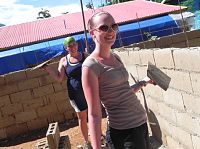
I do see many positive signs— a young woman named Gina who is seeking to have her life radically changed by God as she lives out of a back pack, traveling the world helping the poor; the family who travels to third world countries offering love and medical care; the young college graduate who went to Haiti to help build an orphanage and hauled drinking water for the workers each day. Other people submit to the transforming power of the St.Ignatius thirty-day retreat, or sit down with someone regularly to examine their spiritual life and the call of God. Many people are taking responsibility for developing their faith in creative ways, and often these occur outside traditional church settings.
 Spiritual maturity helps us to answer such questions as – How do we help ourselves live with paradox and ambiguity? How do we increase our tolerance for the stranger and the alien? How do we meet suffering and deprivation in ways, which carry us beyond sullen entitlement, bitterness, and retaliation? How do we integrate increasingly complex realities with faith and generosity?
As a thirteen year old I believed the promises of scripture: that God is good and wants goodness for us. I believed that God also has expectations for us to live with reverence, forgiveness, compassion, and self-giving love.
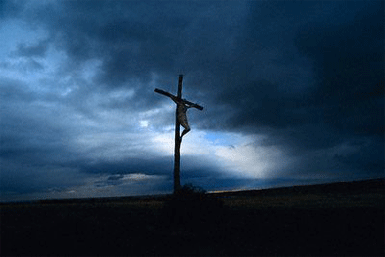
As a knocked down, punched out, disillusioned adult I also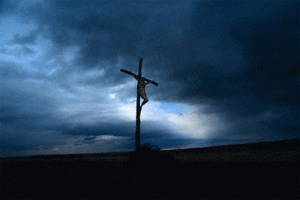 believed that suffering, evil, sin, loss, and disappointment are real. For me the cross, no less a scandal and folly today than 2000 years ago, stands between the polarities of the goodness of God and the harsh realities of life in this world. Strung between childlike trust and adult confrontation with sin and evil is a tightrope called faith. In the center of that tightrope we find the cross. No one may pass by without a crucifixion. Mature spirituality has learned to walk that narrow wire with precision and grace.
Despite our advances in technology, health care, science, industry, and commerce, we remain in some respects spiritual children. I believe among the most important skill called for in our time is not our intellectual expertise, but rather, mature faith manifested in how we respond to deprivation and loss, how we respond to our own lust and greed, and how we discover the inner resources of wisdom, character, and love that make us worthy to be entrusted with the great power that is ours as a community and individuals.
 I am writing this blog in the public library of a small town in Iowa. A group of middle school kids sat down at the table near by. They are discussing how old they are and who is mature and who is not. They are working on a school assignment, but so far have not opened their books. They just took a break and asked me to watch their notebooks. The kids are funny, exasperating, and when they suddenly apologized to me for making too much noise, I fell in love with them. As endearing as I find them, I would hate to bank the future of Christianity on the faith on these children, or have to count on their leadership and wisdom to lead us in these tumultuous times.
As a matter of fact, they make me want to be the very best grown up I can possibly be for them.
I know a large number of grown ups in the faith – including you, my dears. Many are members of churches, quite a few are not. Some have nothing good to say about Christianity. But all are bringing, deep, resonant, intelligent faith to bear on the challenges and sorrows of this world. Thank you all so very much!
Read more about prayer www.fromholyground.org, Tracking Holiness – Newsletter
They are all screaming at the top of their lungs. A gargantuan angel with bushy hair and a dark, cavernous throat bellows from a starry sky. A couple of space ships pass in the distance and a few screaming angels flit among the stars. Four other angels hover at the large angel’s feet, with neat rows of white teeth framing their gaping mouths. These angels are playing musical instruments: a violin, a harp, and one angel is hitting a cow bell with a drum stick.
The cartoon’s caption, printed on a scroll held by the big angel, reads:
PRAY. Everything else is ___! (expletive removed)
The cartoon is the irreverent work of Robert Therrien, aka Bad Bob, who made a name for himself in the 90’s drawing Screaming Man cartoons, which featured a fellow who had consumed five or six too many cups of coffee.
This framed cartoon has stood on my desk for over fifteen years. I loved its no-nonsense; just do it approach to prayer. Those ugly hysterical angels seemed to say, “Get over yourself, sweet cakes, and turn to God. Now!” I doubt if Bad Bob of Mad Magazine fame intended such a response. None the less, the cartoon neatly cut through my own (expletive removed) and shifted my focus from my almighty self to One greater and wiser and kinder than I.
A few weeks ago my Black Lab, Elijah, named for the Tishbite prophet who bested the prophets of Baal, and heard the still, small voice of God, chewed up Bad Bob’s profane angels. By the time I caught him gnawing on pieces of the wooden frame, he had already eaten one of the smaller angels. I don’t remember what instrument he was playing. I do not think Elijah had a quarrel with the angels or Bad Bob. The satisfying crunch and shred of the wooden frame was his delight. That angel he ate was just an after dinner mint.

Once in a while I have the urge to yell at someone, “Pray!” But usually the person already feels tormented, guilty, and vulnerable enough without me adding to his or her pain.
How does one enter into relationship with the most high God? We hesitate on the threshold, dilly dallying around reading books and blogs, talking about prayer, and about God, holding opinions about religion and other people’s expressions of faith, all the while avoiding that vulnerable exposure of our raw need to the Holy One, intolerably awesome and other than us.
Maybe we need a herd of fierce, raucous, over-caffeinated angels to descend and scare the wits out of us. If not such a rude kick in the seat of the pants, we may need at least someone to take us by the hand and say, “Okay, let’s do it like this. And then sit down with us and pray. Maybe we need someone who will stay with us, as we flail about. Maybe we need someone who will bang a cowbell with a stick, when we start to nod off. Maybe we need someone whose faith, at the moment, is larger than ours, whose belief is deeper, and whose hope is wider. Whether we find such support and compassion with one other person or a hundred, this is what I call church.
Bad Bob’s screaming angel appears to have no doubt in our ability to pray or in prayer’s power and effectiveness. Yet the heavenly being, along with the other hosts, has had it up to here with a people, who persist in looking for answers to their troubles only in solutions that amount to the manure of bulls.
Come to think of it, I have had it too. Pray!
Let me know if you need some help.

Read more about at www.fromholyground.org Tracking Holiness – Newsletter
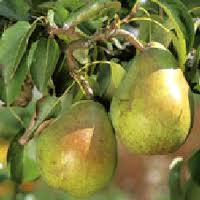
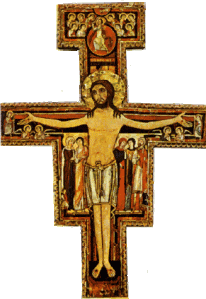
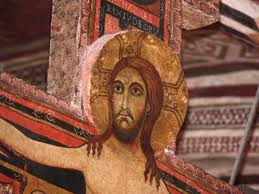
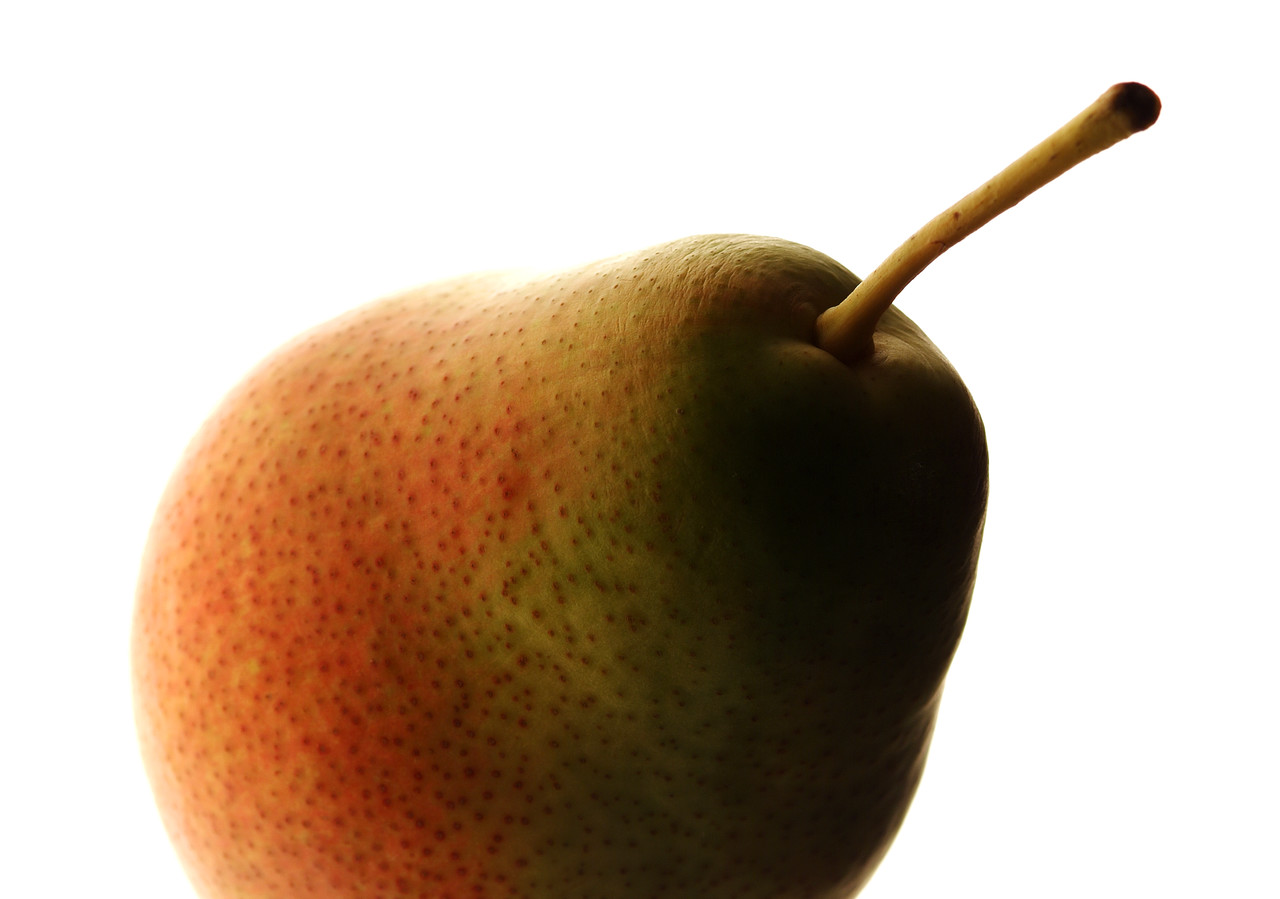
The leaves of the pear tree are glossy and thick on the branches. The pears, a bit larger than walnuts, blush rose near their stems. On my window frame hangs the icon of a skinny naked Jesus. It is the crucifix of San Damiano from which St. Francis heard Jesus tell him to repair His church. This Jesus will not meet my gaze, but looks down some hellish tunnel of sorrow that hallows the space between us. His face is grey, mouth turned down. He is wearing a sheer loin cloth that looks like it came from Frederick’s of Hollywood. I am embarrassed for him in his poverty, his utter abasement. Cheer up Jesus! You look terrible. The pear tree is laden with fruit this year!
He doesn’t seem to notice the fruit, though he must see it – his eyes are wide open. Pinned like a specimen to the cross where under his arms are gathered stately mourners, he bleeds in tiny spurts from hands and feet. Angels hover over his head in neat rows. One appears to be performing a liturgical dance. No – that’s no angel. It must be Christ on his way to heaven, ascending in a crimson mandala.
The crucified Jesus just hangs there. Has he no shame? It is I who squirm, not he. For his eyes pin me at the intersection of poverty and abundance where I hang ripening in the Kansas sun in mid September. O Jesus, how long must you hang there suspended in misery, wearing us out with that sorrowful stare?
 With an introit of barking dogs, the squirrels soon will come to pluck the half-ripe pears with their agile paws, taking one bite from each, and then carelessly tossing them to the ground to rot. Pray God to preserve us from squirrels that raid at dawn, chattering and chasing up and down the branches, tempting us into thinking that we have been made to be consumed by squirrels. Pray God that we may be left hanging, suspended by the heart’s stem, hidden in the leaves until we’ve ripened properly. And then, at the sharp insistent teeth of need open our flesh sweet and tender to one another.
Then maybe that sad Jesus will get off that rugged cross and come eat the fruit of summer with us.
____________________
We went to Koger’s Variety Store for back to school specials the other day and painstakingly put names on new back packs, glue bottles, scissors, and Big Chief Tablets. We watched Dad’s jaw drop as he wrote the check for new clothes at the mall. Then last evening we noted it was getting dark so early.
The air is uneasy, a mix of the eager hope of a brand new lunch box and the painful regret that summer is over and we never got around to making those doll clothes or camping out in the back yard to watch the stars all night.
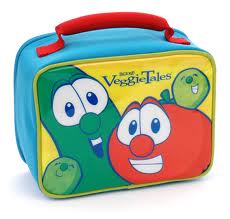 Jeremiah laments with us, “The harvest is past, the summer is ended and we are not saved.”(8:20) And we find ourselves at the intersection of poverty and abundance where the kingdom of God is conceived. Christians seem to perpetually stand on the threshold of a new school year clutching our shiny lunch boxes in one hand and the forsaken dreams of summer in the other. Holy ground is the paradoxical place where we simultaneously live in the Pentecost fullness of the gifts of the Spirit and the power of the Risen One; and in the crucifixion emptiness and cry for redemption of the Suffering One.
Jesus tells us that of God’s own will we have been brought forth to be a kind of first fruits of God’s creatures. Like the firstborn child or the firstborn of livestock, the first fruits to come ripe in a season were sacred to God. “When the grain is ripe, ready to be given up, at once the farmer puts in the sickle because the harvest has come,”(Mark 4:29) says Jesus. When one is ready to die, then harvest is come. How odd to be ripening for death, to be growing in Christ only to be handed over.

Just as the cross is the joining of two opposite directions, we live in the creative tension of the union of poverty and abundance. The tension is great, and it is hard for us to stay in the center of the cross for very long. We want resolution. We are tempted to heave ourselves down one polarity or the other. But if we can hold both the pear tree laden with fruit and our ongoing need to be nourished, if we can accommodate both the Risen Christ and the Crucified Savior, then we may discover, out of the union of these opposites, new fruit conceived in us which will heal and sustain the earth.
The barrage of demands and the voracious appetite of a culture that seeks to devour, rather than savor its sustenance undermine a quiet patient trust in God’s seasons of growth and harvest. What is it that finally brings us to fruition? Is it not the sharp insistent teeth of need, our own poverty and the poverty of one another, that finally allows us to fall sweet and tender into each other’s embrace?

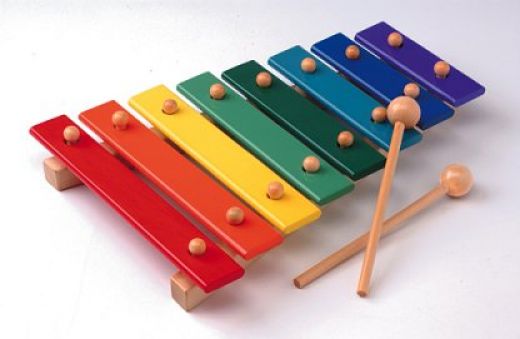
At Toys R Us — Oh my, toys are us! In Proverbs Wisdom tells us, “At the beginning I was playing beside him like a little child and I was daily his delight.”(8:29), I listened to a tinkling recording of “It’s a Small World, Isn’t It?” while watching a lion and a lamb, a giraffe, a hopping kangaroo, and a waving bear shimmer across a plastic screen. Nearby Cicelia plinked a xylophone in plunking delight.
Then in the department store she asked, “Are shoes alive?”
Her elder sister exclaimed, “No!”
But she persisted, “I saw one talking on TV.”
“Let’s see,” I said, and leaning over a cordovan Bass loafer inquired, “Are you alive?”
“Oh mom,” Diana sighed.
We tried on grown-up perfume. When the saleslady offered to help, we told her we were searching for a fragrance that was really “us.” A spray, and Cicelia, pressing her hands to her cheeks, giggled, “Oh mom, I know this one is me!”
Before boarding the escalator we tried on hats. Cicelia, in a large brimmed red felt with ribbons, and Diana, in a small black veiled cloche, gazed at their images in the narrow mirror on the best day of my life.
We took six dresses from a rack for Diana to choose. Cicelia was her handmaiden, letting it be according to sister’s word, carrying, doing buttons and zippers, and holding up the blue satin fabric like a swatch of heaven against each dress.
 Jesus, I thought you were suffering, but I saw streams of light pouring from your head like a fountain, spraying colors – blue, azure, hues of red, green, yellow – shimmering rainbows irradiating in spurts and gushes and rivers from a still small body sagging on a tree. All day I played plinking magic while you spun streams of green leaves, jungles, hay fields in spring, purple hyacinths, beets, cerulean seas, dolphins, berries, mountain mist, and a single red rose flame out of the chaste and tender aureole of your pain.
There in the dance of creation and dissolution, there where our need is met with the abundance of another and our abundance fills another’s lack,
there where it is a small world after all,
there is our joy made complete.
 Maybe you have taken on a very difficult and demanding task. Maybe you have been engaged in a burst of creative activity. Or perhaps, you have been involved in the long, slow, steady, outpouring of yourself for family, friends, or your job.
You may have noticed the signs: an anxious, sleepless night here or there; drinking too much caffeine or alcohol; not enough time to get to the grocery store; a sudden attraction to playing solitaire, and a rush of those Please-Lord-give-me-the-strength-to-do-this prayers.
In my case I was following my own devices again, rushing ahead of the Spirit, plowing my own path. Finally I was stopped by a sharp, shard of sorrow in my heart, a sense of restless unease, and the accompanying guilt and self-recrimination about my lack of motivation. I did not miss God’s irony that this should assail me over the Labor Day holiday.
After thirty years of devoting myself to prayer, I am amazed at how hard it still is to expose myself to the direct presence of Christ. I really think I would be the one in the back of the crowd, wanting desperately to push through to touch his robe, but fearful and cautious, and resigned to making the best of things on my own.
Many of us find it easy to read about faith and prayer. Books on these topics are best sellers. Countless people read the Bible. Most of us do not have much trouble telling God what we need. We may even write out a list of our needs and longings and hand it to the person in front of us, asking, “Would you pass this on up to Jesus, for me?”
What I hadn’t done was the simple, radical exposure of myself and my need to God. What I hadn’t done for several weeks was a sustained, still, silent offering of my being to the being of God. This is what I believe truly heals and redeems: contact with Holiness, that mysterious communion and co-mingling of my spirit with the Spirit, a dance of love beyond my understanding or control.
I know why I avoid it and why I, suppose, that I have to write about it. The reason is that this communion may hurt at first. The exposure of a raw, chaffed heart to the burning brightness of Grace can be excruciating. (Yes, that is the word for it: ex- crucifix, from the cross.) It may be the last thing we want to do. So we often just tell God about it, then get up and go on fretting, and look about for something to do, anything other than just sitting there in that fear and pain.
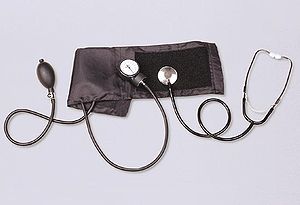
Now think for a moment. If you were sick, would you not pay attention to your symptoms, maybe check them out on the internet, and go to a physician and describe what you are feeling? And then, would you get up from your chair and go home, before the doctor had a chance to ask questions, to examine you, run tests, and prescribe your treatment?
Surely you would you wait for the examination. You would answer questions. You would you lie down on the table, bare your chest to the stethoscope, your arm to the blood pressure cuff, and take whatever tests the doctor advised. You would take your medicine and follow a treatment plan.
I had been making drive-by visits to God, where I would drop off my laundry or tell God what I need for today. I was sipping those devotions for busy people, spouting sound bite prayers on the run. I was not coming before God and disrobing. I was not holding still for God to search my heart and probe my mind. I would not wait for his grace to move into me, to absorb the pain, to refresh and heal me. Further, it was all about me. I was all about me. I had nary a thought of what God might desire or need from me.
We fool ourselves if we think a quick shot of God, a pithy quote, or Bible verse alone will do it. God desires a relationship with us, not a power lunch, and depth relationships require leisure, attention, vulnerability, and mutuality.
Part of us really does desire this. However, another part of us is just not that interested. I hear about this internal conflict over and over in my practice of spiritual direction. People are sincere and have good intentions. Yet nearly everyone I know finds him or herself facing obstacles to a sustained presence to God.
Try it. Find a quiet place where you will not be interrupted. Set a timer. Twenty minutes is good. Ten minutes will do. Even five minutes can hold a miracle. Breathe a while. Just be there and allow yourself to be open to Christ, the patient physician, who has been waiting for you for an eternity. Now right off, you may notice all sorts of responses in yourself: a sudden urge to get up and tend to some task; some buried pain rising up, burning and stinging like really bad heart burn. You will take little sorties into the past and into future. You will write fiction, little novellas, about your life. You will discover some hurt or slight or worry to gnaw on.
Just stay there. Hold still. You are getting a CT scan. Don’t move. This time is for God’s examination of you. What you think and how you feel about this isn’t all that important. The physician is at work. Trust that. You may feel panic or anger or despair. You may feel deep peace and joy. Whatever you feel, just stay there opening yourself to the one who loves and cares for you beyond your wildest dreams.
When the timer rings, give thanks as honestly as you can. Then do the same thing the next day and the day after and the day after. Don’t look for “results,” just be obedient in allowing the doctor to heal you. Thomas Keating calls this form of centering prayer “divine therapy.” You, of course, may also read the Bible, pray in other ways that you are drawn to, do acts of love and service, and whatever else that seems right for you.

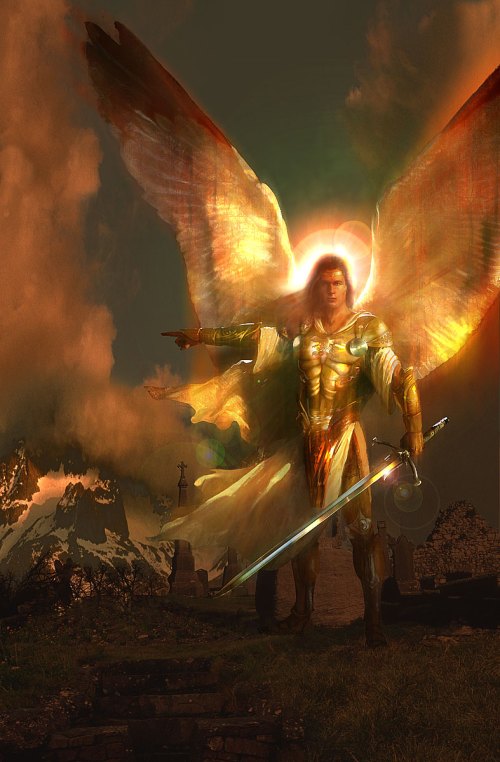
Sometimes this prayer is like detox, a weaning from some addiction, and we go through the painful withdrawal of whatever we may have been substituting for God in our lives. Other times this prayer is like the surrendered offering of Mary to the angel, Let it be to me according to thy word.
Always such yielded prayer is an act of faith in the mystery of God’s love and purposeful activity in the human heart and soul.
Hold your eyes on God and leave the doing to him.
That is all the doing you need to worry about. St. Jeanne de Chantal
Posted in contemplation, Prayer, Spiritual Practices, spirituality
Tagged Bible, centering prayer, Christianity, God, Jesus, Religion and Spirituality, surrender, Thomas Keating












 The Praying Life